
Middletown's #1 Tree Expert Company
FREE Inspection & Estimate | Certified Arborists | Trimming, Pruning, Removal, More!
Sponsored
The Watering Question I Get Every July
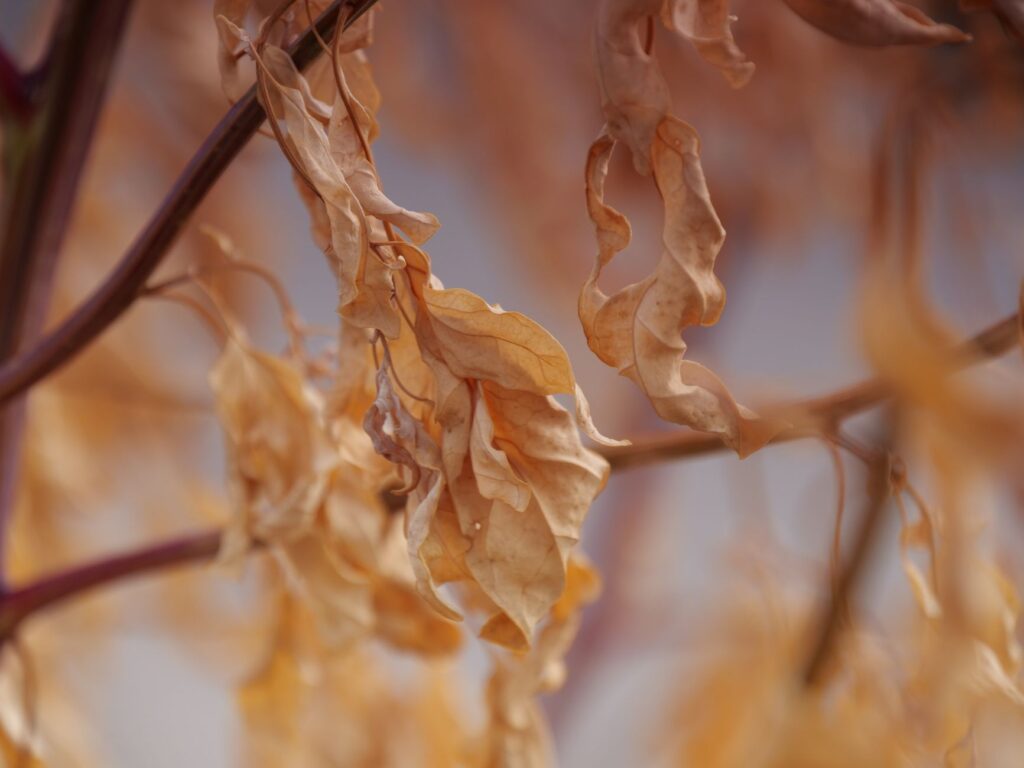
By the second week of July, my phone starts ringing with a version of the same question: “My tree’s leaves look a little droopy — should I be watering it?” It’s a fair question, and in Middletown Township it’s rarely a simple yes or no. Between the clay-loam pockets around Lincroft and Navesink and the sandier, faster-draining soils closer to the Bayshore, two trees fifteen minutes apart can have completely different root-zone conditions on the same afternoon.
Most homeowners either overwater out of anxiety or underwater because the lawn sprinklers are running and they assume the tree is covered. Both mistakes come from the same root cause: nobody’s actually checking what’s happening six to twelve inches below the mulch line, where the fine feeder roots that do the real work of drinking are living. The good news is that figuring this out doesn’t require a soil lab or a moisture meter from the garden center. It takes a screwdriver, five minutes, and a little bit of know-how about what you’re feeling for.
This is the same basic technique I use on a routine site visit before I ever recommend a deep watering program, so let’s walk through it properly — what to use, where to check, and how to read what you find.
Why Guessing by Leaf Symptoms Alone Fails You

The instinct to look at the canopy first makes sense — it’s the part you can see. The problem is that drought stress and waterlogged roots produce nearly identical symptoms above ground: wilting, leaf curl, marginal browning, even early leaf drop. A red maple (Acer rubrum) sitting in saturated clay after a wet stretch can look just as sad as one baking in dry sand near a driveway, and treating the wrong problem makes it worse. Pour more water on a tree whose roots are already oxygen-starved in compacted, waterlogged soil, and you accelerate root rot. Withhold water from a genuinely drought-stressed tree because you’re worried about overwatering, and you push it toward decline right when Middletown’s July heat is hardest on it.
Rutgers Cooperative Extension has long emphasized that soil moisture at the root zone, not surface appearance, should drive irrigation decisions for landscape trees — surface soil can look and feel dry while moisture is perfectly adequate a few inches down, or vice versa. Their guidance on home landscape watering is a good baseline for how differently trees, shrubs, and turf actually behave underground even when they’re getting the same sprinkler schedule.
That’s the gap the screwdriver test closes. It gives you a direct read on the one thing that actually matters: is there usable moisture where the roots are.
The Screwdriver Test, Step by Step
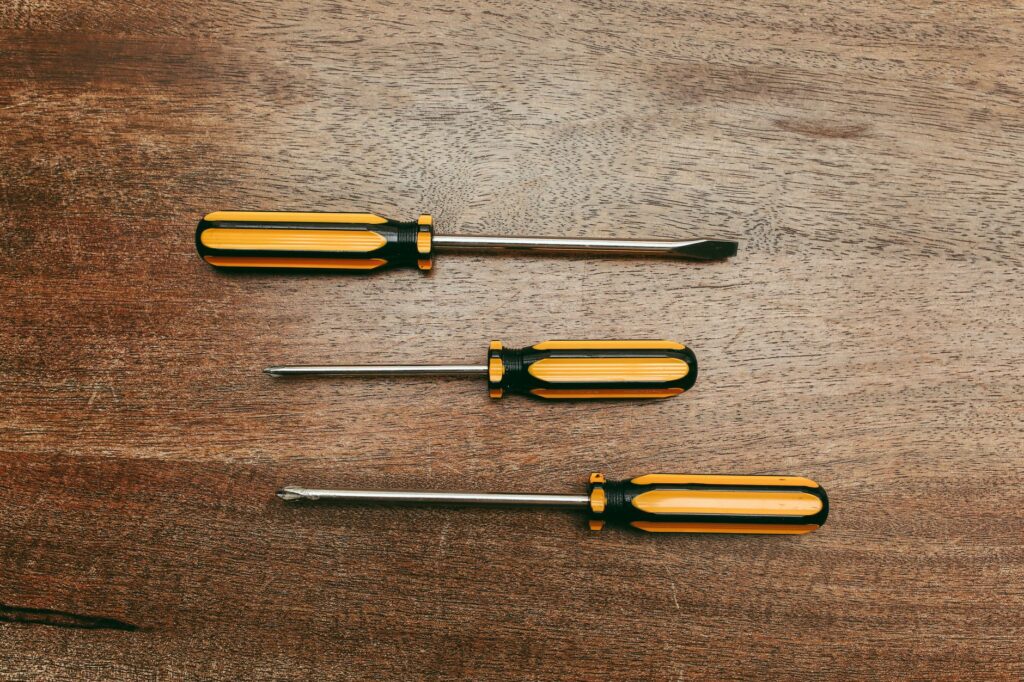
Grab a long flathead screwdriver or a metal soil probe — anything with a shaft six to eight inches long will do. Here’s the process I walk clients through:
- Pick the right spot. Test in the root zone, roughly under the drip line of the canopy, not right against the trunk. That’s where the active feeder roots concentrate, not directly at the base.
- Push it straight down. With steady, even pressure, push the screwdriver into the soil as far as it will comfortably go without forcing it.
- Read the resistance. Moist, well-structured soil lets the screwdriver slide in with modest, even resistance to six or eight inches. Dry soil stops you hard within an inch or two — it feels like pushing into packed sand or brick. Waterlogged or heavily compacted soil either offers almost no resistance and comes out muddy, or resists uniformly like dense clay even near the surface.
- Check three spots, not one. Root zones aren’t uniform, especially in Middletown’s mixed clay-loam and sandy pockets. Test at three points around the drip line and average what you’re feeling.
If you’d rather not improvise with a screwdriver, an inexpensive soil moisture meter from a garden center works the same way and gives you a numeric readout, though I find the manual test just as reliable once you’ve done it a few times.
Middletown's #1 Tree Expert Company
FREE Inspection & Estimate | Certified Arborists | Trimming, Pruning, Removal, More!
Sponsored
What the Results Actually Mean for Your Tree
If the top two to three inches are dry but you hit consistent moisture below that, your tree is generally fine — established trees pull most of their water from deeper, cooler soil layers, and a dry surface crust in July heat is completely normal. Resist the urge to water just because the mulch looks dusty.
If you’re hitting hard resistance all the way down, six to eight inches with no give, that’s a genuine deep-water signal, especially for anything planted in the last two to three years. Young trees haven’t yet developed the wide, deep root systems that let mature trees ride out a dry week, which is why USDA Forest Service urban forestry guidance consistently flags the first three years after planting as the highest-risk window for drought mortality in landscape trees.
If the screwdriver slides in with almost no resistance and comes out with mud clinging to it, stop watering immediately and check drainage. Saturated soil around the root collar for extended periods is one of the more common, and more preventable, causes I see of root rot and secondary fungal decline in Middletown yards — particularly in the heavier clay pockets and in any spot where downspouts or grading route extra water toward a tree.
How to Actually Water Once You Know You Need To
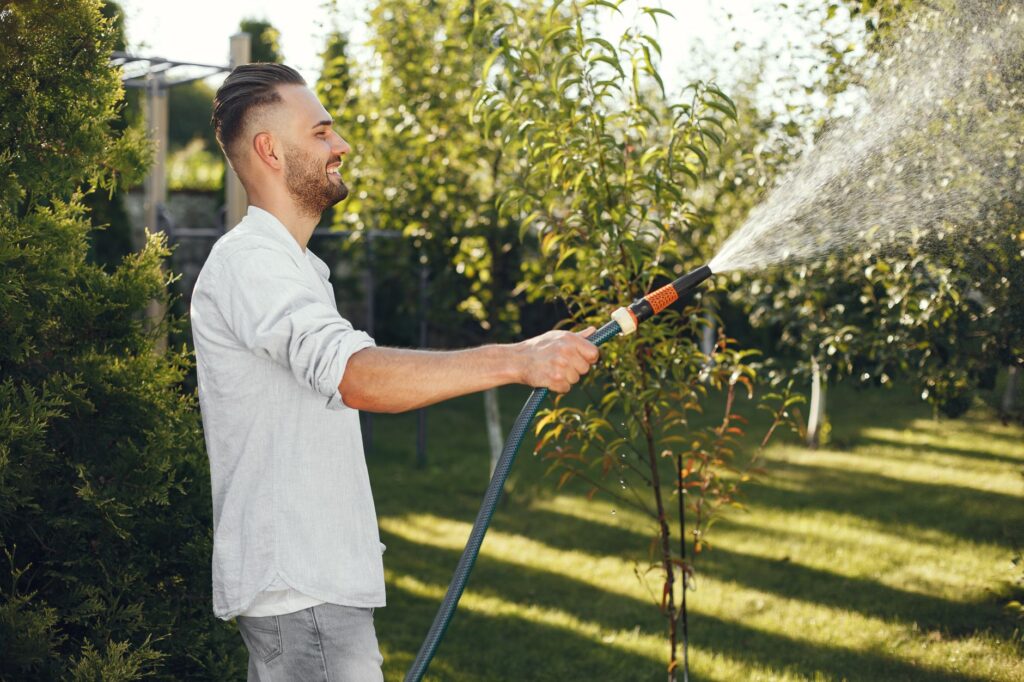
Confirmed a dry root zone? The fix isn’t a daily five-minute sprinkler run — that wets the top inch of soil and trains roots to stay shallow, which backfires badly in a heat wave. What the tree actually needs is slow, deep water that reaches down to where the screwdriver was meeting resistance.
For an establishing tree, a slow trickle from a hose left at the base for 20-30 minutes, or a soaker hose run in a loop around the drip line, delivers a deep soak without runoff — this matters more on Middletown’s clay-loam soils, where water can pool and shed sideways off compacted ground before it ever penetrates. For a mature tree, you’re generally supplementing rainfall only during genuine dry stretches, and the same slow-and-deep principle applies: better to soak thoroughly once a week than sprinkle daily.
Retest with the screwdriver a day after watering. You should feel that resistance ease up through the top six to eight inches. If it doesn’t, you likely need a longer soak, or you may be dealing with compacted soil that’s shedding water rather than absorbing it — worth a conversation with an arborist about whether the root zone needs aeration.
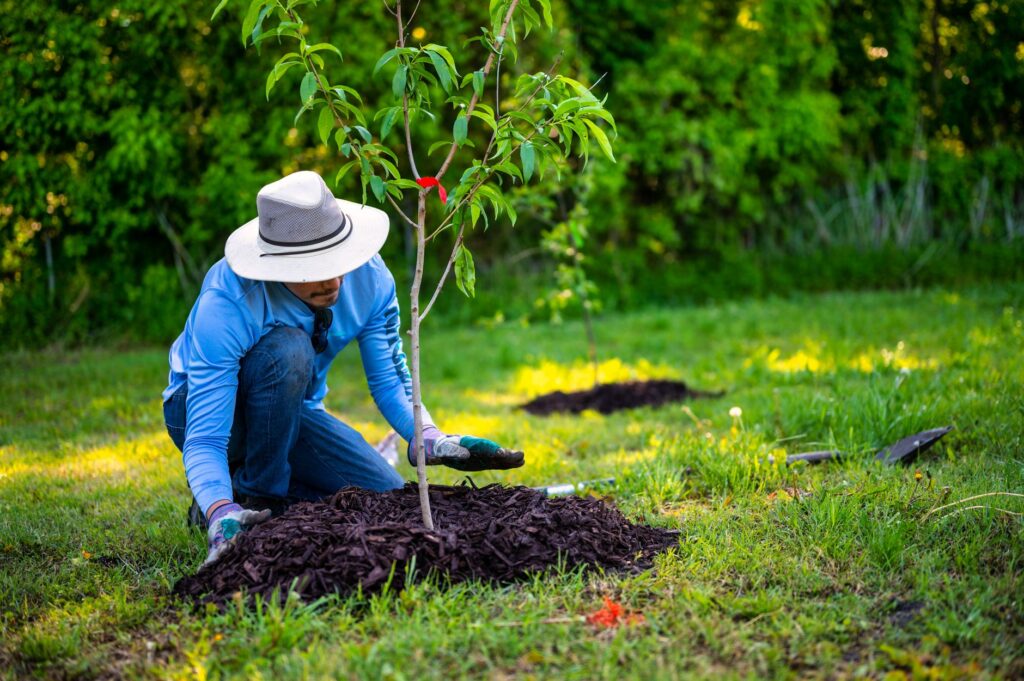
A three-to-four-inch ring of mulch out to the drip line, kept off the trunk itself, helps hold that moisture once it’s in the ground. The International Society of Arboriculture has a solid overview of proper mulching depth and technique on their Trees Are Good homeowner resource, worth a quick read if you’re not sure your mulch ring is doing its job.
Building the Habit Into Your Summer Routine
The screwdriver test is worth repeating every week or two through the hottest stretch of summer, not just when a tree already looks stressed. Checking before you see wilting is what actually prevents damage — by the time leaves curl and brown at the margins, the tree has already been under stress for a while, and recovery takes the rest of the season. Keep a mental note (or a quick phone note) of how many inches down you hit resistance each time; over a few checks you’ll start to know your own yard’s rhythm better than any generic watering schedule could tell you.
Pay particular attention to trees planted within the last three years, anything near pavement or a south-facing wall that radiates extra heat, and trees on the sandier, faster-draining soils common closer to the Bayshore and Raritan Bay. Those are consistently the trees that dry out fastest in a Middletown July.
Middletown's #1 Tree Expert Company
FREE Inspection & Estimate | Certified Arborists | Trimming, Pruning, Removal, More!
Sponsored
When to Call In a Professional
The screwdriver test is a genuinely reliable DIY tool, but it has limits. If you’re checking correctly and still seeing wilting, early leaf drop, or canopy thinning despite adequate root-zone moisture, something other than simple drought stress may be at work — girdling roots, soil compaction from past construction, a vascular disease, or a root system that’s been damaged and just can’t move water efficiently anymore, regardless of how much is available in the soil.
That’s the point where it’s worth having a certified arborist take a look. A proper site assessment can distinguish a straightforward watering fix from something that needs root zone work, disease diagnosis, or a longer-term treatment plan — and catching that distinction in July, rather than after a tree has declined through the fall, is almost always the difference between a tree you save and one you eventually have to remove. If your own screwdriver checks keep coming back damp and the tree still isn’t bouncing back, that’s your cue to get a second opinion before the season gets away from you.
Photo credits: Featured image by Tima Miroshnichenko on Pexels; Section 1 by Arri Bom on Pexels; Section 2 by Steve Jerry on Pexels; Section 3 by Polina Tankilevitch on Pexels; Section 4 by Alfo Medeiros on Pexels; Section 5 by Gustavo Fring on Pexels; Section 6 by Boys in Bristol Photography on Pexels; Section 7 by Peter Xie on Pexels.