Middletown's #1 Tree Expert Company
FREE Inspection & Estimate | Certified Arborists | Trimming, Pruning, Removal, More!
Sponsored
The Bark Damage Nobody Warns New Tree Owners About
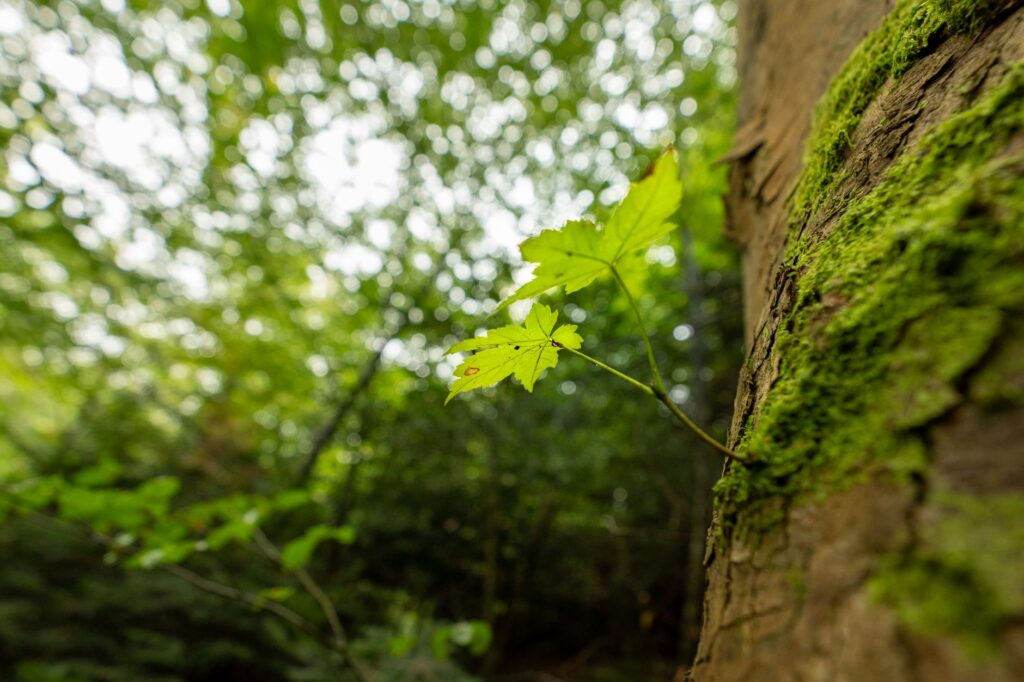
Every July I get calls from Middletown homeowners who planted a tree during the spring rush — maybe a red maple (Acer rubrum) from a Memorial Day planting, maybe a new shade tree put in after a builder cleared the lot in Lincroft or Port Monmouth — and now there’s a long, sunken, discolored strip running up one side of the trunk. It usually shows up on the southwest face, the side that catches the harshest afternoon sun. Most people assume it’s a disease. It’s usually sunscald, and it’s one of the most preventable problems a young tree will ever face.
Sunscald doesn’t get the attention that pests or storms do, but for a tree in its first few years in the ground, it can be just as damaging. The cambium — the thin, living layer just under the bark — is what moves water and sugars through the trunk. When that layer cooks or gets stressed by rapid temperature swings, it dies. Dead cambium means dead bark, and dead bark is an open door for wood-boring insects and decay fungi. On a young tree with a small diameter trunk, a sunscald wound can girdle a meaningful percentage of the trunk’s living tissue in a single season.
What makes this a Middletown-specific problem is exposure. A lot of our newer plantings — street trees along recently widened roads, replacement trees after storm removals, new shade trees in yards that were cleared for construction — go from nursery rows with some mutual shading straight into wide-open Bayshore sun with no canopy cover at all. That shock is exactly the setup sunscald needs.
Why Thin-Barked Trees Take the Hit
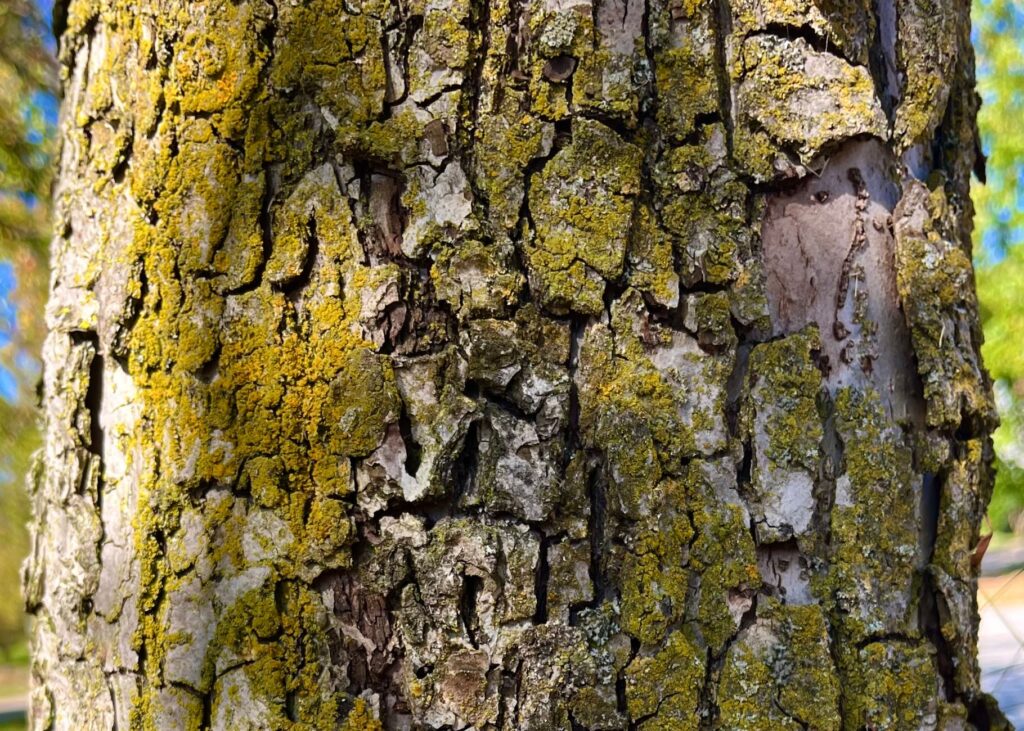
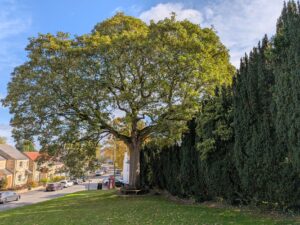
Not every species is equally vulnerable. Thin-barked trees — maples, honey locust (Gleditsia triacanthos), littleleaf linden, and most young fruit and ornamental trees like crabapple and cherry — have far less insulation between the outside world and that living cambium layer than a mature oak or a thick-barked pine. Bark thickens with age, which is exactly why sunscald is overwhelmingly a young-tree problem. A 40-year-old white oak (Quercus alba) on Kings Highway has bark built for exposure. A three-year-old maple in a new development does not.
Newly planted trees carry a second disadvantage: a reduced or asymmetric canopy. Nursery-grown trees are often pruned to a fairly open structure for transport and staking, which means less of the trunk is shaded by its own leaves. Add a hot southwest exposure, reflected heat off a driveway or vinyl siding, and a trunk that hasn’t built up bark thickness, and you have the exact combination that produces sunscald.
It isn’t only a winter injury, either, even though the classic textbook cases involve freeze-thaw cycles in the cold months. Summer sunscald happens through a related mechanism: intense, sustained heat on exposed bark stresses and kills tissue directly, especially on trees already under drought stress. According to Rutgers Cooperative Extension, over-mulching and poor moisture management compound the problem by stressing the whole root-to-crown system at once, leaving less reserve capacity for the tree to cope with heat load on the trunk (Rutgers NJAES FS099).
Why This July Is Peak Risk in Middletown
Coastal Monmouth County gets a specific flavor of summer heat: long stretches of intense, direct afternoon sun with high humidity that keeps overnight temperatures from dropping much, followed by the kind of dry spell that leaves clay-loam soils cracked and hard. That combination is rough on any tree, but it’s brutal on one that was planted within the last one to three years and hasn’t built a root system deep or wide enough to keep up with demand.
If your tree went into the ground this spring, or even last fall, its root system is still mostly confined to the original root ball footprint. It cannot pull enough water to keep the whole tree — leaves and bark both — properly hydrated during a string of 90-degree afternoons. A stressed, under-watered tree is more prone to sunscald because turgid, well-hydrated bark tissue handles heat load better than tissue that’s already running a moisture deficit.
I see this most often on the newer plantings around open-lot developments and along roads without much street tree canopy yet — parts of Middletown Township where the shade cover that would naturally protect a young trunk simply hasn’t grown in. If you planted a tree in the last few years and it sits in full southwest exposure with no larger trees nearby, put it on your watch list this month.
Middletown's #1 Tree Expert Company
FREE Inspection & Estimate | Certified Arborists | Trimming, Pruning, Removal, More!
Sponsored
How to Spot It Before It Gets Serious
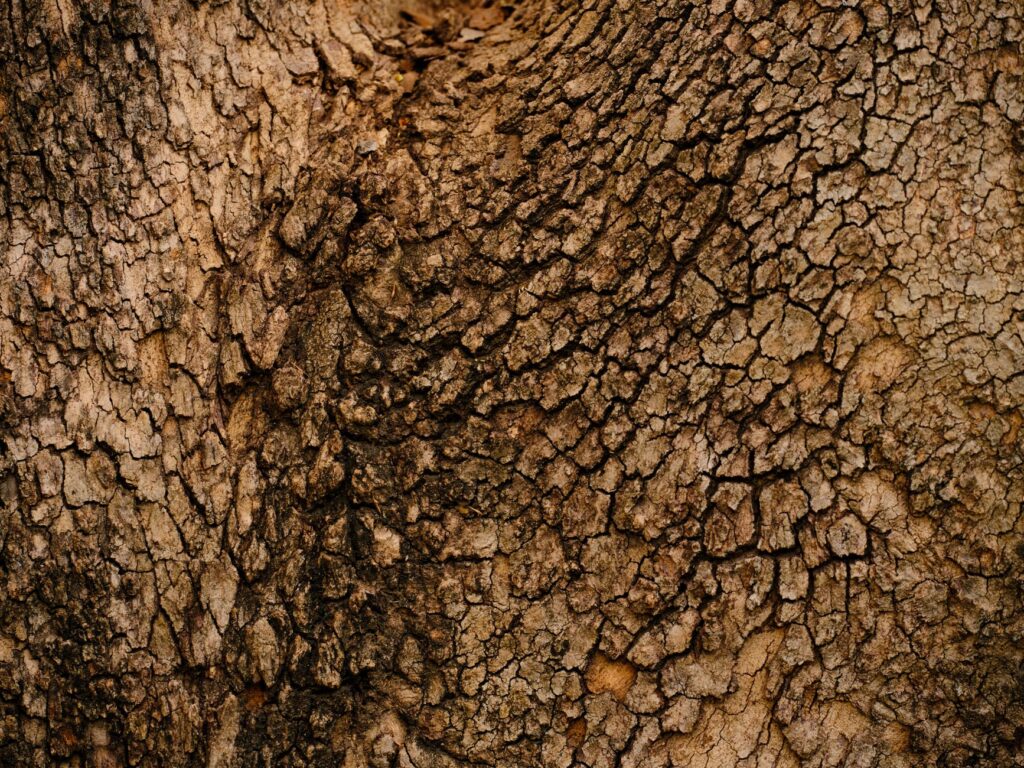
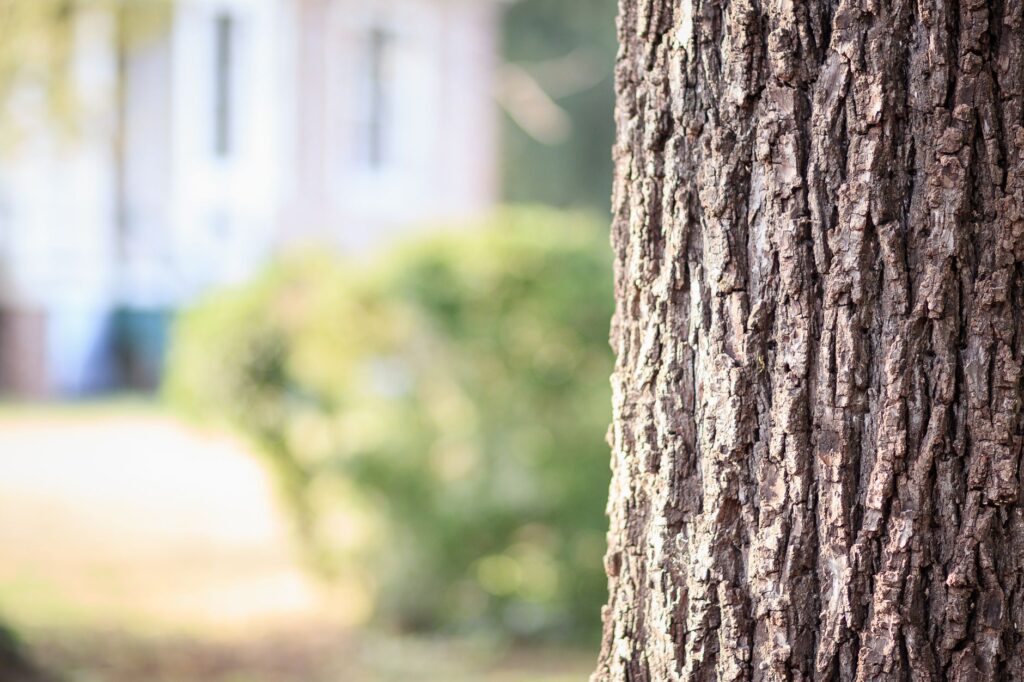
Early sunscald often looks unremarkable — a slightly sunken, discolored patch of bark, sometimes with a faint reddish or darkened tint, usually on the south or southwest-facing side of the trunk. Left alone, it progresses: the bark cracks, then splits, then eventually sloughs off in strips, exposing bare wood underneath. By the time you see actual dead wood showing through, the cambium in that area is gone for good — it will not heal back into living bark, only be sealed over at the edges as the tree compartmentalizes the wound over years.
- Sunken or slightly discolored bark on the south/southwest trunk face
- Vertical cracking or splitting running parallel to the grain
- Bark that looks dry, papery, or loose to the touch
- Small holes or sawdust-like frass nearby — a sign borers have already moved into the dead tissue
- Any of the above concentrated on a young tree’s exposed, sun-facing side rather than distributed randomly
Once borers find a sunscald wound, the problem compounds fast — the very insects that exploit stressed bark, like the bronze birch borer on birches or various flatheaded borers on maples, will happily colonize dead tissue and expand the damage well beyond the original scald. Catching it at the discoloration stage, before the bark actually splits, gives you the best odds of protecting the tree without professional intervention.
What You Can Actually Do Yourself
The good news is that sunscald prevention is genuinely a DIY-friendly problem, and most of the fix is either already in your yard maintenance routine or a quick trip to the garden center.
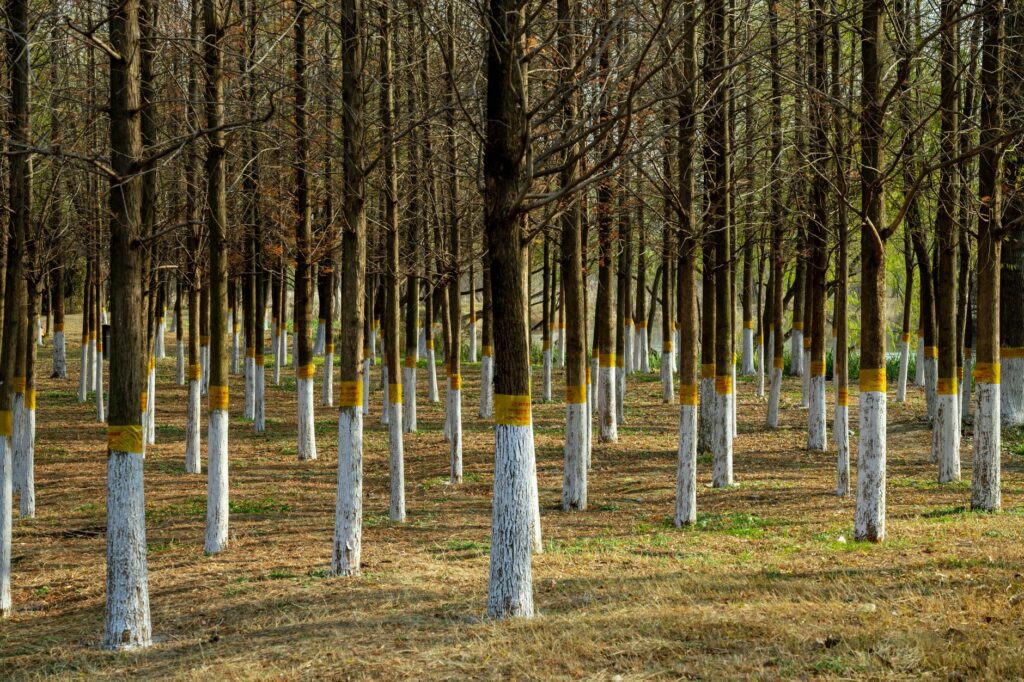
Shade the trunk. A light-colored tree wrap or guard — crepe paper wrap, plastic spiral guards, or even a loosely tied length of burlap — reduces direct solar load on the bark. Wrap from the base up, overlapping like shingles so water sheds outward, and never wrap so tightly that you constrict growth. If you use spiral guards, check them monthly; bark grows faster than people expect in summer, and a guard left too tight becomes its own girdling hazard.
Water deeply, not frequently. A slow soak that reaches 12-18 inches down does more for trunk and bark health than a daily sprinkler pass that wets only the top inch of soil. TreesAreGood.org, the International Society of Arboriculture’s consumer education site, recommends watering at least once a week barring rain, checking that the soil below the mulch layer is actually dry before adding more, and increasing frequency during hot, windy stretches exactly like the ones Middletown gets in July (ISA / TreesAreGood.org).
Get the mulch ring right. A 2-4 inch layer of mulch out to at least the drip line keeps root-zone soil temperatures more stable and moisture more available, both of which reduce overall tree stress. But keep mulch off the trunk itself — a mulch volcano piled against the bark traps moisture against the trunk and creates rot conditions that make bark damage worse, not better. Rutgers Cooperative Extension has documented this over-mulching problem extensively and it remains one of the most common mistakes homeowners make with new plantings (Rutgers NJAES FS099).
Consider temporary shade. For a tree in a truly brutal southwest exposure with no relief in sight, a simple shade cloth staked on the sun side for the worst of the afternoon, or even a light-colored board propped against that face, can buy the trunk a season or two of protection while it builds bark thickness and a fuller canopy.
Mistakes That Make Sunscald Worse
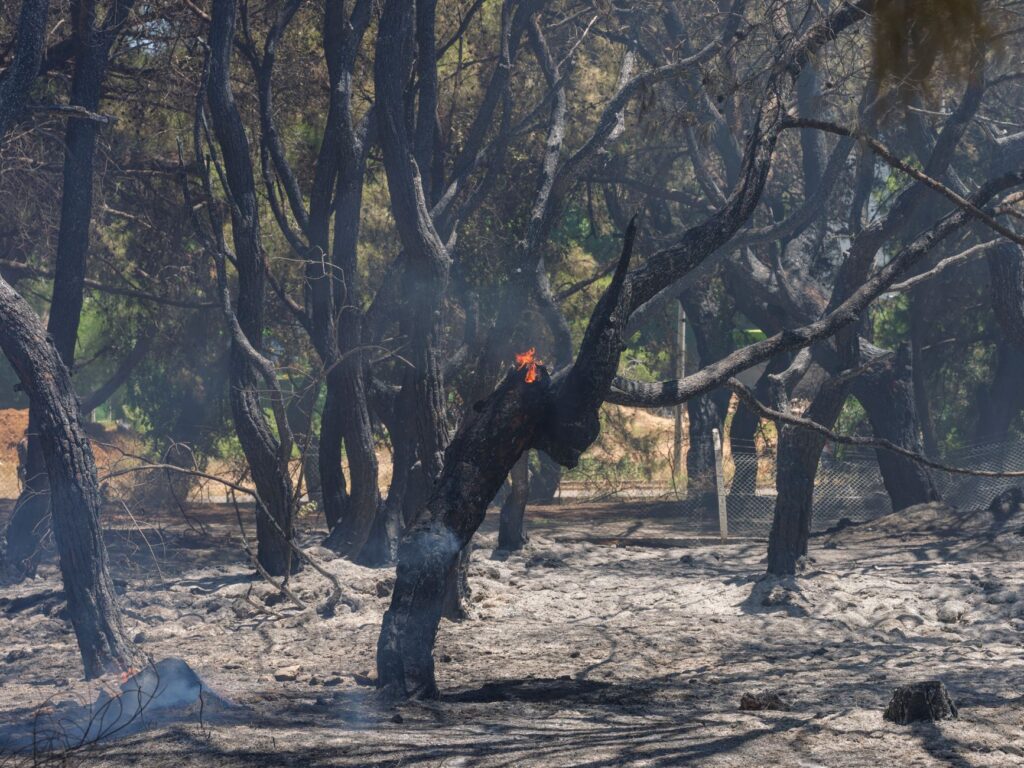
A few well-intentioned habits actually increase sunscald risk. Dark-colored trunk wraps absorb heat rather than reflecting it, which can raise bark temperature instead of lowering it — stick with white or light-colored materials only. Wraps left on year-round, especially through a humid Jersey Shore summer, trap moisture against the bark and invite the exact rot and insect problems you’re trying to prevent; if you wrap for winter protection, plan to remove it by late spring, and if you’re using shade cloth for summer heat, take it down once the worst of the heat passes so the trunk can breathe and continue thickening its bark normally.
Fertilizing a stressed, sunscald-prone tree heavily in the middle of summer is another common misstep. Pushing new growth during a heat and moisture deficit adds demand the tree can’t meet and increases overall stress rather than relieving it — hold off on fertilizer until the tree is well-watered and the worst heat has passed, or better yet, until fall.
And resist the urge to prune away a sunscald wound aggressively the moment you spot it. Removing bark or wood beyond what’s already dead exposes more living tissue unnecessarily. Clean, minimal removal of only the clearly dead material — or simply monitoring a mild case while you correct the watering and shading — is usually the better call.
Middletown's #1 Tree Expert Company
FREE Inspection & Estimate | Certified Arborists | Trimming, Pruning, Removal, More!
Sponsored
When to Call In a Certified Arborist
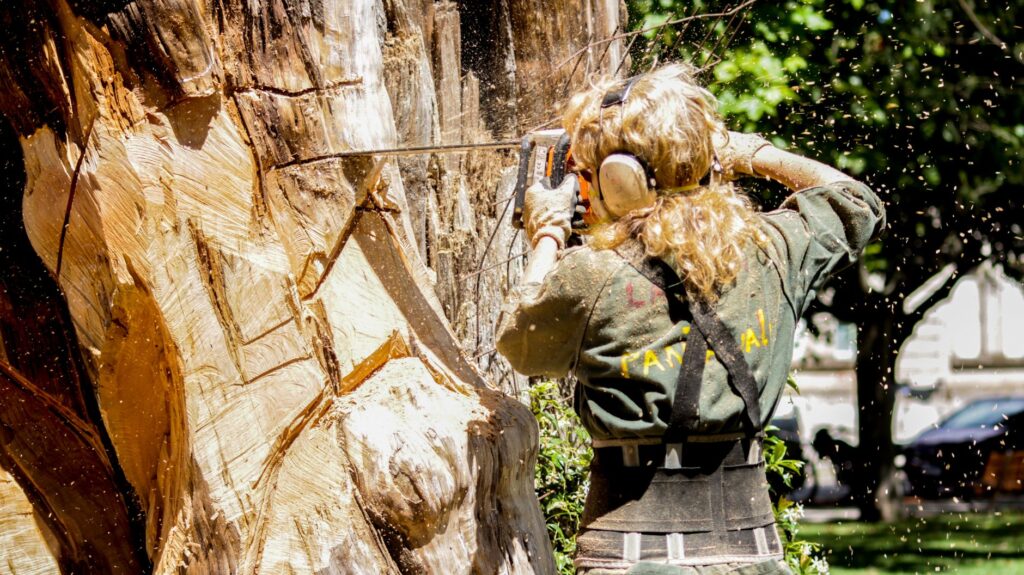
Most early sunscald is manageable with the steps above: shade, consistent deep watering, and a properly built mulch ring. But there are situations where it’s worth having a certified arborist take a look. If the damaged area already wraps a significant portion of the trunk’s circumference, if you can see borer entry holes or frass in the wound, or if a young tree’s canopy is thinning or wilting on top of visible bark damage, that’s a tree under compound stress, and an arborist can assess how much of the vascular system is still functioning and whether the tree is salvageable or should be replaced while it’s still small and inexpensive to do so.
An arborist assessment is also worth it if you’re not sure whether what you’re looking at is sunscald, a canker disease, or storm-related bark damage from an earlier season — the symptoms can look similar early on, and getting the diagnosis right determines whether the fix is a tree wrap or a fungicide program. For a tree you’ve invested real money and a few growing seasons into, a single consultation is cheap insurance against losing it during exactly the summer it was starting to establish.
Either way, the earlier you catch sunscald, the better the tree’s odds. A young tree that gets through its first three or four Middletown summers with intact bark on its sunny side will go on to build the thick, weathered trunk that lets a mature oak or maple shrug off a July heat wave without a second thought.
Photo credits: Featured image by Michael Morse on Pexels; Section 1 by mali maeder on Pexels; Section 2 by Sophia Zheng on Pexels; Section 3 by Pixabay on Pexels; Section 4 by Engin Akyurt on Pexels; Section 5 by Bingqian Li on Pexels; Section 6 by Engin Akyurt on Pexels; Section 7 by Gastón Mousist on Pexels.