Middletown's #1 Tree Expert Company
FREE Inspection & Estimate | Certified Arborists | Trimming, Pruning, Removal, More!
Sponsored
The Summer Spray Habit That Puts Middletown Trees at Risk

July is weed season in Middletown. The bindweed is creeping into the garden beds, crabgrass is working its way along the lawn edges, and the brush along the back fence has gotten completely out of hand. It’s the time of year when a lot of homeowners head to the hardware store, pick up a bottle of weed killer, and get to work. I understand it — I’ve walked countless Middletown properties where the weeds had genuinely taken over.
What I’ve also walked are properties where a beautiful red maple or a twenty-year-old flowering dogwood (Cornus florida) was quietly dying, and the homeowner had no idea why. The leaves were curling or yellowing in strange patterns. The branch tips had started dying back. In several cases, the damage was subtle enough that the owner blamed drought or a mysterious disease. What had actually happened — more often than I’d like — was herbicide damage from a product applied weeks or even months earlier, nowhere near the tree.
This is one of the most commonly misdiagnosed tree problems I see in Monmouth County, partly because the symptoms appear well after the application and partly because most homeowners simply don’t connect the dots. The good news is that a few straightforward practices can eliminate most of the risk. You don’t have to choose between weed control and healthy trees.
It's Not Just About Spraying the Tree Directly
The most common misconception I hear is, “I was careful — I didn’t spray the tree.” That’s a good instinct, but it misses how herbicides actually move through the environment. There are three primary pathways that bring herbicide chemicals into contact with trees you never intended to treat.
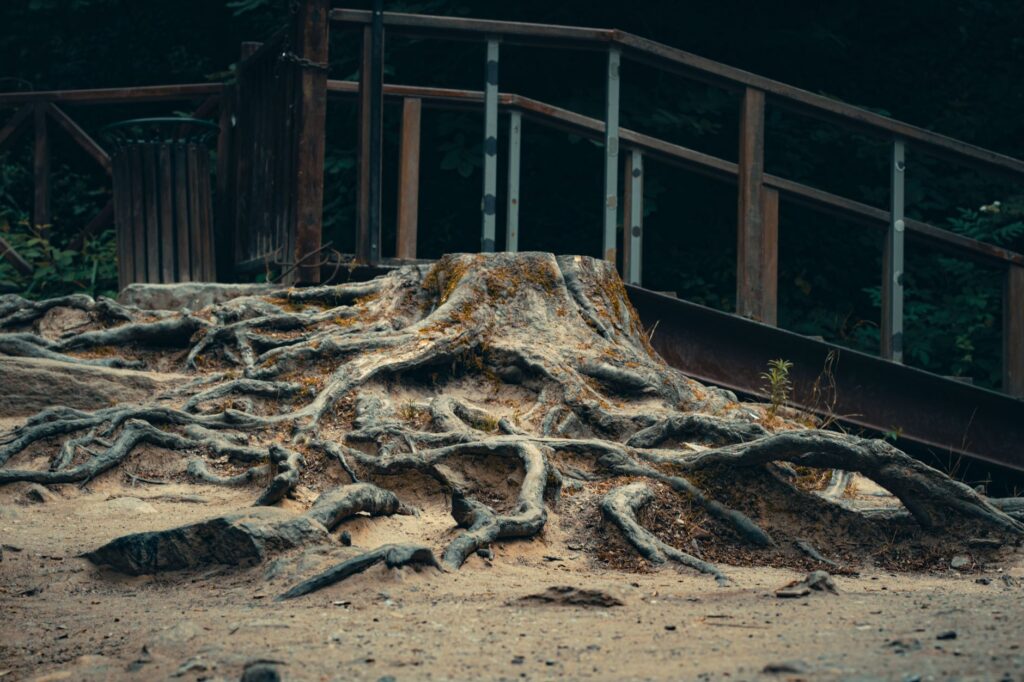
Root uptake is the most significant pathway in residential settings. Most homeowners don’t realize how far tree roots extend — they can run two to three times the height of the tree in lateral spread. When you apply a granular or liquid weed killer to a lawn or garden bed within the drip line of a tree, the product leaches into the soil and gets taken up by roots along with water and nutrients. Soil-applied products like pre-emergent herbicides and systemic lawn treatments are particularly prone to this. Rutgers Cooperative Extension has documented how herbicide movement in NJ soils can affect desirable plants well beyond the intended treatment area, particularly in clay-heavy soil profiles common throughout Middletown Township.
Spray drift is the other major pathway. Even a slight breeze on a July afternoon can carry fine herbicide droplets far enough to contact bark, leaves, or exposed surface roots. Products that volatilize in heat — including some formulations containing dicamba — can become airborne and travel significant distances on a warm day, depositing on foliage or bark far from the application site.
Bark absorption matters most for products applied directly to stumps, brush, or woody stems. Triclopyr and similar woody-plant killers are designed to absorb through bark, and they don’t discriminate between the target plant and the roots of a nearby tree that happen to run through the same soil.
What Herbicide Damage Looks Like — and Why It Gets Misdiagnosed
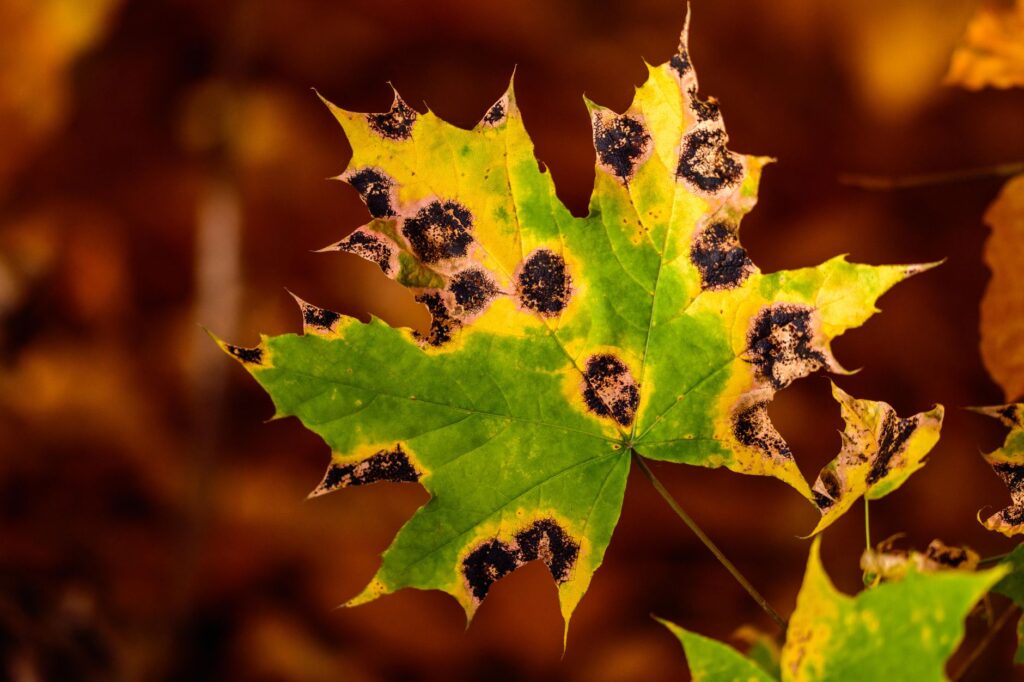
The symptoms of herbicide damage vary depending on the product involved, and this is exactly why it gets misdiagnosed so often. After a nor’easter rolls through the Bayshore, I can walk a Middletown neighborhood and spot wind damage in an hour — it follows a predictable pattern. Herbicide damage is subtler, slower, and delayed.
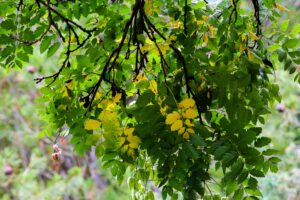
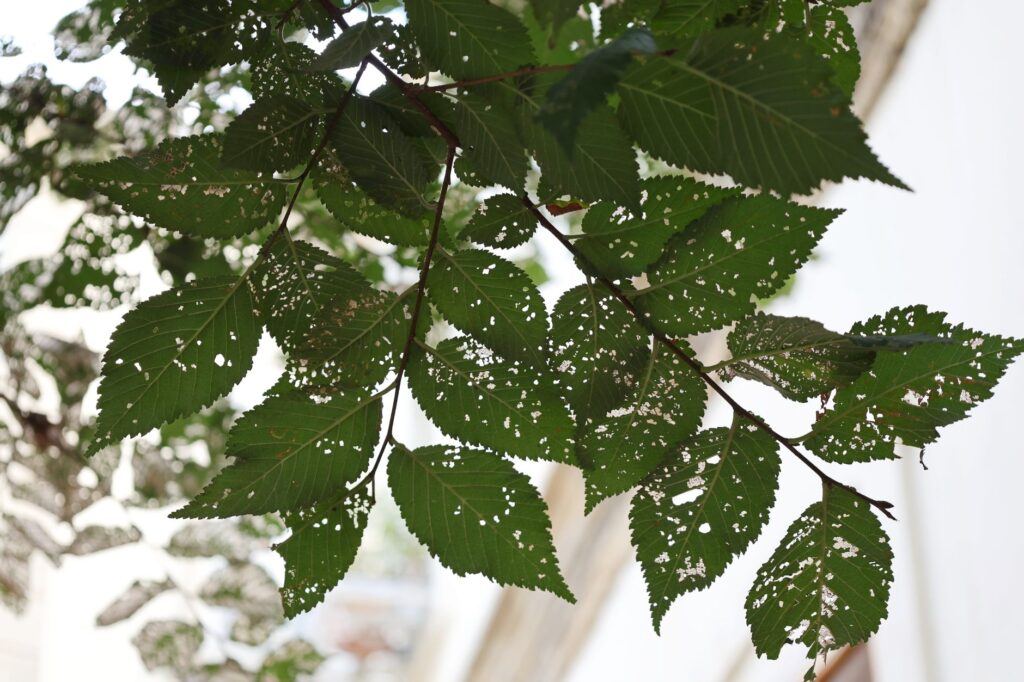
Hormone-type herbicides containing 2,4-D, dicamba, or triclopyr typically cause dramatic leaf distortion when absorbed by a tree. Leaves become cupped, curled, elongated, or twisted — almost as if they’re trying to fold in on themselves. Stems may curl in corkscrew patterns. Young growth is usually affected first and most severely. Homeowners often assume this is a viral disease, nutrient deficiency, or insect feeding. According to the International Society of Arboriculture, hormone herbicide injury is one of the most commonly misidentified non-pest tree problems in residential landscapes, in part because the pattern mimics several fungal diseases.
Non-selective herbicides like glyphosate cause a different picture: yellowing that begins at the leaf margins or tips and progresses inward, followed by browning and dieback. If the exposure came through roots rather than foliage, you may see general canopy thinning or progressive dieback from the outer branches inward — the classic pattern of a tree dying from a root zone problem.
Timing is another reason these injuries get missed. Symptoms from soil-applied herbicides can take weeks or even a full growing season to appear, by which point the connection to any specific application has been forgotten. If your tree develops unexplained symptoms in late summer or fall, think back carefully to any applications made in spring or early summer.
Middletown's #1 Tree Expert Company
FREE Inspection & Estimate | Certified Arborists | Trimming, Pruning, Removal, More!
Sponsored
Which Weed Killers Are Hardest on Middletown Trees

Not all herbicides carry equal risk to nearby trees, but several common household products deserve particular caution. Here’s what I see creating the most problems in Middletown yards.
- Broadleaf weed killers containing 2,4-D — sold under dozens of brand names and included in many lawn fertilizer-plus-weed-control products — are among the most widely used herbicides in residential settings. They’re effective on dandelions, clover, and plantain, but their mode of action disrupts plant hormone balance in all broadleaf plants, including every shade tree in a typical Middletown yard. Root uptake from soil applications can occur at significant distances from the trunk.
- Glyphosate (Roundup and generics) is non-selective, meaning it affects whatever green tissue it contacts. It’s commonly applied along fence lines, driveways, and path edges — locations often very close to tree trunks and surface roots. Repeated use in the root zone of mature trees can affect soil microbial communities in ways that impair root function over time.
- Triclopyr is the active ingredient in many brush killers and stump removers. It’s highly effective at killing woody plants — which is exactly the problem. Brush killers used on stumps or shrubs near the base of a tree can travel through soil and be taken up by the overlapping root systems of nearby trees.
When in doubt about a product’s risk to nearby trees, the USDA Forest Service urban and community forestry resources include guidance on herbicide use around desirable trees that’s worth consulting before you buy.
How to Keep Up with Weeds Without Harming Your Trees
You don’t have to abandon weed control to protect your trees. A few adjustments to how and where you apply products will eliminate most of the risk.
- Maintain a no-spray buffer around trees. Treat the entire area under a tree’s drip line — the outer edge of the canopy — as a no-spray zone for any soil-applied herbicide. For a large oak, maple, or tulip poplar, that buffer may extend 25 to 40 feet from the trunk. This sounds extreme until you consider how far roots actually run.
- Spot-treat, don’t broadcast. Hose-end sprayers and broadcast spreaders maximize the area covered by a product. Near trees, hand-held spray wands allow much more precise application. Target the individual weed, not the general area around it.
- Spray on still days. Drift is almost entirely a wind problem. If the leaves on your trees are moving, wait. Early mornings in July are typically calmer than afternoons.
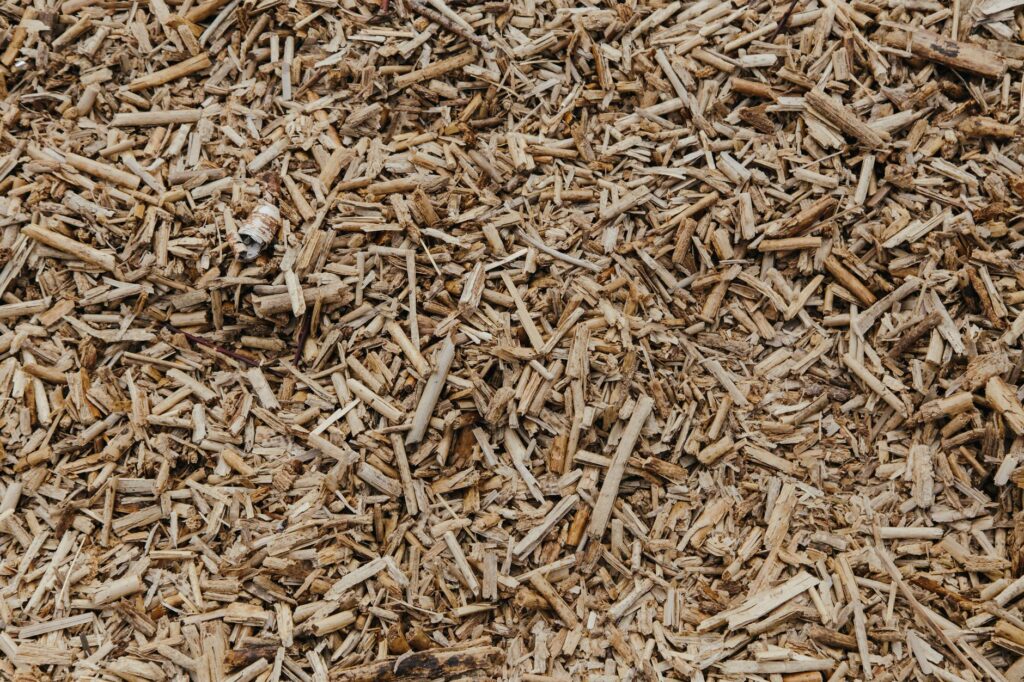
- Use mulch as your first line of defense near tree bases. A 3- to 4-inch layer of wood chip mulch spread to the drip line suppresses weeds effectively, requires no chemicals, and actively benefits tree root health by moderating soil temperature and retaining moisture. The weeds that do break through are easier to hand-pull from a mulched bed.
- Read labels for soil residual activity. Pre-emergent herbicides are designed to persist in soil for weeks to months. That persistence also extends the window of potential root uptake.
The wood chip mulch approach has a compounding benefit: it builds the organic matter in Middletown’s clay-heavy soils over time, improving drainage and creating the loose, aerated root zone that mature trees thrive in.
Why Middletown's Clay-Loam Soils Make This Worse
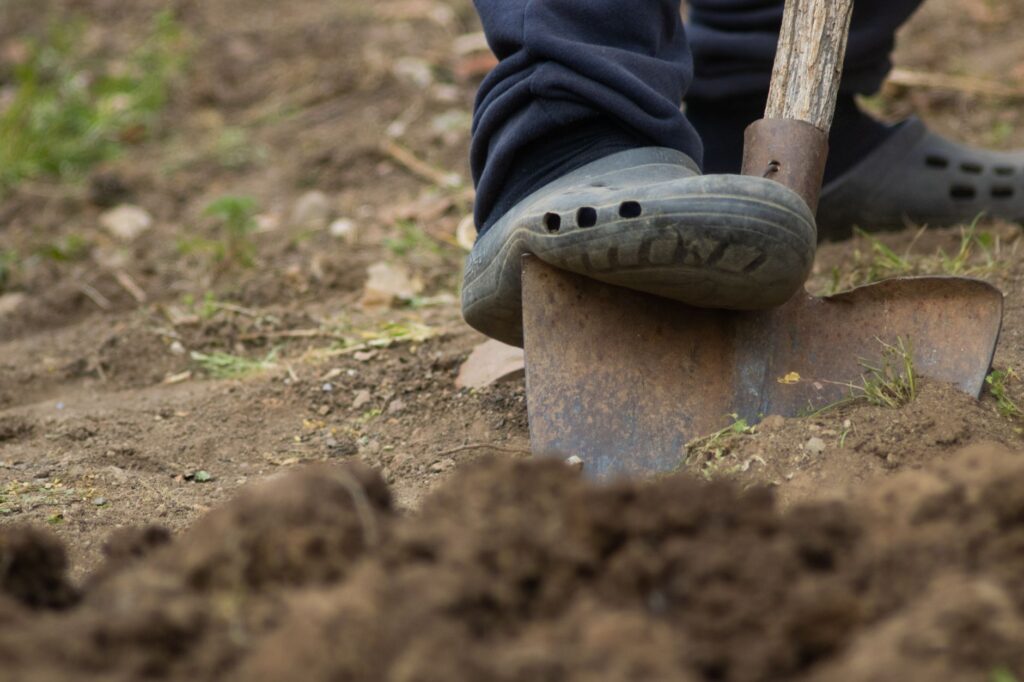
The soils across much of Middletown Township are a clay-loam mix — heavier and denser than the sandy soils found closer to the shore. This is generally good news for mature trees during a drought, since clay soils retain moisture more effectively than pure sand. But it’s bad news when herbicide residue is present in the root zone.
Clay particles bind tightly to many herbicide molecules, holding them far longer than sandier soils would. A product applied in late June may still be present at meaningful concentrations well into August or September. During dry summer stretches — and Middletown has seen some genuinely dry Julys over the past decade — reduced rainfall means less water movement through the soil to dilute or carry residue away. Roots draw in what’s available, and that includes herbicide-laden soil water drawn toward active root tips.
If you’ve had significant landscape work done recently — new hardscape, regrading, fill material brought in — the altered drainage patterns may affect where water (and dissolved herbicide) accumulates in unexpected ways. I’ve worked on properties in Lincroft and Port Monmouth where regraded slopes changed the entire drainage picture beneath a tree’s root zone, concentrating runoff where it hadn’t gone before.
The practical takeaway: don’t assume that because it rained after you sprayed, the risk has passed. In Middletown’s soils, the chemistry lingers longer than intuition suggests. Mulching the root zone won’t remove what’s already in the soil, but it slows future introduction and reduces the weed pressure that drives repeated applications.
Middletown's #1 Tree Expert Company
FREE Inspection & Estimate | Certified Arborists | Trimming, Pruning, Removal, More!
Sponsored
When Leaf Symptoms Near a Sprayed Area Mean You Need an Arborist
If you’re seeing unusual leaf curling, twisting, or progressive yellowing on a tree near an area where you’ve applied weed killer in the past few months, don’t wait for the damage to get worse. Herbicide injury can be arrested and, in many cases, partially reversed if caught early and the source of exposure is eliminated — but the window closes as more tissue is lost. An arborist can help you distinguish herbicide symptoms from fungal disease, drought stress, or insect damage, each of which requires a different response.
Treatment options for herbicide-damaged trees are limited but not nonexistent. Depending on the compound and level of exposure, improving soil drainage, supporting the tree with deep watering, and in some cases applying activated charcoal to the root zone can help limit further uptake and support recovery. None of that happens without an accurate diagnosis first, and guessing wrong can make things worse.
The best move is always prevention. Before your next summer spray session, take a few minutes to locate your trees’ drip lines and mark those areas as no-spray zones. Your red oak or tulip poplar has been growing for thirty years — a bottle of broadleaf herbicide shouldn’t be what ends it. Weeds are an annual problem. A mature tree is irreplaceable on any human timeline.
If you’re already seeing symptoms or you’re simply unsure whether a past application may have reached a tree’s root zone, a certified arborist can walk the property, evaluate what you’re seeing, and help you develop a weed management approach that keeps both your lawn and your trees healthy through the summer ahead.
Photo credits: Featured image by Tahir Xəlfəquliyev on Pexels; Section 1 by Gustavo Fring on Pexels; Section 2 by Emrecan Dora on Pexels; Section 3 by Diana ✨ on Pexels; Section 4 by Pew Nguyen on Pexels; Section 5 by Ron Lach on Pexels; Section 6 by Riccardo Falconi on Pexels; Section 7 by Boys in Bristol Photography on Pexels.