Middletown's #1 Tree Expert Company
FREE Inspection & Estimate | Certified Arborists | Trimming, Pruning, Removal, More!
Sponsored
Why Late June Is Your Best Window to Check
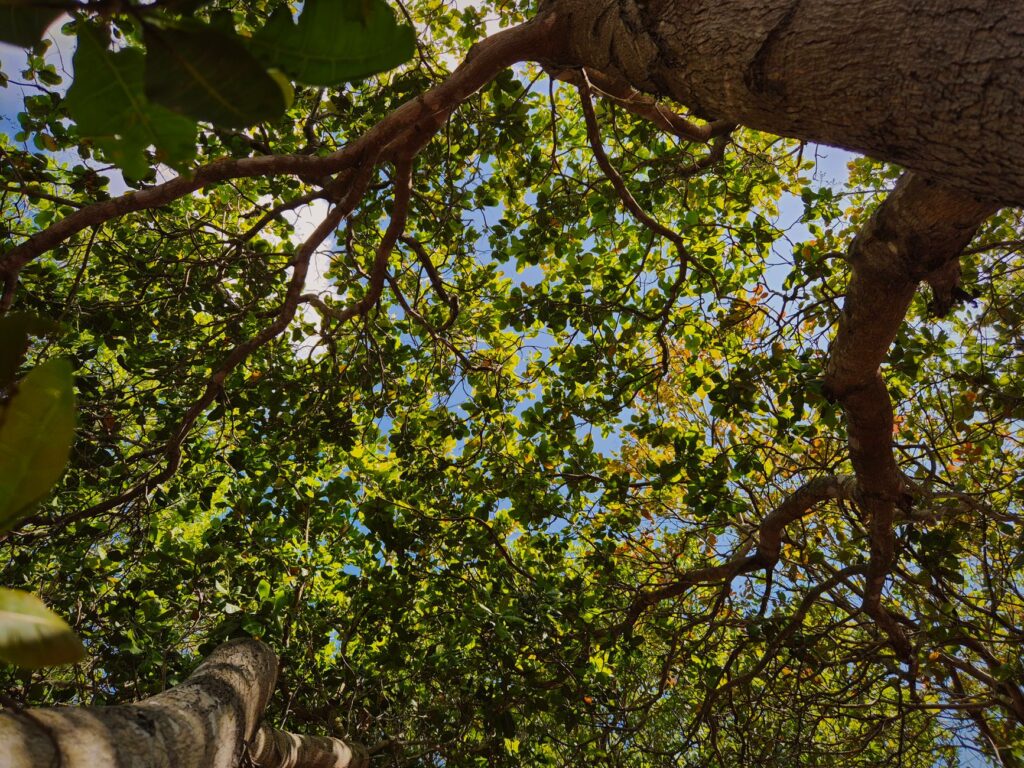
In Middletown Township, late June is when the easy spring growth hardens off, the soil dries from May’s rain cycle, and the real summer heat begins building. This is exactly when your trees start to reveal what kind of summer they’re going to have — and whether they’ll handle it well or begin to struggle.
The advantage of walking your property now, before July and August heat peaks, is that you can still act. A tree showing early drought stress in late June can often be stabilized with a deep watering program. A hanging dead limb spotted today can come down before a summer thunderstorm removes it for you — and into your roof. A canker noticed now gives you time to consult a certified arborist before it advances into live sapwood.
Middletown’s soils range from the clay-loam common around Tatum Park and Lincroft to the sandier coastal plain soils near Port Monmouth and Leonardo along the Bayshore. Both soil types show drought stress differently — clay holds moisture longer but becomes cement-hard when dry, while sandy soils drain fast and push trees toward stress earlier in a dry summer. Knowing your soil type helps you interpret what you’re seeing.
This 20-minute walk doesn’t require any tools beyond your eyes and maybe a flashlight for dark bark cavities. You’re not diagnosing — you’re observing. Think of it as a report card on each tree before the hardest part of the semester arrives.
Start at the Base: Root Zone and Trunk
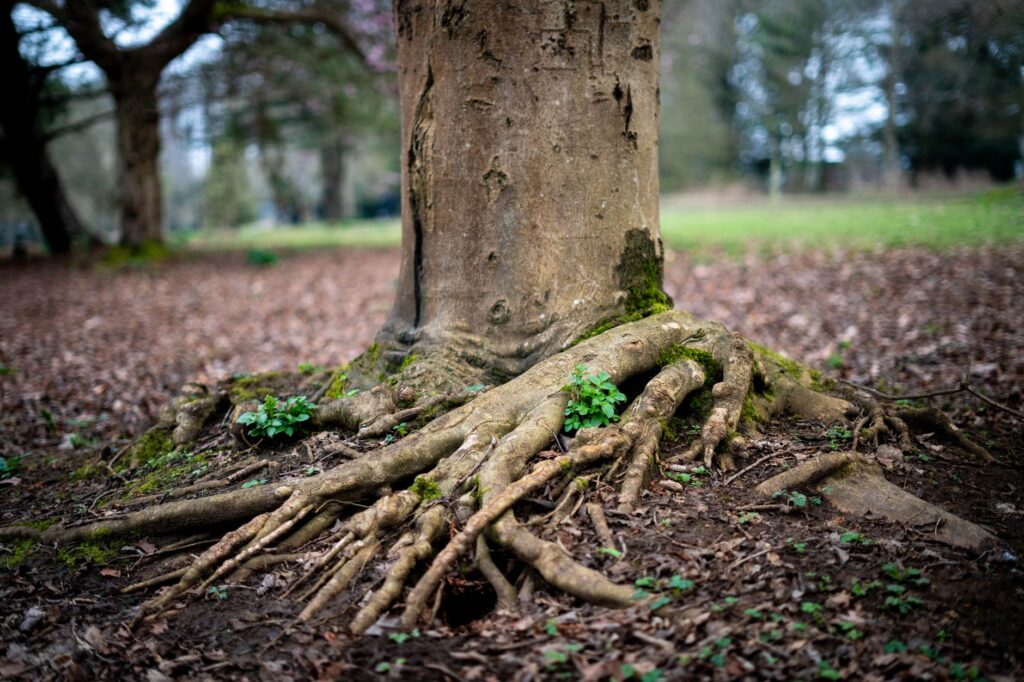
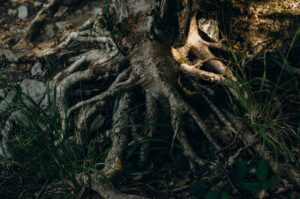
The first thing I check on any tree is the root flare — the transition where the trunk widens into buttress roots just above the soil. On a healthy tree, you should see that visible flare, like the base of a wine glass, before the roots disappear into the ground. If the trunk descends straight into the soil like a telephone pole, the tree is either planted too deep or has been buried by accumulating mulch or soil fill over the years.
Walk around the base slowly. Look for heaving soil on one side — which can indicate root failure underground — mushrooms or bracket fungi emerging from the root zone or lower trunk, and soil that has cracked and pulled away from the trunk base. Cracked soil near the trunk often means roots are dehydrating and contracting under summer stress.
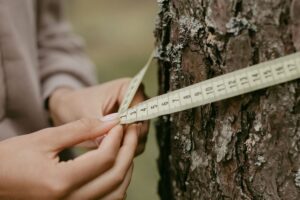
Check the bark from the root zone up to about four feet. Healthy bark should be continuous and firm. Note any cankers — sunken, discolored, or cracked areas — any weeping sap or dark staining, and any spots where bark has separated to reveal exposed wood. On maples especially, look for vertical bark cracks along the lower trunk. Rutgers NJAES Cooperative Extension notes that Nectria canker and other fungal bark diseases often appear most dramatically on maples in summer, when increased vascular activity stresses already-damaged tissue.
Also check for climbing vines. Oriental bittersweet and English ivy on the trunk don’t just compete for light — they physically girdle bark and trap moisture that accelerates decay. Any vine that has reached the trunk should be cut at the base immediately.
Reading Bark From the Ground Up
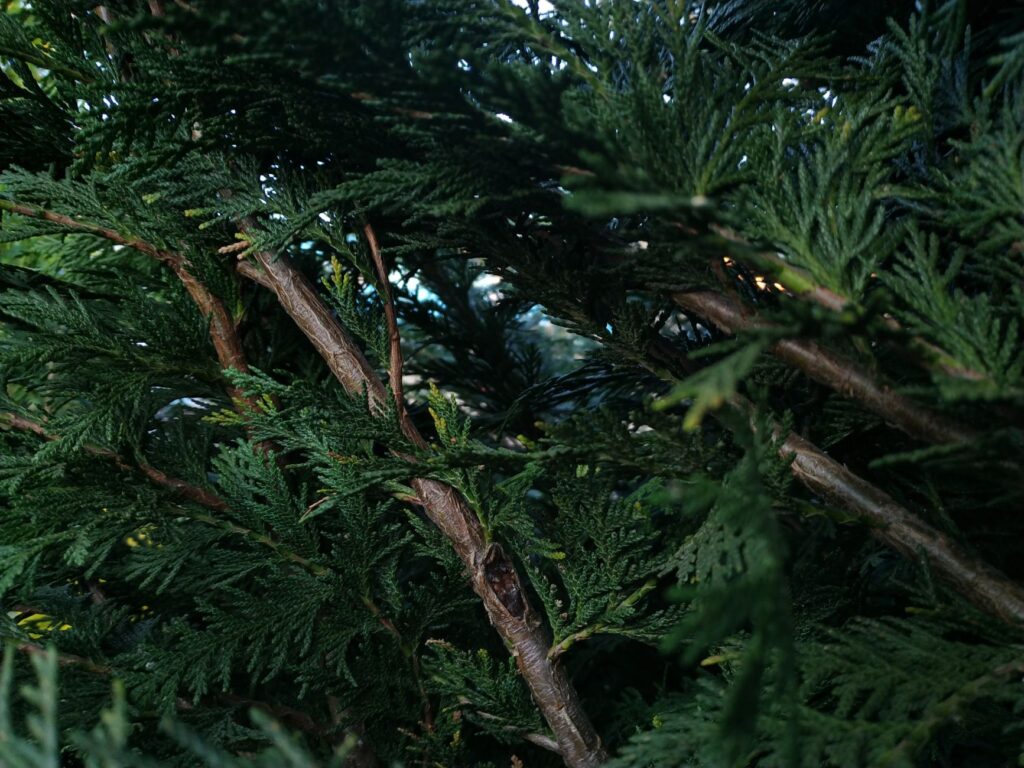
After the lower trunk and root zone, step back and look at the main scaffold branches — the large limbs in the lower and mid-canopy that carry the structural load of the tree. These branches carry the highest risk when they fail, and they’re the ones worth examining carefully from the ground.
On each major branch, look for the same markers you checked at the base: cankers, weeping sap, missing or sunken bark. Then look closely at the branch attachment points — where each limb meets the trunk. A healthy attachment has a visible branch bark ridge, a raised collar on the upper side of the union that indicates a well-anchored connection. An attachment with a visible seam or crease running down through the union, often with darker staining, is showing included bark. This compression zone weakens the attachment structurally and makes the branch significantly more likely to fail under load or high wind.
Included bark is one of the most common structural defects I find on older Middletown oaks and maples, especially those with co-dominant stems — two leaders of roughly equal size competing for dominance. The International Society of Arboriculture’s consumer resource at treesaregood.org has a useful guide to recognizing these structural defects from the ground. A tree with included bark at one union isn’t automatically dangerous, but it warrants monitoring — and in some cases, professional cable bracing.
Also scan for visible decay at old pruning cuts. A properly made cut compartmentalizes and closes over time. A topping stub — the broad, flat remnant of an improper cut — often doesn’t close, and the exposed wood decays inward toward the heartwood over the following years.
Middletown's #1 Tree Expert Company
FREE Inspection & Estimate | Certified Arborists | Trimming, Pruning, Removal, More!
Sponsored
Reading the Canopy: Leaves Don't Lie
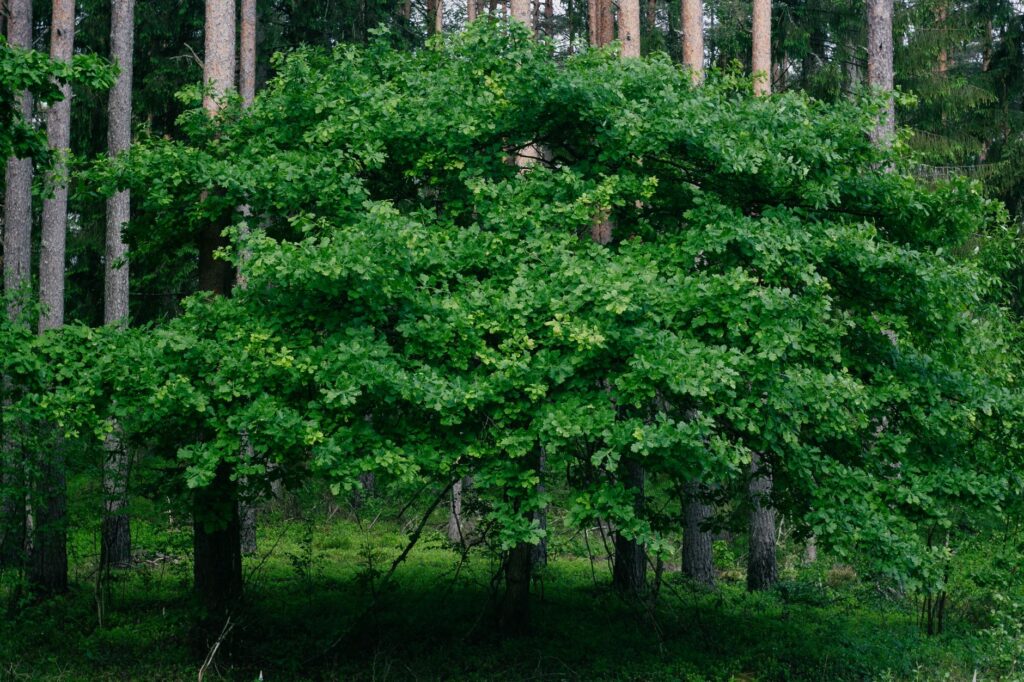
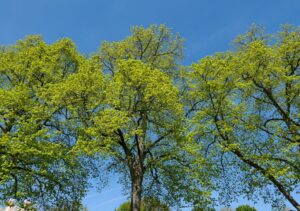
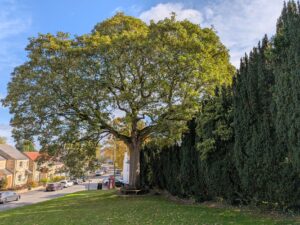
The leaves are the tree’s most visible report on its internal condition. Step back far enough to see the full canopy in one view and ask yourself: Is it full and dense, or are there gaps that weren’t there in May? Are the leaves the expected size, or do they look smaller than usual? Is the color consistent across the crown, or are there yellowing patches, brown edges, or branches already going sparse?
A thin canopy on a tree that should be full is one of the clearest stress signals available. Under significant pressure — from drought, compacted soil, root damage, or systemic disease — trees shed small branches and reduce leaf area to cut their water demand. If a canopy that was full in May is already looking airy in late June, that tree is telling you something important before the harder part of summer even begins.
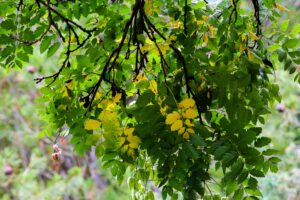
Leaf scorch — brown or tan margins on otherwise green leaves — is common in Middletown on maples, beeches, and dogwoods during hot, dry stretches. Resources from the USDA Forest Service’s urban forestry program note that leaf scorch alone isn’t always an emergency — it’s a symptom to interpret. The critical question is whether the scorch stays on the outer leaf margins, which is typical drought scorch often manageable with improved watering, or whether it’s spreading inward or appearing on interior leaves as well, which often points to a vascular or root problem.
Finally, look for dead branch tips — sections where leaves have gone brown and dried without falling. These flags can indicate borer activity, a vascular disease, or simple drought-induced dieback. Note whether they’re scattered broadly through the canopy or concentrated on one side, which often suggests a root or vascular problem localized to that side of the tree.
What Branch Structure Tells You From Below
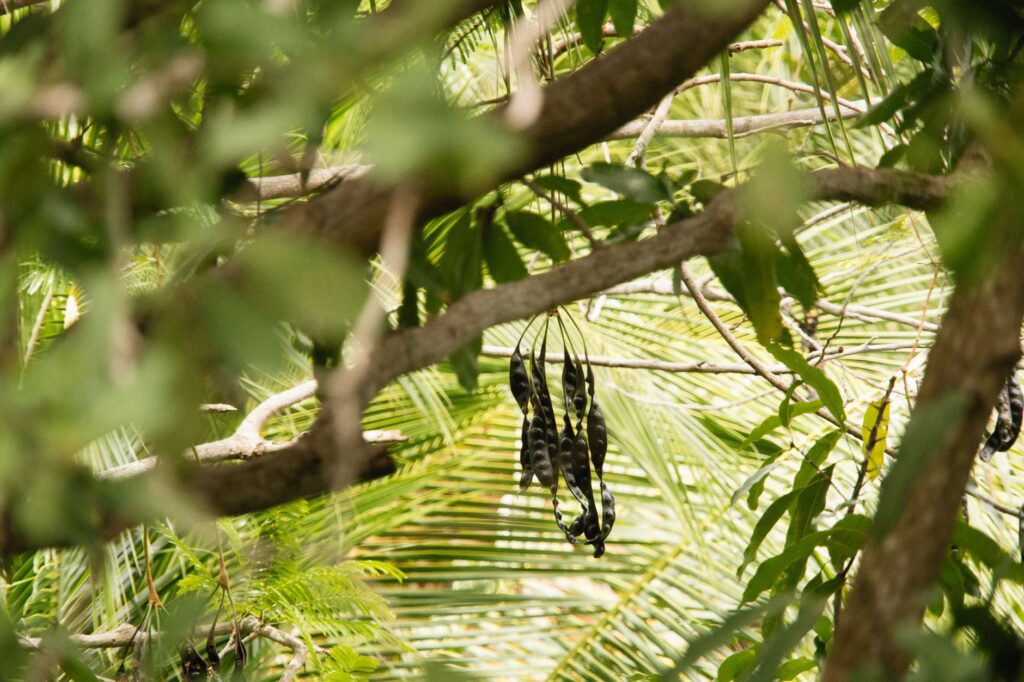
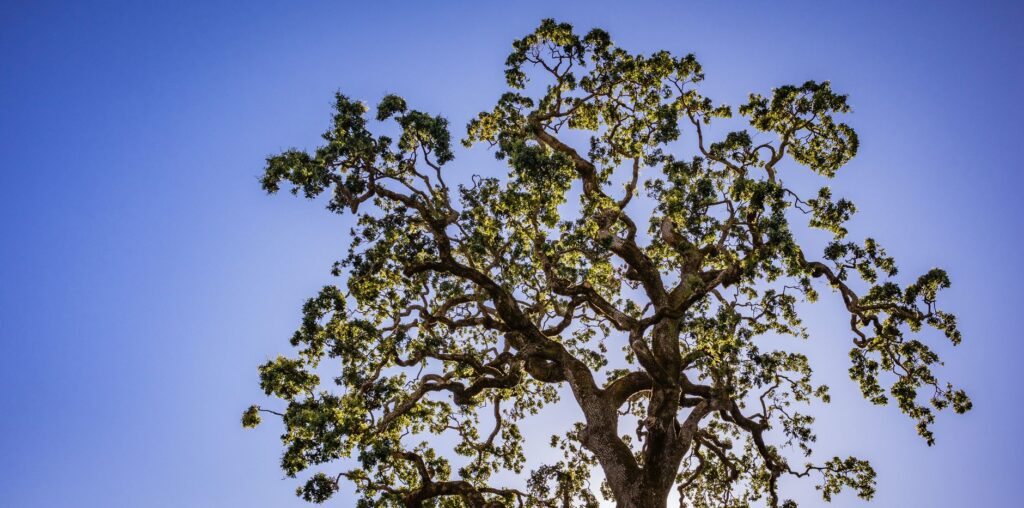
Once you’ve checked the bark on major scaffold branches and read the canopy leaves, step back farther and look at the tree’s overall silhouette. You’re not climbing anything — you’re reading the architecture of the tree against the sky, looking for things that don’t belong.
Here’s what to look for in the upper structure:
- Hanging dead branches — sometimes called widow makers — suspended in the canopy. These are typically gray, leafless, or holding dried brown leaves. Any hanging branch above a structure, driveway, or area where people stand regularly is a high-priority item that needs attention before the next thunderstorm.
- Rubbing branches — two branches crossing and contacting each other repeatedly. Chronic rubbing wounds bark, creates entry points for pathogens, and eventually snaps the weaker branch.
- Sharp V-shaped unions in the upper canopy, which carry the same included-bark risk as lower scaffold attachments but are harder to reach and evaluate.
- Epicormic sprout clusters surrounding old stubs or topping cuts — clusters of weakly attached water sprouts are heavy, prone to failure, and a sign the tree is compensating for lost canopy from previous improper pruning.
The NJ Department of Environmental Protection Division of Forestry recommends periodic structural evaluation as a core practice for maintaining residential trees near structures. A structurally sound tree has well-spaced major branches, solid attachment points, and no suspended deadwood. A tree with multiple overlapping concerns — included bark plus hanging deadwood plus a thin canopy — needs professional eyes, even if each issue in isolation might seem minor.
When to Watch, When to Act, When to Call

After your walk, you’ll have a list — mental or written — of what you observed. Here’s a practical framework for deciding what to do next.
You can monitor and adjust yourself:
- Leaf scorch on outer margins on a few branches — check your watering depth and mulch coverage
- A thin canopy on a newly planted tree — establish a deep watering program through August
- Scattered dead twigs throughout an otherwise vigorous canopy — normal seasonal dieback; prune if accessible from the ground
- Minor surface fungi on soil away from the trunk — usually decomposers, no action needed
Get professional eyes on it within a few weeks:
- A bracket fungus (shelf mushroom) growing from the trunk or root zone
- A canker with weeping sap on a major scaffold branch, especially over a structure
- Included bark visible at a major union on a large tree
- Co-dominant leaders with a visible seam running through the union
- Hanging deadwood of any significant size above a structure or frequently-used outdoor area
Call today:
- A branch visibly hanging by a strip of bark, or a broken limb suspended in the canopy
- Significant soil heaving or cracking at the root zone of a leaning tree
- A large section of the canopy gone brown on a tree that appeared healthy in spring
The difference between watch and call is often the combination of factors and what’s below the tree. A small canker on a healthy tree in the interior of the canopy may be worth monitoring. The same canker on a limb directly over your back deck or a neighbor’s fence is a different conversation entirely.
Middletown's #1 Tree Expert Company
FREE Inspection & Estimate | Certified Arborists | Trimming, Pruning, Removal, More!
Sponsored
Summary: What to Do With What You Find

A midsummer tree walk won’t catch everything — no single walk will. But it gives you a baseline and surfaces the issues that need professional attention before fall storm season arrives. The trees in your Middletown yard are working at full capacity right now: transpiring hundreds of gallons of water per week, producing seeds, and doing the quiet metabolic work of a full summer. The stress signals they send are often subtle, but they’re there if you know where to look.
If your walk turns up structural concerns — included bark at a major union, a co-dominant stem with a visible seam, a bracket fungus at the base, or any hanging deadwood above your home or yard — don’t wait for a summer storm to make the decision for you. Contact a certified arborist for a professional assessment. An ISA-certified arborist can evaluate risk, identify options like cable bracing or targeted removal, and give you a written recommendation you can share with your insurance carrier if needed. You can locate a certified arborist in Monmouth County through the ISA’s arborist locator at treesaregood.org.
For Middletown homeowners who’ve never had a formal tree assessment, summer is an ideal time to schedule one — before the September and October storm window, before leaves drop and change the visual picture, and while arborists can still see the full canopy under summer load. A tree that looks fine from your kitchen window can look very different to someone who knows what to look for in the upper canopy.
Photo credits: Featured image by Robert So on Pexels; Section 1 by Lan Nguyen Tran on Pexels; Section 2 by Harry Johnson on Pexels; Section 3 by José Alfredo Munguía Lira on Pexels; Section 4 by Plato Terentev on Pexels; Section 5 by Alexey Demidov on Pexels; Section 6 by RDNE Stock project on Pexels; Section 7 by Kindel Media on Pexels.