Middletown's #1 Tree Expert Company
FREE Inspection & Estimate | Certified Arborists | Trimming, Pruning, Removal, More!
Sponsored
The Backyard Mystery Every July
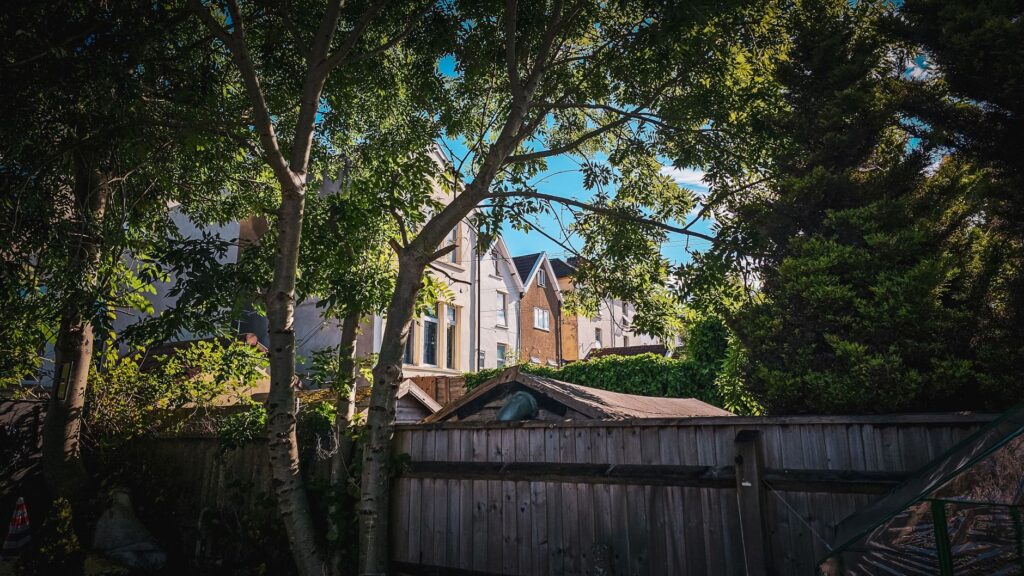
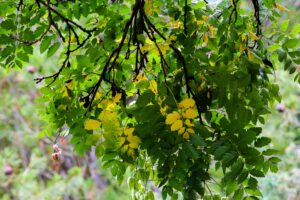
Every July I get a version of the same call. A homeowner in Lincroft or Port Monmouth notices that two or three trees on the property — not just one — suddenly look ragged at the same time. Leaves curling at the edges, a flush of small yellowing leaves near the crown, branches that seem to be shutting down together instead of one tree struggling while its neighbor stays green. The instinct is to assume something spread between them, like a disease jumping tree to tree. Sometimes that’s exactly what happened. But just as often, what I’m looking at is something stranger and, frankly, more interesting: trees under stress broadcasting chemical warnings to everything growing near them.
This isn’t folklore. It’s measurable plant physiology, and it matters most in weeks like this one, when Middletown’s clay-loam soils have baked hard, humidity is thick off the Bayshore, and every mature shade tree on a block is drawing on the same shallow water table at once. Understanding how trees actually communicate stress — as opposed to how the idea gets exaggerated online — helps you read your own yard more accurately and decide when a cluster of bad-looking trees is a coincidence versus a warning you should act on.
What "Talking" Really Means: Volatile Chemical Signals
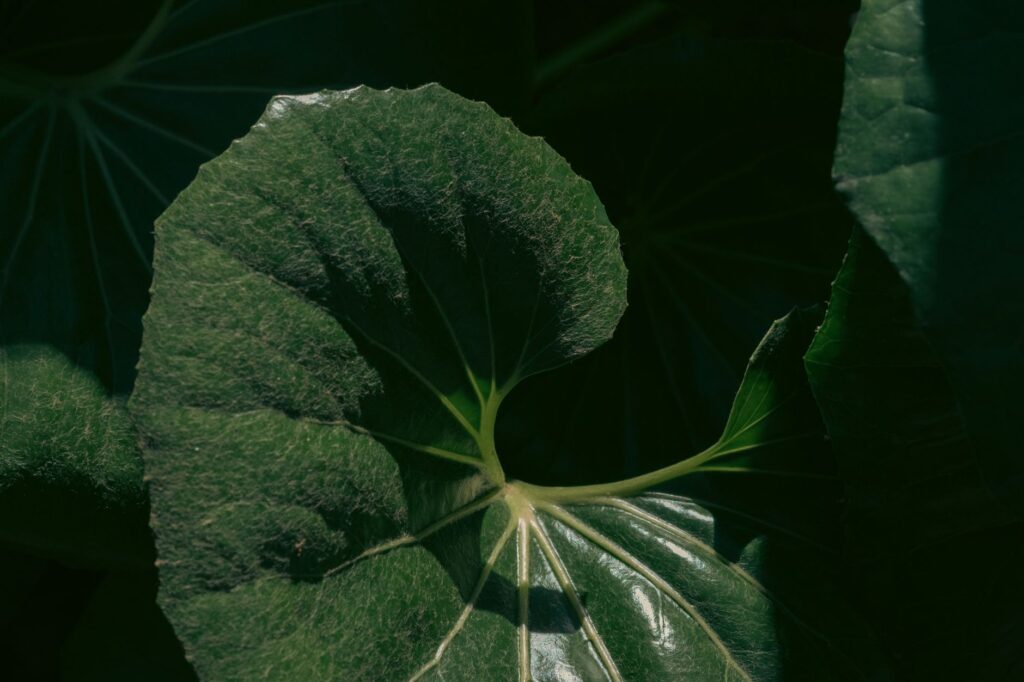
Trees don’t have nervous systems, and they aren’t sending intentional messages the way people do. What they do have is an ability to release volatile organic compounds, or VOCs, into the air through their leaves when they’re wounded, drought-stressed, or under insect attack. These are the same class of compounds responsible for that sharp, almost minty smell of a freshly cut lawn — that scent is grass tissue releasing distress chemicals in real time. Trees do the same thing on a larger, slower scale.
Research summarized by the USDA Forest Service’s research database has documented for decades that neighboring plants exposed to a stressed individual’s VOC plume will pre-emptively ramp up their own defensive chemistry — producing more tannins, thickening leaf cuticles, or closing stomata sooner under heat load — before they show any visible symptoms themselves. It’s not communication in the way we’d use the word. It’s closer to one tree leaking chemical evidence of a problem, and its neighbors’ cells reacting defensively to that evidence because they share the same air and, often, the same root zone.
Why Clusters of Stressed Trees Show Up Together in Middletown's Heat
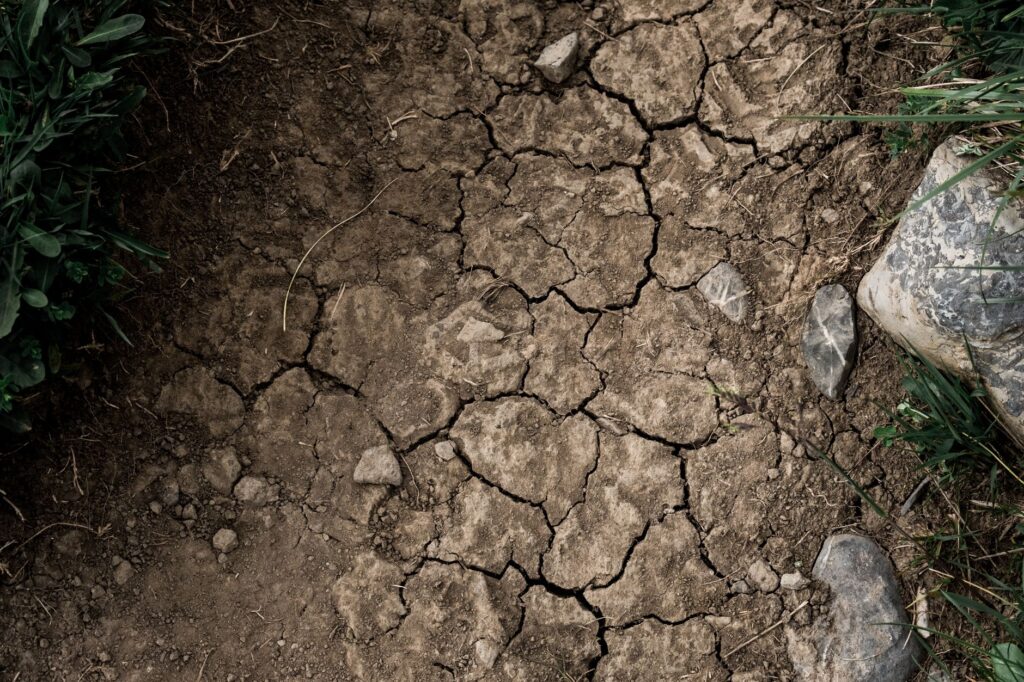
This matters right now because July and August are exactly when I see the clustering effect most clearly. Middletown’s soils, particularly the heavier clay-loam pockets around Lincroft, Leonardo, and inland from the Bayshore, drain slowly after a downpour but crack and shed water fast once they dry — a poor combination during a stretch of 90-degree afternoons. When one mature tree on a property hits its wilting point first, usually because it’s slightly more exposed, slightly shallower-rooted, or simply older, it releases stress VOCs and root exudates that reach the trees around it within hours.
Those neighboring trees haven’t necessarily hit the same water deficit yet, but their stomata begin closing earlier and their leaf tissue starts protective changes in response to the chemical cue. To a homeowner watching from the deck, it looks like the whole tree line declined at once. In reality, one tree usually tipped first and the others reacted to it — which is useful information, because it tells you where your actual problem tree is, and that the others may still be salvageable with prompt watering rather than already damaged.
Middletown's #1 Tree Expert Company
FREE Inspection & Estimate | Certified Arborists | Trimming, Pruning, Removal, More!
Sponsored
Insect Attack Changes the Signal Entirely
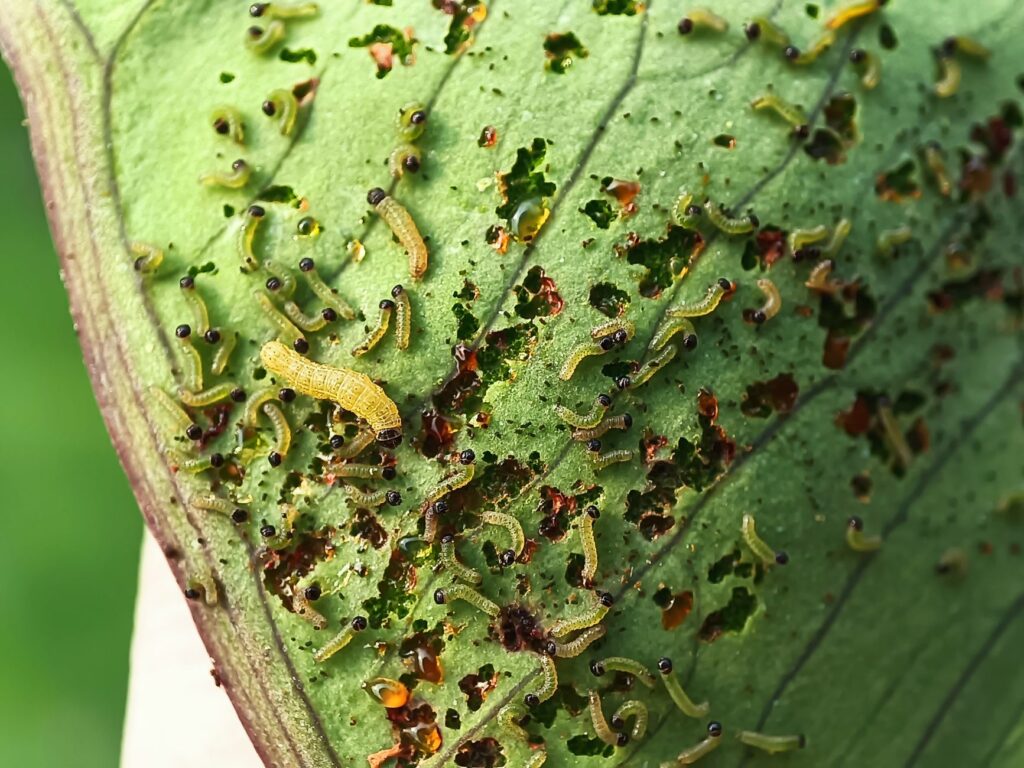
Drought VOCs and herbivory VOCs are chemically distinct, and trees respond to them differently. When a tree is being actively fed on by defoliating insects, it releases a different volatile blend, one that in some documented cases doesn’t just prime nearby plants defensively but can attract the specific predatory or parasitic insects that prey on the pest doing the damage. Extension entomology programs, including work summarized by Cornell Cooperative Extension, have studied this “cry for help” signaling extensively in cases involving caterpillar defoliation, where a wounded tree’s chemistry recruits parasitic wasps to the scene.
Practically, this means that if you notice chewing damage concentrated on one tree while neighboring trees of the same species stay untouched, it’s not necessarily luck — the untouched trees may have already up-regulated bitter tannins and other feeding deterrents in response to the first tree’s distress signal. It’s one more reason a single damaged tree in a stand deserves a closer look before assuming the whole group is at equal risk.
Root Signals Are a Separate System From Leaf Signals
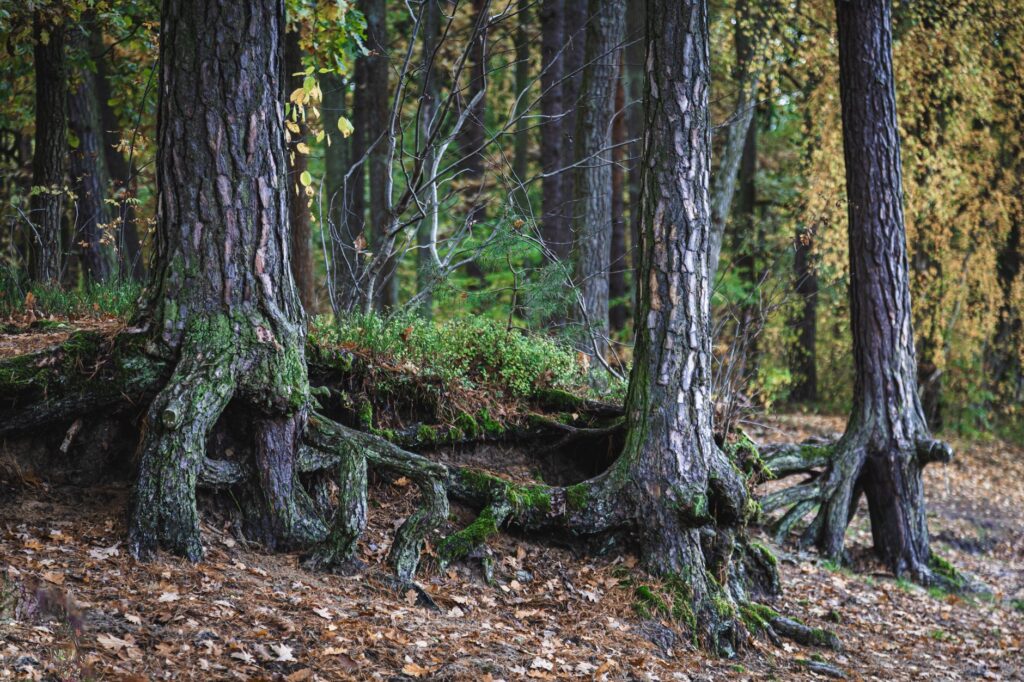
Airborne VOCs travel between trees whether or not their roots ever touch, but there’s a second, slower signaling pathway happening underground through direct root contact and shared soil chemistry — distinct from the well-known fungal networks that connect trees below ground. When roots from two trees occupy the same soil volume, a drought-stressed tree can alter the chemistry of the water and soil immediately around its root zone, and neighboring roots growing through that same volume pick up the change well before the surrounding air does.
This is part of why trees planted too close together, a common issue on smaller Middletown lots near Port Monmouth and along older Bayshore streets, often decline in tandem rather than independently. It isn’t always competition for the same finite resources; sometimes it’s one tree’s root-zone stress chemistry accelerating a neighbor’s decline before either tree is visibly in trouble. Understanding this is one reason International Society of Arboriculture-certified arborists assess trees in groups rather than one at a time — a healthy-looking tree next to a declining one is not automatically in the clear.
What This Means for Your Yard This Week
None of this changes the basic triage most Middletown homeowners need in high summer, but it does change how you should interpret what you’re seeing. A few practical takeaways:
- If several trees on your property show stress symptoms simultaneously, look for the one tree showing symptoms earliest or most severely — that’s likely the original stress source, and it may need the most immediate deep watering.
- Don’t assume simultaneous decline means disease spread between trees. Check bark and canopy individually; VOC-driven stress response looks similar to early disease symptoms but isn’t contagious in the pathogen sense.
- Trees planted within a few feet of each other, common on older or smaller lots, should be watered as a unit even if only one shows visible symptoms, since root-zone signaling means the seemingly healthy one may already be reacting defensively.
- Deep, slow watering at the drip line, not surface sprinkling, is what actually reaches the root zone in Middletown’s clay-loam soils. The Rutgers New Jersey Agricultural Experiment Station has extension guidance on proper watering volume and frequency for established shade trees during summer heat.
If you’re not confident which tree in a cluster is the actual source of stress, that’s a judgment call worth having a professional make before you spend a summer’s worth of water on the wrong tree.
Middletown's #1 Tree Expert Company
FREE Inspection & Estimate | Certified Arborists | Trimming, Pruning, Removal, More!
Sponsored
When to Call a Pro
Most simultaneous stress you’ll see this summer is exactly what it looks like: several trees responding to the same heat and soil conditions, amplified by the chemical signaling between them. That’s manageable with consistent deep watering and patience. But if a cluster of trees is declining rapidly, if you’re seeing dieback progress from one tree to its neighbors over a matter of days rather than weeks, or if bark, canopy thinning, or fungal growth accompanies the leaf symptoms, that’s no longer a simple stress response and deserves an in-person look.
A certified arborist can tell the difference between VOC-driven group stress, root-zone competition, and an actual pathogen moving through a stand — three things that can look identical from the ground but require completely different responses. If your Middletown yard has a cluster of mature trees that all seem to be struggling together this July, it’s worth having someone qualified walk the property and tell you which tree, if any, is the one actually driving the problem.
Photo credits: Featured image by Jonathan Petersson on Pexels; Section 1 by Boys in Bristol Photography on Pexels; Section 2 by Kaiya Inouye on Pexels; Section 3 by Henrik Pfitzenmaier on Pexels; Section 4 by Hong Kimvai on Pexels; Section 5 by Serhii Barkanov on Pexels; Section 6 by Gustavo Fring on Pexels; Section 7 by Peter Xie on Pexels.