
Middletown's #1 Tree Expert Company
FREE Inspection & Estimate | Certified Arborists | Trimming, Pruning, Removal, More!
Sponsored
The Storm Blew Through, and Now Your Young Tree Is Leaning
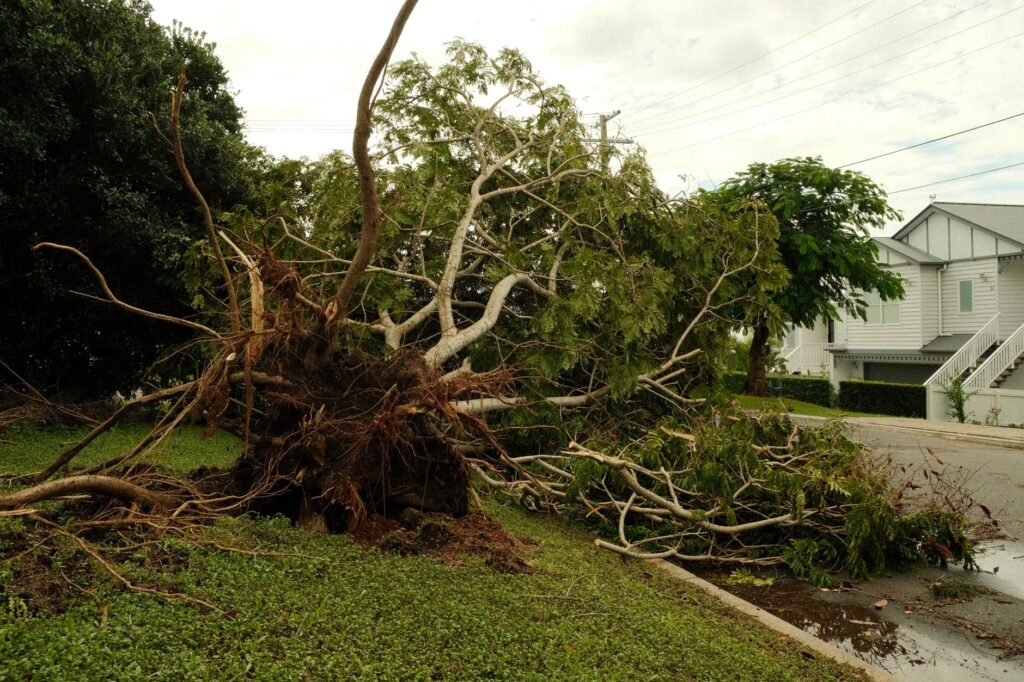
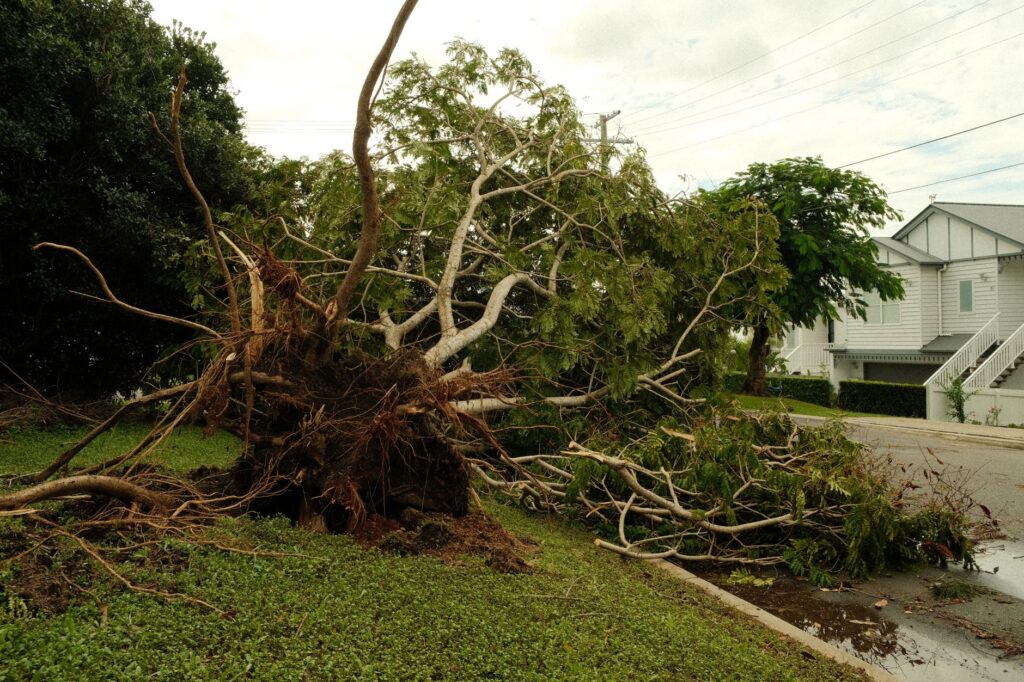
Every July, after one of those fast-moving afternoon thunderstorms rolls off the Bayshore and through Lincroft, Belford, or Port Monmouth, I get the same call. A homeowner planted a nice little red maple or serviceberry back in April, it looked perfect all spring, and now it’s leaning ten or fifteen degrees toward the fence after last night’s wind. They want to know if the tree is dying, and whether they can just yank it back upright and be done with it.
The good news is that a leaning young tree is one of the most fixable problems in residential tree care, if you catch it early and do it right. The bad news is that most of the DIY fixes I see attempted — cranking the trunk straight with a rope tied to a truck hitch, or driving a single stake through the root ball — do more damage than the storm did. A young tree’s root system in its first one to three years in the ground is not yet anchored the way a mature tree’s is, which is exactly why it moved in the first place, and exactly why it needs a gentler hand to fix.
This is especially true in Middletown’s clay-loam soils, which hold water after a storm and stay soft for days. A tree that leans in saturated clay is sitting in ground with very little resistance to hold the root ball in place, so the fix has to account for soil that won’t firm back up for a while.
First, Figure Out Whether This Is a Root Problem or a Wind Problem
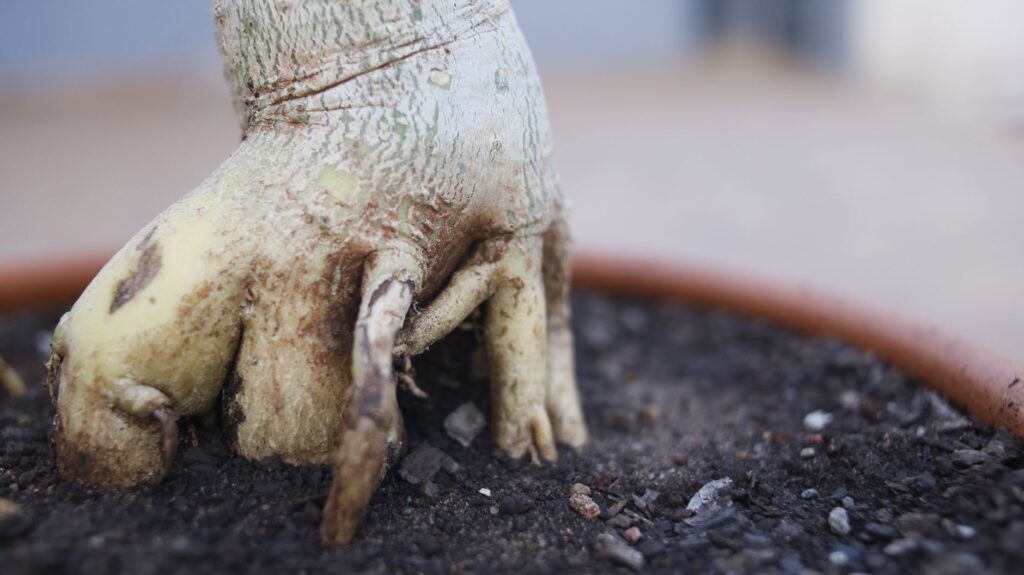
Before you touch the trunk, walk around the base of the tree and look at the soil line. If you see a crescent-shaped crack or a slightly raised mound of soil on the side opposite the lean, the root ball itself has shifted in the ground — the tree rocked like a lever and pried the soil loose. That’s a different repair than a tree that’s simply bent from wind pressure on the canopy while the root ball stayed put.
Grab the trunk about a foot above the ground and gently rock it side to side. If the whole root ball moves with your hand and you can see the soil surface flexing around the base, you’re dealing with a genuine root-ball problem, and straightening needs to happen soon, before new roots start growing at the wrong angle. If the root ball itself is stable and it’s really the upper trunk that’s bent or leaning, you may be looking at a structural issue from the nursery rather than storm damage, and the fix is closer to corrective staking than root-ball repair.
Also check the depth of the root flare — the point where the trunk widens into roots. If it’s buried a few inches under the soil, that tree was planted too deep to begin with, and a deep planting is part of why it didn’t have enough anchorage to resist the wind. The Rutgers Cooperative Extension guide to newly planted tree care is a good sanity check on planting depth and the other basics before you go further.
Straightening the Tree: Slow and Gentle, Not a Single Yank
If the root ball has shifted and the tree needs to come back upright, do it while the soil is still soft from the rain, not after it dries and hardens around the tilted root ball. Have one person hold the trunk at a comfortable height — never at the very top — and slowly walk it back to vertical while a second person watches from two vantage points at least ninety degrees apart to judge true plumb. Move it gradually over a minute or two, not in one hard pull. A root ball that gets yanked back suddenly can tear the fine roots that are just starting to establish, which sets the tree back further than the lean did.
Once it’s upright, firm the soil back into the gap on the side where the crack opened, tamping gently with your foot, and water it in immediately. That settles soil around the disturbed roots and closes air pockets that would otherwise dry them out. Don’t add extra soil on top to build a mound — keep the root flare at or slightly above grade, the same rule that applies to planting.
For a tree under about two inches in trunk diameter, this is a reasonable homeowner task. Anything larger, or any tree that resists moving without real force, is a sign the root system is more compromised than it looks from the surface, and it’s worth having a certified arborist assess it before you apply more pressure.
Middletown's #1 Tree Expert Company
FREE Inspection & Estimate | Certified Arborists | Trimming, Pruning, Removal, More!
Sponsored
Staking It Properly (and Only If It Actually Needs It)
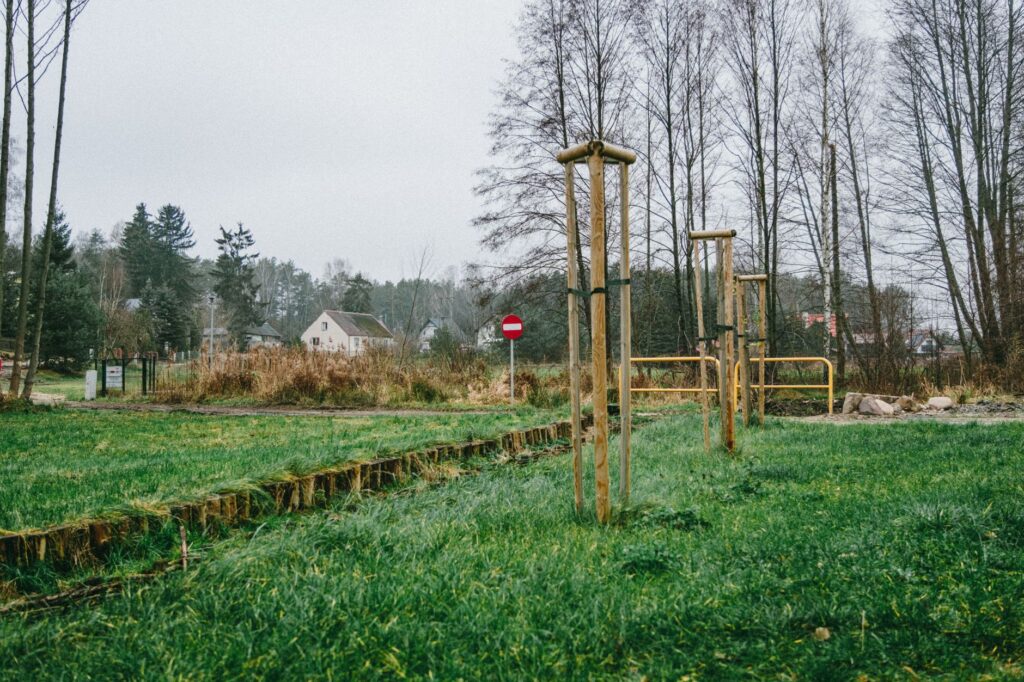
Here’s where most well-meaning staking jobs go wrong: people stake too rigidly, too high on the trunk, and for too long. A trunk that can’t flex at all doesn’t build the taper and trunk strength it needs, and by the time the stakes come off, the tree is often weaker than an unstaked one would have been. Research summarized by the International Society of Arboriculture is consistent on this — trees establish faster and develop stronger trunks when they’re allowed some movement, and staking should be the exception for a tree that genuinely can’t stand on its own, not the default.
If staking is warranted, use two stakes placed on opposite sides of the tree, outside the root ball, with wide, flexible webbing (not wire, and not anything that can cut into bark) attached at roughly the lower third to half of the trunk’s height, low enough that the top of the tree can still sway in the wind. That movement is what triggers the tree to thicken its trunk and root system where it matters. You can find diagrams and specifics in the ISA’s tree owner resources, which are written for exactly this kind of homeowner decision.
Check the ties every few weeks. Clay-loam soil that dries and cracks in a hot Middletown July can loosen a staking job that looked solid in June, and a tie that was fine at installation can start biting into bark as the trunk grows through the season.
How Long to Leave the Stakes On
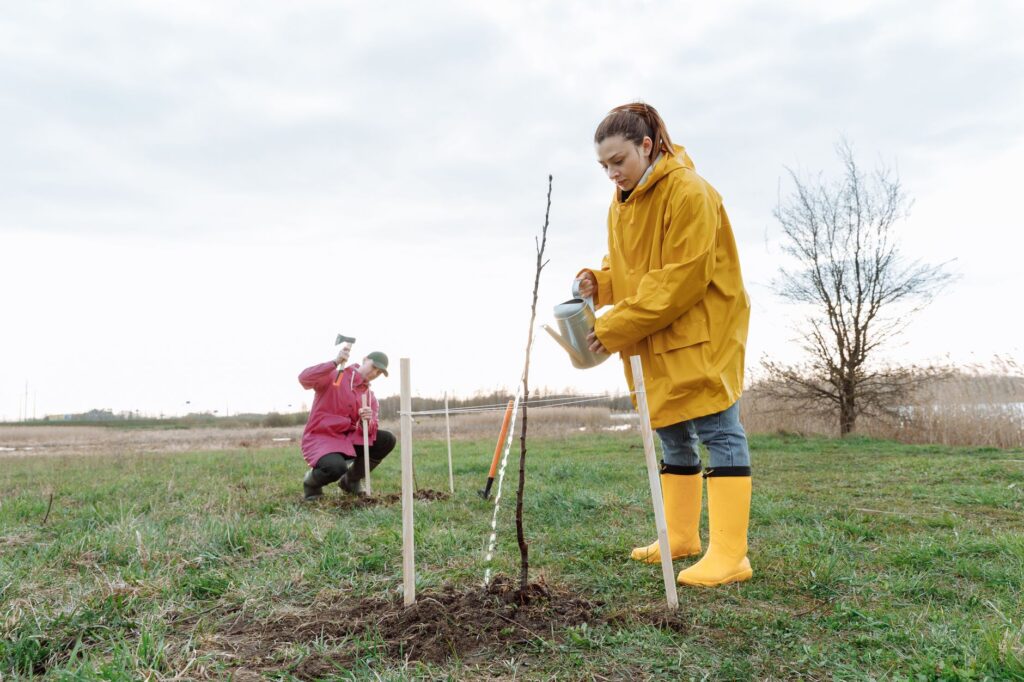
One growing season is the general rule, and it’s a rule people break constantly in the wrong direction — leaving stakes on for two or three years because the tree still looks small and vulnerable. By the second season, most young trees have enough root anchorage to stand on their own, and stakes left too long become the problem: ties get forgotten, bark grows around them, and I’ve cut girdling wire and rope out of five-year-old trunks more times than I can count.
Set a reminder on your phone for next spring when you stake a tree this summer. Before removing stakes for good, do the same rock test from earlier — if the root ball holds firm when you gently push the trunk, the tree is ready to go it alone. If it still shifts noticeably, give it a few more months and test again, but don’t let “a few more months” quietly become a second full year.
What Not to Do After a Tree Leans
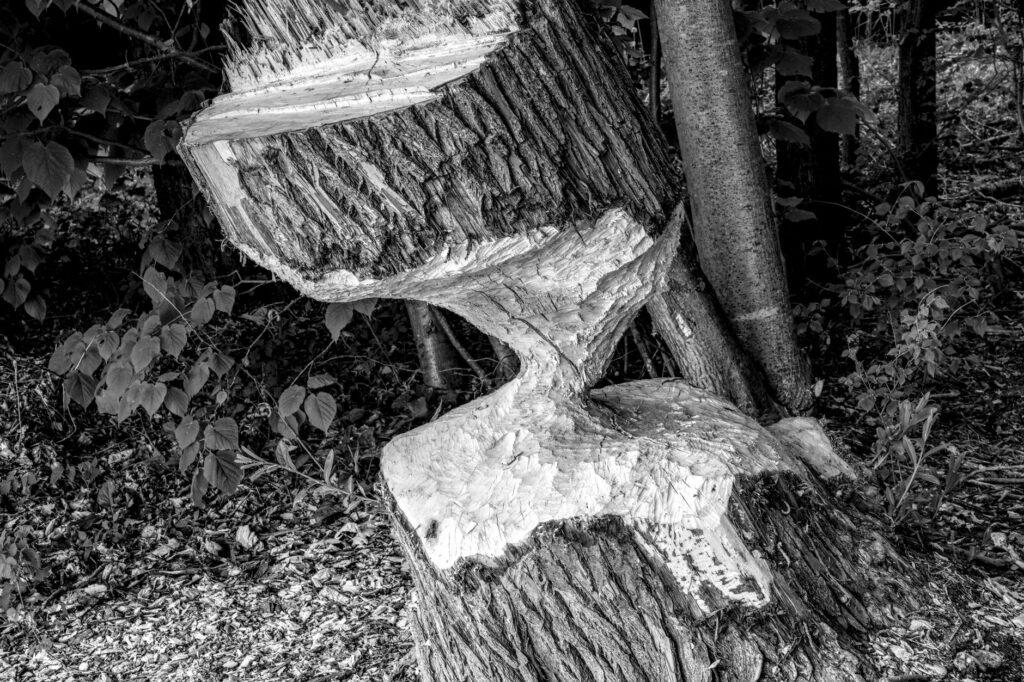
Don’t prune the canopy heavily to “take weight off” a leaning tree. It’s a common instinct, but a young tree needs its leaves to photosynthesize and recover, and heavy pruning right after a stress event just compounds the setback. A little light thinning of clearly broken or torn branches is fine; wholesale canopy reduction is not.
Don’t fertilize a stressed, recently straightened tree hoping to speed recovery. Trees under stress prioritize survival over growth, and a flush of nitrogen at the wrong time can push tender new growth the plant isn’t ready to support, right as the root system needs to focus on re-anchoring. Water and time do more work here than any product will.
And don’t ignore a lean that shows up gradually over weeks rather than overnight in a storm. A sudden lean after a known wind event has an obvious cause. A slow lean with no storm to explain it is more often a sign of root rot, girdling roots, or a failing root system underground, and it calls for a different diagnosis than a quick straighten-and-stake job.
Middletown's #1 Tree Expert Company
FREE Inspection & Estimate | Certified Arborists | Trimming, Pruning, Removal, More!
Sponsored
When to Call a Certified Arborist Instead
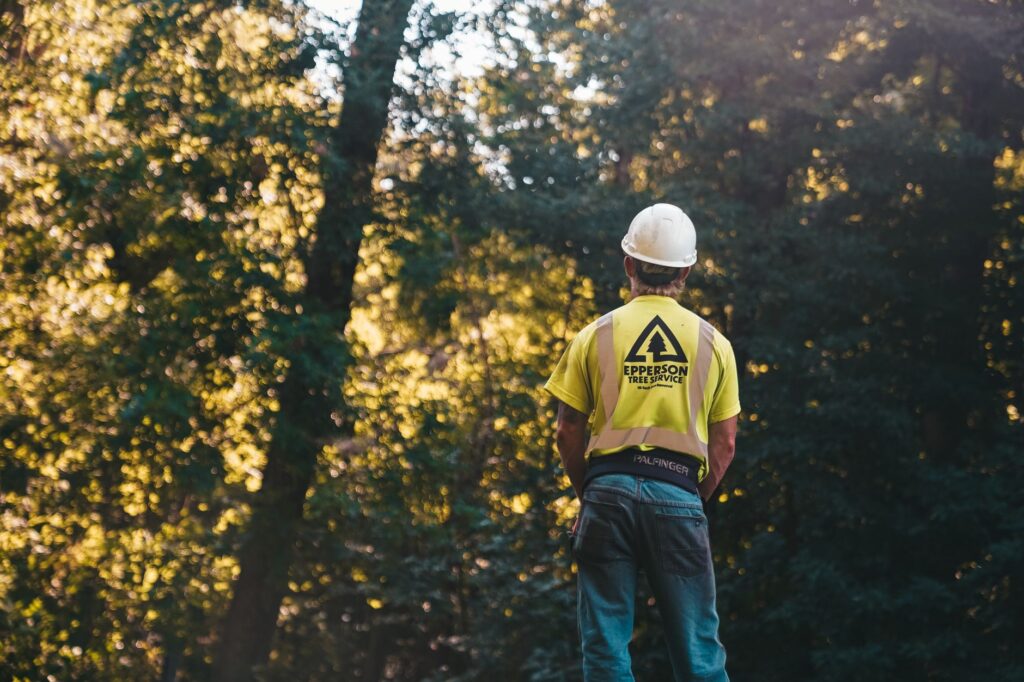
A young tree under a couple of inches in trunk diameter, with a clear storm-related lean and no other red flags, is usually a fair DIY project if you follow the steps above. Beyond that, the math changes. A larger caliper tree carries more leverage on a root system that’s still establishing, and the line between “needs staking” and “needs professional root and structural assessment” gets harder to judge from the surface.
Bring in a certified arborist if the tree won’t return to plumb without heavy force, if you see cracked or exposed roots on the tension side of the lean, if the trunk itself shows bark splitting or wounds from the event, or if this is the second time the same tree has leaned after a storm. That pattern usually points to something below grade — a girdling root, a shallow planting, or compacted soil from construction — that a straightening job alone won’t fix. The USDA Forest Service’s guidance on monitoring young trees makes the same point: the establishment period is when small structural problems are cheapest to catch and correct, and most expensive to ignore.
A tree you planted this spring is a decades-long investment in your Middletown yard. Fifteen minutes of the right kind of attention after a storm is what decides whether it grows into the shade tree you pictured, or becomes a slow-motion problem you’re dealing with again in five years.
Photo credits: Featured image by April Yang on Pexels; Section 1 by April Yang on Pexels; Section 2 by Vidal Balielo Jr. on Pexels; Section 3 by Etem Koçak on Pexels; Section 4 by Daniel Żabiński on Pexels; Section 5 by Thirdman on Pexels; Section 6 by Jean-Paul Wettstein on Pexels; Section 7 by Grant on Pexels.