
Middletown's #1 Tree Expert Company
FREE Inspection & Estimate | Certified Arborists | Trimming, Pruning, Removal, More!
Sponsored
Why the Wire Overhead Changes Every Tree Decision
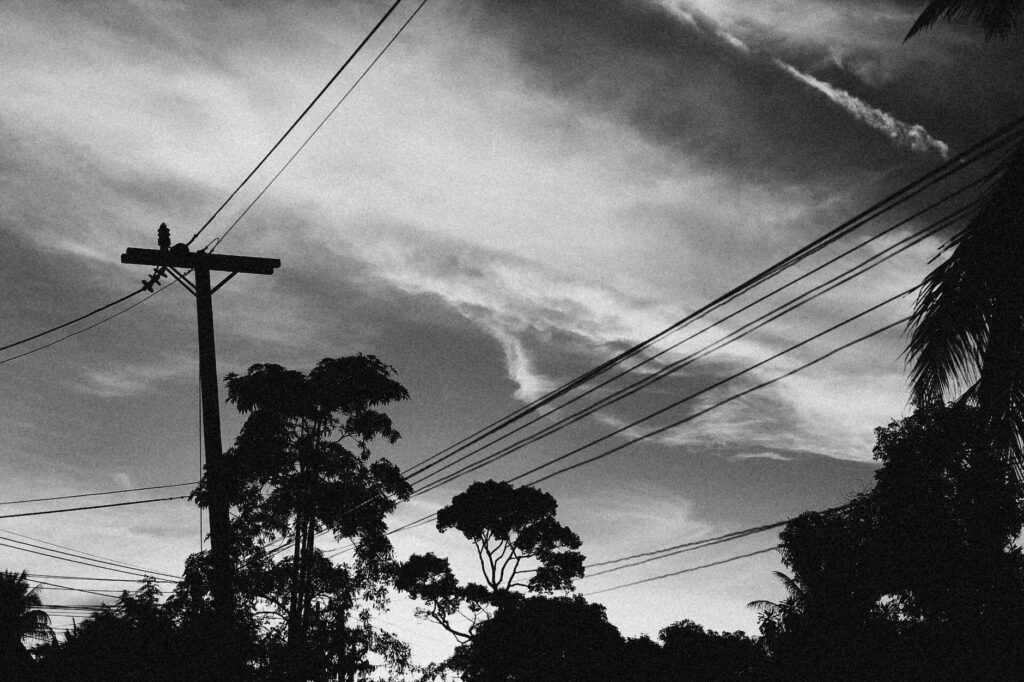
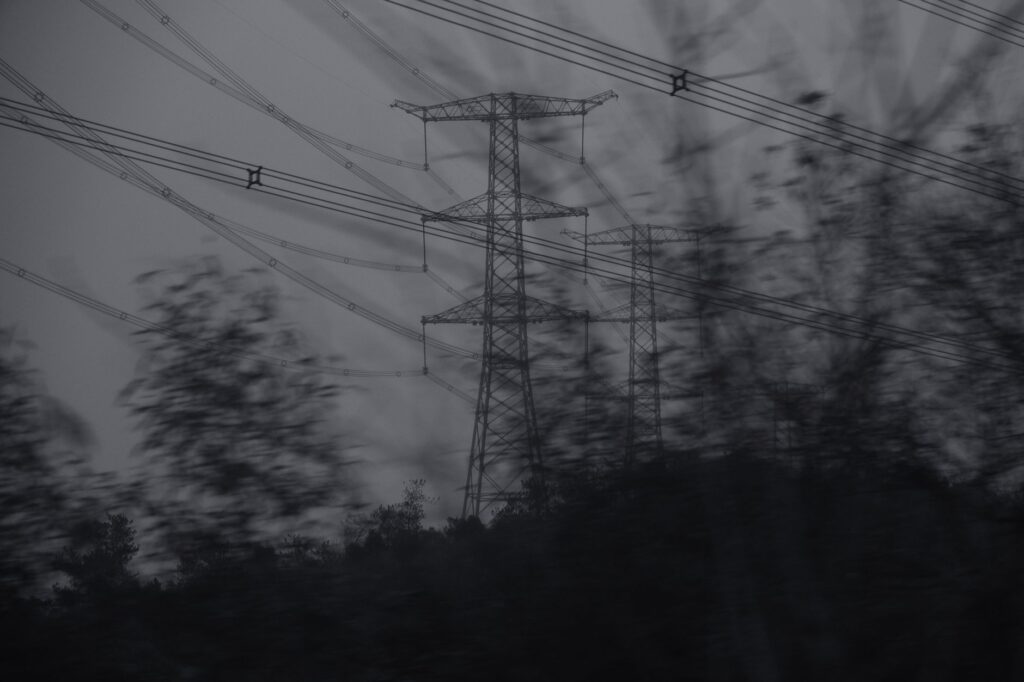
Walk almost any street in Middletown Township and you will see the same picture: a mature maple or oak reaching toward a set of utility wires, with a ragged notch cut out of one side where a crew once pruned for clearance. Most homeowners look at that notch and see an ugly tree. Arborists look at it and see a tree that has been forced into a very specific set of rules.
Trees near power lines sit in a different category from every other tree on the property. A limb that would be a simple weekend job anywhere else becomes a genuine life-safety problem when it is within reach of an energized conductor. At the same time, a tree that grows into those conductors is one of the most common causes of local outages during a nor’easter or a summer thunderstorm.
This article sorts out who is responsible for what, why utility pruning looks the way it does, what a homeowner can safely do, and when the right answer is to pick up the phone. October is a good month to think about it, because the leaves are coming down, the wires are easy to see, and the winter storm season is close.
Who Trims What: The Utility's Side and Your Side
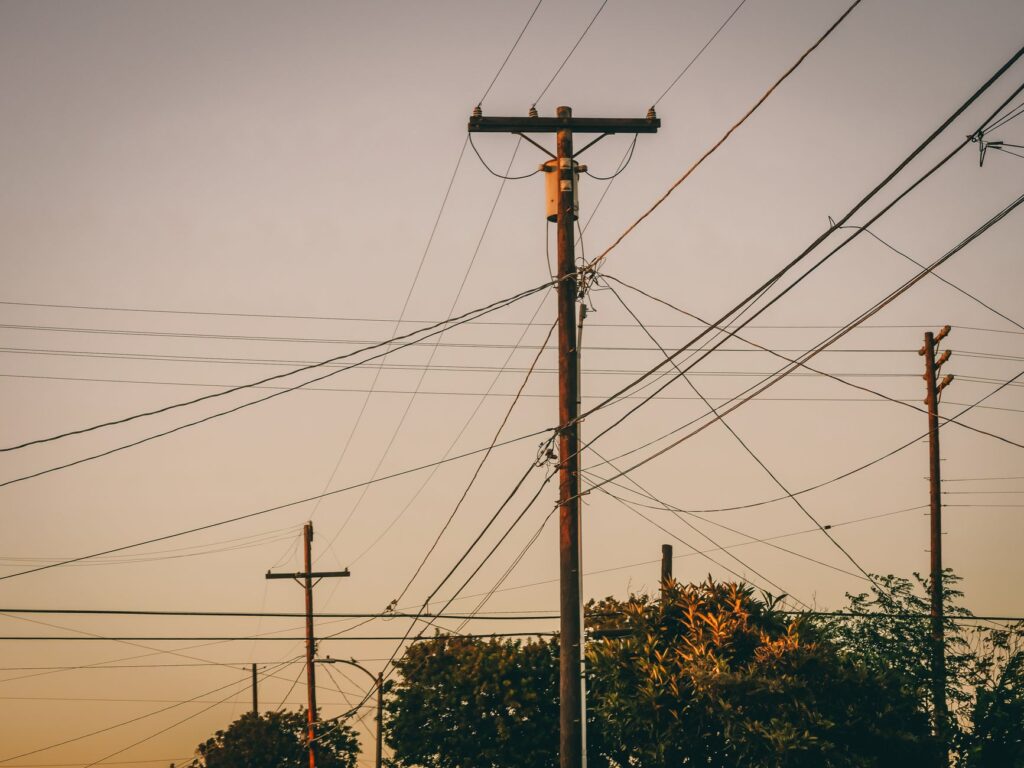
The first thing most people want to know is simple: whose job is it? The honest answer is that it depends on which wire you are talking about, and that is exactly why so many homeowners end up confused.
The large lines running along the street, on top of the poles, are the utility’s primary distribution system. The company that owns those lines runs its own vegetation management program and sends crews, or contracted line-clearance arborists, on a regular cycle to keep trees back from them. A homeowner generally has no say in how often that happens, and a homeowner should never attempt that work.
The smaller line that drops from the pole to the side of a house is called a service drop. Responsibility for trees around it is handled differently from place to place, and it is worth a phone call to the utility rather than a guess. What is consistent is the rule of thumb that anything touching or leaning on any energized wire, large or small, is a utility matter first and a landscaping matter second.
- Lines on the poles along the street: the utility’s vegetation crews.
- The service drop to your house: call the utility to find out who handles it.
- Trees and shrubs well away from any wire: the property owner.
- Anything in contact with a wire: stay back and call the utility immediately.
For the larger picture of how tree work and public safety fit together, the NJ Forest Service community forestry program is a useful starting point for the state’s approach to managing trees in developed areas.
Why Utility Pruning Looks So Unusual
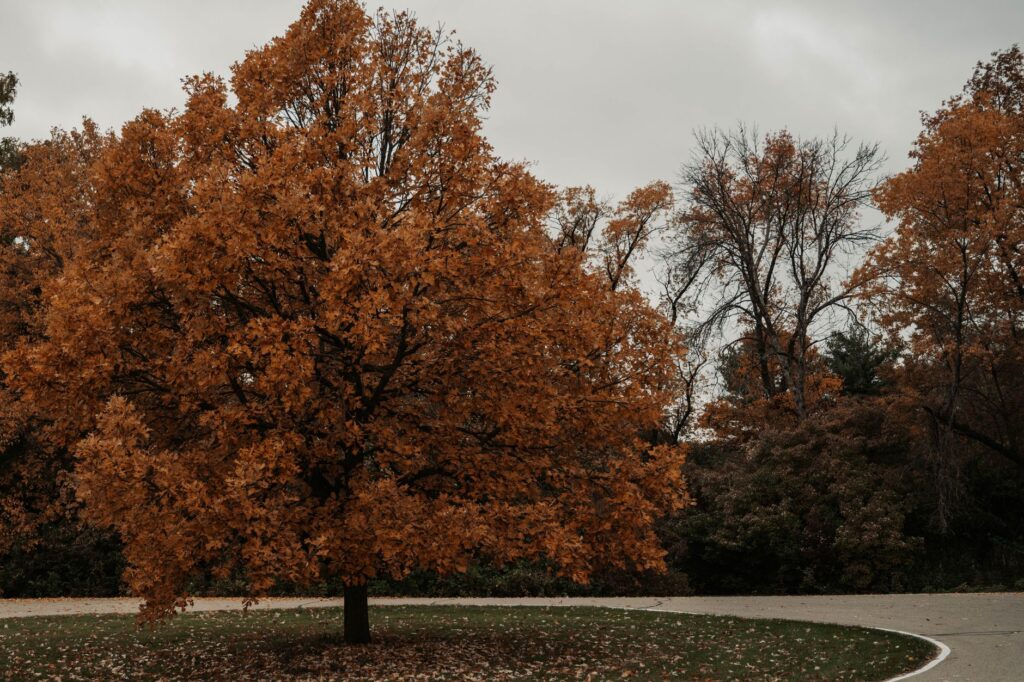
The odd shapes created by clearance pruning are not carelessness. Crews work to a clearance standard, and the cuts are often made to direct growth away from the wires. When a tree is in the way, the safest long-term approach is usually to remove entire branches back to a healthy junction, so the remaining branches grow away from the conductors rather than into them.
That approach is often called directional pruning, and it is the opposite of what happens when a tree is simply chopped off. A topped tree sends up a thicket of weakly attached shoots from each cut. Those shoots grow fast, grow straight toward the light, and usually reach the wires again in a few years. A properly directed cut avoids that by leaving a branch that is already growing away from the line.
The result can still look lopsided, especially on a tree with a wide canopy. The notch or V-shape is common on silver maples, Norway maples, and callery pears, which are some of the faster growers along suburban streets. The point of the shape is function: clear space around the wires while giving the tree the best chance to compartmentalize the wounds and carry on.
If a utility-pruned tree in your yard concerns you, it is reasonable to have a certified arborist look at the remaining structure afterward. A notch on one side can leave the canopy unbalanced, which matters when the next big wind arrives.
Middletown's #1 Tree Expert Company
FREE Inspection & Estimate | Certified Arborists | Trimming, Pruning, Removal, More!
Sponsored
The Ten-Foot Rule and Why DIY Is the Wrong Call
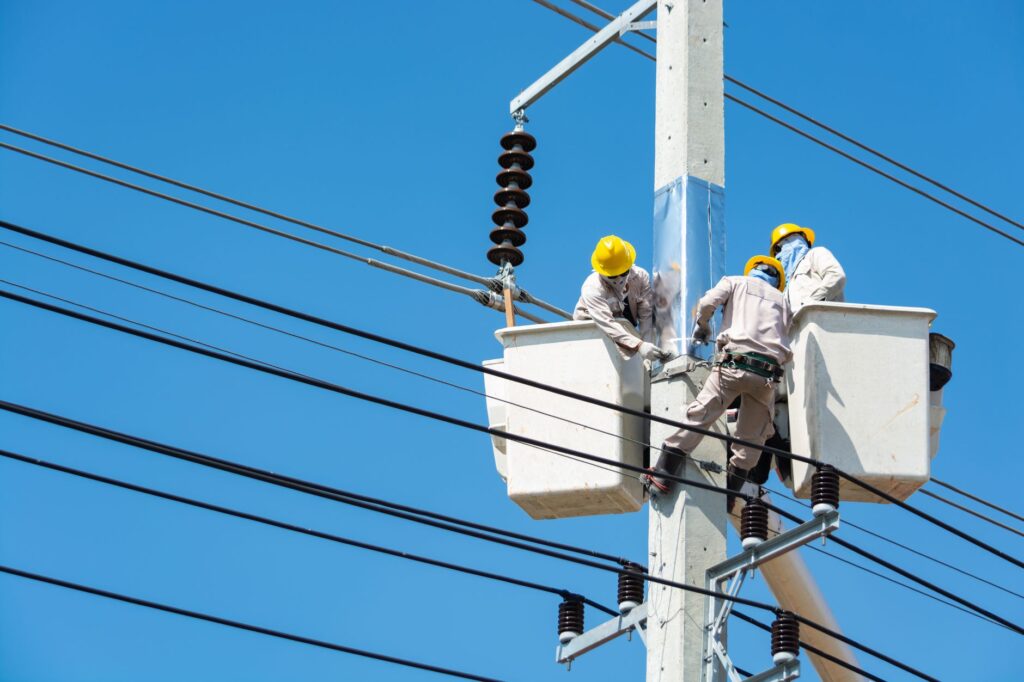
Safety rules for electrical work around trees are blunt on purpose. Federal workplace safety rules require unqualified workers to stay at least ten feet away from energized power lines of ordinary distribution voltage, and the arborist industry teaches the same distance as the minimum for anyone without line-clearance training. A ladder, a pole saw, a long-handled pruner, or even a wet branch that you are holding can all become part of an electrical path.
Two things make this more dangerous than it looks from the ground. First, bare conductors on many residential poles carry no insulation worth trusting, so a casual glance at the wire tells you nothing about whether it is safe. Second, a branch does not have to touch a wire to be a problem. Electricity can arc across a small gap, and a falling limb can pull a line down, bring a pole sideways, or whip a wire toward the person on the ground.
The International Society of Arboriculture’s guidance on trees and power lines makes the same point plainly: pruning near lines belongs to trained line-clearance professionals, and a homeowner’s job is to keep a safe distance and call for help.
That means no pole saws near the wire, no climbing a tree that has branches in contact with a line, and no standing under a limb that is resting on a wire. If a limb comes down onto a line during a storm, treat both the limb and anything it touches as energized.
Reading Your Own Trees: What to Check This Month

Fall is the best time to look, because you can see the full outline of a tree against the sky and the wires beyond it. You do not need any tools. A walk around the property with a coffee and a phone camera does a surprising amount of good work.
Start with the obvious question: where is the closest branch to any wire, and which direction is it growing? A limb a few feet below a line and growing parallel is a different situation from a limb a few feet below a line and growing upward. The second one will be in contact within a season or two.
Then look for the quiet problems that make a tree more likely to fail into the lines in the first place. Dead branches, a crack where two stems meet, a lean that has changed since last year, mushrooms at the base, and bark that is pulling away are all worth noting. Photographs with a date make it easy to compare next year.
- Photograph the tree from the same spot, with the wires in frame.
- Note any dead or hanging branches above or near the lines.
- Check the base for fungus, soil heaving, or fresh cracks.
- Look for new growth reaching toward the wires from below.
When you are ready to have someone look, the guide to hiring an arborist from Trees Are Good explains what credentials to look for, including ISA certification and proof of insurance.
Planting for the Future: Right Tree Under the Wire
Most of the trouble with wires and trees is decided the day the tree is planted. A seedling that is two feet tall does not look like it will ever matter to a power line. A silver maple planted in the same spot grows into a fifty or sixty foot tree, and the wires are in the way of its whole life.
The standard advice is to sort planting spots by height. Directly under or beside the wires, plant only small, slow, low-growing species that top out well beneath the conductors. Further away, medium trees fit. Large shade trees belong where there is nothing overhead and plenty of room for roots and canopy to spread.
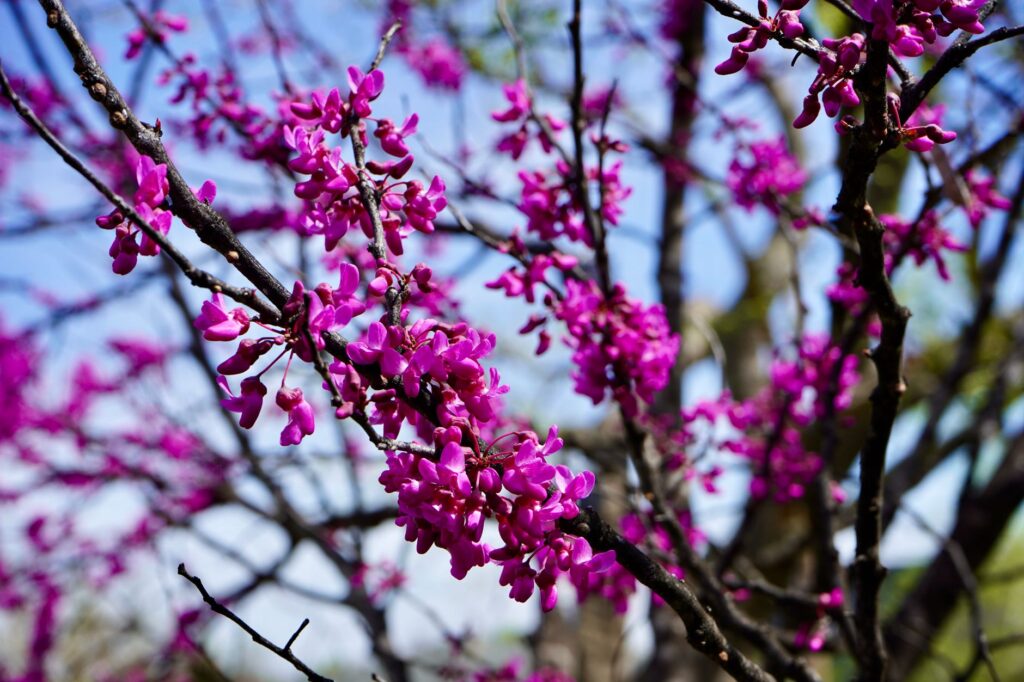
In Middletown’s coastal plain soils, good small-tree options for tight overhead spaces include serviceberry, American hornbeam, eastern redbud, and flowering dogwood where the site is not too exposed. Salt spray and wind near the Bayshore narrows the list further, so exposure matters as much as height. The planting guidance from Trees Are Good covers site selection and mature size in more detail.
One more planting rule that is easy to forget: before you dig, call 811, the free national service that has utilities mark underground lines. Underground and overhead utilities both limit where a tree can safely go, and the call costs nothing.
Middletown's #1 Tree Expert Company
FREE Inspection & Estimate | Certified Arborists | Trimming, Pruning, Removal, More!
Sponsored
When to Call a Pro, and Who to Call First
Trees and wires produce a short list of situations where the correct answer is always the same: do not touch it, and call someone qualified. A limb resting on a wire is one. A tree that has fallen across a line is another. So is a branch that sparks, a wire hanging low, or any tree that has pulled a service drop away from the house. In those cases, stay well back, keep other people and pets away, and call the utility and, if there is any immediate danger, emergency services.
For everything else, the right professional is a certified arborist with line-clearance training if the work is anywhere near the wires. Ask for proof of insurance, ask for the ISA certification number, and ask how the crew handles clearance distances. A reputable arborist will be glad to answer. If the answer is vague, move on.
For work that is not near the wires, an assessment now is cheaper than an emergency after a winter storm. A trained eye can tell the difference between a tree that only looks scary and one that really is a hazard. The International Society of Arboriculture lets you look up certified arborists by location.
The overhead wires are not going away, and neither are the trees. Respect the ten foot rule, plant sensibly, and let the qualified crews do the work they train for.
Photo credits: Featured image by 易 凡 on Pexels; Section 1 by Alexey Demidov on Pexels; Section 2 by Kindel Media on Pexels; Section 3 by Quang Vuong on Pexels; Section 4 by Thampapon Otavorn on Pexels; Section 5 by Mac Mullins on Pexels; Section 6 by A Goddard on Pexels; Section 7 by Thomas P on Pexels.