
Middletown's #1 Tree Expert Company
FREE Inspection & Estimate | Certified Arborists | Trimming, Pruning, Removal, More!
Sponsored
The Fertilizer Aisle Question Every October Brings
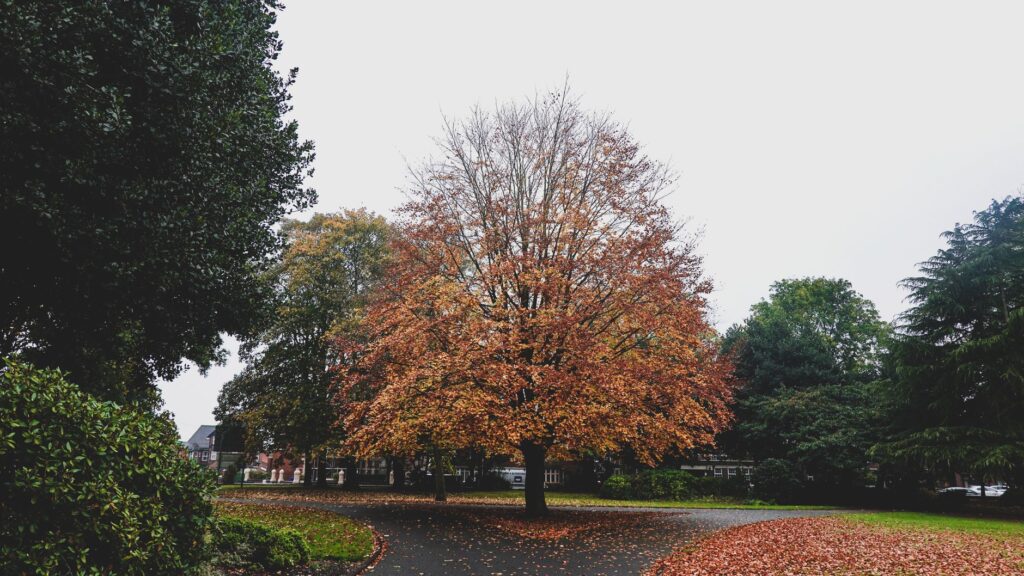
Every fall, right around the time the leaves turn, the garden centers around Middletown stack up bags and spikes promising a stronger tree next spring. It is a fair question to ask whether your oak, maple, or dogwood should get a meal before winter. The honest answer from the field is usually less exciting than the label: most healthy landscape trees in this township do not need fertilizer at all.
That surprises people, because we think of feeding as automatically good. But a tree in a forest feeds itself from its own leaf drop and the fungi in the soil. A tree in a suburban yard has lost some of that cycle, since the leaves get bagged and hauled away, but it still has far more to work with than a potted houseplant does.
The goal of this article is to help you decide whether your tree is the exception. Late October is a useful moment to ask, because roots stay active in the soil well after the canopy shuts down. What you do now, or choose not to do, shapes how the tree comes out of winter.
We will walk through what trees actually take up, how to tell hunger from other problems, what a soil test shows, and what to do if feeding truly is warranted.
What a Tree Actually Does With Nutrients in Fall
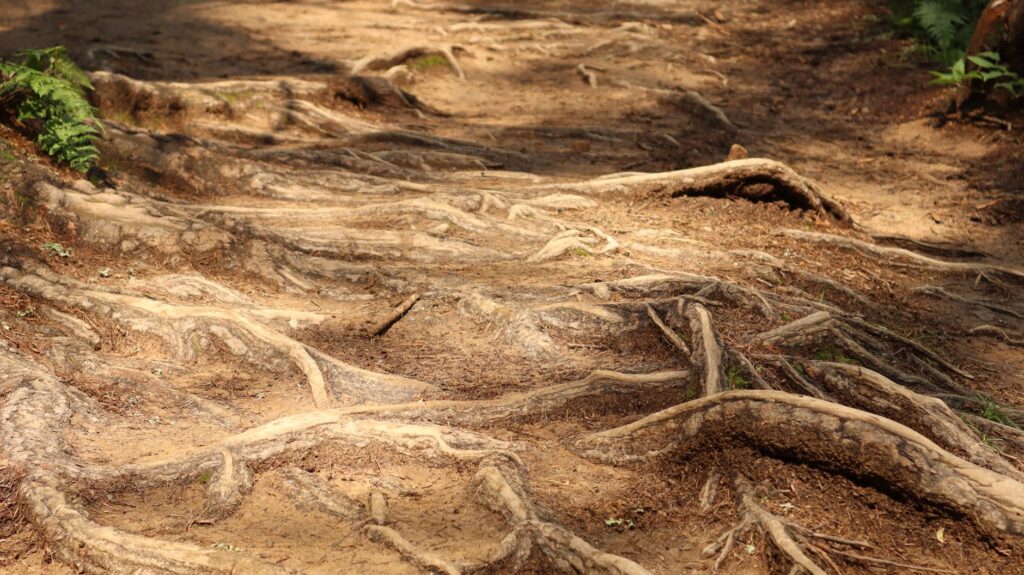
Many people picture a tree going to sleep in autumn. In reality the tree is busy. Before the leaves drop, it pulls nitrogen and other mobile nutrients back out of the foliage and stores them in branches, trunk, and roots. The sugars made over the summer are packed away as starch, a reserve that fuels budbreak in April before the new leaves can make food on their own.
Roots keep growing in fall as long as the soil stays above roughly 40 degrees, which on the Bayshore can mean well into December. That is why fall is a fine time to plant and a reasonable time to feed, if feeding is needed. It is also why people assume more fertilizer means more reserve. It does not work that way.
Extra nitrogen applied to a healthy tree mostly pushes soft, leafy growth the following spring, and that growth is a magnet for aphids, scale, and fungal leaf spots. The International Society of Arboriculture’s homeowner guidance on fertilizing trees makes the same point: fertilizer should answer a specific deficiency, not serve as a general tonic.
So the starting question is never “what should I feed it?” It is “what is the tree telling me, and is it a nutrient problem at all?”
Reading the Signs: Hunger, or Something Else?
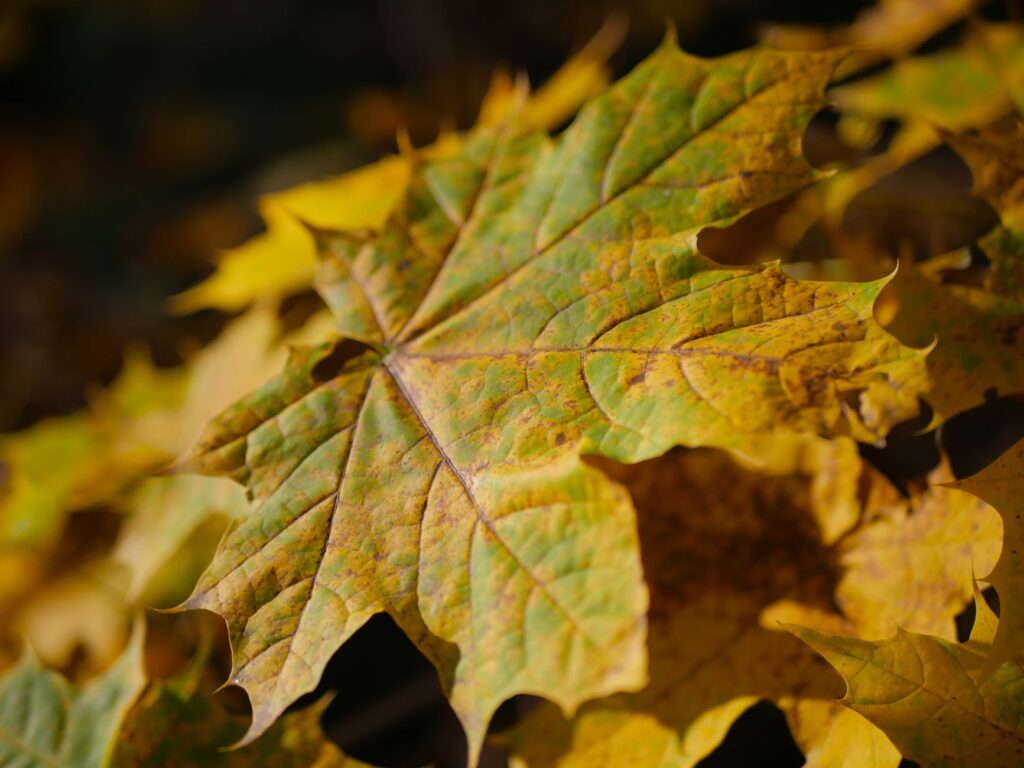
True nutrient deficiency has a recognizable look, but many other problems copy it. Pale, undersized leaves, very short twig growth year after year, and early yellowing can all point to low fertility. They can just as easily point to compacted soil, girdling roots, a buried root flare, or summer drought stress.
Here is how I sort it out when I walk a Middletown yard:
- Pale leaves with green veins on pin oak, red maple, or river birch often mean iron chlorosis, which is a soil pH problem rather than a shortage of iron in the ground.
- Uniformly small leaves on all branches across several years suggest a root problem or poor soil structure.
- Yellowing on one side only points to damage on that side, such as a trenched root, a de-icer path, or a failing limb.
- Good leaf size and color with an annual twig growth of several inches means the tree is fine, and fertilizer would add nothing.
A quick field check helps. Find last year’s bud scale scars on a branch tip and measure from there to the end of the twig. Mature shade trees often put on only a few inches a year, and that can be perfectly normal for an old tree. Younger trees under about 15 years should be growing noticeably more.
If the symptoms fit a deficiency, the next step is a test, not a guess.
Middletown's #1 Tree Expert Company
FREE Inspection & Estimate | Certified Arborists | Trimming, Pruning, Removal, More!
Sponsored
Middletown Soils and Why a Soil Test Comes First
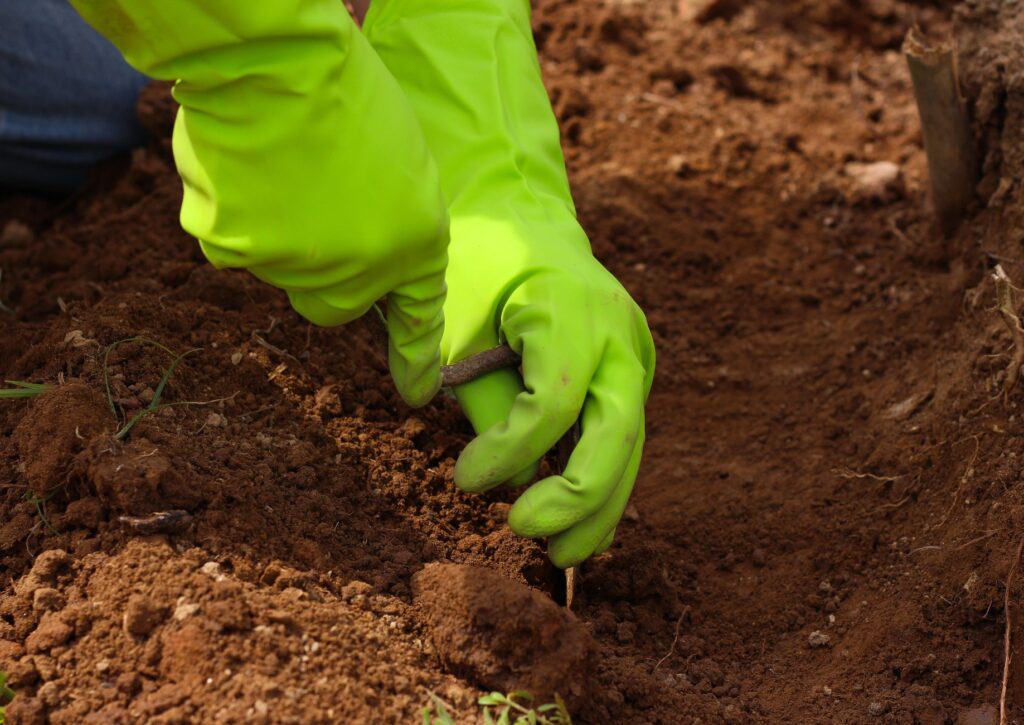
Middletown Township sits on the coastal plain, and the ground varies more than most owners expect. Parts of the Bayshore have sandy, quick-draining soils that hold few nutrients. Further inland, around Lincroft and the Navesink side, you will find heavier clay loams and the glauconitic greensand that gives Poricy Park its character. Fill soil from subdivision grading can be almost anything.
Because of that variety, the only sensible way to decide on fertilizer is to test. The Rutgers Cooperative Extension soil testing laboratory analyzes samples from New Jersey properties and reports pH, phosphorus, potassium, and other readings, with recommendations. A sample costs far less than a bag of tree fertilizer applied blindly across a lawn.
Take your sample from the top six inches of soil in several spots under the canopy, out between the trunk and the drip line, then mix them together. Avoid areas where lime, fertilizer, or compost were recently spread. Most trees on lawns also get fertilizer indirectly from lawn programs, which is often already more nitrogen than the tree wanted.
Two results matter most: pH and the major nutrients. A pH above about 7 locks up iron and manganese for acid-loving species, while very low phosphorus or potassium suggests a real shortfall. If the test comes back normal, you have saved yourself a mistake and the tree has lost nothing.
Slow Release, Placement, and Doing It Safely
When a test or a clear symptom pattern does call for feeding, how you do it matters more than the product. Fast-release lawn fertilizer scattered under a tree is the usual culprit in the damage I see. It burns fine roots near the surface, runs off toward storm drains on Middletown’s sloping lots, and feeds the grass first.
A more careful approach looks like this:
- Choose a slow-release formulation, with a low nitrogen rate matched to the soil test.
- Spread it evenly across the root zone, which reaches well past the drip line, rather than piling it near the trunk.
- Keep fertilizer off the trunk flare and well clear of any roots that are exposed or damaged.
- Water it in so the nutrients move into the soil instead of washing along the surface.
- Skip frozen ground, saturated ground, and any day with heavy rain in the forecast.
Deep root fertilization, where a nutrient solution is injected into the soil under pressure, has its place on stressed or construction-damaged trees, but it is not routine care. It works partly by loosening compacted soil, which is a benefit you can sometimes get more cheaply with mulch and patience.
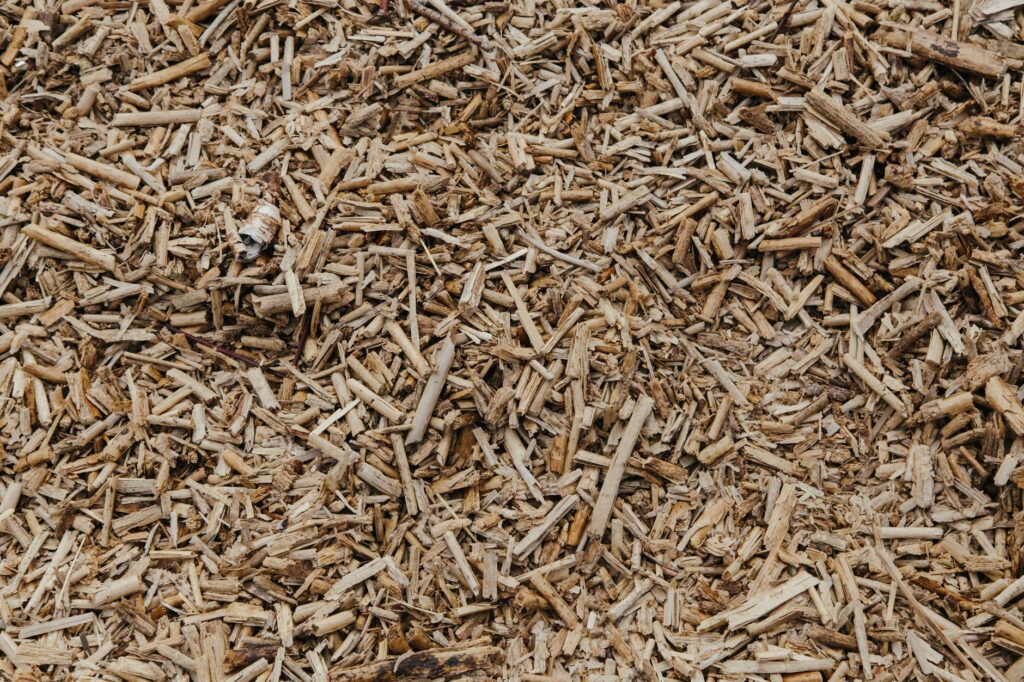
On that point, a two to four inch layer of wood chip mulch, kept pulled back from the trunk, does more for long-term tree nutrition than most granular products. The same guidance from the ISA on mulching trees explains how it feeds the soil as it breaks down and moderates moisture.
The Free Fertilizer Already Under Your Trees
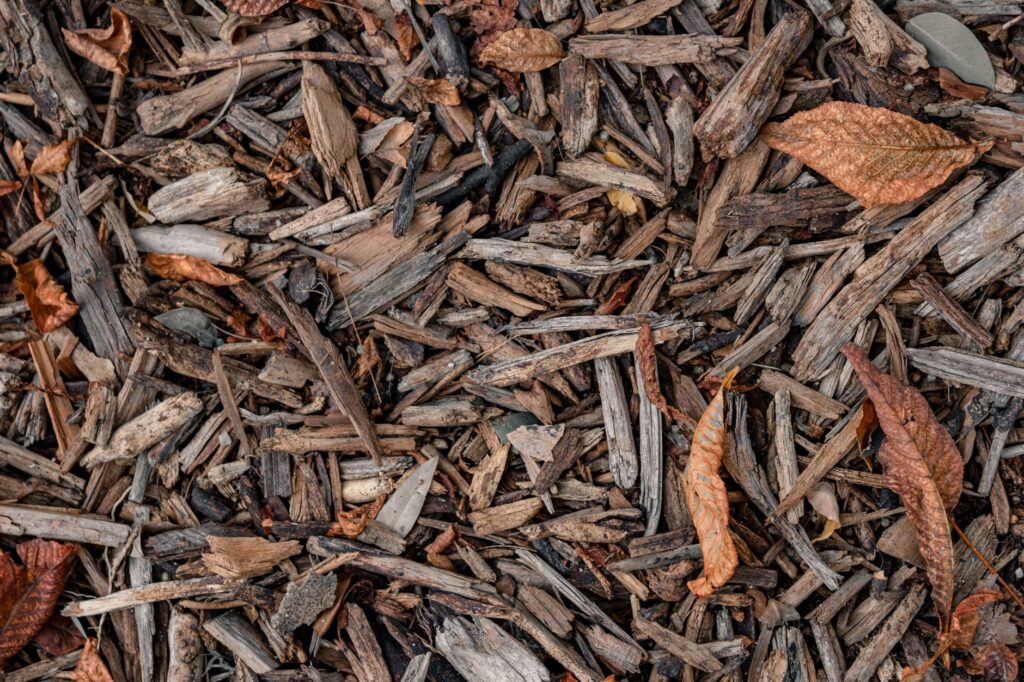
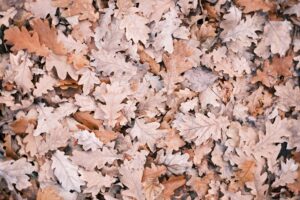
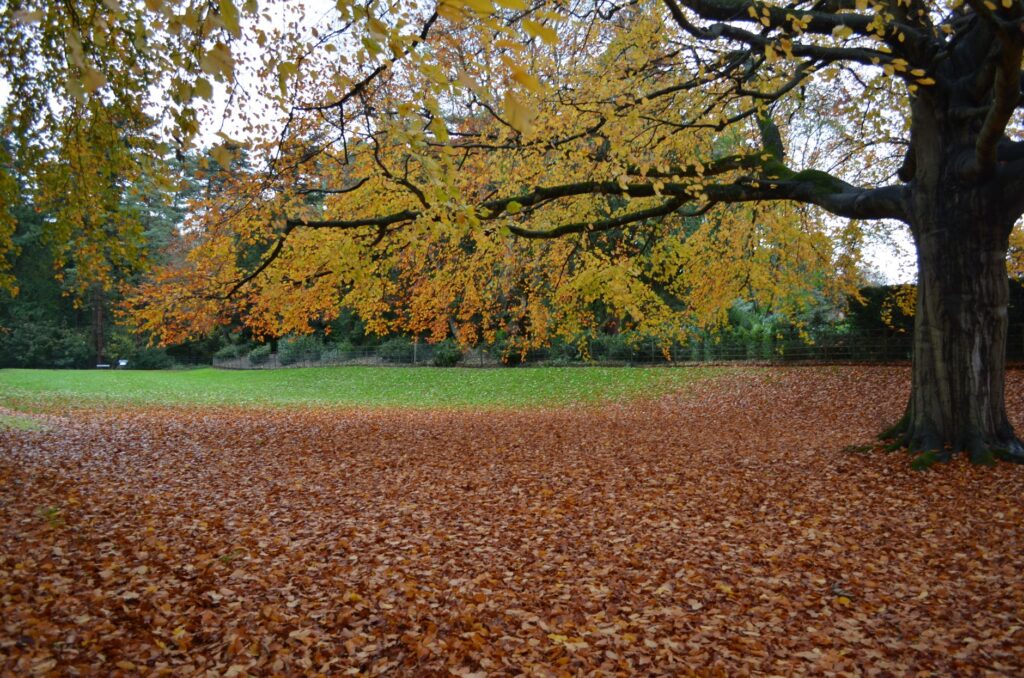
If I could change one habit in Middletown neighborhoods, it would be the fall bagging of leaves. A canopy tree drops a great deal of the nutrition it pulled from the soil over the summer, and leaf litter returns it slowly, along with organic matter that feeds the fungi and bacteria around the roots.
Shredded leaves, run over once or twice with a mower, break down into a mulch that suppresses weeds and keeps soil temperatures steadier through winter freeze and thaw. Spread a thin layer, a couple of inches at most, across beds and under the canopy, and keep it off the trunk itself. Matted whole leaves can smother a lawn, but shredded ones rarely do.
Healthy soil also depends on mycorrhizal fungi, tiny partners that attach to fine roots and extend their reach for water and phosphorus. Heavy fertilizer, particularly high phosphorus products, can discourage these partnerships. Slow, organic inputs help them. Parks around the county, such as those managed by the Monmouth County Park System, show how well an unraked woodland floor sustains large trees with no fertilizer program at all.
You can borrow that idea in your own yard. Leave leaves in the planting beds, add a ring of wood chips where grass is struggling, and avoid compacting the soil with equipment or repeated foot traffic.
Middletown's #1 Tree Expert Company
FREE Inspection & Estimate | Certified Arborists | Trimming, Pruning, Removal, More!
Sponsored
When to Call a Certified Arborist

Some situations are beyond a bag of fertilizer and a free weekend. If a tree has declining canopy, thinning leaves in the upper crown, dead twigs, or fungal growth at the base, nutrition is rarely the whole story. Construction damage, root rot, and structural problems all hide behind the same symptoms.
A certified arborist can look at the whole picture: soil, roots, trunk, and crown. They can take tissue and soil samples, check for girdling roots, measure growth, and tell you whether the tree is a candidate for a plant health care program or whether money is better spent on pruning or removal of a hazard. Ask for ISA certification and for a written scope that names the tree, the product, and the rate.
For most homeowners the plan is simple. Test the soil before buying anything. Mulch and leave the leaves. Skip fertilizer on healthy trees. And if the canopy tells you something is wrong, bring in a professional to find out what, rather than feeding a tree that is actually fighting a different problem.
Trees reward patience in Middletown. A modest fall routine today puts a tree in better shape for April, and that matters more than any product on the shelf.
Photo credits: Featured image by Reuben K Sam on Pexels; Section 1 by Neville Hawkins on Pexels; Section 2 by Łukasz Dąbrowski on Pexels; Section 3 by Bruno Kraler on Pexels; Section 4 by Paula Lira on Pexels; Section 5 by Ron Lach on Pexels; Section 6 by Jorge Urosa on Pexels; Section 7 by Pavel Danilyuk on Pexels.