Middletown's #1 Tree Expert Company
FREE Inspection & Estimate | Certified Arborists | Trimming, Pruning, Removal, More!
Sponsored
The Part of Your Yard You Cannot See
Drive the quieter, older streets of Middletown Township and you will find plenty of homes that never connected to a public sewer line. Behind many of those houses is a buried septic tank and a drainfield, a network of perforated pipes sitting in a shallow bed of gravel and soil, usually one to three feet below the lawn. Most owners know roughly where the lid is. Far fewer know where the field itself runs, and almost nobody thinks about it when they pick a spot for a new tree.
That is the problem. A drainfield is warm, damp, and rich in nutrients, which is exactly what a tree root is built to find. In October, with fall planting season in full swing, a lot of homeowners are choosing where to put a maple, an oak, or a flowering cherry. This article is about one specific decision: how to place trees so they do not end up growing into the most expensive pipe network on your property.
A quick note on scope. Every property is different, and your tank and field location, your local health department rules, and your tree species all matter. Treat this as the background you need to ask better questions, not as a substitute for the as-built drawing of your own system.
Why Roots Go Looking for Your Drainfield
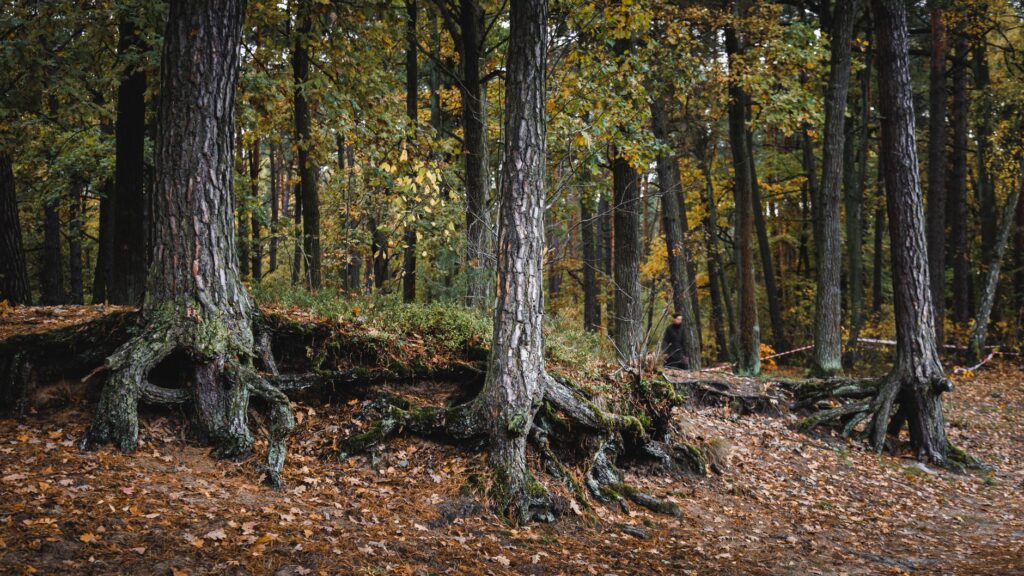
Tree roots do not drill down looking for water the way cartoons suggest. Most of a tree’s absorbing roots live in the top foot or two of soil, where oxygen and moisture overlap. The International Society of Arboriculture notes that a tree’s root system commonly spreads far wider than the canopy, often well beyond the drip line, which is why the Trees Are Good guidance on trees and construction keeps pushing owners to think about the whole root zone and not just the trunk.
A drainfield sits right in that productive layer. The effluent leaving the tank is treated by the soil, but it still carries water and dissolved nutrients, and in our heavy clay-loam soils the surrounding ground can run dry and compacted in August while the field stays moist. A thirsty root that meets a perforated pipe or a wet gravel trench does what roots do: it branches, thickens, and keeps growing toward the better conditions.
Over several years that can mean fine roots entering the pipe perforations and slowly matting the inside, or larger roots lifting and cracking the distribution box and lines. The first sign is usually slow drains or a soggy patch of lawn, and by then the roots have been at work for a long time.
How Far Is Far Enough?
There is no single number, and anyone who gives you one without asking what species you are planting is guessing. University extension services give different answers because the real variable is how large the tree gets and how aggressive its roots are. A fair way to think about it comes from the University of Maine Cooperative Extension, whose gardening team advises planting trees at least as far from the drainfield as their estimated root spread at maturity, and farther for the aggressive species.
Here is how to turn that into something practical for a Middletown yard:
- Look up the mature height and spread of the tree you are considering, not the size of the nursery container.
- Use the mature height as your absolute minimum distance from the field, tank, and lines.
- Add distance for fast-growing, shallow-rooted species.
- Keep the tree out of the reserve area set aside for a replacement field, if your property has one.
Under that approach a 60-foot red maple belongs a long way from the field, while a small ornamental that tops out at 20 feet can sit much closer. Small trees still need to stay off the pipes themselves, so the rule of thumb is a floor, not a license.
Middletown's #1 Tree Expert Company
FREE Inspection & Estimate | Certified Arborists | Trimming, Pruning, Removal, More!
Sponsored
Species That Cause the Most Trouble
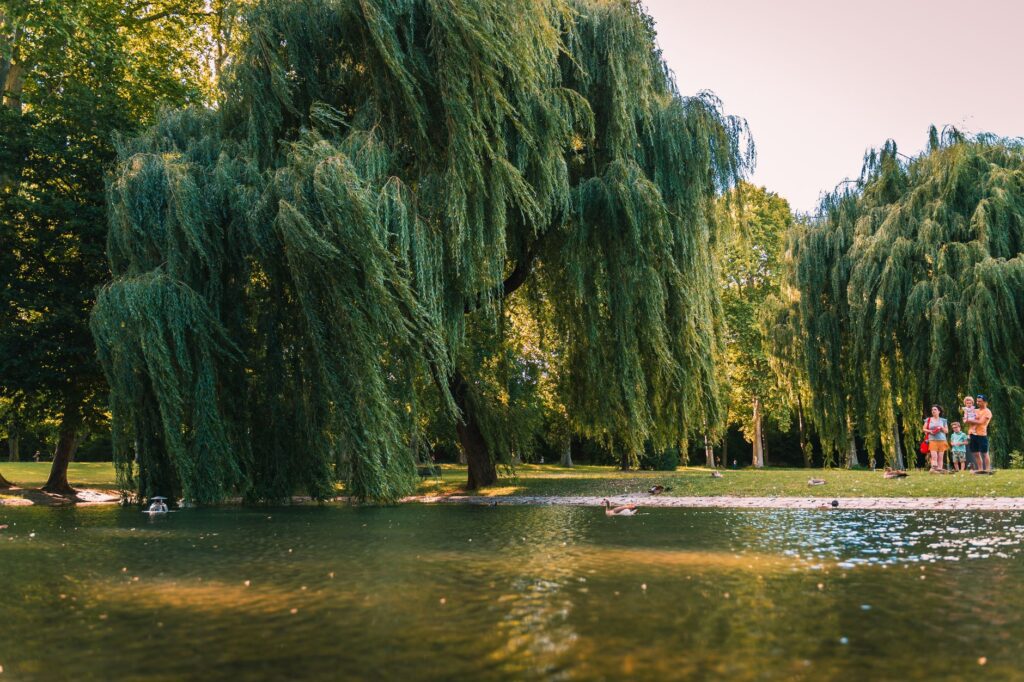
Extension references commonly name the same culprits when it comes to wastewater systems: willows, poplars, silver maples, and other fast, shallow, water-hungry trees. Elms, birches, and red maples show up on many lists as well. These are the trees that tolerate wet soil, grow quickly, and send roots a long way in a hurry, which is a good survival strategy and a poor match for a buried pipe.
Closer to home, think about the trees already common on Bayshore properties. Silver maple (Acer saccharinum) is a classic problem, with brittle wood and a root system that goes wherever the water is. Weeping willow (Salix babylonica) is a lovely tree for a pond edge and a poor neighbor for a septic field. Tulip poplar and Bradford pear are not water seekers in the same way, but their size and shallow lateral roots still make them poor candidates close to a system.
Slower, less aggressive trees such as dogwood, serviceberry, and many oaks are generally easier on a field, though the distance rule still applies. If you are not sure, a certified arborist can read your existing trees, tell you which are likely to be a problem, and suggest alternatives suited to Middletown’s soils.
Trees You Already Have: What to Watch For
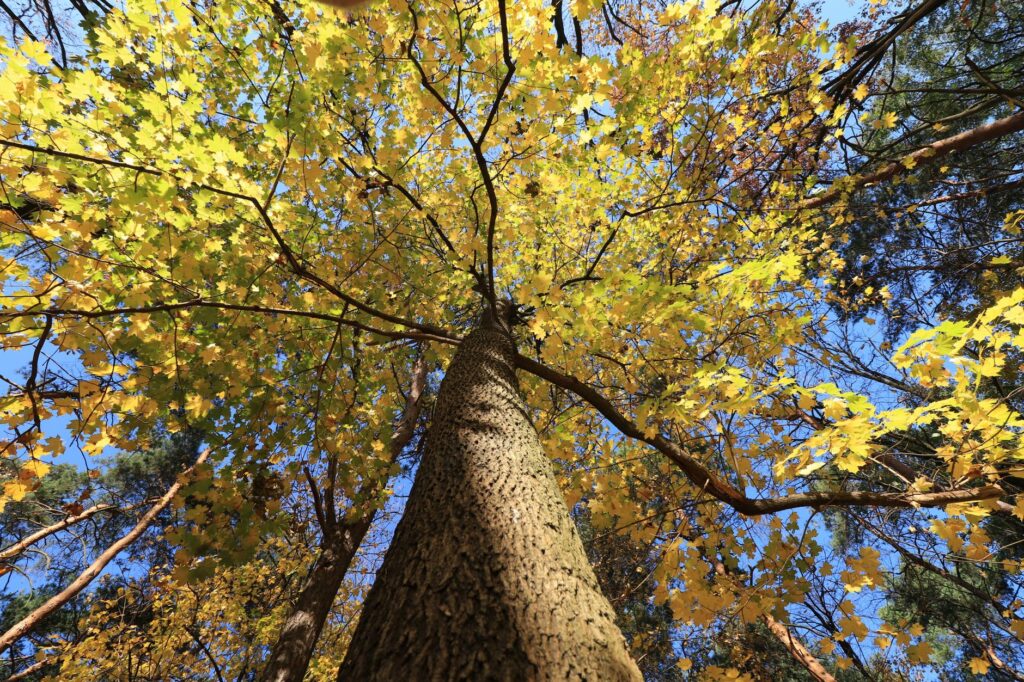
Most owners are not choosing a spot for a first tree. They are living with a 40-year-old maple that was planted before anyone sketched the field. The question there is whether the roots are causing trouble, and the warning signs are fairly consistent.
- Slow drains, gurgling pipes, or sewage odors indoors or in the yard.
- A strip of unusually green, lush grass over the field, especially in a dry stretch.
- Wet or spongy ground that does not match recent rain.
- Surface roots running straight toward the tank lid or distribution box.
Do not rush to cut the tree. Removing a large tree can leave a decaying root mass in place and does not always fix the problem. Have the system inspected by a licensed septic professional first, and have an arborist evaluate the tree. If roots must be cut near the lines, a certified arborist can show you which roots are safe to remove and which are structural, since severing the wrong ones can destabilize a large tree. That matters on Middletown properties where a leaning maple can be a real storm hazard.
The EPA’s overview of how to care for your septic system is a good plain-language reference for what routine maintenance and inspections should look like, and it makes clear that keeping roots and heavy loads off the field is part of the job.
Planting Smart Around a Septic System This Fall

October is a good planting month in New Jersey. Soil is still warm, air is cooler, and roots can establish before the ground freezes, so you do not need to give up on fall planting just because there is a field in the yard. You only need a plan.
Start by finding the as-built drawing for the system. If you cannot locate it, the township health department or your septic service can often help, and a licensed inspector can locate the tank and lines without digging up the lawn. Mark the tank, lines, and any replacement area with flags before you shop for trees.
Then use the fixed distance rule from earlier, and favor small, slow-growing, non-aggressive trees close in, saving large shade trees for the far side of the lot. Shrubs and ground covers with shallow, fibrous roots, and grasses that need little water, are good choices directly over a field because they hold the soil without sending deep roots down. Avoid heavy mulch piles, irrigation lines, and raised beds that add weight or water to the area.
Planting depth and watering still matter, of course. A tree placed correctly in the right spot is a long-term asset, and the same tree in the wrong spot can become a repair bill.
If you would like a second set of eyes on a site, the International Society of Arboriculture maintains a directory of certified arborists.
Middletown's #1 Tree Expert Company
FREE Inspection & Estimate | Certified Arborists | Trimming, Pruning, Removal, More!
Sponsored
Summary: When to Call a Pro
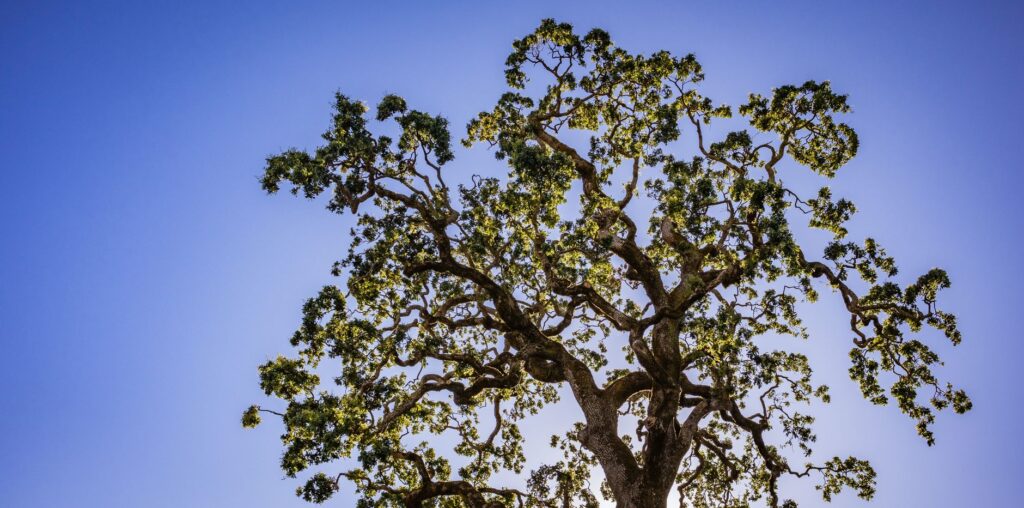
A drainfield and a tree are not enemies, but they do need distance. Match the planting distance to the tree’s mature size, steer clear of the aggressive water seekers, and keep new roots away from tanks, lines, and the reserve area. For trees already standing near a system, watch for slow drains and soggy patches before they become emergencies.
Call a licensed septic professional when you see signs of a failing system, and call a certified arborist before any large tree is removed or major roots are cut. The two specialists see different halves of the same problem, and a coordinated plan costs far less than a failed field and a fallen tree in the same season.
Before you buy a tree this fall, spend an hour with a tape measure and the as-built drawing. It is the cheapest tree care you will do all year.
Photo credits: Featured image by Get Lost Mike on Pexels; Section 1 by Viaceslav Kat on Pexels; Section 2 by Serhii Barkanov on Pexels; Section 3 by William Warby on Pexels; Section 4 by Metehan Demirkaya on Pexels; Section 5 by Marek Kupiec on Pexels; Section 6 by Gustavo Fring on Pexels; Section 7 by Robert So on Pexels.