
Middletown's #1 Tree Expert Company
FREE Inspection & Estimate | Certified Arborists | Trimming, Pruning, Removal, More!
Sponsored
A Fresh Stump Is a Diary: What Tree Rings Actually Record
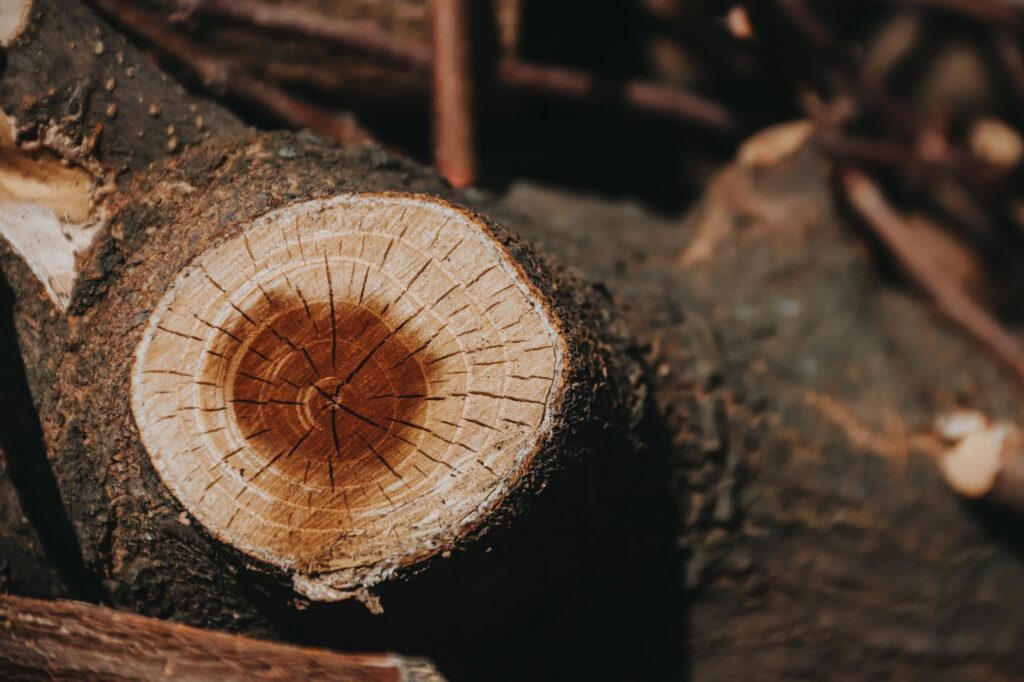
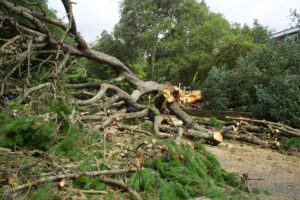
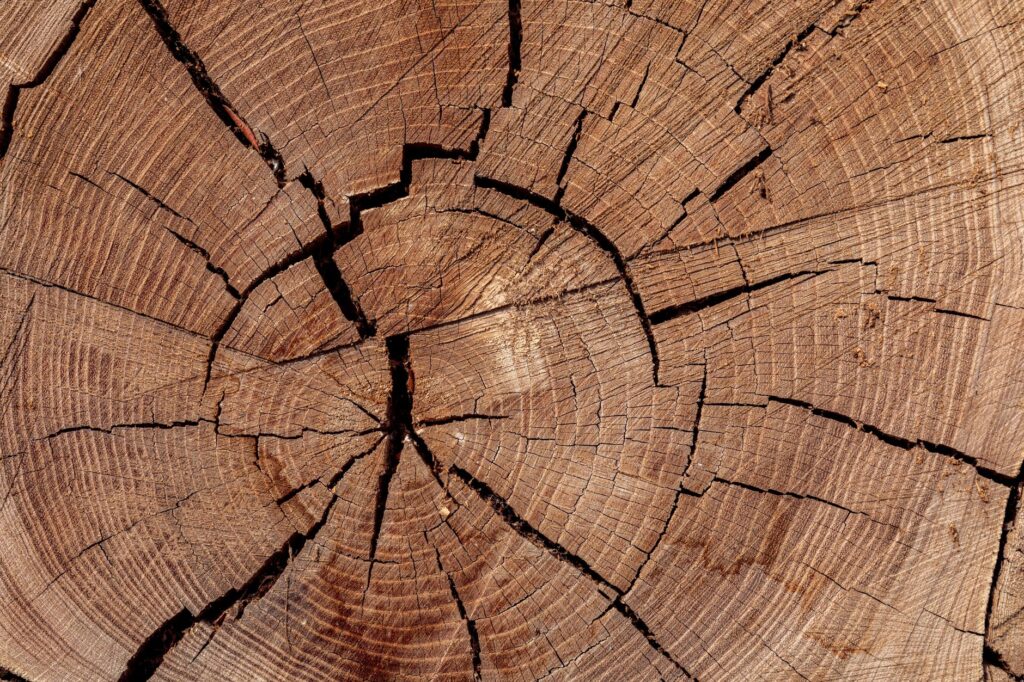
After a storm passes through the Bayshore, the cleanup crews leave behind something most people walk past: a fresh stump or a cross section of trunk with the rings plainly visible. Those pale and dark bands look like decoration, but they are a year by year record of how the tree lived. Every ring is one growing season, and the width, color and shape of each one carry information about rain, heat, crowding and injury.
In Middletown the species you will most often see cut are red maple (Acer rubrum), pin oak (Quercus palustris), white oak (Quercus alba) and black cherry (Prunus serotina). Oaks and cherries show their rings clearly. Maples are subtler, and tulip poplar (Liriodendron tulipifera) can be faint enough that you need a fingernail and good light.
Reading rings is a simple skill, and it explains a lot about why a particular tree behaved the way it did. It also helps you think about your other trees, because the same weather that shaped the ring pattern on a stump acted on every living tree in the neighborhood.
If you have ever wondered how scientists reconstruct old droughts from wood, the field is called dendrochronology, and the federal climate archives hold thousands of tree ring records. The NOAA tree ring data archive is a good place to see how the same bands you are looking at on a stump become climate history.
How a Ring Forms: Earlywood, Latewood and the Cambium
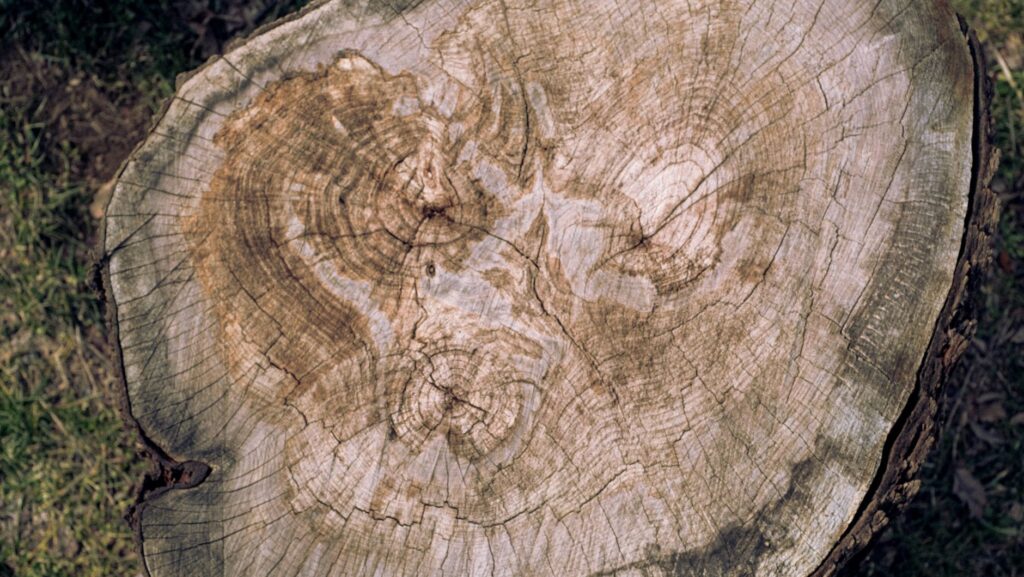
Each ring is built by the cambium, a razor thin layer of living cells just beneath the bark. In spring the cambium produces large, thin walled cells that move water quickly, and this band is called earlywood. As summer goes on the cells become smaller and denser, which is latewood. The dark line you see is the latewood, and the point where dark latewood meets the next spring’s pale earlywood is the boundary between years.
Oaks are ring porous, meaning the big spring vessels show up as a row of tiny holes you can see without a lens. Maples, birches and tulip poplar are diffuse porous, with vessels spread more evenly, which is why their rings look softer. Knowing which type you are looking at helps you avoid miscounting.
The cambium works only on the outside of the wood. That is a useful fact, because it means the inner rings never move. A scar from a wound in 1998 stays exactly where it formed, and each later year simply wraps another layer over it. Nothing in the middle of the trunk is reorganized, repaired or replaced; it is only covered.
The same biology explains why damage to the thin cambium and inner bark is so serious. Cut or crush it all the way around a trunk and the tree cannot add new wood or move sugars down to the roots. The Trees Are Good pages from the International Society of Arboriculture explain in plain language how trunk and root injuries interrupt this layer.
Wide Rings, Narrow Rings: Reading Rain, Drought and Heat
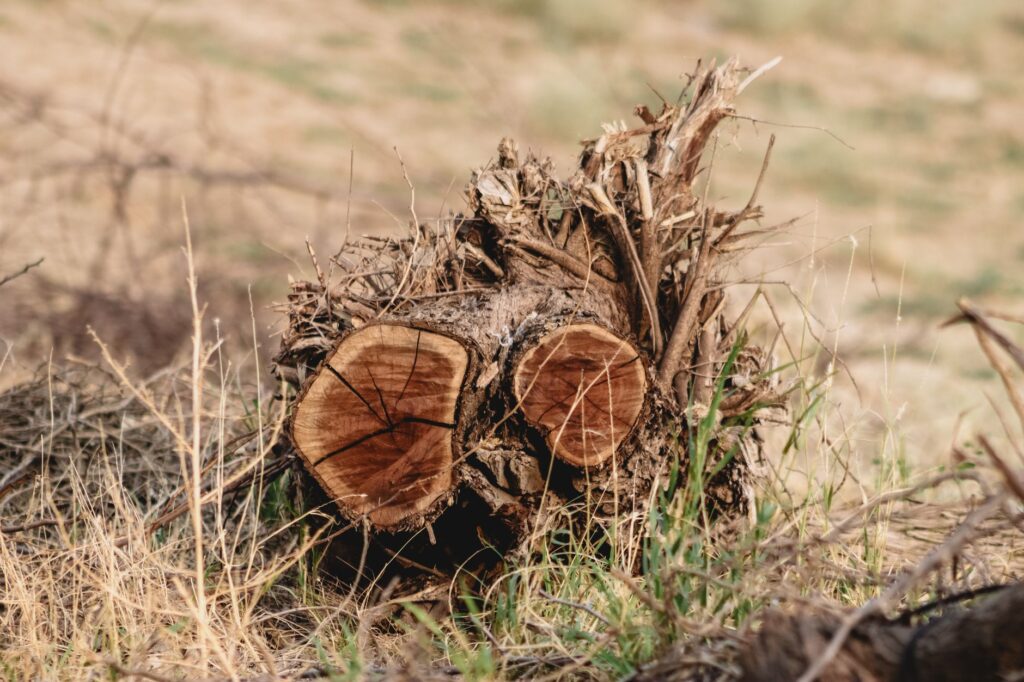
The most obvious thing a stump tells you is how good or bad each year was. Wide rings mean the tree had plenty of water and sunlight and put on a lot of wood. Narrow rings mean it was stressed. If you see a run of thin rings, the tree was struggling through several tough seasons in a row.
Middletown’s weather history shows up in this pattern. Drought summers leave thin rings, especially on shallow rooted trees like red maple and pin oak that depend on the top foot of soil. A very wet spring can produce a fat earlywood band, but if disease or waterlogged roots follow, the latewood may be thin. Tree growth tracks a mix of factors, not just rain, which is why a single narrow ring is not alarming.
Here are the patterns most homeowners can pick out on a cut face:
- Gradual narrowing toward the bark: normal in old trees, which slow down as they get larger.
- A sudden step from wide to narrow: often a change at the site, such as nearby construction, a grade change, or the shade of a newly grown neighbor tree.
- A step from narrow to wide: frequently a release, when a nearby tree came down and the survivor got more light.
- Several thin rings in a row near the center: a young tree that grew up crowded in the understory.
None of these tells you what to do about a living tree, but they show how the tree responded to change. The New Jersey Forest Service publishes material on how drought and site disturbance show up in tree health across the state.
Middletown's #1 Tree Expert Company
FREE Inspection & Estimate | Certified Arborists | Trimming, Pruning, Removal, More!
Sponsored
Scars, Dark Stains and Lopsided Rings: Injuries Written in Wood
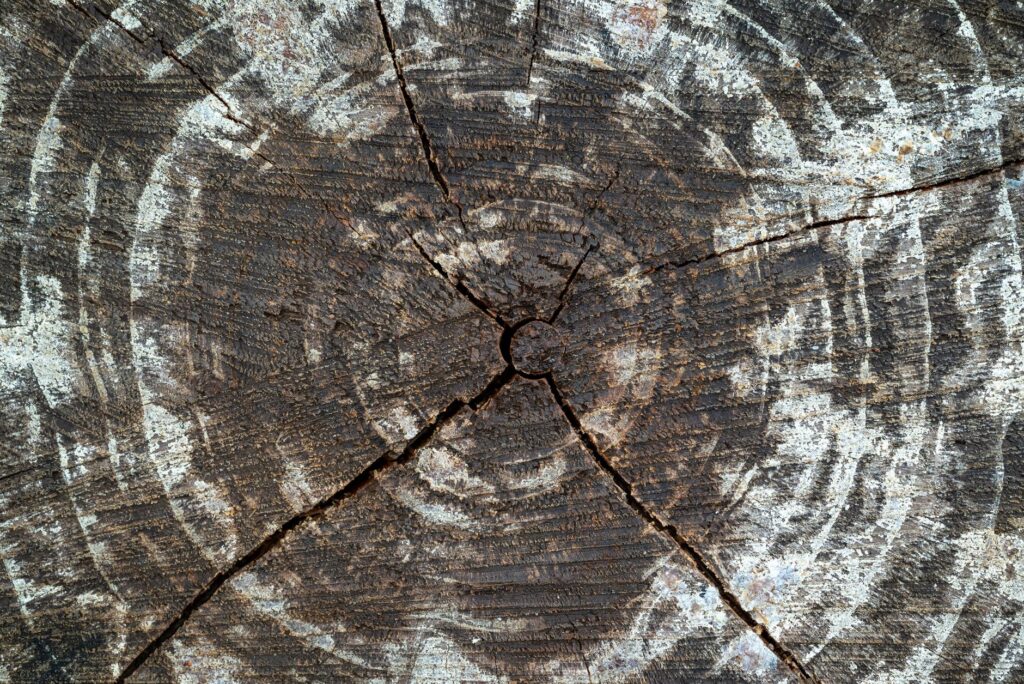
Rings do more than count years. When a tree is wounded, the cambium around the injury keeps growing and slowly rolls over the damage. On a cross section you can often find a small notch or a patch of discolored wood buried several rings deep, with every ring after it curving around the spot. Counting outward from that scar tells you roughly when the injury happened.
Common scars on Middletown trees come from lawn mower and string trimmer strikes, nails and wire driven into trunks long ago, lightning, storm broken limbs, and the stubs left by past pruning. Fence wire that has been swallowed by a trunk is a classic find, and so is a rusty nail or a long forgotten swing hook.
Dark stains in the wood tell a different story. When a tree is wounded it walls off the damage with chemical barriers, a process called compartmentalization. The stained column you see is the tree’s attempt to keep decay from spreading, and it is why a wound from years ago does not always lead to a hollow tree. The wood inside the stain may be discolored but still solid.
Lopsided rings, wider on one side than the other, are called eccentric growth. A tree that has leaned, or that has carried a heavy limb on one side for decades, lays extra wood where the load is highest. This reaction wood shows the tree has been working to hold itself up. If a lean is recent, though, extra wood on the low side can be a warning that something has shifted at the roots.
What Stump Rings Cannot Tell You About the Trees Still Standing
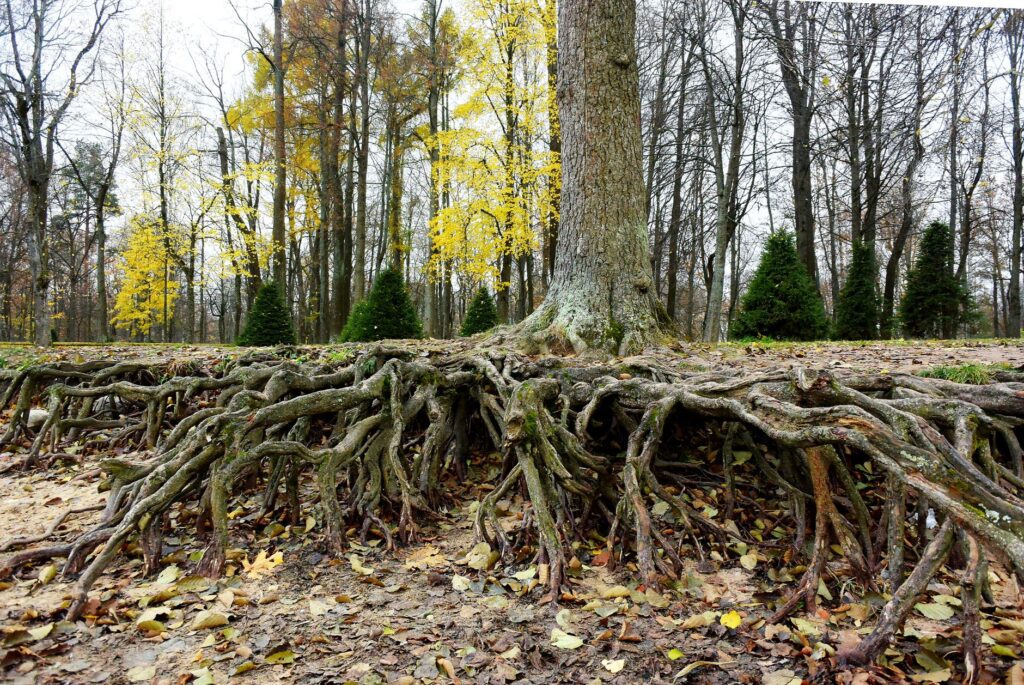
A stump is a wonderful teacher, but it is easy to read too much into it. The first limitation is that rings only record the growth of the trunk. They say very little about the health of roots, the canopy or the soil underneath. A tree can lay down healthy looking rings for decades and still have a root problem that finally surfaces after a wet storm.
Second, rings cannot tell you whether a neighboring tree is safe. A stump with wide, even rings from a healthy oak says nothing about the maple next to it, which might have a split union, a cavity or a girdling root. Hazard evaluation depends on structure, decay and site conditions, not on growth history alone.
Third, the width of a ring depends on where on the trunk you measure. Trees grow differently at the base than at chest height, and buttress flare distorts the base. Counting rings low on a stump can undercount, because the earliest years may be missing if the cut is above the first few feet of growth.
A Simple Way to Read Your Own Stump or Firewood Round
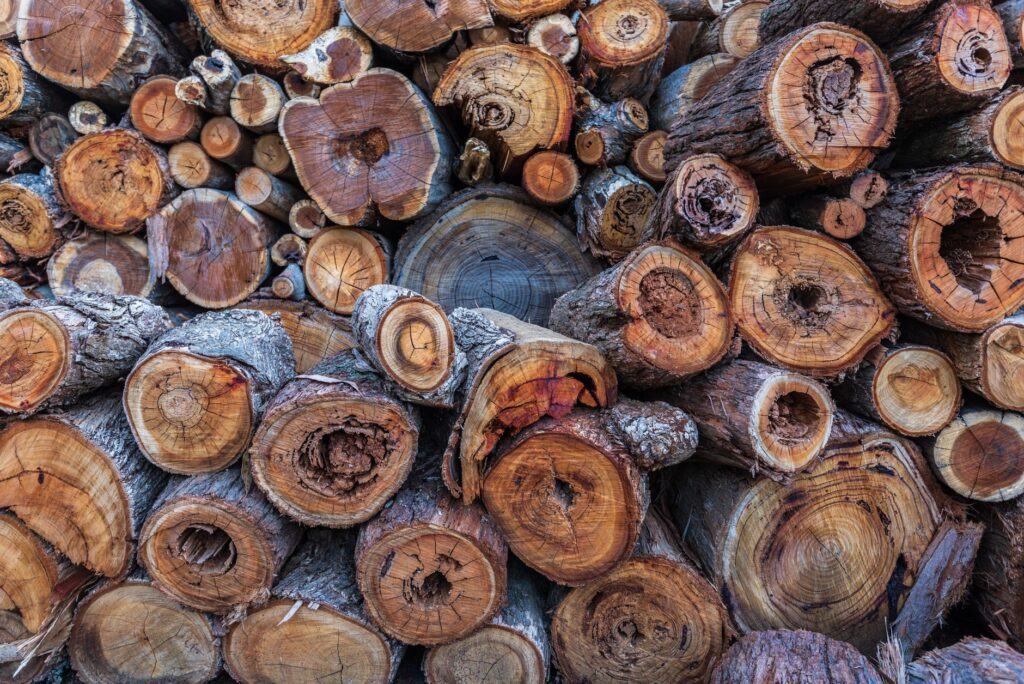
You do not need a lab to read a stump. If you have a fresh cut in the yard, or a round of firewood from a storm cleanup, a few steps will give you a good read.
Start by getting a clean surface. A sharp hand plane, a block with fine sandpaper, or even a clean fresh saw cut will do. Wet the surface lightly with water, because moisture brings out the contrast between earlywood and latewood. Dry, dusty wood hides the rings.
Then count outward from the center along one straight line, marking every ten rings with a pencil dot so you do not lose your place. Check your count along a second line at a different angle and average the two if they differ. Look for the features described above: thin runs, sudden changes, scars and stained wood.
A few things to keep in mind as you work:
- Take a photo before you start sanding so you can compare later.
- Use the line with the clearest rings, away from knots and the pith.
- Wear eye protection if you are sanding or planing, and leave the saw work to people with experience.
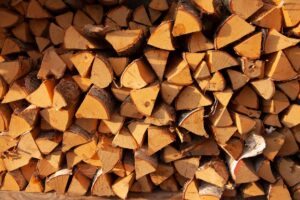
- Keep firewood close to where it was cut. Moving wood spreads insects such as emerald ash borer, and the New Jersey Forest Service can point you to current guidance.
If you live near Hartshorne Woods Park or the Navesink River bluffs, you may see a lot of cut oak and beech after fall storms. A single round tells you plenty about the grove it came from, since neighboring trees shared the same weather for the same years.
Middletown's #1 Tree Expert Company
FREE Inspection & Estimate | Certified Arborists | Trimming, Pruning, Removal, More!
Sponsored
When Ring Clues Point to a Problem: Calling a Certified Arborist
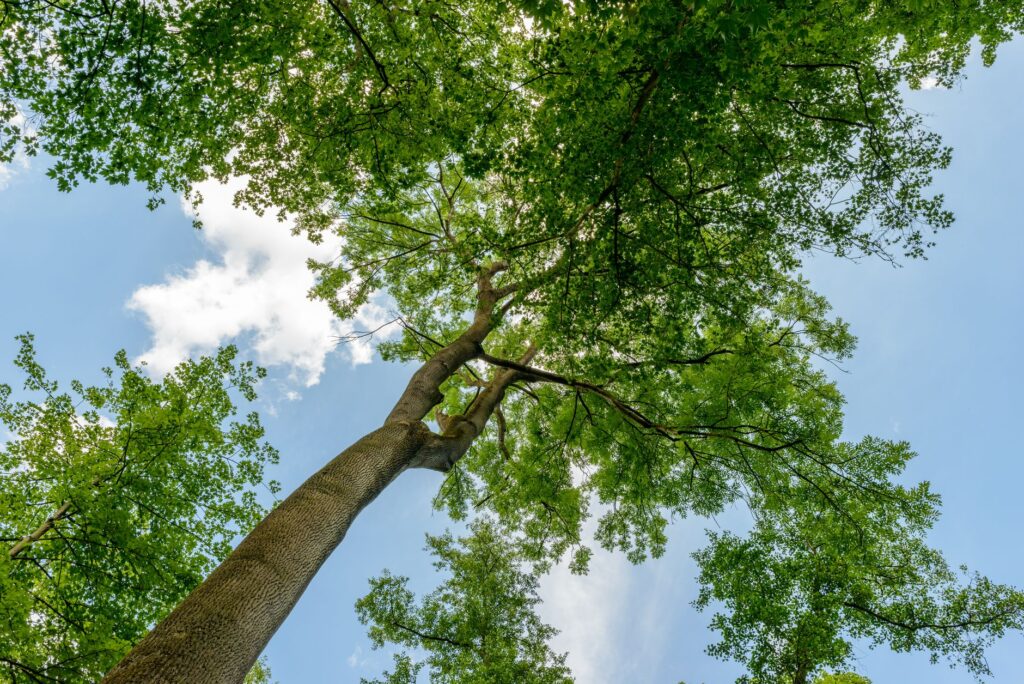
Reading rings is a curiosity, and it is also a way to start asking better questions about the trees you still have. If a stump shows a long run of thin rings, the tree was under stress, and the other trees on the same lot may have gone through the same stress. If it shows decay running through the center, ask whether any nearby trees of the same species and age have similar warning signs on the outside, such as mushrooms at the base, cracks, or dead limbs in the canopy.
This is where a certified arborist is worth hearing from. An ISA Certified Arborist can inspect the roots, the trunk and the canopy, take measurements, and use tools you cannot use yourself to look inside a trunk. They can also tell you whether a tree with slow growth has a fixable cause, such as compacted soil, a girdling root, or competing turf, or whether it is simply old.
Do not remove or heavily prune a tree because of what a stump looks like. Use the stump as a prompt, and let a professional evaluate the living tree. In Middletown Township, removing larger trees may also require a permit, so check with the municipality first. The Monmouth County Park System is also a good place to see mature native trees in healthy condition and compare them with what you see at home.
The next time a crew leaves a fresh stump on your street, take a minute to look at it. Those rings are the record of every season that tree survived, and they are free to read.
Photo credits: Featured image by Collab Media on Pexels; Section 1 by Ejov Igor on Pexels; Section 2 by Sıla Onorevole on Pexels; Section 3 by Dr Photographer on Pexels; Section 4 by Chris F on Pexels; Section 5 by RinaS on Pexels; Section 6 by Richard Pan on Pexels; Section 7 by Petr Ganaj on Pexels.