
Middletown's #1 Tree Expert Company
FREE Inspection & Estimate | Certified Arborists | Trimming, Pruning, Removal, More!
Sponsored
The Branch That Stayed Up There After the Wind Died Down
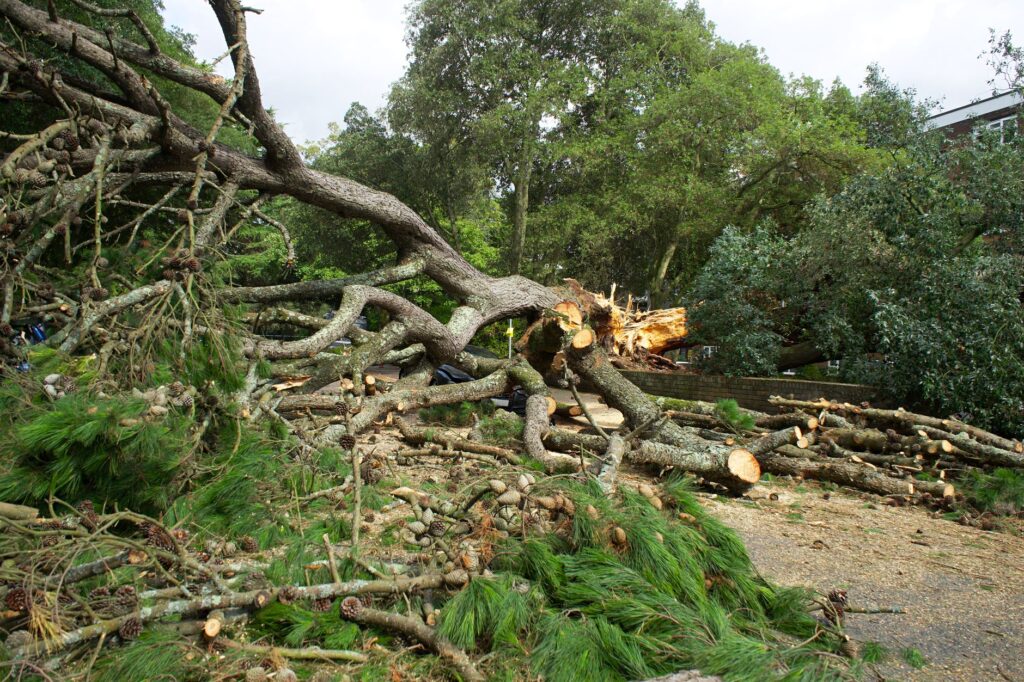
Every fall a Middletown nor’easter or a stray tropical remnant leaves the same quiet problem behind: a limb that snapped but never reached the ground. It hangs in the crown, caught on a neighboring branch, held by a strip of bark, or wedged in a fork twenty feet over a driveway. Arborists call these hangers, and the older word for them, widowmakers, was earned honestly.
The reason hangers are dangerous is that they look settled. The storm is over, the leaves are mostly still on, and a broken branch tangled in a canopy seems like it has found its place. It has not. A hanger is stored energy. Wind, a squirrel, a heavy dew, or simply the slow shifting of the supporting branch can release it without warning, and a ten pound limb falling from height behaves nothing like a ten pound limb dropped from your hand.
Across Middletown Township, from the older streets near Lincroft to the wooded lots along the Navesink, October is when homeowners tend to notice these. The foliage is thinning, sightlines open up, and a dangling limb that was hidden all summer suddenly shows against the sky. This guide walks through how to find hangers, how to judge what is under them, and what is and is not a reasonable thing to do yourself.
How Limbs End Up Hanging in the First Place
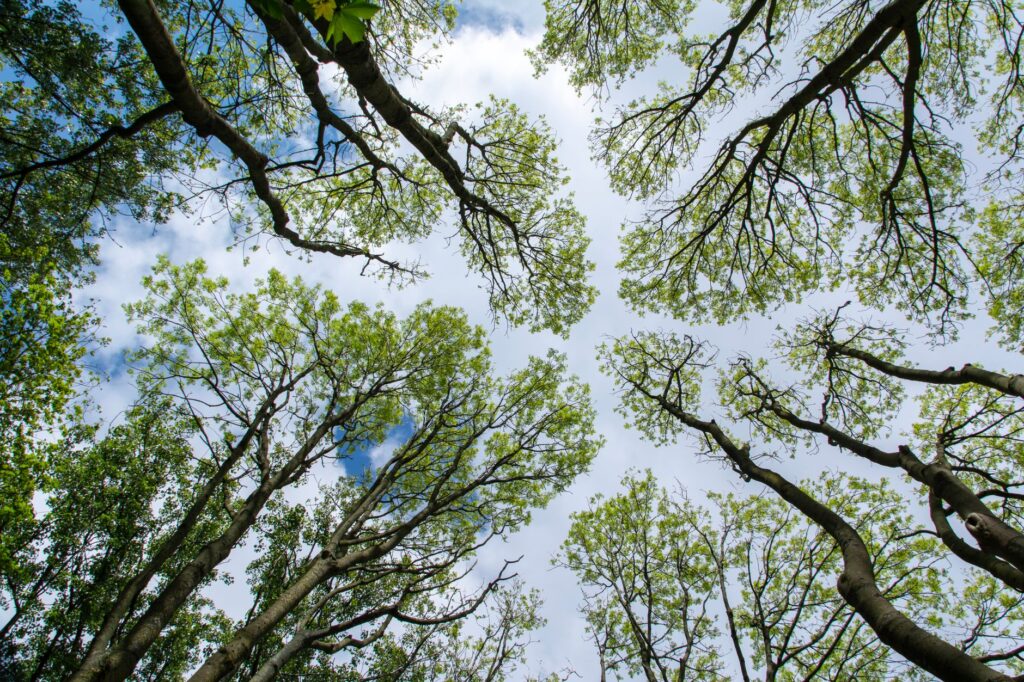
A branch hangs when it fails but something stops it from completing the fall. The most common cases in our area are a limb that tears off a codominant stem and snags in the lower canopy, a dead branch that breaks in a gust and lodges against the tree’s own scaffold, and a limb from one tree that lands in the crown of its neighbor. Dense, close-grown canopies, like the mixed oak and tulip poplar stands you see around Poricy Park, catch more of them than open lawn trees do.
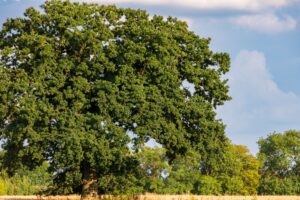
Species matters too. Tulip poplar (Liriodendron tulipifera) and silver maple (Acer saccharinum) have brittle wood and shed large limbs in strong wind. White oak (Quercus alba) holds its wood well but drops heavy dead branches that can hang up on lower growth for weeks. Callery pears split at tight crotches and tend to stay attached by a hinge of bark.
Storm sequence plays a role as well. Wet soil followed by wind, which is a very Bayshore combination in fall, loosens root anchorage and puts extra bending stress on the crown, so the damage often shows up in the upper tree rather than at ground level. That is exactly where a hanger hides.
A Ground-Level Walk to Find Them Safely

Finding hangers is a looking job, not a climbing job. Walk the yard on a calm, dry, bright morning and look up, keeping your feet outside the area directly beneath anything suspicious. Binoculars help more than you would expect, because a snapped limb with brown or exposed pale wood is easy to confuse with a shadow from the ground.
Things to look for as you circle each tree:
- Branches pointing a different direction than their neighbors, especially downward or sideways at an odd angle.
- Fresh pale wood, torn bark or a ragged stub where a limb used to be.
- Leaves that have gone brown and stayed on a single branch while the rest of the tree is still green.
- A pile of fresh bark chips, splinters or small twigs on the ground that does not match anything else in the yard.
- Limbs resting on utility lines, a roofline, a fence or another tree’s crown.
If the tree is leaning, the ground is heaved, or you see root plate movement, stop looking and read the next section before doing anything else. A tree that has been shifted by a storm has different problems than one that merely lost a limb. The tree risk management page from the International Society of Arboriculture explains the thinking professionals use to rate that kind of damage in order of urgency.
Middletown's #1 Tree Expert Company
FREE Inspection & Estimate | Certified Arborists | Trimming, Pruning, Removal, More!
Sponsored
Thinking in Targets: What Is Underneath Matters Most
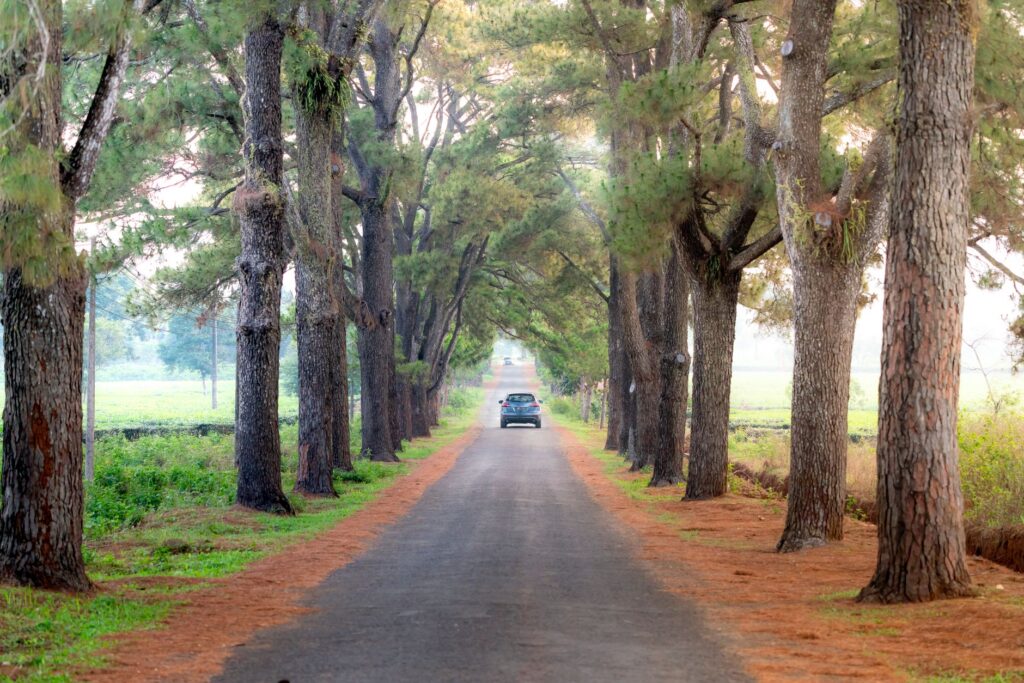
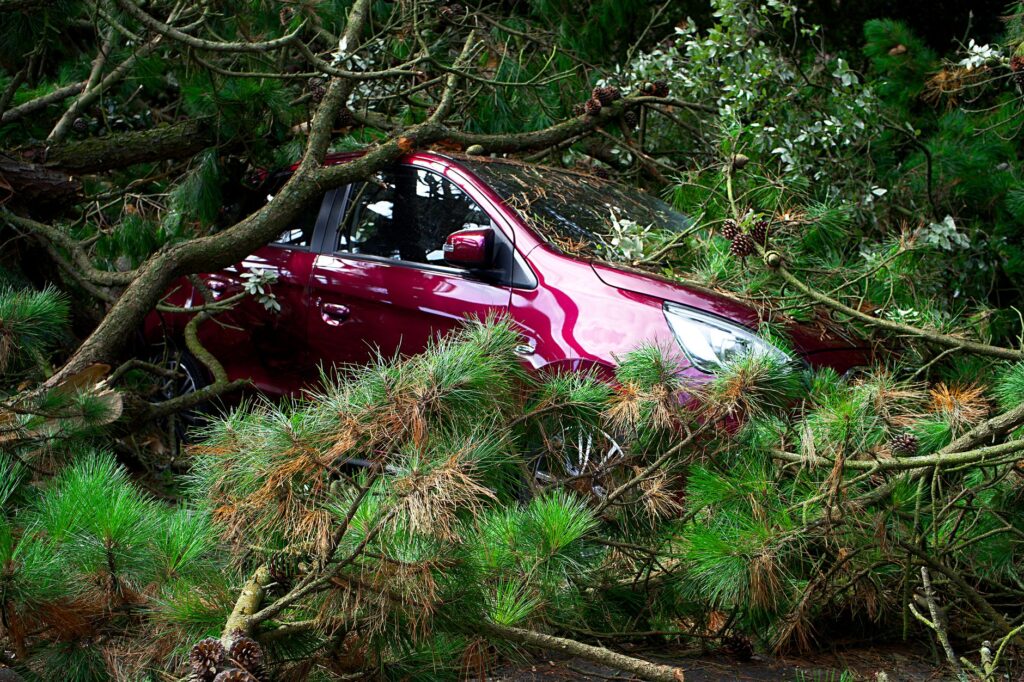
Arborists do not rate risk by the branch alone. They look at the likelihood that it fails, the size of what could fall, and what is below, which they call the target. A hanger over an unused back corner of a lot is a nuisance. The same limb over a patio table, a school bus stop, a driveway you park in every night, or a play set is a genuine hazard, even if the limb is smaller.
A good habit is to mentally draw a circle on the ground beneath the hanger with a radius at least as large as the height at which it hangs. A branch hanging at thirty feet can land well outside the tree’s drip line because it kicks and bounces. Anything you use daily inside that circle is worth moving or protecting until the limb is dealt with.
Timing also matters. Falls are most likely in gusts, in the first hours after rain when added weight stresses the supporting branch, and during thaws after ice. For a Middletown yard in October that means the next nor’easter is the real deadline. If the hanger is over a target and the forecast shows wind, treat it as urgent rather than waiting for a convenient weekend.
What You Should Not Try Yourself
The tempting fixes are the dangerous ones. Pulling on a hanger with a rope from the ground, shaking it loose with a long pole, or standing under it while you cut the supporting branch are all how people get hurt. A limb that is loaded can release in a direction nobody predicted, and the person at the end of the rope is usually standing in the fall zone.
The same goes for ladders. A ladder leaned into a tree and a chainsaw overhead is a combination that safety organizations warn about in every tree care publication, and the injuries are severe. Climbing a storm-damaged tree is especially risky because the tree itself may have hidden cracks, and the branch you rely on for footing may be the next one to fail. The ISA guidance on storm damage and hazardous trees is blunt about this, and it lines up with what experienced climbers tell homeowners every year.
There are limited things that are sensible without any specialized gear. You can rope off the area or park vehicles elsewhere. You can pick up small, fully fallen debris away from the hanger. You can photograph the damage for your records, a step that helps if there is ever an insurance question. Past that, anything involving height, tension, or a running saw should go to someone trained and insured for it.
Choosing Who Gets the Job
Removing a hanger is real tree work, and in New Jersey that is regulated. Whoever you hire should be properly licensed and carry liability and workers’ compensation insurance, and ideally should have an ISA Certified Arborist on staff who can evaluate whether the rest of the tree is sound. Ask to see paperwork before the first cut, not afterward. If you are not sure what the license letters mean, the ISA guide to hiring an arborist lays out what to look for and what questions to ask.
A good arborist will not simply knock the hanger down and leave. They will look at the point where the limb tore away, check for decay or a split that could let the next limb go, and tell you whether the tree needs further pruning or a closer assessment. That second look is often worth more than the removal itself, because the hanger is frequently the visible sign of a structural problem somewhere above it.
Be wary of door-to-door crews who appear in the days after a storm offering cash deals, and of anyone who suggests topping the tree as a repair. Topping creates weak, fast-growing sprouts and lasting decay, and it is the opposite of what a damaged tree needs. A reputable company will quote in writing, explain the method, and tell you plainly what they will do with the debris.
Middletown's #1 Tree Expert Company
FREE Inspection & Estimate | Certified Arborists | Trimming, Pruning, Removal, More!
Sponsored
When to Call a Pro, and the Local Details to Know
The short rule: if a broken limb is lodged anywhere above head height and there is something valuable or people-filled below it, call a certified arborist and keep everyone clear until it is addressed. If the limb is on or near a power line, call the utility first and stay well away. Nothing about a downed or contacting limb is worth guessing at.
Also remember the public side of things. If a hanger or its tree sits along the road or in the right of way, the Township’s rules on who handles it differ from private lots, and the town’s website at middletownnj.org is the right place to start for the current process. If your property borders county parkland, such as the lands managed by the Monmouth County Park System, the park system handles trees inside its boundaries, so reporting rather than touching is the right move.
Finally, make a small habit of it. Walk your trees after every notable wind event, look up, and write down what you see with dates and a photo or two. Most hangers get dealt with easily when they are found in the first week. It is the ones left to swing for a month that cause the stories we all hear afterward. A calm look overhead this weekend costs you nothing and may save a car, a fence or worse.
Photo credits: Featured image by Mike Bird on Pexels; Section 1 by Jan van der Wolf on Pexels; Section 2 by Mike Bird on Pexels; Section 3 by Uriel Mont on Pexels; Section 4 by Quang Nguyen Vinh on Pexels; Section 5 by Marta Wave on Pexels; Section 6 by Davis Arenas on Pexels; Section 7 by Mike Bird on Pexels.