
Middletown's #1 Tree Expert Company
FREE Inspection & Estimate | Certified Arborists | Trimming, Pruning, Removal, More!
Sponsored
Why October Gardeners Eye the Ground Beneath Their Trees

Every October the same thing happens in Middletown yards. The leaves start to drop, the light under the big maple or oak opens up for a few months, and a homeowner looks at the bare, patchy ground beneath it and decides this is the year to fix it. Bulbs go on sale, groundcover plugs show up at the garden centers, and a shovel comes out.
The impulse is a good one. A planted understory looks better than bare dirt, and it can help the tree too. But the ground under a mature tree is not ordinary garden soil. It is the tree’s working root zone, and the way the planting gets done matters more than which plants are chosen.
This guide covers what is actually down there, which plants cooperate with tree roots, how deep and how close it is safe to dig, and how to time a fall planting for Monmouth County’s clay-loam and sandy Bayshore soils.
What You Are Digging Into: The Feeder Root Layer

The common picture of a tree has a deep taproot mirroring the branches above. For nearly every landscape tree in Middletown, that picture is wrong. Most of a tree’s absorbing roots are fine, fibrous feeders packed into the top foot or so of soil, where oxygen and water are both available. Cornell Cooperative Extension’s guidance on selecting groundcovers for the landscape puts it plainly: most fibrous tree roots sit in the top 12 inches, so soil preparation under an existing tree should go only two or three inches deep.
Those feeder roots also reach far beyond the trunk. A root system commonly extends well past the width of the canopy, which means the drip line is not the edge of the root zone. It is closer to the middle of it.
Larger structural roots run nearer the trunk and can sit just under the surface, especially in compacted clay or in the wet, shallow soils near Raritan Bay. A single swing with a spade can sever a root the thickness of a wrist. Cutting a few small roots is survivable. Cutting a large one near the trunk opens a wound that decays, can destabilize the tree, and cannot be undone.
The practical rule that follows is simple. Treat the soil under a tree as something to plant on top of, not into.
Plants That Cooperate With Tree Roots

The best understory plants share a few traits: shallow, fibrous roots of their own, tolerance for dry shade in summer, and the ability to spread by themselves so that planting can stay minimal. Rutgers describes this approach in its guidance on mulching trees and shrubs as part of a wider strategy of keeping the soil surface covered, and groundcovers are one way to do that without piling on wood mulch every year.
Groundcovers and perennials with a good track record under New Jersey shade trees include:
- Pennsylvania sedge (Carex pensylvanica), a native, fine-textured sedge that handles dry shade under oaks
- White wood aster (Eurybia divaricata), a native that blooms in late summer and fall when little else does
- Hostas, shallow-rooted and widely used under existing trees, though deer in Monmouth County will often eat them to the ground
- Pachysandra and periwinkle, the dependable evergreen carpets, with the caveat that both can spread aggressively into nearby woodland
- Ferns and foamflower, good for moister spots near drainage swales
Native choices are worth favoring. They support insects and birds, they are adapted to local rainfall, and they are less likely to escape into places like Hartshorne Woods Park where invasive groundcovers cause real problems.
Middletown's #1 Tree Expert Company
FREE Inspection & Estimate | Certified Arborists | Trimming, Pruning, Removal, More!
Sponsored
Fall Bulbs: Good Partners if Planted Carefully
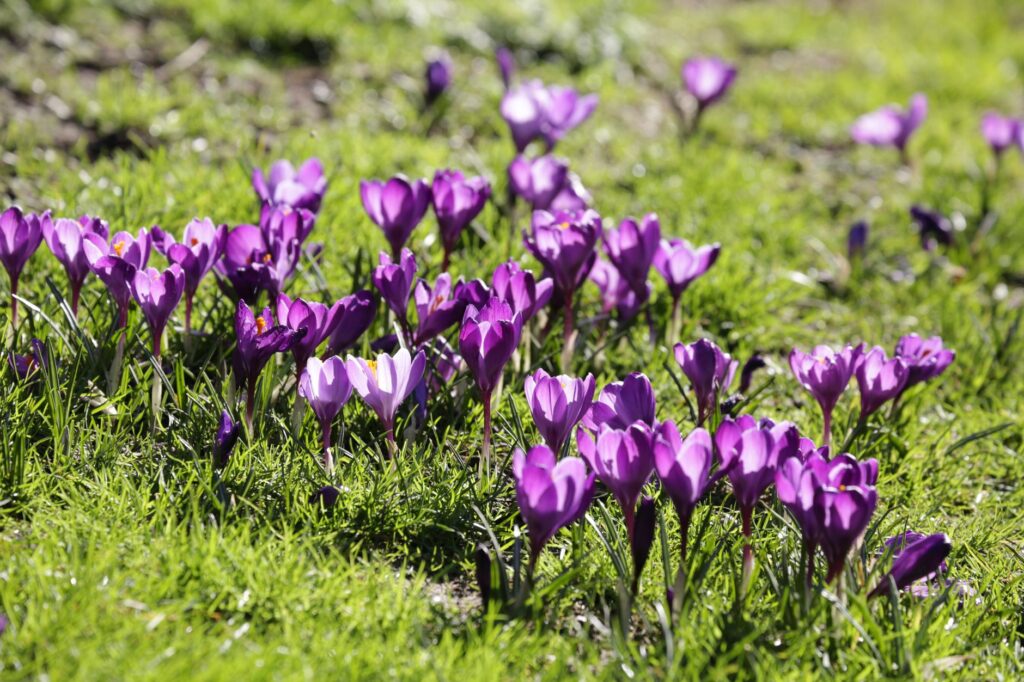
Spring bulbs are one of the best fits for the space under deciduous trees, for a simple reason: they finish their show before the canopy leafs out. Crocus, snowdrops, scilla, and grape hyacinth bloom in March and April, when sunlight still reaches the ground, then go dormant just as the tree’s demand for water ramps up.
Timing is part of the plan. Rutgers’ fact sheet on spring flowering bulbs recommends planting from mid-September through October, once soil temperatures fall below 60 degrees, so roots can establish before the ground freezes. In Middletown that makes the next few weeks the ideal window.
Depth is where tree roots complicate the usual advice. The general rule is to plant two to three times the bulb’s height, which puts large tulips and daffodils around eight inches down. Under a tree, that is deep enough to hit significant roots. Smaller bulbs such as crocus and anemones go in at only three to four inches, which suits the root zone far better. Where a root blocks a planting hole, move the bulb a few inches rather than cutting through.
Evergreen canopies are a poorer match. Spruce and pine block the winter and early spring light that bulbs need to recharge, so bulbs do best under deciduous trees such as maples, oaks, and tulip poplars.
How to Plant Without Hurting the Tree
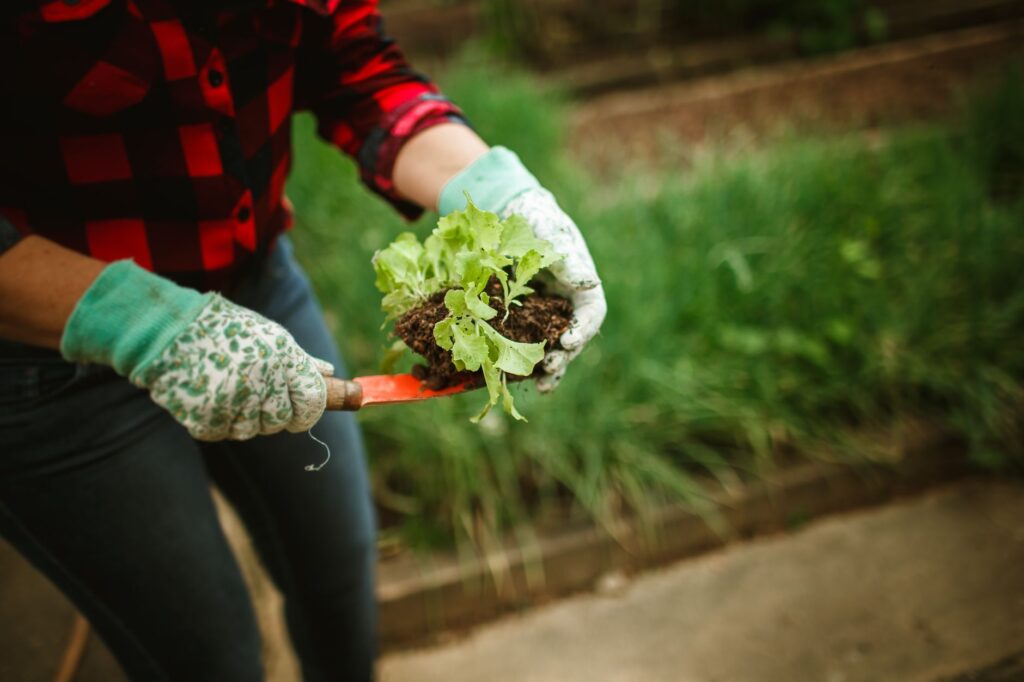
A few habits make the difference between a planting that helps a tree and one that quietly harms it.
- Use a hand trowel, not a shovel. A trowel finds roots by feel before it cuts them.
- Choose small plugs over big containers. A two-inch plug needs a much smaller hole than a gallon pot, so far less soil and fewer roots are disturbed.
- Skip the tiller. Rototilling under a tree shreds feeder roots across the whole bed in minutes.
- Do not add soil on top. Raising the grade even a few inches over the roots can smother them. Where roots are already exposed, a thin layer of mulch is the safer cover.
- Keep plants back from the trunk. Leave a clear ring around the base so the root flare stays visible and dry.
- Water in, then taper off. New plantings need regular moisture through their first season, which also benefits the tree.
Edging is another quiet hazard. Cutting a deep trench around a new bed with a spade slices every root that crosses the line. A shallow lawn-edging tool or a simple fold of the sod is enough.
Mulch, Weed Fabric, and Other Common Mistakes
Mulch is often paired with understory planting, and this is where well-meant projects go wrong. The International Society of Arboriculture recommends a few inches of mulch spread wide and pulled back from the trunk so the base stays visible. Deep mulch piled against the bark holds moisture against it, invites rot and rodents, and can encourage roots to grow up into the mulch instead of down into the soil. Rutgers’ publication on the problems with over-mulching trees and shrubs covers the damage in detail.
Other mistakes show up repeatedly in Monmouth County yards:
- Landscape fabric under the plants. It blocks gas exchange, traps moisture, and eventually gets tangled in roots. Bulbs and groundcovers cannot work through it either.
- Plastic edging sunk deep. A buried barrier can girdle roots over time.
- Fertilizing the new bed heavily. Surface fertilizer feeds the new plants and the lawn grass more than the tree, and excess nitrogen can wash toward the bay.
- Piling stone or boulders on top of roots to create a feature, which compacts the soil and cuts off oxygen.
If the goal is a lower-maintenance yard, a modest planted ring under the canopy, with thin mulch between the plants, does more good than any hardscape.
Middletown's #1 Tree Expert Company
FREE Inspection & Estimate | Certified Arborists | Trimming, Pruning, Removal, More!
Sponsored
When a Tree Needs a Professional Look First

Some situations call for pausing the planting project and asking a certified arborist to look at the tree. If the tree has heavily exposed surface roots, a lean, mushrooms or conks at the base, dead branches in the canopy, or thin, undersized leaves, those are signs the root zone is already under stress. Adding a new bed on top of a struggling root system can tip a declining tree further.
Construction is the other trigger. If the yard has had trenching, regrading, or heavy equipment within the drip line in the last few years, the soil may be compacted enough that groundcovers will struggle and the tree’s problems are bigger than its appearance. An arborist can test for compaction and advise whether an air-spade treatment or a different layout makes sense.
For a healthy tree, the fall plan is straightforward: small bulbs at the right depth, shallow native groundcovers set in as small plugs, thin mulch kept off the trunk, and no digging near the large roots. Done that way, the planted understory protects the soil, adds spring color, and keeps the tree healthy for decades. When there is any doubt about a root, a hazard, or the tree itself, an ISA-certified arborist can sort it out before the first bulb goes in.
Photo credits: Featured image by Engin Akyurt on Pexels; Section 1 by 정규송 Nui MALAMA on Pexels; Section 2 by Serhii Barkanov on Pexels; Section 3 by Wyxina Tresse on Pexels; Section 4 by Peter Muscutt on Pexels; Section 5 by Helena Lopes on Pexels; Section 6 by https://kaboompics.com/ on Pexels; Section 7 by Grant on Pexels.