
Middletown's #1 Tree Expert Company
FREE Inspection & Estimate | Certified Arborists | Trimming, Pruning, Removal, More!
Sponsored
Why Your Maple Turned Early While the Oak Next Door Stays Green
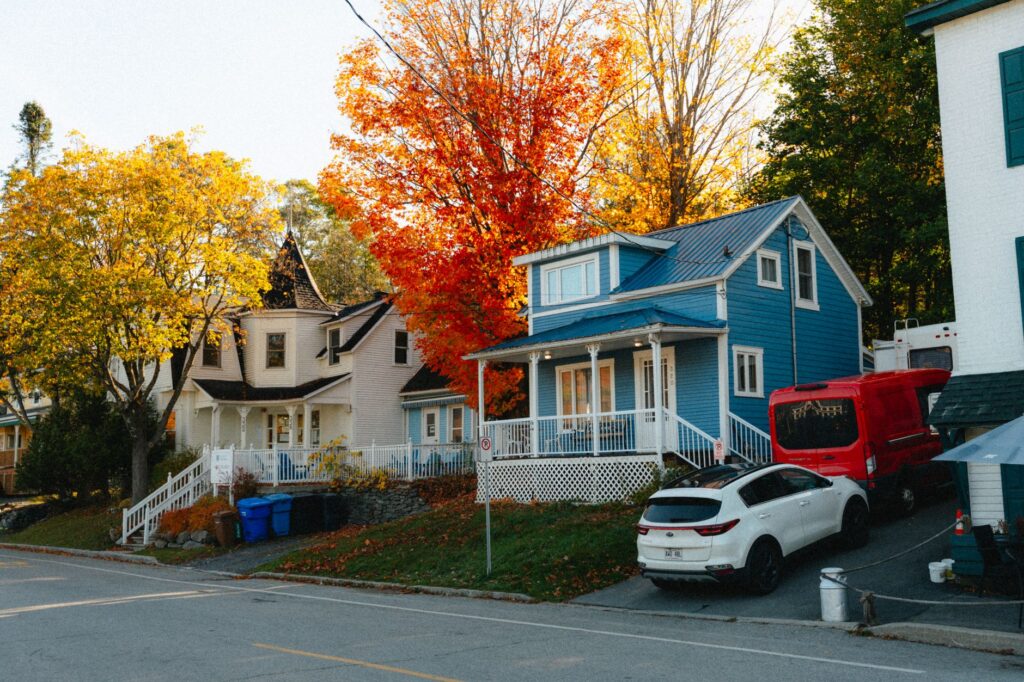
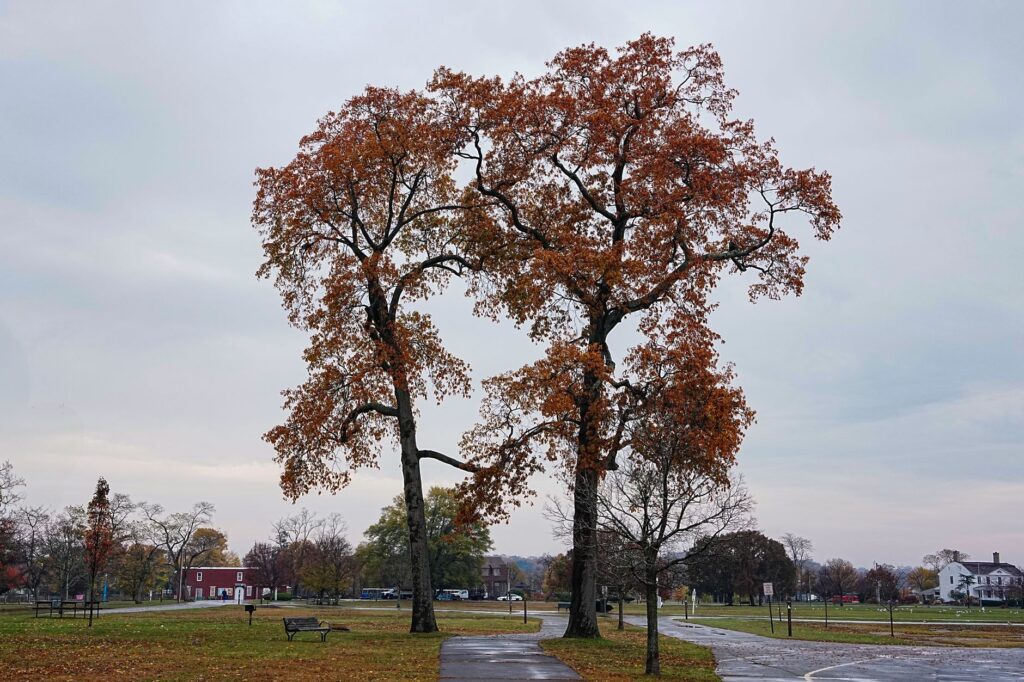
Every October, somewhere along a Middletown street, a homeowner stops at the mailbox and asks the same question. Why is my red maple already crimson while the oak across the fence is still dull green, and the sweetgum down the block hasn’t budged? The answer is that fall color is not a single event. It is a slow, species-specific chemical handoff, and the timing tells you far more about a tree than most people realize.
As a certified arborist, I read fall foliage the way a doctor reads a pulse. A tree that colors on schedule, drops leaves cleanly, and does it in a similar window year after year is usually running a healthy budget. A tree that turns weeks ahead of its neighbors, or fades to brown without ever showing color, is sending a message about its roots, its water supply, or its structure.
This guide covers what is actually happening inside a leaf in October, which trees along the Raritan Bayshore normally turn first and last, and which timing quirks are harmless versus worth a closer look. By the end, you should be able to walk your own yard and tell the difference between a tree that is simply doing autumn and one that is quietly asking for help.
What Actually Happens Inside a Leaf in October
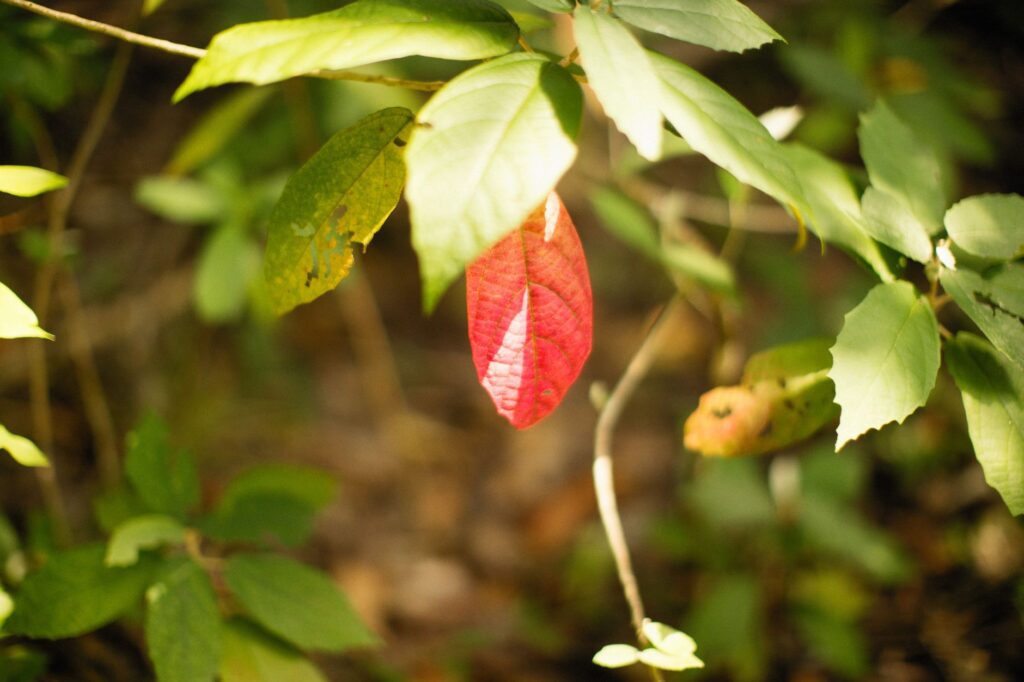
Leaves are green because of chlorophyll, the pigment that captures sunlight and powers the tree all summer. As days shorten and nights cool, the tree stops making new chlorophyll and begins pulling nutrients such as nitrogen and phosphorus back into branches and roots for storage. Once the green fades, yellow and orange pigments called carotenoids, which were present all along, finally become visible. That is the story behind the golden hickories and tulip poplars you see around Poricy Park.
Reds and purples are different. Anthocyanins are produced fresh in the fall, from sugars trapped in the leaf when cool nights slow the movement of sap out of the blade. That is why the best red color comes after a run of bright, dry days and crisp, frost-free nights. The USDA Forest Service explains how light, temperature and moisture combine to set the pace each season.
At the base of every leaf stem, a thin layer of cells called the abscission layer forms and slowly seals the connection to the twig. When it is complete, the leaf lets go. Understanding this sequence matters because stress interrupts it. Drought, root injury, or disease can trigger the abscission layer too early, which is why a stressed tree sometimes drops brown, lifeless leaves in September instead of finishing its show.
In short, color is the visible side of a tree closing the books for the year. The cleaner the process, the better the tree usually looks next spring.
Which Middletown Trees Turn First, and Which Hold Out
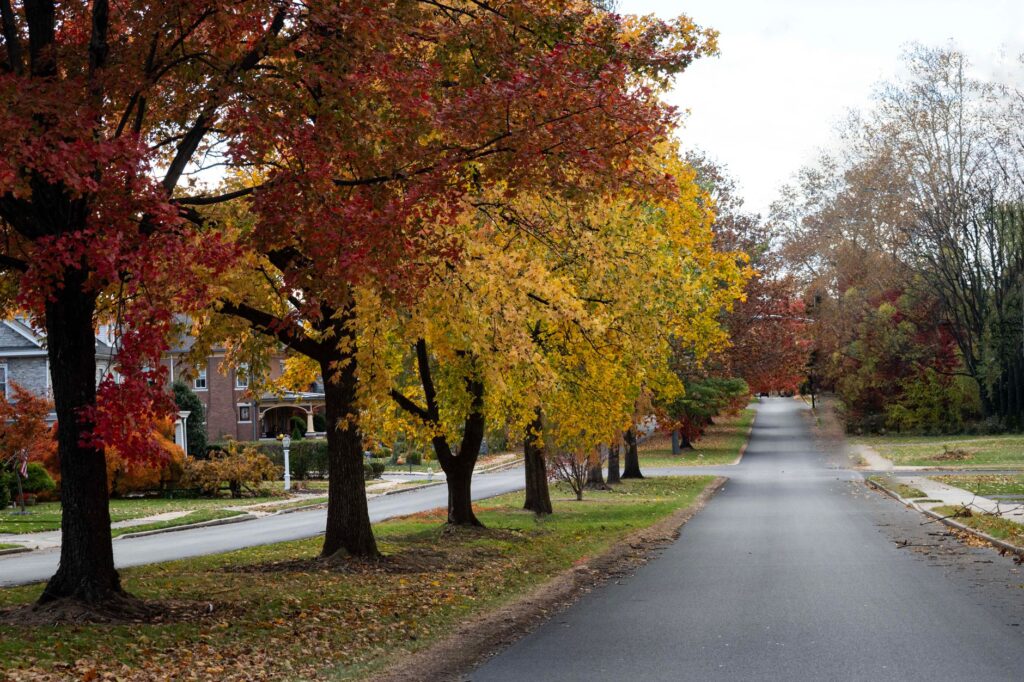
Species matter more than any other factor, so start with a baseline. Here is roughly what to expect across Middletown Township in a typical year:
- Early (late September to early October): red maple (Acer rubrum), black gum or tupelo, sumac, and Virginia creeper on fences and trunks.
- Mid season (mid October): sugar and Norway maple, sweetgum, tulip poplar, birch, and dogwood.
- Late (late October into November): white oak, red oak, pin oak, and beech, which often fades to bronze and clings to its leaves into winter.
- Last to go: Bradford pear and some willows, which can still be green after the first frost.
Location shifts these dates too. A tree on the exposed Bayshore edge near Port Monmouth, with salt in the wind and sandy soil underfoot, will often color and drop sooner than the same species in a sheltered Lincroft yard with deeper loam. Street trees surrounded by pavement run warmer and may hold color a week longer.
Comparing a tree against its own species is the useful test. If your red maple turns three weeks before every other red maple on the block, the neighbors are not the difference. Something about that particular tree, its roots, or its growing space is.
Middletown's #1 Tree Expert Company
FREE Inspection & Estimate | Certified Arborists | Trimming, Pruning, Removal, More!
Sponsored
When Early Color Is a Distress Signal
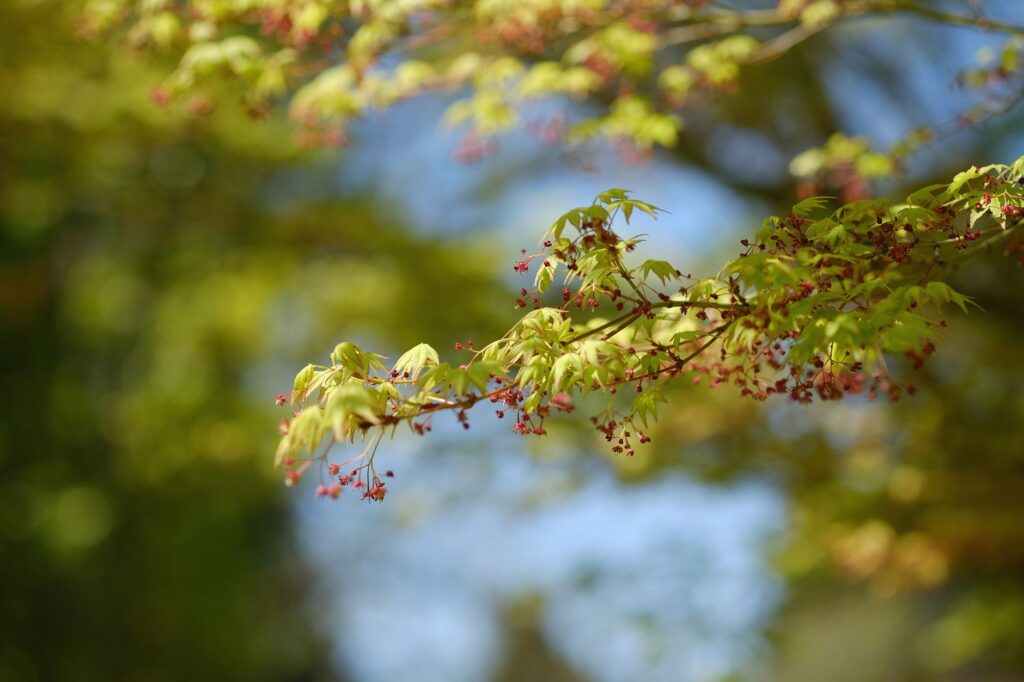
Premature fall color is the most common warning I see homeowners dismiss. A single branch that turns red in August, or a whole tree that looks tired by early September, usually means something is interrupting the flow of water or nutrients. The causes tend to fall into a handful of buckets.
The first is drought and heat. Middletown has had several dry stretches that left shallow roots scrambling, and a tree short on water will shed leaves early to protect itself. The second is root trouble, whether from soil compaction, construction, grade changes, or girdling roots wrapped around the base. Roots that cannot deliver water leave the crown starving, and the canopy shows it first.
The third is disease or decay. Verticillium wilt in maples, for example, often announces itself as one scarlet branch while the rest of the tree is still green. Borers, cankers, and trunk decay can all produce the same early flare. The Rutgers NJAES extension library is a reliable place to match symptoms to likely causes before you call anyone out.
The pattern to watch for is localized color. When one side or one limb turns weeks ahead of the rest, think localized problem, such as a canker, a damaged root on that side, or a cracked union. When the whole crown turns together but only slightly early, the cause is more likely environmental and temporary.
Dull, Brown, or Late Color: What the Other End Tells You
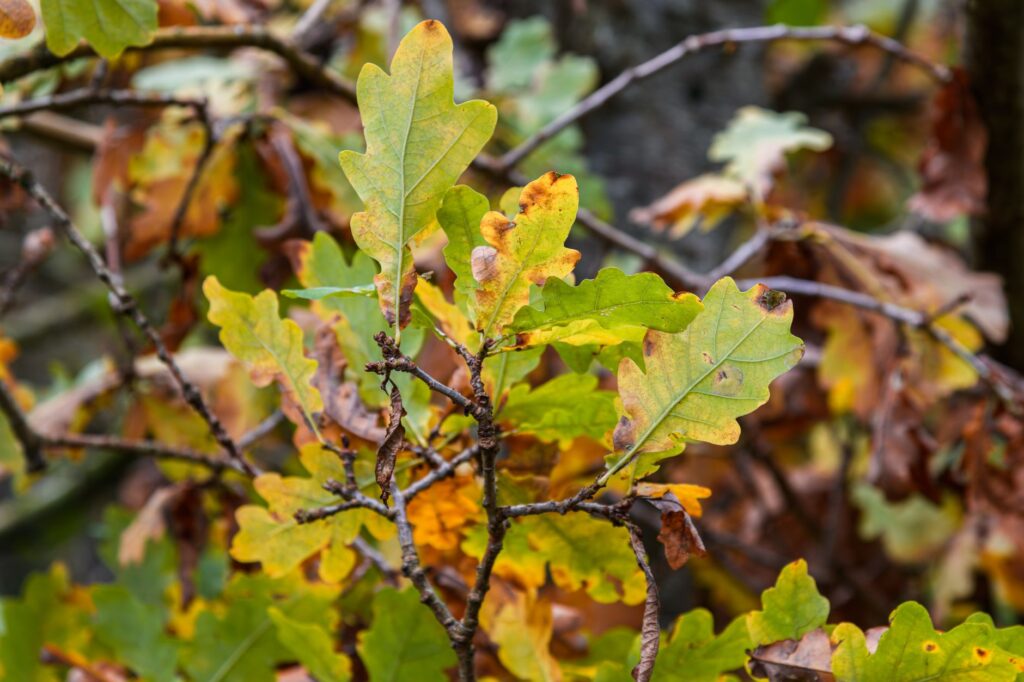
The opposite problem gets less attention. A tree that never develops color, or whose leaves simply turn brown and drop, is also telling you something. Pin oaks in alkaline soil often fade to a washed-out yellow because of iron chlorosis, a nutrient lockout rather than a seasonal pattern. Trees hit by a hard early frost can freeze before the color chemistry finishes, leaving crunchy brown leaves that hang on.
Heavy summer defoliation matters too. Trees that lost their leaves to spongy moth or leaf scorch earlier in the year frequently produce a second, smaller flush and then color poorly, because the sugar reserves are low. That is a tree running a deficit, and it needs a calm winter and consistent watering next summer more than any product from a garden center.
Late color is usually less worrying than early color. A warm autumn, abundant rain, or a tree with a vigorous late growth flush may simply be behind schedule. The Trees Are Good homeowner library from the International Society of Arboriculture offers plain-language guidance on this kind of seasonal behavior.
The takeaway is not to panic over a dull year. One muted season rarely means decline. Several consecutive years of weak color, thinning canopies, or smaller leaves are the pattern worth acting on.
A Ten-Minute Fall Foliage Check You Can Do This Weekend
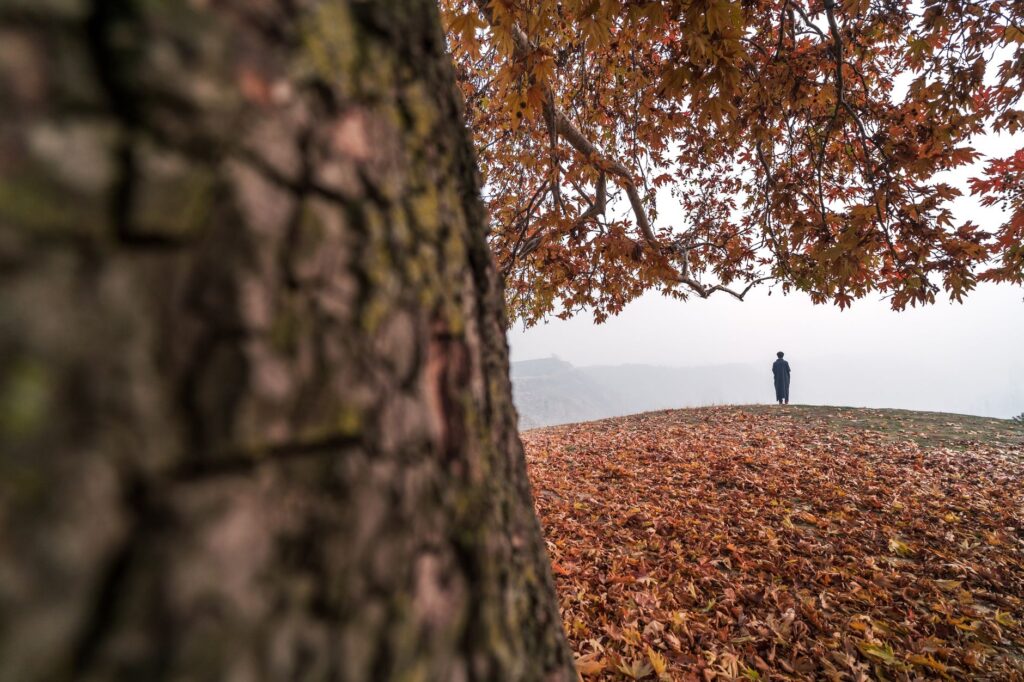
You do not need tools to get useful information out of fall color. Pick a clear afternoon and walk each significant tree in your yard with this simple routine.
- Compare to species norm. Note whether the tree is ahead of or behind similar trees nearby.
- Look for patchy color. One limb or one side turning early is the signal worth writing down.
- Check leaf size and density. Small, sparse, or undersized leaves point to root or water stress.
- Inspect the base. Look for mulch piled against the trunk, exposed roots, fungal conks, or cracks.
- Photograph it. A dated photo each October builds a record you can compare year over year.
While you are out there, rake or mow-mulch fallen leaves rather than bagging them where possible, and pull mulch back so it never touches the bark. Keep watering until the ground freezes if the fall stays dry, because evergreens and young trees continue to lose moisture through the winter.
If you want broader context for what you are seeing, the NJ Forest Service publishes statewide forest health information that helps put local conditions in perspective.
Middletown's #1 Tree Expert Company
FREE Inspection & Estimate | Certified Arborists | Trimming, Pruning, Removal, More!
Sponsored
When Fall Color Is Your Cue to Call a Pro
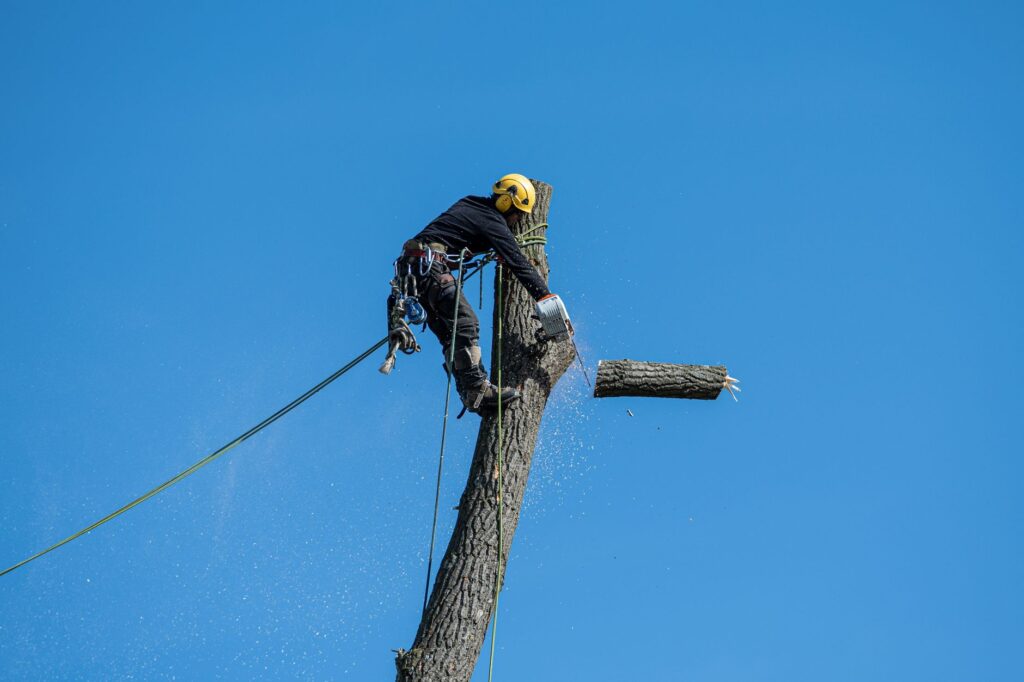
Most years, fall color is just a pleasant show. Some years, it is the earliest and clearest warning you will get before winter storms test a weakened tree. Consider calling a certified arborist if you notice any of the following: a single limb turning weeks ahead of the rest, leaves that stay small and sparse across several seasons, color that fades to brown every year, or any change paired with cracks, fungal growth, or dead branches in the canopy.
A professional assessment can check root flare, soil conditions, and internal soundness, and can tell you whether the problem is a quirk of this year or a trend. Look for an arborist credentialed through the International Society of Arboriculture, and ask them to explain what they find in plain terms. A good one will talk about observation and monitoring before they talk about removal.
It is also worth confirming local rules before any major work on a large or protected tree. The Middletown Township website lists the current ordinances and permit requirements.
So enjoy the color while it lasts, and keep a loose eye on the trees that look different from their neighbors. Autumn gives you a free, once-a-year health report on every tree in your yard, and it costs nothing to read it.
Photo credits: Featured image by David Kanigan on Pexels; Section 1 by Mathias Reding on Pexels; Section 2 by Alexey Demidov on Pexels; Section 3 by Ray Suarez on Pexels; Section 4 by Lana on Pexels; Section 5 by Irek Marcinkowski on Pexels; Section 6 by Iqbal farooz on Pexels; Section 7 by Jacky on Pexels.