
Middletown's #1 Tree Expert Company
FREE Inspection & Estimate | Certified Arborists | Trimming, Pruning, Removal, More!
Sponsored
Why the First Snow Is Hard on Tall, Narrow Evergreens
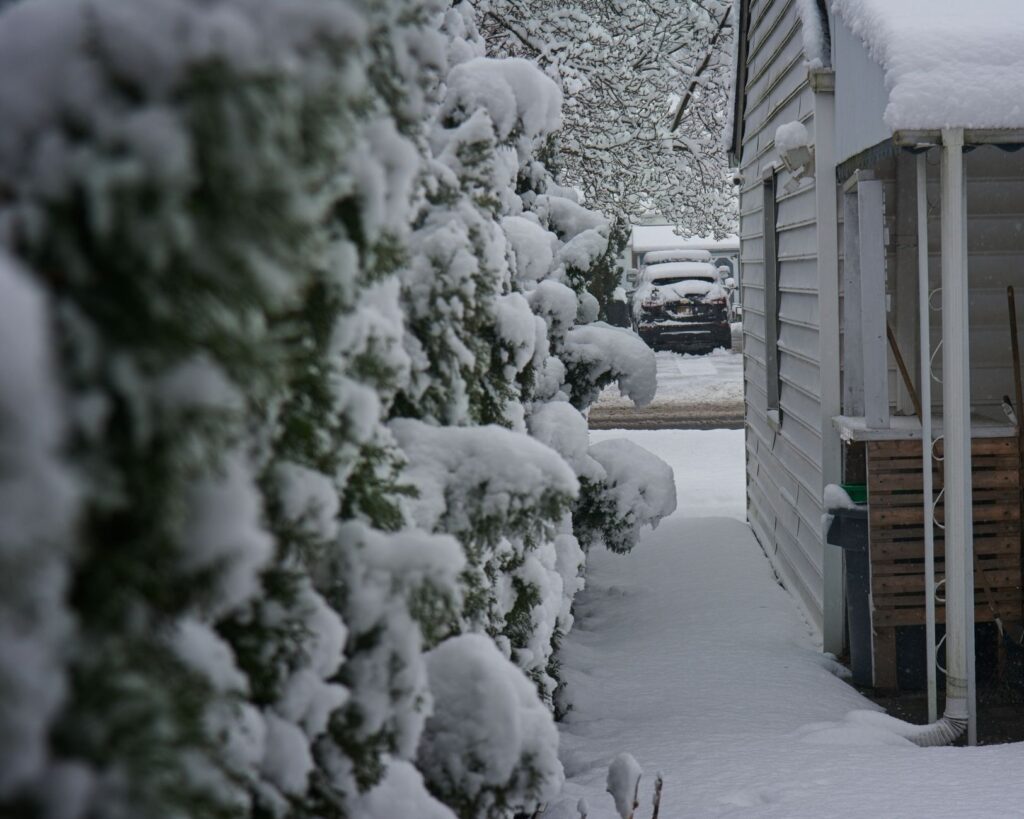
Most Middletown homeowners watch the first wet snow of the season from a window and think only about the roads. The trees in the yard feel it differently. A tall, narrow evergreen with many upright stems, such as a columnar arborvitae (Thuja occidentalis) along a driveway, can catch a surprising weight of snow on its dense foliage in a single night. The stems bend outward, and the plant may never fully spring back.
That bending is the quiet kind of storm damage. Michigan State University Extension notes that bending and breakage on columnar arborvitae is one of the most common forms of snow damage it sees. The plants are bred for a tight, slender shape, which means the stems lean close together and share the load poorly once wet snow settles in the crown.
The good news is that this is a damage type you can mostly prevent with a little work in late November, before anything has fallen. This article covers how snow actually hurts these plants, what to do beforehand, what to leave alone during a storm, and when a damaged shrub is worth saving.
What Heavy Snow Does Inside the Plant
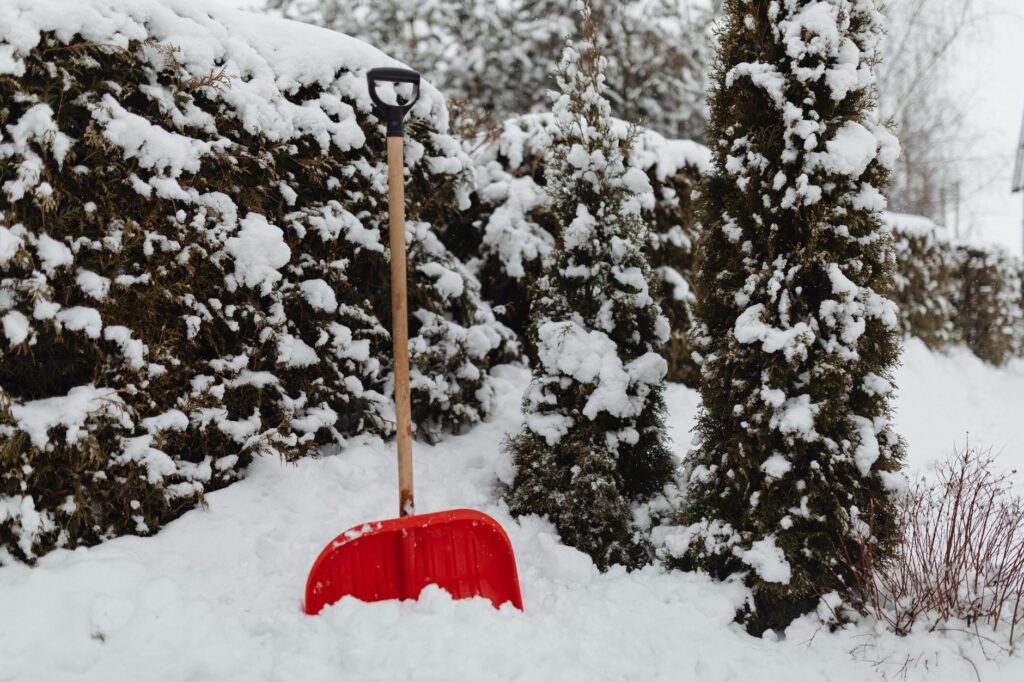
Snow is not just weight. A wet, heavy snow clings to foliage, and each added layer pushes the stems outward from the center. Stems that grow from the same base are held together mainly by bark and wood fibers that are thin and flexible, so the load pulls them apart rather than snapping a single trunk.
Once a stem has been splayed open, the plant tends to stay open. The center of an arborvitae or upright juniper is shaded and holds little foliage, so there is nothing to close the gap again. In a Bayshore yard, where nor’easters bring wind on top of the snow, the stems that were already leaning take the worst of it. Wind drives snow against one side of a hedge and loads that side more than the other.
Ice adds another layer. A freezing rain after a snowfall coats the foliage in a shell that locks the branches in the bent position. This is why the timing of what you do matters: preparing the plant before the storm is far more effective than rescuing it in the middle of one. Fresh breaks and tears also open wounds that dry out in the cold, winter wind and leave brown, dead patches the following spring.
Which Middletown Plants Are Most at Risk

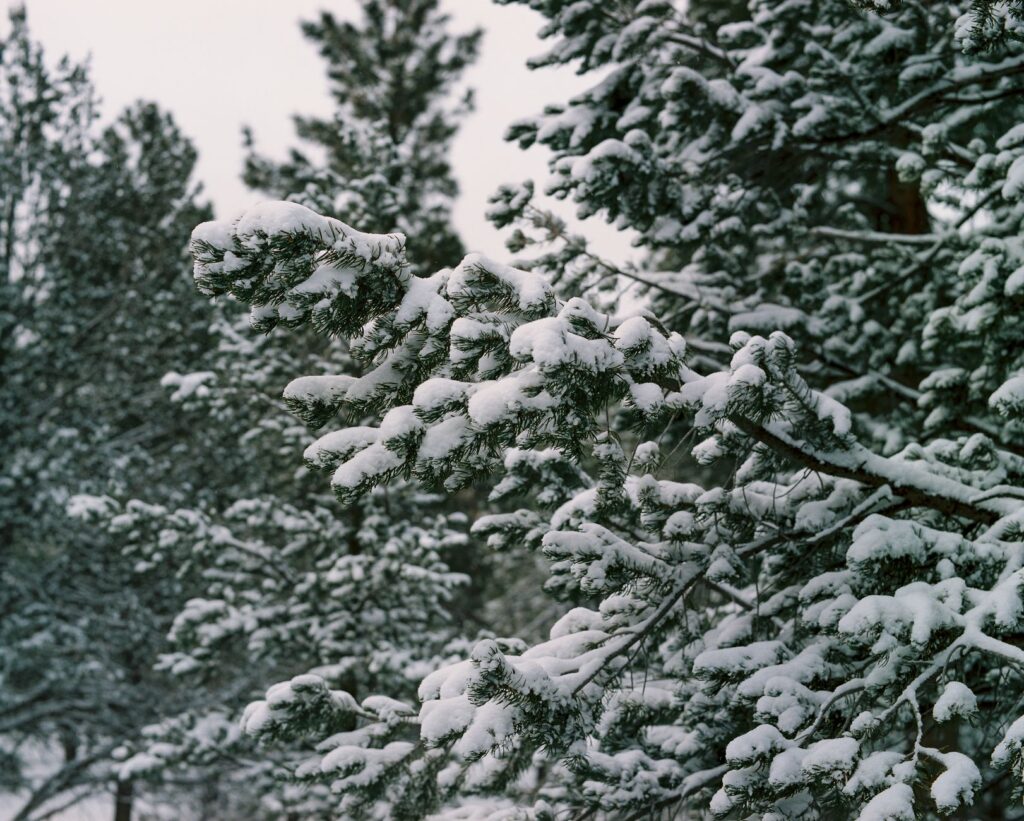
Not every evergreen needs attention. A spreading white pine or a broad Eastern red cedar (Juniperus virginiana) sheds snow on its own because its branches angle downward and its crown is open. The plants to look at are the ones with many upright stems and dense foliage.
- Columnar and pyramidal arborvitae, especially the tall hedge rows planted along property lines for privacy
- Upright junipers and the multi-stem forms sold as accent plants
- Multi-stem yews and boxwood clumps near a foundation
- Young, thin-stemmed trees that have not yet developed a strong central leader
- Any evergreen planted directly below a roof edge, where snow slides off the roof onto the plant
Location matters as much as species. Michigan State University Extension advises planting beyond the roof line so sliding snow does not land on the plants, which is useful for anyone planning next year’s landscaping. Plants on the exposed side of a Port Monmouth or Leonardo lot facing the bay also deserve a closer look than those sheltered by a house or a stand of mature oaks.
Older, established arborvitae with sturdy stems are usually fine. The risk is highest in young hedges and in plants that were sheared tight every year, since pruning to a flat face can produce a dense wall of foliage that traps even more snow.
Middletown's #1 Tree Expert Company
FREE Inspection & Estimate | Certified Arborists | Trimming, Pruning, Removal, More!
Sponsored
The Late November Fix: Tie the Stems Up Before Snow
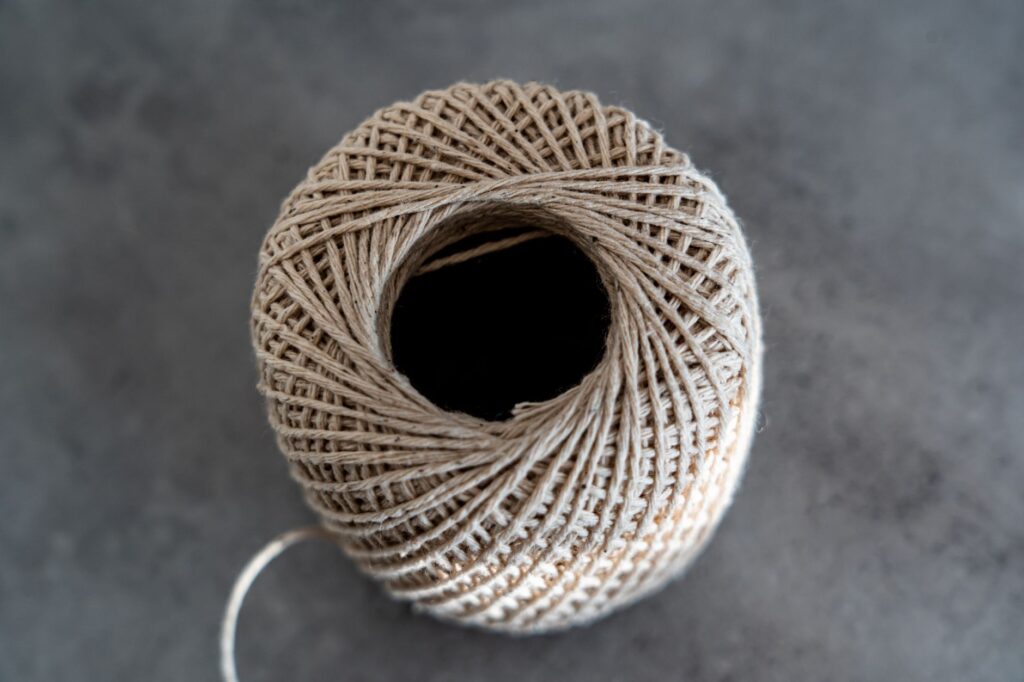
The simplest and most reliable protection is to tie the stems together. Iowa State University Extension recommends tying up multi-stemmed evergreens in the fall and removing the support in spring. Done correctly, the tie holds the stems close to the center so the load is shared across the whole plant, and the loose cone shape that results sheds snow better than a wide, open one.
The method is straightforward. Start near the base and wrap soft twine, strips of old cloth or wide tree ties in a gentle spiral up the plant, drawing the stems in only as far as they will go without strain. Work in dry weather and do not cinch hard. Overtightened wire or thin cord can cut into bark and damage the cambium, which is the thin, living layer under the surface.
- Use soft, wide material rather than wire, fishing line or thin string
- Make the first wrap about a third of the way up, then add spirals every foot or so
- Pull the stems in snugly but leave room for foliage to breathe
- For tall plants, work from a stable ladder with a helper holding the base
- Mark a calendar reminder to remove the ties once the last snow of the season has gone
That last step is easy to forget. Leaving ties on all summer traps moisture against the stems and can leave a girdling groove as the plant grows. The wrap is seasonal protection, not a permanent fix.
What to Do, and Not Do, During and After a Snowfall
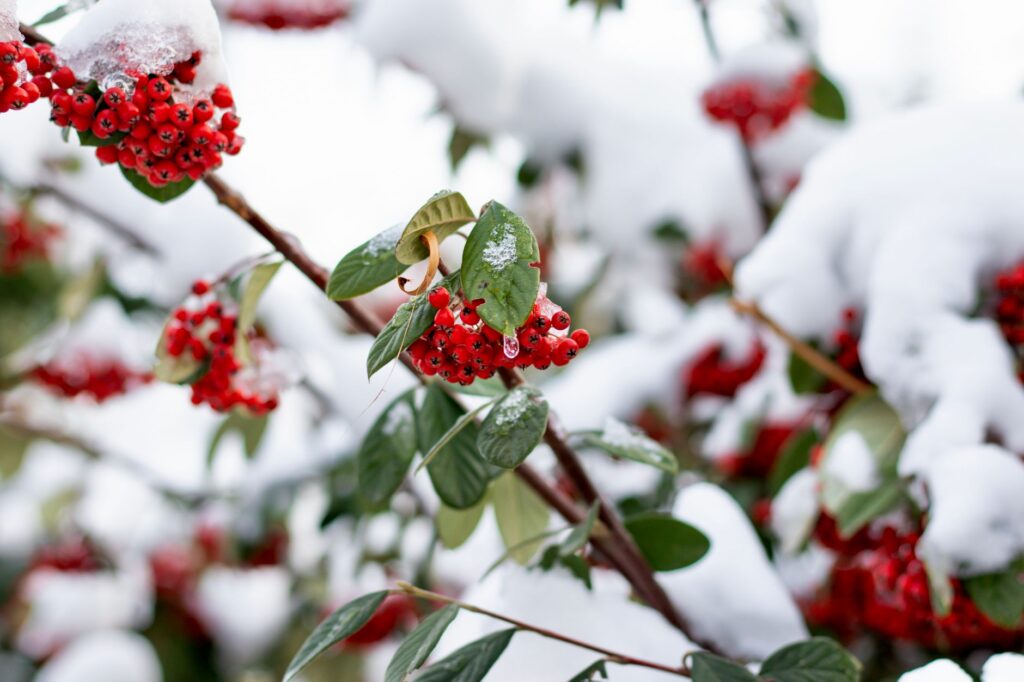
If snow arrives before you have tied anything, resist the urge to knock it off with a broom. Iowa State University Extension and other extension services advise against beating ice and snow off plants, because frozen branches are brittle and break under force that would not harm them in warmer weather. North Carolina State Extension makes a similar point about ice: let it melt on its own schedule.
Light, fluffy snow on dry foliage can be brushed gently away with an upward sweep of a soft broom, working from the bottom up so you lift the load rather than shove it down onto lower stems. That is the one case where a gentle hand helps. For wet snow, ice or anything crusted over, stand back and wait for a thaw.
After the storm, look at the plant in daylight before deciding anything. Stems that are bowed but intact will often recover over a few weeks as the load melts. Cracked stems with the bark torn open will not. Resist pruning for now, because frozen wood breaks more easily and fresh cuts in midwinter do not heal until growth resumes. A sound plan is to wait until the following spring, then trim only what is clearly dead or broken.
Salvage or Replace: Reading the Damage
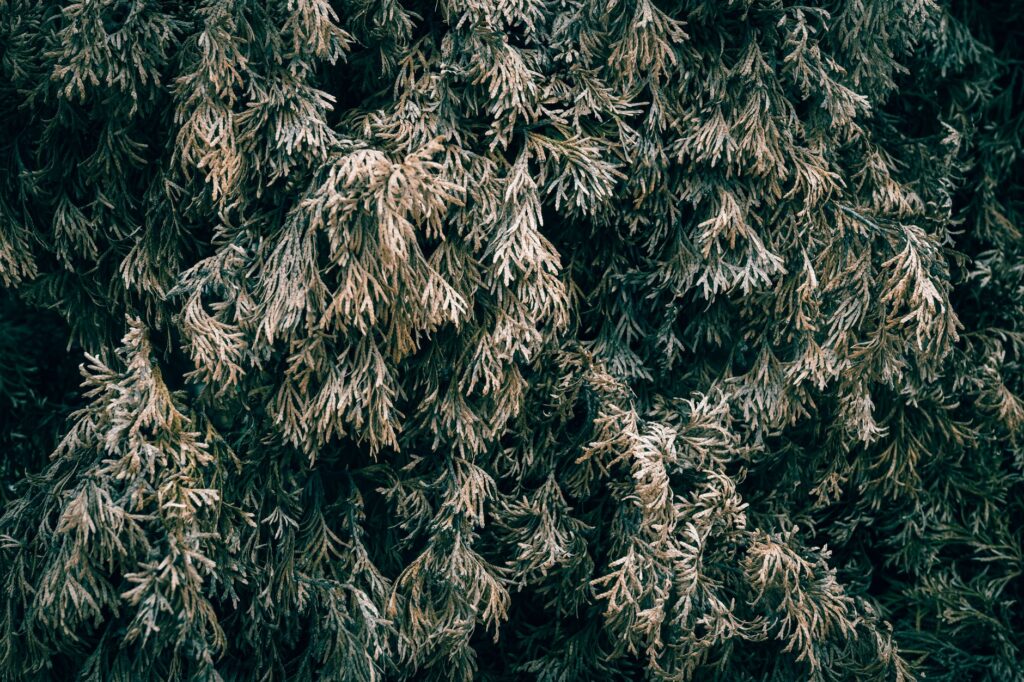
When spring arrives and the snow is gone, take stock. A shrub that bent but did not break can often be coaxed back with a season of support. A shrub whose center has split wide open usually cannot. North Carolina State Extension notes that conifers that split apart in an ice storm generally do not recover and are better replaced than patched.
Here is a practical way to sort the damage:
- Bent, no cracks: tie the stems together in spring and leave the support on through the growing season
- One stem cracked, the rest sound: remove the broken stem cleanly at its base and let the others fill in
- Several stems splayed with bare, brown center: expect only partial recovery, since interior growth rarely returns on arborvitae and junipers
- Main trunk split or leaning with exposed roots: treat as a hazard and have it evaluated
Do not rush to fertilize a stressed plant. A deep watering in a dry spell and a thin ring of wood chip mulch kept clear of the stems do more good than any quick fix. Stressed evergreens can also attract bagworms and other pests the next summer, so watch the foliage as the season goes on.
Middletown's #1 Tree Expert Company
FREE Inspection & Estimate | Certified Arborists | Trimming, Pruning, Removal, More!
Sponsored
When a Certified Arborist Is Worth Calling
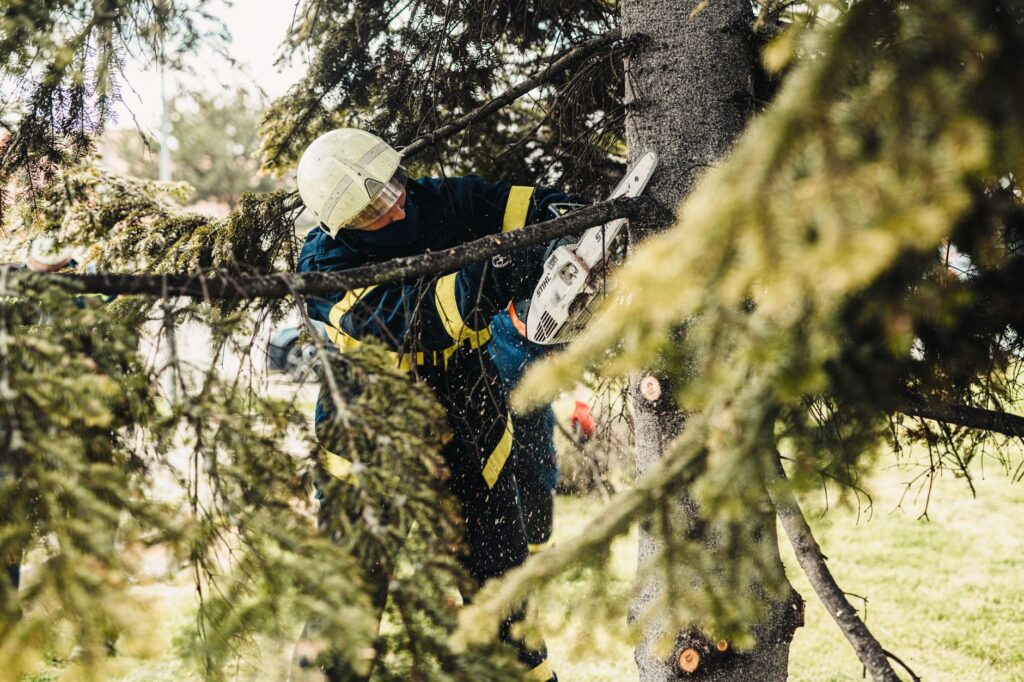
Most of this work is within reach of a homeowner with a ladder, a spool of twine and a free Saturday. A few situations are different. A tall evergreen leaning toward a house, a garage or a utility line is no longer a gardening question. Neither is a plant with a cracked trunk or one whose roots have lifted on one side. Those are risk judgments, and they are made best by a person trained to read them.
The International Society of Arboriculture keeps tree care advice for owners and a way to find an ISA Certified Arborist in New Jersey. It is wise to confirm the credentials of anyone you hire, and to ask for a written scope of work before they start. For help choosing hardy plants for next year, local knowledge matters too, and parks such as those run by the Monmouth County Park System offer a look at which native evergreens hold up well in this part of the county.
To recap, the task is small and the timing is narrow: tie up the vulnerable stems in late November, leave the snow alone when it comes, wait for spring to judge the damage, and replace what cannot be saved. A little work now keeps the driveway hedge standing tall through January.
Photo credits: Featured image by Curtis Cheng on Pexels; Section 1 by kaboompics on Pexels; Section 2 by Alfo Medeiros on Pexels; Section 3 by Patrick Nizan on Pexels; Section 4 by Castorly Stock on Pexels; Section 5 by Ebru S on Pexels; Section 6 by Wyxina Tresse on Pexels; Section 7 by Helena Jankovičová Kováčová on Pexels.