Middletown's #1 Tree Expert Company
FREE Inspection & Estimate | Certified Arborists | Trimming, Pruning, Removal, More!
Sponsored
The Gray-Green Crust on Your Middletown Tree: Is It Doing Harm?
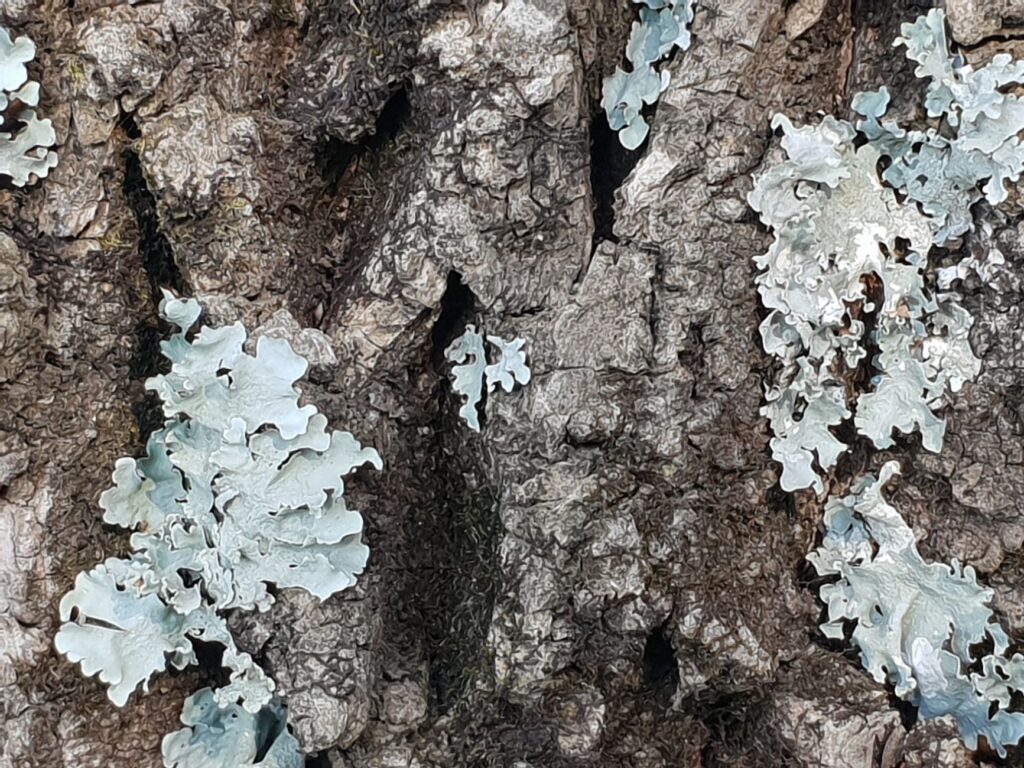
Walk a Middletown street in mid-November, once the maples and oaks have dropped their leaves, and the bark suddenly becomes the main attraction. Pale gray-green patches, orange freckles, and soft green fuzz show up on trunks and limbs that were hidden behind foliage all summer. Many homeowners spot them, assume the tree is sick, and start searching for a spray or a scrub brush. Others have been told by a well-meaning neighbor that the tree is dying because it is covered in moss.
In almost every case the growth in question is lichen, moss, or algae, and none of them is attacking the tree. They are passengers that use bark as a place to sit. Still, there is a real question hiding behind the worry: sometimes heavy growth of this kind is a symptom of something else going on in the canopy, and the difference matters for how you read a tree.
This article walks through how to tell the common bark colonizers apart, why the Bayshore climate suits them so well, what they can and cannot tell you about tree health, and when a crusty trunk is worth a call to a certified arborist. The short version is that the growth itself is rarely the problem, but the pattern it grows in can be a useful clue.
Lichen, Moss and Algae: Three Different Things
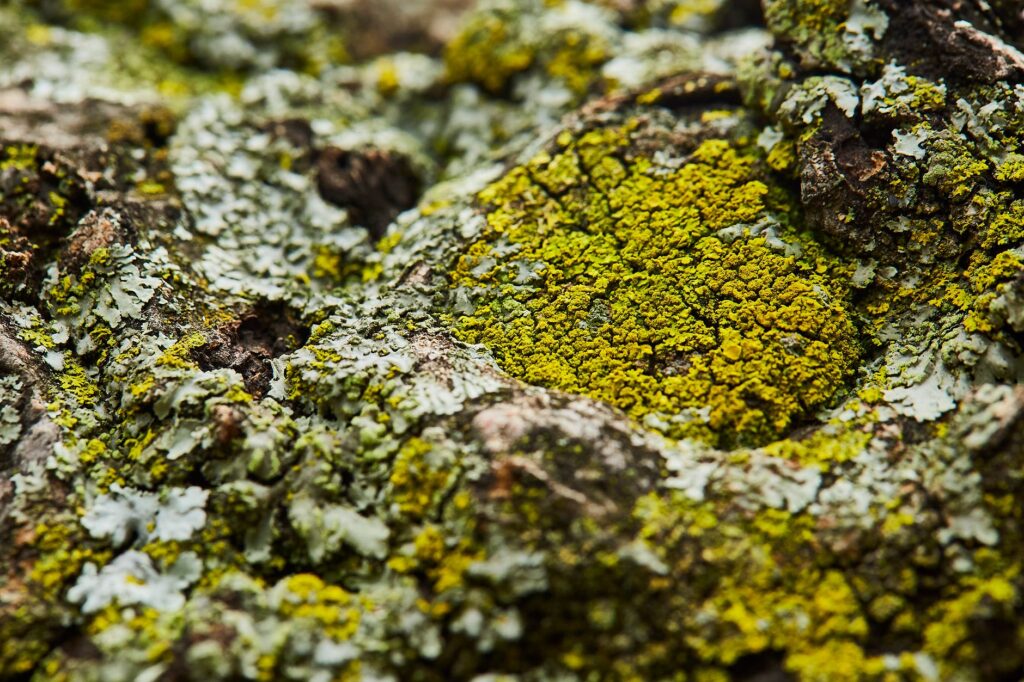
The three colonizers look similar from the sidewalk, but they are different organisms, and knowing which one you have makes the rest of the diagnosis easier.
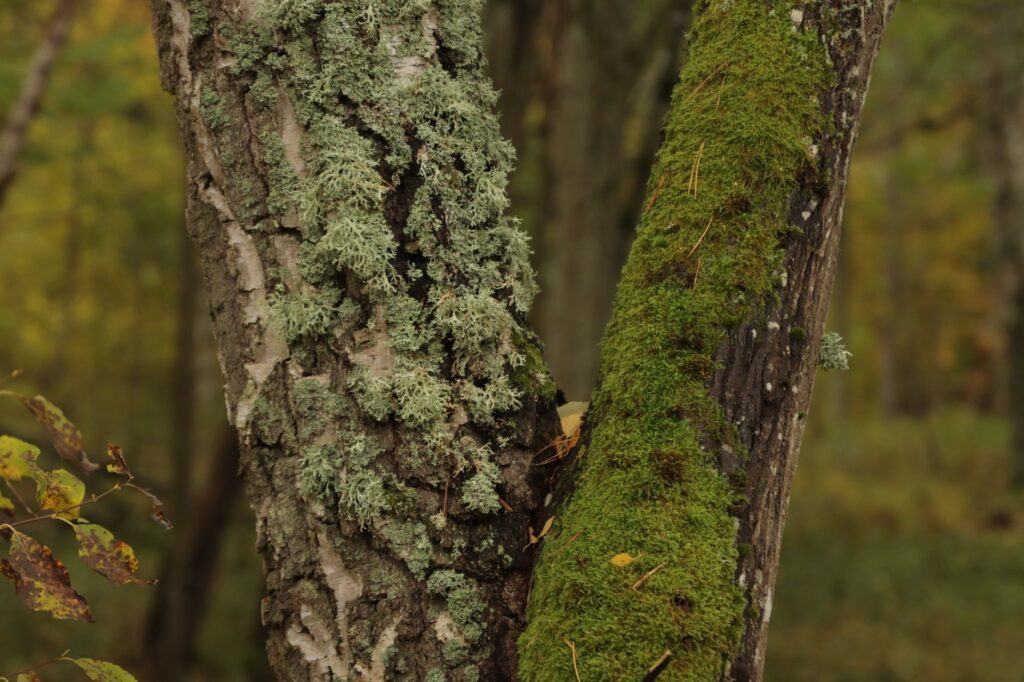
- Lichen is not a single organism. It is a partnership between a fungus and an alga or cyanobacterium, living together in a crust or leafy patch. Crustose lichens look like flat gray, white, or orange paint. Foliose lichens form ruffled, leaf-like rosettes. Fruticose lichens, such as the gray-green tufts hanging from twigs, look like tiny shrubs. Lichens draw moisture and nutrients from rain and air, not from the tree.
- Moss is a true plant with tiny leaves, and it forms soft green mats, usually on the shady, damp side of a trunk or on the top of a large limb where debris collects.
- Algae appear as a thin green or reddish film, often on bark that stays wet for long stretches, such as a north-facing trunk shaded by a fence or building.
The USDA Forest Service lichen overview describes how these partnerships work and why they are so widespread on tree bark. The key point for a homeowner is that none of the three has roots that penetrate living wood. They hold on to the outer, already-dead layer of bark and take what they need from the air and rain.
One easy field test is to scrape a small patch with a fingernail or a plastic card. Lichen and algae come away as dry flakes or a green smear, and the bark underneath is intact, dry, and ordinary. If what you find beneath is soft, dark, or weeping, you are looking at something else, and that is covered further down.
Why Middletown's Climate Grows So Much of It
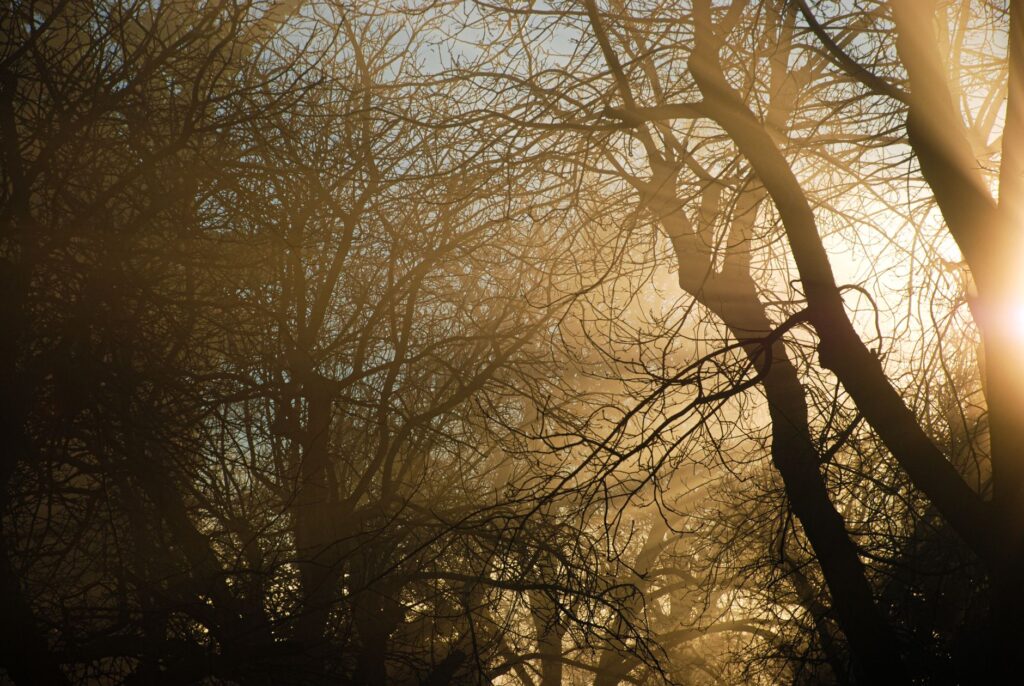
Lichens are slow growers that thrive where the air is clean and moisture is steady. Middletown Township sits in a coastal-plain setting between the Raritan Bay and the Navesink and Shrewsbury river corridors, so the humidity is high, fog and dew are common, and the air has been getting cleaner for decades as sulfur emissions from power plants and vehicles have fallen. That combination is close to ideal for a bark-dwelling lichen, and it is one reason old trees in Poricy Park, Hartshorne Woods, and along the older Lincroft and Navesink streets often carry a rich, varied crust.
Many lichen species are sensitive to air pollution. Scientists have long used them as living air-quality monitors, because a trunk with a diverse lichen community generally means the surrounding air is not heavily polluted. In that sense, a lichen-covered white oak in your yard is mildly good news about your neighborhood rather than bad news about your tree.
Moss and algae follow the moisture. They show up most on the north and east faces of trunks, which dry out slowly, and on trees that are shaded by houses, fences, or neighboring evergreens. A maple on a shady lot in Belford will almost always have more green on its bark than the same species in an open Port Monmouth lawn, and that difference tells you about light and airflow, not about disease.
Middletown's #1 Tree Expert Company
FREE Inspection & Estimate | Certified Arborists | Trimming, Pruning, Removal, More!
Sponsored
What a Heavy Crust Can and Cannot Tell You
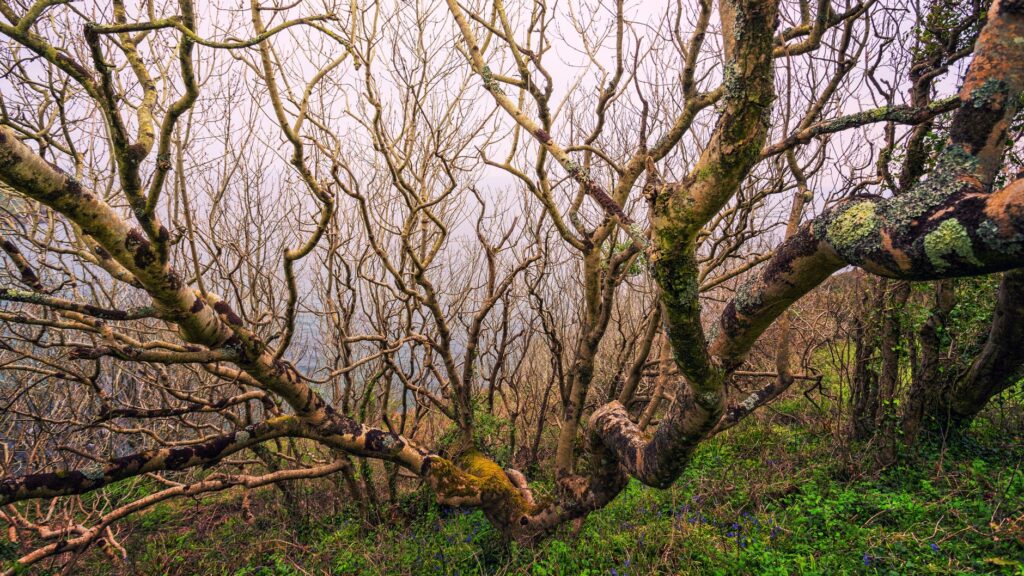
The most common misunderstanding is the idea that lichen kills trees. It does not. A healthy tree with a fully lichen-covered trunk is a common sight in every forest in the Northeast. Where homeowners get confused is that struggling trees often carry a lot of lichen and moss, so the two get linked in memory. The real connection runs the other way around.
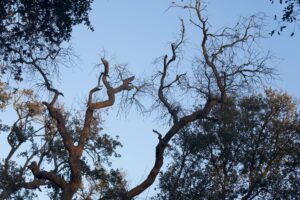
A tree with a thin, sparse canopy lets far more sunlight and rain reach the bark. When branches die back, shade falls away, the surface stays bright and wet, and lichens and algae move in quickly. The growth is the result of the decline, not its cause. So a heavily colonized limb surrounded by few leaves is worth a closer look, but the lichen is only the signpost.
This is the useful pattern to learn:
- Lichen spread evenly across a full, leafy canopy points to a stable tree in a damp, clean setting.
- Lichen concentrated on one dying limb or a sparse upper crown suggests the tree has lost foliage there, and the cause should be investigated.
- Fresh, thick moss on the upper side of a large horizontal limb may mean debris and moisture are collecting where a crack or cavity is forming.
- Lichen covering a trunk that also has oozing, cracks, or mushrooms is a sign to look at the underlying damage, not at the lichen.
The International Society of Arboriculture tree health guidance stresses that lasting diagnosis starts with the whole tree: canopy density, leaf size and color, twig growth, and structure. Bark growth is one data point among many, and by itself it is a poor reason to worry or to treat.
Do Not Scrub, Spray or Pressure-Wash It Off
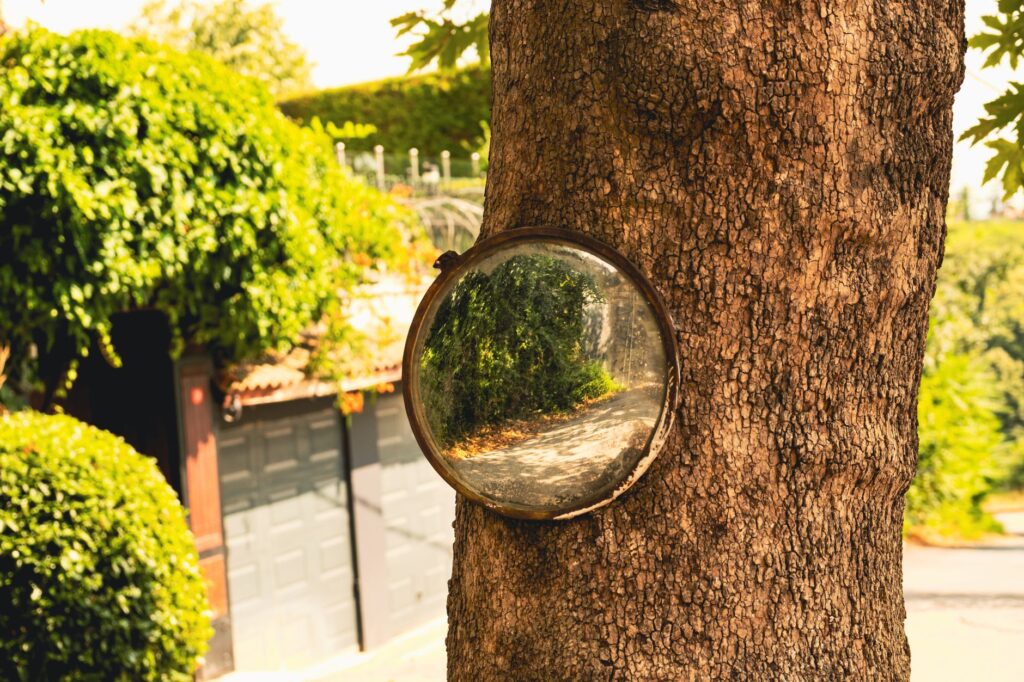
Because the crust looks dirty, a surprising number of homeowners decide to clean it. This is where real damage can happen, and it is the single most useful thing to take from this article: leave it alone.
Scrubbing with a wire brush or stiff bristles scrapes away the outer bark and can open the living layer underneath. Pressure washing does the same thing faster, and it also drives water and spores deeper into cracks. Bleach, copper sprays, and household cleaners can burn the bark and run down into the root zone, where they harm fine roots and the soil life that feeds them. None of these methods removes the organisms for long, because spores land again the next damp week, and a freshly wounded surface is exactly what decay fungi are looking for.
There is also nothing to gain from fungicide. Lichens are not a disease, so a product labeled to treat tree disease will do nothing useful, and misapplied chemicals near a Middletown storm drain or the bay shoreline add runoff problems on top. Homeowners who feel strongly about appearance have one safe option, which is to wait. Lichens and moss weather away on their own as seasons change, and a few rainy weeks in spring will brighten the green while a hot, dry summer will fade it.
A Ten-Minute November Bark Check You Can Do Yourself

Late fall is the best time of year to read bark, because the leaves are gone and the light is low and angled, which shows every ridge, crack, and patch. A slow walk around each tree takes about ten minutes, and it gives you a baseline to compare against next spring.
- Start at the ground. Look at the root flare and the first three feet of trunk for soft, dark, wet-looking bark, sawdust-like frass, or mushrooms. Lichen is dry and crusty. Anything wet, sour-smelling, or crumbly is not lichen.
- Move up the trunk. Note any vertical cracks, loose plates of bark, or oozing. Photograph them with a coin or tape measure for scale.
- Scan the crown with binoculars. Look for limbs without buds, or limbs covered in lichen with no twig growth at the tips. Dormant buds should be plump and firm.
- Compare sides. Check whether the green growth is even or concentrated on one face. One-sided growth often just means shade, but sudden changes in light after a neighbor removes a tree can stress a trunk that was shaded for years.
- Write down the date and take photos. A dated photo set taken from the same spot each autumn shows change far better than memory.
The Arbor Day Foundation tree health pages offer additional symptom guides if you want to read more about what a stressed canopy looks like. Keep the notes with your other tree records. If a limb falls or a claim ever needs to be made, a history of dated photos is worth far more than a hazy recollection.
Middletown's #1 Tree Expert Company
FREE Inspection & Estimate | Certified Arborists | Trimming, Pruning, Removal, More!
Sponsored
When a Crusty Trunk Is Worth a Call to a Certified Arborist
Most of the time the answer to a lichen-covered tree is to enjoy it and move on. A few combinations of signs, though, deserve a professional look, and it is wise to book that visit while the leaves are off and the structure is easy to see.
Call a certified arborist when you find colonizing growth together with any of the following: a canopy that is noticeably thinner than it was two years ago, dead twigs at the ends of branches that should be alive, cracks that open and close with the weather, mushrooms or conks at the base of the trunk, bark that is peeling away to show dark, damp wood, or a lean that has changed. An arborist can tell whether the growth is merely cosmetic, and can measure the real risk using established assessment methods.
The USDA Forest Service urban forestry program explains why the health of community trees matters to whole neighborhoods, and it is a good reminder that a mature tree in a Middletown yard is a long-term asset worth a careful look. Choose an ISA-certified arborist, ask to see proof of insurance, and expect a written explanation of what the arborist found and why, not a sales pitch.
The takeaway for the coming winter is simple. Lichen, moss, and algae are normal, quiet residents of a damp coastal climate. Learn to read the pattern, resist the urge to scrub, keep dated photos, and let a certified arborist weigh in whenever the crust shows up beside real warning signs. A tree that wears a little green is usually just a tree that has lived in Middletown for a long time.
Photo credits: Featured image by Efrem Efre on Pexels; Section 1 by Magda Ehlers on Pexels; Section 2 by Nikolass Graff on Pexels; Section 3 by Lisa Stroud on Pexels; Section 4 by Johannes Plenio on Pexels; Section 5 by Sevde Altıntaş on Pexels; Section 6 by Elif Sevim on Pexels; Section 7 by Gustavo Fring on Pexels.