Middletown's #1 Tree Expert Company
FREE Inspection & Estimate | Certified Arborists | Trimming, Pruning, Removal, More!
Sponsored
The Mushrooms Nobody Planted
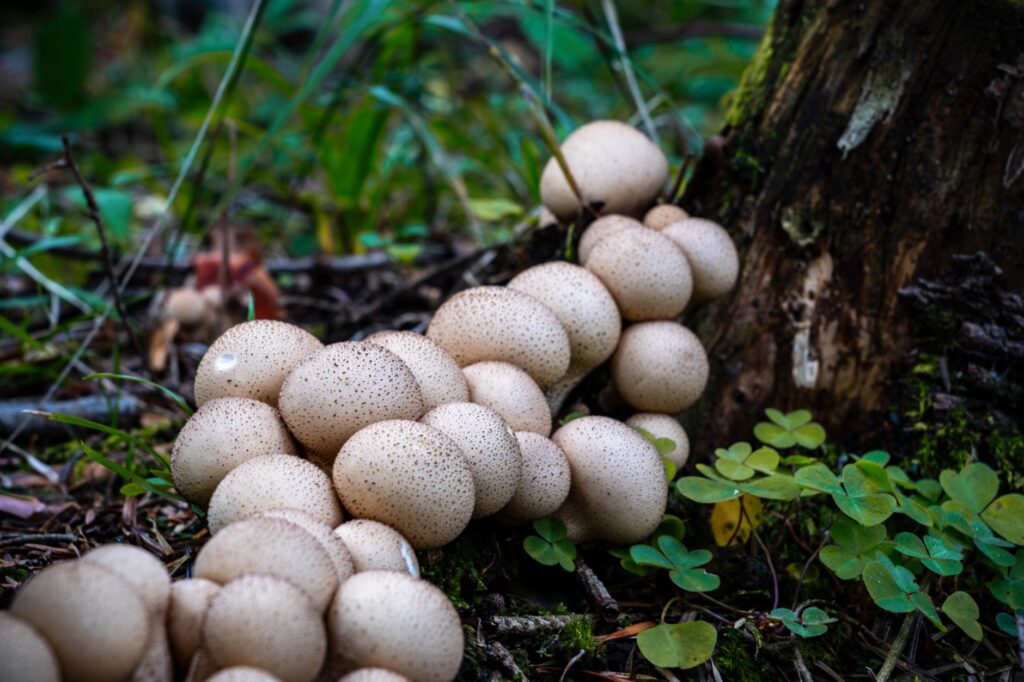
After a few damp November weeks, the same phone call comes in from Lincroft to Port Monmouth: a ring of tan mushrooms has sprung up around the base of an oak or maple, and the homeowner wants to know whether the tree is in trouble. It is a fair question. Mushrooms are the visible fruit of a fungus that lives mostly out of sight, and what that fungus is eating matters a great deal.
Here is the honest answer up front. Many mushrooms near trees are harmless. They feed on buried mulch, old wood chips or the leaf litter in the soil. But some of them grow from the roots or the base of the tree itself, and in that case they are telling you that the wood holding up your tree is being digested from the inside. The skill is learning to tell the two situations apart.
This guide walks through what you can safely observe from the lawn, which clues point to a problem, and why a fall mushroom flush on a large tree near a house deserves a closer look from a certified arborist.
Why Fungi Fruit in Fall
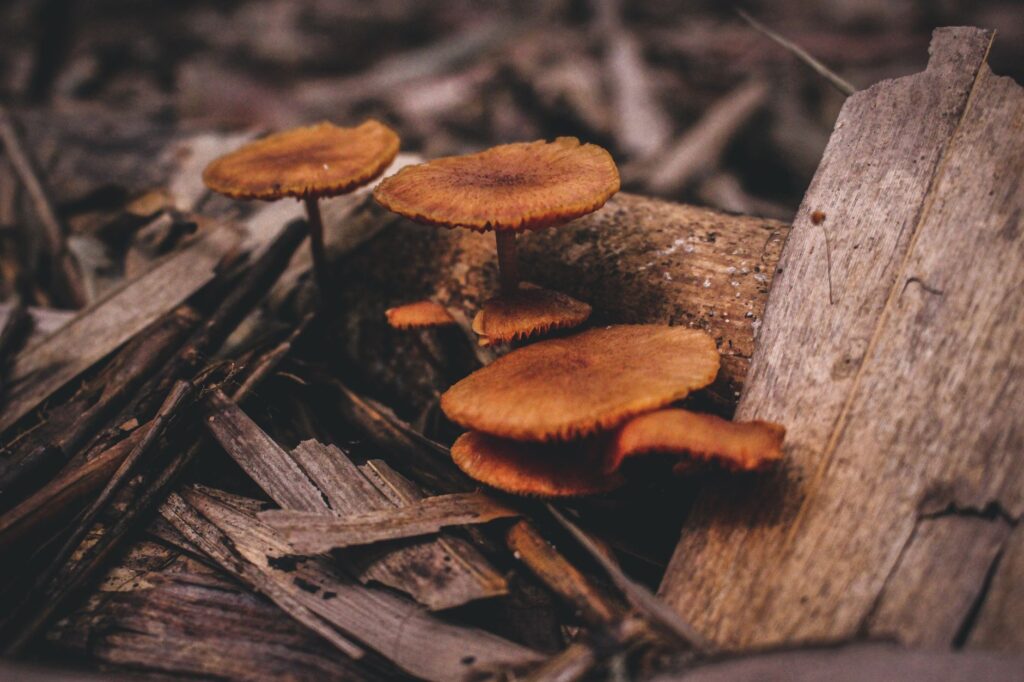
A fungus is mostly a mass of fine threads called mycelium, hidden in soil or wood. The mushroom is its reproductive structure, the way an apple is for an apple tree. Fungi send up mushrooms when conditions turn cool and wet, which is why the Bayshore sees a flush in October and November after a run of rain and mild nights. The mushrooms appear and rot away within days, but the fungus underneath carries on.
That timing is useful. A mushroom is the one moment a hidden organism gives away its position and sometimes its identity. If a mushroom appears and vanishes in a week, you still learned something: a decay organism or a soil feeder is active at that spot, and you can note the location, take photographs and return to look at the tree itself.
Not every fungus is a villain. Most of the fungi in a healthy forest soil recycle dead material, and many partner with living roots in a mutually helpful arrangement called mycorrhizae. The trouble is the smaller group that attacks living or structurally important wood. Those are the ones to watch for.
Harmless Feeders Versus Wood Rotters
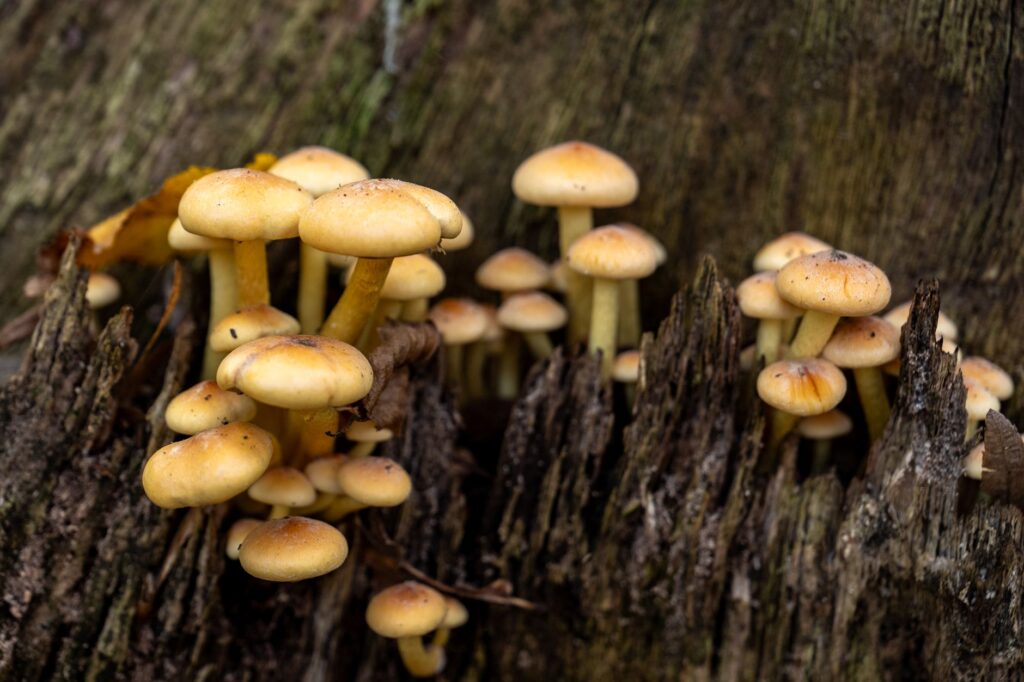
Start with where the mushrooms are growing. Mushrooms popping up across the lawn in scattered groups, or in a bed of wood chip mulch, are almost always feeding on buried organic matter. They are unattractive to some people, but they are not harming your tree. Raking them away or mowing over them is fine, though it will not remove the fungus.
Mushrooms that grow in a tight cluster hugging the root flare, or in a ring that follows the line of a major root, are different. Those may be fruiting from living roots or from decayed wood at the base. One well known culprit in the eastern United States is Armillaria, often called honey fungus. The University of Minnesota Extension describes Armillaria root rot as causing honey colored mushrooms in clusters at the base of a tree in fall, along with black, bootlace-like strands called rhizomorphs and white fungal sheets between the bark and the wood.
Shelf shaped growths on the trunk are a third category. These are conks, or brackets, and they are the fruiting bodies of fungi that digest heartwood or sapwood. A conk is rarely cosmetic. It means the fungus has already worked its way into the structure of the tree.
- Scattered in lawn or mulch: usually feeding on buried debris, low concern.
- Tight cluster at the root flare: possible root or butt rot, worth a professional look.
- Shelf or bracket on the trunk: decay is likely already inside the wood.
- Fruiting on a stump or dead root nearby: may be feeding on the old wood, but can spread to living roots.
Identification to a species can be tricky because several fungi look alike, and even specialists often need to see the decayed wood. Treat the pattern of growth as your first clue rather than the shape of the cap.
Middletown's #1 Tree Expert Company
FREE Inspection & Estimate | Certified Arborists | Trimming, Pruning, Removal, More!
Sponsored
What You Can Check From the Lawn
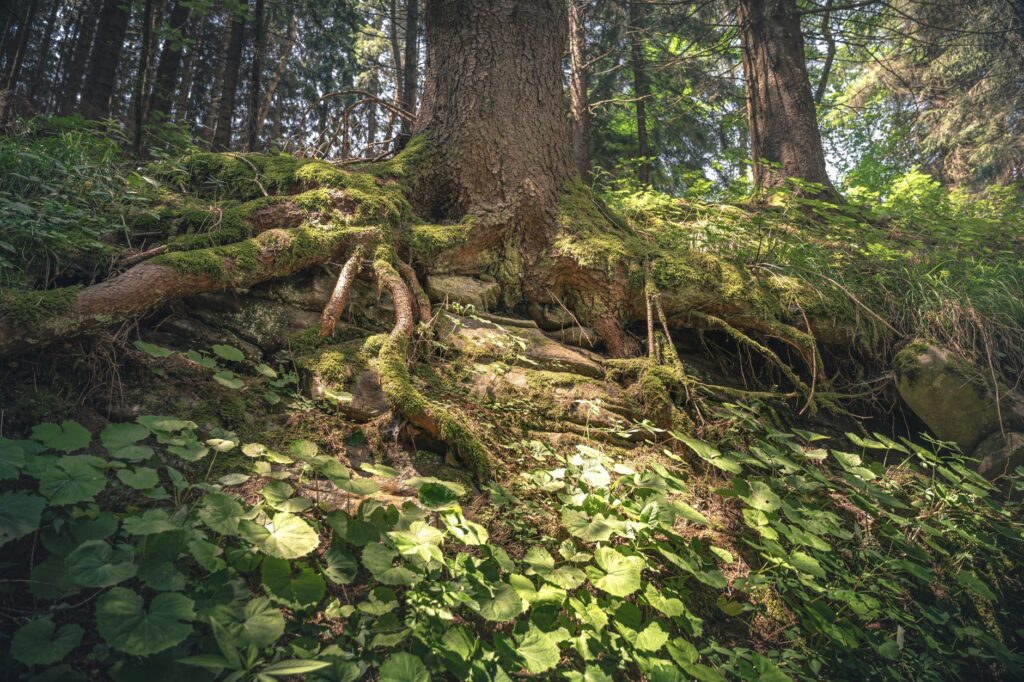
You do not need tools to gather useful information. Walk a slow circle around the tree on a dry day and look at the ground and the lower trunk. Note any of the following, and take a few phone photographs with a boot or a tape measure beside them for scale.
- Soft, spongy or crumbly wood at the root flare, or bark that is loose and sloughing off.
- A sunken area, cracks or cavities low on the trunk.
- Thinning leaves, small leaves or early fall color in the previous summer, which can signal that the roots are struggling.
- Dead branches in the upper crown, especially if the dieback is spreading.
- A tree that leans more than it used to, or soil heaved up on one side of the base.
It is fine to press gently on the wood with a gloved hand. It is not wise to dig around the root flare with a shovel, or to pry at a fungus on a large tree. Deep digging can sever healthy roots, and a tree already weakened by decay does not need more injury.
One more habit helps. Photograph the mushrooms on the day you see them. Many of them melt into slime within a few days, and a clear photo with the date lets a certified arborist match the fungus to the location later. Dated pictures also create a useful record, which pairs well with the tree documentation homeowners are encouraged to keep before storm season.
Why Decay at the Base Matters in Our Storms
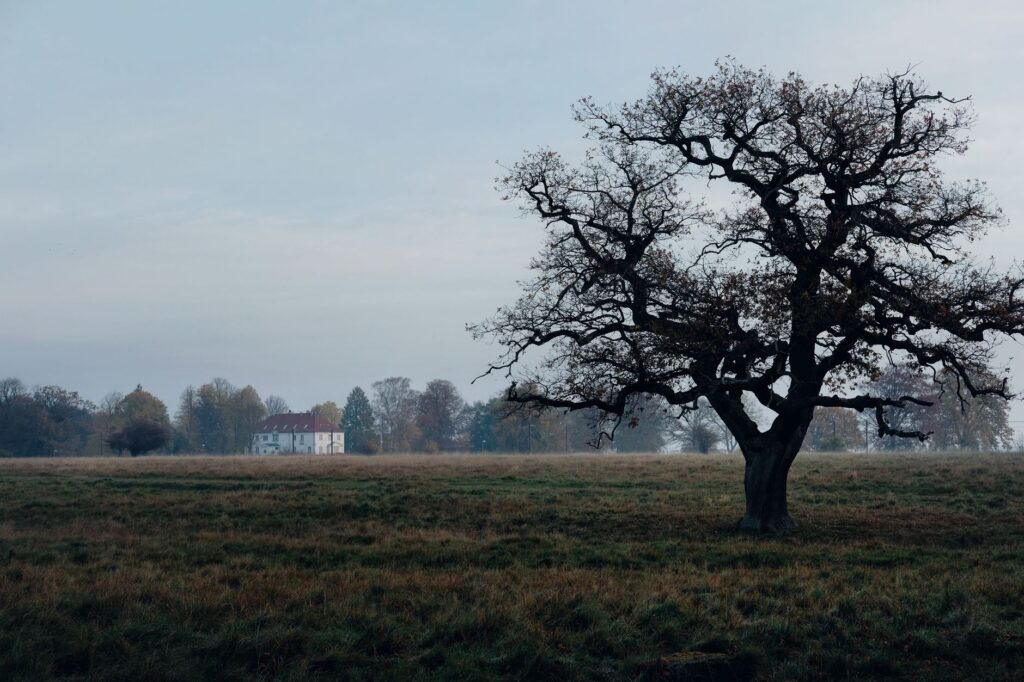
The lower trunk and root flare carry the entire weight of a tree and resist the lever force of the wind. Decay there is more serious than decay in a small branch because the damage sits right where the tree anchors itself. A tree with a hollow or rotted base can look healthy in the crown and still fail in a gust.
That is a real concern on the Bayshore. Nor’easters and the remnants of tropical storms roll in over open water with sustained wind, and our coastal plain soils can be soft and saturated when the gusts arrive. A tree with compromised root structure has less margin for error. The USDA Forest Service has published research on decay fungi of oaks and associated hardwoods, and a recurring theme in that kind of work is that fungi can be well established inside the wood before outward signs appear.
The location of the tree is what turns a biology question into a safety question. A decayed oak at the back of a wooded lot is a different matter from the same tree beside a driveway, a play set or a bedroom wall. Foresters and arborists describe this as risk: the likelihood of failure combined with what would be hit when it fails.
How a Certified Arborist Sorts Out the Risk
When a fungus is growing on or around a tree, a qualified arborist does not guess from the mushroom alone. The usual approach follows a structured risk assessment, like the process described by the International Society of Arboriculture on its consumer education site Trees Are Good. A visual inspection looks at the root flare, the trunk, the union of major limbs and the crown, plus the site, soil, recent construction and any history of storm damage.
If the visual clues raise concern, the next step may be a closer look. That can include probing, sounding the trunk with a mallet, or using instruments that measure the density of the wood. Some assessments involve a more detailed inspection of the roots. The result is rarely a simple yes or no. More often it is a rating of risk and a set of options.
Those options might include monitoring and re-inspecting, reducing the weight of the crown to lower the wind load, moving the target by shifting a play area or parking spot, or in higher risk cases removing the tree. Look for credentials, such as an ISA Certified Arborist, and for an assessor who is willing to explain the reasoning.
Middletown's #1 Tree Expert Company
FREE Inspection & Estimate | Certified Arborists | Trimming, Pruning, Removal, More!
Sponsored
Summary and When to Call a Pro

Mushrooms near a tree are not an automatic emergency, and they are not something to ignore either. Scattered mushrooms in lawn or mulch are usually harmless decomposers. A tight cluster at the root flare, a conk on the trunk, soft wood at the base or a tree that is changing its lean are signals worth taking seriously, especially on a large tree near a structure.
Take photographs, keep the area free of digging and mower damage, and note whether the fruiting returns next fall. If the tree is big, close to your home or showing any of the warning signs above, consult a certified arborist for an assessment before the winter storm season. A professional can tell you whether the tree is a keeper, a candidate for monitoring or a risk that should be addressed. Waiting for a storm to answer the question is the expensive way to find out.
Photo credits: Featured image by Marino Kurunić on Pexels; Section 1 by Michał Robak on Pexels; Section 2 by Tresia Hoban on Pexels; Section 3 by Vladimir Srajber on Pexels; Section 4 by Cătălin Todosia on Pexels; Section 5 by A. on Pexels; Section 6 by Stephen Leonardi on Pexels; Section 7 by Alexandra Kollstrem on Pexels.