
Middletown's #1 Tree Expert Company
FREE Inspection & Estimate | Certified Arborists | Trimming, Pruning, Removal, More!
Sponsored
The Hardware Nobody Remembers Leaving Behind
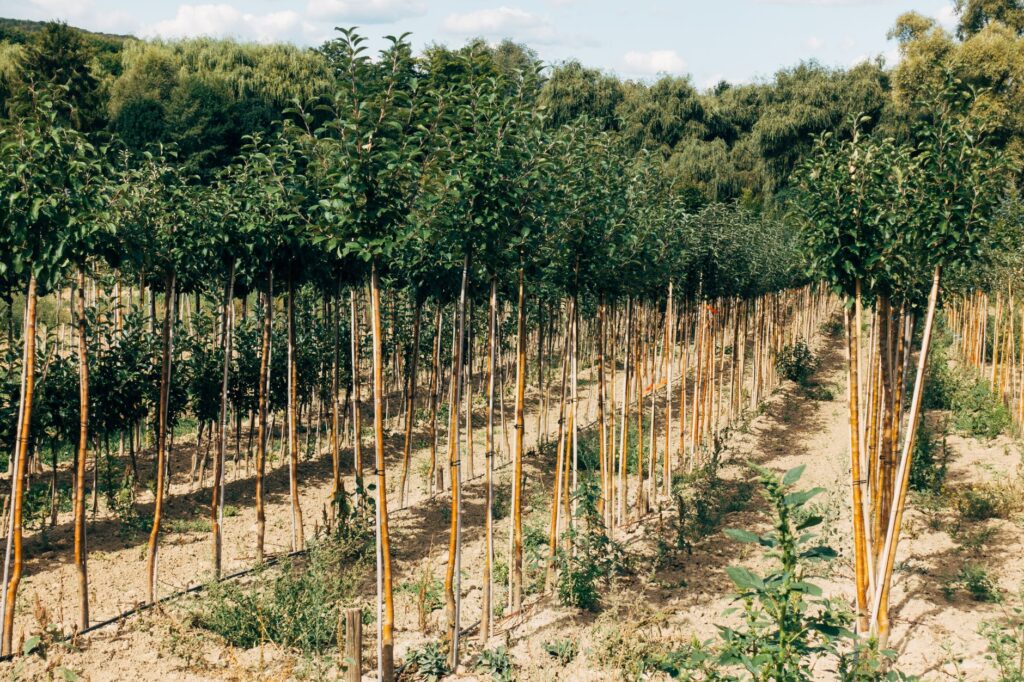
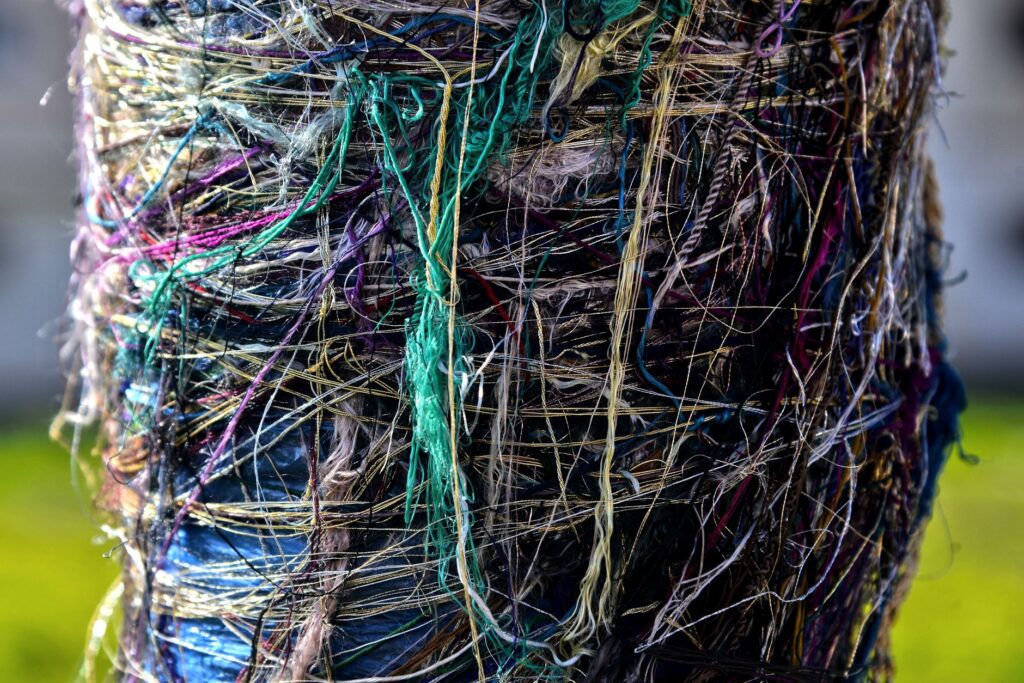
Every tree planted in a Middletown yard arrives wearing something. A plastic or aluminum tag clipped to a branch, a loop of twine around the trunk, a burlap wrap pinned with nails, a wire basket holding the root ball together. All of it has a purpose in the nursery truck. None of it has a purpose once the tree is in the ground and growing.
The trouble is that hardware gets left on, and the tree keeps growing around it. A tag that fit loosely on a pencil-thin branch in 2018 can be buried inside a branch the width of a wrist by now. Twine that was snug but harmless on a whip becomes a slow tourniquet. Trees do not shed foreign objects. They wall them off, swallow them, and carry the consequences for decades.
Early October is a good moment for a walk around the yard with a pair of snips, because leaves are thinning, the canopy is easier to see into, and the ground is still soft enough to dig around a root flare without a fight. This article covers what to look for, what is safe to remove yourself, and what deserves a professional’s eyes.
Nursery Tags and Wire Labels on Growing Branches
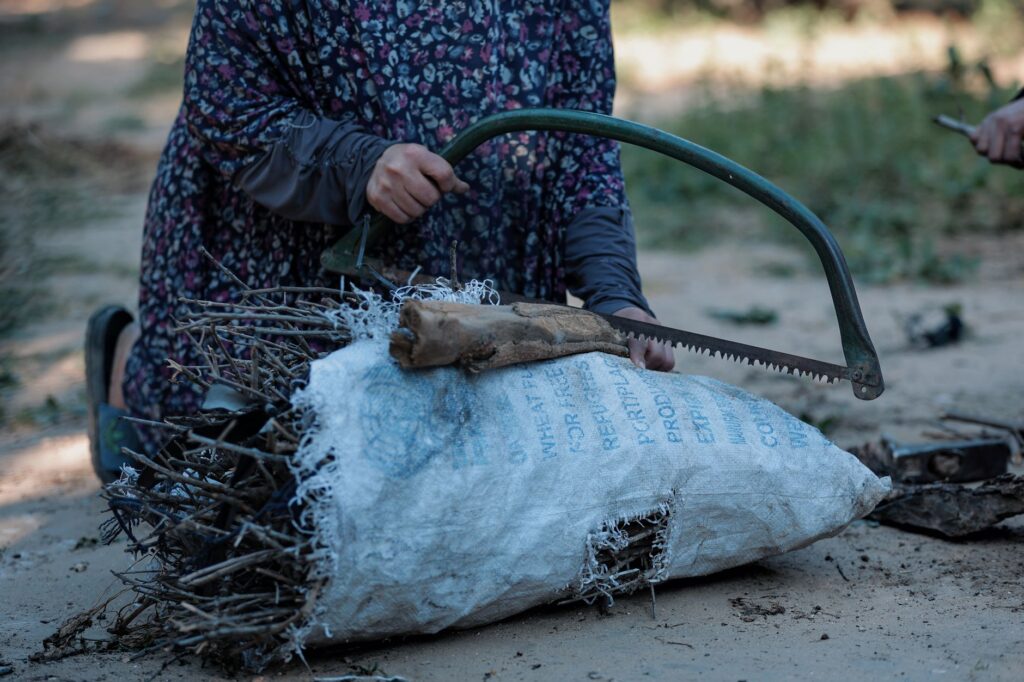
The most common leftover is the nursery tag. It is usually a plastic strip, a thin aluminum band, or a wire loop with a printed label, fastened to a scaffold branch near the trunk. On the day of planting it hangs freely. A few growing seasons later, the branch has thickened and the tag is cutting into the bark like a ring on a swollen finger.
Tight tags interrupt the thin layer of living tissue just under the bark that carries sugars down from the leaves. Above the constriction, the branch often swells and may show smaller or paler foliage than its neighbors. In a windy Bayshore winter, a constricted branch is also more likely to snap exactly at the tag.
Removal is simple. Cut the tag or wire with snips or sharp scissors, then pull it free. If the wire has already been partly overgrown, do not pry it out of the wood. Cut it on either side of the bark and leave the embedded piece alone, since digging it out makes a larger wound than the tag ever did.
- Check every branch within arm’s reach of the trunk, not just the lowest one.
- Look for a bulge, a ridge, or a dent in the bark that circles the limb.
- Keep the tag if it shows the cultivar name, then store it indoors with your planting records.
That last point matters more than most people expect. Knowing the exact cultivar helps an arborist later when a disease or storm-damage question comes up.
Twine, Rope and Trunk Ties That Became Tourniquets
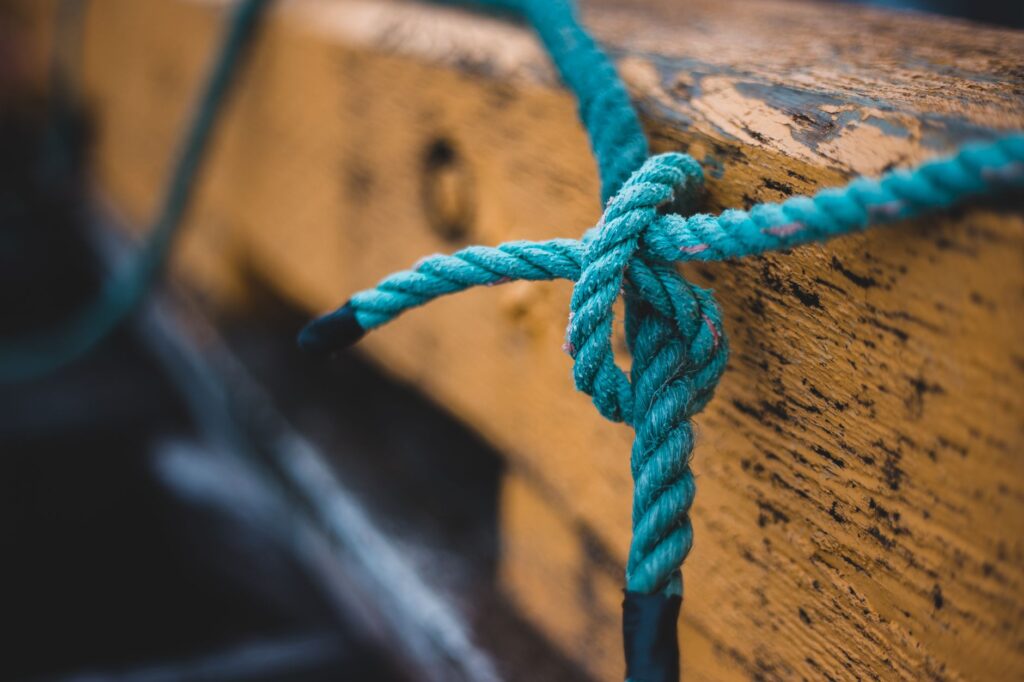
Twine is the second offender. Nurseries often tie branches upward to make a tree easier to ship, and homeowners sometimes add their own ties for staking. Natural jute decays over a year or two, but synthetic twine, nylon rope and plastic zip ties do not. The guidance from the International Society of Arboriculture on newly planted trees is clear that staking and ties should be temporary and checked often, because a tie that holds a young trunk gently in year one can strangle it by year three.
On a Middletown street tree, the telltale sign is a groove that wraps part or all of the way around the trunk, often with callus tissue piled up above it. Sometimes the tie itself is gone from view, buried under bark. Sometimes the tree is leaning slightly or has a flat side, because the trunk could not expand evenly.
Free any tie you can reach by cutting it, never by pulling. If the groove is deep or encircles most of the trunk, take photographs and leave further decisions to a certified arborist, since a girdled stem can look fine until the first nor’easter reveals the weak point.
Staking deserves its own reminder. Most trees planted in decent soil need stakes for no more than a single growing season. If stakes and straps from a past planting are still standing, they are doing more harm than good, and the straps are often the very thing cutting into the bark.
Middletown's #1 Tree Expert Company
FREE Inspection & Estimate | Certified Arborists | Trimming, Pruning, Removal, More!
Sponsored
Burlap, Twine and Wire Baskets Around the Root Ball
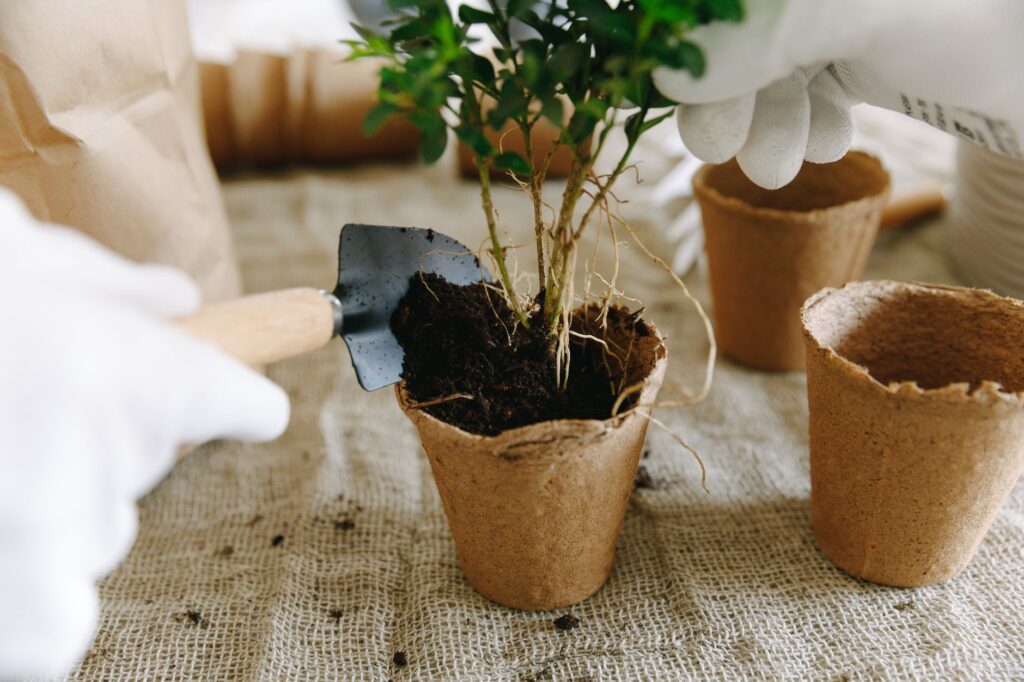
Below ground is where the real trouble hides. A balled-and-burlapped tree comes with a wire basket wrapped around the root ball, a layer of burlap, and often twine looped around the trunk base. Plenty of landscapers set the whole package in the hole and backfill. The roots are supposed to grow out through the burlap, and often do, but the wire basket and any synthetic burlap have no such manners.
Wire baskets are a known long-term problem. As roots thicken, they run into the wire and wrap along it instead of passing through. Years later the root flare can be cinched in, and the tree develops what arborists call a girdling root, a main root that slowly squeezes the trunk or the other roots. Synthetic burlap, which looks like natural jute but is actually plastic, does not rot at all and can hold water away from roots.
The correct practice, as described in the ISA tree planting guidance, is to cut away the top portion of a wire basket and remove all twine, nails and non-biodegradable wrap from the upper root ball before the hole is filled in. That guidance works for people planting today. For a tree already in the ground, the question becomes how to find out what was left behind.
The test is easy and costs nothing. Use a hand trowel to scrape back mulch and a couple of inches of soil at the base of the trunk, working in the direction away from the roots rather than toward them. You are looking for the root flare, the point where the trunk widens as it meets the ground. If you cannot see a flare at all, or you hit twine, burlap or wire within a few inches of the surface, you have found the problem.
How to Inspect the Base of a Tree Safely
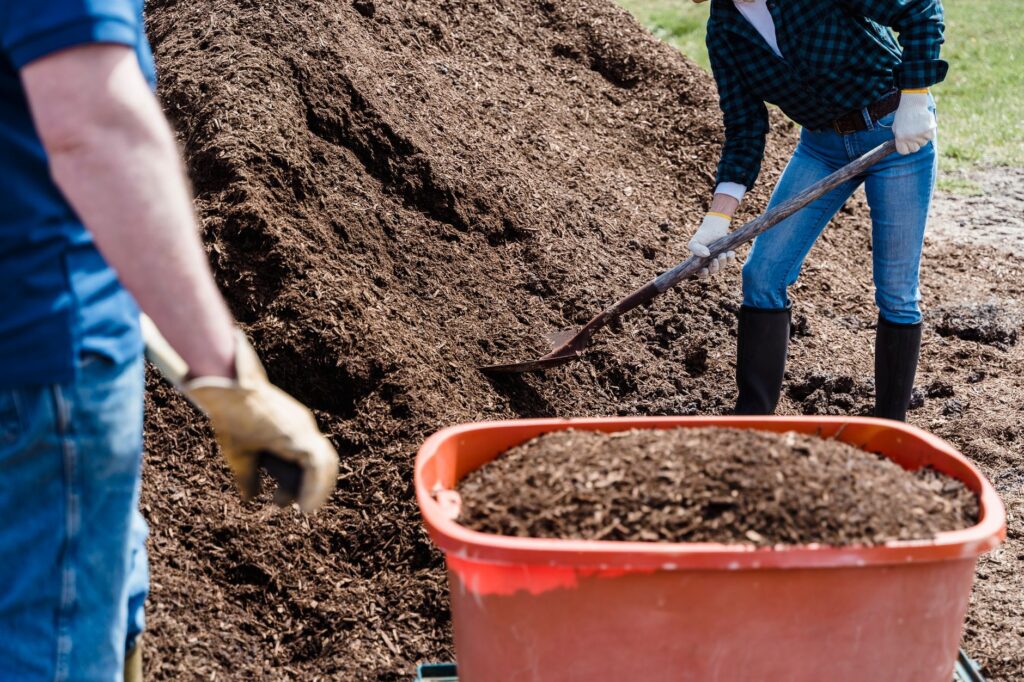
Inspection season is October through early November, when moisture is returning to the soil and the tree is shutting down for the year. Dry August soil is hard and hot, and digging then can stress roots at the worst moment. Fall disturbance, kept small and shallow, is easy on the tree.
Start by pulling mulch back from the trunk. If the mulch is stacked against the bark in a cone, that is a separate problem we have covered before, but it also hides everything you want to see. Then clear a circle about two feet across, keeping the tools shallow so you never slice roots.
- Look for the flare. A trunk that goes into the soil like a telephone pole is planted too deep or is covered with excess soil.
- Feel for roots that cross over the trunk or curve around it. Those are the girdlers.
- Watch for twine, burlap strips or metal bits at the surface. Pull only what comes freely.
- Photograph everything before you change it.
A useful rule is to remove only what you can lift out without force. Wire embedded in the soil mass, a large buried basket, or a root already pressing into the trunk is a job for a certified arborist with an air spade, which loosens soil with compressed air instead of steel and spares the fine roots that keep the tree alive.
Signs the Tree Is Already Paying the Price
Hardware problems rarely announce themselves. They show up as vague underperformance that gets blamed on drought, deer or the last winter. The USDA Forest Service urban forestry program points out that urban trees face a combination of root restriction, compaction and planting errors that together shorten their lives well below what the species can achieve. A buried wire basket is one more item on that list.
Watch for crowns that look thin on one side, leaves that color and drop earlier than neighboring trees of the same species, or a tree that leans despite a straight trunk. In Middletown’s clay-loam soils, a restricted root system also makes a tree more likely to blow over in saturated ground, which is the typical condition during a coastal storm.
Also compare the trunk at the ground with the trunk at knee height. A trunk that is thinner at the soil line than higher up, or that has bark flaking just at the base, suggests the flare is buried or constricted. None of these signs proves a hardware problem, but together they justify an hour with a trowel.
Do not panic if you find something. Most trees tolerate hardware for years, and removing it is almost always better than leaving it. The aim is to relieve pressure before it becomes permanent, not to perform surgery in an afternoon.
Middletown's #1 Tree Expert Company
FREE Inspection & Estimate | Certified Arborists | Trimming, Pruning, Removal, More!
Sponsored
When to Call a Certified Arborist
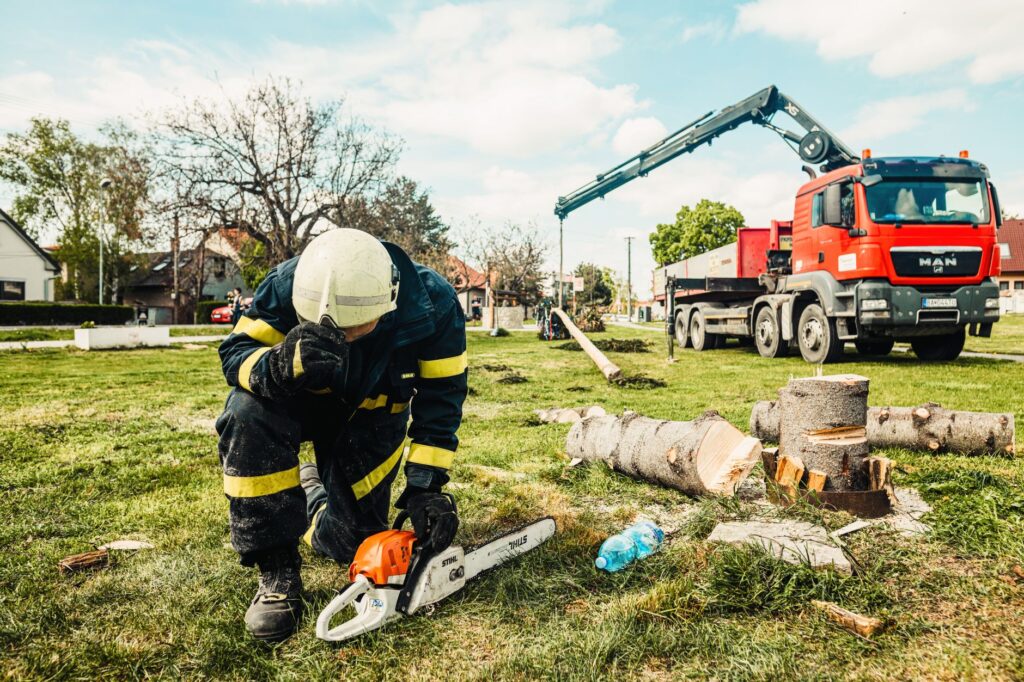
Snipping a tag or cutting a loose tie is a ten-minute job anyone can handle. Digging out a wire basket, severing a girdling root, or deciding whether a deeply embedded tie has damaged the trunk is a different category of work. Cut the wrong root and you can destabilize a tree. Leave the wrong one and the tree continues to decline.
If you see a groove that circles most of the trunk, a visible wire emerging from the soil, a lean you did not notice before, or a flare that has vanished, ask an ISA certified arborist to take a look. In New Jersey, the person doing the work should also hold the appropriate state tree expert or tree care operator license, which a homeowner can verify with the state before work begins.
Bring your photographs and any retained tags or planting records. A good assessment takes less than an hour, and the findings tell you whether the tree needs simple clean-up, a root collar excavation, or just monitoring.
Taking this inspection from a vague worry to a documented checklist is the cheapest tree insurance there is. A tree planted correctly and cleaned up promptly can live a century in a Monmouth County yard. The same tree left wearing its nursery hardware might not make it to thirty.
Photo credits: Featured image by Moussa Idrissi on Pexels; Section 1 by Markus Winkler on Pexels; Section 2 by Hosny salah on Pexels; Section 3 by Erik Mclean on Pexels; Section 4 by Thirdman on Pexels; Section 5 by Greta Hoffman on Pexels; Section 6 by Paweł on Pexels; Section 7 by Helena Jankovičová Kováčová on Pexels.