
Middletown's #1 Tree Expert Company
FREE Inspection & Estimate | Certified Arborists | Trimming, Pruning, Removal, More!
Sponsored
The Watering Job Most Middletown Homeowners Skip in Fall

By mid-October the hoses are coiled, the sprinkler is in the garage, and most of us consider the watering season finished. The leaves are turning, the nights are cool, and it feels as though the trees have gone to sleep. They have not. Below ground, the roots of most Monmouth County trees are still working, and they will keep working for weeks after the last leaf drops.
That is why one late deep soak, timed for the stretch between leaf drop and the first hard freeze, is among the most useful things a homeowner can do for a tree. It costs almost nothing, it takes an afternoon, and it sets a tree up for the driest and windiest part of the year, which is winter.
This article covers why late watering matters here, how to tell whether your soil actually needs it, how much water to use, and which trees deserve the most attention. It also covers a few common mistakes that do more harm than skipping the job altogether.
Why Late Watering Matters: Active Roots and a Drying Winter
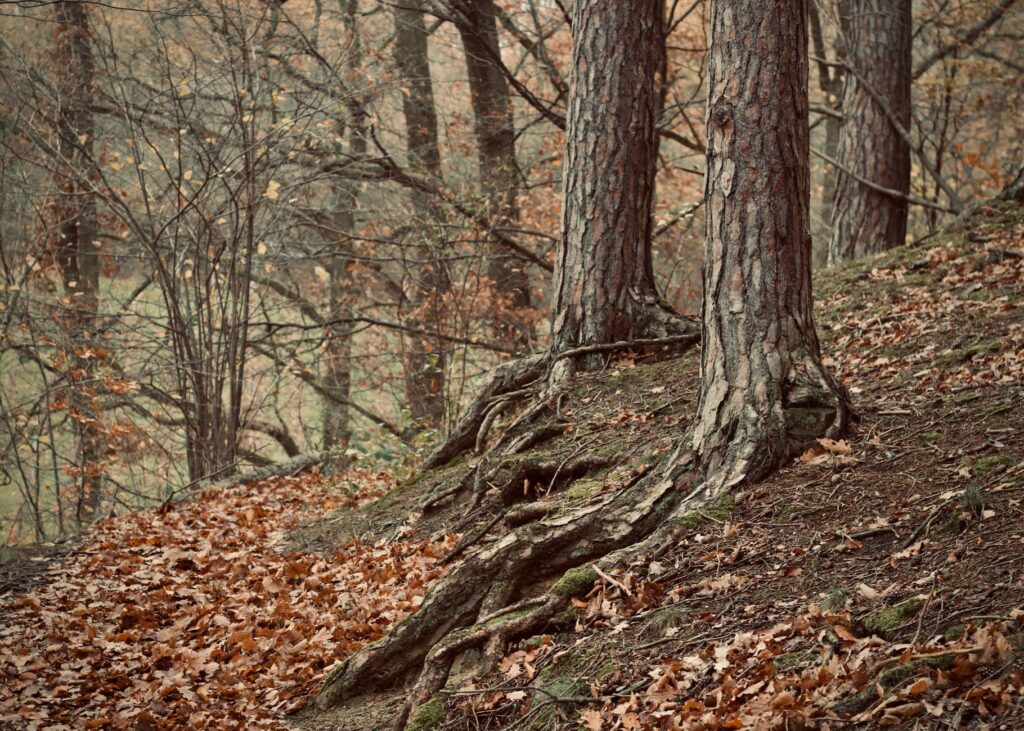
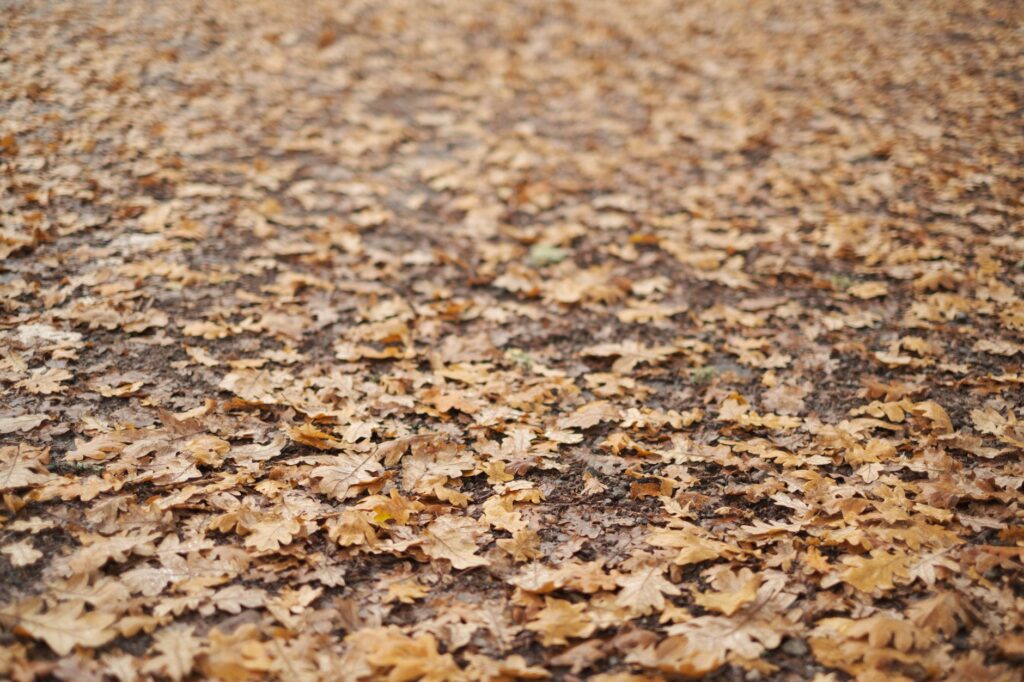
A tree’s canopy and its root system run on different calendars. Leaves shut down as days shorten, but root growth in many species continues until the soil cools to somewhere near the low 40s Fahrenheit. In Middletown, with the Raritan Bay moderating our temperatures, that can mean roots stay active well into November and sometimes beyond.
During those weeks the tree is drinking, storing carbohydrates, and building the small feeder roots it will lean on next spring. A tree that enters that period with dry soil has to do all of this on a deficit. The damage rarely shows up right away, which is exactly why it is so easy to miss.
The Rutgers New Jersey Agricultural Experiment Station and its cooperative extension offices have long advised that trees and shrubs, especially recent plantings, should go into winter with adequate soil moisture. The reasoning is simple. Dry roots in cold soil are slow to recover, and the stress compounds with whatever winter delivers.
It sounds backwards, but winter is hard on trees mostly because of water. Frozen soil cannot release moisture to roots, yet wind and sun keep pulling water out of bark, buds, and needles. Evergreens such as Eastern white pine, American holly, and arborvitae lose water through their foliage all winter and have no way to refill the supply when the ground is locked up.
Anyone who has watched a hedge of arborvitae turn rusty brown in February has seen the result. The browning is often blamed on cold, but a good share of it is desiccation, and the trees that suffer most tend to be the ones that went into the freeze dry. Our Bayshore properties add salt-laden wind to the mix, which pulls even more moisture out of exposed foliage.
Broadleaf trees are not immune. Twigs and buds can dry out on a windy January day, and a tree with a thin water reserve has fewer options. Moist soil going in means a deeper reserve, and soil that holds moisture also buffers swings in root zone temperature slightly, which helps.
How to Tell Whether Your Soil Actually Needs a Soak
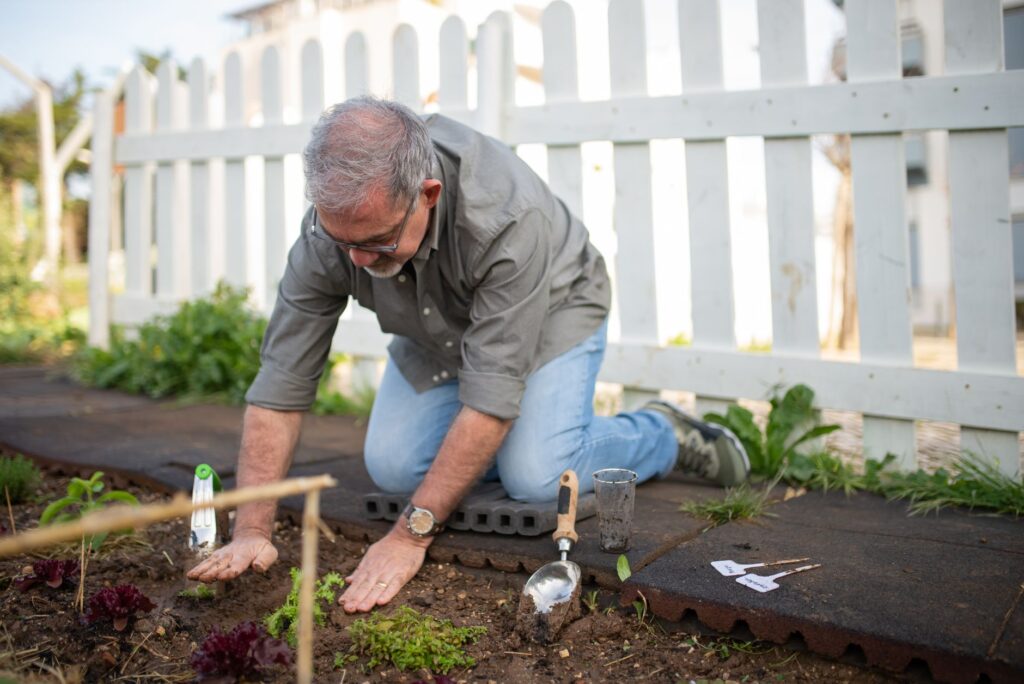
Do not water on a calendar. Water on evidence. Fall in New Jersey can be soggy one year and bone dry the next, and a Middletown yard on clay-loam behaves very differently from a sandy lot near Leonardo or Port Monmouth. Watering saturated clay is a mistake, because roots need oxygen as much as they need water.
The check takes two minutes. Push a long screwdriver or a length of rebar into the soil at the edge of the canopy, about halfway between the trunk and the drip line. If it slides in easily to eight inches or more, the soil is moist enough. If it stops short or you have to lean on it, the soil is dry. You can also dig a small hole with a trowel and squeeze a handful from six inches down. It should hold together loosely without dripping.
As a rough guide, a tree wants about an inch of water per week from rain or from you through the end of the growing season. If the last two or three weeks have fallen well short of that, a soak is probably warranted. If the ground is already soft and squishy, skip it and check again in ten days.
Middletown's #1 Tree Expert Company
FREE Inspection & Estimate | Certified Arborists | Trimming, Pruning, Removal, More!
Sponsored
How to Give a Deep Soak That Reaches the Roots
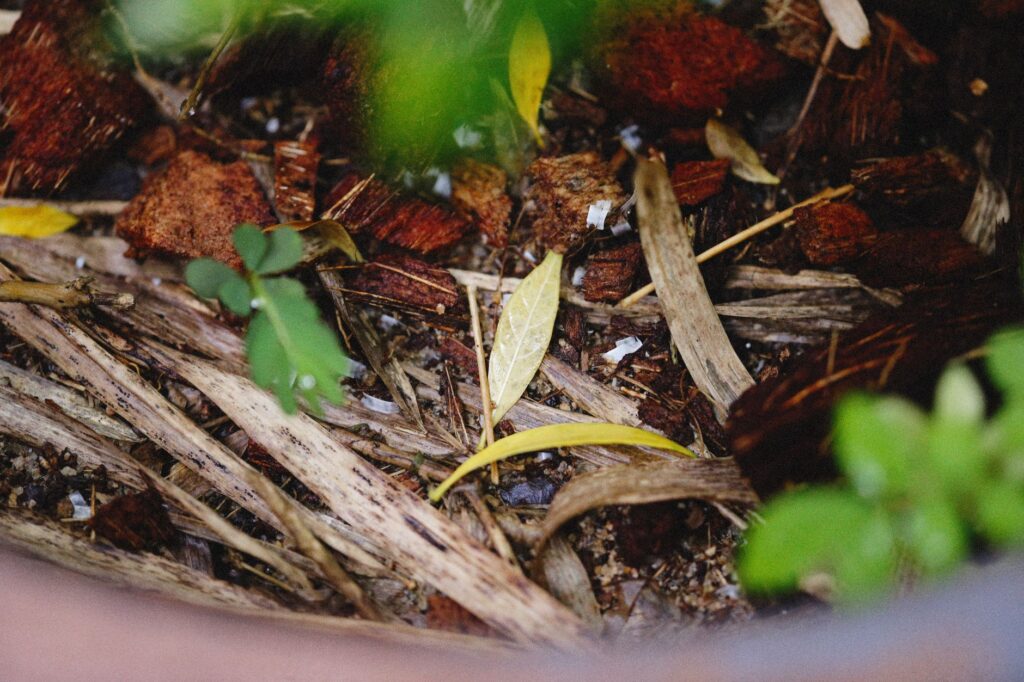
The goal is slow, deep, and wide. A tree’s feeder roots live mostly in the top twelve inches of soil, and they extend well past the trunk, often to or beyond the drip line. Water poured at the trunk mostly misses them.
Lay a soaker hose in a loose spiral under the canopy, starting a couple of feet from the trunk and reaching out toward the drip line, then run it at a trickle. A common rule of thumb from Trees Are Good, the public education site of the International Society of Arboriculture, is roughly ten gallons for every inch of trunk diameter, measured at chest height. A tree with a six inch trunk would get around sixty gallons over several hours.
- Use a soaker hose, a drip line, or a hose set to a slow trickle, never a high-pressure spray.
- Run it long enough for the water to move down twelve inches, which usually takes several hours.
- Move the hose to a new section of the root zone if the first area starts to puddle.
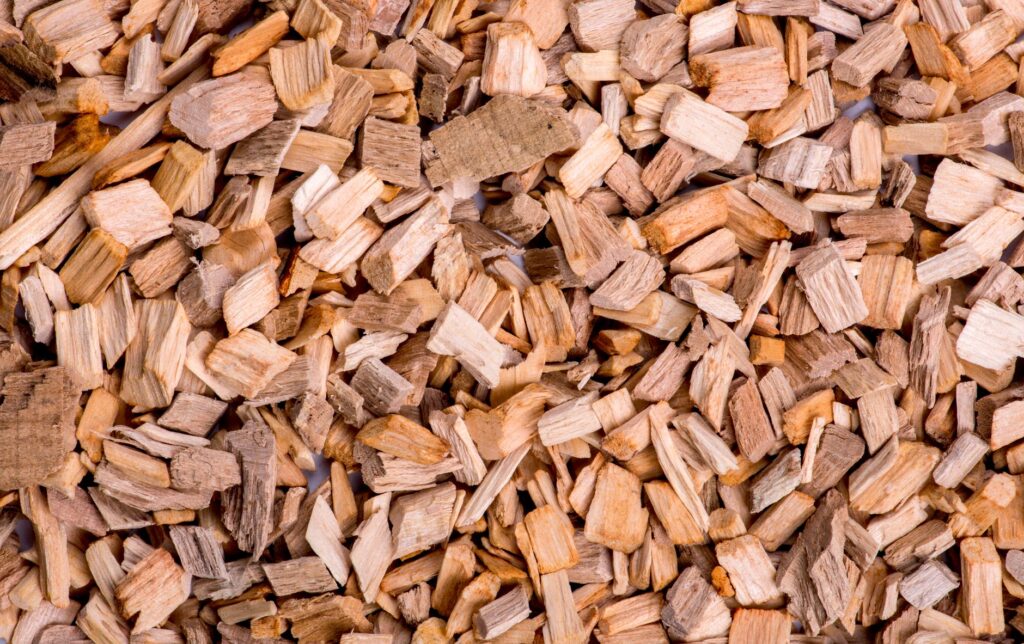
- Finish with a layer of wood chip mulch, two to three inches deep, pulled back from the trunk.
For a mature tree the whole job might take two sessions on separate days. That is fine. Slow and repeated beats fast and once, because clay-loam soils in much of Middletown absorb water gradually and shed it quickly if you rush.
Which Trees Deserve the Most Attention

Not every tree needs a soak every fall. Established native oaks and maples on healthy ground usually manage fine on their own, and they dislike being overwatered. Put your effort where it pays back.
Newly planted trees come first. Anything installed in the last two or three years has a small root ball and has not yet reached into the surrounding soil, so it depends on you. Evergreens come second, especially broadleaf evergreens like American holly and rhododendron, along with hemlock, Eastern white pine, and arborvitae. Third are trees that have already had a rough year, such as those stressed by summer drought, flooded by a tidal surge, or recently pruned heavily.
Trees growing in compacted soil or close to pavement, where rain runs off rather than soaking in, also tend to run dry sooner than their neighbors in open ground. A driveway edge can be a quiet drought zone even in a wet fall, so check those trees with the screwdriver test rather than assuming the rain reached them.
Common Mistakes That Hurt More Than They Help
The first mistake is watering after the ground has frozen. Frozen soil will not absorb water, and what you pour on will pool, run off, or form ice at the base of the trunk. Time the soak for a mild stretch, ideally before the first sustained hard freeze, and stop once the soil stiffens.
The second is the sprinkler habit. A lawn sprinkler wets the top inch or two and encourages shallow roots, which are the roots most vulnerable to winter drying. Deep and infrequent is the only approach that moves water where a tree can use it.
Third, resist piling mulch against the trunk. A mulch volcano holds moisture against bark through the cold months and invites voles, rot, and girdling roots. Keep the mulch a hand’s width from the trunk and spread it wide and flat. Finally, do not fertilize now. Late-season nitrogen can push tender growth that the first hard freeze will punish, and the tree has no use for it before dormancy.
Middletown's #1 Tree Expert Company
FREE Inspection & Estimate | Certified Arborists | Trimming, Pruning, Removal, More!
Sponsored
Summary: When to Call a Certified Arborist
A fall soak is a homeowner job, but some situations call for professional eyes. If a tree that was healthy last year has thin leaves, early drop, or branch tips that died back over the summer, the cause may be something no hose will fix. Root problems, trunk decay, and construction damage often show up first as drought-like symptoms.
The same goes for a tree you simply cannot read. A certified arborist can assess the root zone, check soil conditions, and tell you whether the tree needs supplemental water, a different approach to care, or monitoring through the winter. The USDA Forest Service publishes plain-language guidance on tree health and urban forestry that makes a good companion to that advice.
If you do nothing else this fall, pick a mild afternoon, check the soil with a screwdriver, and give your newest tree and your evergreens a slow, deep drink. It is a modest task. Come February, when the wind is howling off Raritan Bay, it is the kind of small job you will be glad you did.
Photo credits: Featured image by Ludvig Hedenborg on Pexels; Section 1 by Gustavo Fring on Pexels; Section 2 by Peter Dyllong on Pexels; Section 3 by Kampus Production on Pexels; Section 4 by Alexey Demidov on Pexels; Section 5 by Thành Văn Đình on Pexels; Section 6 by Valentin Ivantsov on Pexels; Section 7 by wal_ 172619 on Pexels.