
Middletown's #1 Tree Expert Company
FREE Inspection & Estimate | Certified Arborists | Trimming, Pruning, Removal, More!
Sponsored
Why Your White Pine Looks Like It Is Dying Every October
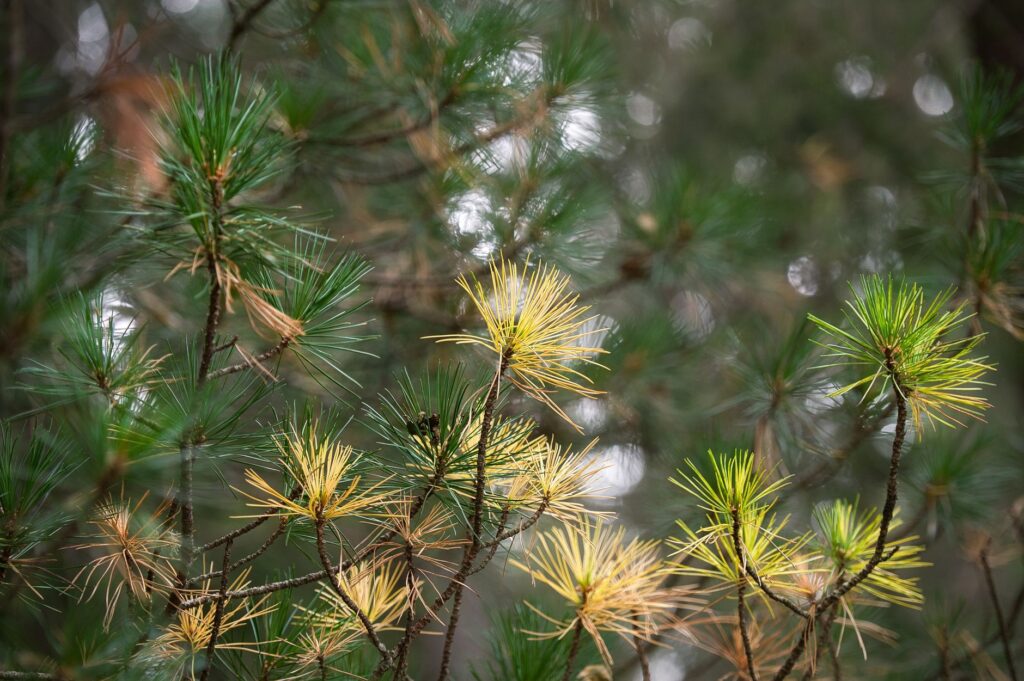
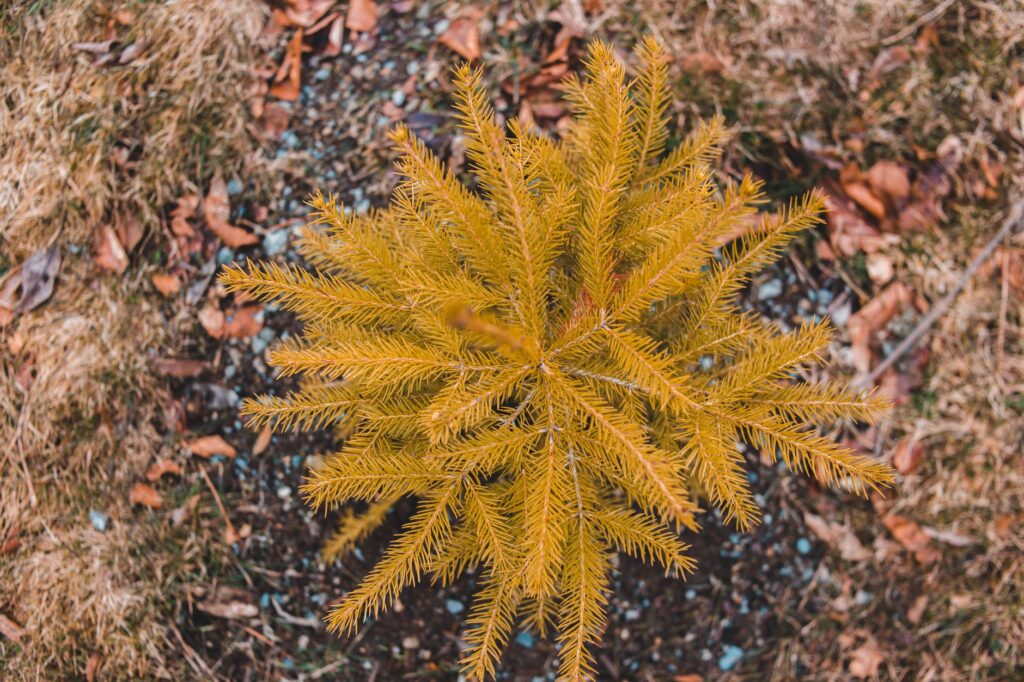
Sometime between late September and the end of October, the phone calls start up in every neighborhood with a mature evergreen. The inside of the white pine has turned yellow, then orange, then a rusty brown, and needles are piling up under the branches like a second autumn. Homeowners across Middletown Township see it and assume the worst. In most cases, they are watching a perfectly normal event.
Evergreen does not mean ever-green. It means the tree keeps some foliage through winter while quietly retiring the oldest foliage on a schedule. For an eastern white pine (Pinus strobus), that schedule produces a dramatic, once-a-year display that looks alarming and is usually harmless.
This article walks through which needle drop is routine, which species do it, what the pattern looks like, and the handful of signs that point to a real problem instead. October is the right moment for the conversation, because the normal drop is at its peak and the calendar still leaves time to act on anything that is not normal.
A little knowledge here saves a lot of worry, and occasionally saves a tree that really was in trouble.
How Evergreens Actually Shed: The Needle Lifespan Idea
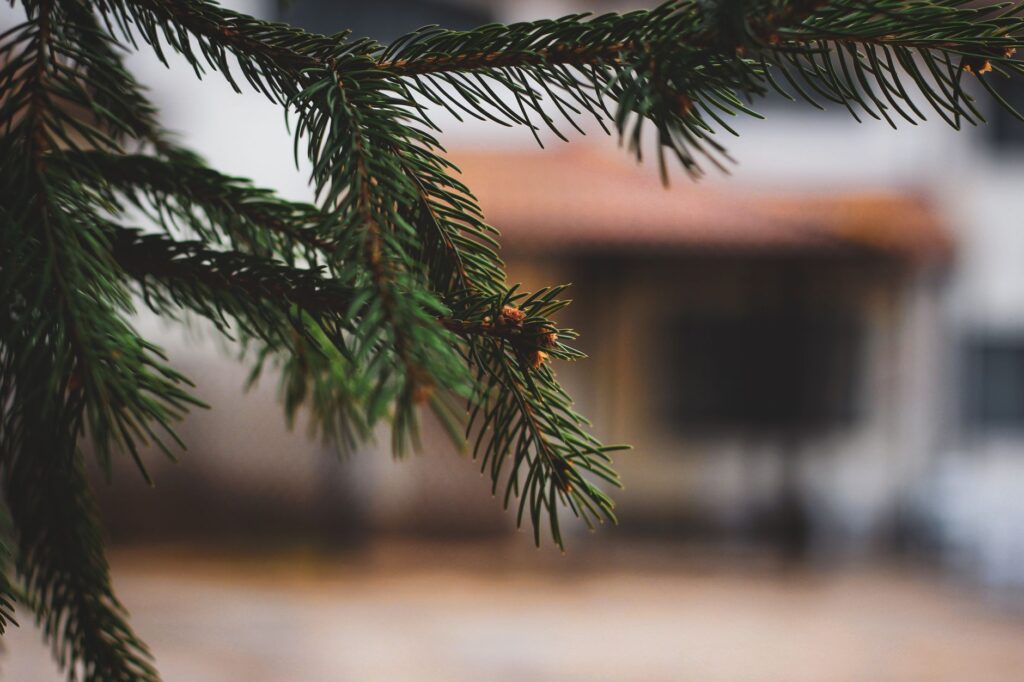
Every conifer needle has a lifespan. Eastern white pine needles generally live for about a year and a half to two and a half years, which is why you see only the newest one or two years of growth staying green at the branch tips in autumn. Spruces and hemlocks hold their needles much longer, often four to seven years, so their shedding is slower and rarely noticed. Pitch pines, the tough natives of the sandy soils around Sandy Hook and the Hartshorne Woods ridge, fall somewhere in between.
When a needle reaches the end of its useful life, the tree forms a layer of cells at its base, the same kind of separation zone a maple uses before it drops a leaf. The tree first pulls back mobile nutrients such as nitrogen from the aging needle and stores them in the twig. Only then does the needle yellow, brown, and let go. In other words, the tree is recycling, not failing.
The timing is pushed by weather. A dry late summer or an early cold snap compresses the display into a couple of weeks, which can make a normal year look like a sudden crisis. A mild, wet fall spreads it out and makes it easy to overlook.
The International Society of Arboriculture’s tree owner resources are a good plain-language place to read about how trees manage foliage and stress through the seasons.
Which Middletown Evergreens Do This, and What It Looks Like
Different species put on different versions of the same show, and knowing yours helps you read it correctly.
- Eastern white pine: the classic case. Needles on the inner two-thirds of each branch turn yellow, then brown, and drop in a rush. The tips stay blue-green and full.
- Arborvitae (Thuja occidentalis): scattered patches of foliage deep inside the plant turn orange-brown in fall. The browned scales are old growth, and the outer shell stays green. The pattern is called seasonal browning.
- Eastern red cedar (Juniperus virginiana): inner foliage browns and sheds in fall, which is easy to see on the large cedars along old fence lines and the edges of the county parks.
- American holly (Ilex opaca): older leaves yellow and drop mostly in late spring after new growth, but some drop earlier, and this is normal.
- Pitch pine and Austrian pine: older needles yellow and fall from the interior, though less dramatically than white pine.
Notice the common thread. In every one of these cases, the browning is on the inside, it is symmetrical across the tree, and the newest growth at the outside is healthy. That symmetry is your best field clue.
A few conifers are deciduous by design. Bald cypress (Taxodium distichum) and larch turn rust or gold and drop all their needles, and nobody should rush to rescue them.
Middletown's #1 Tree Expert Company
FREE Inspection & Estimate | Certified Arborists | Trimming, Pruning, Removal, More!
Sponsored
Normal Drop Versus a Tree in Trouble
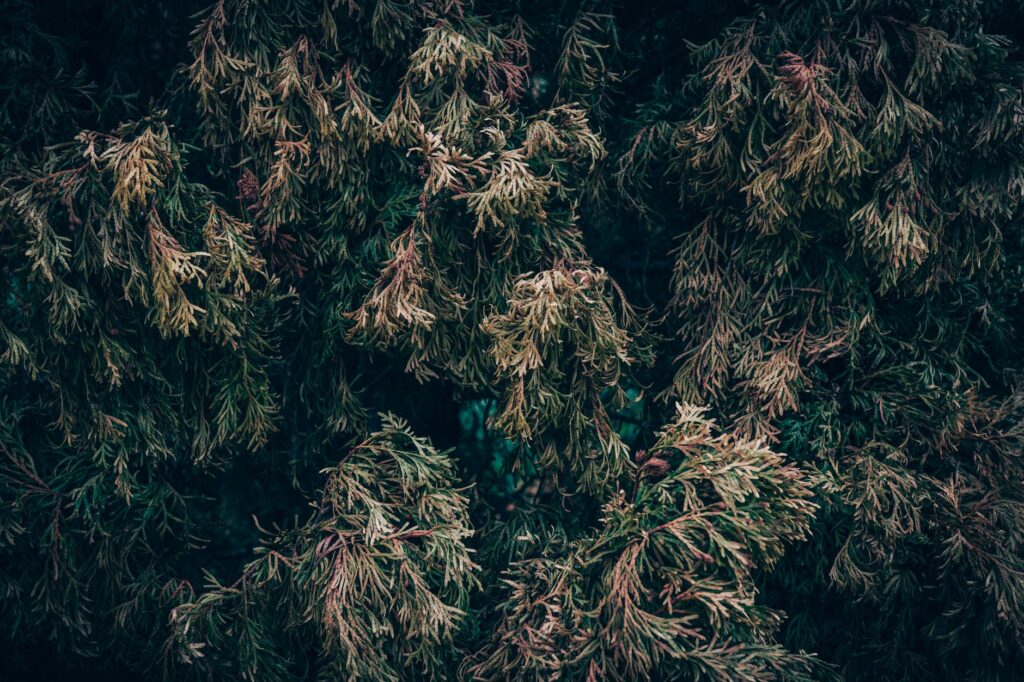
The difference between a routine shed and a real problem comes down to where the damage is, how much of it there is, and whether the tree looks balanced. Walk around the whole tree before you decide anything, and look at it from a few steps back as well as up close.
Normal needle drop is usually evenly distributed, affects the oldest foliage on the interior of the branches, and leaves healthy, plump buds and bright new needles at the outside of every branch. It occurs once a year, mostly in a window of a few weeks in autumn, and the tree looks the same the following spring.
Trouble looks different. Warning signs include browning at the branch tips instead of the inside, one side or one limb that browns while the rest stays green, needles that turn brown but stay attached through winter, bands of spots or tiny black dots on the needles, and thin, see-through crowns over several years. Resin oozing from the trunk, sawdust at the base, or fine webbing in the foliage also deserve a closer look.
Foliage that browns from the tips back is classic stress from drought, root damage, or salt. Foliage that drops in the middle of summer, when it should not, points to something happening to the roots or the water supply. Timing matters as much as location.
Stressors Specific to Bayshore and Monmouth County Yards

Even when the October shed is normal, a stressed evergreen shows it more. A few local factors make a regular difference around Middletown.
Salt is the first. Spray from nor’easters and tidal flooding carries salt inland on the Bayshore side of the township, and de-icing salt thrown from roads adds more in winter. White pines are notably sensitive to it, and evergreens near roads or the water commonly show tip burn on the exposed side. Salt-injured foliage browns from the tips, usually on the side facing the road or the bay.
Drought is the second. The sandy, fast-draining soils in parts of the township mean that a dry September can leave shallow-rooted conifers thirsty heading into winter. Evergreens lose water through their needles all year, so going into the freeze with dry soil sets them up for winter browning in March.
Compaction and construction come third. Conifers have shallow, wide root systems, and driveways, patios, and heavy equipment squeeze the same roots that feed them. A white pine that has lost a third of its roots to a new addition may take years to show it.
Planting too deep or mulching against the trunk adds to the strain. The USDA Forest Service publishes a deep library of tree research publications for anyone who wants to read further on conifer stress.
What You Can Do in October and November
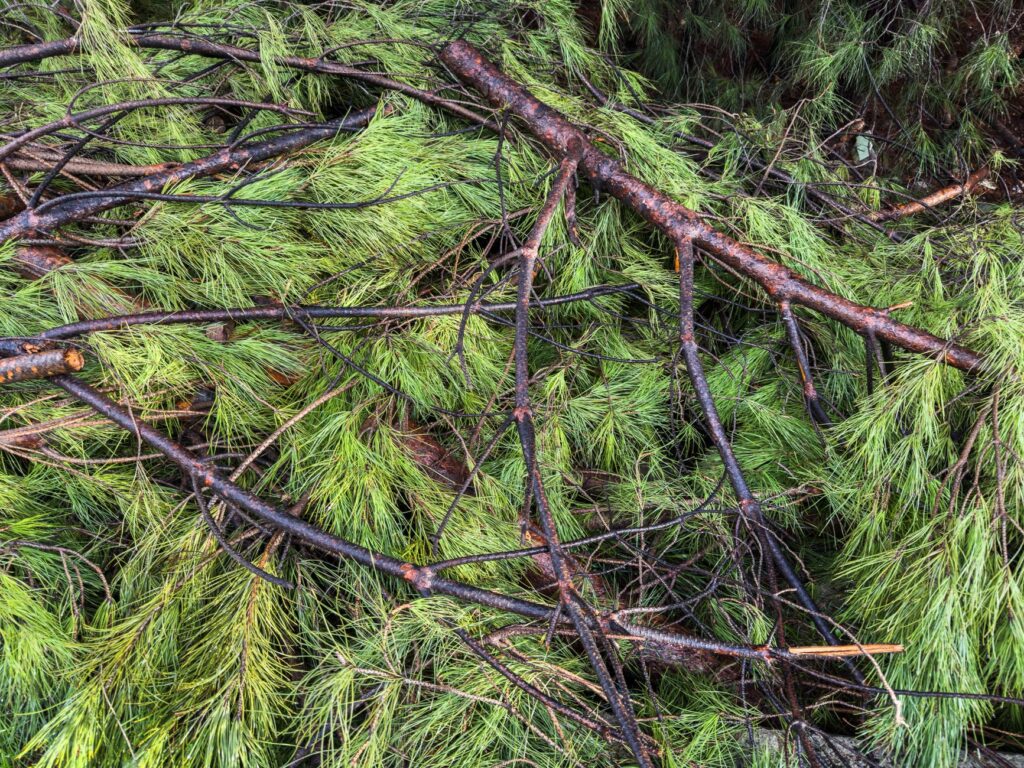
The best response to a normal shed is usually restraint, plus a few small kindnesses to the tree.
Leave the fallen needles where they are, or rake them into the bed beneath the tree. Pine needles break down slowly and make a light mulch. Do not shear the browning interior of an arborvitae, and never cut into old brown wood on a pine or cedar, because most conifers will not sprout new growth from bare wood. Cutting there leaves a permanent hole.
Give the tree a long, slow soak before the ground freezes if the fall has been dry. A slow trickle from a hose for an hour or so at the drip line, repeated if there has been no rain, does far more good than a quick spray. Keep the mulch two or three inches deep and pulled back from the trunk.
Take photographs now. A picture of the tree in late October gives you a baseline for comparison next year, and it is exactly what an arborist will want to see if you do call. You can also see mature pines and cedars in their natural setting at parks run by the Monmouth County Park System, which is a handy way to compare what a healthy autumn shed looks like.
Hold off on fertilizer. Healthy evergreens rarely need it, and fall feeding is seldom the answer to a browning needle.
Middletown's #1 Tree Expert Company
FREE Inspection & Estimate | Certified Arborists | Trimming, Pruning, Removal, More!
Sponsored
When to Call a Certified Arborist

If the browning is on the outside, on one side only, or still there next spring, it is time to have someone look. The same goes for a pine whose branches are bare toward the trunk year-round, a cedar with scattered dead limbs, or an arborvitae hedge with entire plants that have turned brown. These are patterns that need a diagnosis, not a guess.
A certified arborist can look at the roots, the soil, the trunk, and the foliage together, take a sample if it is needed, and tell you whether the problem is salt, drought, a fungal disease, or an insect. You can find credentialed professionals through the International Society of Arboriculture. Ask for a written assessment so you know what was found and what is recommended.
If a large pine or cedar leans, has dead limbs over a roof, or has been damaged by recent work on the property, treat that as a safety question and not a cosmetic one, and arrange the visit before the winter storms arrive.
For everything else, take a deep breath and enjoy the show. A white pine dropping its oldest needles is not dying, it is doing exactly what it has done every fall of its life.
Photo credits: Featured image by Erik Mclean on Pexels; Section 1 by Joerg Hartmann on Pexels; Section 2 by Kiril Georgiev on Pexels; Section 3 by 🇻🇳🇻🇳Nguyễn Tiến Thịnh 🇻🇳🇻🇳 on Pexels; Section 4 by Wyxina Tresse on Pexels; Section 5 by Mohan Nannapaneni on Pexels; Section 6 by Doğan Alpaslan Demir on Pexels; Section 7 by qmicertification design on Pexels.