
Middletown's #1 Tree Expert Company
FREE Inspection & Estimate | Certified Arborists | Trimming, Pruning, Removal, More!
Sponsored
Summer Drop: Why June Leaves on the Ground Aren't Always a Crisis
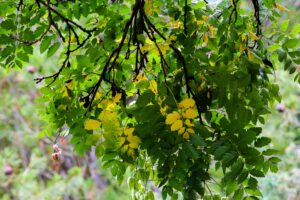
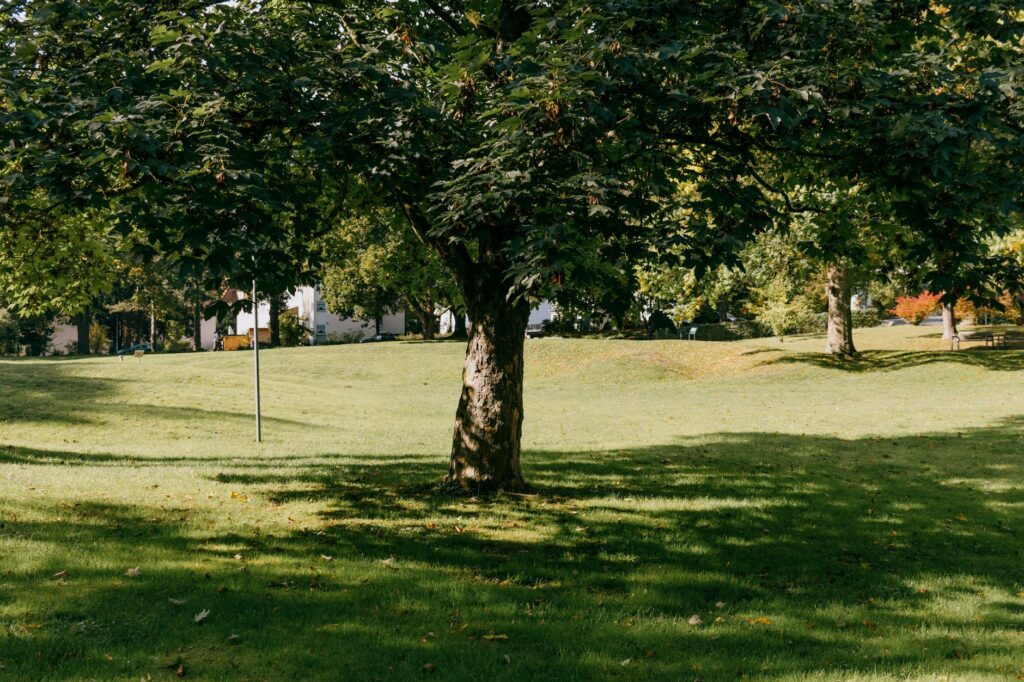
You raked and bagged leaves all November, so finding them on the ground again in June can feel like the universe playing a cruel joke. The instinct is immediate: something is wrong with the tree. A bug, a disease, a root problem — you start cataloging possibilities before the second cup of coffee. But before you head to the garden center or call the first tree service you find, it helps to understand what your tree is actually doing and why summer leaf drop, in most cases, is far less alarming than it looks.
In Middletown, June leaf drop shows up in yards from Port Monmouth to Lincroft every year. The combination of coastal summer heat, variable soils, and the natural drying that follows a wet spring creates the right conditions for it regularly. It’s not a sign that something is terribly wrong — it’s often a sign that your tree is doing exactly what it evolved to do when conditions shift. The question worth asking isn’t why are there leaves on the ground, but what pattern am I seeing, and what does it mean for this specific tree?
Understanding that difference can save you from unnecessary treatment, help you catch a genuine problem early, and make you a more confident observer of the trees that define your yard and your street.
The Biology Behind Summer Leaf Drop
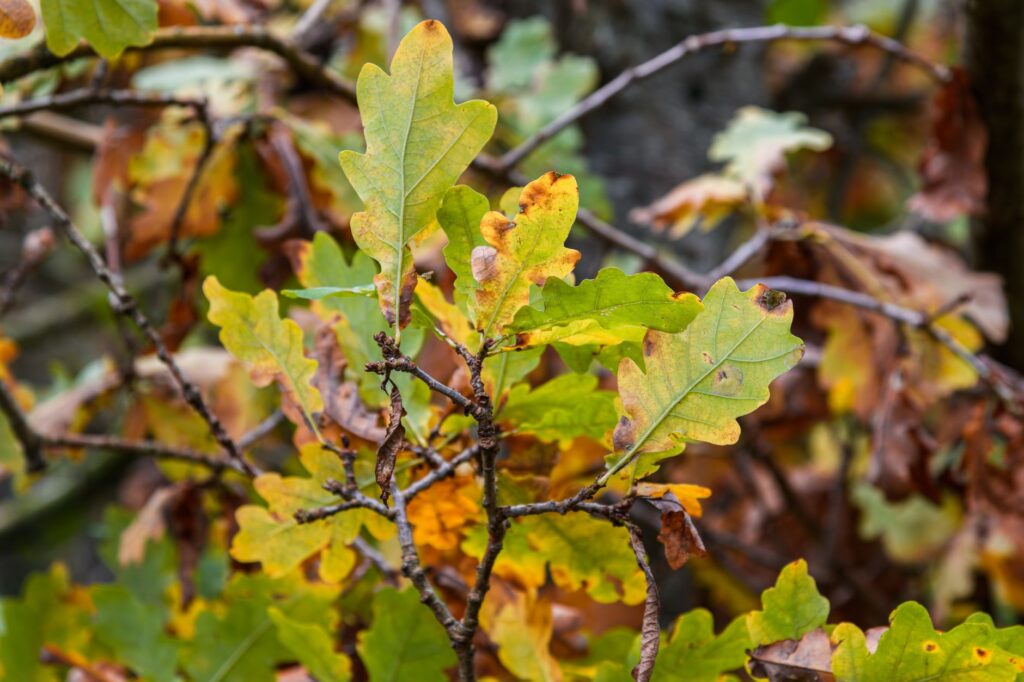
Trees are not passive recipients of whatever weather comes their way. They actively manage stress through a suite of biochemical responses, and one of the most powerful tools in that toolkit is controlled leaf shedding — what botanists call abscission. Unlike leaves torn off in a storm or chewed off by insects, an abscised leaf is shed deliberately. The tree decides to let it go.
At the base of every leaf petiole — the small stem connecting the leaf blade to the branch — there’s a specialized layer of cells called the abscission zone. When the tree experiences stress, particularly water stress, it produces a hormone called abscisic acid (ABA). Rising ABA levels signal the abscission zone to begin sealing off the leaf from the branch, slowly restricting water and nutrient flow until the connection weakens and the leaf drops cleanly. You’ll often notice a neat, sealed scar on the twig after the leaf falls — that’s not damage, that’s precision engineering.
The evolutionary logic is elegant. A mature white oak (Quercus alba) can transpire well over 100 gallons of water per day through its leaves on a hot, dry afternoon, according to research compiled by the USDA Forest Service. When the root system can’t pull in water fast enough to replace what the leaves are losing, the tree does a simple calculation: shed some leaves, reduce the total demand, buy time to survive. From the tree’s perspective, a thinner crown in July is far better than a dead crown in August.
Which Middletown Tree Species Drop Leaves Earliest
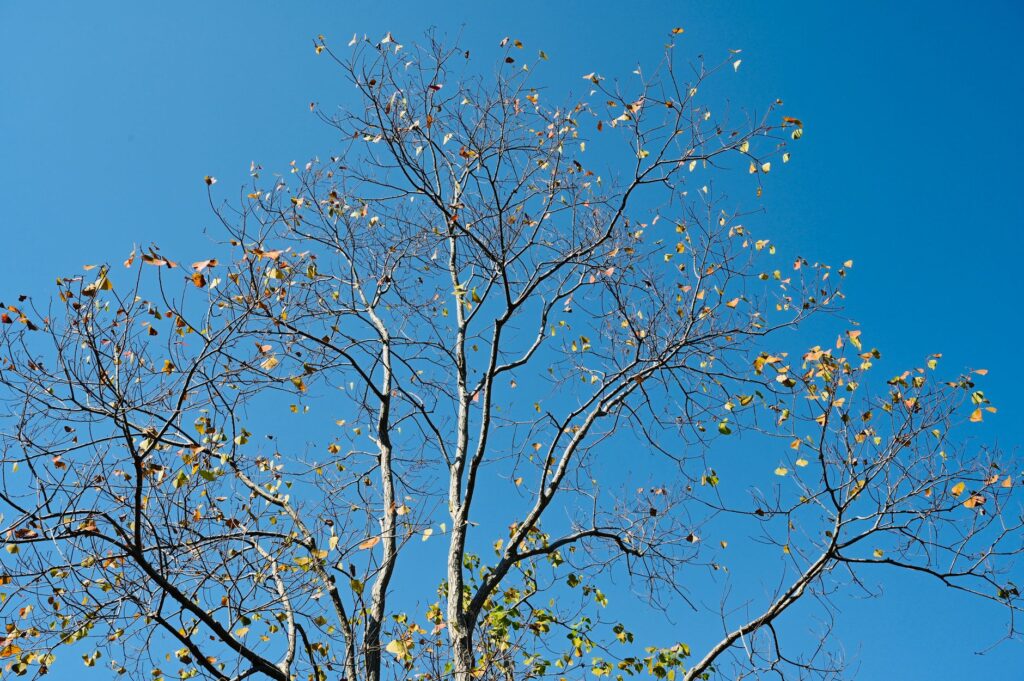
Summer leaf drop isn’t uniform across species. Some trees reach the stress threshold well before others, and knowing what’s growing in your yard helps you calibrate your concern level considerably.
A few species common in Middletown yards are notable early droppers:
- Sycamore (Platanus occidentalis): Sycamores are notorious for this. They often drop a significant portion of their leaves in midsummer — sometimes looking nearly half-bare in July — then push out a fresh set of smaller leaves. It’s alarming to watch the first time, but for sycamores, this pattern is well-established and normal, not a death spiral.
- Silver maple (Acer saccharinum): These fast-growing trees have relatively shallow roots and thin, broad leaves, making them among the most sensitive to water stress. Yellowing and early drop during dry stretches in June and July is common.
- River birch (Betula nigra) and gray birch (Betula populifolia): Birches are shallow-rooted by nature and among the quickest to show drought stress through leaf yellowing and drop. A birch dropping leaves in late June is usually running low on water in the upper root zone.
- Fruit trees and crabapples: These undergo a natural midsummer drop known as “June drop,” shedding both developing fruitlets and some foliage as the tree self-thins to what it can actually carry to maturity.
Oaks, hickories, and most mature native species tend to hold their leaves better under stress, but they’re not immune — especially if the root zone has been compromised by construction, compaction, or drought damage in previous seasons. Even a centuries-old red oak will shed leaves defensively if its root zone is severely restricted.
Middletown's #1 Tree Expert Company
FREE Inspection & Estimate | Certified Arborists | Trimming, Pruning, Removal, More!
Sponsored
Bayshore Soils, Coastal Heat, and Why Middletown Trees Stress Earlier
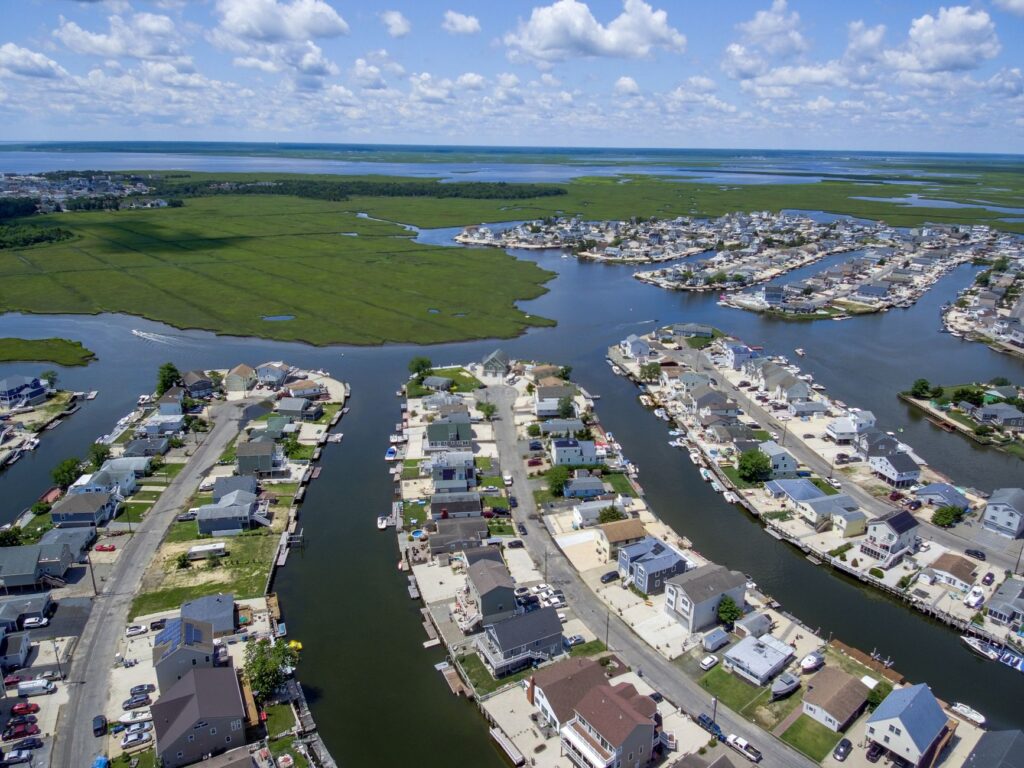
Middletown Township sits across a notable soil transition. Properties near the Bayshore — in Port Monmouth, Leonardo, and Keansburg — tend to have sandier soils that drain fast and heat up quickly in summer. Move inland toward Lincroft, Holmdel, and the areas surrounding Poricy Park and Tatum Park, and you’re dealing with heavier clay-loam profiles that hold moisture longer but compact more easily, especially in areas with heavy foot traffic or regular lawn equipment passes.
Both soil types can generate summer leaf drop stress, just through different mechanisms. Sandy soils dry out fast — a week without rain in July can push a shallow-rooted tree into genuine water deficit. Clay-loam soils hold moisture longer, but when they do dry, they can crack and pull away from roots. Compacted zones in the upper root area dramatically limit how much water the tree can access even when moisture is theoretically present deeper in the profile.
The Raritan Bay shoreline and Navesink River estuary create a local heat dynamic that many homeowners feel but don’t fully register for their trees. On hot, still days in June and July, coastal areas can experience temperatures notably higher than NJ statewide averages. Onshore breezes that feel refreshing to a person on the porch are actually desiccating agents for trees — they dramatically accelerate the rate of transpiration from leaf surfaces. The Rutgers New Jersey Agricultural Experiment Station has documented how coastal urban heat effects amplify drought stress in trees across our region, increasing water demand well beyond what rainfall patterns alone would predict.
After a wet spring, trees often develop more vigorous canopy than in drought years — more leaves, more surface area requiring water. When soils then dry out rapidly in early June, those trees suddenly have more leaf area to support than their water budget can sustain. The result is a corrective wave of early summer drop as the tree recalibrates to its actual available water.
Reading the Pattern: What the Drop Is Telling You
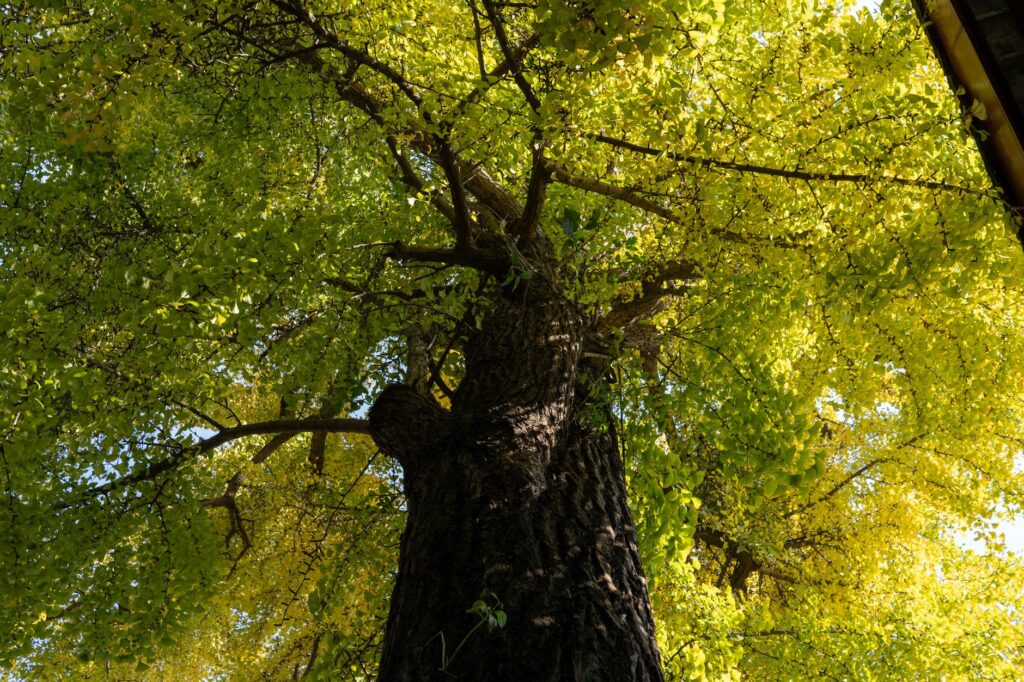
Once you accept that some degree of summer leaf drop is normal, the critical skill becomes reading the pattern. The location, timing, and character of the drop carries real diagnostic information — if you know what to look for.
Scattered light drop across the whole canopy: A few leaves yellowing and falling from throughout the tree on a hot afternoon is the most common pattern and typically not alarming. The tree is making a proportional adjustment across the board. Watch the overall canopy density over the next week — if it stabilizes or improves after rain, you’re likely watching a healthy stress response that doesn’t need any intervention beyond water.
Inner canopy drop (older interior leaves yellowing while outer branch tips stay green): Also largely normal. Trees prioritize keeping actively photosynthesizing growth at the branch tips; older interior leaves contribute less light capture and get sacrificed first. This is essentially the same triage logic that runs in fall, just operating earlier under summer stress conditions.
One-sided or sectoral drop (a distinct portion of the crown thinning while the rest stays full): This pattern is worth investigating. Asymmetric drop often points to a root zone problem directly beneath the affected side — compaction from repeated parking or foot traffic, construction disturbance, a severed structural root from a recent utility project, or early-stage vascular disease affecting that sector of the tree. It’s not necessarily an emergency, but it earns a closer look before the season is over.
Sudden rapid drop from the upper crown, with tip dieback: This is the pattern that warrants an urgent call. When the highest, most sun-exposed leaves drop quickly and branch tips go dry and brittle, the tree may be experiencing hydraulic failure — its vascular system can no longer move water to the top. Water pressure drops fastest at the greatest height, so the upper crown fails first. Possible causes include severe root rot, advanced girdling roots, or significant vascular disease. A tree showing this pattern needs professional eyes, not more waiting.
What to Do — and What Not to Do
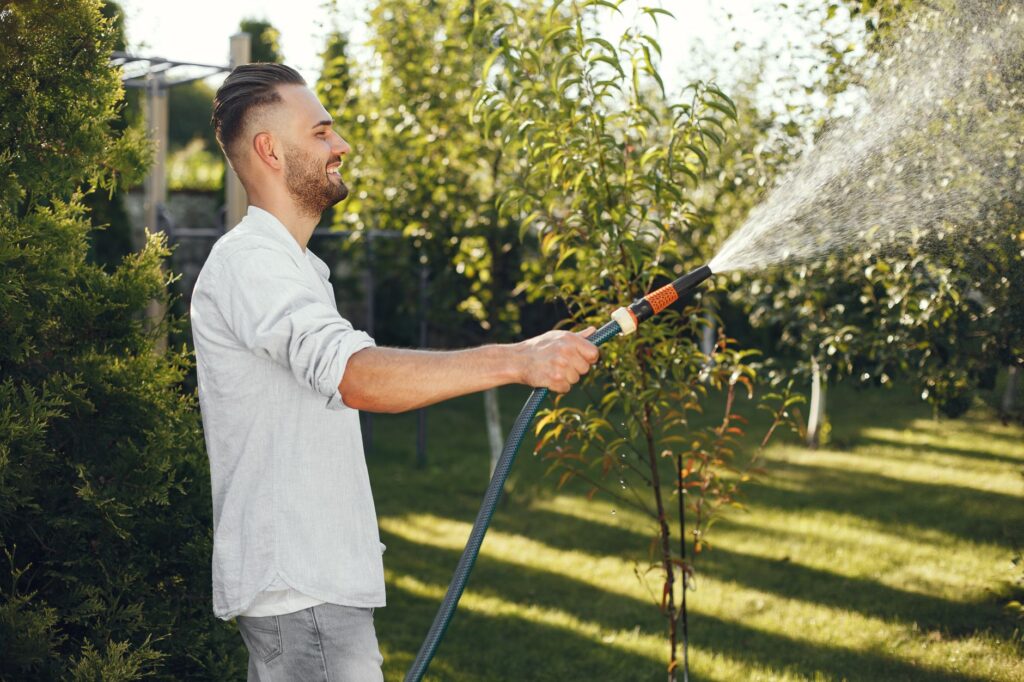
When you see summer leaf drop, the instinct to water is usually right. But how you water matters significantly. Light, frequent watering — running a sprinkler every day for 20 minutes — wets only the top few inches of soil, encourages shallow root growth over time, and evaporates before it reaches the root zone where it’s actually needed. For an established tree under stress, you want to wet the soil 12–18 inches deep and then let it partially dry before the next cycle. A soaker hose laid in a ring at the drip line (the outer edge of the canopy, not against the trunk) running for 60–90 minutes once or twice a week is far more effective than daily sprinkler runs for the same amount of water.
Mulching the root zone is one of the highest-return actions you can take for a tree experiencing summer stress. A 3–4 inch layer of wood chip or shredded bark mulch spread from the trunk flare out to the drip line reduces soil temperature by several degrees, dramatically slows moisture evaporation, and suppresses the lawn grass that competes aggressively with tree roots for available water. The International Society of Arboriculture recommends proper mulching as one of the single most effective steps a homeowner can take to reduce summer heat and drought stress in suburban trees. Keep the mulch from touching the trunk itself — a gap of 2–3 inches at the base prevents bark rot and moisture damage to the crown collar.
Equally important is knowing what not to do when your tree is dropping leaves in June:
- Don’t fertilize. Nitrogen fertilizer pushes new growth, which increases water demand at exactly the wrong time. Hold any fertilization for fall or very early spring.
- Don’t prune heavily. Each wound is another resource demand on a tree already running lean on water and energy.
- Don’t assume the problem is a pest or disease. The instinct to spray something is strong, but most summer leaf drop is water-driven, not insect-driven. Applying pesticides or fungicides for the wrong problem wastes time, money, and introduces chemistry the tree doesn’t need right now.
If the tree is dropping leaves and showing other concurrent symptoms — bark abnormalities, dead stubs in the canopy from prior years, girdling root development visible at the base, or a history of root zone disturbance — it’s worth having a certified arborist assess the whole picture before deciding on any course of action.
Middletown's #1 Tree Expert Company
FREE Inspection & Estimate | Certified Arborists | Trimming, Pruning, Removal, More!
Sponsored
Summary / When to Call a Pro
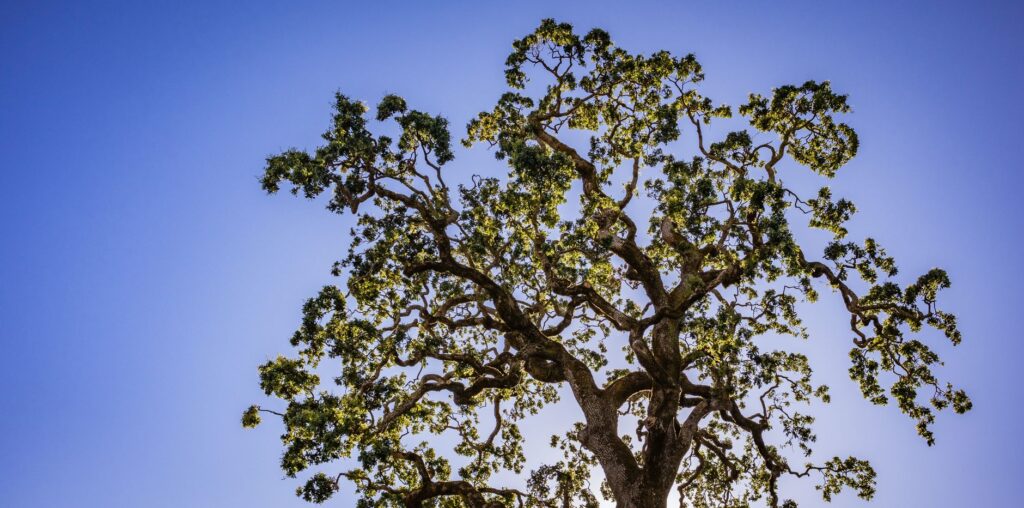
Most summer leaf drop in Middletown is the tree doing what it’s supposed to do: managing a water deficit by reducing the total leaf surface it has to maintain. The biology is sound, the response is adaptive, and in most cases a well-placed soaker hose and a fresh ring of mulch are the right answers. Watching the canopy stabilize over the following week after you improve the watering situation is one of the more satisfying things a tree owner can experience — a tangible connection between your action and the tree’s response.
That said, several patterns warrant a call to an ISA-certified arborist. The NJ DEP Forest Service and the ISA both maintain directories for finding licensed, certified professionals if you’re unsure where to start. Call when you see:
- Drop that’s clearly localized to one side or sector of the crown
- Drop accompanied by branch tip dieback in the upper crown
- Any large or mature tree showing sudden, significant canopy thinning
- A tree that had root zone disturbance within the past 3–5 years — construction, trenching, heavy equipment, soil grading near the base
- Drop that continues or worsens after rain returns
An arborist can probe root zone condition, look for signs of vascular disease, and give you an honest read on whether the tree is adapting or actually declining. For a specimen tree that took 40 or 60 years to reach its current size in your Middletown yard, that distinction is worth getting right. The best time to catch a real problem is while there’s still time to change the outcome — and in June, there’s still time.
Photo credits: Featured image by Arlind D on Pexels; Section 1 by RDNE Stock project on Pexels; Section 2 by Irek Marcinkowski on Pexels; Section 3 by SunLi S on Pexels; Section 4 by Connor McKenzie on Pexels; Section 5 by Peter Xie on Pexels; Section 6 by Gustavo Fring on Pexels; Section 7 by Robert So on Pexels.