Middletown's #1 Tree Expert Company
FREE Inspection & Estimate | Certified Arborists | Trimming, Pruning, Removal, More!
Sponsored
The Split That Comes Out of Nowhere
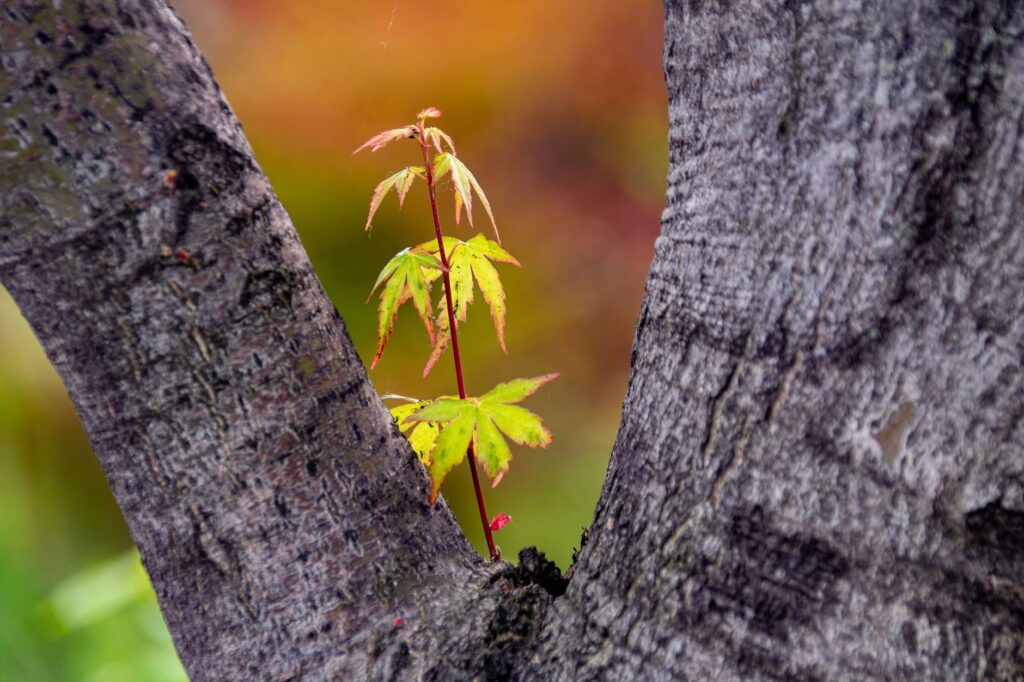
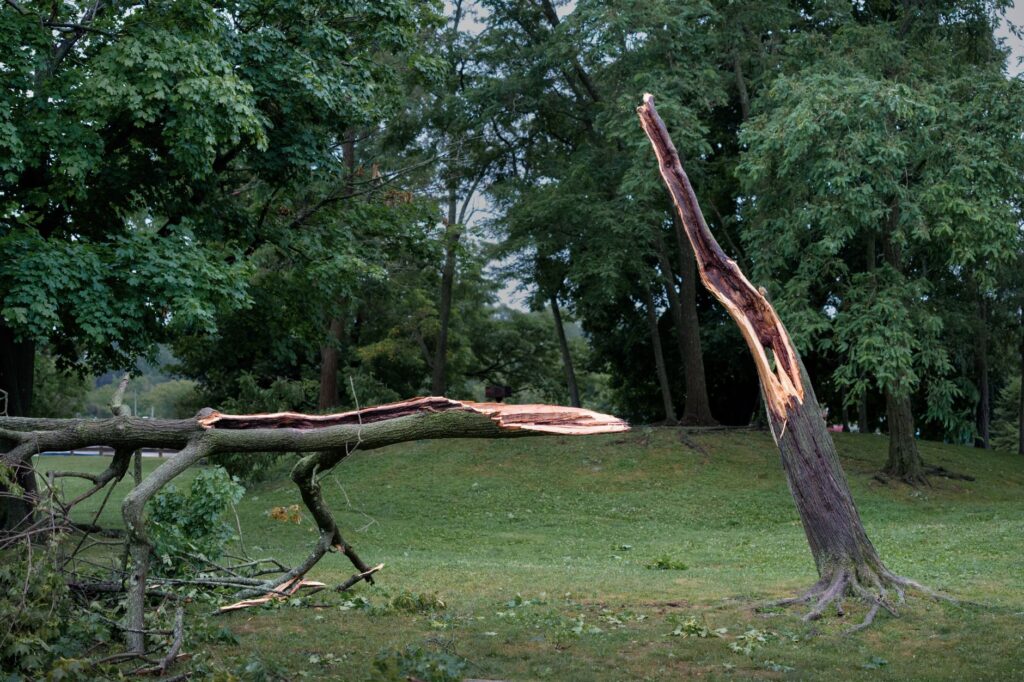
Every August I get a call that starts the same way: “It wasn’t even that windy.” A homeowner near Thompson Park or up on the ridge above the Bayshore looks out to find half their shade tree lying across the lawn, and the tree looked perfectly healthy the week before — full canopy, green leaves, no obvious rot. When I walk the site, the answer is almost always at the point where the trunk split: a tight, V-shaped union where two large limbs or co-dominant trunks came together. That union failed not because the tree was sick, but because of something built into its structure decades earlier, hiding in plain sight.
Arborists call it included bark, and it is one of the most common — and most overlooked — reasons mature trees fail in Middletown Township. It doesn’t show up as a dead branch or a fungal conk. It shows up as a seam, a subtle ridge, a slightly swollen crotch that looks structural but isn’t. Understanding what it is and how to spot it can save you from a very expensive surprise the next time a nor’easter or a summer microburst rolls through the Raritan Bayshore.
What Included Bark Actually Is
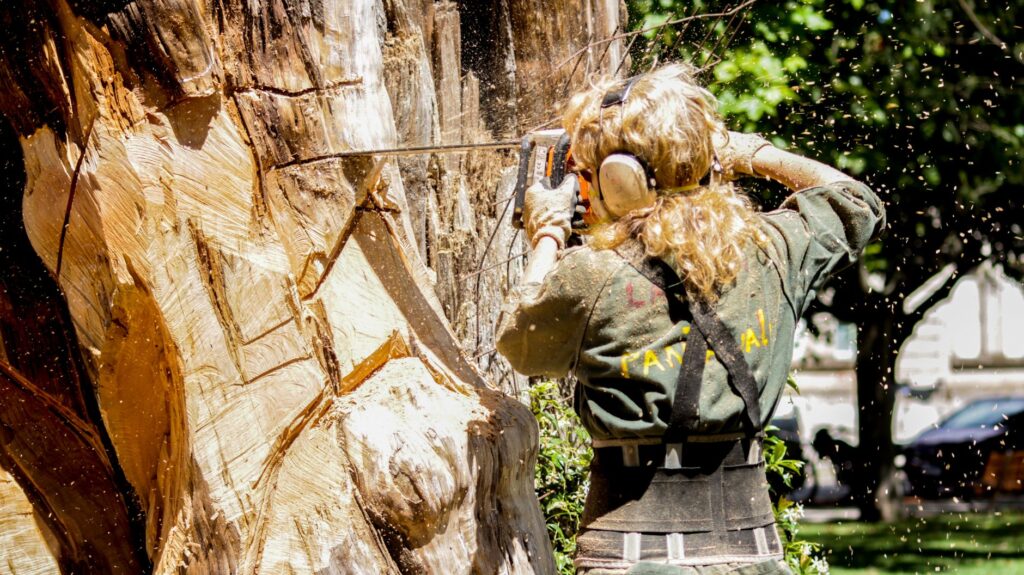
When two limbs of similar size grow from roughly the same point on a trunk, they form what’s called a codominant union. In a healthy union, the tree lays down interlocking wood fibers where the branches meet, creating a strong, flared connection — think of the wide, buttressed base where a trunk meets the ground, but higher up in the canopy.
Included bark happens when the angle between those two limbs is too narrow, often less than 30 degrees. Instead of wood growing into wood, bark gets pinched and folded inward between the two stems as they expand outward. Bark has none of the structural strength of wood. The result is a union held together mostly by the outer layers of the tree, with a wedge of compressed, dead bark tissue running down the middle where strong wood should be. Rutgers Cooperative Extension and the International Society of Arboriculture both flag included bark as one of the clearest predictors of future limb or stem failure, because the defect gets structurally weaker every year the tree keeps growing, even as it becomes harder to see from the ground.
Why It's So Common in Middletown Yards
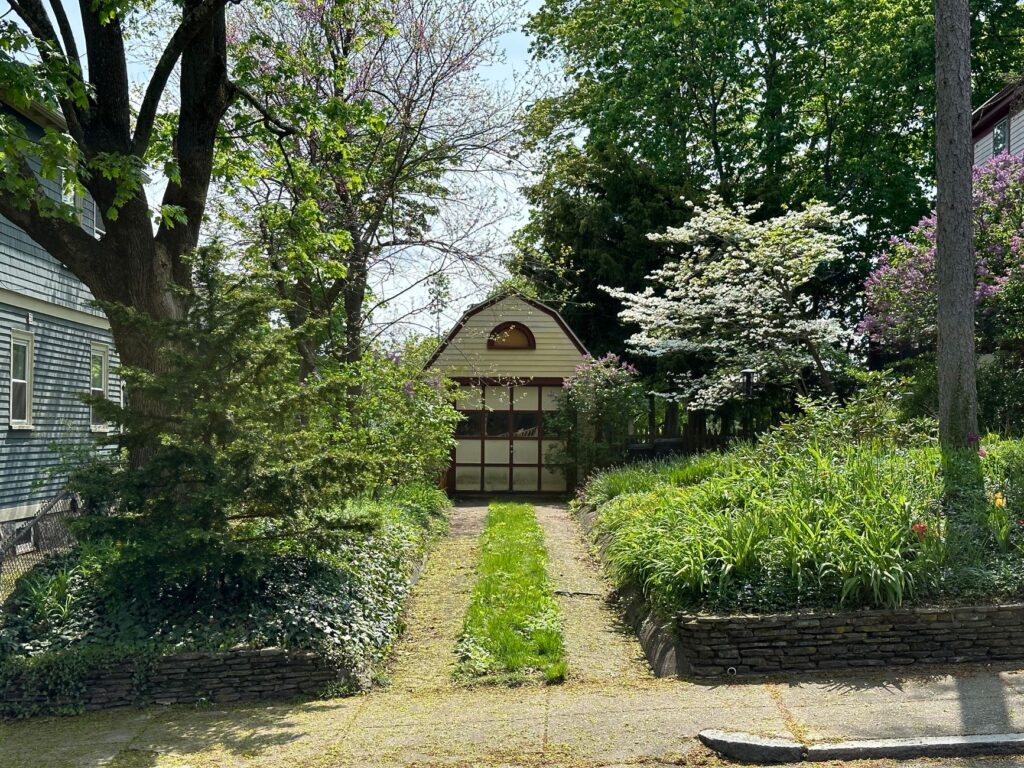
Included bark isn’t random — certain species and certain planting histories set it up. Fast-growing, multi-stemmed trees like silver maple, Bradford and other ornamental pears, tulip poplar (Liriodendron tulipifera), and river birch are especially prone to throwing up tight codominant leaders in their first ten to fifteen years. If nobody corrects that structure early with a little selective pruning, the tree locks in the narrow union permanently.
I see it constantly on Bradford pears planted along Middletown driveways and cul-de-sacs in the 1990s and 2000s — they were popular street trees precisely because they grew fast and flowered heavily, but their branch architecture is notoriously bad. Topping is another common cause: when a tree is cut back hard, it responds by sending up a cluster of new shoots from the cut point, all originating from nearly the same spot with weak, included-bark attachments. A tree that was topped once, fifteen or twenty years ago, is often carrying three or four of these defects today, high in the canopy where you’d never think to look.
Middletown's #1 Tree Expert Company
FREE Inspection & Estimate | Certified Arborists | Trimming, Pruning, Removal, More!
Sponsored
How to Spot It From the Ground
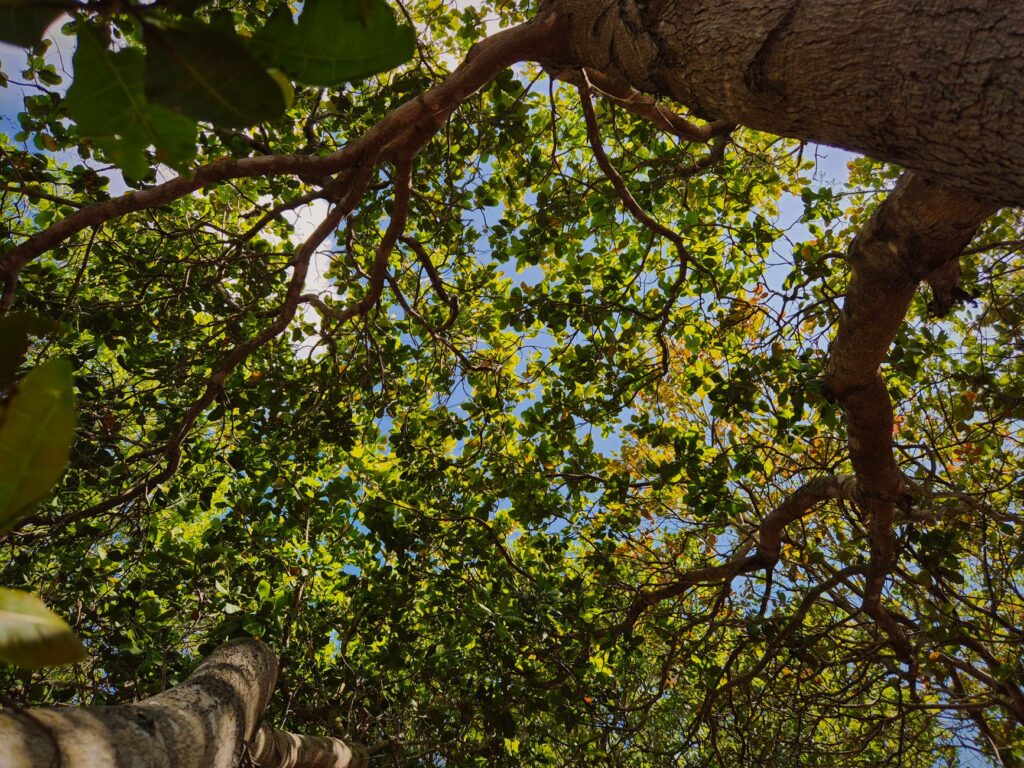
You don’t need to climb a ladder to start screening your own trees. Walk your yard and look up at every place where the trunk forks into two or more major stems, or where a large limb branches off close to another one of similar size.
- Union shape: A strong union looks like a rounded “U,” with visible bark ridges flaring outward where the branches meet. A weak union looks like a tight “V,” almost like the two limbs are growing parallel and just touching.
- Bark seams: Look for a vertical crack or seam running down from the union into the trunk, sometimes with a slightly raised or dark ridge of bark on either side. That seam is often the included bark itself, or a crack that’s already started to open along it.
- Swelling without flare: A healthy branch union bulges outward as the tree reinforces it. A union with included bark can look swollen too, but without the outward-flaring collar — it reads as puffy rather than structurally buttressed.
- Multiple trunks from one point: Any tree with two or three trunks of nearly equal diameter rising from the same spot near ground level deserves a closer look, especially pears, maples, and river birches.
If you see any of these signs on a tree that overhangs your house, driveway, or a spot where people gather, it’s worth a professional look rather than a guess from the lawn.
Why August Raises the Stakes
Right now, in early August, Middletown’s trees are carrying their heaviest canopy load of the year — full leaf-out, plus whatever fruit or seed crop they’ve set. That extra weight puts more sustained stress on every branch union, included bark or not. It’s also the stretch of the calendar when we start seeing the season’s first tropical moisture and the thunderstorm cells that spin up quick, hard wind gusts with little warning, well before the more organized nor’easters and named storms of September and October arrive.
A union with included bark that has quietly held together through calm spring weather can fail under a sudden gust load once the canopy is fully leafed and storm season ramps up. The USDA Forest Service and NJ’s own hurricane and coastal storm history make clear that Monmouth County’s exposure to the Bayshore and Raritan Bay means wind loading on trees isn’t a once-a-decade event — it’s an annual risk that structural defects like this one are waiting for.
What Can Actually Be Done About It
The fix depends heavily on the tree’s age and how far the defect has progressed, which is exactly why this isn’t a good DIY project. On a young tree, correcting a codominant union is straightforward: a certified arborist performs subordination pruning, selectively reducing one of the competing leaders so a single dominant trunk takes over and the weaker union stops gaining diameter and stress. Done in the first decade of a tree’s life, this single pruning cycle can prevent the defect from ever becoming dangerous.
On a mature tree where included bark has been present for years, removal usually isn’t necessary or desirable — but the union typically needs mechanical support. That’s where cable bracing comes in: a flexible steel cable installed high in the canopy limits how far the two stems can spread apart under wind load, reducing (though not eliminating) the chance of a catastrophic split. The Tree Care Industry Association publishes the ANSI A300 pruning standards that govern how this kind of structural support and corrective pruning should be done safely and effectively. What you should never do yourself is try to cable a union with rope or wire, or caulk a bark seam shut — neither addresses the underlying structural weakness, and improvised hardware can actually gird and damage the tree further.
Middletown's #1 Tree Expert Company
FREE Inspection & Estimate | Certified Arborists | Trimming, Pruning, Removal, More!
Sponsored
When to Call a Pro

If you’ve spotted a tight, V-shaped union, a vertical bark seam, or multiple trunks of similar size on a tree near your house, driveway, or a spot where family and neighbors spend time, that’s worth a certified arborist’s eyes before the next round of summer storms comes through. A trained assessment can tell the difference between a cosmetic seam and a union that’s genuinely at risk, and it can catch problems high in the canopy that are invisible from the ground.
Middletown’s tree canopy — from the white oaks along Poricy Park to the mixed hardwoods around Hartshorne Woods — is one of the best things about living here, and most of these trees will never need anything more than a normal maintenance cycle. But a structural defect like included bark is one of the few problems where waiting for visible symptoms means waiting too long. A quick assessment now, while the weather is calm, is a lot cheaper than a call after the next storm.
Photo credits: Featured image by David Kanigan on Pexels; Section 1 by wal_ 172619 on Pexels; Section 2 by Gastón Mousist on Pexels; Section 3 by Alireza AM on Pexels; Section 4 by Lan Nguyen Tran on Pexels; Section 5 by Stuart Robinson on Pexels; Section 6 by Magda Ehlers on Pexels; Section 7 by Kindel Media on Pexels.