
Middletown's #1 Tree Expert Company
FREE Inspection & Estimate | Certified Arborists | Trimming, Pruning, Removal, More!
Sponsored
Winter Is When a Tree's Bones Show
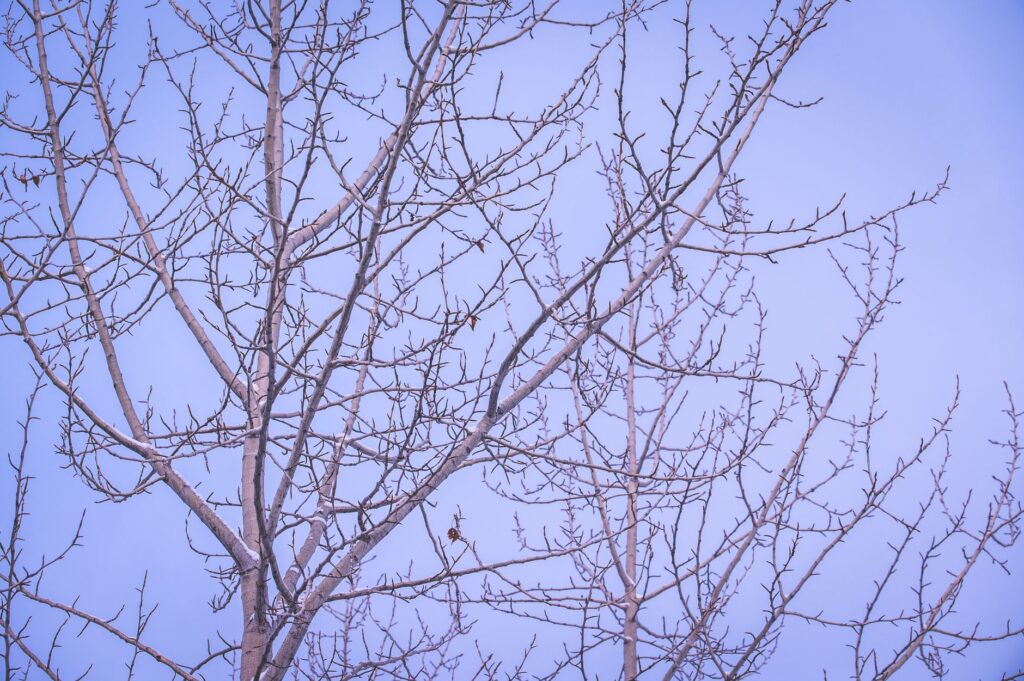
Every October the conversation in Middletown yards turns to color, and then to rakes. Almost nobody talks about what the yard will look like in February, when the leaves are down, the sky over Raritan Bay is the color of pewter, and the only things standing between you and a flat gray view are the shape and bark of the trees you chose. That is a planting decision, and the fall planting window is the time to make it.
Arborists call this winter interest. It means the features a tree keeps after the leaves go: peeling or patterned bark, a graceful branching habit, persistent fruit, evergreen foliage, even flowers that open in the cold. A tree with good winter interest earns its place in the landscape twelve months a year instead of five.
It also tells you something about the tree itself. Bark texture, branch angle and trunk form are the same traits that determine how a tree handles a nor’easter, so looking at a tree’s bones is useful well beyond appearance. Over the next few sections we will walk through which trees shine in a bare Middletown yard, which ones tolerate our coastal plain soils, and how to avoid buying something that looks wonderful at the nursery and struggles here.
Bark That Does the Work: River Birch, Hornbeam and Serviceberry
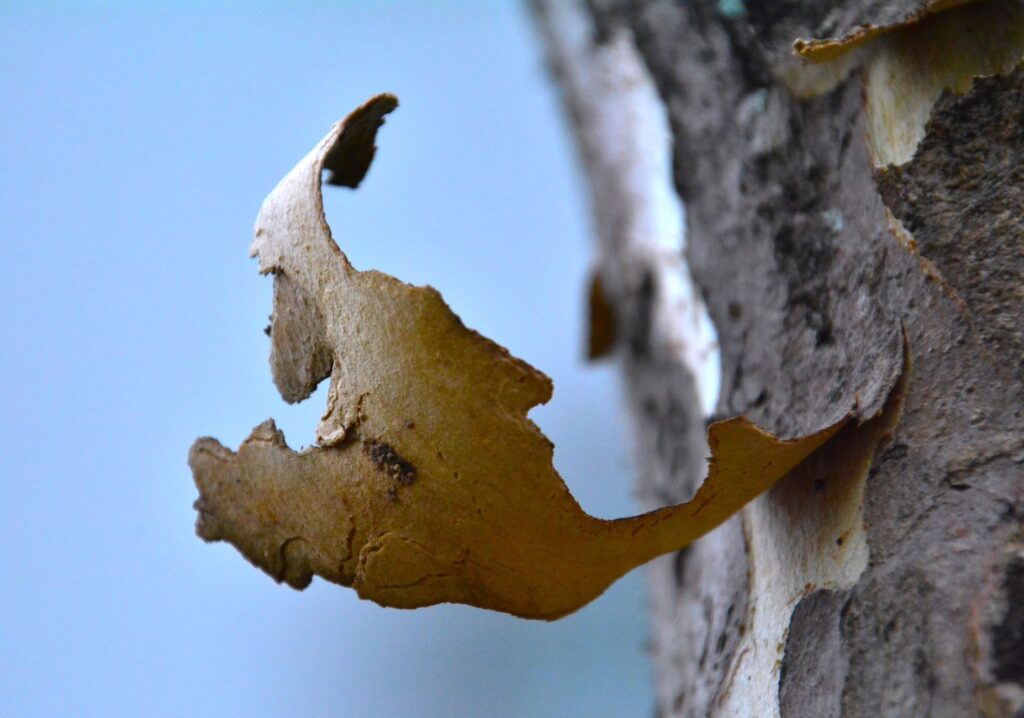
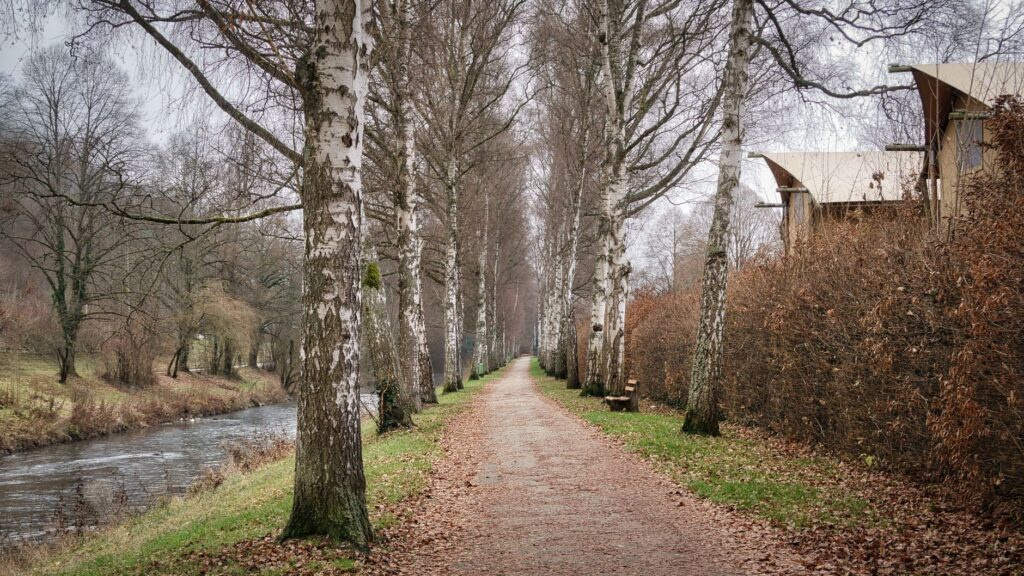
If you want bark as the main event, start with the natives. River birch (Betula nigra) is a classic Monmouth County choice: cinnamon, salmon and cream bark that curls off in papery sheets, a tolerance for wet feet that suits low spots near the Shrewsbury River drainage, and a relaxed, multi-stem form. It does best in consistently moist soil and can show yellowing leaves when it is planted in dry, alkaline ground, so site it where it will not bake.
American hornbeam (Carpinus caroliniana), sometimes called musclewood, has smooth blue-gray bark stretched over fluted ridges that really do resemble a flexed arm. It stays small, handles shade, and is one of the better answers for a tight yard with overhead wires. Serviceberry (Amelanchier) offers smooth gray bark with faint vertical streaks, early white flowers in spring and small fruit that the birds will find before you do.
For a broader look at matching species to a site, the International Society of Arboriculture’s consumer site has a practical guide to choosing the right tree, covering mature size, soil, light and what is growing overhead. Read it before you buy, not after.
One caution: peeling bark is normal on a birch, but peeling, cracking or sloughing bark on a tree that should be smooth can signal a problem. Know what your species is supposed to look like so you can tell the difference.
Structure and Branching: The Silhouette That Carries a Bare Yard
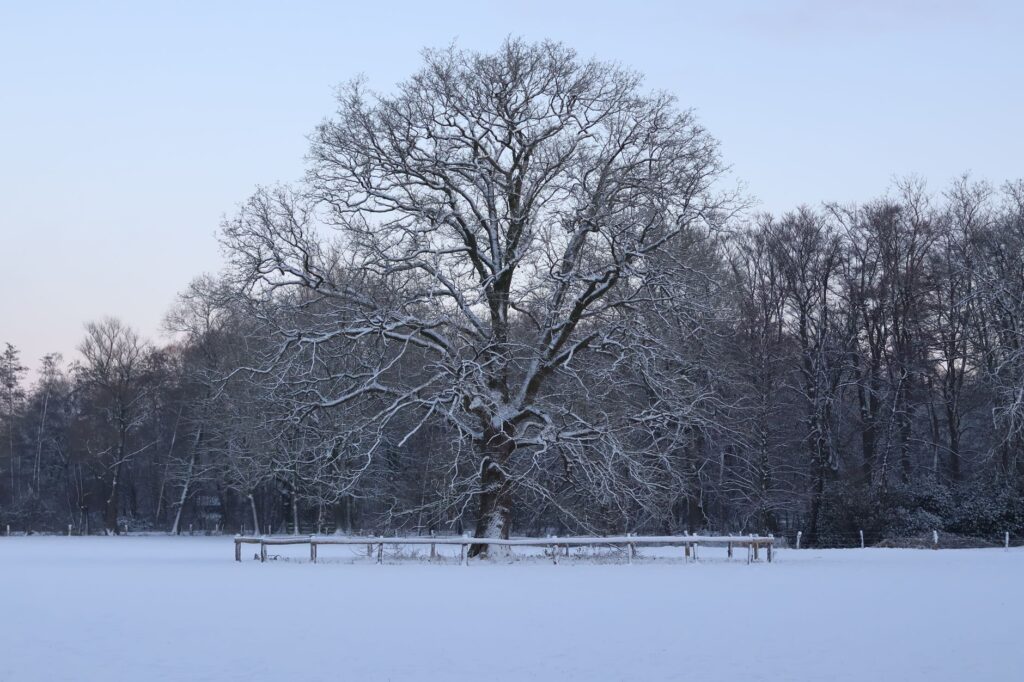
Bark is only half of the story. Some of the best winter trees are chosen for the way their limbs are arranged. A mature white oak (Quercus alba) holds a broad, rugged crown that looks like architecture against a snowy sky. American beech (Fagus grandifolia) has smooth gray bark that scars easily and wraps a spreading frame, and its coppery leaves hang on through much of the winter. Flowering dogwood (Cornus florida) layers its branches in horizontal tiers, and its flower buds are visible on the twigs all winter, a quiet promise of spring.
Strong structure matters for safety as well as looks. Good winter trees usually have one dominant leader, branches spaced along the trunk rather than bunched at one point, and attachment angles that are wide rather than tight. Narrow, V-shaped unions with bark pinched inside, called included bark, are weak points that tend to split in ice and wind. A tree that looks beautiful now but has a poor junction at twelve feet is a limb waiting for a bad night.
Winter is actually the best time to judge this on trees you already own. With the leaves gone, you can see every fork, every crossing branch and every dead twig. Take a slow walk around the yard with binoculars and make a short list of anything that looks crowded, cracked or hanging. That list is exactly what a certified arborist will want to see during a dormant season assessment.
Middletown's #1 Tree Expert Company
FREE Inspection & Estimate | Certified Arborists | Trimming, Pruning, Removal, More!
Sponsored
Evergreens and Berries: Color When Everything Else Is Brown
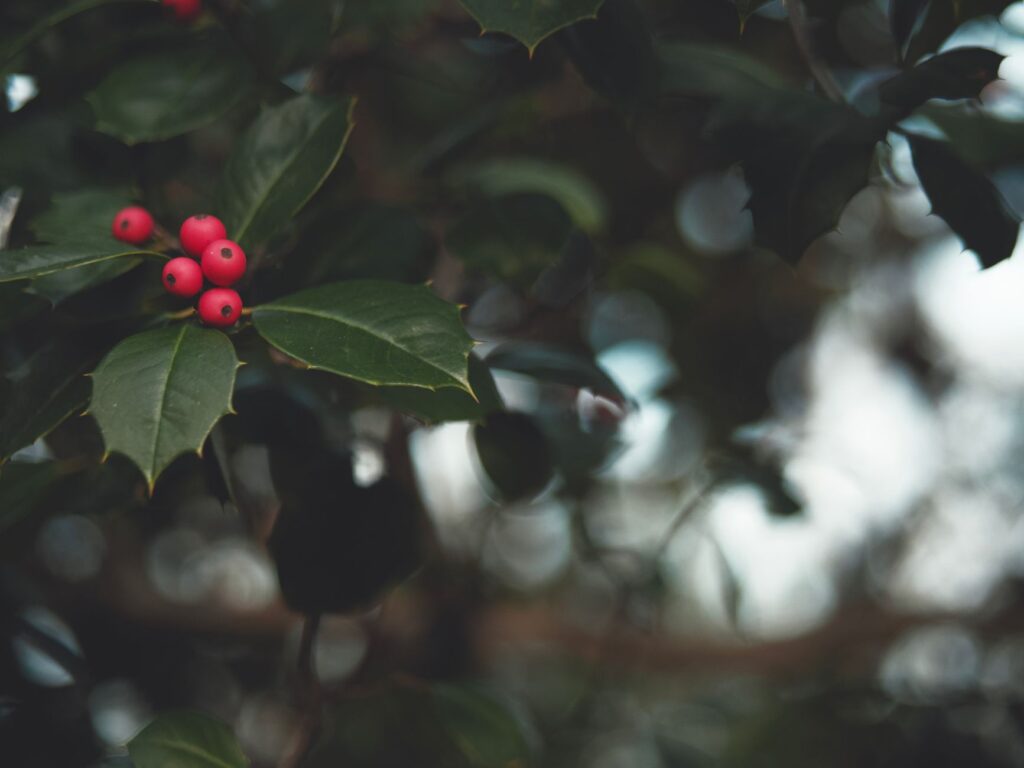
Evergreens give the yard a backbone from December through March, but not every evergreen belongs on the Bayshore. American holly (Ilex opaca) is a native broadleaf evergreen that tolerates salt spray reasonably well, and the female trees carry bright red berries that persist into winter, provided a male holly is somewhere nearby for pollination. Eastern redcedar (Juniperus virginiana) is tough, drought tolerant and handles wind and salt air, which is why you see it along the shore and on old farm fencelines in Monmouth County.
Eastern white pine (Pinus strobus) is a good-looking native with soft, long needles, though it dislikes salt and compacted soil, and ice storms can break its brittle limbs. Colorado blue spruce is widely sold but often struggles in our humid summers with needle diseases, so think twice before you buy one for a showpiece spot.
For berries and bright twigs, winterberry (Ilex verticillata), a native deciduous holly, lights up a bare yard with red fruit once the leaves fall. Red-twig dogwood shows vivid stems against snow. Even native witch hazel (Hamamelis virginiana) earns a spot, since it blooms with ribbon-like yellow flowers right as everything else is shutting down for the year, usually from October into November.
The USDA Forest Service keeps species information and regional guidance on its main site, fs.usda.gov, which is a good place to confirm that a tree is native to the Northeast before you plant it.
Right Tree, Right Place: Matching Winter Beauty to Middletown Conditions
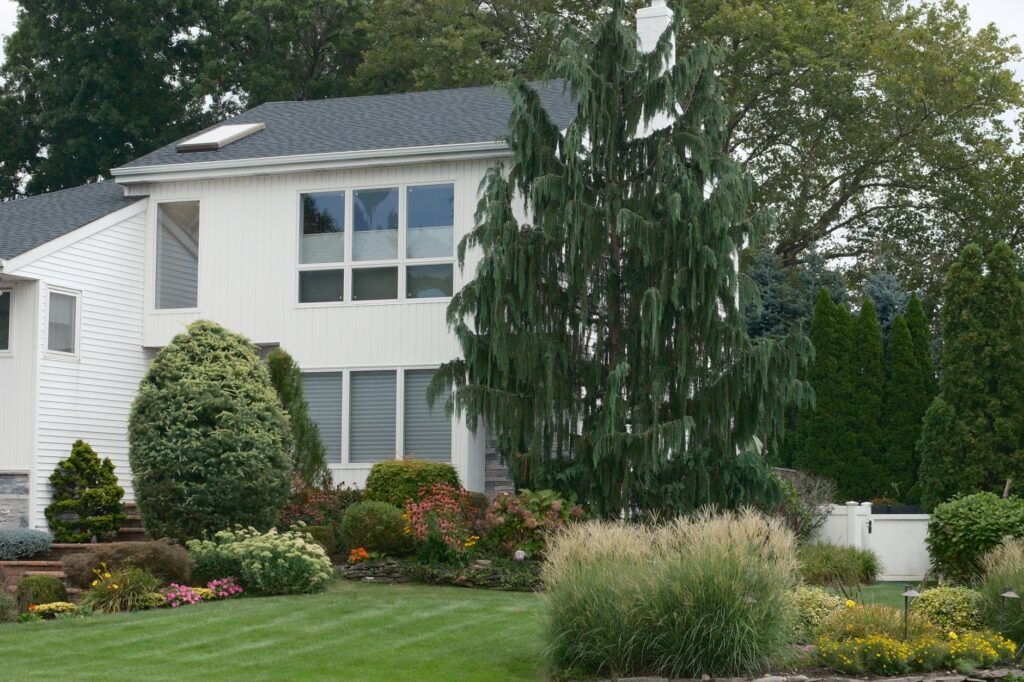
A beautiful winter tree planted in the wrong spot is a future problem. Middletown sits on the coastal plain, with sandy and clay loam soils that vary a great deal from block to block, and the Bayshore side adds salt spray and wind. Before you fall in love with a bark, ask four practical questions. How wet or dry is the spot in July? How much sun does it get? How much salt reaches it from the road or the bay? And what is above and below it, including wires, roofs, septic systems and utility lines?
Mature size is the question most homeowners get wrong. A one-gallon sycamore with gorgeous mottled white bark becomes a very large tree, far too big for a typical suburban lot, and it is also prone to leaf disease in wet springs. A river birch planted a few feet from a driveway will have roots and falling twigs in the way for decades. Tools like the ISA’s tree selection guide help you compare mature height, spread and growth habits before you commit.
If you are planting near the shore, look at the trees already thriving in your neighborhood and in places like the parks the Monmouth County Park System maintains. Mature trees that have survived many winters in similar conditions are the best free advice you will find. Match your list to what is already doing well, and add one or two specimens for winter drama rather than trying to build an entire collection at once.
Planting Now: Why Fall Is the Right Window
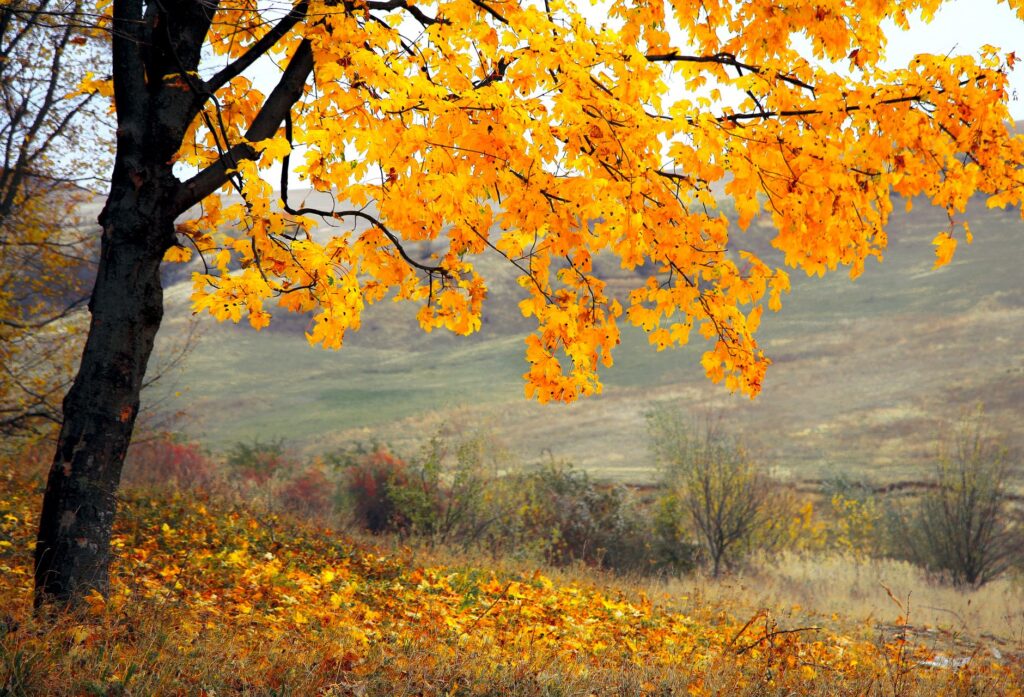
October through early December is one of the best planting windows in New Jersey. The air is cooling, but the soil is still warm, which encourages roots to grow while the top of the tree is shutting down. A tree planted now spends the winter building a root system and is better prepared for next summer’s heat than one planted in May.
The mistakes that kill new trees are consistent. The most common is planting too deep. The root flare, where the trunk widens at the base, should sit at or slightly above grade, never buried. Dig a wide, shallow hole, roughly two to three times the width of the root ball but no deeper than it. Remove wire baskets, twine and tags, and backfill with the soil you dug out rather than a rich amended mix that discourages roots from leaving the hole.
Mulch two to four inches deep in a wide ring, pulled back from the trunk, and water deeply once a week until the ground freezes if rain is scarce. The ISA’s step-by-step guide to planting a tree covers the details, including how to handle balled-and-burlapped and container stock. Avoid staking unless the site is windy enough to move the root ball, and remove any stakes after the first year.
Skip fertilizer at planting. A new tree needs roots first, and a late-fall nitrogen boost can push soft growth that frost will burn.
Middletown's #1 Tree Expert Company
FREE Inspection & Estimate | Certified Arborists | Trimming, Pruning, Removal, More!
Sponsored
Summary: Plan the Bare Yard and Call a Pro for the Big Decisions

Winter interest is easy to overlook in October, and it is the reason a Middletown yard feels finished in January instead of empty. Look for bark that peels or ridges, branching that holds its shape, berries and evergreens that carry color, and a species that suits your soil, light and salt exposure. Natives such as river birch, hornbeam, serviceberry, American holly and witch hazel give you a lot of winter value without fighting the local conditions.
Use the bare-branch season to take stock of the trees you already have. Note any crossed limbs, tight forks, cracks, dead branches or leaning trunks. These are the problems that show most clearly now and cause the most trouble in a winter storm.
Planting a new tree is a project most homeowners can do themselves. Evaluating a large mature tree, deciding what can safely be pruned, or choosing a species for a spot near your house, septic system or power lines is where a certified arborist earns their fee. A short consultation in the dormant season can save a lot of expense later, and it gives you a plan for the next planting window while the shapes of your trees are easy to read.
Photo credits: Featured image by Joerg Hartmann on Pexels; Section 1 by Brett Sayles on Pexels; Section 2 by To Tao on Pexels; Section 3 by Carel Voorhorst on Pexels; Section 4 by Aaron Burden on Pexels; Section 5 by Mingyang LIU on Pexels; Section 6 by Valentin S on Pexels; Section 7 by Henk Schuurmans on Pexels.