Middletown's #1 Tree Expert Company
FREE Inspection & Estimate | Certified Arborists | Trimming, Pruning, Removal, More!
Sponsored
The Trees Still Recovering From Last Season's Storms
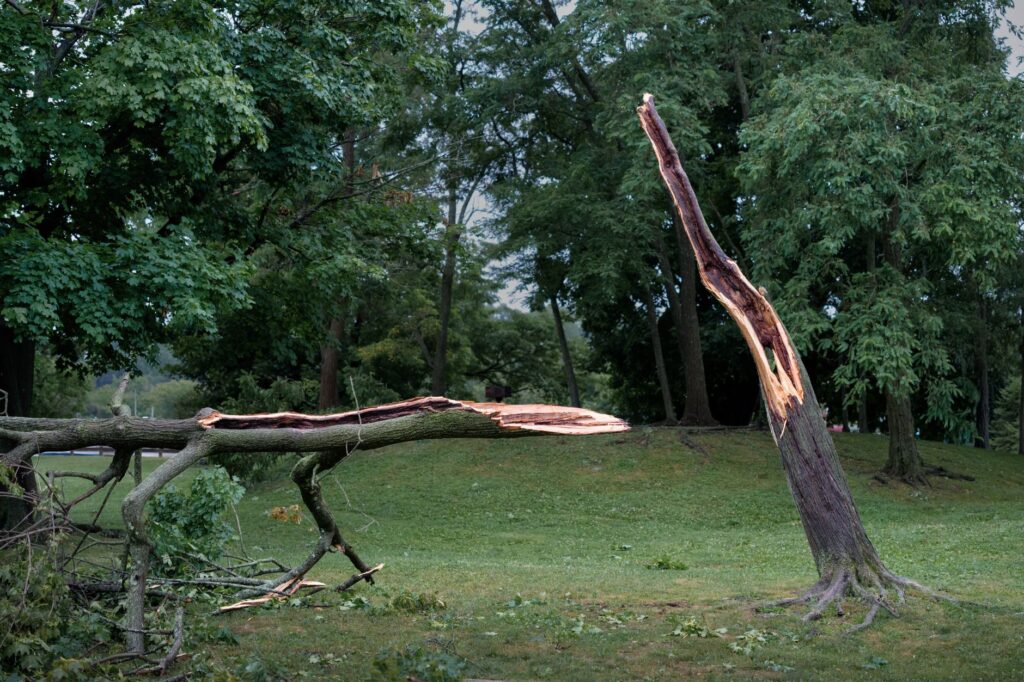
Drive through Lincroft or Leonardo this time of year and you’ll spot them — trees with a lopsided crown, a cluster of thin whip-like shoots shooting straight up from a stub, or a canopy that just looks wrong compared to its neighbors. Most of the time, that tree isn’t dying. It’s recovering from something: a nor’easter that snapped a major limb, a previous owner who had it topped to “open up the yard,” or storm cleanup crews who took off more than they should have because the truck was already there and the meter was running.
By early August, this year’s growth flush has settled in enough that you can actually see how a tree responded to whatever happened to it last winter or spring. That makes late summer one of the better windows for an arborist to walk the property, look at what grew back, and decide whether the tree is a candidate for restoration pruning — a slow, deliberate process of rebuilding a damaged crown’s structure over several years — or whether the damage is bad enough that removal is the more honest answer.
Restoration pruning doesn’t get talked about as much as storm cleanup or routine trimming, but for a lot of Middletown properties sitting on trees that took a hit two, three, or five years ago, it’s the difference between a tree that eventually looks whole again and one that’s quietly building toward its next failure.
What Restoration Pruning Actually Means
Crown restoration is a specific term, not just a synonym for “cleaning up a tree.” The International Society of Arboriculture defines it as pruning meant to improve the structure, form, and appearance of trees that have been severely headed, topped, vandalized, or storm damaged — trees that responded to that injury by throwing out a thicket of fast, weakly attached shoots called epicormic sprouts.
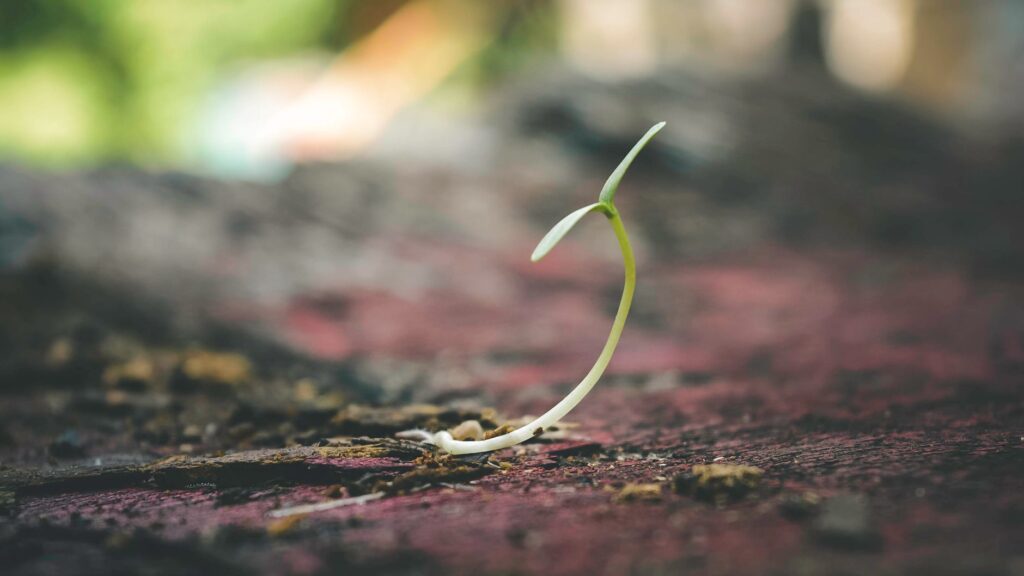
Those sprouts are the tree’s emergency response. When a large limb or the main leader is suddenly removed, dormant buds along the remaining wood wake up and push out growth to replace lost leaf area as fast as possible. The problem is that epicormic shoots attach to the parent branch with bark, not interlocking wood grain, so they’re inherently weaker than a limb the tree grew as part of its original branching plan. Left alone, a dozen of them competing for the same space eventually turn into a rat’s nest of crossing, rubbing, poorly attached branches — exactly the setup for the next storm to do more damage than the first one did.
Restoration pruning works with that regrowth instead of against it. Rather than cutting all the sprouts back hard again — which just triggers another flush of the same problem — a certified arborist selects the best-positioned, best-attached shoots to keep as future scaffold branches and removes the competition around them. It’s a selection process, repeated over several pruning cycles, not a single visit.
Is the Tree Actually a Good Candidate?
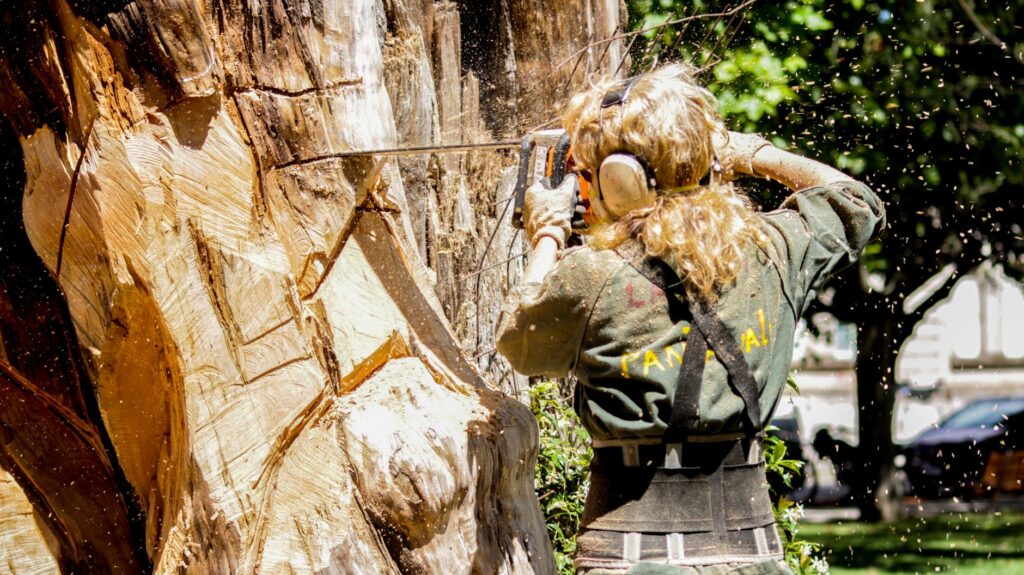
Not every damaged tree is worth restoring, and a good arborist will tell you that plainly instead of billing you for years of pruning on a tree that was never going to make it. The main things worth checking before committing to the process:
- How much sound wood is left. If the trunk or major limbs have decay, cracking, or included bark covering more than roughly a third of the cross-section, restoration is unlikely to produce a stable long-term structure.
- Species response to heavy pruning. Species like London plane, many maples, and willow oak tolerate heading and restoration reasonably well. Others — American beech and most conifers in particular — don’t resprout reliably from old wood and are usually poor restoration candidates once badly damaged.
- Root and site health. A tree recovering from crown damage also needs a healthy root zone to fund that regrowth. Compacted soil, recent grade changes, or construction disturbance near the root plate change the math.
- How much crown is missing. A tree that lost one major limb is a very different project than one that was topped outright and lost 60-70% of its canopy in a single cut.
This is genuinely a judgment call, which is why it’s worth having a certified arborist look at the specific tree rather than guessing from a ladder. An assessment usually takes less than an hour and saves years of pruning a tree that was always headed for removal.
Middletown's #1 Tree Expert Company
FREE Inspection & Estimate | Certified Arborists | Trimming, Pruning, Removal, More!
Sponsored
How the Process Actually Works, Year by Year
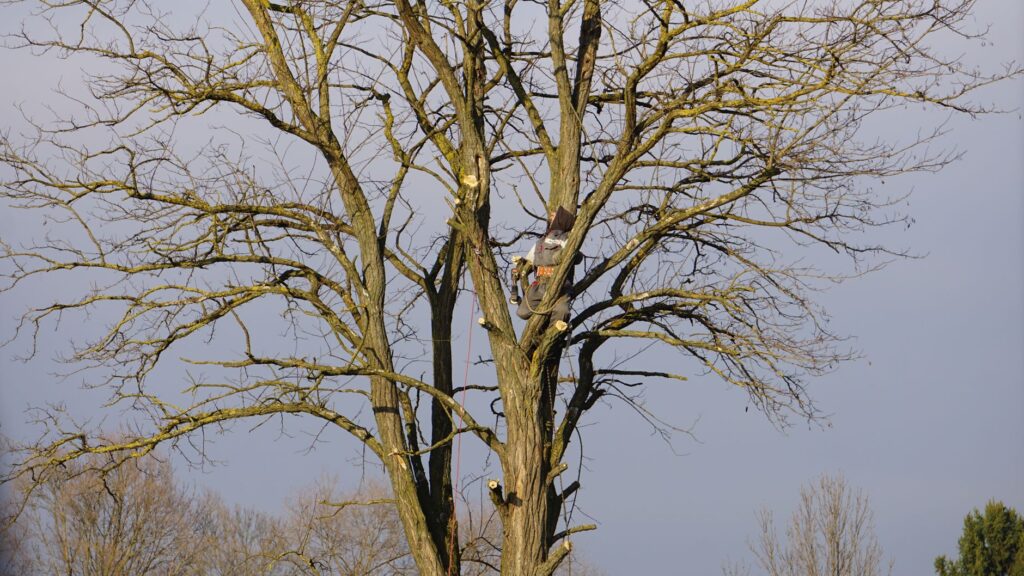
Restoration pruning is deliberately gradual, and that pace is the part homeowners find most counterintuitive. A tree that lost a big share of its crown needs the leaf area it has left to photosynthesize and rebuild energy reserves, so an arborist won’t remove more than roughly 20-30% of the live canopy in a single visit, according to the pruning specifications Penn State Extension outlines for restoration work. Pull off much more than that in one pass and you can stall the tree’s recovery or trigger an even bigger flush of weak sprouts.
In practice, that first visit usually focuses on: removing dead, broken, or clearly decayed wood; thinning out the most crowded, crossing, and poorly attached sprouts near the injury; and selecting two or three of the strongest-positioned shoots per damaged area to develop into permanent scaffold limbs. Everything else in that cluster gets subordinated — cut back rather than removed outright, so it keeps contributing leaf area without competing for dominance.
The following year or two, the arborist comes back and repeats the process on the shoots that were left, continuing to favor whichever ones have developed the strongest, best-angled attachment to the parent limb. Over three to five cycles, what started as a chaotic thicket of sprouts gradually resolves into a smaller number of well-spaced, structurally sound branches — not identical to the tree’s original form, but stable and proportioned. The Tree Care Industry Association covers this staged approach as a core part of standard pruning training, precisely because rushing it produces worse outcomes than doing nothing at all.
The Mistakes That Undo Years of Recovery
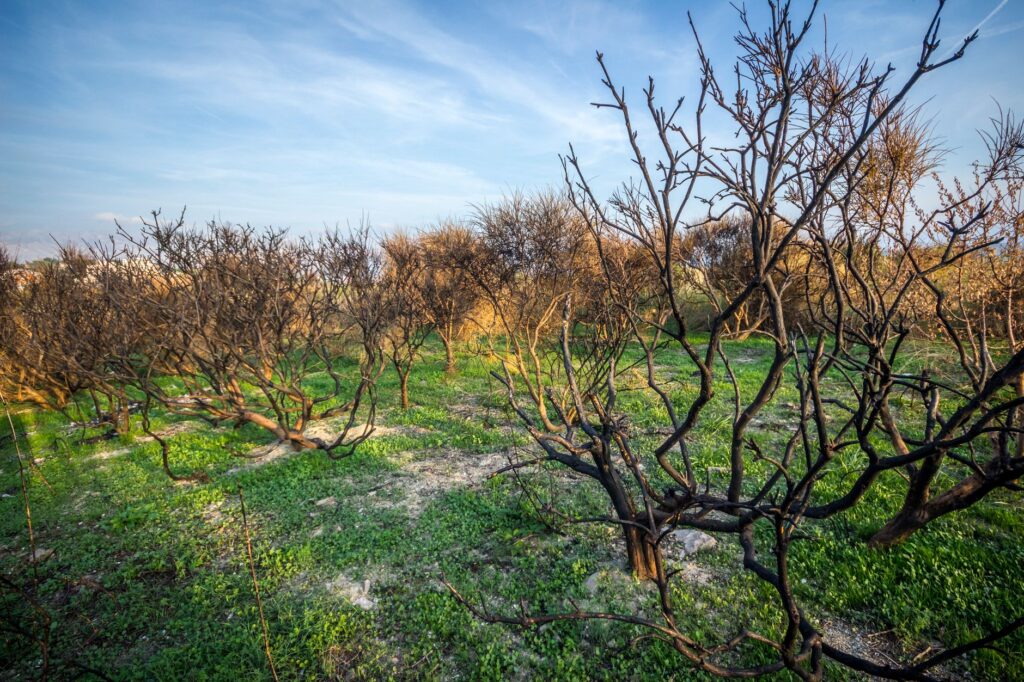
The most common way restoration efforts get wasted isn’t neglect — it’s someone trying to speed things up. A few patterns show up again and again on Middletown properties:
- Re-topping. Cutting the new sprouts back to stubs again “to keep it neat” just restarts the epicormic response from scratch, usually with an even denser thicket the second time.
- Removing all the sprouts at once. It’s tempting to clear out everything that looks messy in a single visit, but the tree needs some of that leaf area to keep generating energy while its permanent structure develops.
- DIY work on anything above eye level. Restoration cuts are precision work — the wrong cut on the wrong shoot can eliminate the one branch that was developing into good structure. Combined with the fact that this work is usually happening on a tree that’s already structurally compromised, it’s not a ladder-and-handsaw project.
- Fertilizing heavily to “help it along.” A stressed tree needs water and time more than a jolt of nitrogen, which can push weak, fast growth at the expense of the sturdier wood the tree actually needs.
Patience is the whole strategy here. A tree that took one bad cut can usually recover a stable structure over five to ten years of periodic restoration pruning — but every impatient shortcut resets that clock.
What This Looks Like Around Middletown
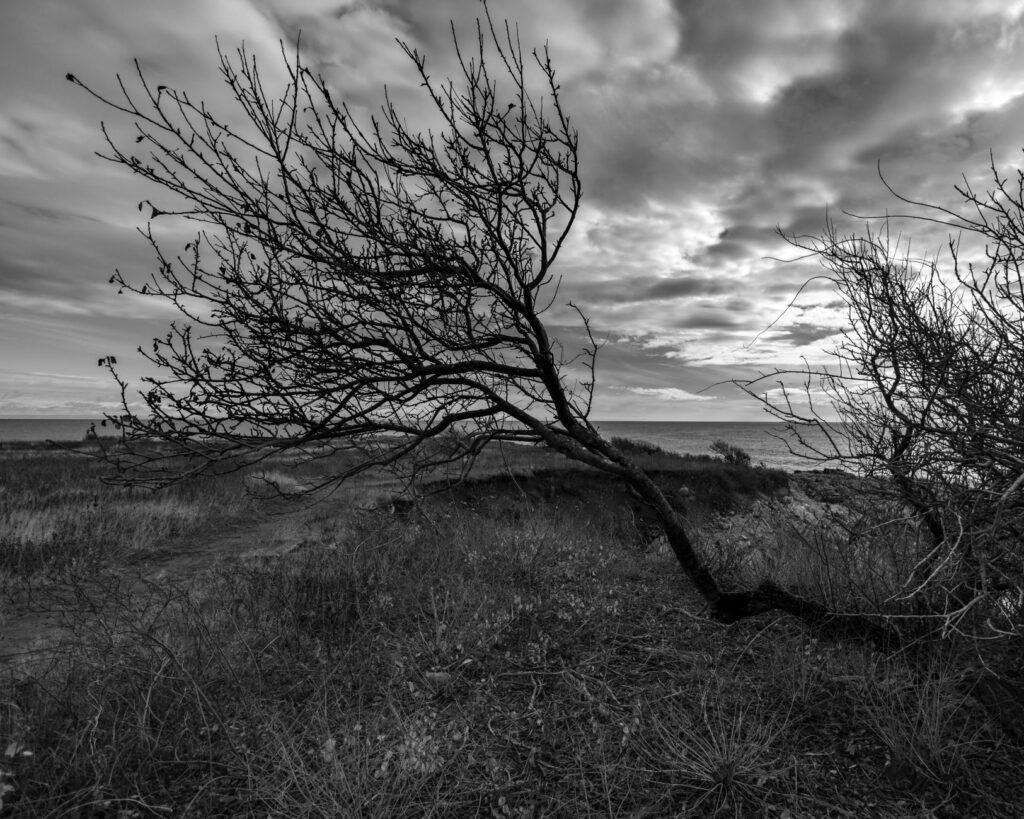
The trees that end up needing restoration work in this area tend to fall into a few familiar categories: Bradford pears and other ornamentals that were hard-headed years ago by a previous landscaper, shade trees along Route 35 and Route 36 corridor properties that got aggressively cut back for utility clearance, and mature oaks and maples that lost a major leader in a nor’easter and threw up a crowded cluster of replacement sprouts. Coastal exposure near the Bayshore adds another wrinkle — wind-stressed trees near Port Monmouth and the Navesink often develop lopsided crowns even without a single dramatic storm event, just from years of prevailing wind pressure on one side.
For homeowners near Hartshorne Woods or Thompson Park who are weighing whether an older, storm-marked tree on their property is worth the investment, the Rutgers NJAES county office is a solid free resource for general species guidance before you bring in an arborist for a hands-on assessment — useful for getting a baseline sense of whether a species typically responds well to this kind of work in our soils and climate.
Middletown's #1 Tree Expert Company
FREE Inspection & Estimate | Certified Arborists | Trimming, Pruning, Removal, More!
Sponsored
When to Call a Pro
If you’re looking at a tree that was topped, storm-damaged, or badly pruned in years past and it’s thrown out a mess of upright sprouts since, that’s exactly the situation restoration pruning was built for. The earlier a certified arborist gets involved, the more selection they have to work with and the fewer years it takes to steer the tree back toward sound structure.
What restoration pruning can’t do is fix a tree that’s already lost too much sound wood, or turn a poor species choice into a good one. Part of a proper assessment is being honest about which of those two situations you’re actually in — a tree worth five years of careful pruning, or one where that time and money are better spent planting something new in a better spot. Either way, get a second set of trained eyes on it before deciding. A tree that’s had one bad break in its life deserves a real look before anyone reaches for the saw again.
Photo credits: Featured image by Dmytro Glazunov on Pexels; Section 1 by David Kanigan on Pexels; Section 2 by Gelgas Airlangga on Pexels; Section 3 by Gastón Mousist on Pexels; Section 4 by Dmytro Glazunov on Pexels; Section 5 by Ivan Boban on Pexels; Section 6 by Phil Evenden on Pexels; Section 7 by Gerzon Piñata on Pexels.