Middletown's #1 Tree Expert Company
FREE Inspection & Estimate | Certified Arborists | Trimming, Pruning, Removal, More!
Sponsored
That Cool Shadow Is Doing More Than You Think
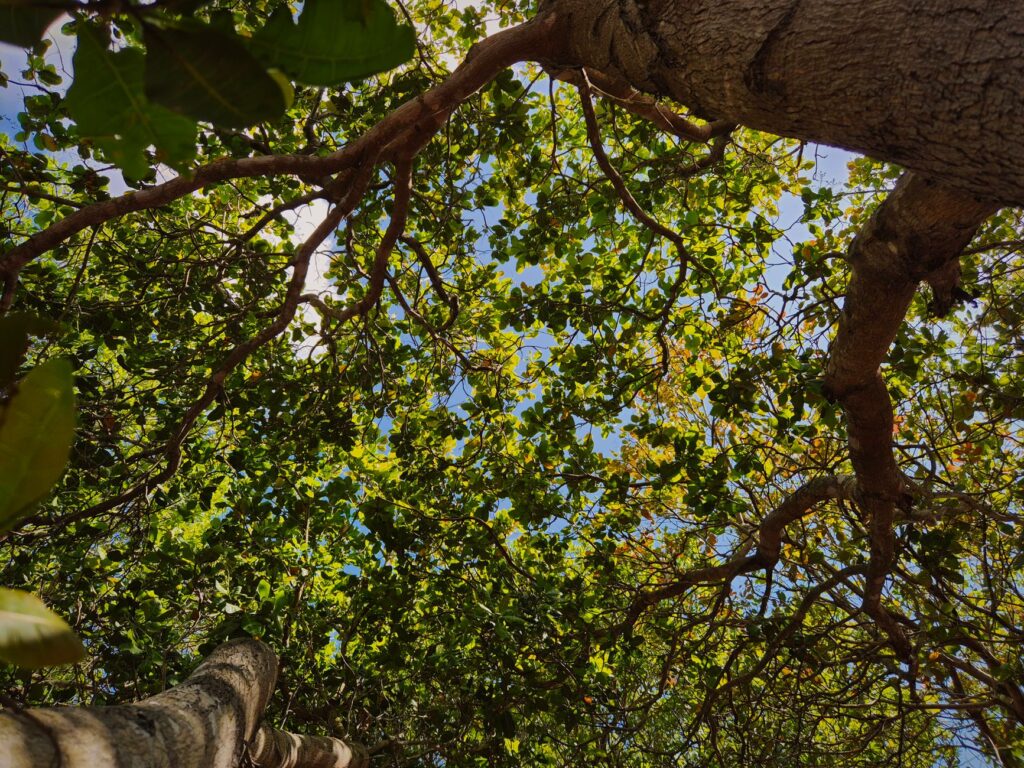
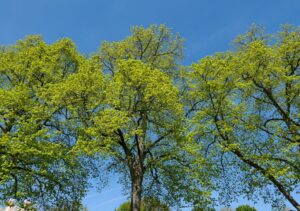
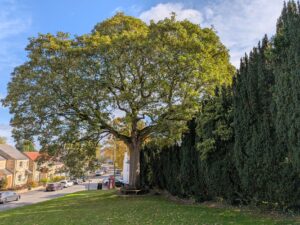
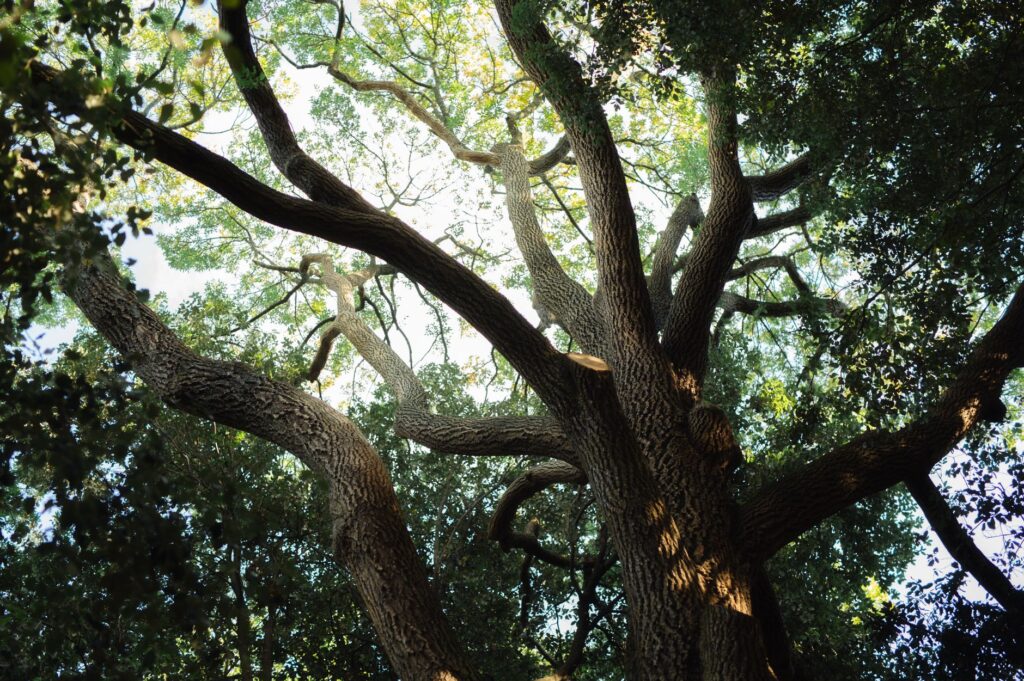
Stand under a mature white oak (Quercus alba) on a 90-degree afternoon in Middletown Township and you’ll notice something immediate: it feels like a different world. The air is cooler, almost damp, in a way that goes beyond simple shade. That sensation is real, measurable, and has a name — transpiration — and it is one of the most fascinating and underappreciated things your trees are doing for your yard right now.
Transpiration is the process by which trees absorb water from the soil through their roots, move it up through the trunk and branches, and release it as water vapor through tiny pores in their leaves called stomata. On a hot June day in Middletown, a single mature shade tree can move 50 gallons or more of water through this system — some large-canopied trees move considerably more. All that evaporating water carries heat away from the leaf surface, cooling the surrounding air in the same way that sweat cools your skin.
Understanding how transpiration works — and what stresses it — changes how you think about your trees in summer. It explains why a lawn sprinkler isn’t enough to sustain a large oak during a June heat wave, why mulch matters more in July than January, and why a wilting leaf in the afternoon is your tree’s first distress signal. Here’s a walk through the science and what Middletown homeowners can do when the heat turns up.
What Transpiration Is — and the Physics That Make It Work
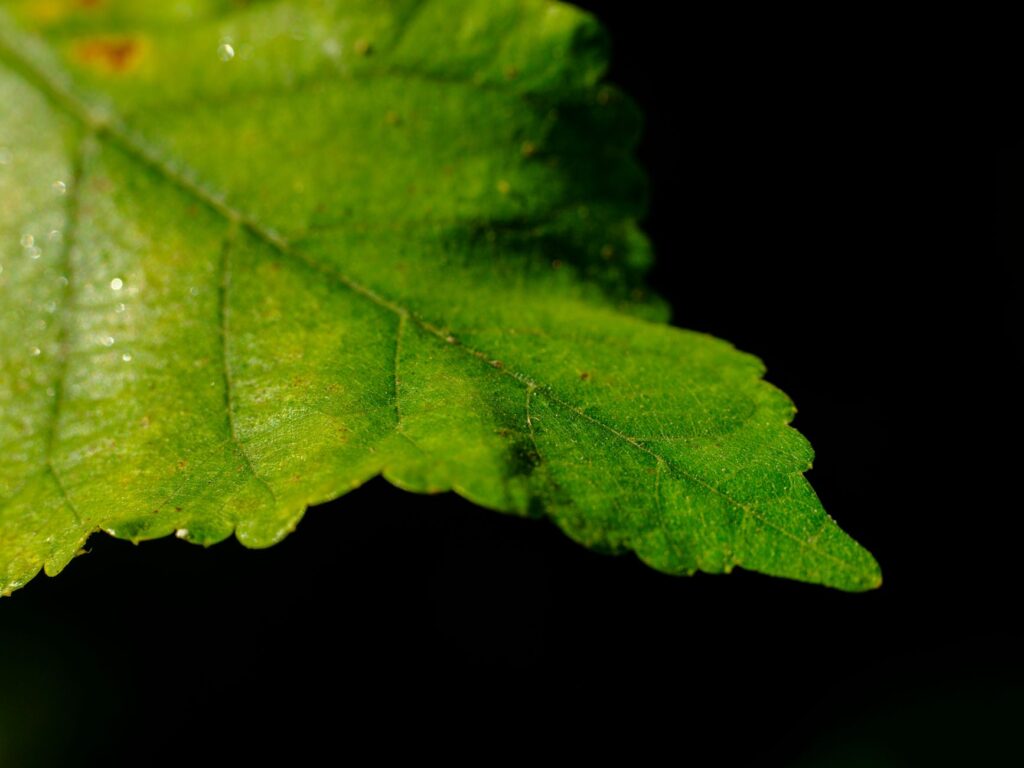
At its most basic, transpiration is evaporation from plant tissue — but the mechanism behind it is far more elegant than simple evaporation from a puddle. Water enters a tree through root hairs in the outer root zone, moves inward through root tissue, and enters the xylem — a network of narrow tubes that runs from root tips to leaf tips. In a mature white oak, this network carries water to every leaf on a canopy that might spread 80 feet wide.
The force that pulls water upward — sometimes 80 to 100 feet in a large tree — comes not from the tree actively pumping, but from physics. Water molecules cling to each other and to the walls of xylem vessels through a property called cohesion-tension. When water evaporates from a leaf surface, it creates a slight tension that pulls the entire column of water upward, the way pulling on one link in a chain moves the rest. Solar energy powers the whole system by driving evaporation at the leaf surface.
The leaf controls water flow through structures called stomata — microscopic pores on the leaf’s underside, each flanked by a pair of guard cells that open and close the pore in response to light, humidity, and the tree’s internal water status. A single oak leaf can have 500 to 1,000 stomata per square millimeter. When water is plentiful, stomata open wide to let in carbon dioxide for photosynthesis and allow water vapor to escape. When conditions turn hostile, the tree faces a trade-off — and that is where summer stress begins. The International Society of Arboriculture offers practical guidance on how watering practices connect directly to this internal system.
How Much Water Is Your Middletown Tree Actually Using?
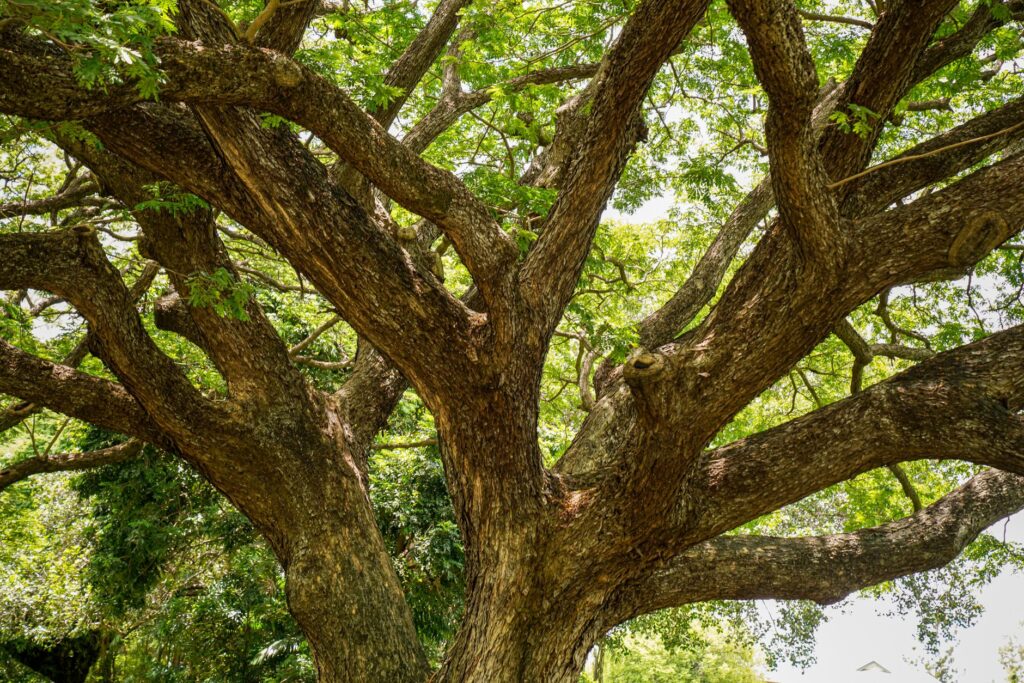
The numbers are genuinely surprising. The USDA Forest Service estimates that on a hot summer day, a single large deciduous tree can transpire 50 to 100 gallons of water or more. A mature white oak or red maple (Acer rubrum) in Middletown’s full summer sun — the kind shading a backyard off Kings Highway or along the wooded lots near Hartshorne Woods Park — can move even more than that on a peak heat day.
This matters for two reasons. First, it tells you how much water your tree is actually consuming. If you’re running a sprinkler for 20 minutes on a hot week, you’re nowhere close to replacing what the tree is pulling from the soil. Second, it explains why trees provide such dramatic cooling. All that water vapor carries latent heat away from the leaf surface, lowering air temperatures in the immediate canopy zone by 10 to 15 degrees Fahrenheit compared to exposed pavement or rooftop surfaces.
Trees also release oxygen as a byproduct of photosynthesis, but transpiration’s cooling and humidifying effect on local air is its own remarkable contribution — one that’s increasingly being documented in urban heat island research. In a neighborhood like Lincroft or the older residential areas of Middletown proper, a mature tree canopy creates a microclimatic buffer that air conditioning alone cannot replicate.
Middletown's #1 Tree Expert Company
FREE Inspection & Estimate | Certified Arborists | Trimming, Pruning, Removal, More!
Sponsored
When the System Breaks Down: Heat Stress Signals to Watch For
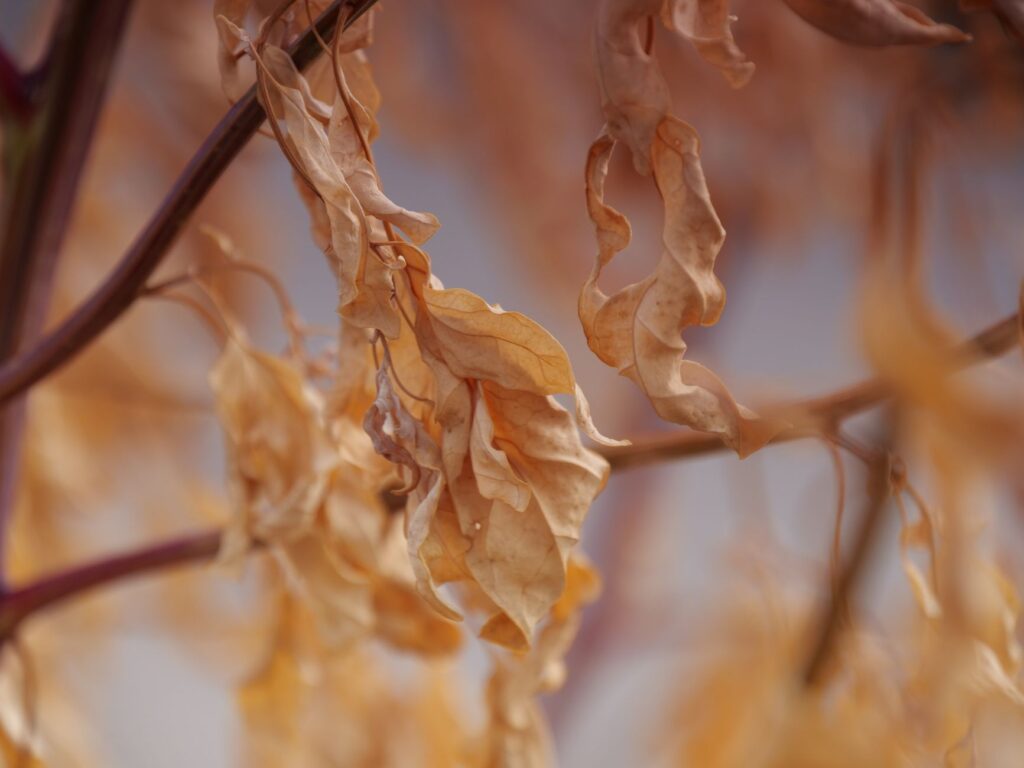
When soil moisture drops and a tree cannot deliver water to its leaves fast enough to meet transpiration demand, it triggers a stress response. The tree produces a hormone called abscisic acid (ABA), which signals the guard cells around each stoma to close the pore. This is smart, self-protective chemistry: it reduces water loss from the leaves. But it also shuts down photosynthesis, because carbon dioxide can no longer enter through closed stomata. The tree is essentially choosing to stop eating in order to stop bleeding.
The first visible sign of this stress is usually leaf curl or wilting in the afternoon — not a sign of a dying tree, but a sign that the tree is conserving resources. If you see a red maple’s leaves curling inward by 3 p.m. on a 95-degree day, that’s a normal heat stress response. If the leaves are still curled the next morning after overnight temperatures cooled, the tree is telling you it never fully recovered.
Prolonged heat stress moves the damage deeper. Leaf tips and margins scorch — the edges dry out because they are the farthest point from the water supply moving up through the trunk. In trees already compromised by root damage, soil compaction, or girdling roots, an extended drought during a June heat wave can trigger dieback in the upper crown that won’t be obvious until late summer or even the following spring. Rutgers Cooperative Extension offers detailed resources on diagnosing and responding to summer stress in New Jersey shade trees.
Middletown's Soils and the Bayshore Climate: Why Location Matters
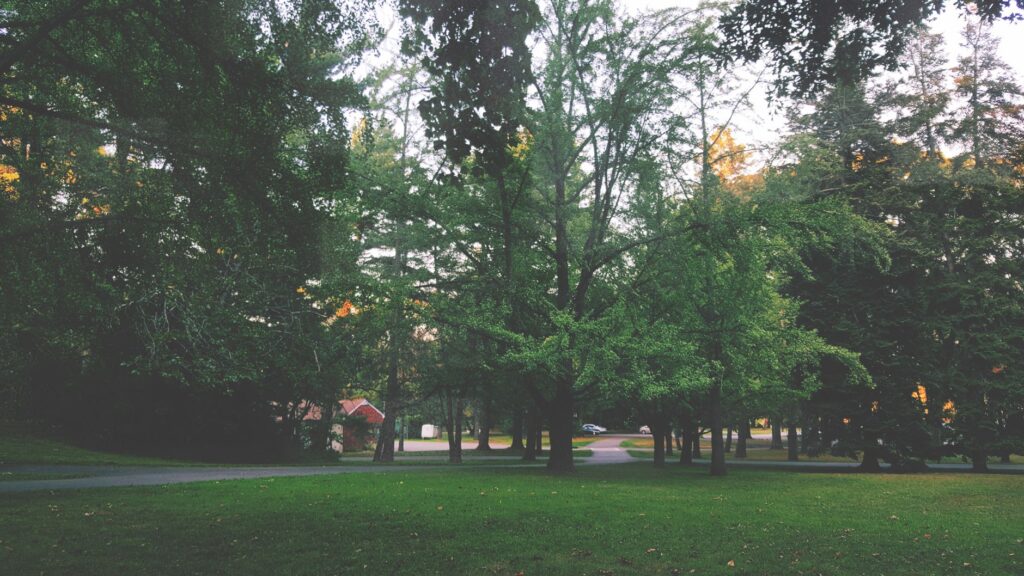
Middletown Township’s soils are not uniform, and that matters for how trees handle summer heat. Much of inland Middletown — from the Lincroft corridor toward the Holmdel border and east through the central township — sits on Freehold loamy sand and Holmdel silt loam. These soils hold moderate moisture but can become compacted under lawns and in high-traffic areas, reducing the root zone’s ability to absorb and retain water. During a dry June, trees in these areas can hit water deficit faster than homeowners expect.
Closer to the Raritan Bay and the Bayshore — in Port Monmouth, Leonardo, and along the waterways near Atlantic Highlands — the coastal influence brings slightly higher humidity and more moderate summer temperatures. The smaller vapor pressure difference near the water means trees lose moisture to the atmosphere a bit more slowly, giving them a modest edge during heat events. That’s part of why native coastal species like American holly (Ilex opaca) and black cherry (Prunus serotina) thrive along the Bayshore; they evolved with this exact microclimate.
The practical takeaway: the same species may need different management in different parts of town. A red maple planted in a Lincroft backyard with dense clay-loam soil in full sun will need more supplemental irrigation in June than one planted 15 minutes east near the water. Knowing your soil type and your site exposure helps you calibrate how much — and how often — to water during a summer stretch.
What You Can Do Right Now to Support Your Trees
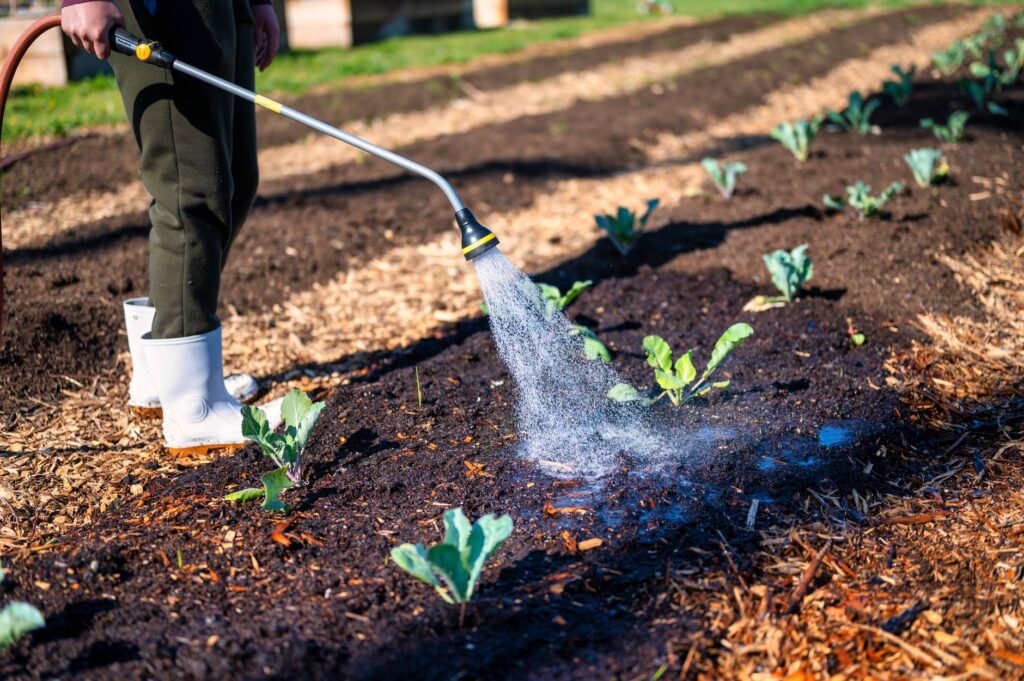
The most effective thing Middletown homeowners can do to support trees through summer heat is also the simplest: water deeply and infrequently, rather than shallowly and often. A lawn sprinkler running 20 minutes wets the top inch of soil — exactly where grass roots live, not where tree roots live. Tree roots extend well beyond the drip line and draw from soil 12 to 24 inches deep. To reach them, you need to deliver water slowly and directly to the outer root zone.
- Use a soaker hose or a slow-trickling garden hose laid in a loop around the outer drip line of the tree. Run it for at least an hour, once or twice a week during heat waves.
- Apply 2 to 3 inches of organic mulch — shredded hardwood bark, not rubber or dyed nuggets — from just outside the root flare out to the drip line. Mulch dramatically slows soil moisture evaporation.
- Water in early morning, before temperatures peak, to minimize loss from surface evaporation.
- In clay-heavy soils, avoid overwatering: standing water displaces oxygen from the root zone and can cause root rot in already-stressed trees.
One mistake homeowners often make is assuming that because a tree survived last summer without supplemental irrigation, it doesn’t need any this year. A tree’s water reserves do not recharge equally every spring. Drought in early June — during peak leaf-out, when the transpiration system is running at maximum capacity with new leaf tissue that hasn’t yet toughened — is particularly taxing, even for established trees.
Middletown's #1 Tree Expert Company
FREE Inspection & Estimate | Certified Arborists | Trimming, Pruning, Removal, More!
Sponsored
Summary: When to Call a Certified Arborist
Most healthy, well-established Middletown trees will handle a June heat wave without lasting damage, especially if they have had a few years to develop a deep root system and they’re going into summer with reasonable soil moisture. Transpiration is the tree’s own resilience — a system of physical and chemical responses refined over hundreds of millions of years. It just needs the raw material: water in the soil.
But if you’re seeing stress signs — afternoon wilting that persists into the following morning, leaf scorch spreading beyond the tips and margins, early leaf drop concentrated in one part of the crown — and they don’t resolve within a day or two after the heat breaks, it’s worth a closer look. Persistent symptoms often point to something beyond the current conditions: root damage from a nearby excavation, compacted soil from years of foot traffic, a girdling root that has been quietly constricting the base, or the early stages of a fungal or vascular disease that heat stress has tipped into visibility.
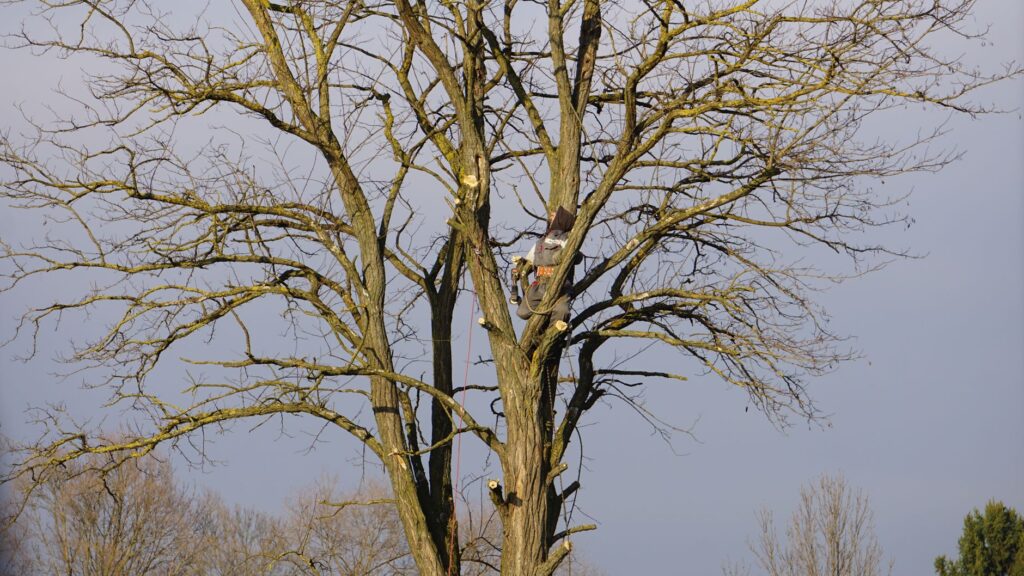
A certified arborist can assess the full picture — soil conditions, root zone health, crown structure, bark anomalies — and tell you whether what you’re seeing is straightforward heat stress or something that needs attention. Late June is actually an excellent time for that kind of evaluation: the tree is in full leaf, stress signals are legible, and you have the rest of the growing season to respond. If you have a tree that seems to struggle every summer despite your best watering efforts, don’t wait for it to become a liability. Get an arborist out while you can still read what the tree is telling you.
Photo credits: Featured image by Grigoriy on Pexels; Section 1 by Lan Nguyen Tran on Pexels; Section 2 by Engin Akyurt on Pexels; Section 3 by Eleanor Newport on Pexels; Section 4 by Arri Bom on Pexels; Section 5 by Ibrahim Boran on Pexels; Section 6 by Alfo Medeiros on Pexels; Section 7 by Dmytro Glazunov on Pexels.