
Middletown's #1 Tree Expert Company
FREE Inspection & Estimate | Certified Arborists | Trimming, Pruning, Removal, More!
Sponsored
The Mid-June Window: Why Timing Matters for Summer Mulch

By the time August heat sets in along the Raritan Bayshore, the damage to unprotected tree roots has already been building for weeks. Mid-June is the leverage point — the moment when Middletown’s soil temperatures are climbing but haven’t yet hit the stress threshold that shuts down fine root activity. A two- to three-inch layer of organic mulch applied now is one of the most productive things a homeowner can do for their trees this summer.
Middletown Township’s soils vary from sandy loam near the Bayshore to heavier clay-loam in areas like Lincroft and Chapel Hill. Both soil types share a common vulnerability in summer: they dry unevenly, and when clay dries out completely, it contracts and cracks, physically severing the fine feeder roots trees depend on for water and nutrient uptake. Rutgers Cooperative Extension notes that these feeder roots are concentrated in the top 12 inches of soil — the exact zone that summer heat and evaporation attack first.
The good news: organic mulch intercepts that heat. It holds moisture, feeds soil biology, and suppresses the weeds and grass that compete with your tree for water during dry spells. The key is applying it correctly and at the right time — which for Monmouth County is right now, before July’s heat peaks.
What Mulch Is Actually Doing Underground
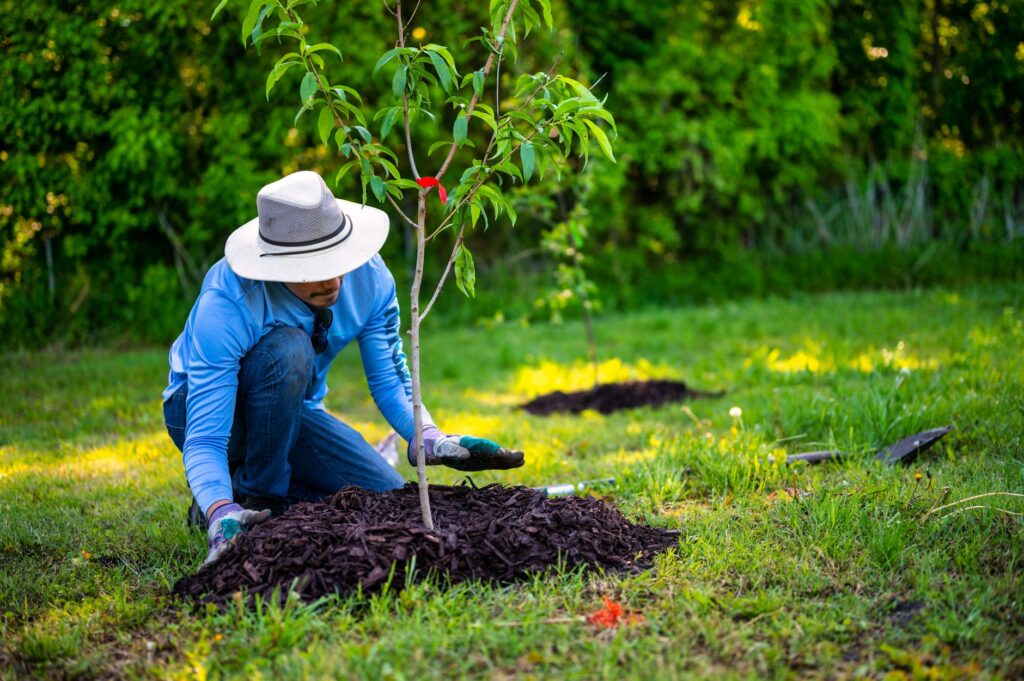
Most homeowners think of mulch as decoration, but under the surface it’s doing real biological work. Properly applied organic mulch creates a buffer zone between the summer sun and the root system that regulates soil temperature, conserves moisture, and gradually feeds the soil food web that supports your tree’s long-term health.
Research from the USDA Forest Service’s urban forestry program has documented that mulched root zones can remain 8 to 15 degrees cooler on hot summer days compared to bare or turf-covered soil. For a tree’s fine roots — which begin to die off when soil temperatures exceed roughly 90°F — that temperature difference can mean the distinction between a healthy root flush and widespread root dieback going into fall.
Organic mulch also slows evaporative water loss significantly. A three-inch mulch layer can cut soil moisture loss by 25 to 50 percent compared to bare soil, which means your tree’s roots have access to moisture much longer between rain events. In a Monmouth County summer — weeks of dry spells punctuated by brief heavy rains — that buffering effect is critical. And as the mulch breaks down over time, it adds organic matter to what is often thin suburban topsoil, improving the soil’s capacity to hold air, water, and nutrients for years to come.
Choosing the Right Mulch Material for Monmouth County
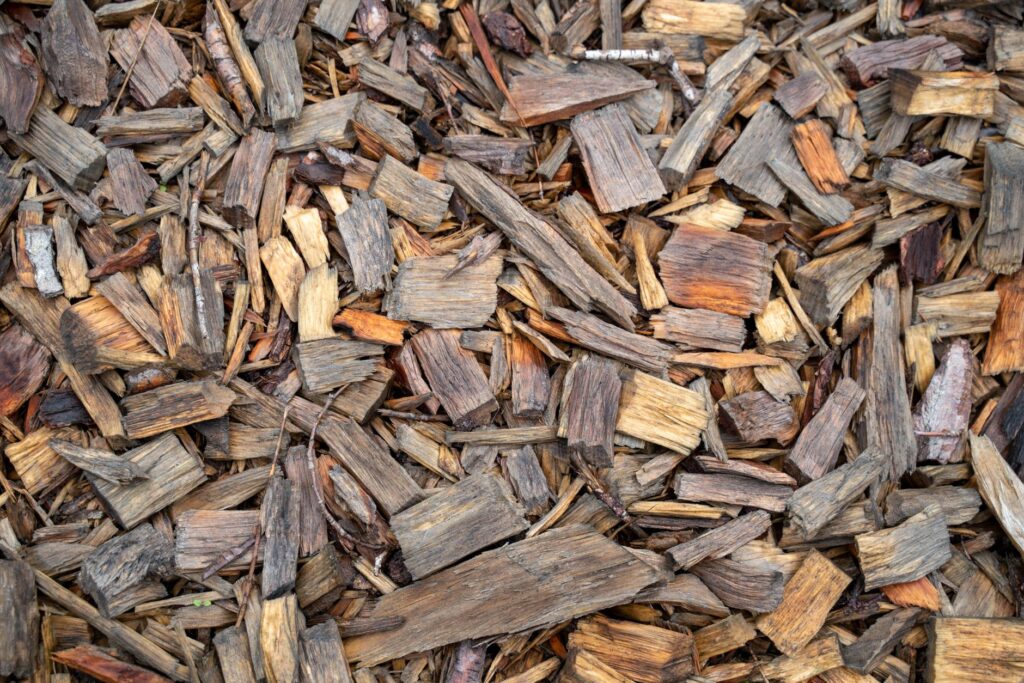
Not all mulch is equal, and some products commonly sold at big-box stores are actively counterproductive around trees. For the shade trees, ornamentals, and native species that fill Middletown yards, here’s how the main options stack up:
- Shredded hardwood bark: The gold standard for landscape trees. It breaks down slowly, knits together to resist displacement in wind and rain, and doesn’t shed heat the way finer particles do. Well-suited for oaks, maples, and most large shade trees throughout Monmouth County.
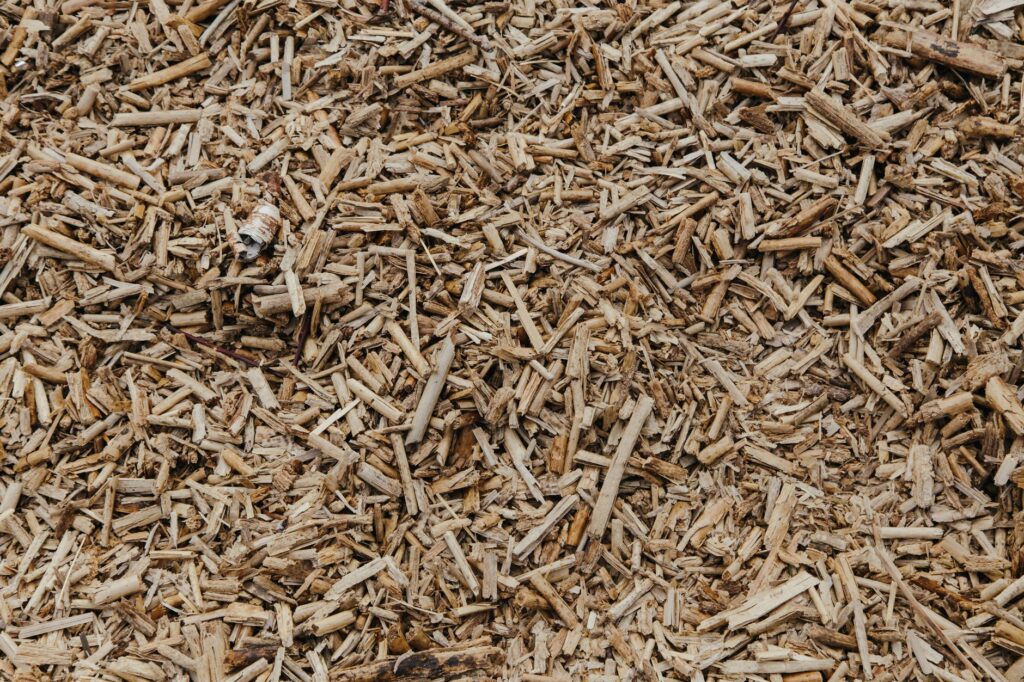
- Double-ground wood chips: A slightly faster decomposer, more affordable, and perfectly effective. Widely available and often offered free through municipal composting programs or local tree services clearing brush.
- Arborist wood chips: Arguably the best biological mulch available — diverse particle sizes, rich in nutrients, and excellent for supporting the fungal networks that healthy trees rely on. Many arborists will drop a load free when they’re chipping in your neighborhood.
- Pine straw: Acceptable under acid-tolerant species like native pines and hollies, but not ideal for the oaks and maples that anchor most Middletown yards. It acidifies the soil slightly over time and breaks down quickly in NJ summers.
Avoid rubber mulch, heavily dyed mulch, and stone or gravel around trees. Rubber doesn’t decompose and contributes no organic matter. Stone and gravel are heat sinks — they absorb and radiate warmth directly into the root zone, essentially reversing the temperature-buffering effect you’re trying to achieve. These materials may look tidy, but they work against the tree’s biology season after season.
Middletown's #1 Tree Expert Company
FREE Inspection & Estimate | Certified Arborists | Trimming, Pruning, Removal, More!
Sponsored
Depth and Radius: Getting the Numbers Right
The two most common mulching mistakes are going too deep and not going wide enough. The International Society of Arboriculture recommends two to four inches of mulch depth — enough to insulate and retain moisture without smothering the soil. Going beyond four inches creates a spongy, anaerobic layer that can trap excess moisture and create conditions for crown rot and fungal issues at the root collar.
The radius matters as much as the depth. A common error is applying a small ring of mulch within 18 inches of the trunk and calling it done. But a mature tree’s feeder roots extend well beyond the drip line — sometimes two to three times the canopy radius outward. The wider you can spread your mulch ring, the more active root zone you’re protecting. For large shade trees, aim to cover at least out to the drip line. For smaller ornamentals and younger trees, a minimum four- to six-foot radius is a good starting point.
One absolute rule: keep a two- to three-inch clearance between the mulch and the tree’s trunk flare — the point where the root system transitions to the trunk. Mulch piled against the bark traps moisture against the cambium layer and creates ideal conditions for fungi, borers, and rodent damage. If you can’t see a slight flare where the trunk meets the ground, the mulch is already too close.
Reading Existing Mulch: When to Refresh vs. When to Remove
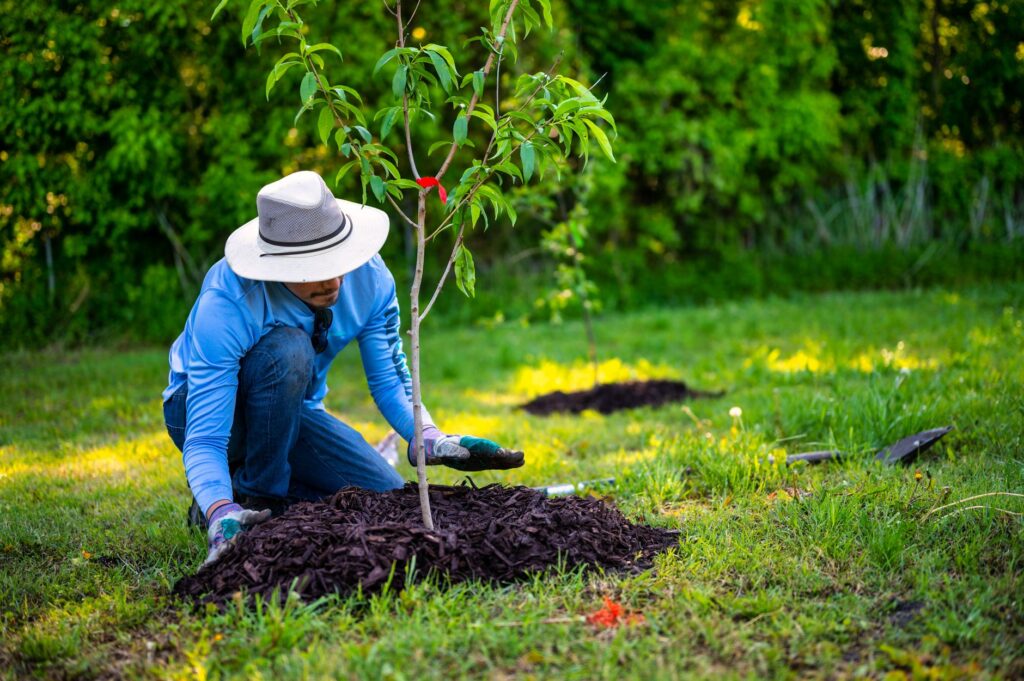
If you already have mulch around your trees from last year or earlier, don’t automatically add a new layer on top. Take five minutes to assess what’s there before you buy or order more material. A quick hands-on check can tell you everything you need to know.
Run a trowel or gloved fingers through the existing mulch layer. If it’s loose, fluffy, and falls apart easily, it’s in good shape — you may just need to top it off if the depth has dropped below two inches. If the mulch has compressed into a flat, matted layer that repels water (you’ll notice this when rain beads off the surface rather than soaking through), it needs to be loosened or removed before adding fresh material on top.
Old compacted mulch can become hydrophobic over time — water runs off rather than penetrating to the roots below, which is exactly the opposite of what you want during a summer dry spell. Use a garden fork to loosen it, rake it out, and then add fresh material to bring the layer back to two to three inches. If decomposition has reduced the layer to less than an inch of fine black compost, you can often add fresh mulch directly over the decomposed layer without disturbing it — that decomposed material is now organic matter feeding the soil, which is precisely what you want.
Newly Planted Trees Need Extra Attention in Year One and Two
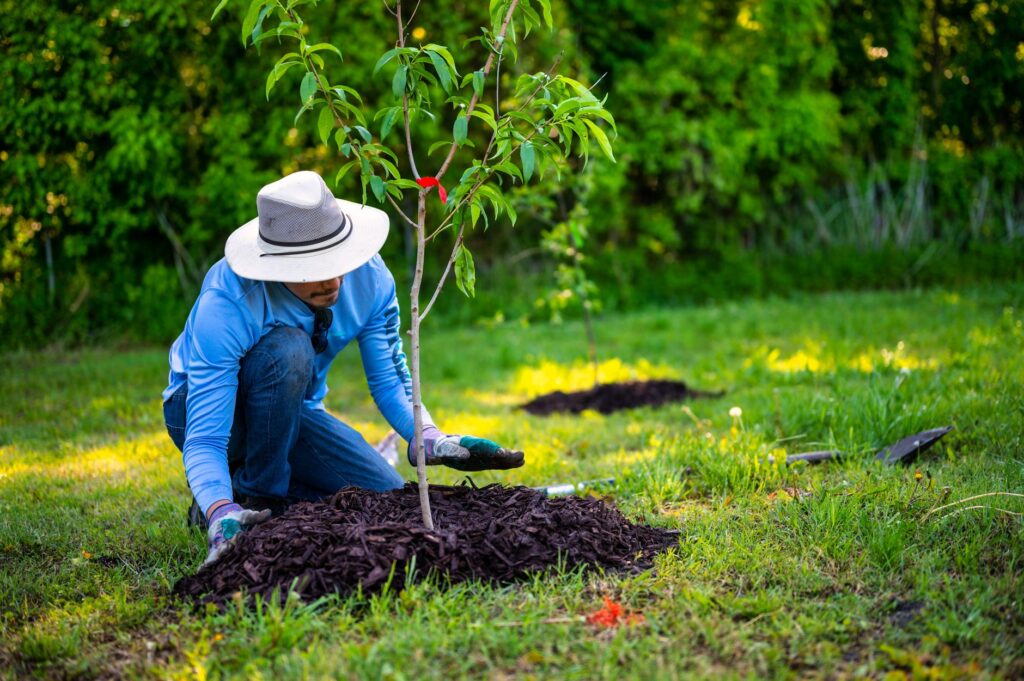
A tree planted in the last year or two is at far greater risk during a Middletown summer than an established specimen. The root ball hasn’t yet expanded into the surrounding soil, which means the young tree is dependent almost entirely on whatever moisture is within that original planting zone. Without proper mulching, that root ball can dry out faster than you’d expect — even when nearby soil feels damp to the touch.
For newly planted trees, apply a mulch ring of at least four to six feet in radius and maintain it through the full growing season. The goal is to slow evaporation around the planting area and keep the soil temperature stable as the tree pushes out new roots in late summer. Check beneath the mulch every week or two in July and August — if the soil directly below feels dry and powdery, you need to water more deeply and more frequently than you have been.
Pay close attention to the trunk flare on newly planted trees. Many nursery-grown trees arrive with mulch piled against the trunk from the growing yard, and some homeowners inadvertently continue this habit when they install their own ring. That piled-against-the-trunk pattern is particularly damaging on young trees because their bark is thinner and more vulnerable to moisture-related pathogens. If you see mulch touching the bark anywhere, pull it back two to three inches immediately — and check again a few weeks later, since mulch tends to shift and resettle toward the trunk on sloped ground.
Middletown's #1 Tree Expert Company
FREE Inspection & Estimate | Certified Arborists | Trimming, Pruning, Removal, More!
Sponsored
Summary / When to Call a Pro
A proper summer mulch application is one of the few tree-care tasks that most Middletown homeowners can handle confidently on their own. No specialized equipment needed — just the right material, the right depth, an eye for keeping the trunk flare clear, and enough radius to cover meaningful root zone. For the average backyard shade tree, a few hours and a load of shredded hardwood is all it takes to meaningfully reduce summer drought stress and set the tree up for a healthy fall root push.
That said, working close to the base of your trees is a good opportunity to notice things worth flagging. While you’re pulling mulch back and checking the trunk flare, take a moment to look at the lower bark, the root collar, and any surface roots. Cracks, sunken areas, weeping sap, or discoloration at or below the soil line are signs that deserve a closer look from a certified arborist — preferably before you put fresh mulch down and cover them up for the season. Surface roots that appear to be wrapping around the trunk base are also worth having assessed while the root zone is visible.
If you have large, mature trees that haven’t been evaluated in a few years, a summer arborist visit pairs well with a mulch refresh. A certified arborist can assess canopy health, check for structural concerns heading into hurricane season, and recommend a care plan that goes beyond what mulch alone can accomplish. Mulching is the right starting point — and getting close enough to apply it correctly is also the right moment to really look at what your trees are telling you.
Photo credits: Featured image by Alfo Medeiros on Pexels; Section 1 by Gustavo Fring on Pexels; Section 2 by Walter Cunha on Pexels; Section 3 by Vladimir Srajber on Pexels; Section 4 by Ron Lach on Pexels; Section 5 by Alfo Medeiros on Pexels; Section 6 by Alfo Medeiros on Pexels; Section 7 by Dmytro Glazunov on Pexels.