
Middletown's #1 Tree Expert Company
FREE Inspection & Estimate | Certified Arborists | Trimming, Pruning, Removal, More!
Sponsored
The Pitch Pines Near Cheesequake Aren't as Maintenance-Free as They Look
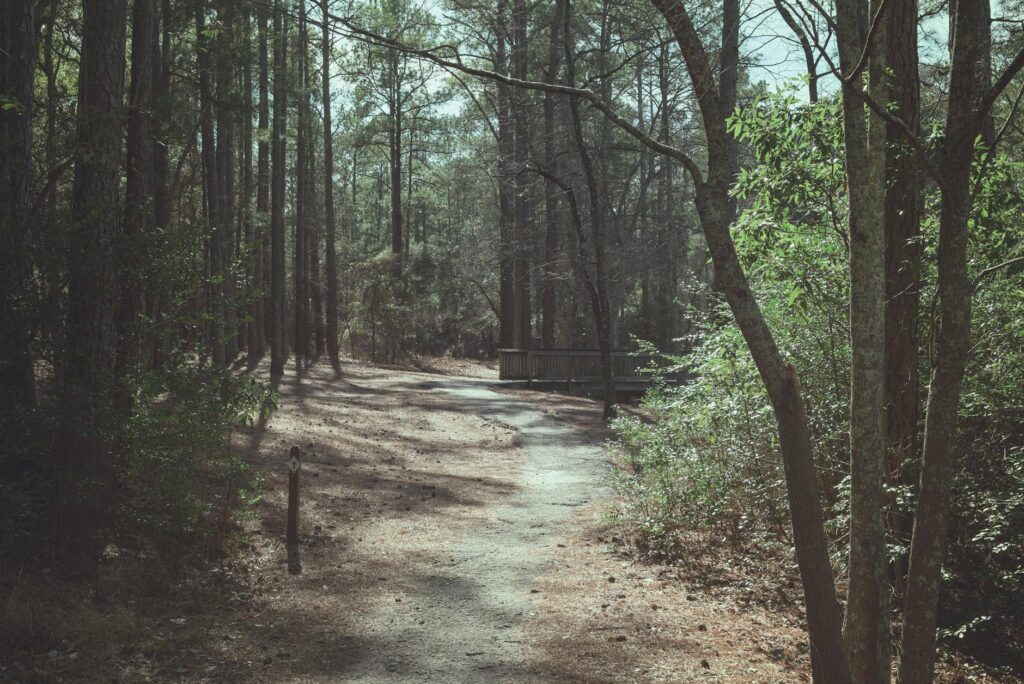
Walk the main trail at Cheesequake State Park in late April and you pass through three distinct ecosystems inside of twenty minutes — freshwater wetland, Atlantic white cedar swamp, and the sandy upland scrub where pitch pine (Pinus rigida) dominates the canopy. That scrubby, resinous, fire-scarred woodland looks self-sufficient, and mostly it is. But the pitch pines growing just outside the park boundary — on properties in Cheesequake Heights, along Route 34, and in the Morgan section of Sayreville on Middletown’s northwestern edge — are facing pressures the park trees don’t encounter in the same way.
Over the past few seasons I’ve been called to more Middletown properties where a pitch pine that had always seemed fine suddenly shows crown dieback, thinning needles, or bark beetle activity clustered on the trunk. In nearly every case, the tree didn’t collapse overnight. It was three or four compounding stressors over two or three years — a spongy moth outbreak, a dry summer, a new patio poured inside the drip line — that pushed a tough native species past the point of easy recovery.
Late April is actually the best time to evaluate a pitch pine before the new growth fully extends and fills in what the crown is really doing. This is what I look for, how I approach these trees in Monmouth County’s sandy coastal plain soils, and when the situation calls for a professional.
What Makes Pinus Rigida Different From Every Other Pine in Your Yard
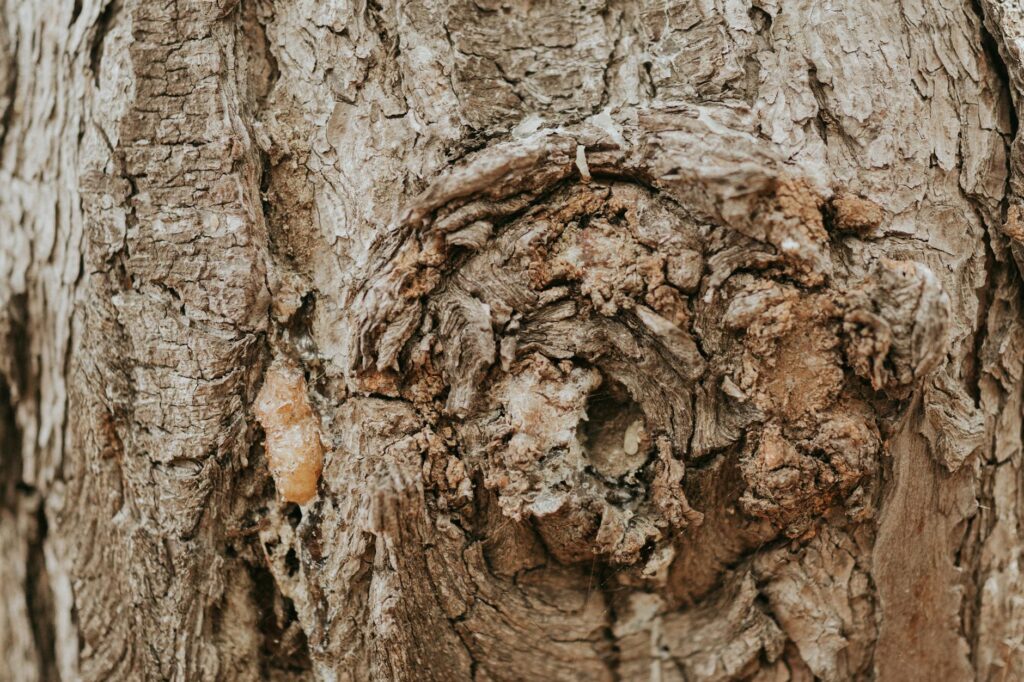
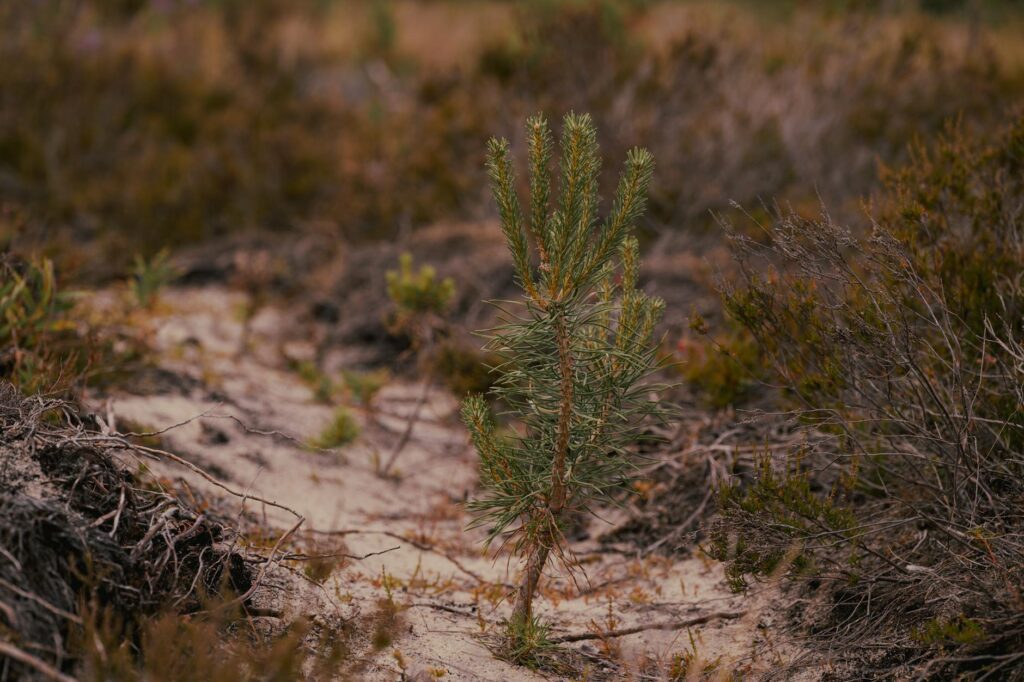
Pitch pine earned its common name honestly. The wood is so saturated with resin that early colonists used it to waterproof ships, fuel torches, and caulk hulls. Pinus rigida — rigid pine, true to the Latin — is also the only pine native to the eastern seaboard that can regenerate by sprouting new growth directly from its trunk and roots after being killed to the ground by fire. Those clusters of stubby needles sometimes erupting from an older pitch pine’s bark are epicormic sprouts, and they are an ancient survival response rather than a sign of distress.
The cones tell an equally remarkable story. Many pitch pine cones are serotinous: sealed with resin, they remain closed for years and only open when exposed to intense heat — typically a wildfire. The tree is, in a sense, waiting for the world to burn before releasing its seeds. Fire clears competition, heat triggers germination, and pitch pine colonizes the ash-enriched soil below. This is why the New Jersey Pinelands exist at all, and why smaller satellite stands like those threading through Cheesequake and into Middletown’s western neighborhoods are a direct ecological echo of that larger landscape.
The needles come in bundles of three, medium-length and slightly twisted. The crown is famously irregular — not the symmetrical pyramid of a white pine or Norway spruce, but a windswept, layered canopy built for disturbance. That asymmetry is not a flaw. It reflects a species that invests its energy in trunk density and root reach rather than architectural tidiness, and understanding that biology is the first step toward caring for one correctly.
Three Pressures Quietly Stressing Middletown's Pitch Pines Right Now
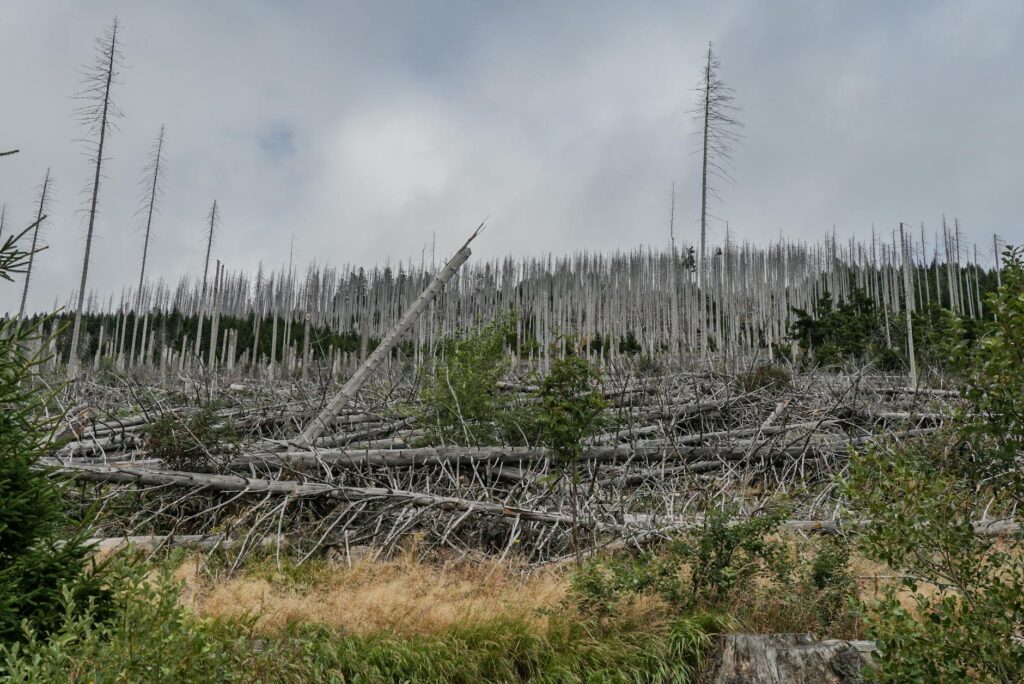
Pitch pine evolved to handle drought, fire, and nutrient-poor soil. What it didn’t evolve to handle is the layered stress that suburban development in Monmouth County produces. Three pressures in particular are showing up together on the properties I visit.
The first is spongy moth (Lymantria dispar) defoliation. A single bad year weakens a pitch pine; two or three consecutive years of defoliation — which have become increasingly common in outbreak cycles across the coastal plain — can be fatal for trees in the low-nutrient sandy soils where they naturally grow. Pitch pine simply has fewer carbohydrate reserves to draw down during recovery than a red oak or sugar maple would. The Rutgers New Jersey Agricultural Experiment Station tracks spongy moth pressure across the state, and Monmouth County’s coastal plain has been within active outbreak zones in recent cycles. If your pitch pine was heavily defoliated last summer, it entered this spring already running a deficit.
The second pressure is Ips pine bark beetles (Ips spp.). These beetles don’t typically attack healthy, vigorous trees — they target trees already weakened by drought, defoliation, or root damage. The giveaway is pitch tubes on the bark: small, coin-sized masses of crystallized resin where the tree attempted to push an invading beetle out. Multiple pitch tubes paired with any crown thinning above them is a serious warning sign that the tree has been under assault for more than one season.
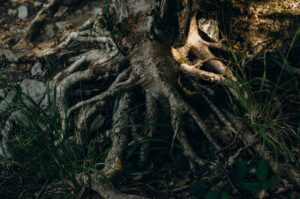
The third and most insidious pressure is root-zone disturbance. New driveways, patios, sheds, and fence posts installed within 20 to 25 feet of a pitch pine compact the sandy soil and sever the shallow lateral roots responsible for most water and nutrient uptake. Grade changes — even adding three or four inches of fill soil — can suffocate a root system that evolved in exposed, well-drained conditions. The damage doesn’t appear in the canopy for a year or two, which is why homeowners rarely connect a new outdoor project to a tree that declines the following season.
Middletown's #1 Tree Expert Company
FREE Inspection & Estimate | Certified Arborists | Trimming, Pruning, Removal, More!
Sponsored
How to Read a Stressed Pitch Pine Before It Reaches the Point of No Return
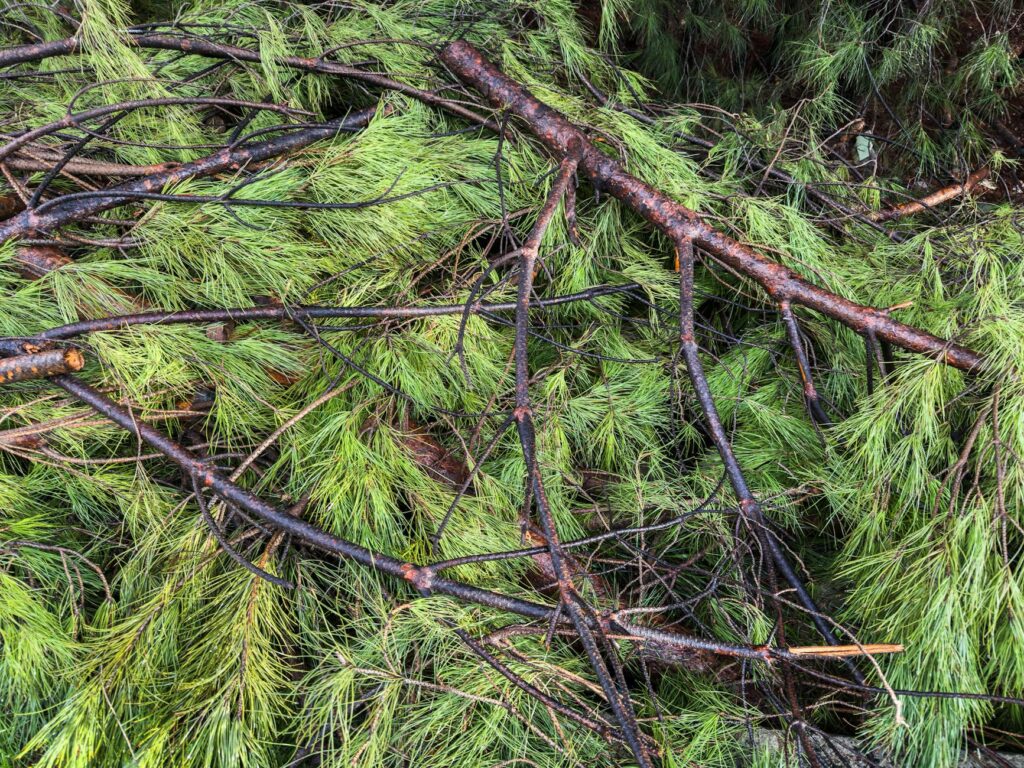
April, before the new growth fully extends, is the best window to assess a pitch pine’s canopy health. The crown is still relatively open, and the contrast between dead wood and live needles is easier to read now than it will be in July.
Start with needle color and distribution. Pitch pines naturally shed their innermost, oldest needles in late summer — a yellowish flush near the trunk base in August is completely normal. If you’re seeing yellowing or browning at the branch tips or spreading across the outer canopy in spring, that’s a stress response. Needles that are noticeably shorter than they were two or three seasons ago indicate the tree couldn’t sustain a full growth flush last year.
Check the bark surface on the main trunk and primary branches. Healthy pitch pines produce visible resin when beetles probe the bark — those pitch tubes are the tree’s own defense. A few isolated pitch tubes on an otherwise vigorous tree mean the tree fought back successfully. Many pitch tubes combined with crown thinning above them means the balance has shifted the other way.
Crown dieback — dead branches working back from the tips and outer crown — is the most visible sign of advanced decline. The NJ DEP Forest Service considers crown dieback exceeding 25 to 30 percent of the canopy a threshold requiring professional evaluation. Below that, the tree may recover if stressors are reduced; above it, you need an arborist’s assessment to understand what’s driving the loss and whether the decline is still reversible.
One secondary flag worth noting: heavy moss and lichen accumulation on the trunk isn’t harmful in itself, but it often appears on trees that have dramatically slowed their growth rate. In context with needle thinning and crown dieback, it adds to the picture.
Sandy Soil Is a Feature, Not a Bug — Don't Try to Fix It
The most common mistake I see Middletown homeowners make with pitch pine is trying to improve the soil around it. The tree is growing in dry, sandy, acidic ground — typically a pH between 4.5 and 5.5 — and the impulse to enrich that with topsoil, compost, and slow-release fertilizer feels logical. It is almost always the wrong move.
Pitch pine root systems depend on specialized mycorrhizal fungi that evolved alongside this species in nutrient-poor, acidic soils. These fungal networks — which extend the tree’s effective root reach and supply phosphorus the tree couldn’t access on its own — are exquisitely sensitive to pH shifts and nitrogen loading. Heavy fertilizer applications disrupt the mycorrhizal relationship, and the tree may actually display stress symptoms in the first season or two after “enrichment.” What looks like a soil improvement is functioning as a disruption.
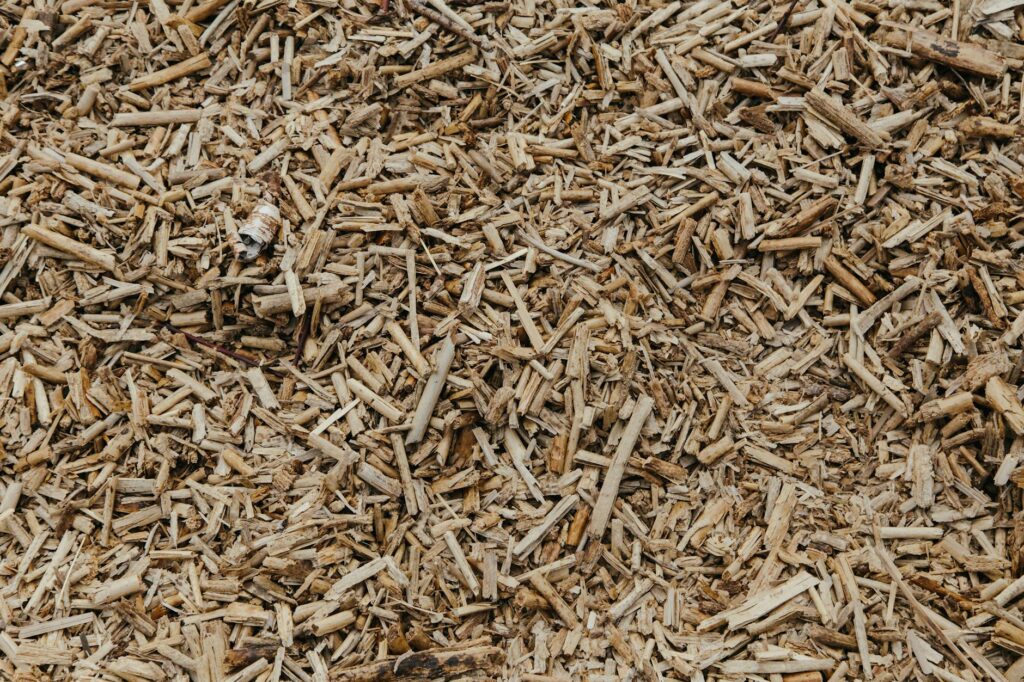
The correct support move is a light application of aged wood chip mulch: two to three inches, spread within the drip line and kept several inches away from the trunk. Wood chips that break down slowly create the acidic organic layer pitch pine roots prefer, insulate shallow feeder roots from temperature extremes, and retain moisture during dry spells without waterlogging. Avoid dyed mulch, fresh green wood chips, or rubber mulch.
Grade changes are the other major threat. The USDA Forest Service’s Fire Effects Information System profile for Pinus rigida documents how the species’ lateral root system concentrates in the upper 12 to 18 inches of soil — unusually shallow for a tree that can reach 60 feet in height. Adding even three or four inches of fill soil over those roots cuts off oxygen exchange and water movement in ways that produce canopy dieback one to two seasons later. If you are planning any landscape project within 30 feet of a pitch pine, talk to a certified arborist before a single load of topsoil is moved.
The Right Time to Prune a Pitch Pine (and When to Leave It Alone)
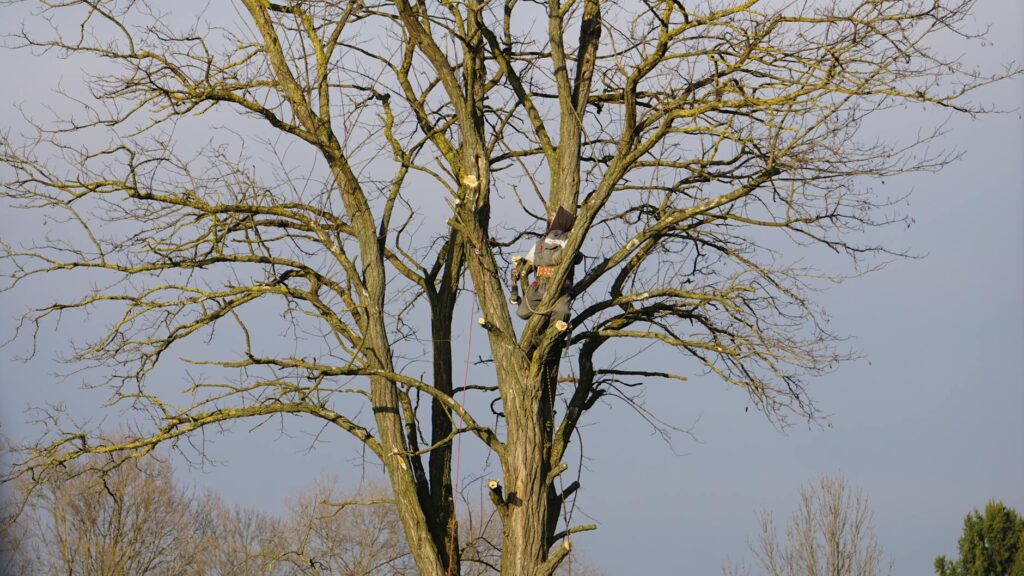
Pitch pine grows slowly and has a well-earned reputation for requiring almost no pruning. Most of the structural work I recommend for these trees is corrective — removing dead wood, addressing co-dominant stems over structures, or reducing long lateral branches that have grown over rooflines. The timing matters nearly as much as the cut itself.
The safest window for structural pruning in Monmouth County is late winter: January through early March. Bark beetles that colonize freshly wounded pines are most actively flying from late April through August, so pruning in the dormant season minimizes the time between an open wound and peak beetle activity. Winter pruning also allows the tree to begin compartmentalizing the cut before its spring growth flush starts, which means faster wound occlusion and a shorter window of vulnerability.
If you want to manage size and density without making large structural cuts, spring candle-pinching is an effective and low-risk technique. When the new growth tips — the candles — have extended but haven’t fully hardened (typically in May in Middletown), you can snap or cut them back by about half. This encourages branching and keeps the tree more compact without creating wounds large enough to attract beetles. It is the same principle used in bonsai practice, applied at full scale.
One thing I consistently counsel against: removing all dead wood from a pitch pine crown as a cosmetic exercise. Dead branches in the lower crown provide nesting cavities for cavity-nesting birds and foraging habitat for woodpeckers. If the dead wood poses no structural risk to a structure or person below, leaving it serves your yard’s ecology at no cost to the living tree above it.
Middletown's #1 Tree Expert Company
FREE Inspection & Estimate | Certified Arborists | Trimming, Pruning, Removal, More!
Sponsored
When Your Pitch Pine Needs More Than You Can Give It
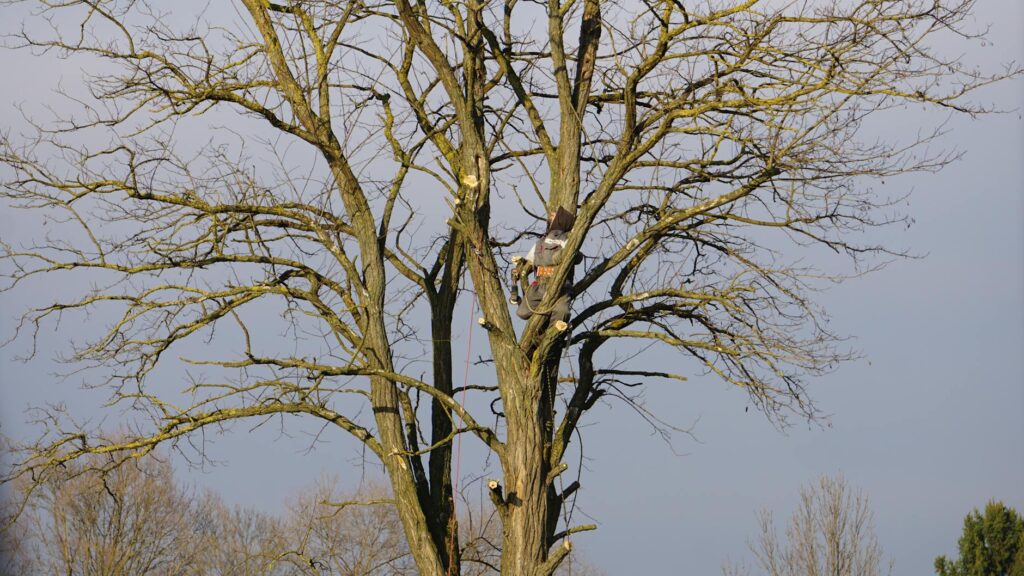
Most of what’s covered above — reading the crown for stress signals, adjusting your mulching approach, timing a pruning project correctly — is within the reach of an attentive Middletown homeowner. Pitch pine does not demand constant professional attention. But there are situations where what you’re looking at on the ground needs trained eyes and tools that a homeowner assessment can’t substitute for.
Call a certified arborist if you’re seeing any of the following: crown dieback exceeding 25 to 30 percent of the canopy; pitch tube clusters on the trunk combined with any measurable crown thinning; a history of root-zone disturbance — new pavement, grading, or fill soil — within the past two seasons; the tree sits within striking distance of a structure, utility line, or regularly occupied outdoor space; or you’re seeing basal sprouts emerging from the trunk base, which can indicate the crown above is more severely compromised than it appears from a distance.
An arborist evaluation for a struggling pitch pine typically involves a visual crown assessment, a probe of the bark for beetle galleries beneath the surface, and often a soil core to check compaction and pH. In cases of active Ips infestation, systemic treatments exist — but they are most effective on trees caught in the early stages of decline, before dieback has progressed past a recoverable threshold. Waiting until a pitch pine looks bad from the street almost always means the window for effective treatment has narrowed significantly.
The International Society of Arboriculture’s Find an Arborist tool lets you search by zip code for ISA-certified professionals in Monmouth County. Look for a Certified Tree Risk Assessor (CTRA) credential if your concern includes structural risk from a tree near a structure. Pitch pine is one of New Jersey’s genuinely irreplaceable native species — scrappy, ancient-looking, and deeply local to this coastal landscape. With informed attention at the right moments, the pitch pine on your Middletown property can outlive you by a century.
Photo credits: Featured image by Lauri Poldre on Pexels; Section 1 by Jared Brotman on Pexels; Section 2 by Taryn Elliott on Pexels; Section 3 by Godfrey Phiri on Pexels; Section 4 by Doğan Alpaslan Demir on Pexels; Section 5 by Ron Lach on Pexels; Section 6 by Dmytro Glazunov on Pexels; Section 7 by Dmytro Glazunov on Pexels.