
Middletown's #1 Tree Expert Company
FREE Inspection & Estimate | Certified Arborists | Trimming, Pruning, Removal, More!
Sponsored
When the Blooms Open, the Storm Season Starts
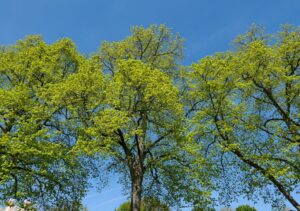
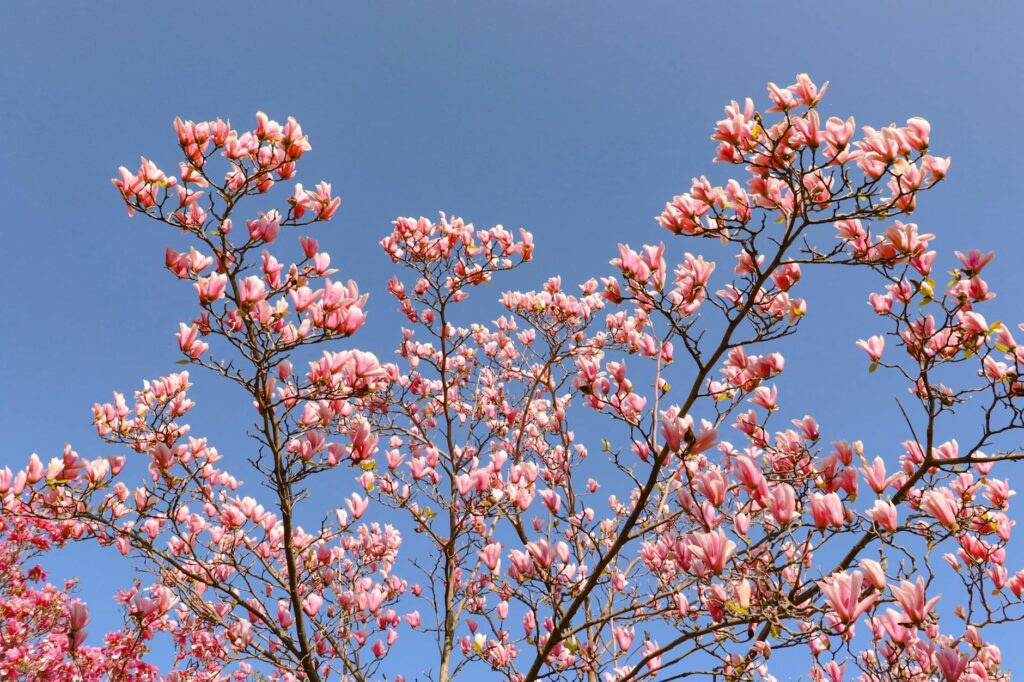
The tulip poplar (Liriodendron tulipifera) is putting on one of the most striking spring shows in Monmouth County right now — those orange-and-yellow tulip-shaped flowers appearing high in the canopy signal that real spring has arrived along the Bayshore. But late April is also when I start fielding calls about limbs that came down overnight, damage to decks, and cracked fences. The same week those blooms open, we get the first real thunderstorms of the season, and tulip poplars and spring storms in Middletown Township are a combination worth taking seriously.
These trees are everywhere here. Drive any wooded road from Lincroft to Leonardo and you’ll spot their arrow-straight trunks punching above the oaks and maples. They’re beautiful, native, wildlife-supporting trees — and they’re also the species I see causing structural damage to homes and outbuildings more often than almost any other hardwood in this part of New Jersey. Not because they’re sick, and not because their owners did anything wrong. Mostly because they get very tall, very fast, and their crowns develop in ways that create real structural vulnerabilities as they age.
This isn’t a reason to panic or reach for a chainsaw. It’s a reason to look up — while you still can see the branch architecture before leaf-out closes the canopy in the next week or two.
What Makes Tulip Poplars So Tall — and So Risky
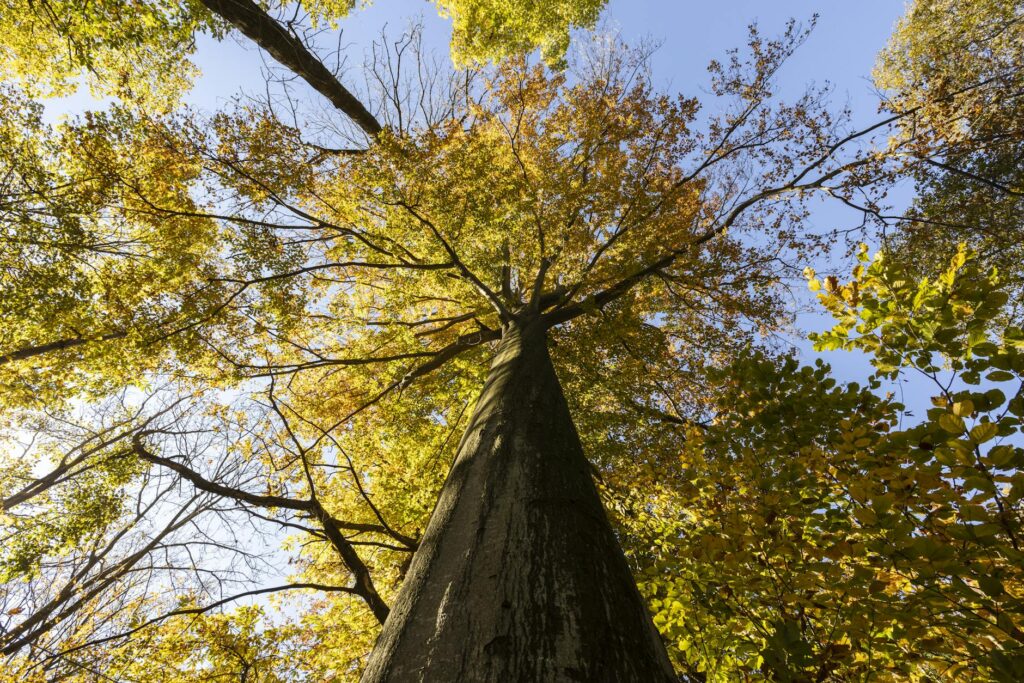
Liriodendron tulipifera is the tallest native hardwood in eastern North America. In good conditions — and Middletown’s mix of clay-loam soils with sandier pockets near Poricy Park and the Navesink watershed can be excellent tulip poplar habitat — these trees regularly reach 80 to 100 feet, with sheltered specimens in ravines occasionally exceeding that. That height means an enormous amount of sail area in a wind event. A single large scaffold limb 60 feet above the ground, leveraged against a 40 mph thunderstorm gust, delivers a force load at the attachment point that far exceeds what most homeowners would intuitively expect.
The wood itself contributes to the risk. Tulip poplar is fast-growing and relatively lightweight compared to oaks or hickories — which is actually a structural disadvantage when it comes to supporting large limb loads as the tree matures. According to the USDA Forest Service Silvics of North America, tulip poplar produces numerous large primary branches from relatively early in its life, a crown architecture that creates multiple potential failure points as the tree ages into a large, heavy specimen.
Combine the height, the broad spreading crown, lightweight and somewhat brittle mature wood, and a growth rate that quickly creates a significant above-ground mass, and you have a tree profile that demands attention before the summer storm window opens. This is not about whether tulip poplars are good trees — they are. It’s about understanding their specific risk profile and managing accordingly.
The Structural Red Flags to Look for Right Now
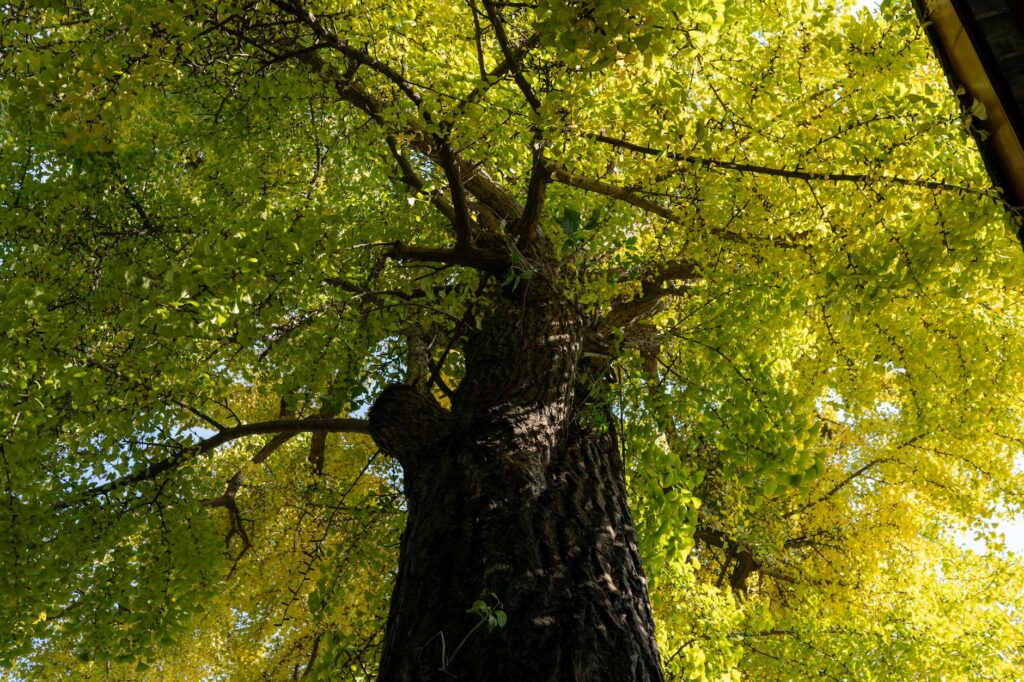
Late April is actually the best window of the year to assess your tulip poplars for structural issues. The flowers are out, but the leaves haven’t fully expanded yet — which means you can still see branch architecture, stem unions, and major structural features from the ground with a good pair of binoculars. Once the canopy closes in the next week or two, that visibility is gone until October. Here’s what to look for:
- Codominant stems — two or more roughly equal-sized stems rising from the same point on the trunk. These are extremely common in tulip poplars. The connection between codominant stems often contains included bark: tissue trapped inside the union rather than growing around it. Included bark forms a wedge that literally pushes the stems apart under load. On a 70-foot tulip poplar, a codominant stem failure is not a branch problem — it’s a catastrophic whole-top event.
- Longitudinal cracks or seams running up the trunk. These can indicate internal decay, frost crack damage from past cold snaps, or lightning strike damage that isn’t obvious from the outside.
- Asymmetric crown weight — significantly more limb mass extending to one side than the other. This imbalance worsens as leaves fill in and dramatically worsens when those leaves are soaked during a heavy rain. Trees that have been topped or lost major limbs to past storms often develop this one-sided shape.
- Deadwood or dieback in the upper crown. In a healthy tulip poplar, the outer canopy is typically clean and vigorous. Significant deadwood near the top often signals root stress, compaction, or early decline that will affect structural integrity before it’s obvious from below.
The International Society of Arboriculture’s tree owner resources at treesaregood.org offer helpful illustrated guides for identifying structural defects as a homeowner — a good companion to any DIY assessment before you call a professional.
Middletown's #1 Tree Expert Company
FREE Inspection & Estimate | Certified Arborists | Trimming, Pruning, Removal, More!
Sponsored
How Middletown's Wet Spring Soils Compound the Risk

Even a structurally sound tree can fail in the right soil conditions, and late April through early June in Monmouth County often delivers exactly those conditions. This spring’s rainfall has kept soils saturated across much of Middletown Township, and saturated soil dramatically reduces the anchorage holding power of a tree’s root plate. The root-soil anchor that normally holds a large tulip poplar firmly upright becomes a loose, waterlogged medium that can give way when lateral force is applied.
This risk is highest in low-lying portions of the township — neighborhoods near the Navesink River and its tributaries, properties in the Poricy Brook drainage, and lower-lying lots in Leonardo and Port Monmouth near the Bayshore. If you’ve had standing water in your yard for multiple days after a heavy rain this spring, trees rooted in those soils are operating with a compromised anchor regardless of how healthy their crowns appear. Windthrow — whole-tree uprooting — gives almost no crown-level warning signs before it happens. The first signal is often the sound of roots tearing as the tree begins to lean.
Sandy soils along the Bayshore side of Middletown present a different version of this problem: they drain quickly but don’t anchor roots as firmly as clay-heavy soils inland. Large tulip poplars on sandy coastal-plain lots combine the anchorage limits of sandy substrate with the sail area of a very tall canopy. These trees are worth a second look before any named storm or strong weather system moves through the area.
Rutgers’ New Jersey Agricultural Experiment Station (NJAES) maintains resources on how New Jersey’s variable soils and spring wet patterns affect tree health and stability — worth bookmarking for any homeowner trying to understand their specific property’s risk profile.
Cabling, Structural Pruning, and Other Proactive Options
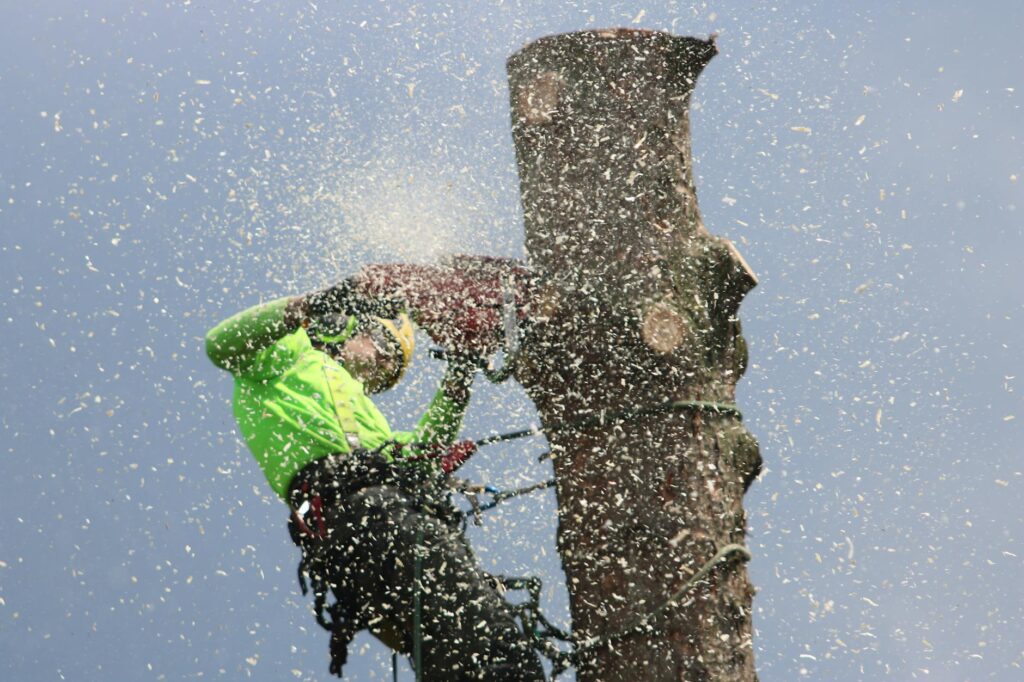
If your tulip poplar has a codominant stem or heavy extended limbs but is otherwise healthy and worth keeping, you have several meaningful options that fall short of removal. The goal is to reduce risk to an acceptable level relative to what’s in the target zone below and downwind of the tree.
Supplemental support systems — cabling and bracing installed by a certified arborist — can significantly reduce the failure risk of codominant stems. A high-strength steel cable installed between co-dominant stems limits separation under wind load. Dynamic systems using synthetic rope are increasingly common and allow more natural tree movement while still providing backup support during extreme events. These aren’t permanent set-and-forget solutions; cables need to be inspected every few years and adjusted as the tree grows.
Structural pruning targets the crown architecture itself — selectively reducing competing leaders, removing significant deadwood, and taking weight off over-extended scaffold limbs. A proper reduction cut — pruning back to a lateral branch of at least one-third the diameter of the limb being reduced — can take meaningful weight off a suspect attachment without disfiguring the tree. This is fundamentally different from topping, which removes dominant leaders and predictably creates worse structural problems in the years that follow by generating dense, weakly attached epicormic growth.
Crown cleaning — removing deadwood, hanging limbs, and storm-damaged material already in the crown — is often the most immediate and impactful step available. Deadwood in the upper canopy of a large tulip poplar is a falling object hazard independent of any structural concern. A crown cleaning alone substantially reduces the material that becomes a projectile in a 50 mph wind event, even before any structural work is addressed.
When Removal Is the Right Answer
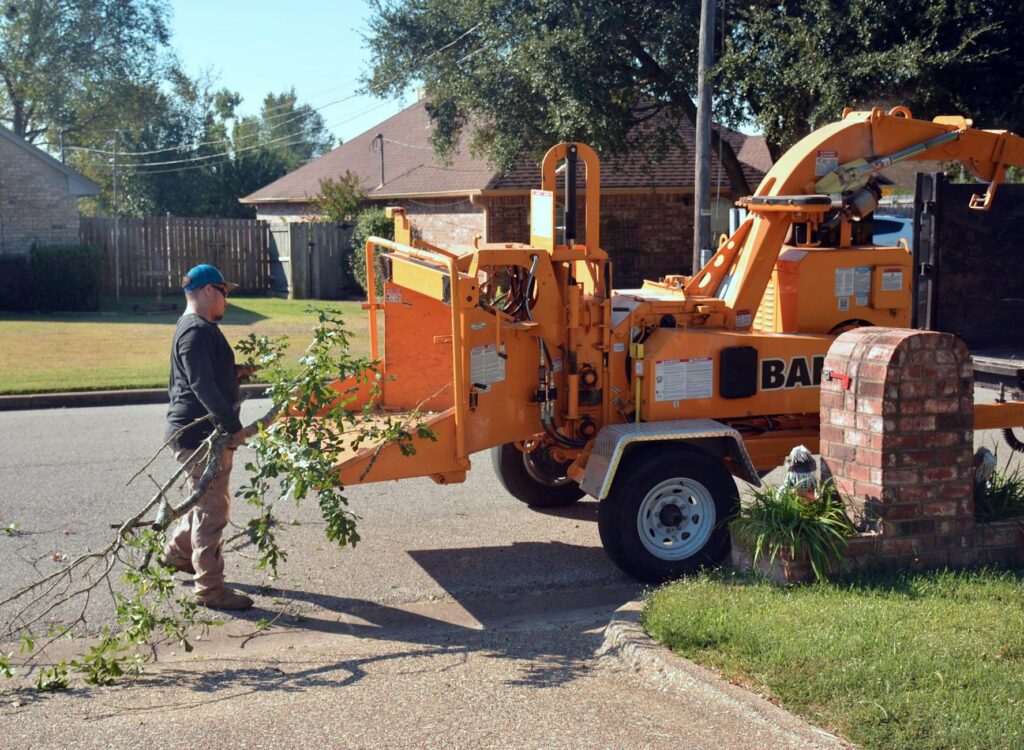
Not every tulip poplar can be managed safely in place, and part of a certified arborist’s job is being honest about that. The decision framework typically weighs several factors: the nature and severity of the structural defect, the overall health and vitality of the rest of the tree, what occupies the target zone below, and whether realistic mitigation options exist that would reduce risk to an acceptable level.
A 90-foot tulip poplar with a large codominant stem directly over the master bedroom, significant internal decay visible through cavities or fungal conks on the trunk, and a root plate in chronically saturated clay is a tree where the risk calculus is very clear. No cable corrects advanced internal decay. No crown reduction undoes a fundamentally compromised root system. That tree needs to come down before a storm makes the decision for you — and probably takes the roof along with it.
Contrast that with a healthy tulip poplar of similar size with the same codominant stem, but positioned at the back of a large lot with nothing in the target zone but open yard. That tree may be an excellent candidate for cabling and annual monitoring. The structural defect is identical; the risk is entirely different because the consequence of failure is different.
If you’re facing this decision on a large tree near a structure, a formal risk assessment by a certified arborist — documented in writing — is the right tool. It gives you a professional opinion to act on, and documentation that matters if an insurance question arises later. This is not a call to make yourself on a large tree with a house in the drop zone.
Middletown's #1 Tree Expert Company
FREE Inspection & Estimate | Certified Arborists | Trimming, Pruning, Removal, More!
Sponsored
Summary: A Five-Minute Walk That Could Save Your Roof
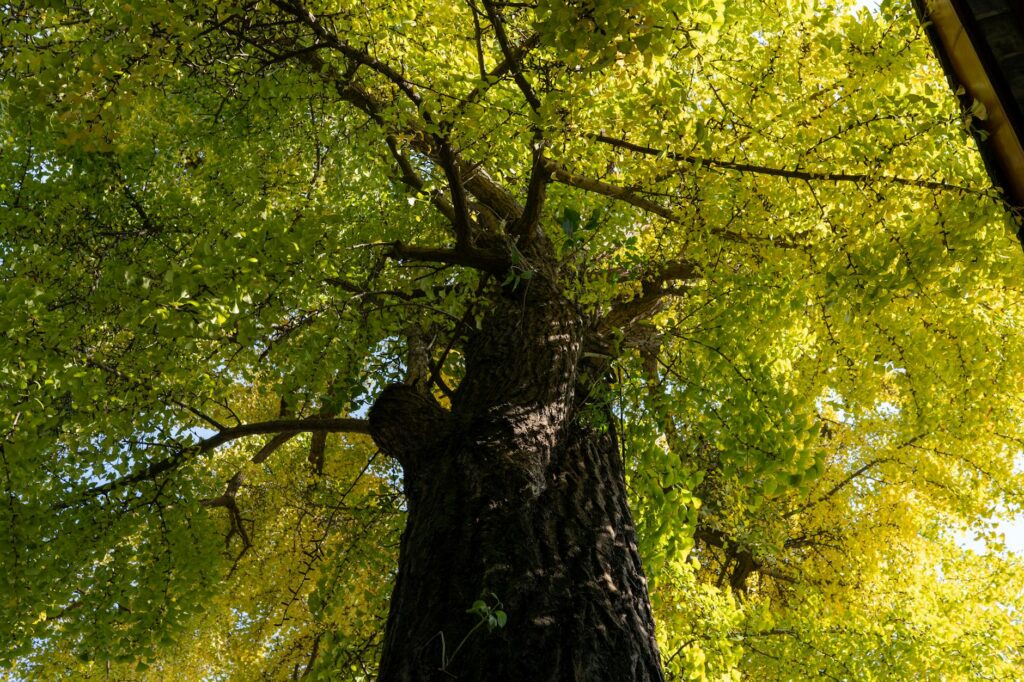
Right now — in this brief window before Middletown’s tulip poplars fully leaf out — you have the best visibility into their crown structure you’ll get until fall. Grab binoculars, walk your property, and spend five minutes looking up at every tulip poplar near a structure, a vehicle, a fence, or a power line. Look for codominant stems, longitudinal cracks, asymmetric canopy weight, and deadwood in the upper crown. These trees bloom beautifully in late April; they also fail dramatically when thunderstorms hit saturated spring soils, and the Bayshore corridor has seen enough of those storms to take the pattern seriously.
If you see something concerning, or if you have a large tulip poplar that hasn’t been professionally assessed in the last few years, this is the right time to schedule an arborist visit — before the June thunderstorm pattern sets in. Proactive assessment gives you options: cabling, structural pruning, crown reduction, or planned removal on your schedule, with a proper crew, in dry conditions. Emergency removal after a tree fails means higher cost, more dangerous working conditions, and no choices in the matter.
A certified arborist familiar with Monmouth County’s soils, species, and storm history can walk through your specific tree’s risk profile, explain your realistic options, and give you something concrete to act on. The tulip poplars along Middletown’s wooded neighborhoods are part of what makes this area beautiful. The goal isn’t to remove them — it’s to understand which ones need attention and take care of them before the season makes that decision for you.
Photo credits: Featured image by Céline | on Pexels; Section 1 by Wolfgang Weiser on Pexels; Section 2 by Rino Adamo on Pexels; Section 3 by Peter Xie on Pexels; Section 4 by Kent Spencer Mendez on Pexels; Section 5 by Henk Schuurmans on Pexels; Section 6 by John Robertson on Pexels; Section 7 by Peter Xie on Pexels.