Middletown's #1 Tree Expert Company
FREE Inspection & Estimate | Certified Arborists | Trimming, Pruning, Removal, More!
Sponsored
Why the Front-Yard Tree Is the Best Landscape Investment You'll Make
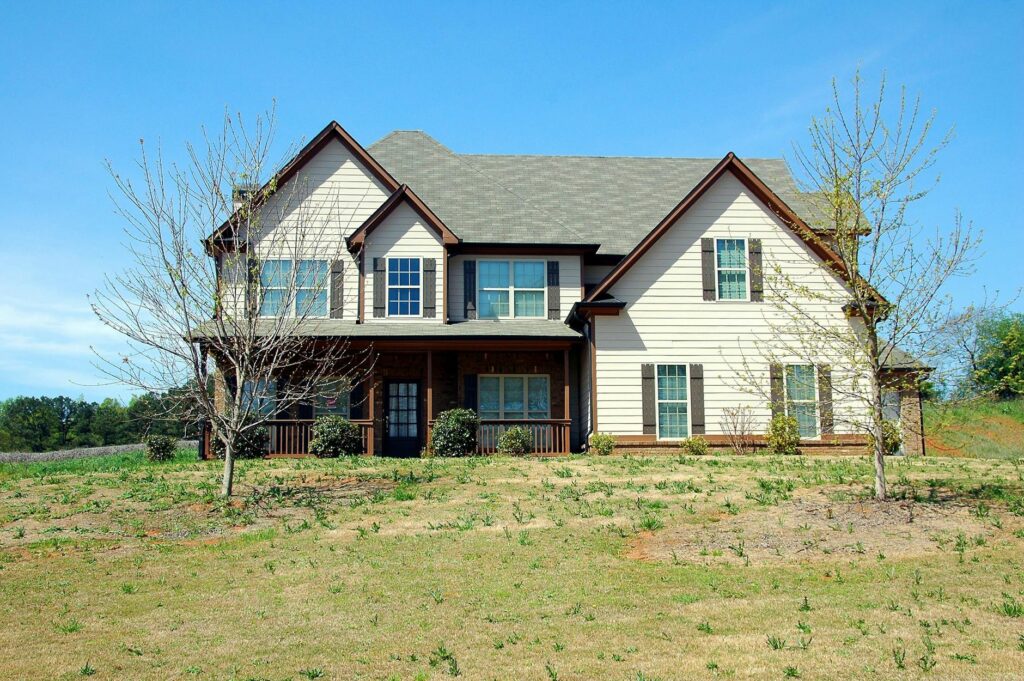
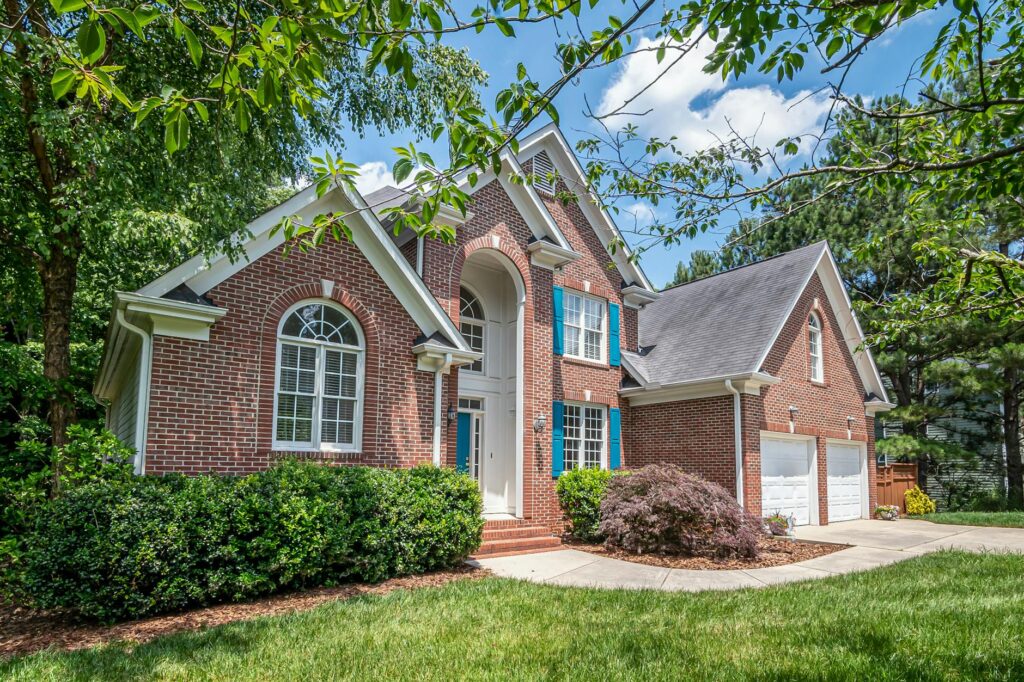
After thirty-some springs walking properties in Middletown, I can tell you the single landscape feature that shifts an appraisal more than any patio, paver, or perennial bed is a healthy, well-placed front-yard tree. Buyers pulling up on Kings Highway or a cul-de-sac off Leonardville Road don’t consciously price the canopy — they just feel the street, and the street feels finished when the trees are right.
The research backs up the eye. The USDA Forest Service has documented landscape tree contributions of roughly 3 to 15 percent of total property value, with mature, healthy specimens consistently at the top of that range. In the Monmouth County market, where a few percentage points on a sale price is real money, that’s a meaningful number.
The catch is that not every tree moves the needle the same way. Some species add value for fifty years. Some look great for ten, then cost you more than they earned in removal, insurance claims, and driveway repair. April is our prime planting window here, so if you’re thinking about putting a tree in the ground this spring, the choice you make this month will outlive most of the rest of your yard.
What Actually Moves the Appraisal Needle
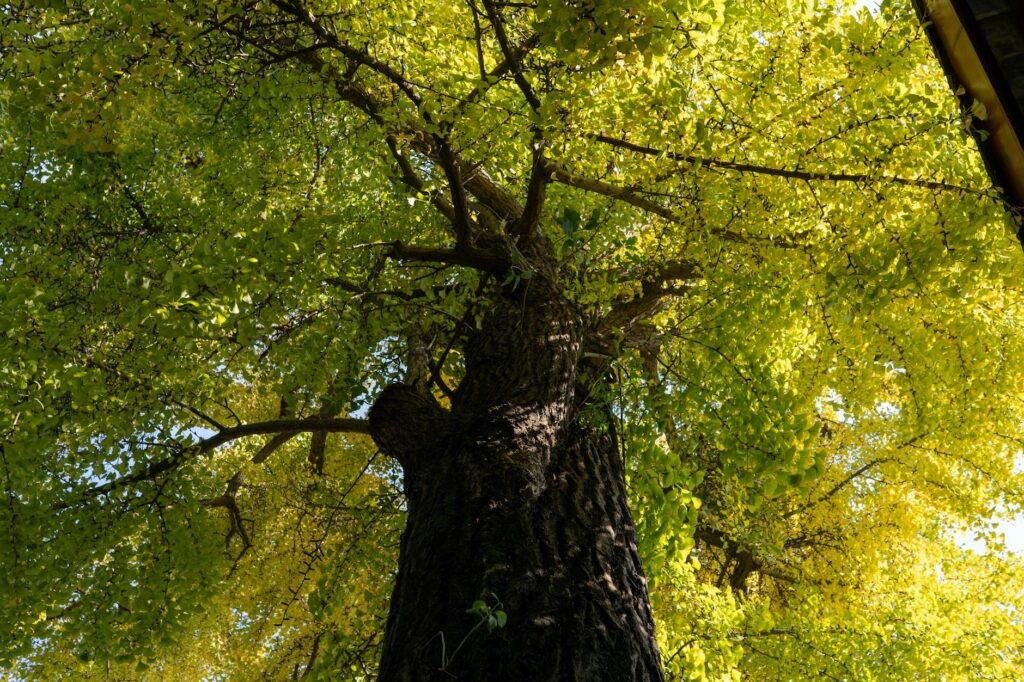
A tree adds value in three ways, and understanding them helps you pick one that pays back. First is canopy presence — the sense of permanence, shade, and scale that a mature tree gives a lot. Second is species reputation — buyers recognize certain trees as desirable (oak, maple, beech) and others as liabilities (silver maple, Bradford pear). Third is condition — a declining specimen tree is a negative; an obvious hazard tree is a red flag on an inspection.
Most homeowners focus on the first point and skip the other two. A Bradford pear hits full size fast and looks stunning in bloom for about fifteen springs. Then the first serious wind event splits it down the middle, because its tight branch unions were never going to hold up. I’ve written too many removal estimates for Bradford pears that were planted by a well-meaning previous owner and inherited by someone now paying two thousand dollars to take it out.
The math that matters is size at maturity divided by time-to-failure-risk. A white oak planted today will be a defining feature of your property for your grandchildren. A silver maple will dominate for twenty years and then start dropping limbs on your roof.
Read Your Site Before You Pick a Species
Middletown is not one site — it’s at least four. A yard in Lincroft sitting on heavy, poorly drained Freehold-series clay is a completely different place to grow a tree than a Port Monmouth lot where the salt spray rolls in off the Bayshore on nor’easter wind. Picking a species before you read your site is how you end up with a chlorotic pin oak on soil it hates, or a sugar maple with scorched leaves every August.
Walk the planting spot and answer four questions honestly. How does water behave after a hard rain — does it pond for a day, or drain within an hour? How much direct sun does the spot get in June with the leaves fully on the neighbors’ trees? How close is it to a road or driveway that gets salted? And how much room does the tree actually have overhead — are you planting into a utility corridor that will force topping in fifteen years?
Rutgers has a useful primer on matching species to New Jersey sites and soils, and it’s worth twenty minutes of reading before you spend two hundred dollars on a tree. Start with their guide to selecting landscape trees for New Jersey. If you’re near the Bayshore or the Navesink, salt tolerance is not optional — it’s the first filter.
Middletown's #1 Tree Expert Company
FREE Inspection & Estimate | Certified Arborists | Trimming, Pruning, Removal, More!
Sponsored
Species That Earn Their Keep in Middletown Front Yards
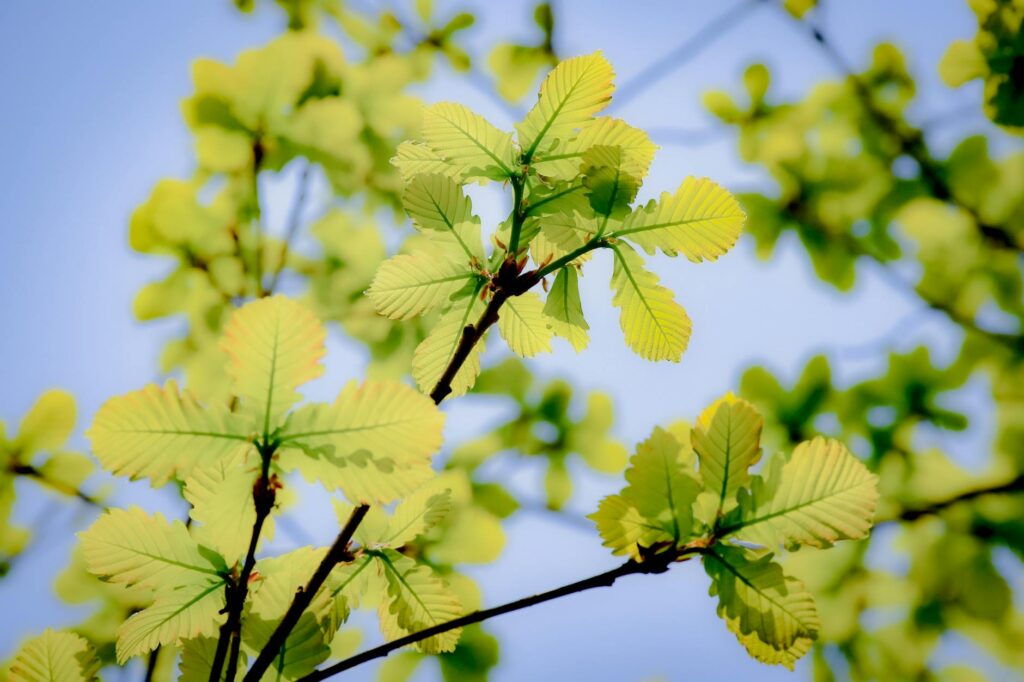
Here’s the short list I actually recommend to homeowners who want a front-yard tree that will still be adding value in 2066. Pair these with the site reading you just did.
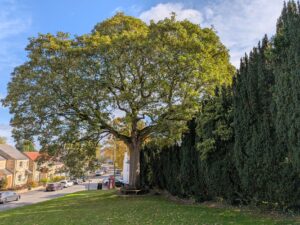
- White oak (Quercus alba) — the gold standard. Slow to establish, but magnificent at maturity, tolerant of most Middletown soils, wind-firm, and deeply desirable to buyers. Plant it and forget about replacing it in your lifetime.
- Red maple (Acer rubrum) — faster than oak, excellent fall color, handles wet feet better than most. Choose named cultivars with better form than the species.
- Black gum (Nyssa sylvatica) — underused, stunning scarlet fall color, handles both wet clay and sandy conditions, and is remarkably wind-resistant.
- American hornbeam (Carpinus caroliniana) — for smaller front yards or under utility lines. Tidy, dense, understory-scale. Great in Lincroft’s more wooded lots.
- Swamp white oak (Quercus bicolor) — if your site drains poorly, this is your oak. Also more salt-tolerant than most oaks, which matters along the Bayshore.
- Kentucky coffeetree (Gymnocladus dioicus) — coarse-textured, beautiful winter silhouette, tough as nails in urban soils, underplanted in NJ.
None of these are trendy. That’s the point. Trendy is why Middletown has a Bradford pear problem.
The Species I Keep Taking Out
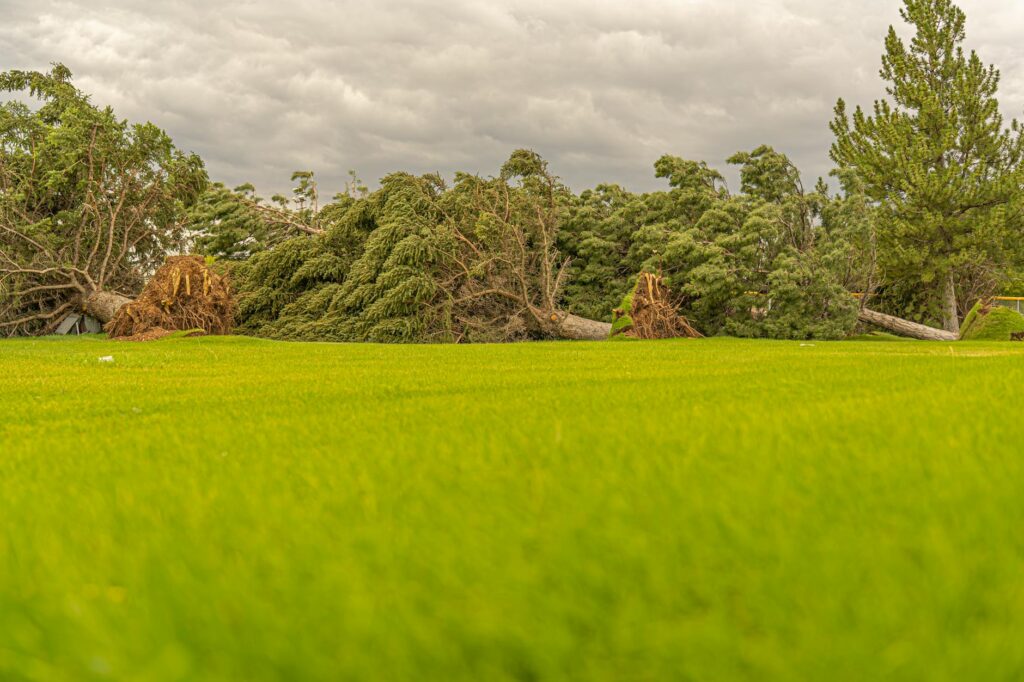
If I can talk you out of planting any of these, I will. They show up on my removal list year after year, and the stories rarely end well.
Bradford pear (Pyrus calleryana) and its cultivars. I mentioned them already. Their branch architecture is fundamentally weak — the unions are included-bark failures waiting for the right storm. They also seed themselves into wild spaces, which is why New Jersey has moved to restrict them. The NJ Department of Agriculture has flagged callery pears for their invasive impact on native ecosystems.
Silver maple (Acer saccharinum). Grows fast, which is why it got planted in so many postwar Middletown neighborhoods. But it’s brittle, surface-rooted, and a regular customer for storm damage claims. If you inherited one, have it inspected; don’t plant a new one.
Norway maple (Acer platanoides). A dense, shallow-rooted tree that kills lawn underneath, suppresses native understory, and is listed as invasive in the Mid-Atlantic. Beautiful in fall, bad neighbor the rest of the time.
Leyland cypress and arborvitae as property-line screens in exposed sites. Not technically front-yard specimen trees, but worth flagging — along the Bayshore they shred in winter wind and brown out from salt. There are better screen choices.
Any tree planted within ten feet of your foundation, driveway, or a water line. The species almost doesn’t matter at that point.
Planting It Right So It Actually Appreciates
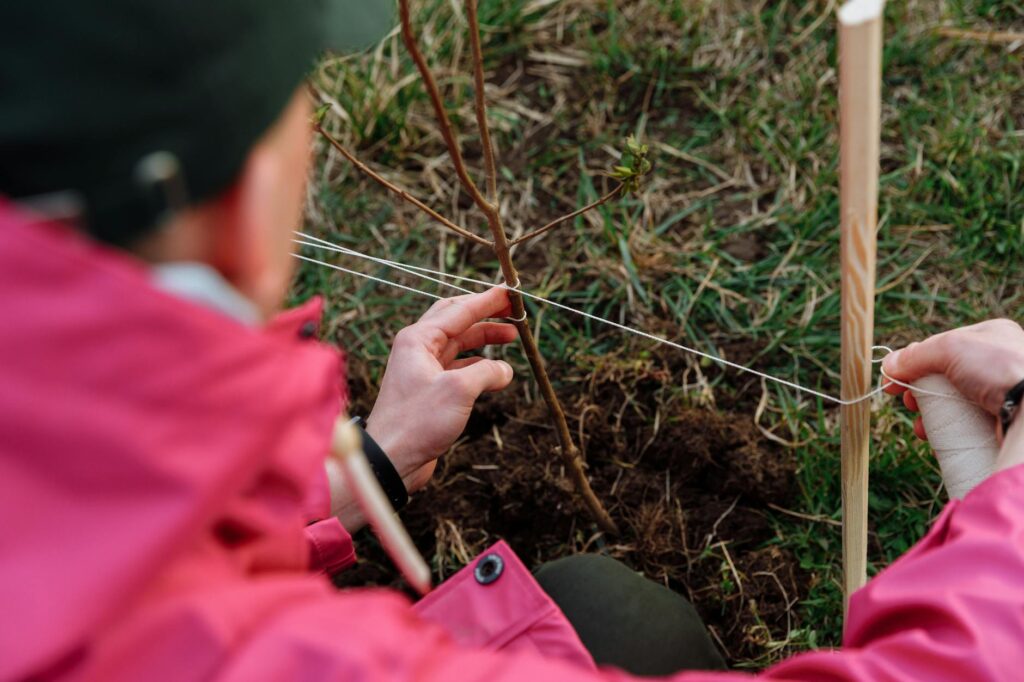
The best species, planted badly, becomes a liability in ten years. This is where most of the value either gets made or gets squandered. A few non-negotiables:
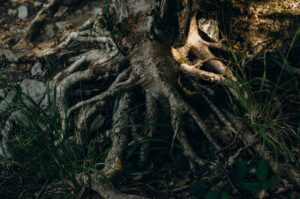
- Dig wide, not deep. The planting hole should be two to three times the width of the root ball and only as deep as the ball itself. The root flare — where the trunk widens into the roots — must sit at or slightly above grade. A tree planted too deep is a tree in slow decline from day one.
- Cut the girdling roots. Container-grown trees almost always have circling roots. If you don’t slice through them at planting, they will eventually strangle the trunk. This is the number-one reason a ten-year-old nursery tree suddenly looks sick.
- Mulch properly, not volcanically. Two to three inches of arborist wood chips, spread in a wide ring, kept off the trunk. I wrote about mulch volcanoes last week; they’re still the most common killer of young front-yard trees in Middletown.
- Water deeply, not often. Ten to fifteen gallons once or twice a week through the first two summers. Set a timer. Drought-stressed transplants in a dry Monmouth County July fail quietly and you don’t notice until September.
- Stake only if you must, and remove stakes after one year. Trees that flex in the wind build stronger trunks. Trees tied rigid for three years snap the first time you untie them.
The International Society of Arboriculture’s new-tree planting guide covers the details, and it’s the single best free resource I hand homeowners.
Middletown's #1 Tree Expert Company
FREE Inspection & Estimate | Certified Arborists | Trimming, Pruning, Removal, More!
Sponsored
Summary and When to Call a Certified Arborist

A front-yard tree is the rare landscape decision that gets better every year for fifty years, or worse every year for fifteen, depending entirely on what you pick and how you plant it. The species list isn’t long, the site-reading isn’t complicated, and the planting technique isn’t mysterious — but skipping any of those steps is how you end up paying to remove the tree you planted to add value.
Bring in an ISA-certified arborist before you plant if any of the following apply: the site has drainage questions, overhead utilities, or close proximity to the house or driveway; you’re replacing a mature tree and want something that will eventually fill the same role; you’re considering a species you’re not sure of; or you already have a front-yard specimen and want it assessed before a sale or refinance. A one-hour consult now is cheaper than a twenty-year mistake — and for Middletown homeowners thinking about resale, it’s the kind of quiet work that shows up later in the appraisal without anyone talking about it.
Plant well this April. Fifty Aprils from now, someone will still thank you for it.
Photo credits: Featured image by Curtis Adams on Pexels; Section 1 by Pixabay on Pexels; Section 2 by Peter Xie on Pexels; Section 3 by Kurt Acuña on Pexels; Section 4 by 袁 勇博 on Pexels; Section 5 by Castorly Stock on Pexels; Section 6 by Thirdman on Pexels; Section 7 by Kindel Media on Pexels.