
Middletown's #1 Tree Expert Company
FREE Inspection & Estimate | Certified Arborists | Trimming, Pruning, Removal, More!
Sponsored
Those White Webs Are Back — and They're All Over Middletown's Cherry Trees
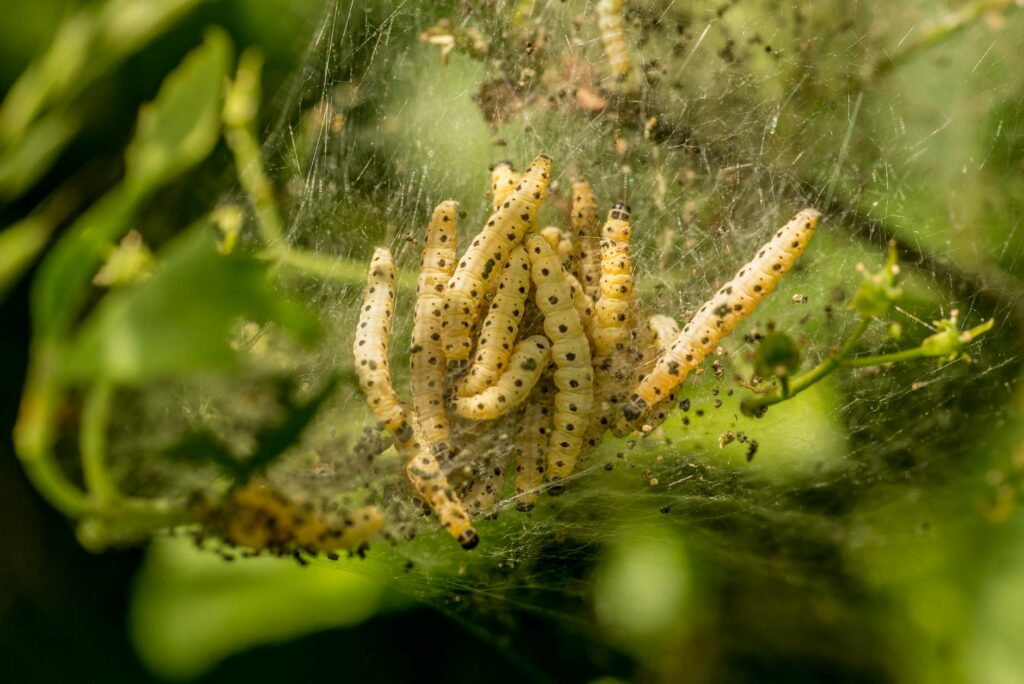
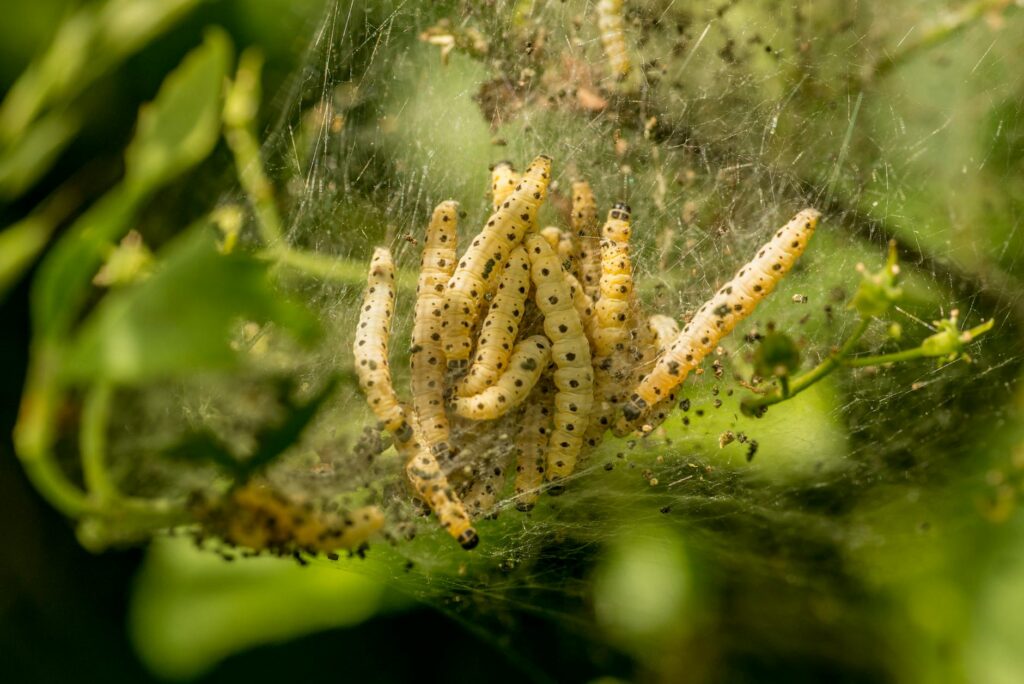
Late April in Middletown Township means a lot of things — forsythia going golden, redbuds blazing along Poricy Park’s wooded edges, and, if you’ve been paying attention, those cottony white tents suddenly appearing in the crotches of wild cherry and crabapple trees throughout the neighborhood. If you’ve driven any wooded stretch of Route 36 near Leonardo lately, or the shaded back roads near Tatum Park, you’ve probably spotted them: the silken web nests of the eastern tent caterpillar (Malacosoma americanum), one of the most visible and most misunderstood spring insects in all of Monmouth County.
Every year around this time I get calls from Middletown homeowners who are convinced their cherry tree is infested and dying. The webs can look alarming — especially when they’re softball-sized in the branch crotch and crawling with dozens of small black-and-orange caterpillars. Most years, the tree is going to be just fine. But that doesn’t mean you should ignore it entirely, and there are situations where eastern tent caterpillars do become a genuine problem for already-stressed trees.
Here’s what you need to know right now, while the treatment window is still open.
What Is the Eastern Tent Caterpillar?
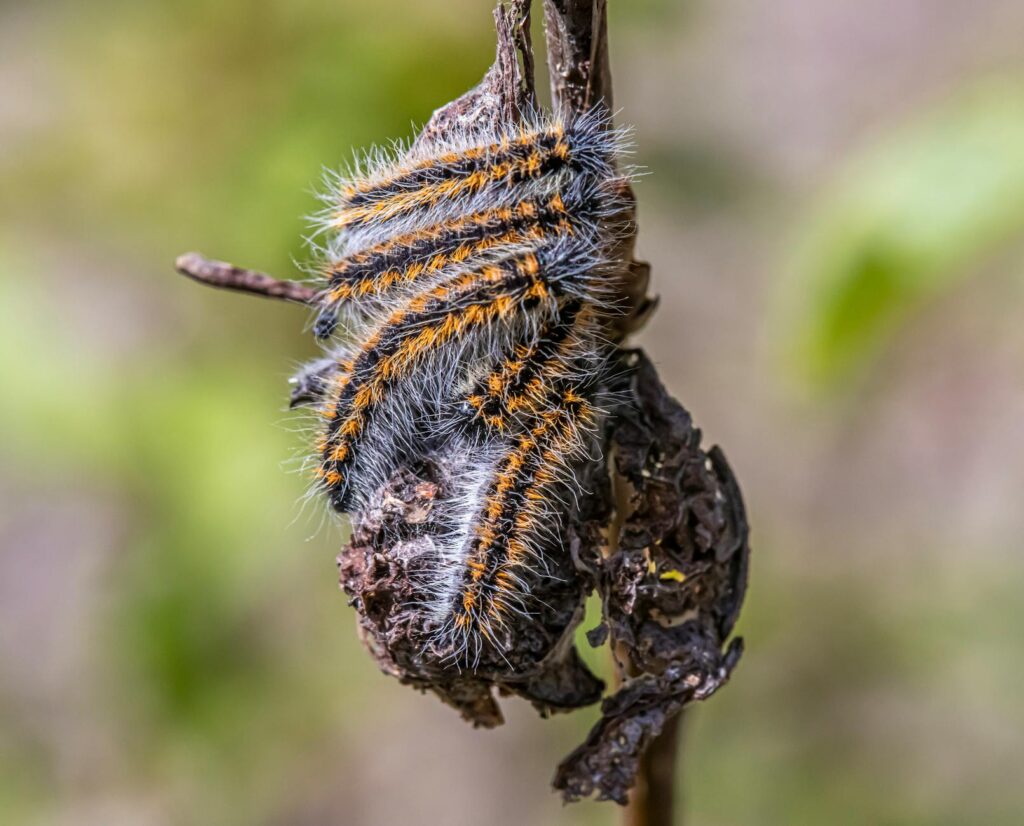
The eastern tent caterpillar is a native North American moth in the family Lasiocampidae. It overwinters as an egg mass — a dark, shiny, foam-like capsule wrapped around a small twig, containing 150 to 350 eggs — and hatches in early spring when temperatures warm and wild cherry buds begin to swell. In most of New Jersey, including Middletown Township, that means late March through April, right now. The larvae are strikingly patterned: black with a white dorsal stripe, rust-orange side lines, and a row of blue oval spots along each side. Once you know what you’re looking at, they’re easy to identify at a glance.
The larvae spin their characteristic silken tent in the first fork of a branch, retreating into it at night and during rain, and venturing out during daylight hours to feed on foliage. They feed for about five to six weeks before dispersing to spin individual cocoons — often on fence posts, under loose bark, or tucked along building eaves. Adults emerge as pale tan moths in early summer, mate quickly, lay a single egg mass on a thin host-tree twig, and die. One generation per year is all you get, which means populations can’t build and compound the way some pests do.
For a detailed natural history of this species and its regional behavior, the USDA Forest Service has published an in-depth overview of the eastern tent caterpillar that covers its range, ecology, and management throughout the eastern United States.
Which Middletown Trees Are Most at Risk?
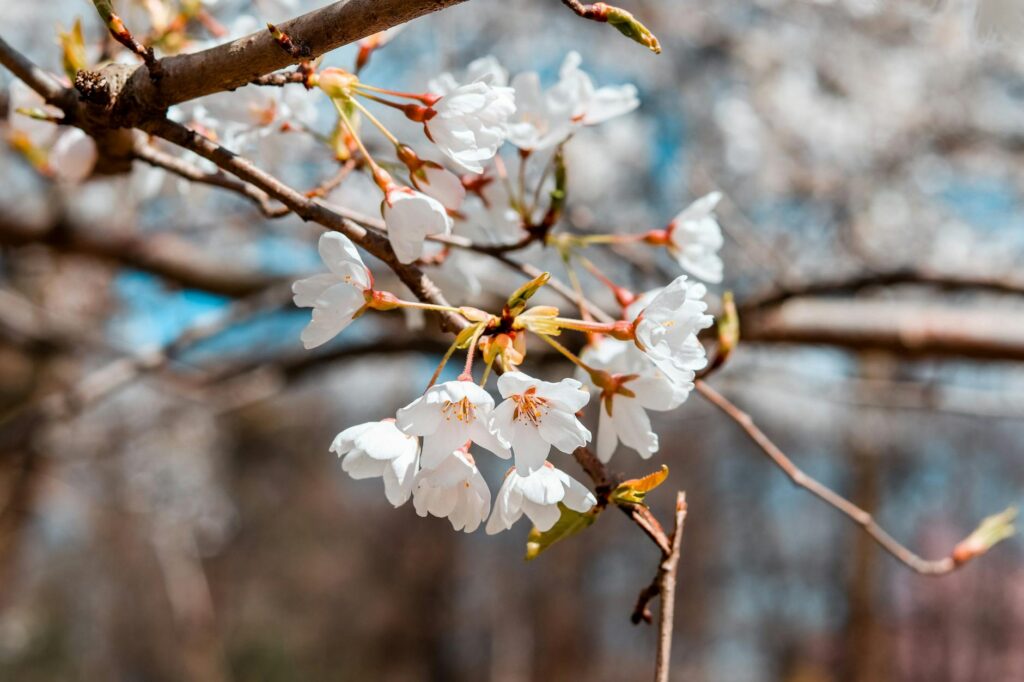
Eastern tent caterpillars strongly prefer members of the rose family (Rosaceae). In Middletown Township, that means their primary targets are:
- Wild black cherry (Prunus serotina) — by far the most heavily infested species in our area. If you have wooded edges on your property, or back up to any natural area near Hartshorne Woods, Poricy Park, or Tatum Park, you almost certainly have wild cherries nearby that are already hosting tents right now.
- Crabapple (Malus spp.) — ornamental crabapples in front yards and along Middletown’s neighborhood streets take heavy feeding pressure in peak years.
- Apple (Malus domestica) — backyard fruit trees in older Middletown neighborhoods are frequently colonized, sometimes heavily.
- Hawthorn (Crataegus spp.) — common in hedgerows and naturalized areas throughout Monmouth County.
- Ornamental cherry and plum — flowering Prunus species planted for spring bloom, including yoshino cherry and purple-leaf plum, are susceptible and often planted in the front yard where infestations are most visible.
You are very unlikely to see eastern tent caterpillars on oaks, maples, elms, or other non-Rosaceae species. This insect is highly host-specific. If you’re seeing tent-like silken webs in those trees, you may be dealing with a completely different species — fall webworm (Hyphantria cunea) makes similar-looking nests but appears in late summer, typically August through September, and attacks a much wider range of hosts.
Middletown's #1 Tree Expert Company
FREE Inspection & Estimate | Certified Arborists | Trimming, Pruning, Removal, More!
Sponsored
Is This Actually Killing Your Tree?
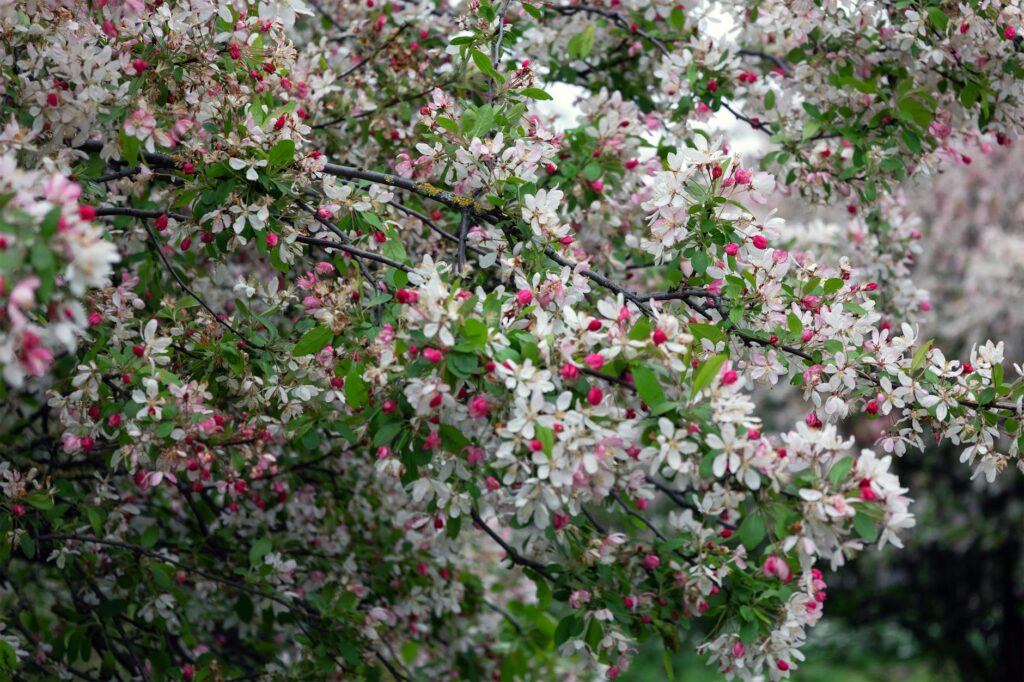
For most healthy, well-established trees in Middletown — the honest answer is no. Eastern tent caterpillars are defoliators: they eat leaves rather than boring into bark, severing the vascular system, or introducing a fungal pathogen. A healthy cherry or crabapple that gets partially or even heavily defoliated in late April will typically releaf by late May or June. The tree draws on its stored carbohydrate reserves to push a second flush of growth, and by midsummer you’d barely know the feeding happened.
Where it becomes a genuine problem is when a tree is already stressed going into the season. Drought stress, soil compaction around the root zone, secondary fungal infections, or multiple consecutive years of heavy defoliation can push a marginally healthy tree toward real decline. I’ve seen mature wild cherries along the Bayshore that shrugged off thirty years of annual tent caterpillar feeding without missing a beat, and I’ve also watched a stressed ornamental crabapple give up after just two consecutive bad defoliation years combined with a dry summer. The tree’s overall resilience is the critical variable — the caterpillars just tip the scale.
The International Society of Arboriculture offers guidance to help tree owners understand the difference between cosmetic pest damage and genuine tree health threats: Trees Are Good — ISA Tree Owner Resources. It’s a useful starting point if you’re trying to calibrate how seriously to take what you’re seeing.
What You Can Do Right Now
If you want to manage eastern tent caterpillars on a valued ornamental tree, timing is everything — and right now, in late April, you are at the edge of the effective treatment window. Here are your options in order of preference:
- Mechanical removal: Early in the morning, when it’s still cool and the caterpillars have retreated inside the tent, use a long stick, a broom handle, or gloved hands to physically pull the tent out of the branch crotch and drop it into a bucket of soapy water. This method is simple, zero-cost, and completely safe for bees, beneficial insects, and birds. For a small to medium ornamental tree, this may be all you need.
- Bacillus thuringiensis var. kurstaki (Bt): Bt is a naturally occurring soil bacterium that produces proteins toxic to caterpillar larvae but harmless to bees, birds, and other non-target wildlife. It must be ingested by young larvae to work, so timing matters — spray foliage in the morning when larvae are actively feeding. Bt is widely available at hardware and garden stores under various product names and can be safely applied by a homeowner on trees reachable from the ground.
- Spinosad: Another low-impact biological insecticide derived from soil bacteria; effective on young caterpillar larvae with lower toxicity to pollinators than most synthetic alternatives, particularly when applied in the morning before bees become active.
What not to do: Do not torch the webs with fire. It is a surprisingly common folk remedy and it damages the branch the tent is attached to while creating an unnecessary fire hazard near structures. Also avoid broad-spectrum synthetic pyrethroids unless the infestation is severe on a high-value tree — these kill the parasitic wasps and ground beetles that naturally regulate eastern tent caterpillar populations from one year to the next.
When to Leave It Alone — and When to Worry

Honestly, in most Middletown backyards, the right answer is to do nothing. Eastern tent caterpillars are a native species with a robust set of natural controls. In woodland edges at Poricy Park and Hartshorne Woods, populations cycle up and down with their predators and parasitoids — parasitic wasps in the family Ichneumonidae, tachinid flies, ground beetles, and insectivorous birds all pick off larvae and pupae in large numbers every season. Many backyard infestations collapse on their own well before the feeding does significant damage.
Signs that warrant closer attention from a certified arborist include:
- Multiple consecutive years of heavy defoliation on the same tree, with the canopy failing to fully recover by midsummer
- Significant branch dieback following defoliation, especially if dieback exceeds 20 to 25 percent of the canopy
- A tree that was already showing symptoms of decline — thin foliage, pale leaves, reduced new growth — before the caterpillars arrived this spring
- Large, mature specimen trees with sentimental or structural value where added defoliation stress could accelerate existing root or vascular problems
Rutgers Cooperative Extension maintains integrated pest management guidance for New Jersey landscape trees that is worth reviewing if you’re dealing with persistent pest pressure on a valued ornamental: Rutgers NJAES: Pest and Disease Management for Sustainable Landscapes. Their approach emphasizes treating the tree’s overall health as the primary defense, not just reacting to each pest event in isolation.
Middletown's #1 Tree Expert Company
FREE Inspection & Estimate | Certified Arborists | Trimming, Pruning, Removal, More!
Sponsored
Summary: When to Call a Pro
Eastern tent caterpillars are a normal, expected part of late April in Middletown Township — they’ve been here as long as the wild cherries they feed on, and healthy trees have been handling them without any human help for centuries. For most homeowners, the single most important thing to know is that a healthy tree can take it. The silken webs look dramatic. The damage is almost always cosmetic.
What I’d encourage any Middletown homeowner to do right now is walk your property, look at the trees showing tents, and ask yourself honestly whether those trees are healthy overall. A wild cherry with one or two tents and a full, vigorous canopy needs nothing from you. A crabapple that has been struggling for a couple of seasons — thinning foliage, slow growth, early leaf drop — and now has multiple tents spread across the crown is a different situation entirely.
If you’re not sure which category your tree falls into, that’s exactly when a consultation with a certified arborist is worth the call. An ISA-certified arborist can assess the overall condition of the tree, identify any compounding stressors — root issues, soil problems, secondary disease — and give you a clear picture of whether watchful waiting is appropriate or whether intervention is warranted. Getting that read early in the season, before a bad summer adds more stress to the equation, is almost always the right move.
Photo credits: Featured image by Petr Ganaj on Pexels; Section 1 by Petr Ganaj on Pexels; Section 2 by Erik Karits on Pexels; Section 3 by Lalada . on Pexels; Section 4 by Victoria Range on Pexels; Section 5 by Jacky on Pexels; Section 6 by Ron Lach on Pexels; Section 7 by Paris Lopez on Pexels.