
Middletown's #1 Tree Expert Company
FREE Inspection & Estimate | Certified Arborists | Trimming, Pruning, Removal, More!
Sponsored
The Storm That Broke Trees Before Winter Began
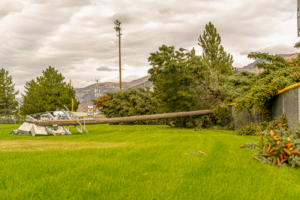
On Saturday, October 29, 2011, a rare October nor’easter swung up the coast and turned a mild autumn afternoon into a tree-breaking event. The National Weather Service’s Mount Holly storm summary notes that after a mild October, many trees across the region still had their leaves, and that wet snow and gusty winds bent and broke trees and power lines under the load. Eight to sixteen inches fell across parts of northwest New Jersey and the Poconos, with 4 to 8 inches measured across parts of Middlesex County, just up the road from Monmouth.
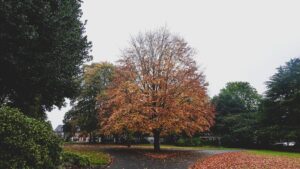
Middletown Township sits on the coastal plain along the Raritan Bay, and the Bayshore usually gets rain or a slushy mix when the inland towns get the heavy snow. That is exactly why homeowners here tend to file the 2011 storm under “something that happened to other people.” It is worth a second look. The lesson of that storm was never about snowfall totals. It was about timing, because a tree carrying a full crown of leaves in late October is a very different structure from the same tree in January.
Right now, at the end of October, many Middletown maples, sweetgums and pears are still holding a good share of their foliage, and the old rule of thumb that “snow season is months away” has a way of failing in exactly this window. This article explains why leafy trees are so vulnerable to early wet snow, which Middletown trees fail first, and what a homeowner can do this week, from the ground, without a ladder.
Why Leaves Turn Snow Into a Weight Problem
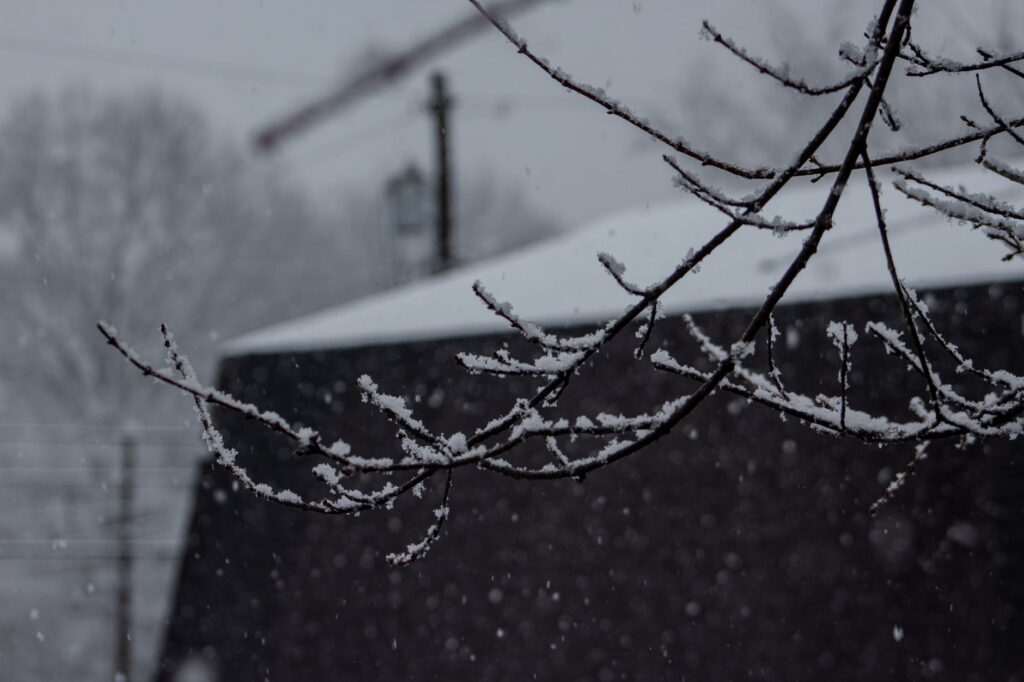
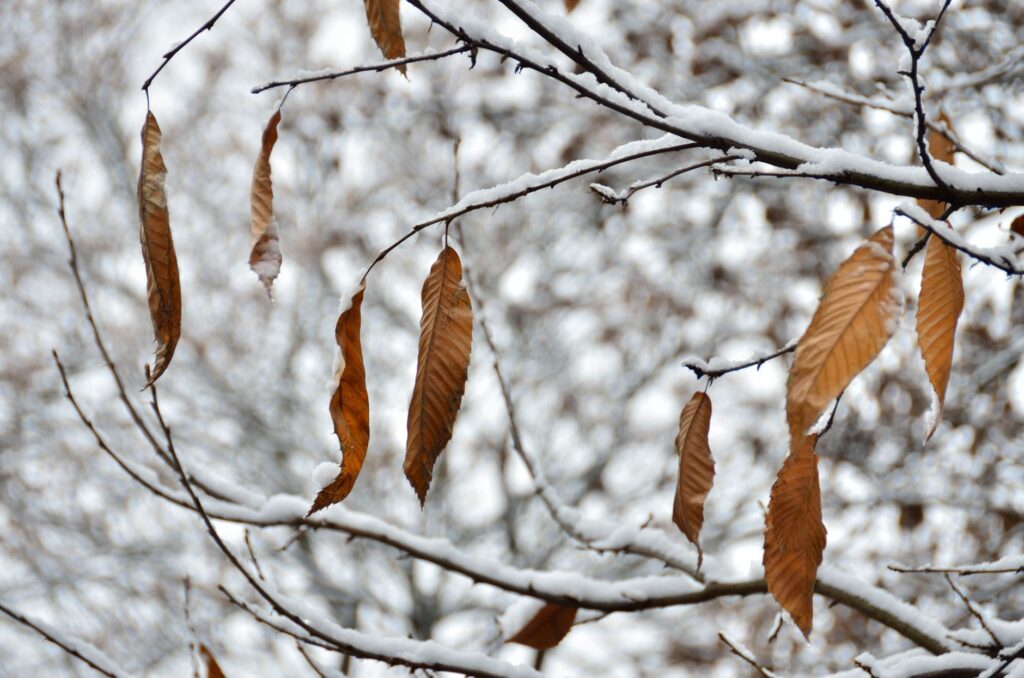
A bare tree sheds most of a snowfall. Snow slides between twigs and falls through the crown, so a dormant branch only carries what lands directly on its own wood. A tree in leaf behaves more like a net. Every leaf is a small shelf, and wet, heavy snow sticks to each one and to the leaf below it, building up weight on the outer ends of limbs where the lever arm is longest.
Foresters describe this as snow and ice loading, and the physics is simple. Wet snow is dense, often several times heavier per cubic foot than the dry powder skiers like, and it arrives with temperatures near freezing, the same conditions that make it cling. Add a northeast wind of 15 to 25 mph, the range the Weather Service recorded in 2011, and the branches are not only loaded but flexing back and forth, which is when cracks start in weak unions.
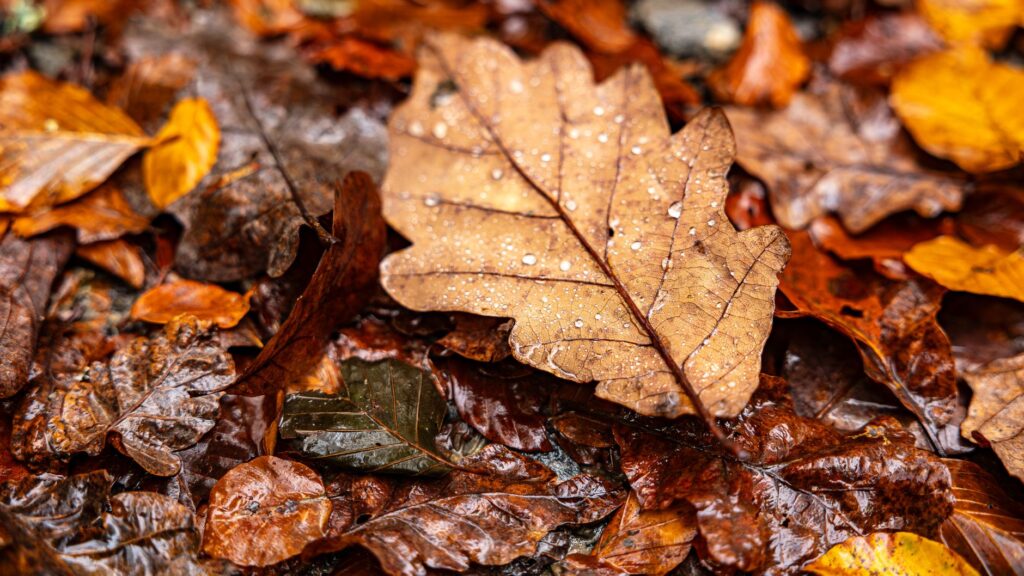
There is also a biological reason leaf-on trees are at risk in October. Deciduous trees have not yet finished forming the abscission layer on every leaf, so green and half-green leaves stay firmly attached and keep collecting snow rather than dropping it. A tree that has already shed most of its leaves, such as an early-dropping sycamore or a stressed red maple that colored up in September, is carrying far less load.
- Leaf area: the more leaves still on, the more surface the snow can grip.
- Branch length: long, unsupported limbs multiply the load at the tip.
- Temperature: snow at 31 to 34 degrees Fahrenheit sticks best and weighs most.
- Wind: gusts turn a static load into a repeated shock.
None of this means a healthy tree is in danger in every early snow. It means the weakest parts of a tree get tested all at once, and that is the real subject of the rest of this article.
Which Middletown Trees Fail First
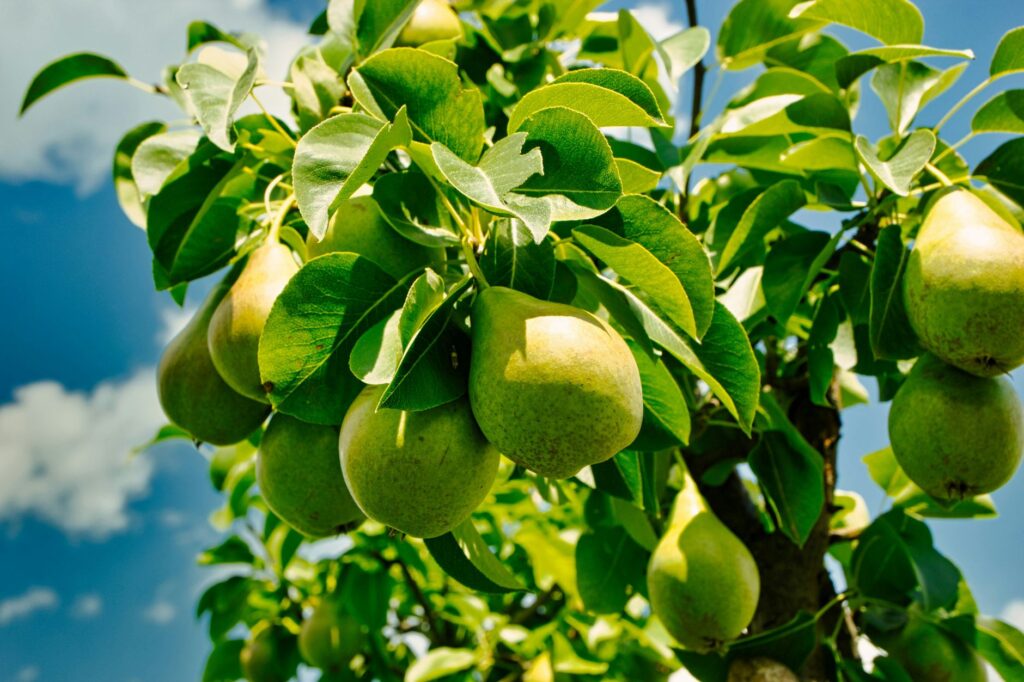
Failure in a snow-and-leaf event is rarely random. The same structural weaknesses show up again and again, and several of them are common in Middletown yards, where many neighborhoods were planted with fast-growing ornamentals decades ago.
Callery pear (Pyrus calleryana), including the older Bradford cultivar, is the textbook case. Its branches are attached at narrow angles and the wood is brittle, so the tree tends to split down the middle once it reaches 15 to 25 years of age. Silver maple (Acer saccharinum) is another frequent offender: fast growth, soft wood and long, heavy limbs that overextend. Multi-stemmed trees with included bark, where two trunks press together with bark trapped between them instead of forming a strong joint, split along that seam under load.
Trees with old wounds, hollow cavities or decayed pockets lose strength where you cannot see it. Rutgers Cooperative Extension has written about how storm damage in the region tends to expose trees that had been neglected, and its piece on storm devastation and the hazards of neglected trees makes the point that a trained eye can often flag the weak ones before the storm does.
Evergreens fail differently. Eastern white pine (Pinus strobus) and arborvitae hold snow year-round and can bend or split their leaders and multi-stem tops, especially when snow lands on foliage that is still wet. Multi-stemmed arborvitae screens along Middletown property lines often open up and lean outward under wet snow.
Middletown's #1 Tree Expert Company
FREE Inspection & Estimate | Certified Arborists | Trimming, Pruning, Removal, More!
Sponsored
What to Check From the Ground This Week

You do not need to climb anything. A slow walk around the yard with binoculars and a cup of coffee, ideally in good light, will tell you most of what you need to know. Start by standing back far enough to see the whole crown, then work your way around the tree.
- Narrow V-shaped forks: a tight crotch with a dark seam of bark pinched between two stems is a classic split point.
- Long horizontal limbs: extended branches with almost no side branching carry the most leverage.
- Cracks and old tears: a split in the wood that has been there for months is already compromised.
- Dead branches in the crown: brittle deadwood fails first and is the usual source of falling debris.
- Branches over targets: note anything that hangs above the house, the car, the shed, a play area, or a service line.
- Lean and root lift: a tree that leans more than it used to, or soil lifting on one side, is telling you something is wrong underground.
Photograph what you find. A dated set of pictures helps a certified arborist see what has changed and helps you document the condition of the tree if there is ever an insurance question. The International Society of Arboriculture’s homeowner site has a useful overview of trees and storms, including the signs of trees that deserve a professional look.
One more thing worth checking is the ground. Saturated soil after a wet October reduces how firmly roots hold a tree, so a tree that is perfectly sound in dry weather can fail more easily in rain-soaked soil with a snow load on top.
What Not to Do When Snow Lands on Leafy Trees
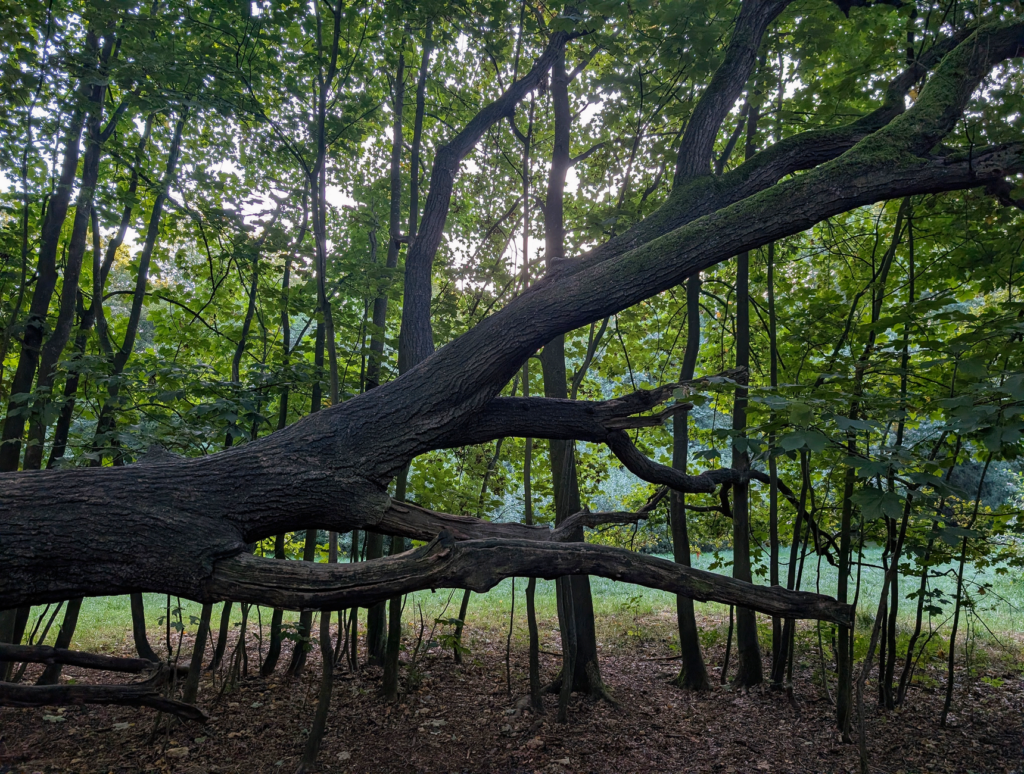
The instinct when you see a bent tree under snow is to run out and shake it. Resist it. Branches under load are already flexed near their limit, and a shake or a sharp tug can be the extra stress that snaps them, usually onto the person doing the shaking. Frozen wood is also more brittle than it looks. If a limb is clearly sagging toward a roof or wire, the right move is to stay out from underneath it and call a professional.
Skip the broom-and-ladder approach for the same reason. The safest way to gently lift snow off a small shrub or low evergreen is with a soft broom, pushing up from below and never down, and only if you are standing completely clear of anything overhead. Never try to do this with a mature tree.
Do not prune in the middle of the storm either. Heavy pruning on a wet, leafy tree is bad timing at best, and a chainsaw on a tree with an unpredictable load can turn a small problem into a serious injury. Power lines add another layer of hazard: any limb touching or near a line should be treated as energized and reported to the utility rather than approached.
For the planning side, the same ISA homeowner site covers the basics of pruning your trees, which is worth a read before you decide what to remove and when.
Quiet Fixes That Make a Tree Stronger

Many of the improvements that reduce storm failure happen long before the storm. Structural pruning on a young tree, done when branches are small, steers growth into a strong, well-spaced framework and reduces the need for big cuts later. On an older tree, a certified arborist might selectively reduce the length and weight of a long limb, a very different job from topping, which leaves weak sprouts and a bigger problem.
For multi-stem trees with included bark, an arborist may recommend a cable or brace to support the union, as long as the underlying wood is sound. Cabling is not a magic fix, and it is never a substitute for removal when a tree has decayed internally, but it can extend the useful life of a valuable specimen. Evergreens with multiple leaders sometimes benefit from careful tying of the stems in advance of snow, a job that is best done by someone who knows how to do it without girdling the tree.
Choosing species also matters. If the replacement for a failed Callery pear is another short-lived ornamental with weak branch attachments, the cycle repeats. Oaks, hornbeam, serviceberry, American holly and other native species with strong wood and good branch structure handle both coastal wind and wet snow better than a tree bred for a single dramatic spring flower.
The goal is not a storm-proof tree, because none exists. The goal is a tree whose weak points are known, managed and, when necessary, removed on your schedule rather than the storm’s.
Middletown's #1 Tree Expert Company
FREE Inspection & Estimate | Certified Arborists | Trimming, Pruning, Removal, More!
Sponsored
Summary: When to Call a Certified Arborist

Early snow on leafy trees is rare in Middletown, but rare is not the same as never, and the 2011 storm showed how quickly a mild October can turn. The risk is a mix of timing, load and structure, and most of those factors are visible in advance if you know where to look.
Call an ISA-certified arborist for a look at any tree with a split union, a long limb over a structure, a history of branch loss, a visible cavity, deadwood in the crown, or a lean you have not seen before. In New Jersey, tree work should be performed by a properly licensed professional, and it pays to ask for proof of insurance before anyone starts. After a storm, treat any tree that is leaning, cracked, or touching a line as an emergency and stay clear.
This week, take twenty minutes to walk your property, photograph the trees you are worried about, and write down what you see. It is the cheapest piece of storm preparation there is, and it gives a professional a head start if you do decide to call.
Photo credits: Featured image by Ulle Haddock on Pexels; Section 1 by Alexander Zvir on Pexels; Section 2 by Teagan Hunt on Pexels; Section 3 by Олександр К on Pexels; Section 4 by Yaroslav Shuraev on Pexels; Section 5 by Natural Light Visuals on Pexels; Section 6 by Gary Barnes on Pexels; Section 7 by Ron Lach on Pexels.