
Middletown's #1 Tree Expert Company
FREE Inspection & Estimate | Certified Arborists | Trimming, Pruning, Removal, More!
Sponsored
Two Credentials People Mix Up Every Day
Most Middletown homeowners who have gone looking for tree work have heard a handful of abbreviations: ISA certified, TRAQ, LTE, LTCO, and sometimes a phone number printed on the side of a truck that starts with a long string of letters and digits. They are not interchangeable. Some are national credentials earned through a professional society. Others are state licenses that carry legal force. Knowing which is which is the difference between reading a truck door like an insider and simply hoping the person on the other end of the chainsaw knows what they are doing.
This article focuses on the two state-level credentials that matter in New Jersey: the Licensed Tree Expert (LTE) and the Licensed Tree Care Operator (LTCO). Both are issued by the New Jersey Board of Tree Experts under the state’s Tree Experts and Tree Care Operators Licensing Act. The credentials sound similar, but they cover different bodies of work, and a company can be properly licensed for one kind of job and not for another.
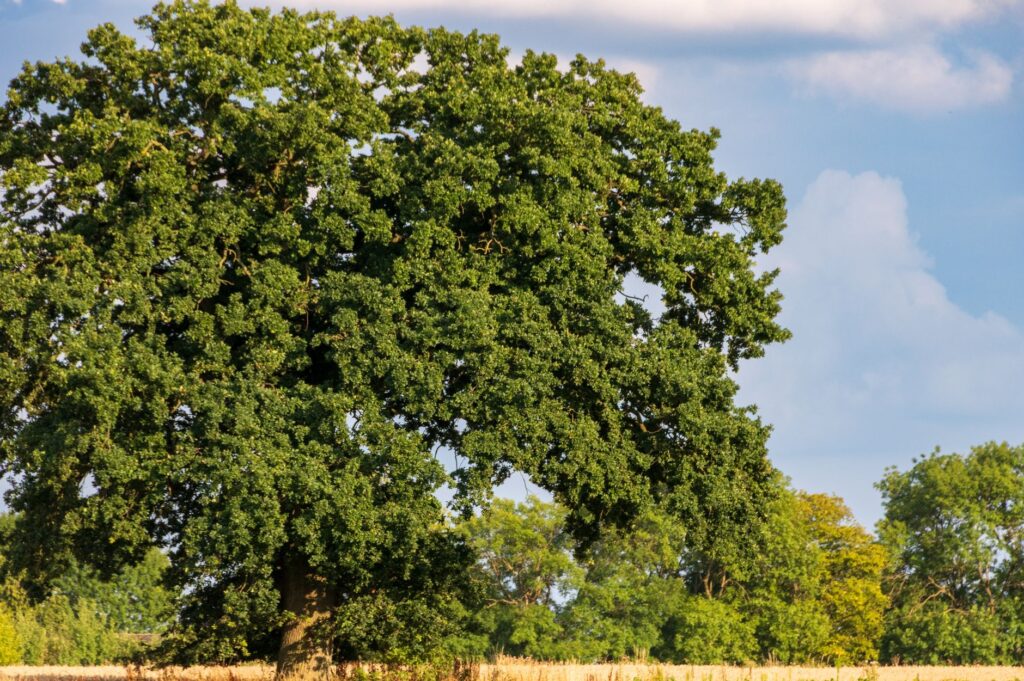
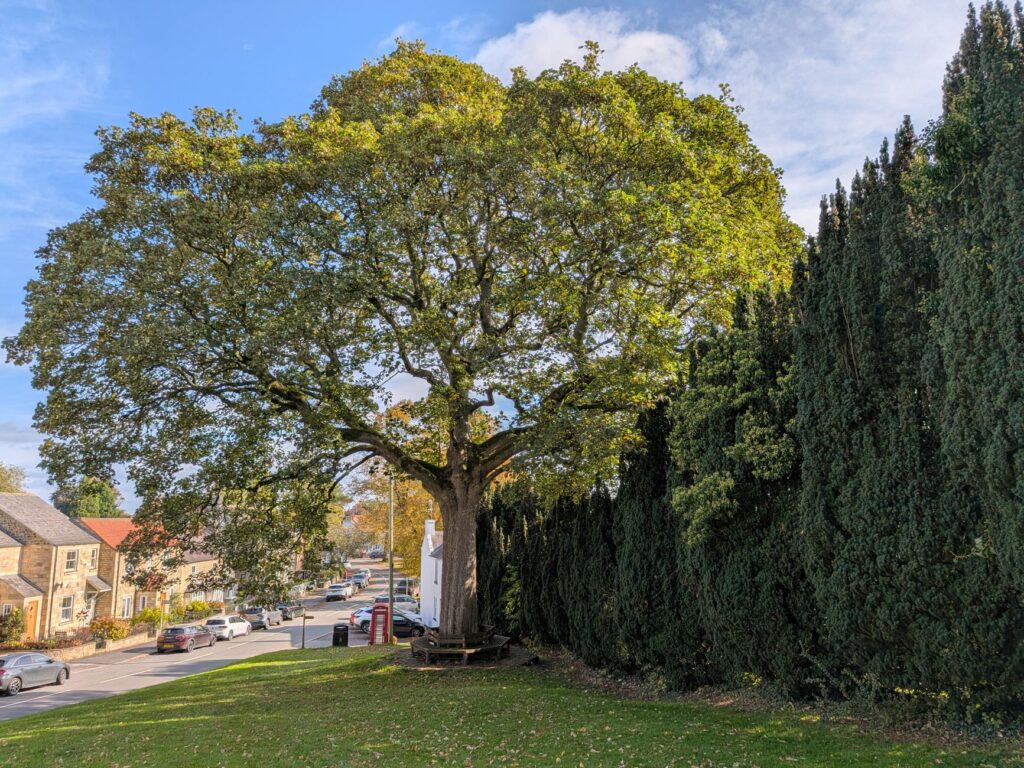
The Bayshore and Monmouth County’s older neighborhoods have plenty of the kind of trees where this matters: large white oaks leaning over roofs in Lincroft, silver maples with old included bark near the Navesink, and storm-weakened pines along the shoreline. Those are jobs that sit right on the line between routine and specialized work.
What the Law Actually Says a Tree Worker Is

New Jersey does not leave the term tree expert up to marketing. According to the state’s consumer guidance from the Board of Tree Experts, tree care professionals fall into exactly two licensed categories, and a business that offers tree care services has to be registered with the Board and keep a licensed individual on staff at its principal office and at each branch office.
That last detail is easy to miss. Licenses are issued to people, not to companies. A business registration number tells you the company is on the state’s books. The license tells you that a particular person passed an exam, holds a current credential, and is accountable to the Board’s standards. A company that is registered but has no licensed person overseeing your particular kind of job is not doing what the law intends.
Licensees must also complete continuing education every two-year licensing period, and they must follow the safety and arboricultural standards that the state has adopted by rule. This is the reason a licensed worker is expected to know what a proper pruning cut looks like and why climbing spikes are a poor choice on a living tree.
LTCO and LTE: The Standard Tier and the Diagnosis Tier

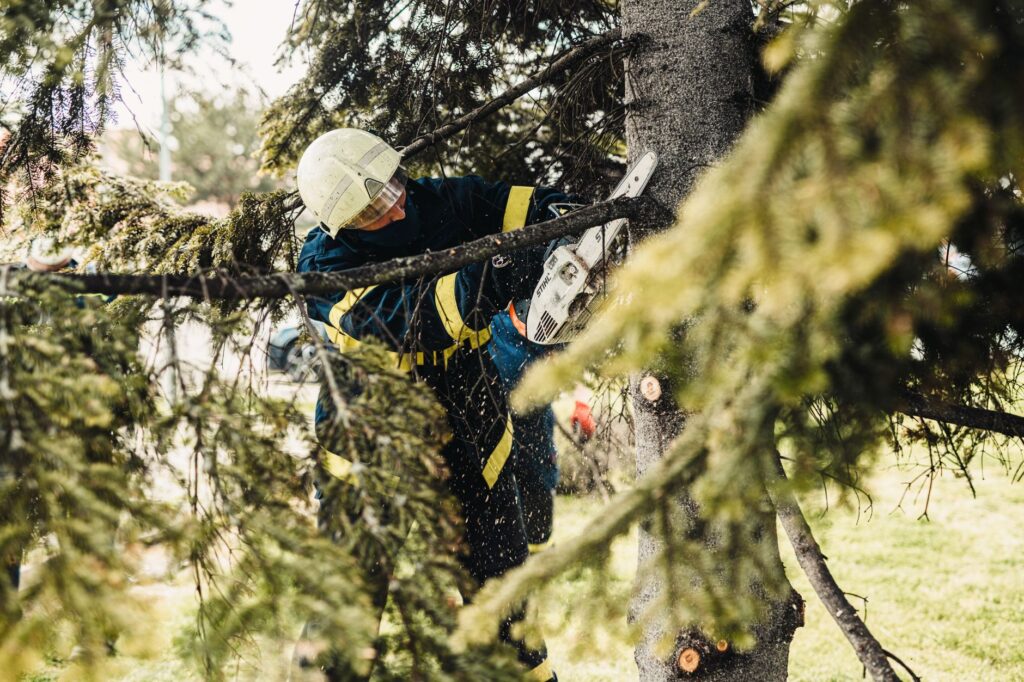
The Licensed Tree Care Operator license covers what most people picture when they imagine tree work. Under the state’s definition, that is tree pruning, repairing, brush cutting or removal, tree removal, and stump grinding or removal. A registered company whose licensed individual is an LTCO is legally set up to take a ladder, a bucket truck, and a chipper to a yard and deal with limbs, whole trees, and stumps.
For many jobs that is exactly the right fit. A mature tree that has already died and is standing clear of the house needs a crew with good rigging skills, proper insurance, and clean-up habits. It does not necessarily need a consulting diagnosis.
Where the LTCO tier stops is where judgment about the living tree begins. The moment the question changes from how do we take this down safely to should this tree be taken down at all, or what is wrong with it, the work moves into territory that belongs to the higher license.
The Licensed Tree Expert license includes everything an LTCO may do, plus a longer list. The state spells it out: tree establishment, fertilization, cabling and bracing, lightning protection, consulting, diagnosis and treatment of tree problems or diseases, tree management during site planning and development, tree assessment and risk management, and application of pesticides or other forms of tree maintenance. In special circumstances, consulting can even extend to serving as an expert witness in cases involving damage or injury related to trees.
In practical terms, that means a number of Middletown situations should involve an LTE:
- A tree that leans after a nor’easter and may or may not be stable
- Cabling or bracing a co-dominant trunk before the next storm season
- Diagnosing leaf, bark, or root symptoms where the cause is not obvious
- Protecting trees during a driveway, addition, or pool project
- Any written risk opinion that may be shown to an insurance adjuster, a buyer, or a neighbor
The reason is simple. A person who removes trees for a living can be excellent at removals and still not be the right person to tell you whether a tree should be saved. The LTE license exists because deciding to remove or retain a living tree is a different skill from carrying out the removal.
Middletown's #1 Tree Expert Company
FREE Inspection & Estimate | Certified Arborists | Trimming, Pruning, Removal, More!
Sponsored
Where ISA Certification Fits In
Many Middletown tree professionals hold more than one credential, and the national ones are worth understanding. The International Society of Arboriculture runs the ISA Certified Arborist program, an exam-based credential that reflects knowledge of tree biology, pruning, soils, and safety. Its public education site, Trees Are Good, explains what certification means in plain language and offers a way to look up certified arborists by location.
The important distinction is legal. An ISA credential is a professional certification issued by a society. It demonstrates knowledge, and the best arborists hold it for good reason, but it is not the New Jersey license that makes tree work legal for a business. Likewise, a general business license, a landscaping license, or a pesticide applicator license does not substitute for tree care registration. The state Board explicitly warns that consumers can be misled by a general business license or a pesticide license.
The strongest combination is the one that shows both: a state-licensed LTE or LTCO as the legal foundation, plus an ISA Certified Arborist or Tree Risk Assessment Qualification for evidence of continuing professional depth. Neither replaces the other.
Insurance, Paperwork, and the Truck Door Test
The state asks businesses to maintain current liability insurance of at least $1,000,000 and workers’ compensation insurance for employees. That number is worth remembering because a single dropped limb through a roof, a pulled fence, or a damaged service line can run quickly into tens of thousands of dollars. If an uninsured worker is hurt on your property, the claim can also land in an unexpected place.
Rutgers Cooperative Extension’s guide, How to Hire a Tree Care Professional, recommends that homeowners be able to ask for, and receive without hesitation, a written statement of need, an estimate, a contract, the company’s current business registration, the LTCO or LTE license, proof of insurance, and a pesticide applicator license if chemicals are involved. A legitimate company produces these routinely.
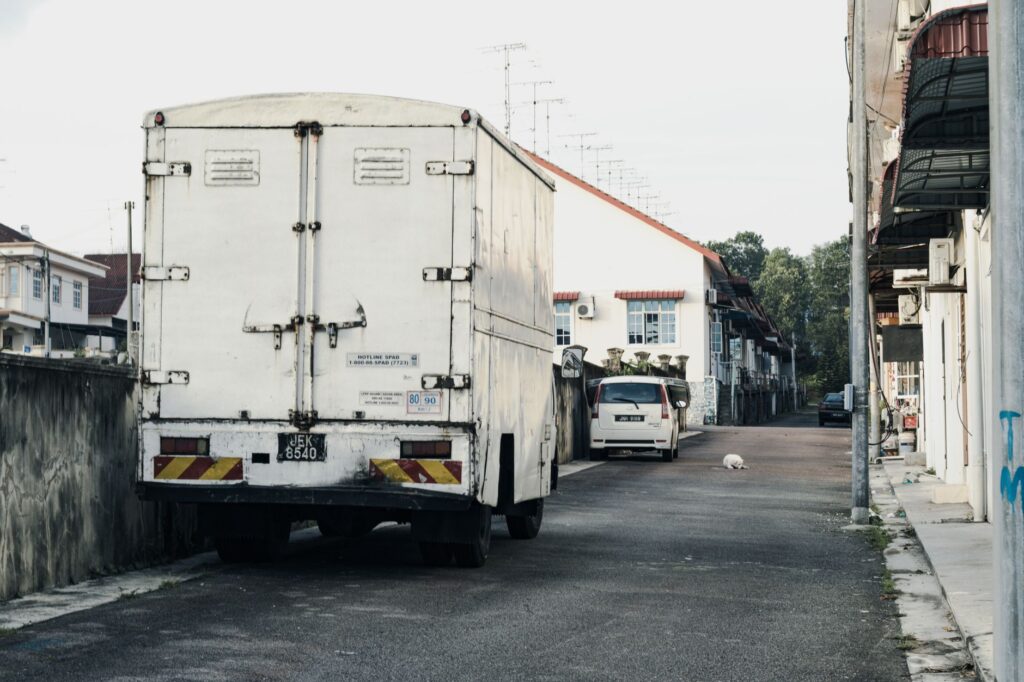
Advertising rules help too. The Board requires a tree care company’s advertising to include its New Jersey tree care registration number, and a registered business may only advertise services it has been approved to offer. A quick look at the side of a truck or a flyer therefore tells you something. If there is no registration number on an ad or vehicle, that is a reason to ask more questions, not fewer.
The same guide advises caution toward anyone who solicits door-to-door, asks for advance payment, offers a special deal for a fast decision, or turns up unannounced after a storm. Those warning signs are common in the days after a Bayshore nor’easter, when homeowners are anxious and fallen limbs are visible everywhere.
Matching the License to the Job: A Middletown Quick Guide
The easiest way to apply all of this is to match the question you are asking to the license that covers it.
- The tree is clearly dead, or a limb is down and needs to go: an LTCO-level company is within its scope, as long as the business is registered and insured.
- You are not sure whether the tree should stay: ask for an LTE, and consider an ISA Certified Arborist or a TRAQ-qualified assessor for the risk opinion.
- The job involves cabling, bracing, fertilizing, or treating a disease: the legal scope is LTE territory.
- A project is planned near a large tree: an LTE can advise on protection zones before the first trench is dug.
Middletown Township also has its own tree ordinance, and Rutgers notes that homeowners should check municipal rules and make sure the chosen contractor is aware of them. A licensed professional will normally already know when a permit or replacement requirement could apply.
The Board of Tree Experts maintains public directories of licensees and registered businesses, and a few minutes with those lists before signing anything confirms what the paperwork claims. If a name does not appear where it should, that is a clear answer on its own.
Middletown's #1 Tree Expert Company
FREE Inspection & Estimate | Certified Arborists | Trimming, Pruning, Removal, More!
Sponsored
Summary: Verify First, Then Decide
The short version is that New Jersey has built a two-tier system, and it works best when homeowners use it. LTCO covers the standard physical work of pruning, removal, and stump grinding. LTE adds the diagnosis, risk assessment, cabling, bracing, fertilization, and consulting that depend on understanding the living tree. National credentials such as ISA certification add depth, but they sit alongside the state license, not in place of it.
Before any work begins on a Middletown property, three things are worth confirming: that the company is registered with the Board of Tree Experts, that it has a licensed individual whose license matches the job, and that it carries liability and workers’ compensation insurance. Written estimates from more than one source make comparisons honest.
When the question is whether a tree is sound, whether a lean is dangerous, or whether a project will harm roots, the right first call is to a licensed tree expert or a certified arborist rather than to whoever is quickest to arrive with a truck. Taking an extra day to verify is nearly always cheaper than the alternative.
Photo credits: Featured image by Sergej ***** on Pexels; Section 1 by Mike Norris on Pexels; Section 2 by Laura James on Pexels; Section 3 by Yaroslav Shuraev on Pexels; Section 4 by Helena Jankovičová Kováčová on Pexels; Section 5 by Raymond Ma Yi Rong on Pexels; Section 6 by Pixabay on Pexels; Section 7 by Tiemy Pixel on Pexels.