Middletown's #1 Tree Expert Company
FREE Inspection & Estimate | Certified Arborists | Trimming, Pruning, Removal, More!
Sponsored
The Job Your Trees Do Before You've Had Coffee
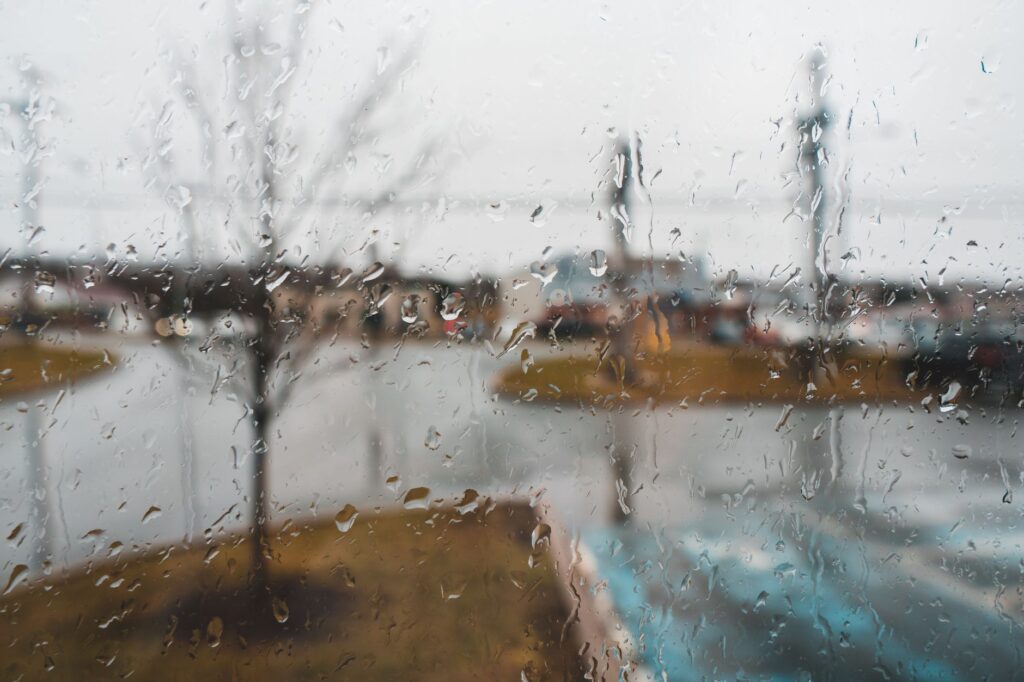
Drive along Port Monmouth Road after a hard summer thunderstorm and you’ll see the difference tree cover makes in about thirty seconds. The stretches shaded by mature oaks and maples drain clean and fast. The stretches stripped down to lawn and asphalt sheet water straight into the storm drains, carrying fertilizer, oil residue, and sediment with it — and all of that runs downhill toward Raritan Bay.
I’ve been climbing and assessing trees in Middletown Township long enough to stop thinking of them as yard features. A healthy canopy is infrastructure. It’s doing quiet, unglamorous work every time it rains: catching water before it hits the ground, slowing what does get through, and pulling pollutants out of the system before they ever reach Bayshore waters. Homeowners rarely think about this until a tree comes down and the runoff pattern in their yard changes overnight.
This piece is about that connection — what’s actually happening in the canopy during a storm, why it matters more here than in most of New Jersey, and what you can do on your own property to keep that system working.
What a Tree Canopy Actually Does to Rainfall
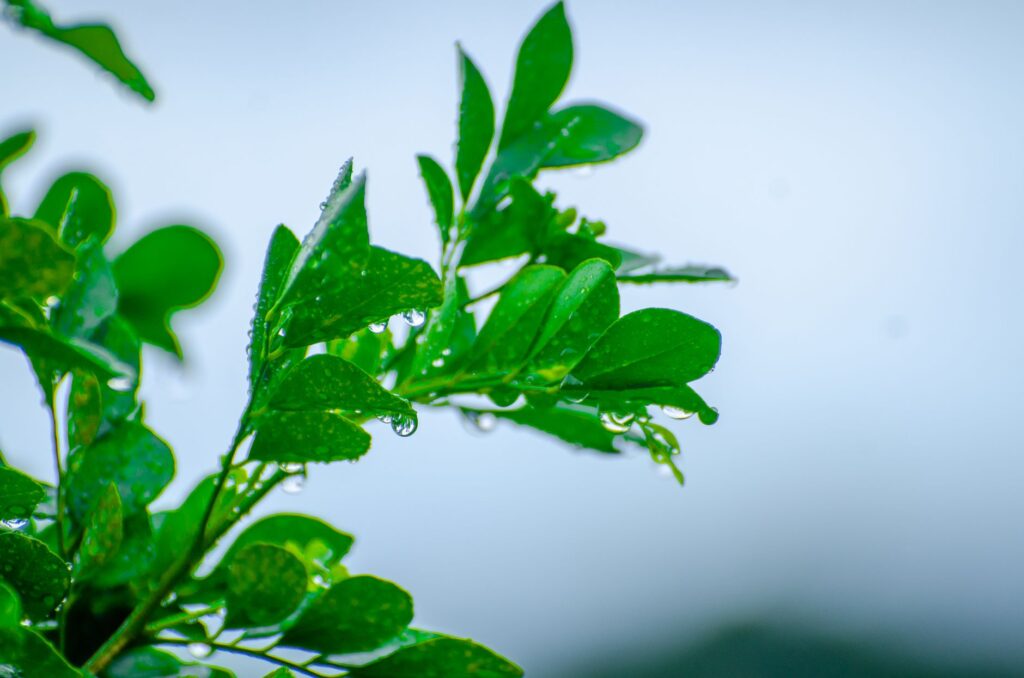
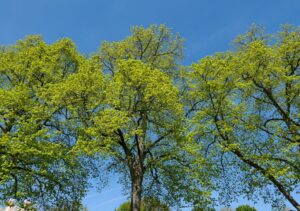
There are three separate mechanisms at work, and they start the moment rain hits the leaves. Interception is the simplest — leaves, bark, and branch surfaces physically catch rainfall before it reaches the ground, and a good amount of it evaporates straight back into the air without ever becoming runoff. A single mature shade tree can intercept meaningfully more than 9% of the rain that falls over its footprint in a given year, and dense, multi-species canopy performs even better.
Evapotranspiration is the second piece — trees pull soil moisture up through their roots and release it as vapor through their leaves, which continuously dries out the root zone and creates more capacity for the next storm to soak in instead of run off. Infiltration is the third: the leaf litter and loosened soil structure under a tree’s canopy let water percolate down rather than sheet across the surface. Research on street trees backs this up directly — USDA Forest Service studies on urban canopy loss have found that removing mature street trees measurably increases the volume and speed of stormwater runoff in the surrounding blocks.
Put those three together under a full canopy and you get a yard that absorbs a downpour instead of shedding it. Take the canopy away and that same lot becomes a fast, dirty funnel to the nearest storm drain.
Why This Matters More in a Bayshore Township

Middletown sits on clay-loam soil that already drains slowly compared to the sandier ground further south in Monmouth County. Add the compacted subsoil left behind by decades of development, and a lot of our neighborhoods have less natural infiltration capacity than they did fifty years ago — which means the trees still standing are carrying more of the load than they used to.
Everything that runs off a lawn or driveway in Belford, Port Monmouth, Leonardo, or the Navesink section eventually finds its way toward Raritan Bay or the Shrewsbury River. That runoff is what water-quality regulators call nonpoint source pollution — not a single pipe from a factory, but the combined runoff from thousands of individual yards, roads, and rooftops. New Jersey’s NJDEP nonpoint source pollution program treats it as one of the biggest threats to coastal water quality in the state, and tree canopy is one of the cheapest, most effective tools for reducing it before it ever becomes a regulatory problem.
This isn’t abstract for anyone who’s watched the Bay after a big storm. Cloudier water near the boat ramps, more sediment along the shoreline, algae blooms in the warmer months — a lot of that traces back to how much stormwater ran fast and dirty off the land instead of soaking in first. Every tree on a Bayshore-facing property is doing a small piece of that filtering work.
Middletown's #1 Tree Expert Company
FREE Inspection & Estimate | Certified Arborists | Trimming, Pruning, Removal, More!
Sponsored
What Gets Lost When a Canopy Thins Out
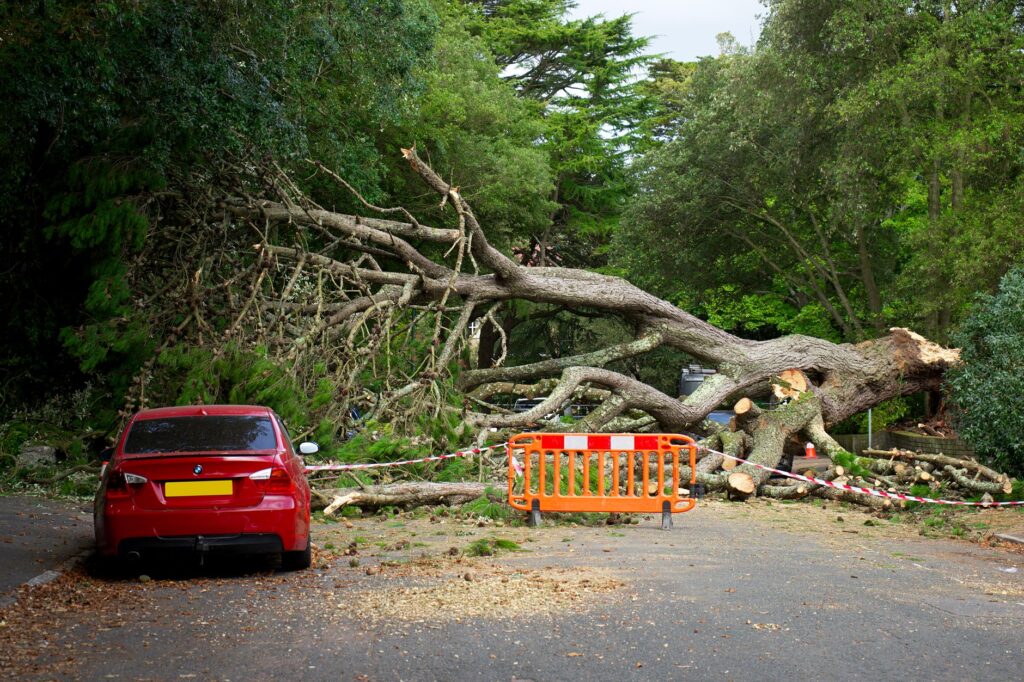
I get called out after nor’easters and summer microbursts more than any other time of year, and the pattern is consistent: a property loses two or three mature trees, and within a season or two the owner notices standing water where there never used to be any, or a soggy low corner of the yard that didn’t exist before. That’s not a coincidence — it’s the direct, measurable loss of interception and infiltration capacity.
Development pressure does the same thing on a larger scale. Every lot cleared for a new driveway, patio, or addition removes root zone and canopy that was quietly managing water for the whole block. Middletown Township’s own stormwater ordinances exist partly because of this — impervious coverage limits aren’t just about flooding your neighbor’s basement, they’re about keeping the cumulative runoff load manageable for the watersheds that drain toward the Bay.
The trees that survive storms and construction end up doing outsized work. That’s part of why I push clients hard to preserve mature canopy wherever it’s structurally sound, rather than defaulting to removal for convenience. A 60-year-old oak isn’t replaceable on any timeline that matters to a homeowner.
What You Can Actually Do on Your Own Property
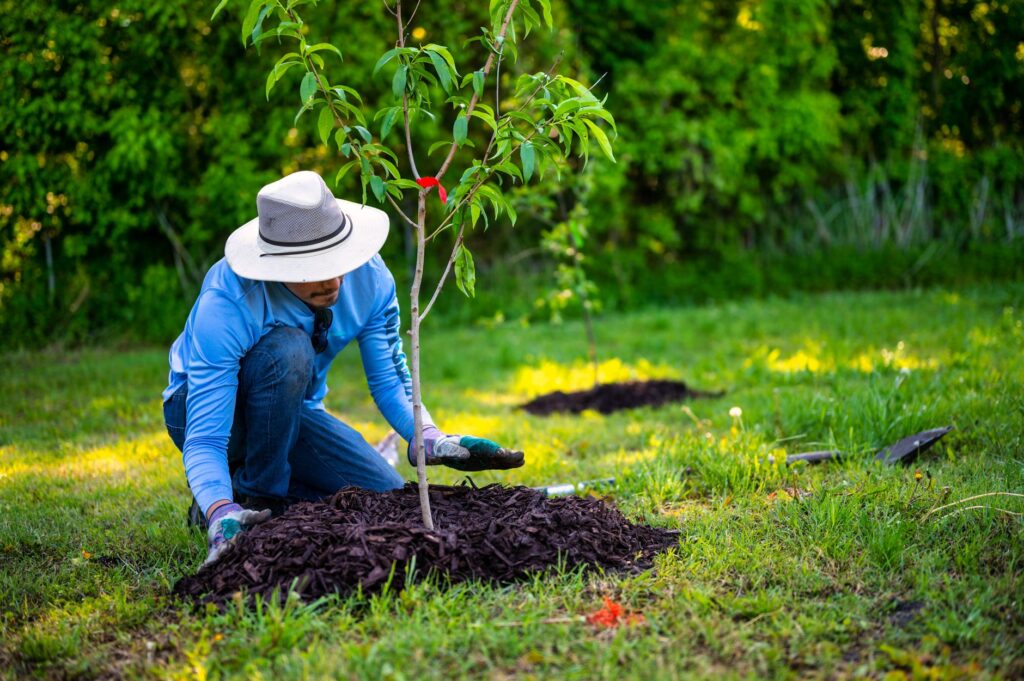
You don’t need three acres to make a difference here. A few things any Middletown homeowner can do this season:
- Keep the trees you have healthy. A stressed, thin canopy intercepts less rain than a full one. Proper mulching and deep watering during dry stretches keep root systems functioning at full capacity.
- Widen mulched beds under existing trees instead of maintaining turf to the trunk. Mulched, uncompacted soil infiltrates dramatically better than mowed lawn.
- Pair new plantings with a rain garden in a natural low spot, so overflow from hard surfaces gets a second chance to soak in in before it reaches the storm drain. Rutgers’ green infrastructure guidance on tree box systems is a useful reference if you’re working near a driveway or the street.
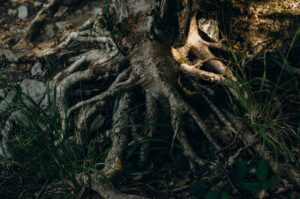
- Avoid compacting the root zone with parked vehicles, stored equipment, or heavy foot traffic — compacted soil under a canopy loses most of its infiltration benefit even if the tree above it looks fine.
None of this requires ripping out your lawn. It’s mostly about protecting what’s already doing the work and giving new plantings the best possible start.
Choosing Species That Pull Their Weight Near the Bay
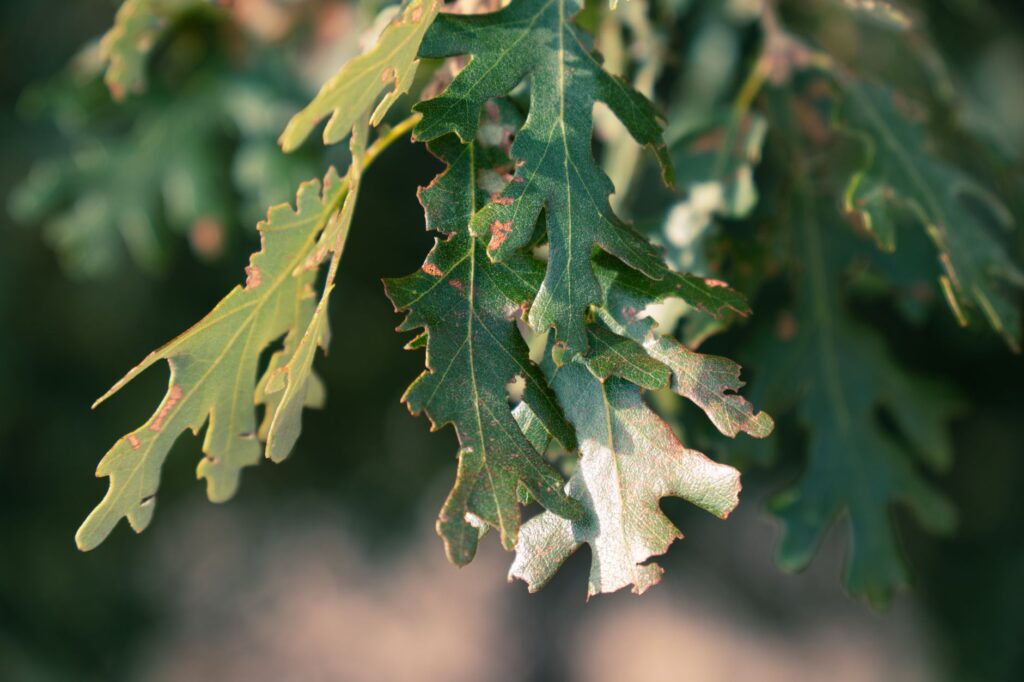
If you’re planting new trees on a Bayshore-adjacent property, species selection matters more than it does further inland. Salt spray, occasional storm-surge flooding, and clay-heavy soil all narrow the list of trees that will actually thrive here long enough to build the kind of canopy that matters for stormwater.
Black gum (Nyssa sylvatica) and swamp white oak (Quercus bicolor) both tolerate Middletown’s heavier, wetter soils and handle occasional flooding without stress — swamp white oak in particular develops a broad, dense canopy that intercepts a lot of rainfall once established. Eastern red cedar (Juniperus virginiana) is one of the better salt-tolerant evergreens for properties closer to the water, and it holds canopy year-round, which matters since deciduous trees do almost none of their interception work in winter.
Whatever you choose, give it room to reach full mature size. A tree squeezed against a foundation or under wires gets topped or removed long before it develops the canopy density that actually moves the needle on runoff. The Monmouth County Park System maintains demonstration plantings of a lot of these native, coastal-tolerant species if you want to see mature specimens before committing.
Middletown's #1 Tree Expert Company
FREE Inspection & Estimate | Certified Arborists | Trimming, Pruning, Removal, More!
Sponsored
When to Bring in a Certified Arborist
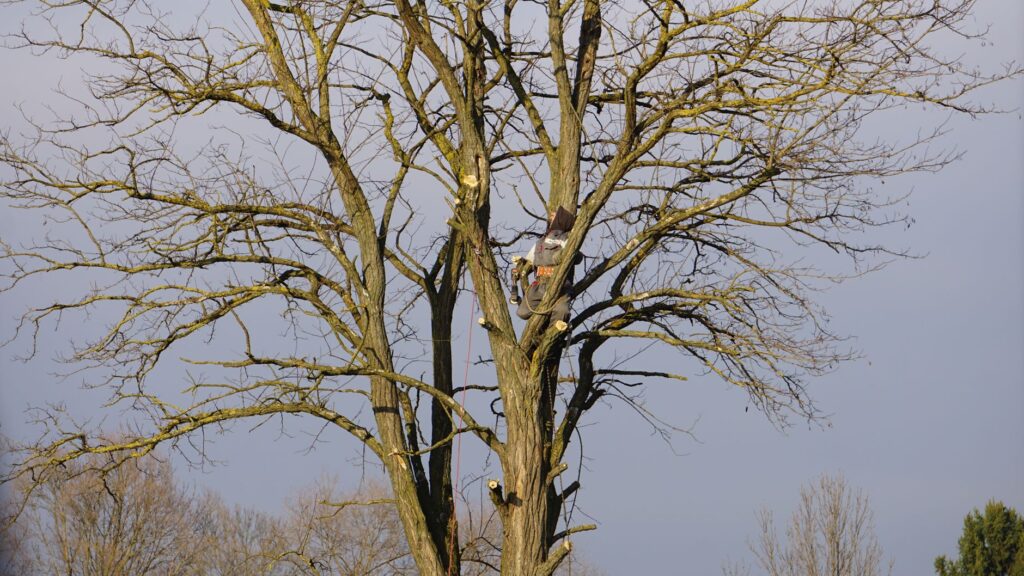
Most of what protects the Bay from your yard is routine care — mulching, watering, and not compacting root zones. But a few situations are worth a professional eye. If you’re losing canopy to storm damage, disease, or construction and want to know whether what’s left is still structurally sound, that’s a job for a certified arborist’s risk assessment, not a guess from the ground. If you’re planning new plantings near a wet or low-lying section of your property, an arborist can tell you which species will actually establish there instead of struggling for a decade.
And if a mature tree on your property is showing dieback, unusual lean, or root-zone soil that stays saturated far longer than it used to, get it looked at before the next big storm rather than after. A tree that’s already stressed is far more likely to fail in high wind — and losing it doesn’t just change your view, it changes how your whole property handles the next downpour. Reach out to a certified arborist through the ISA’s Find an Arborist tool if you want a second opinion before storm season peaks.
Photo credits: Featured image by Robert So on Pexels; Section 1 by Erik Mclean on Pexels; Section 2 by William ZALI on Pexels; Section 3 by David Kanigan on Pexels; Section 4 by Mike Bird on Pexels; Section 5 by Alfo Medeiros on Pexels; Section 6 by Cafer SEVİNÇ on Pexels; Section 7 by Dmytro Glazunov on Pexels.