Middletown's #1 Tree Expert Company
FREE Inspection & Estimate | Certified Arborists | Trimming, Pruning, Removal, More!
Sponsored
The Best Shade in Middletown Costs Nothing to Run
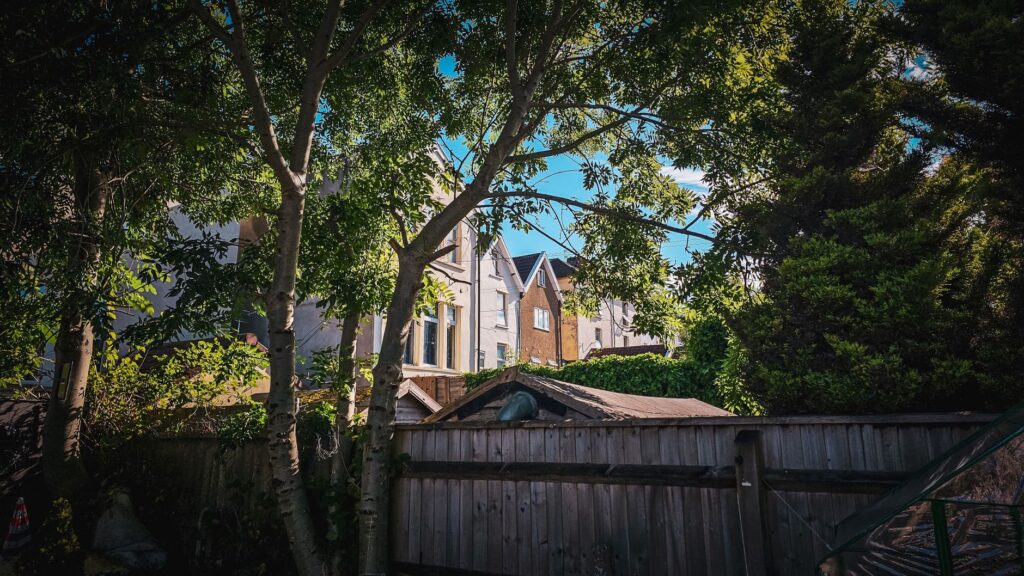
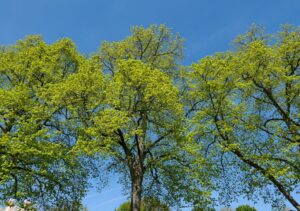
By mid-June in Middletown Township, the conversations shift. Homeowners call me not about a fallen limb or a disease they spotted, but about the same thing: why is the west side of my house blazing hot by three in the afternoon, and why does my electric bill keep climbing? The answer — more often than not — is standing in someone else’s yard, or hasn’t been planted yet. A mature shade tree on the right side of your home is the most energy-efficient cooling system you’ll ever own. It runs on rainfall and sunlight, and it adds value to your property every single year.
Middletown’s climate throws a particular combination at homeowners in summer: the inland heat of Monmouth County’s clay-heavy soils, the humidity rolling off Raritan Bay, and afternoon sun that has a particular grievance against the southwest side of every house in town. If you’re running central air from late June through September, well-placed trees could meaningfully reduce that load — and some homeowners are surprised to find the math is significant.
This is a practical look at how trees actually cool your property, which species do it best in our coastal NJ climate, and how to think about placement before you pick up a shovel or call a nursery.
How Trees Actually Cool Your Yard — Not Just With Shade
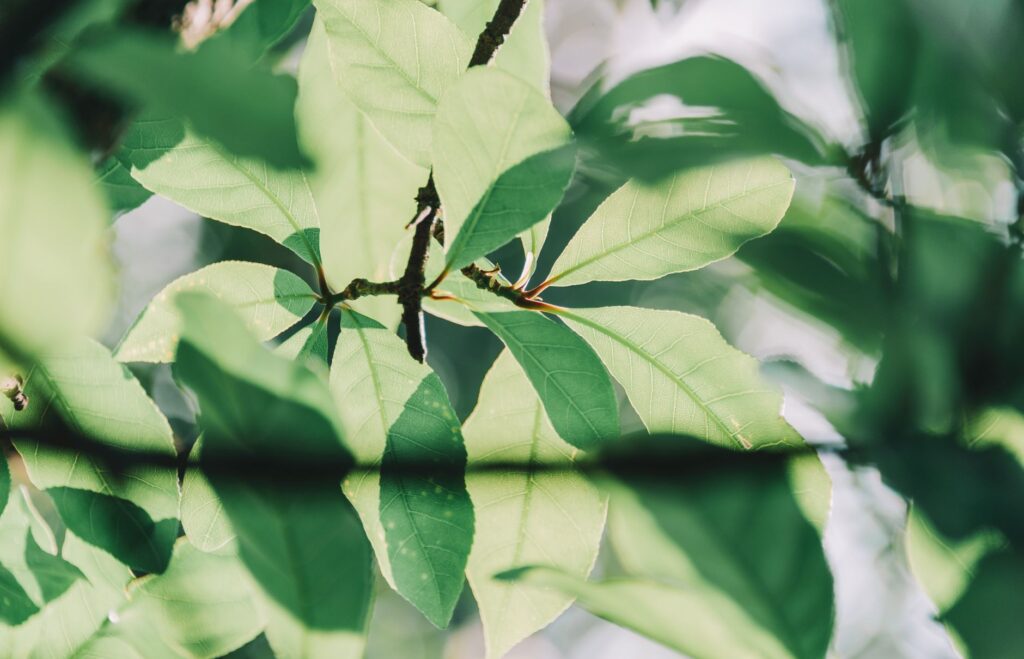
Most homeowners think of tree cooling as simple shade — sunlight blocked, house stays cooler. That’s real and important, but it’s only half the story. Trees cool the air around them through a process called evapotranspiration: water drawn up from the soil is released as vapor through the leaf surface. On a hot July afternoon, a single mature deciduous tree can transpire hundreds of gallons of water, cooling the surrounding air the way your skin cools when sweat evaporates. Researchers at the USDA Forest Service have documented that the combined effect of a mature tree’s shade and evapotranspiration can equal the output of several room-sized air conditioners running around the clock.
The shade itself matters too. A tree intercepts solar radiation before it hits your roof, siding, and windows — surfaces that would otherwise absorb heat and radiate it into your living spaces all evening. A well-placed tree on the west or southwest side of your home can reduce the surface temperature of an unshaded wall by 20 to 30 degrees Fahrenheit on a summer afternoon. That’s the wall facing the sun from about two o’clock until sunset — the single most heat-loaded exposure in most Middletown homes.
The combined effect of shading plus evaporative cooling can reduce air conditioning energy use by 15 to 35 percent in a home with mature trees in strategic positions, according to research compiled by the International Society of Arboriculture. In Middletown, where many homes sit on open lots with southern and western exposure, those numbers are achievable with the right planting decisions.
Placement Is Everything: West, Southwest, and Why the Angle Matters
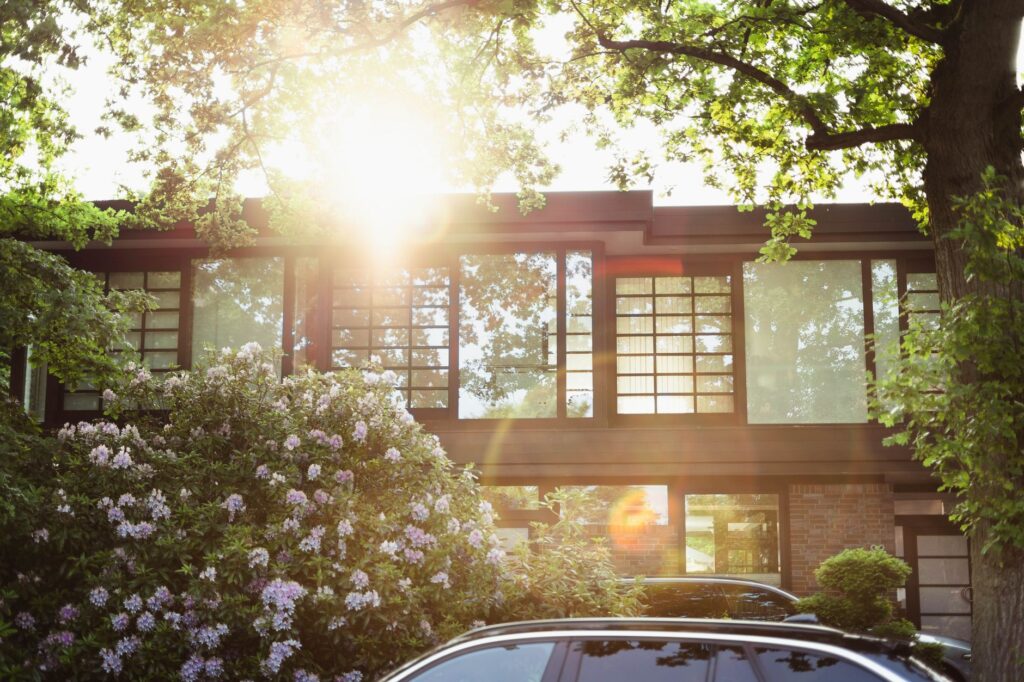
Not all shade is equal when you’re trying to reduce a cooling load. The sun’s position in summer matters a lot. In June and July, the most intense heat hits from the south and southwest in the afternoon hours — roughly one in the afternoon through sunset. That’s when most homes accumulate their worst heat gain, and it’s the exposure you most want to intercept with tree canopy.
For a typical Middletown home: one or two large-canopy trees on the west or southwest side, positioned 15 to 30 feet from the foundation, will do more cooling work than a dozen trees scattered randomly around the yard. A tree on the south side shades a roof and southern windows during peak midday sun. East-side trees help with morning sun but contribute less to afternoon cooling. Trees placed too close to the house — under 10 to 12 feet for a large-canopy species — risk foundation and drainage issues and won’t develop the spread that makes them effective anyway.
If overhead utilities run through your yard, that limits your species choices for trees within striking distance of the lines. Work around those constraints by selecting smaller-stature trees under the wires and reserving your large shade species for open areas with vertical clearance. Middletown Township’s local ordinances regarding planting setbacks and tree removal permits are worth reviewing if you’re planning near a property line or road right-of-way.
Middletown's #1 Tree Expert Company
FREE Inspection & Estimate | Certified Arborists | Trimming, Pruning, Removal, More!
Sponsored
The Best Shade Tree Species for Middletown's Bayshore Climate
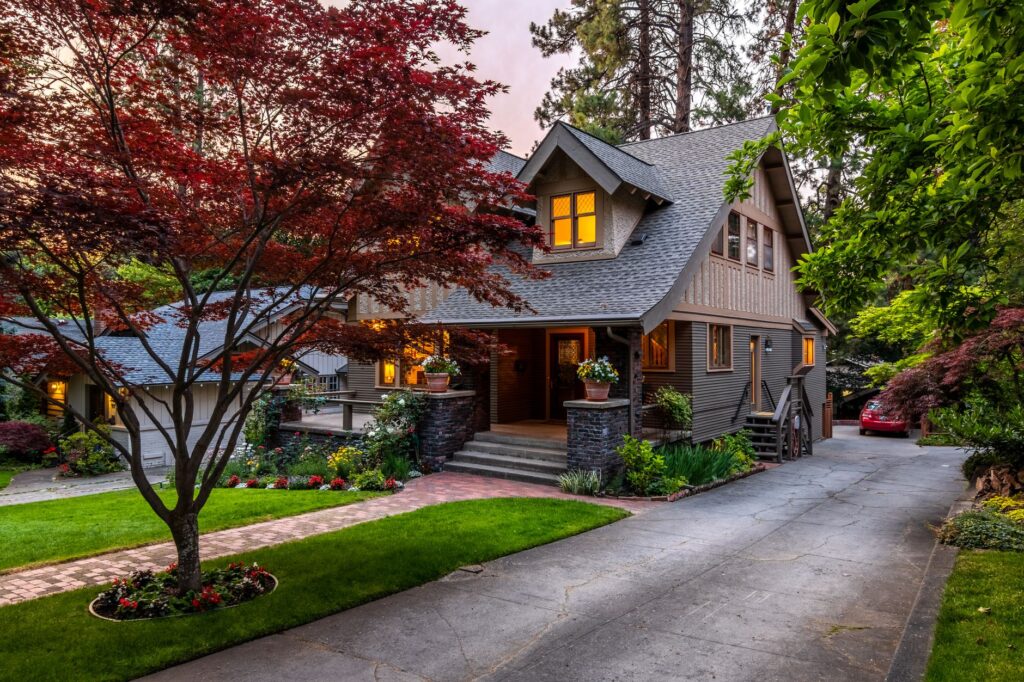
Not every shade tree thrives in Middletown’s conditions. Our soils run from heavy clay loam in the upland neighborhoods to sandy transition soils near the Bayshore. Summer humidity from Raritan Bay creates conditions some species handle better than others. Here’s what I’d plant for shade in a typical Middletown yard, in rough order of preference for most homeowners:
- Red maple (Acer rubrum) — Tolerates wet clay soils, grows faster than most native oaks, and develops a broad, rounded canopy. Fully native to New Jersey. Plant 20 feet or more from the house for best canopy development and root space.
- Swamp white oak (Quercus bicolor) — One of the best shade trees for periodically wet or clay-heavy soils. Slow to establish, but a mature swamp white oak delivers a substantial canopy and is a fixture of Monmouth County’s native forest community.
- Shagbark hickory (Carya ovata) — Native to this region, with strong wood that holds up well in summer thunderstorms and Bayshore wind events. Exceptional canopy over time for those with patience for a slower grower.
- Tulip poplar (Liriodendron tulipifera) — Among the fastest shade available in NJ. The trade-off is brittle branch structure and susceptibility to storm damage — plant it well away from structures and in a spot where a dropped limb won’t cause problems.
- River birch (Betula nigra) — Useful near wet spots or drainage swales. Its multi-stem form provides dappled rather than dense shade, but it fills in quickly and tolerates Bayshore moisture well.
Rutgers Cooperative Extension maintains publications on native tree selection suited to New Jersey’s varied soil conditions — a useful resource when you’re matching species to a specific microsite in your yard.
Shade Trees and Property Values in Monmouth County
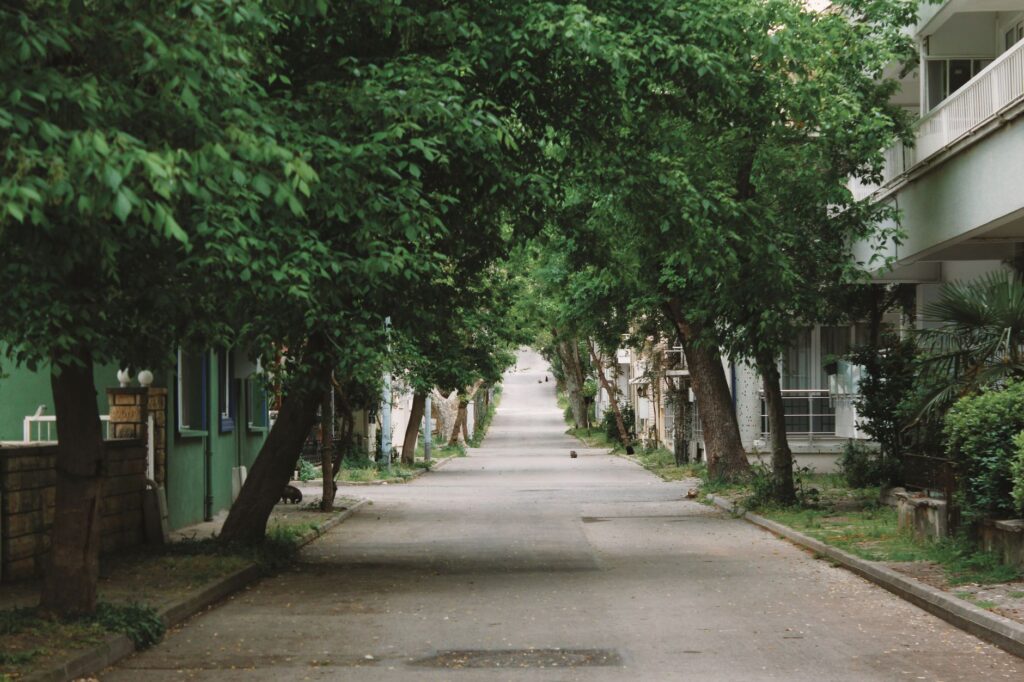
There’s a consistent body of research showing that mature trees add measurable value to residential properties. The numbers vary by study, region, and tree size, but the general finding is stable: a lot with healthy, well-placed mature trees sells for more than a comparable treeless lot, with the difference typically running between 5 and 15 percent of home value.
What drives that premium? Partly aesthetics — Middletown buyers, like most buyers, respond emotionally to a shaded, established yard. But part of it is functional: a home that’s visibly cooler in summer, with established shade that would take a new owner 20 to 30 years to replicate, has real utility value. Real estate appraisers in New Jersey have long recognized mature trees as contributors to assessed value, particularly in neighborhoods where canopy cover distinguishes one lot from another.
In areas near Hartshorne Woods or along the Navesink River waterfront, where lots back up to preserved land and existing woodland canopy, the tree premium can be even more pronounced. Planting a shade tree today is a long-horizon investment — but one that starts paying dividends in reduced cooling costs within a few years and compounds in property value over decades. It’s also one of the few home investments that improves the neighborhood around you, not just your own lot.
Reading the Health of Your Established Shade Trees in June
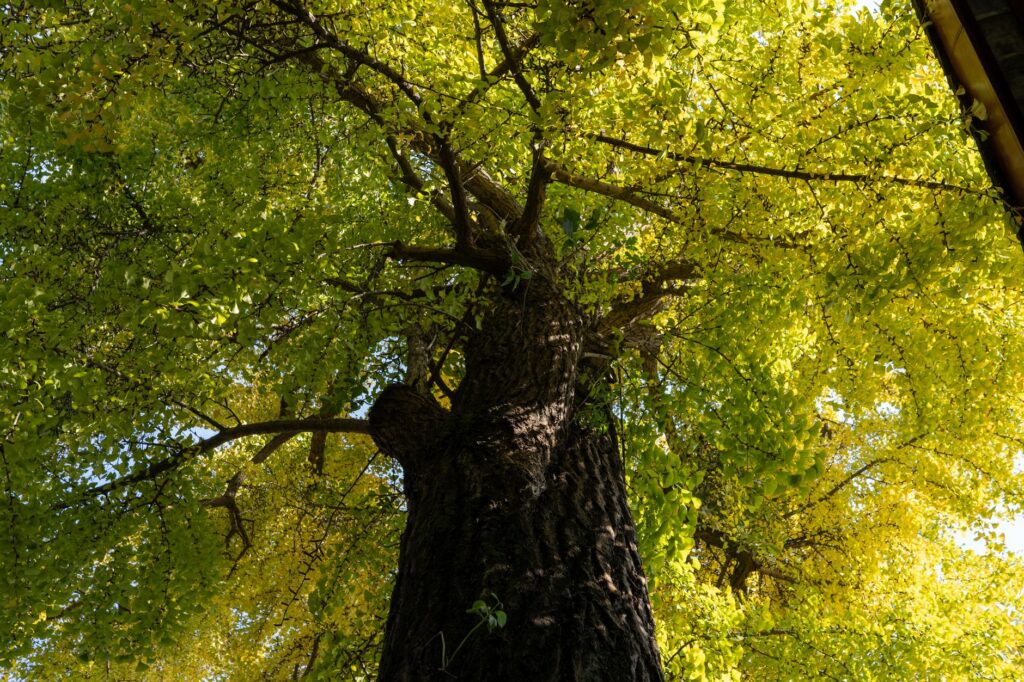
If you have large shade trees already working for you, mid-June is a good time to look at them carefully from the ground. Summer is when stress shows up. A tree that made it through last winter and leafed out normally in April may be signaling something now that wasn’t visible in dormancy.
Signs worth noting right now:
- Leaves smaller than normal in part of the canopy — often indicates root system stress, soil compaction, or the early stages of a vascular disease. Localized small leaves in one branch section are more concerning than uniformly small leaves throughout the crown.
- Tip dieback in the outer canopy — sometimes drought stress, sometimes the first sign of a borer or internal decay. Worth monitoring week to week through the summer.
- Weeping sap or discolored wet patches on the bark — slime flux is common and often benign in summer, but wet, dark areas can also signal bacterial canker or early internal decay worth a closer look.
- Leaf scorch only at outer canopy edges — typically drought stress in sandy or compacted soils. Deep watering at the drip line (the outer edge of the canopy) is more effective than watering close to the trunk.
A shade tree doing its job — cooling your yard, adding to your property value — is worth protecting. Catching problems in June usually means smaller interventions and better outcomes than addressing the same issue in August when the tree is further stressed and the growing season is winding down.
Middletown's #1 Tree Expert Company
FREE Inspection & Estimate | Certified Arborists | Trimming, Pruning, Removal, More!
Sponsored
When to Call a Pro About Your Shade Trees

Mid-June is a challenging time to plant most large shade trees — heat stress on new transplants is significant, and establishing a tree through a Monmouth County summer takes a serious watering commitment. That said, certain species like red maple and river birch transplant acceptably in early summer if you’re dedicated to deep watering two to three times per week through August. Fall planting, starting in late September or October, is almost always the better window for large deciduous species.
What you can do right now is evaluate. Walk the west and southwest sides of your home on a hot afternoon and pay attention to what you’re missing. Note where the sun hits your siding, your windows, and your roof in the hours before dinner. Think about what species, at what spacing, would intercept that solar load within ten years — and what it would cost versus what you’d save on cooling over the same period.
An ISA-certified arborist can walk your property and provide a planting plan that accounts for soil type, existing utilities, setbacks, and which species will deliver meaningful shade on your specific lot. That same visit can include a health check on the shade trees you already have. The trees already cooling your yard deserve the same attention you’d give any system doing significant work in your home — have a certified arborist look at them every three to five years, and you’ll keep them working for a long time to come.
Photo credits: Featured image by Harrison Haines on Pexels; Section 1 by Boys in Bristol Photography on Pexels; Section 2 by Min An on Pexels; Section 3 by Lukas Hartmann on Pexels; Section 4 by Clay Elliot on Pexels; Section 5 by Gülsüm Şener on Pexels; Section 6 by Peter Xie on Pexels; Section 7 by Kindel Media on Pexels.