
Middletown's #1 Tree Expert Company
FREE Inspection & Estimate | Certified Arborists | Trimming, Pruning, Removal, More!
Sponsored
The Split That Doesn't Look Like a Problem Yet
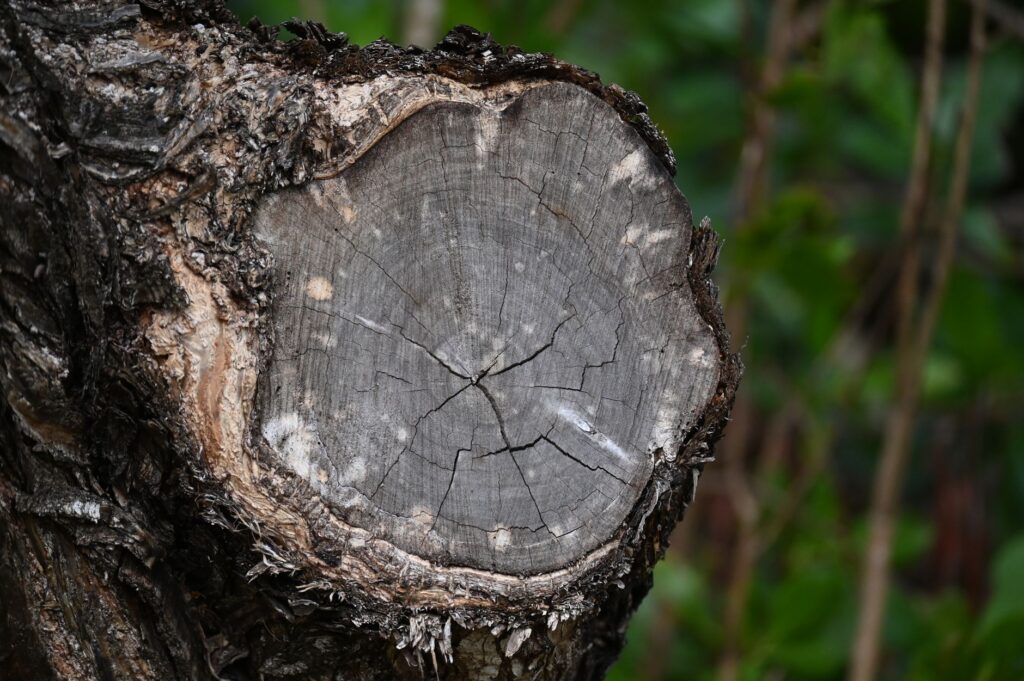
Walk around most mature Middletown neighborhoods in June — Atlantic Highlands, Chapel Hill, Lincroft, the older streets near Poricy Park — and you’ll spot them if you know what to look for: trees with two or more trunks rising from the same base, meeting in a tight V where the bark has been squeezed inward rather than growing outward. Arborists call that an included-bark union, and on a calm June day, it looks completely fine. After a nor’easter rolls through the Bayshore in October, it doesn’t.
Cable bracing is one of the most effective tools in a certified arborist’s kit for managing exactly this kind of structural defect. A properly installed cable system doesn’t straighten a tree, fix the bark, or undo years of problematic growth — but it does redistribute the load so that when a heavy limb catches a wind gust or a wet snow, the cable absorbs what the union can’t. Done right, with the right candidate trees and proper follow-up, bracing can add decades to a mature tree’s life.
Done wrong, on the wrong tree, it creates a false sense of security and delays a decision that should have been made years earlier. This article is about understanding the difference: which trees are good candidates, what the assessment involves, how cables are installed and maintained, and — just as important — when an honest arborist will tell you a tree is past the point where hardware can help.
What Cable Bracing Actually Is (and Isn't)
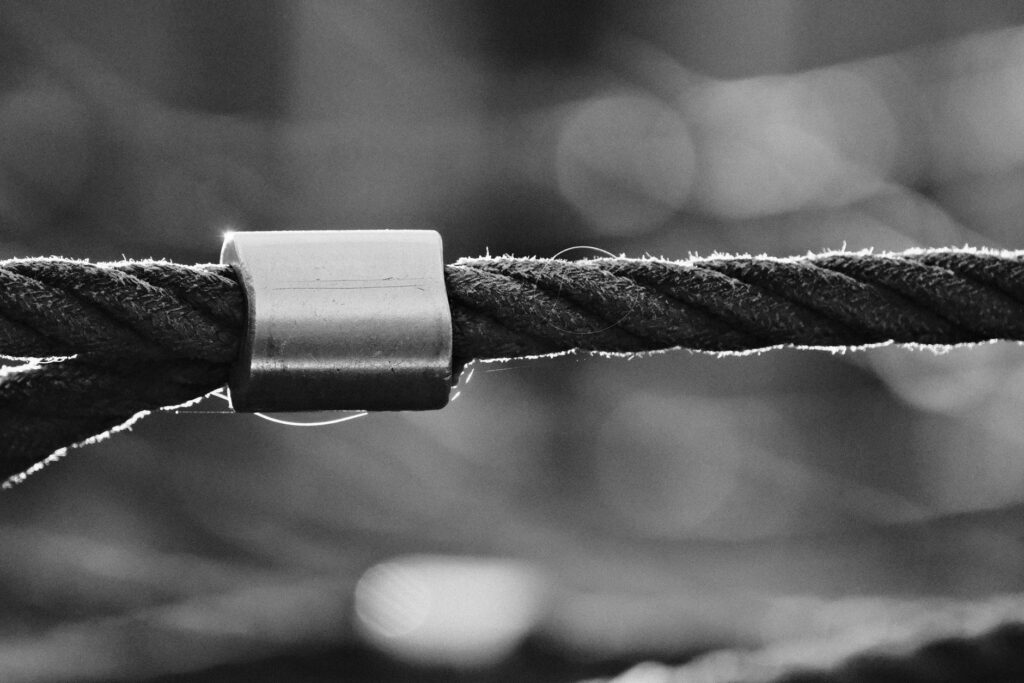
At its core, cable bracing is a supplemental support system. High-strength steel cables are anchored into the upper crown of a tree and tensioned to limit the movement of a weak or co-dominant stem. When wind loads the crown, the cable engages and shares the force between the two stems — rather than letting one stem act as a lever against the other at the weak union point.
The system has two main components. Cables are typically made from high-strength, preformed steel, sized to the diameter and weight of the stems they support. They’re attached via steel eye-bolts that are drilled and seated into the wood of each stem. Modern installations sometimes use flexible, low-stretch cable systems that allow some dynamic movement rather than holding rigidly, which helps the tree continue building its own reaction wood over time.
What cable bracing is not: it is not a cosmetic fix, it is not a substitute for removing hazardous deadwood, and it is not a permanent solution. Cables must be inspected annually because the tree keeps growing — hardware that fits correctly this year may be embedded in the wood within five years if inspections lapse. The International Society of Arboriculture publishes guidelines on supplemental support systems — including when static versus dynamic cable systems are appropriate — that any qualified arborist should be working from.
Which Middletown Trees Are Good Candidates

Not every multi-stemmed tree needs cable bracing, and not every tree that needs it will survive long enough for the investment to pay off. The best candidates share a few characteristics.
Co-dominant stems with shallow V-unions. The classic case is a red maple (Acer rubrum) or silver maple (Acer saccharinum) — both extremely common in Middletown yards — that developed two upright stems of similar diameter from an early age. Where those stems meet, if the bark was folded inward instead of becoming callus, you’ll see a tight V rather than a rounded union. That included bark is structurally weak. Cables work well here when the stems are otherwise healthy and the inclusion is detected before significant decay develops inside the union.
Trees with a documented history of limb loss. If a tree has already dropped a major limb, especially from a co-dominant union, that’s both a warning sign and diagnostic information. It tells you where the failure is likely to occur again — exactly where a cable can help prevent a repeat.
High-value mature trees near structures. A 60-year-old white oak (Quercus alba) shading the south side of a house along the Navesink River highlands is worth a different calculation than a 20-year-old tree in an open yard. The cost-benefit math for bracing always involves the value of the tree, the target below it, and the tree’s realistic remaining life expectancy. Trees with extensive decay at the union, significant root compromise, or systemic disease are generally poor candidates, regardless of how much you value them.
Middletown's #1 Tree Expert Company
FREE Inspection & Estimate | Certified Arborists | Trimming, Pruning, Removal, More!
Sponsored
What an Arborist Evaluates Before Recommending Bracing
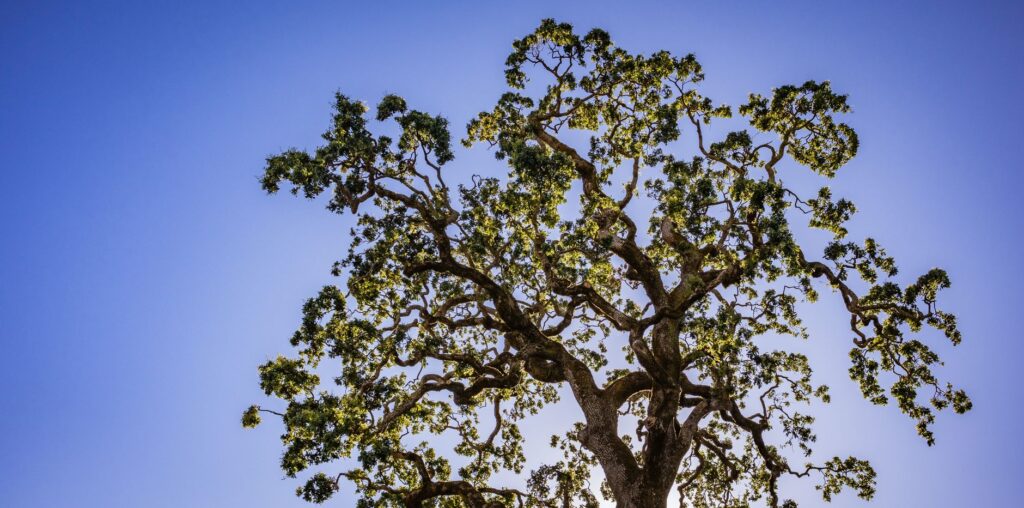
A recommendation for cable bracing should never come from a quick glance from the street. A proper assessment involves examining the tree from multiple angles and elevations — and it follows a structured decision process rooted in published standards.
Most ISA-certified arborists work within the framework of the ISA Tree Risk Assessment Qualification (TRAQ) protocol, which assigns failure probability, consequence of failure, and overall risk rating to a tree or specific defect. That framework guides not just whether to cable, but whether to cable versus prune, versus remove.
The structural evaluation looks at the union itself: how tight the V is, whether there are visible cracks radiating from it (a sign that movement has already occurred), and whether tapping the bark returns a hollow sound (an indicator of internal decay). The arborist will also evaluate crown asymmetry — a heavy, unbalanced crown puts disproportionate load on a weak union — and root zone health, because a tree with compromised roots changes the entire risk calculation.
In Middletown’s clay-loam soils, it’s also worth noting whether the tree sits in a seasonally wet area. Repeated soil saturation can loosen root anchorage, and a poorly anchored tree with a weak union is a different risk profile than one with a solid, well-established root plate. If there’s concern about internal decay not visible from the outside, the assessment may involve a resistograph or sonic tomography tool to image the wood density inside the stem before a final recommendation is made.
How Cable Systems Are Installed and Maintained
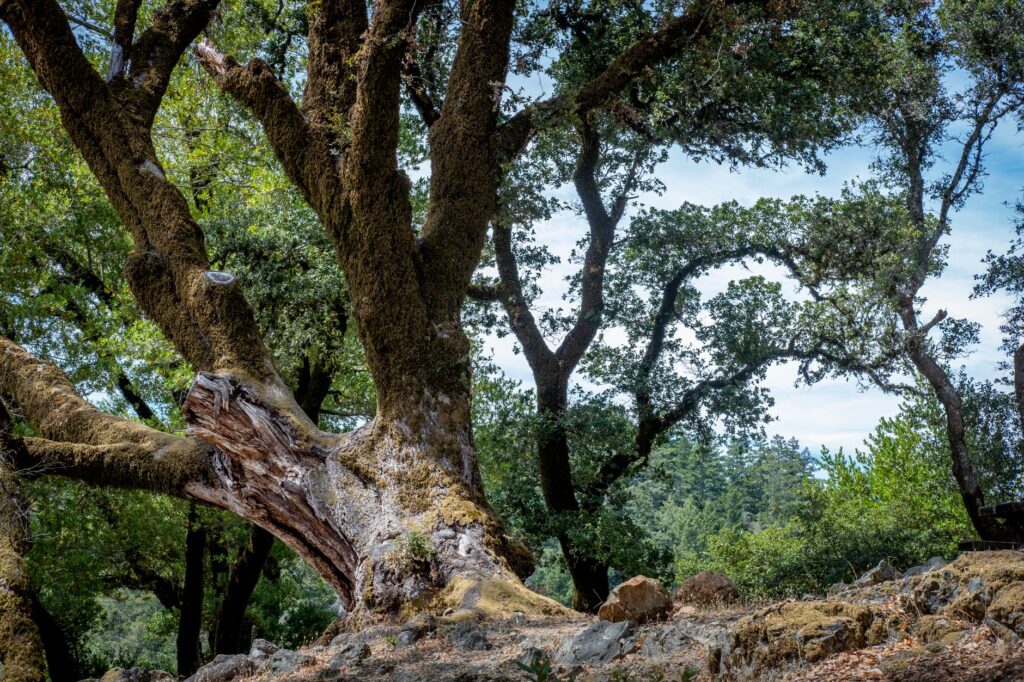
Installation begins with selecting the correct cable placement — typically at two-thirds of the distance from the union to the branch tips. Too low and the lever-arm physics don’t favor you; too high and you’re anchoring hardware near small-diameter wood that can’t bear the load safely.
Steel eye-bolts are drilled through the stem at the chosen height and secured with a nut and washer on the far side. Preformed steel cable is attached using cable grips or swaged fittings, then tensioned to limit movement without eliminating it entirely. Some dynamic flex is healthy for wood development — a tree that can move slightly in the wind will continue to build reaction wood that strengthens the stem over time. Eliminating all movement with an overly rigid system can actually slow that adaptive response.
After installation, the system must be inspected annually. As the tree grows, it expands around the hardware — a properly installed eye-bolt can become embedded within two or three growing seasons if inspections lapse. The ANSI A300 standards maintained by the Tree Care Industry Association govern cable bracing installation in the United States and are the benchmark any reputable tree service should follow.
This is not DIY work. The consequences of a failed cable under load — from improper installation, wrong hardware selection, or a missed annual inspection — can be significant. Hire a certified arborist, keep records of each inspection, and make sure the work is documented in case you ever need it for an insurance conversation.
When Cable Bracing Won't Save the Tree
The hardest part of the cable bracing conversation is not explaining what cables do — it’s explaining when they won’t help. There are several situations where bracing is not appropriate, and a trustworthy arborist will be direct about them.
Advanced decay at the union is typically a disqualifier. If a resistograph or visual inspection reveals significant internal decay running through one or both stems at the attachment point, there may not be enough solid wood to anchor hardware reliably. A cable attached to decayed wood can give way suddenly — often worse than no cable at all, because homeowners may have assumed the tree was addressed.
Root failure changes the equation entirely. If the root plate is compromised — from soil disturbance, grade change, repeated flooding, or root damage from nearby construction — the whole tree is a hazard, not just the union. Bracing a structurally defective tree onto a failing root system is not a solution. It’s a liability.
Excessive lean with no counterweight. A tree that has developed significant lean toward a structure, with no large limbs on the opposite side to create balance, is beyond what horizontal cables can adequately address. That situation calls for significant crown-weight reduction or, in many cases, removal.
An honest arborist will tell you when a tree has crossed the line from a manageable risk into a liability no hardware can adequately reduce. That conversation is harder to have, but it’s the one that actually protects your property, your family, and your neighbors.
Middletown's #1 Tree Expert Company
FREE Inspection & Estimate | Certified Arborists | Trimming, Pruning, Removal, More!
Sponsored
Summary: Plan Before the Storms Do It for You
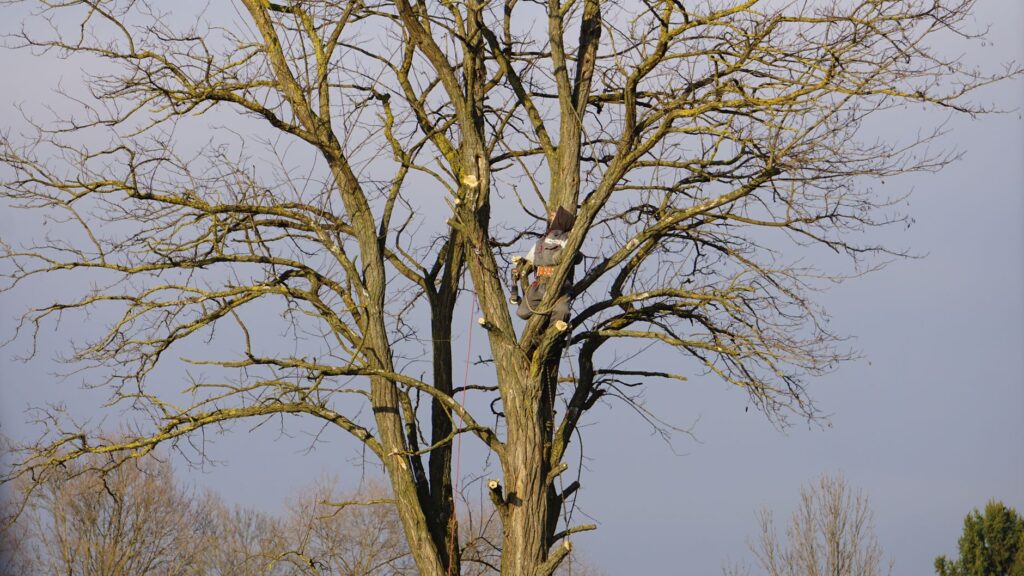
Cable bracing is one of the more misunderstood tools in tree care. Homeowners sometimes view it as a last resort — something you install after a tree has already partially failed. In reality, the best time to evaluate a tree for supplemental support is before anything goes wrong, during a calm season when an arborist can do a thorough assessment and the decision isn’t being made reactively in a driveway after a storm.
In Middletown Township, the window before peak storm season is shrinking. June is actually an ideal month to schedule an evaluation: the leaves are fully out, making it easier to assess crown weight and balance, and there’s still time to get hardware installed before the heavier weather of late summer and fall. The Rutgers New Jersey Agricultural Experiment Station maintains helpful resources on tree care decisions for New Jersey homeowners, including guidance on when professional intervention makes the most sense.
If you have a mature tree with a tight V-union, a history of limb drops, or a heavy co-dominant stem leaning toward your house, a neighbor’s property, or a parked car, don’t wait for the next nor’easter to find out what it will do. Have an ISA-certified arborist walk your property and evaluate the structure while the decision is still yours to make — on your timeline, not the storm’s.
Photo credits: Featured image by Gastón Mousist on Pexels; Section 1 by John Dean on Pexels; Section 2 by Steffen Rühlmann on Pexels; Section 3 by David Guerrero on Pexels; Section 4 by Robert So on Pexels; Section 5 by David McElwee on Pexels; Section 6 by Erik Mclean on Pexels; Section 7 by Dmytro Glazunov on Pexels.