Middletown's #1 Tree Expert Company
FREE Inspection & Estimate | Certified Arborists | Trimming, Pruning, Removal, More!
Sponsored
The Morning a Crew Shows Up With Ropes, Not Just a Chainsaw
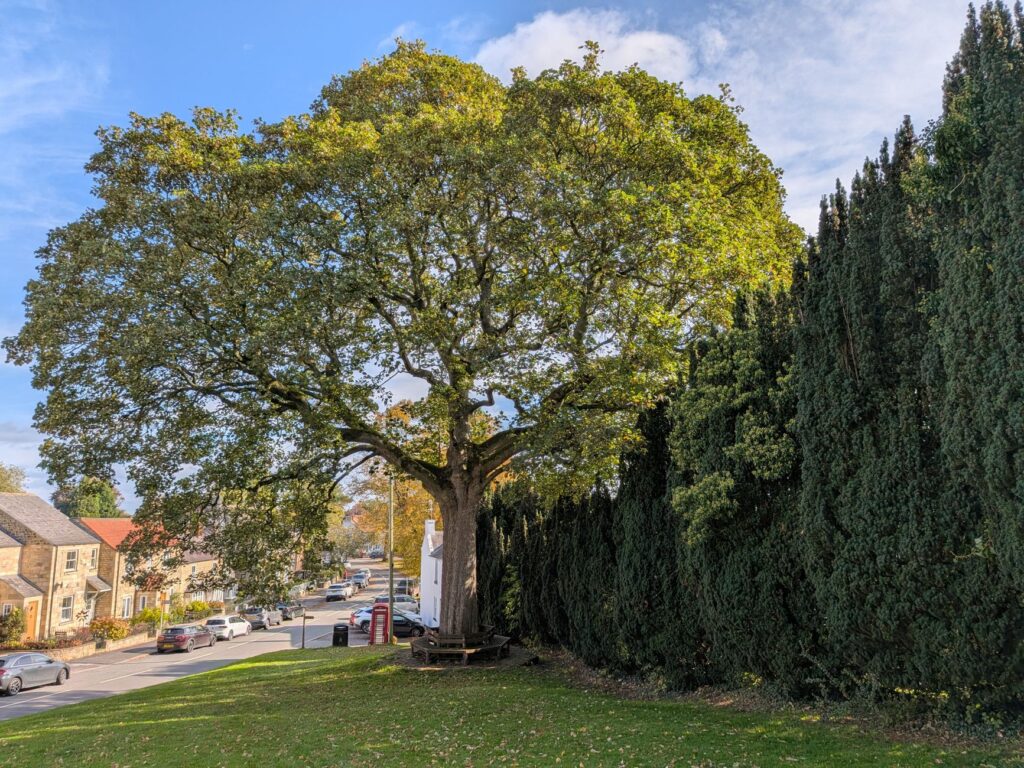
The first time most Middletown homeowners watch a large tree come down, what surprises them isn’t the noise — it’s how slow it is. A mature white oak (Quercus alba) or tulip poplar (Liriodendron tulipifera) leaning over a roofline or a fence line doesn’t come down in one dramatic felling cut the way it might in an open field. It comes down in pieces, on ropes, over the course of hours, with more rope work and planning than actual cutting.
That gap between expectation and reality is where most of the anxiety lives. Homeowners in Lincroft, Belford, and along the Bayshore near Port Monmouth have watched storm-damaged trees get removed in a hurry, and it’s natural to assume every removal looks that chaotic. A planned removal — the kind that follows a hazard assessment rather than a downed tree in the driveway — is a controlled, almost methodical process. Knowing what each stage actually accomplishes makes it easier to stay out of the way, ask the right questions, and recognize a crew that’s doing it correctly.
Removal Is the Last Recommendation, Not the First
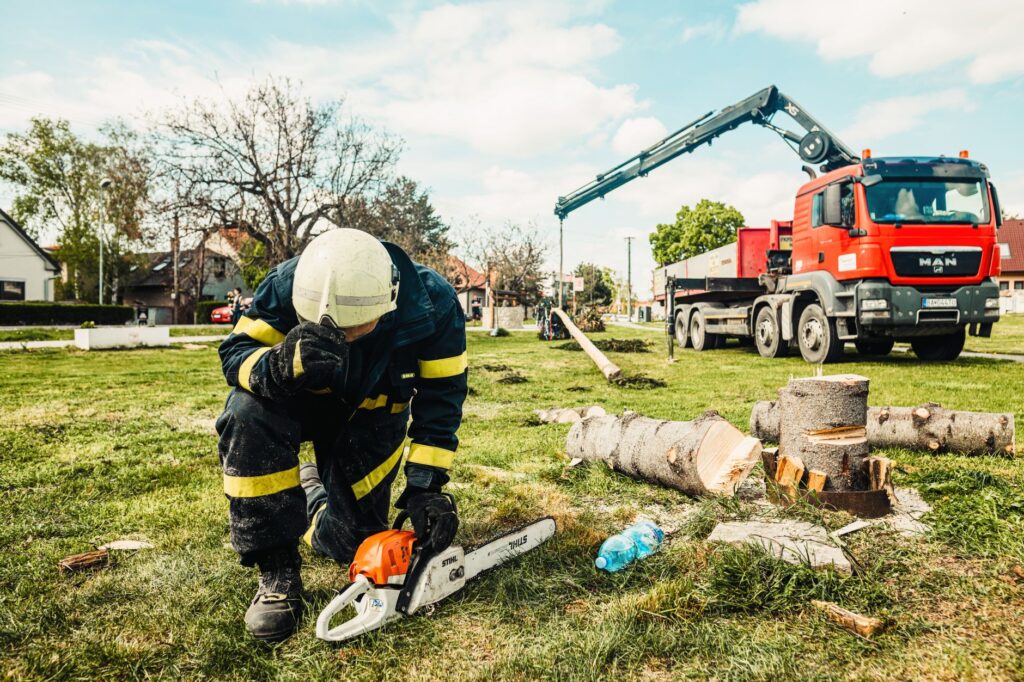
A tree doesn’t get slated for removal because it’s inconvenient or because a few branches died back. Reputable arborists work through options first: crown cleaning to remove deadwood, cabling to support a weak union, root zone work to relieve compaction, or simply monitoring a tree for another season. The International Society of Arboriculture’s guidance on hiring an arborist is explicit that removal should be a last resort, recommended only when a tree poses a risk that can’t be reasonably mitigated any other way — extensive trunk decay, a split codominant stem, a root plate that’s already lifted, or dieback advanced enough that the tree can’t recover.
Part of that evaluation, for a certified arborist, follows the Tree Risk Assessment Qualification (TRAQ) framework — a structured way of scoring the likelihood of failure against the target it would hit and the consequences if it did. A leaning tree over an empty side yard scores very differently than the same lean over a bedroom window. That distinction is why two trees that look equally rough can get two completely different recommendations.
Before Anyone Touches a Saw: Permits, Utilities, and a Plan
The unglamorous part of a removal happens before the crew even arrives with equipment. In Middletown Township, removing a tree above a certain trunk diameter — including on private residential property in many cases — requires checking the township’s shade tree ordinance before work begins; the Middletown Township website maintains the current permit thresholds and application process. Skipping this step is one of the most common (and most avoidable) mistakes homeowners make when they hire based on price alone.
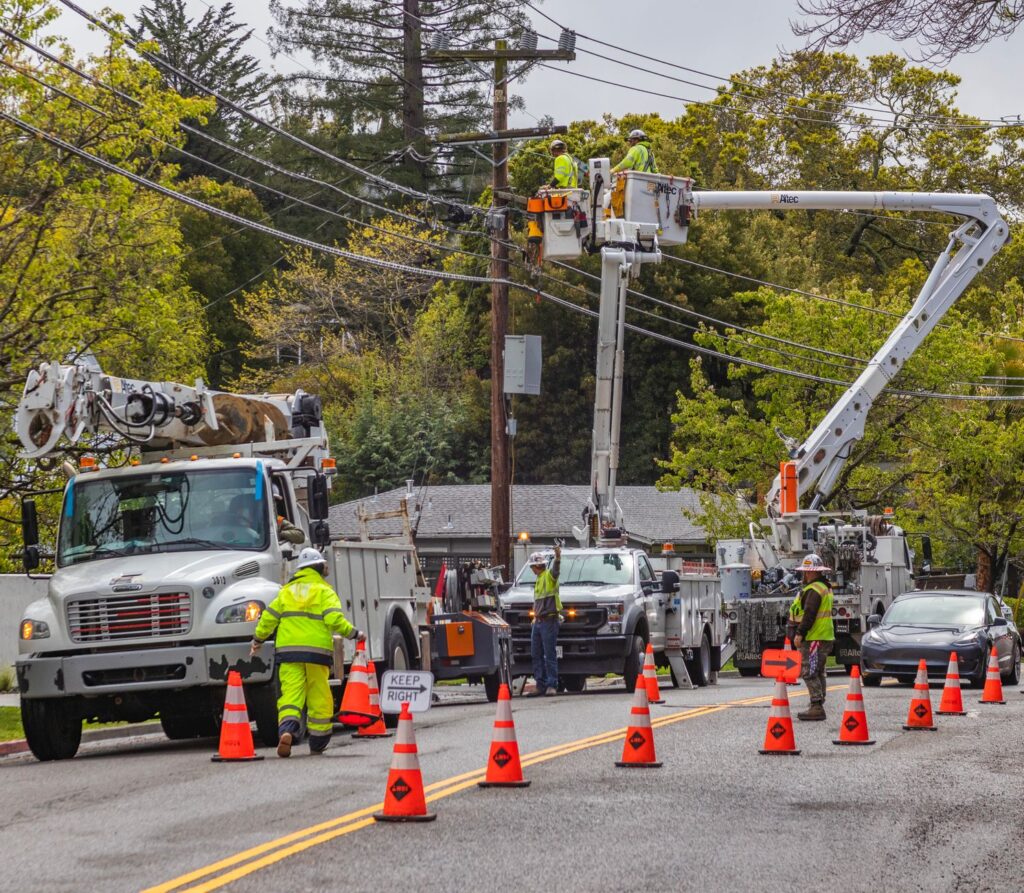
Once the paperwork is clear, the crew walks the site: marking the drop zone, checking overhead and underground utility lines, noting fences, gardens, septic fields, and anything else within striking distance of the canopy. On tight suburban lots — common in neighborhoods like Lincroft and Chapel Hill — this planning stage often takes longer than the actual cutting, because there’s rarely a clean, open direction to drop a whole tree safely.
Middletown's #1 Tree Expert Company
FREE Inspection & Estimate | Certified Arborists | Trimming, Pruning, Removal, More!
Sponsored
Sectional Dismantling: Why the Tree Comes Down in Pieces
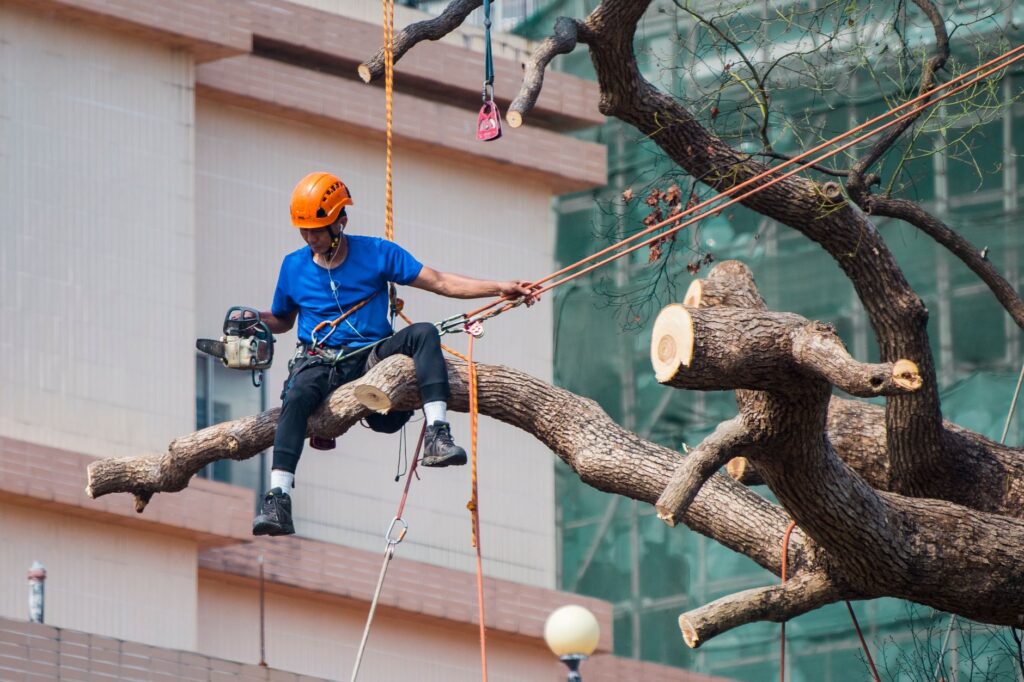
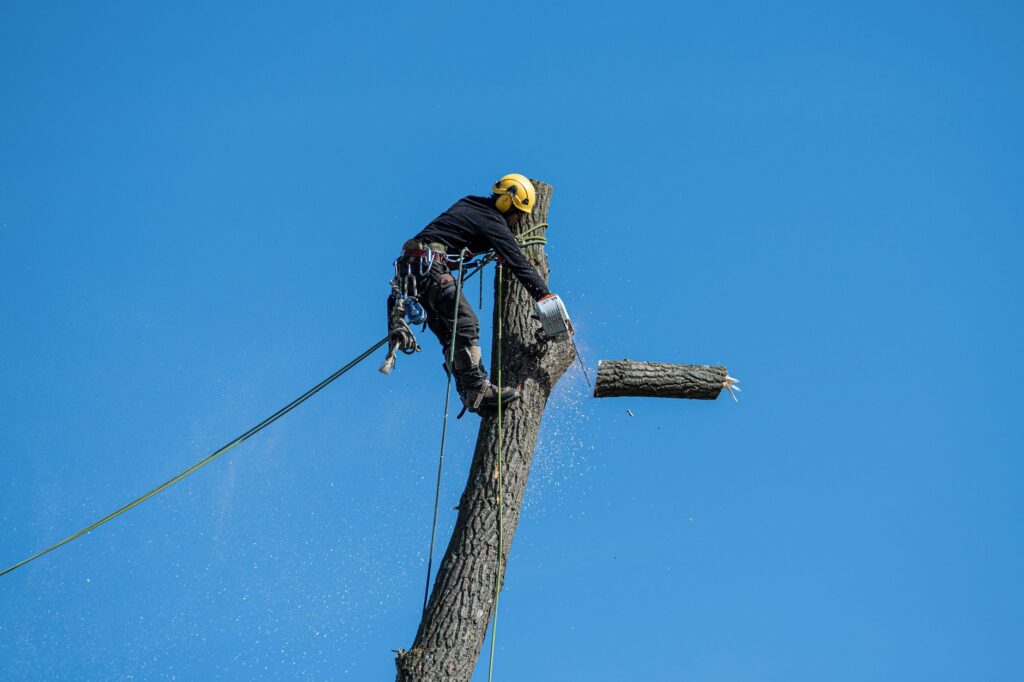
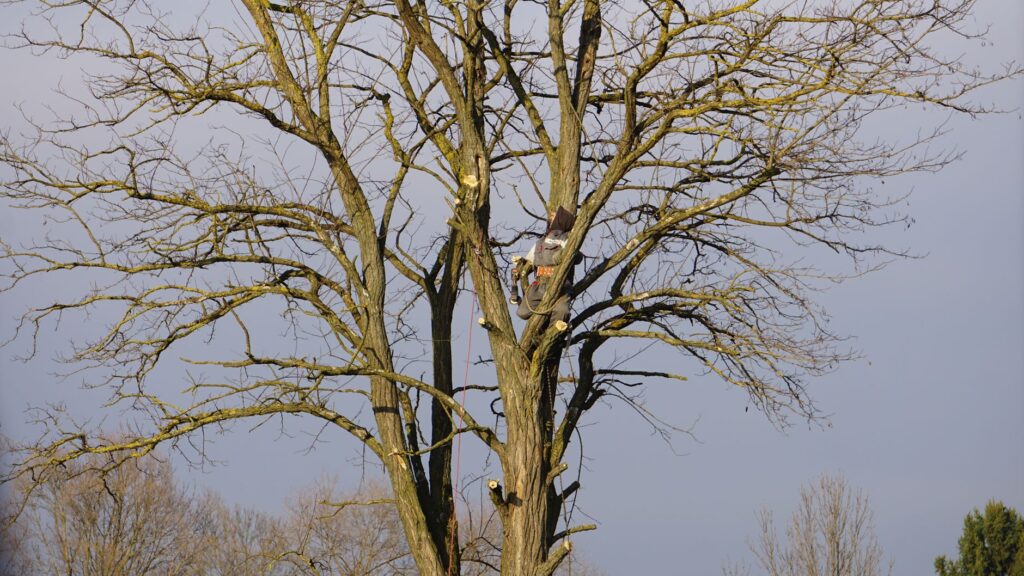
On an open lot, felling a tree in one piece can be the safest and fastest method. But on a typical Middletown property — tree within reach of a house, a driveway, a neighbor’s yard — a climbing arborist almost always uses sectional dismantling instead. That means climbing into the canopy, cutting the tree into manageable sections from the top down, and lowering each piece to the ground on a rigging rope rather than letting it fall freely.
Rigging is a system of ropes, rigging blocks, and often a friction device anchored lower on the trunk that lets the crew control both the speed and the swing of a falling section, steering it into the clear drop zone instead of toward a roof or a fence. The Tree Care Industry Association, the trade group that sets the ANSI Z133 safety standard the whole industry works from, publishes background on what qualifies a tree care operation as following recognized safety practice, and rigging discipline is central to it. On the largest or most awkward removals — a big tree wedged between two houses, for example — a crane may lift entire sections out cleanly, skipping the rigging swing altogether.
Every cut is deliberate. A climber isn’t just cutting branches off; they’re reading how each remaining section is loaded, so the next cut doesn’t shift weight onto a rope or a limb that can’t take it.
What the Homeowner Should (and Shouldn't) Do While It's Happening
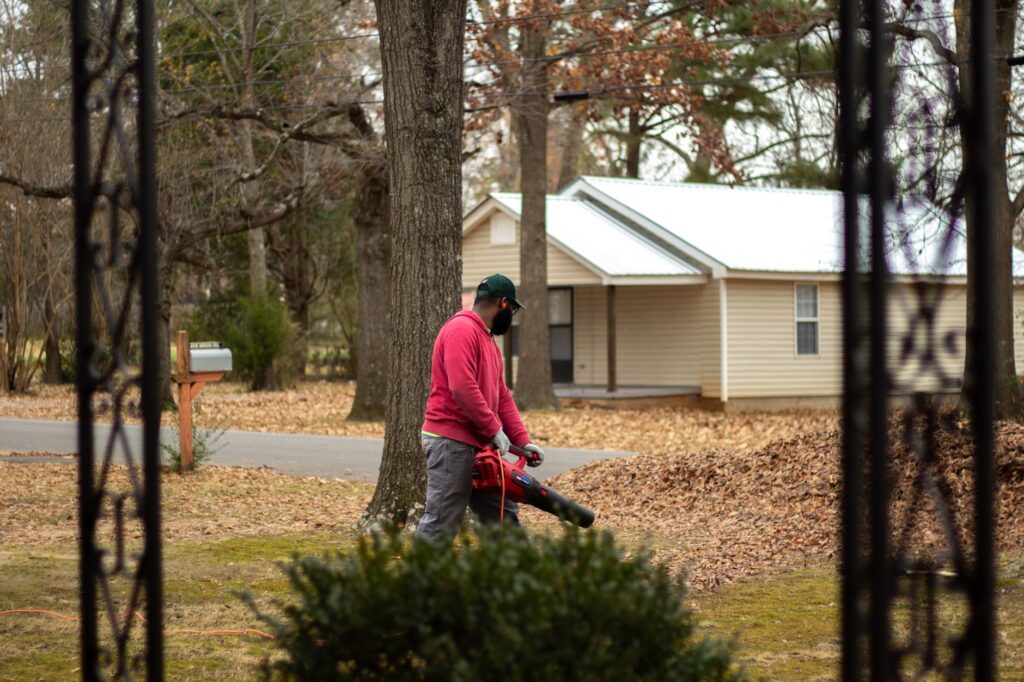
The single most useful thing a homeowner can do during a removal is stay out of the marked drop zone — and keep kids, pets, and cars out of it too. That zone typically extends well beyond where the tree appears to reach, because rigging lines and falling debris travel farther than the canopy’s visual footprint suggests.
- Move vehicles out of the driveway and off the street near the work area if asked.
- Keep windows on the affected side of the house closed in case of falling debris.
- Resist the urge to direct traffic or act as a spotter for the crew — a ground crew member already has that job, and an extra person in the drop zone is a liability, not a help.
- Ask before the crew starts what the plan is for wood and debris — hauled away, chipped on site, or left in rounds for firewood.
A good crew will walk a homeowner through the plan before the first cut, including roughly how long it will take and what the yard will look like afterward. If a crew shows up and starts cutting without any of that conversation, that’s worth noting for future reference — not necessarily a safety failure, but a communication gap that reputable operations don’t have.
After the Cut: Stump, Debris, and What's Worth Keeping
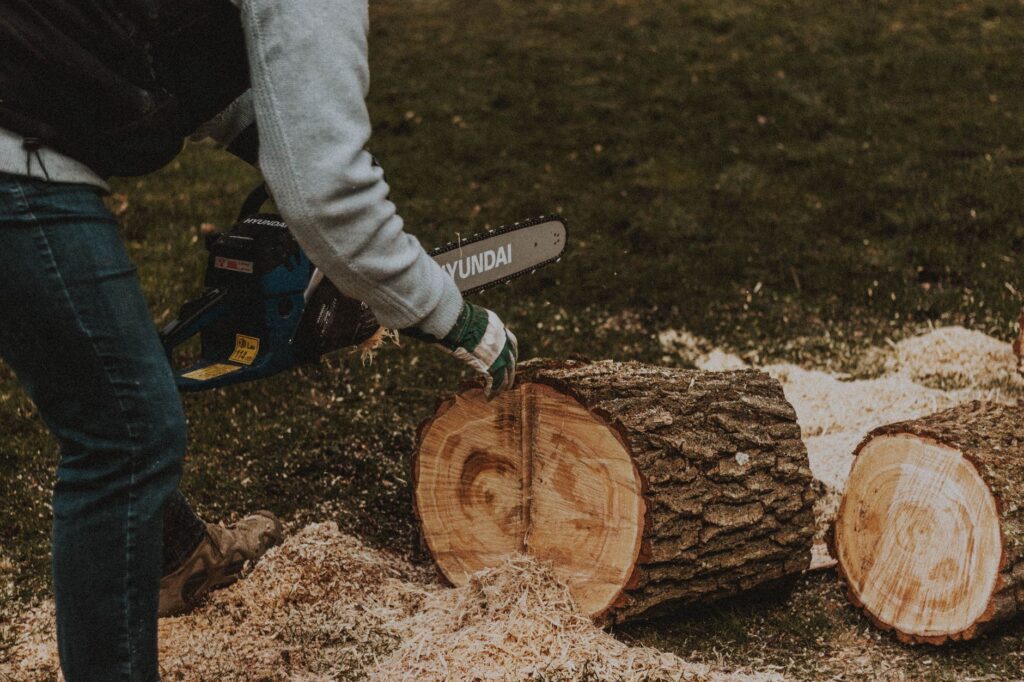
Removal isn’t finished when the trunk is down. Stump grinding is usually a separate step, and homeowners have real choices here — grinding the stump flush for a lawn to grow back over, or leaving a low stump as a planter base or a perch for birds. What happens to the wood itself is worth thinking through too. Standing dead trees and even large fallen sections have genuine ecological value; research from the USDA Forest Service on woodland habitat notes that dead and downed wood supports insects, fungi, and cavity-nesting birds that a manicured yard otherwise offers nothing to. A homeowner near Hartshorne Woods or Tatum Park with space for a brush pile or a few stacked rounds along a property line isn’t being lazy about cleanup — they’re keeping a small piece of habitat that a fully hauled-away yard loses.
Whatever gets left behind, grading and reseeding the disturbed soil is the last real step, and it’s easy to overlook. Compacted, torn-up turf around the old root zone recovers much faster with a light raking, topsoil, and seed than if it’s left to compact under foot traffic over the following months.
Middletown's #1 Tree Expert Company
FREE Inspection & Estimate | Certified Arborists | Trimming, Pruning, Removal, More!
Sponsored
When It's Time to Call, and What to Ask
Most Middletown homeowners don’t need to memorize rigging techniques or ANSI standards — but knowing that a legitimate removal follows a permit check, a documented risk assessment, and a planned rigging sequence makes it much easier to spot a crew that’s cutting corners, sometimes literally. If a tree near the house has visible trunk cavities, a recent lean, extensive dieback in the upper canopy, or fungal conks at the base, that’s the point to call a certified arborist for a proper evaluation rather than waiting for the next nor’easter to make the decision.
A written estimate that references the actual condition of the tree — not just a price — and a crew that can explain their rigging and drop-zone plan before they start are good signs. Consulting the Rutgers New Jersey Agricultural Experiment Station for background on regional tree health issues, or asking a certified arborist to walk the property, costs far less than guessing wrong about a tree that’s already failing.
Photo credits: Featured image by Jacky on Pexels; Section 1 by Mike Norris on Pexels; Section 2 by Helena Jankovičová Kováčová on Pexels; Section 3 by Robert So on Pexels; Section 4 by Jimmy Chan on Pexels; Section 5 by Paris Lopez on Pexels; Section 6 by Mathias Reding on Pexels; Section 7 by Dmytro Glazunov on Pexels.