Middletown's #1 Tree Expert Company
FREE Inspection & Estimate | Certified Arborists | Trimming, Pruning, Removal, More!
Sponsored
The Branch That Broke But Never Fell
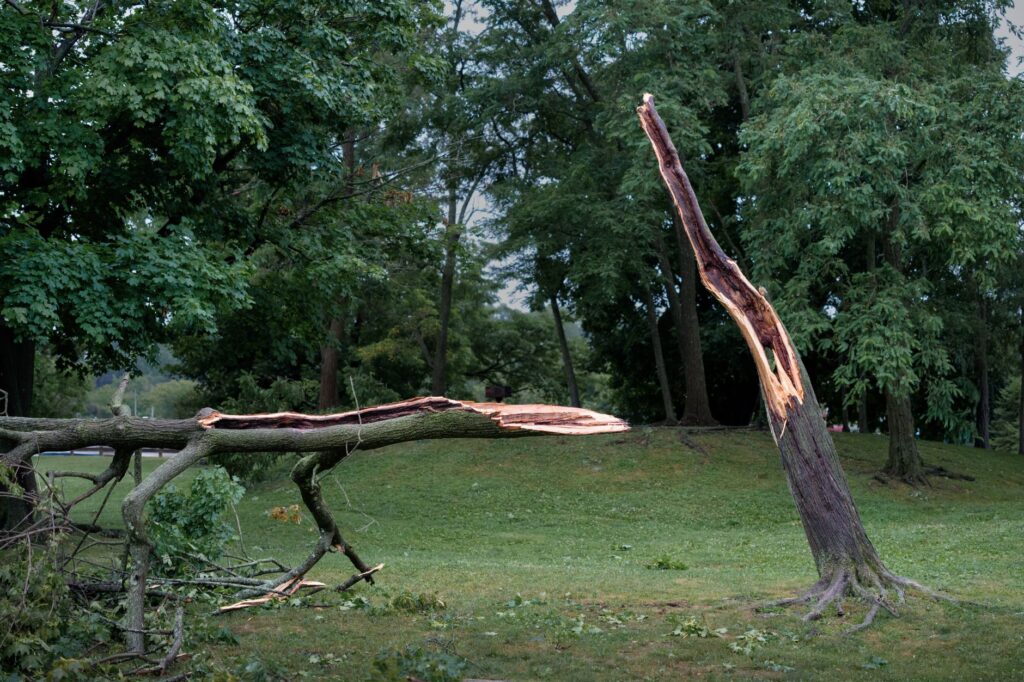
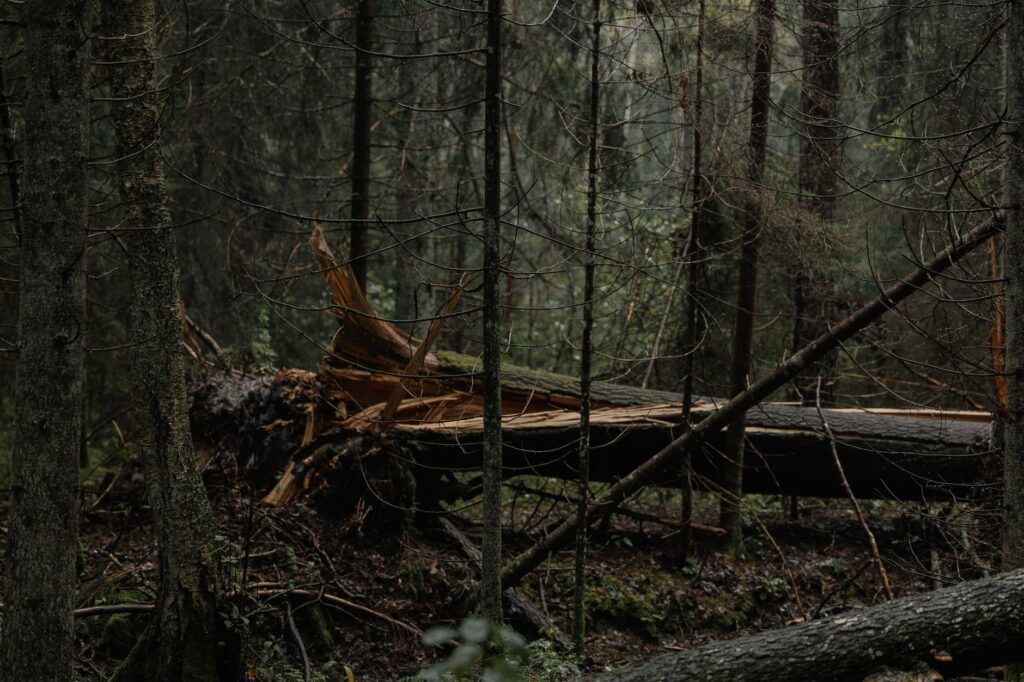
Walk under the wrong tree in Middletown Township after a windy week and you might be standing under a hazard that never announced itself. A hung-up limb — arborists sometimes call it a “widowmaker” — is a branch that has already snapped somewhere along its length but hasn’t come down. It’s wedged in the crotch of the tree, tangled in neighboring limbs, or resting across another branch, held in place by nothing more than friction and luck.
These are common after the kind of weather the Bayshore sees regularly: a July microburst that rips through Port Monmouth, a nor’easter that stalls over the Navesink, or even just a hot, still August afternoon when a stressed limb lets go on its own. The tree doesn’t always drop what it breaks. Sometimes it holds on to it, sometimes for months, waiting for the next gust, the next ice load, or the next person to walk underneath at the wrong moment.
What makes a hung-up branch different from an obviously dead or leaning tree is that it’s easy to miss. Homeowners scan their trees for cracked trunks and bare limbs, but rarely look up into the mid-canopy for a broken piece resting on a healthy one. It doesn’t look wrong from the ground unless you know what you’re looking at.
Why a Hung-Up Limb Is More Dangerous Than a Standing Dead One
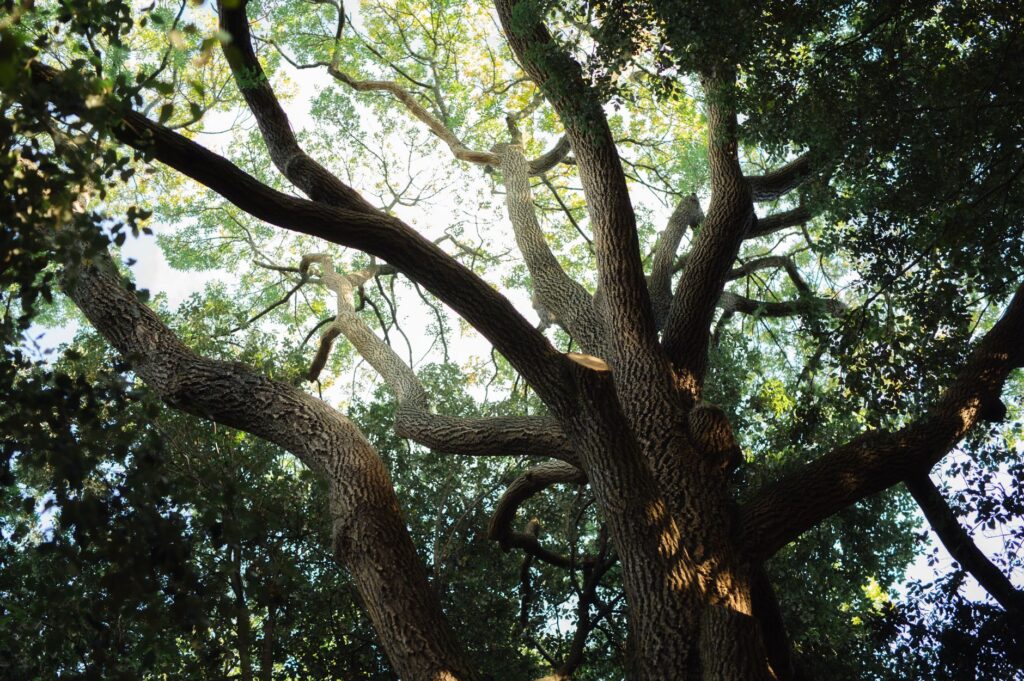
A dead branch still attached to a tree fails somewhat predictably — the wood dries, the connection at the branch collar weakens over a season or two, and it tends to come down in a stiff wind rather than a calm one. A hung-up limb doesn’t follow that pattern. It’s already separated from the tree’s living tissue, so there’s no branch collar knitting it in place and no early-warning bark cracking to watch for. It’s just weight, resting on weight, with gravity as the only thing that changes over time.
That’s part of why the International Society of Arboriculture and groups like Tree Care Industry Association treat hung-up debris as its own category of hazard in a tree risk assessment, separate from deadwood or cracked limbs still attached to the tree. A hung-up branch can fail with no wind at all — a squirrel running across it, wood shrinking as it dries out, or the supporting limb below it flexing in the heat can be enough. Species with dense, heavy wood common around Middletown — white oak (Quercus alba), black locust (Robinia pseudoacacia), and tulip poplar (Liriodendron tulipifera) — drop limbs that carry real mass, which is exactly what makes a hung-up piece from one of these trees worth taking seriously.
Where to Look, and What You're Looking For
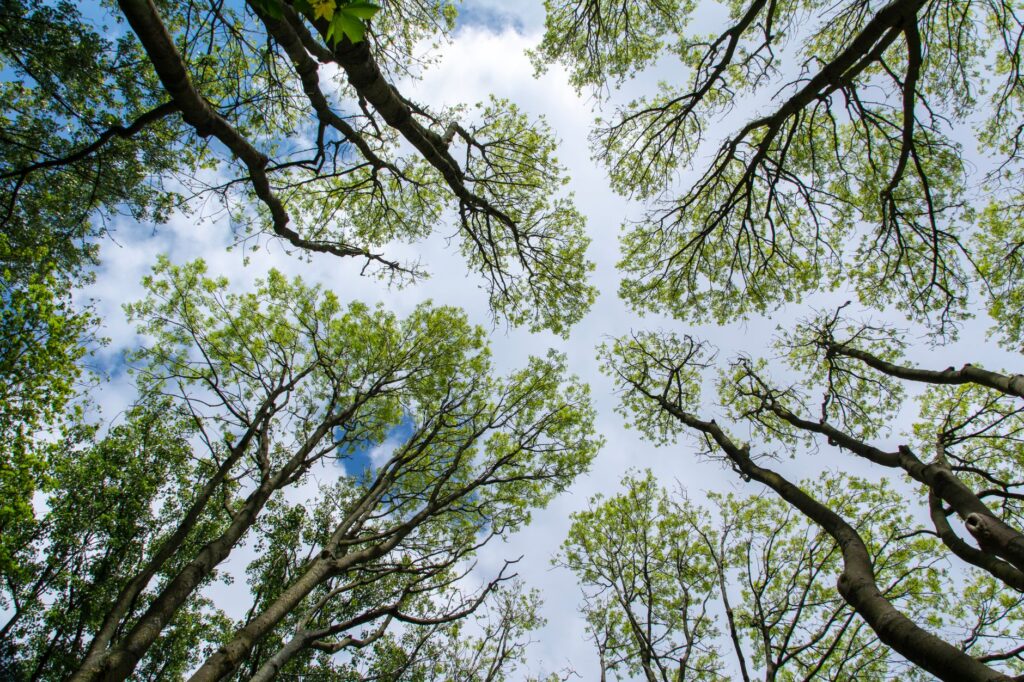
Spotting a hung-up limb takes a few minutes and a clear sky. Stand back far enough to see the whole crown of the tree, not just the trunk, and scan the mid-to-upper canopy for anything that looks like it doesn’t belong: a branch at an odd angle relative to the rest of the growth pattern, a limb with no leaves resting across one that’s fully leafed out, or a visible split or break point where healthy bark should be continuous.
- Look for color mismatch — a broken limb often has drier, grayer bark than the living branches around it, even in the same season.
- Check for a visible break point, not just a bare branch. A limb that’s simply leafless might just be shaded out; one with a jagged or splintered end is a different story.
- Pay attention after any storm with sustained wind over 30 mph, even if nothing looked wrong the day before.
- Look twice at trees with recent crown work, storm history, or visible cavities — these are more likely to have generated debris that never made it to the ground.
Binoculars help more than most homeowners expect. From directly underneath, a hung-up branch can look like it’s part of the tree. From twenty or thirty feet away, the break becomes obvious.
Middletown's #1 Tree Expert Company
FREE Inspection & Estimate | Certified Arborists | Trimming, Pruning, Removal, More!
Sponsored
Why This Matters More Going Into Fall

Late September into October is when Middletown starts seeing the first real nor’easters of the season, and trees that dropped limbs during summer storms have often been carrying that hung-up debris for weeks without anyone noticing. Add wet, heavy leaves and the first real wind events of fall, and a branch that’s been stable all summer can finally shake loose. The USDA Forest Service has noted that storm-related tree failures cluster around the transition seasons, when trees are both physically stressed from the growing season and exposed to the year’s first strong wind events.
It’s also the point in the year when a lot of Middletown homeowners are outside more — raking, doing fall cleanup, letting kids play in the yard again after a hot summer — which puts more time under the canopy right when hung-up limbs are most likely to let go. The risk isn’t constant through the year; it rises and falls with both the tree’s condition and how much time people spend underneath it.
What Not to Try Yourself
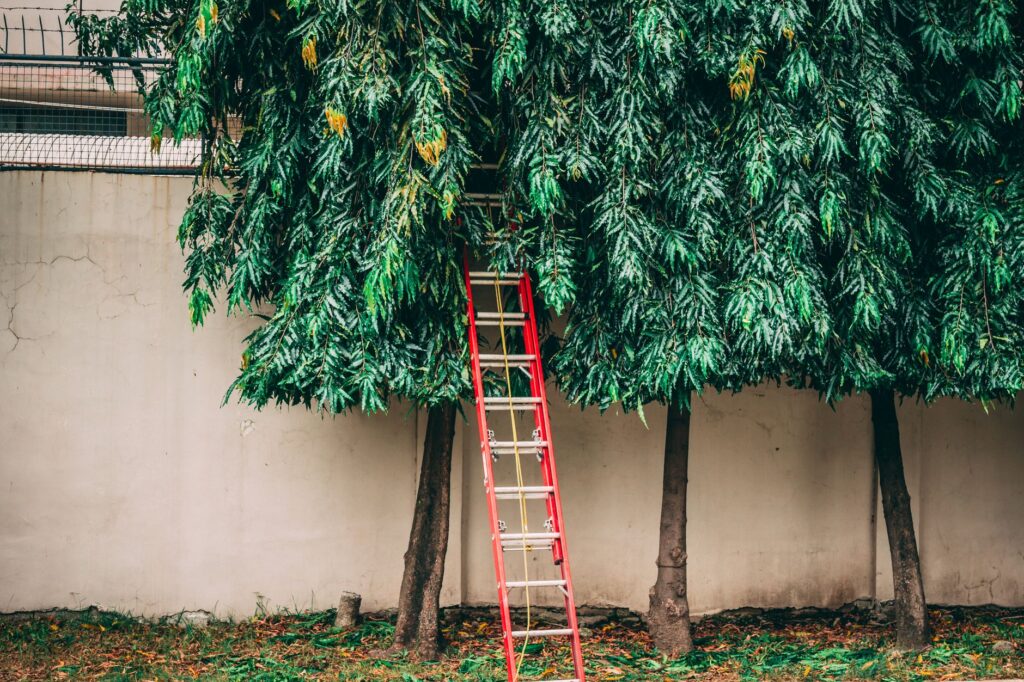
A hung-up branch is one of the few tree issues where the homeowner instinct to “just get up there and knock it loose” is genuinely dangerous, and worth resisting even for a small-looking piece. Pushing or shaking a hung-up limb from a ladder, or worse, from the branch it’s resting on, is one of the more common ways people get seriously hurt doing their own yard work. The limb’s weight and balance point aren’t predictable from the ground, and a branch that looks stable can shift the moment it’s disturbed.
Reasonable DIY tree work — pruning small branches with hand tools, clearing brush, removing a fallen limb that’s already on the ground — is a different category of risk entirely. A hung-up limb, by contrast, is a rigging and positioning problem. It usually needs to be roped and lowered in a controlled way, not cut loose and allowed to fall, especially anywhere near a fence, roof, deck, or power line. This is squarely the kind of job that calls for the right equipment and training rather than a homeowner ladder.
Getting It Assessed the Right Way
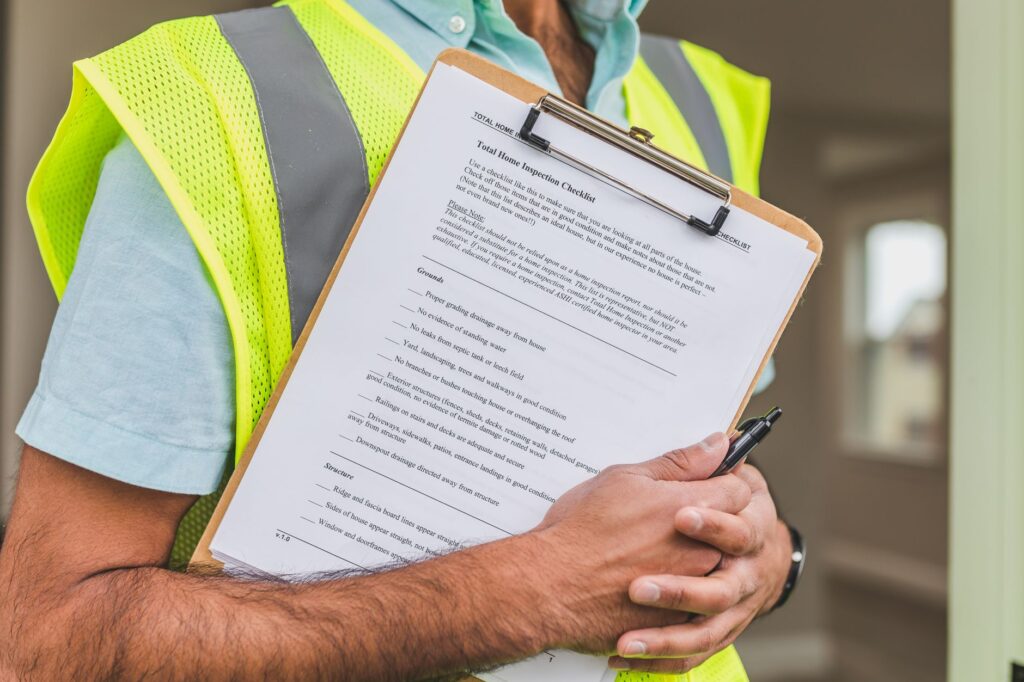
If a suspected hung-up limb is anywhere near a structure, a driveway, or a spot where people or pets spend time, the safest move is to rope off the area underneath it and have it looked at before doing anything else. A certified arborist evaluating a hazard like this will typically use a TRAQ-style risk assessment — the framework taught through Rutgers NJAES and ISA training programs — weighing the likelihood of failure, the size and weight of the piece, and what’s underneath it to decide how urgent the removal is.
Not every hung-up branch needs to come down the same day. A small twig caught fifteen feet up over an open lawn is a different priority than a heavy limb hanging over a patio where people eat dinner. What matters is getting an informed opinion rather than guessing, and rechecking the tree after any significant storm even if a hazard was cleared earlier in the season.
Middletown's #1 Tree Expert Company
FREE Inspection & Estimate | Certified Arborists | Trimming, Pruning, Removal, More!
Sponsored
The Takeaway for Middletown Yards
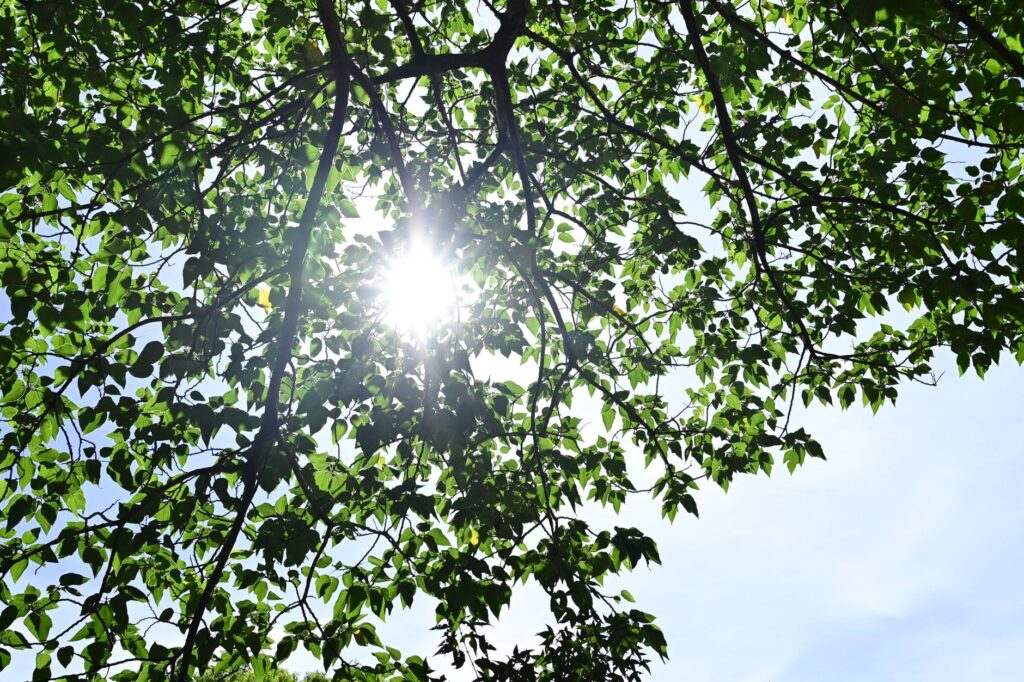
A tree doesn’t have to be dying, leaning, or obviously damaged to be carrying a real hazard. Sometimes the danger is a piece of the tree itself, already broken, waiting on friction and gravity in the canopy overhead. A five-minute look up into the crown after any significant storm — not just at the trunk and lower branches — is one of the simplest habits a Middletown homeowner can build heading into fall.
When something up there doesn’t look right, treating it as a wait-and-see problem is usually the wrong call. A certified arborist can assess the specific risk, recommend safe removal, and make sure a branch that’s already done its damage to the tree doesn’t end up doing damage to a person, a car, or a roof on its way down.
Photo credits: Featured image by Elina Volkova on Pexels; Section 1 by David Kanigan on Pexels; Section 2 by Grigoriy Konsevich on Pexels; Section 3 by Jan van der Wolf on Pexels; Section 4 by David Kanigan on Pexels; Section 5 by Wolven Stein on Pexels; Section 6 by RDNE Stock project on Pexels; Section 7 by William Chen on Pexels.