
Middletown's #1 Tree Expert Company
FREE Inspection & Estimate | Certified Arborists | Trimming, Pruning, Removal, More!
Sponsored
The Boxwood Hedge That Turns Rust-Brown Every March
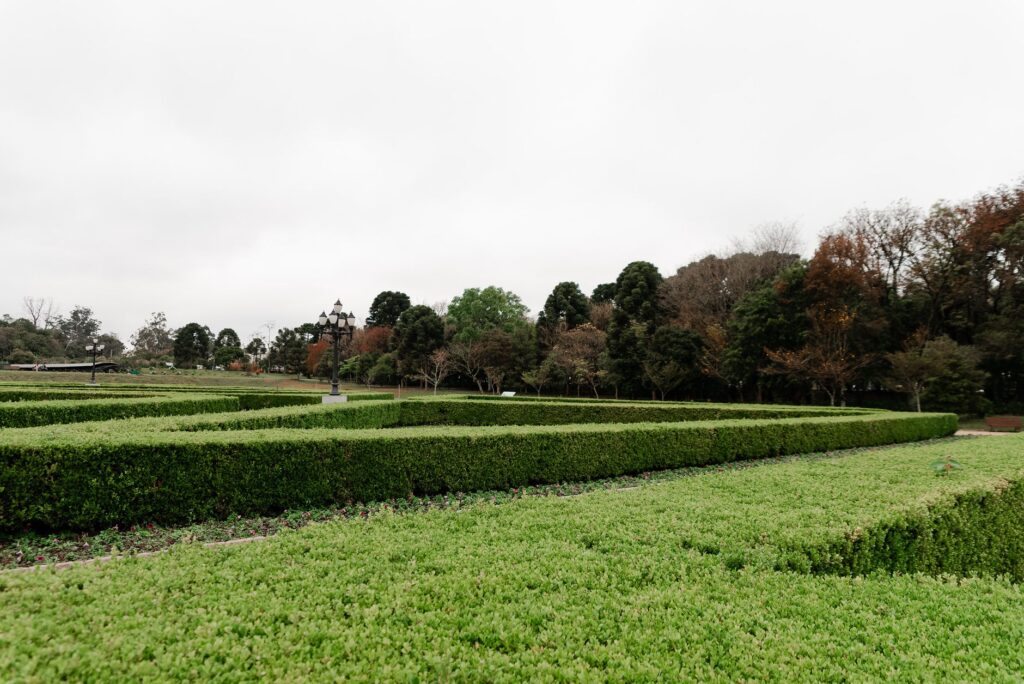
Every year around the third week of March, a familiar question starts showing up in Middletown Township: why does the boxwood hedge that looked perfectly green in December suddenly turn a sickly bronze-orange, or why does the rhododendron by the front steps look scorched along one whole side? The plant wasn’t touched by any pest. It wasn’t diseased in October. It simply spent the winter losing more water through its leaves than its roots could replace, and by the time the damage shows, the season that caused it is already over.
This time of year, garden centers and landscape crews are pushing anti-desiccant sprays — sometimes called anti-transpirants — as the fix. Applied to broadleaf evergreens like boxwood (Buxus), holly, rhododendron, and azalea, these products form a thin waxy film meant to seal in moisture before the ground freezes. They can genuinely help. But how much they help depends heavily on which plant is getting sprayed, where it’s sited, and whether the person applying it skipped the one step that matters more than any product on the label.
Middletown’s evergreen plantings run the gamut from tightly clipped boxwood parterres in Lincroft to windswept holly and cedar screens along the Bayshore in Port Monmouth and Leonardo, where winter gusts off Raritan Bay hit foliage that inland yards never have to deal with. The right approach to fall protection isn’t the same for both.
Why Evergreens Struggle With Water in Winter
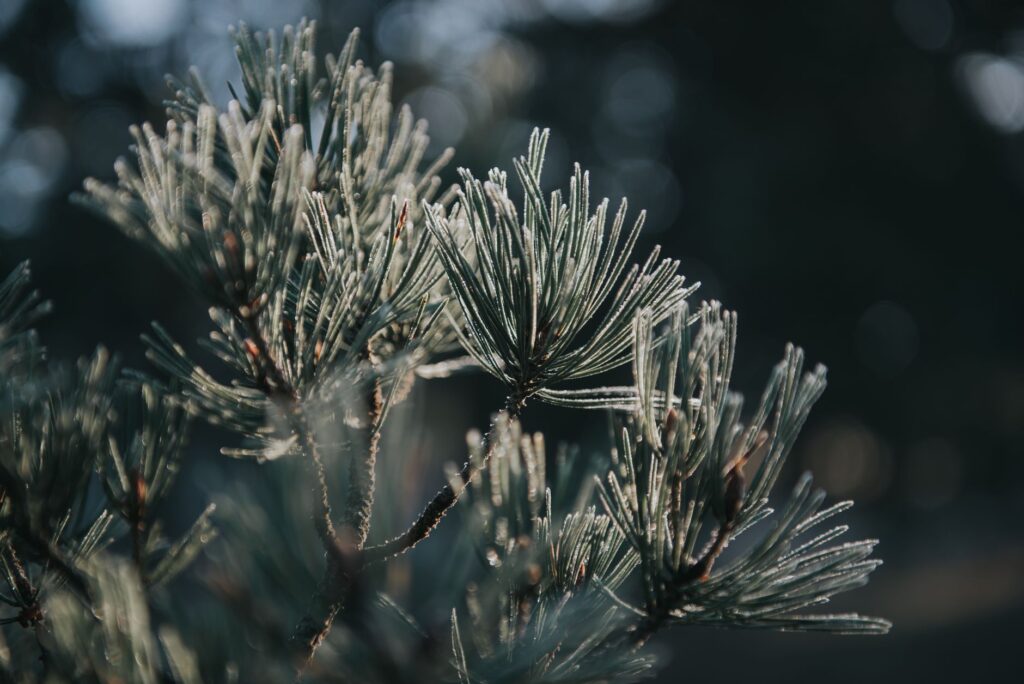
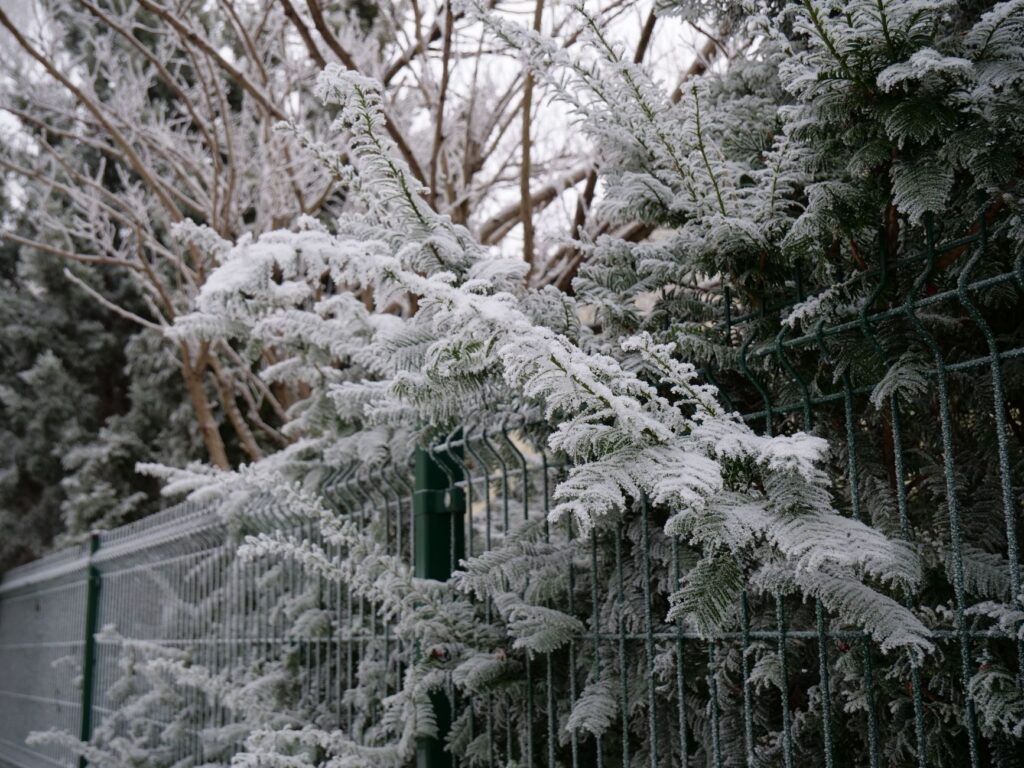
Deciduous trees solve the winter water problem by dropping their leaves — no foliage, no water loss through it, no conflict with frozen ground. Evergreens don’t get that option. Their leaves keep functioning through the cold months, which means they keep losing water vapor through stomata and the leaf cuticle, especially on bright, windy days when a bare, sunlit branch can warm well above air temperature.
The problem is the supply side. When soil is frozen or even just cold enough to slow root uptake, roots can’t replace that lost water at the rate the canopy is losing it. Wind makes it worse by stripping the thin boundary layer of humid air that normally clings to a leaf surface and slows evaporation. The result, weeks or months later, is desiccated foliage — tissue that dried out faster than it could be resupplied, not tissue that was killed by cold itself. That distinction matters, because it means the fix has to address water balance, not just cold tolerance.
Which Plants in a Middletown Yard Actually Need Protecting
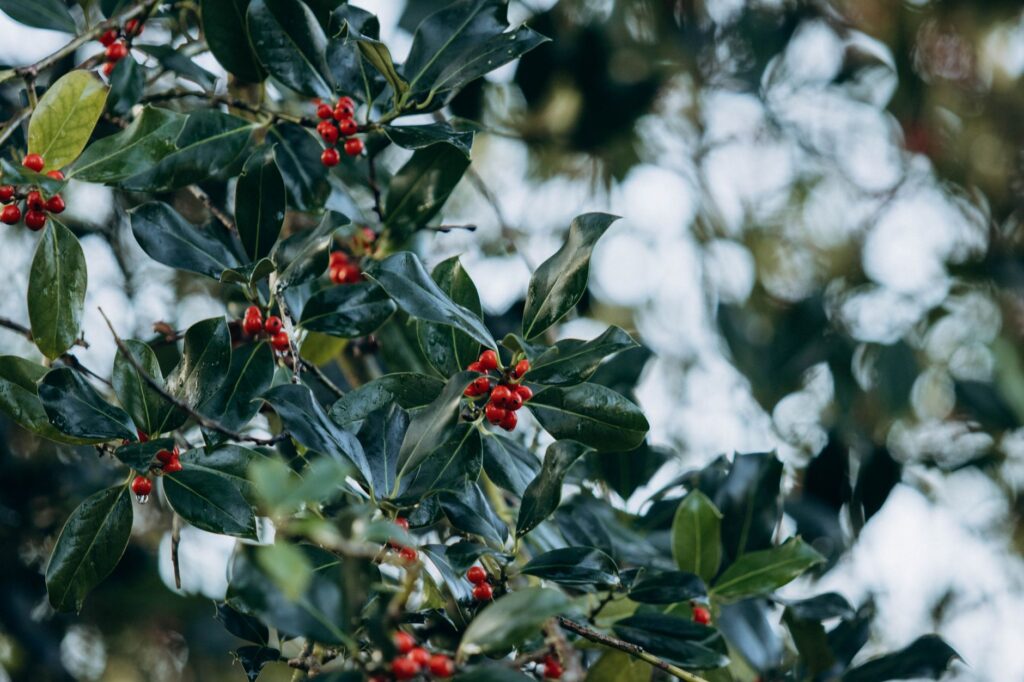
Broadleaf evergreens are the group most vulnerable to this kind of winter burn, because their flat, wide leaves have far more surface area to lose water from than a conifer’s needles. In Middletown landscapes that typically means American holly (Ilex opaca) — one of the few broadleaf evergreens actually native to New Jersey’s coastal plain — along with boxwood, cherry laurel, and rhododendron and azalea plantings that push the edge of their comfort zone in an exposed, windy spot. Rutgers Cooperative Extension’s fact sheet on rhododendron and azalea injuries lists winter desiccation among the most common non-disease damage homeowners misdiagnose as a fungal problem.
Needle evergreens are a different story. Broad-needled types like white pine and spruce see some benefit from anti-desiccants, but scale-leaf conifers — arborvitae, junipers, false cypress — are a genuine exception. Because their foliage is made of tightly overlapping scales rather than open needles, a waxy film can trap moisture against the foliage surface in ways that favor fungal issues, particularly in the humid air common near the Bayshore. Spraying those species without knowing that trade-off can do more harm than the winter burn it was meant to prevent.
Middletown's #1 Tree Expert Company
FREE Inspection & Estimate | Certified Arborists | Trimming, Pruning, Removal, More!
Sponsored
What the Research Actually Shows About Anti-Desiccant Sprays

Rutgers’ Plant & Pest Advisory has published one of the more useful breakdowns of how these products actually perform, and it’s worth reading before assuming a fall spray is a guaranteed fix. According to their primer on anti-transpirant applications, a properly diluted product — roughly one gallon of concentrate to ten or twenty gallons of water — can reduce winter moisture loss from broadleaf evergreens by somewhere in the range of 15 to 20 percent. That’s a meaningful reduction, but it’s not a seal against all water loss, and it isn’t permanent.
The timing detail is the part most homeowners miss. The heaviest desiccation typically doesn’t happen in December — it happens in late winter, often February, when the sun is higher and stronger than midwinter but the ground is still frozen solid. A plant sprayed once in November and left alone may have very little protective film left by the time it needs it most. The coating breaks down with UV exposure and weathering over a period of months, not a full season.
Getting the Timing Right for a Bayshore Winter
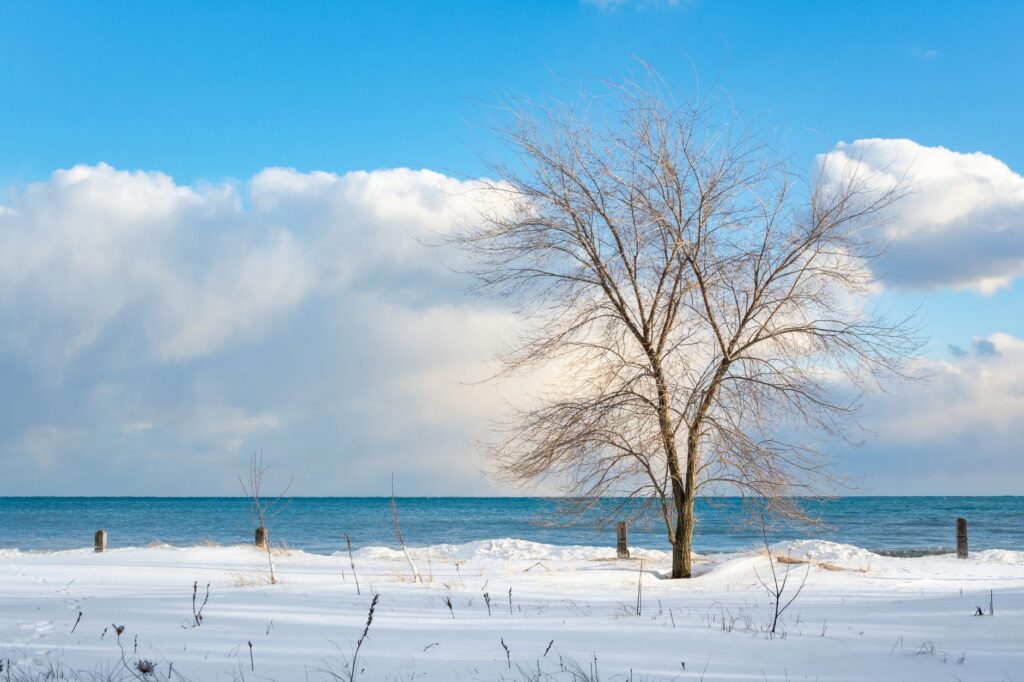
For Monmouth County’s climate, the practical window for a first application is after several hard frosts have hardened off the foliage but before the ground freezes solid — typically late November into December most years. The product needs dry conditions and temperatures safely above freezing to cure properly on the leaf surface; spraying onto wet or frozen foliage mostly wastes the material.
Because the coating fades, a single fall application is rarely enough for exposed plantings. A second, lighter application in late January or early February — timed to catch that high-transpiration stretch Rutgers points to — is what actually closes the gap for hollies, boxwood, and rhododendron sited in full sun and open wind. Plants on a southwest-facing wall that radiates afternoon heat, or anything within direct line of Bayshore gusts in Port Monmouth, Leonardo, or Belford, fall into that higher-risk category. A boxwood tucked against a north-facing foundation in Lincroft or Holmdel Road’s more sheltered lots is carrying a lot less winter stress to begin with.
The Step That Matters More Than Any Spray
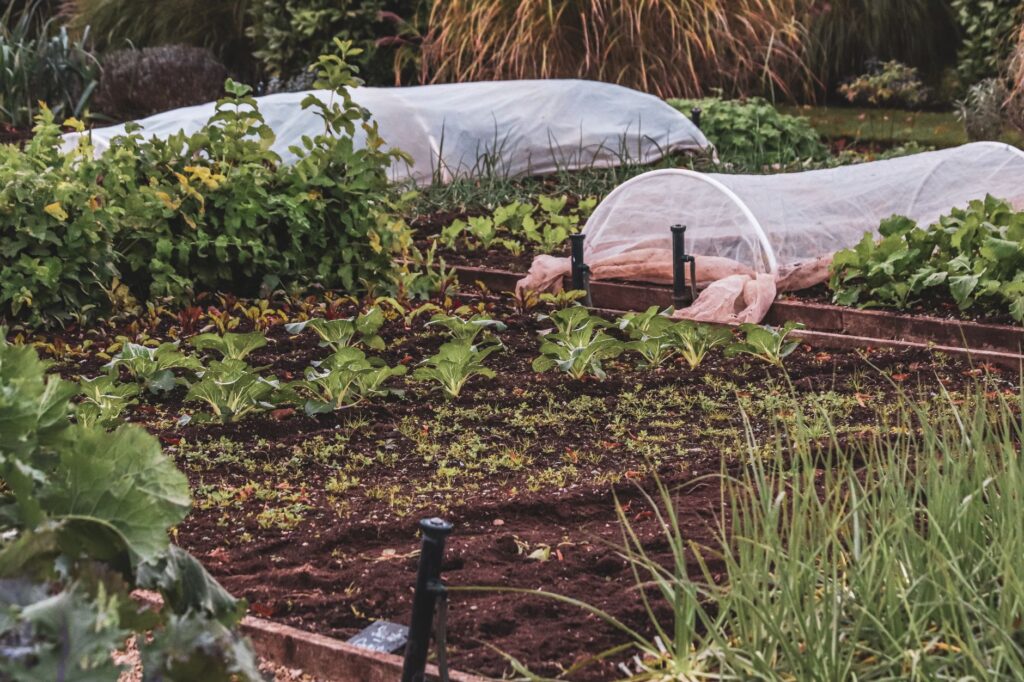
Anti-desiccant is a modest tool. Deep watering before the ground freezes does more for winter survival than any spray on the shelf, because it’s addressing the actual shortfall — how much water is stored in the root zone going into the cold months. The International Society of Arboriculture’s winter tree care guidance puts watering deeply before freeze-up, and again during any winter thaw, at the top of the list — ahead of any product application.
A few other steps do real work alongside that:
- A two- to three-inch mulch ring over the root zone, kept off the trunk itself, buffers soil temperature swings and holds moisture longer.
- Burlap screens staked on the windward side of young or newly installed broadleaf evergreens can cut wind exposure directly, which is often the single biggest variable on an open Bayshore lot.
- Siting matters at planting time — a holly or rhododendron placed out of a hard west or northwest wind corridor will need far less babysitting every winter after.
None of that replaces a spray where one is warranted. It just means the spray is one layer in a plan, not the whole plan.
Middletown's #1 Tree Expert Company
FREE Inspection & Estimate | Certified Arborists | Trimming, Pruning, Removal, More!
Sponsored
When Spray Isn't Enough — And When to Call a Pro

Anti-desiccant sprays make sense for exposed broadleaf evergreens — holly, boxwood, cherry laurel, rhododendron and azalea — sited where wind and winter sun are hardest to avoid. They’re a poor fit for scale-leaf conifers like arborvitae and juniper, and they’re not a substitute for watering the root zone thoroughly before the ground locks up.
If a hedge or specimen evergreen has burned in past winters despite reasonable care, or if the damage pattern doesn’t match a simple wind-exposed side, it’s worth having a certified arborist walk the property before the ground freezes. A fall assessment can sort out whether the issue is genuinely winter desiccation, a root zone problem, a disease that mimics burn, or a plant that was simply never suited to its spot — and build a plan that fits the specific yard rather than a generic label instruction.
Photo credits: Featured image by Anton Sergeevich on Pexels; Section 1 by Vinícius Vieira ft on Pexels; Section 2 by Santa Atte on Pexels; Section 3 by Liudmyla Shalimova on Pexels; Section 4 by Gustavo Fring on Pexels; Section 5 by Mian Rizwan on Pexels; Section 6 by Boys in Bristol Photography on Pexels; Section 7 by Gustavo Fring on Pexels.