Middletown's #1 Tree Expert Company
FREE Inspection & Estimate | Certified Arborists | Trimming, Pruning, Removal, More!
Sponsored
The Pest You Cannot See — Until It Is Too Late
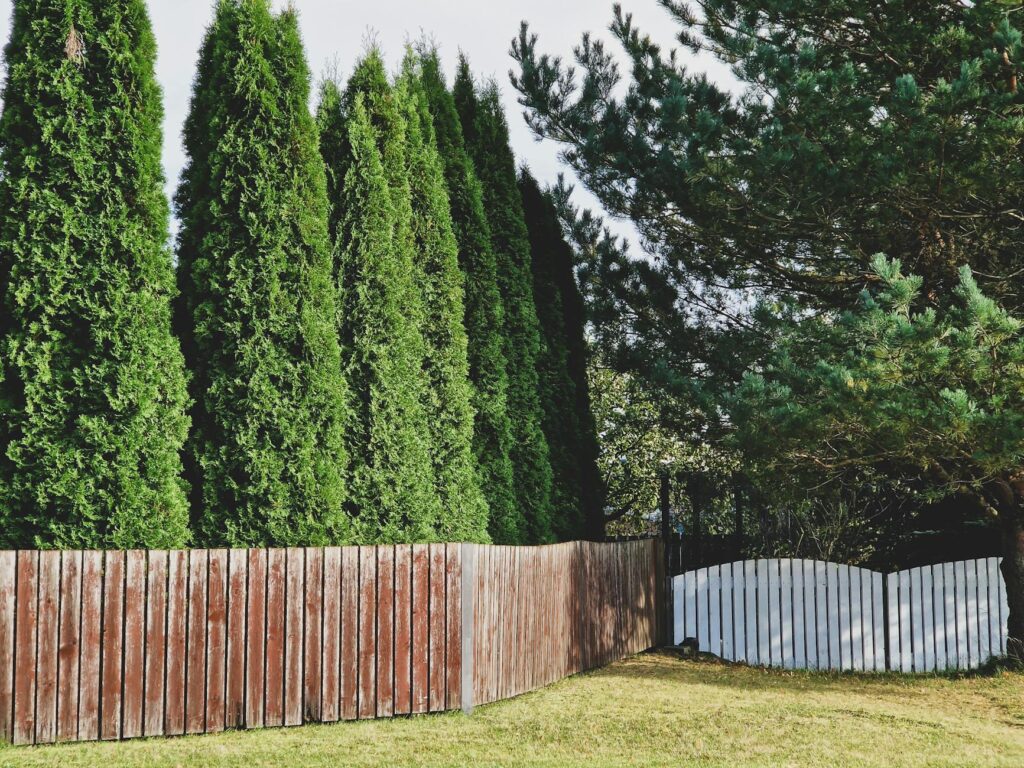
Every summer I get calls from Middletown homeowners who cannot figure out why their arborvitae hedge went from lush green to brown patches seemingly overnight. They blame the drought. They blame the deer. They assume they forgot to water. But when I walk the property and inspect those dying branches up close, I almost always find the same culprit: the remnants of dozens of silken bags, each one housing a caterpillar that spent the summer quietly devouring foliage from the inside out.
Bagworms — Thyridopteryx ephemeraeformis — are one of those pests that seem to materialize out of nowhere in August, but the truth is they were there all along. Right now, in fact, eggs are hatching from overwintered bags on trees across Monmouth County. In a typical year, bagworm eggs begin hatching in late April and continue into mid-May, which means the clock is already running as you read this.
The reason bagworms cause so much damage by late summer is straightforward: by the time most homeowners notice the problem — usually when foliage starts browning significantly — the caterpillars are large, well-armored inside their bags, and very difficult to kill with standard treatments. The window for effective, low-effort control is right now, while the larvae are tiny, exposed, and feeding on the outermost foliage.
Meet the Bagworm: Middletown's Most Overlooked Defoliator
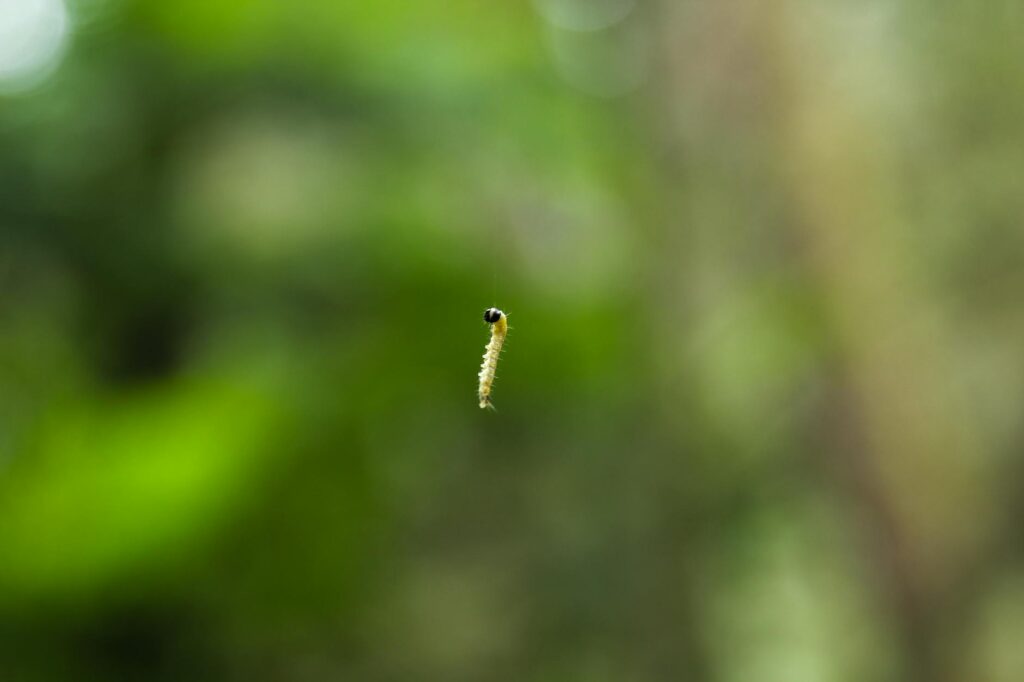
The common bagworm is technically a moth — but not one you would recognize as such. Adult females are wingless and legless, spending their entire lives inside the silk bag they build as larvae. Males emerge briefly in late summer, locate a female’s bag by scent, mate through the bag’s opening, and die within a day or two. The fertilized female lays 500 to 1,000 eggs inside her bag, then also dies. Those egg masses overwinter right there in the bag, protected through our Monmouth County winters, and hatch the following May.
When the eggs hatch, the tiny larvae — barely 1 to 2 millimeters long — immediately begin spinning a protective silk bag around themselves, incorporating bits of leaf tissue and small twig fragments to camouflage it against the host plant. As the larva feeds and grows through the summer, it enlarges the bag from the bottom. By midsummer a mature larva’s bag can reach 1.5 to 2 inches long, adorned with short branch stubs and leaf pieces that make it look remarkably like a small pine cone dangling from a branch.
That camouflage is exactly why so many homeowners miss the infestation entirely until August, when the damage to the foliage becomes hard to ignore. For a detailed look at bagworm biology and integrated pest management options, the Rutgers NJAES Home and Garden Information Center provides research-based guidance specific to New Jersey landscapes.
Which Middletown Trees Are Most at Risk?
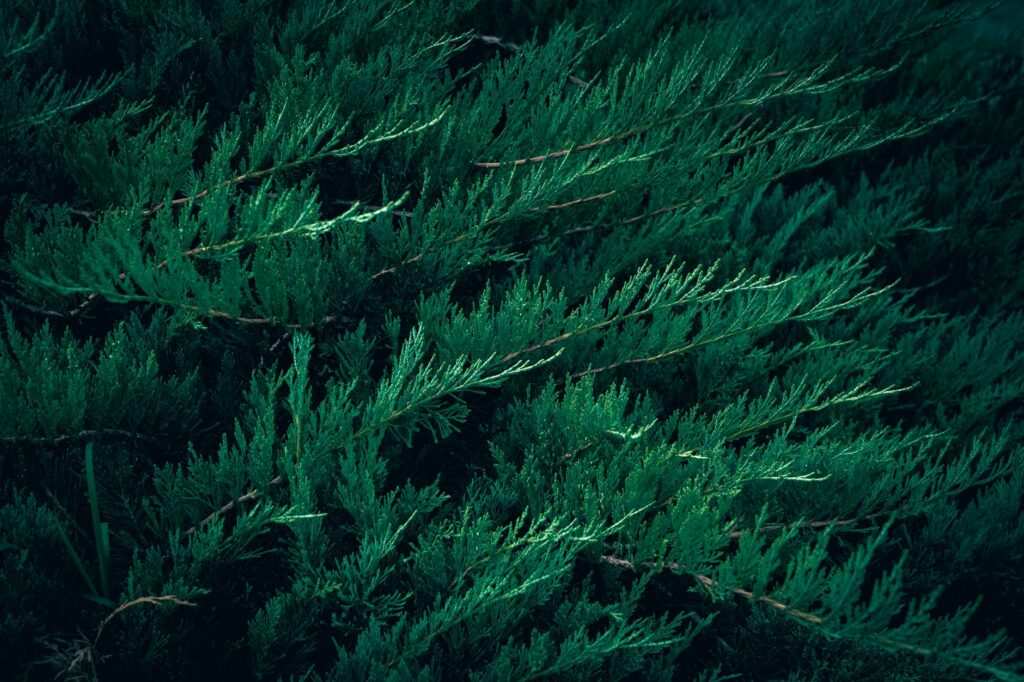
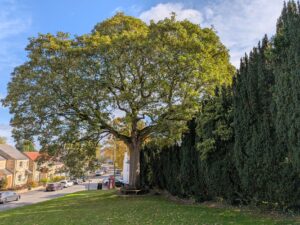
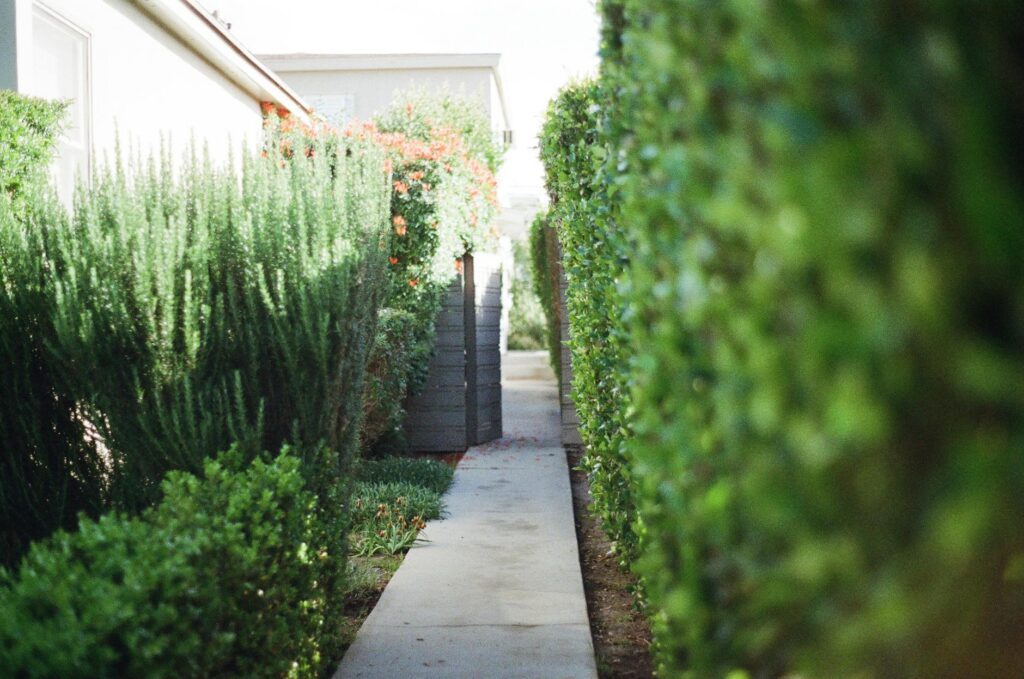
Bagworms are generalists — they can feed on more than 128 plant species — but in Middletown yards they concentrate heavily on a handful of host plants that are extremely common in our landscape. Arborvitae (Thuja occidentalis) is by far the most frequent victim I see. It is the default privacy hedge in this township, lining backyards from Leonardo to Lincroft and from Port Monmouth up through Atlantic Highlands. The problem with arborvitae and bagworms is severe: this species does not regenerate foliage from bare wood the way a broadleaf tree might. Branches stripped clean by a heavy infestation stay brown and dead permanently.
Eastern red cedar (Juniperus virginiana) is another favorite host, and Middletown has plenty — it is one of the first trees to colonize disturbed ground, and you will find it along old fence lines and at the wooded edges of Hartshorne Woods Park. Other junipers, leyland cypress, and false cypress are similarly attractive to bagworms. Among broadleaves, oaks, maples, and sycamores can be attacked but tend to recover better because they push new foliage after defoliation.
If you have a row of arborvitae, a juniper in a foundation planting, or an Eastern red cedar at the property edge, take 15 minutes this week to inspect the outer branch tips carefully. Look for tiny silken bags, each one a narrow spindle-shaped structure barely larger than a sesame seed at this time of year. They are there — you just have to know what to look for.
Middletown's #1 Tree Expert Company
FREE Inspection & Estimate | Certified Arborists | Trimming, Pruning, Removal, More!
Sponsored
How to Scout for Bagworms Right Now
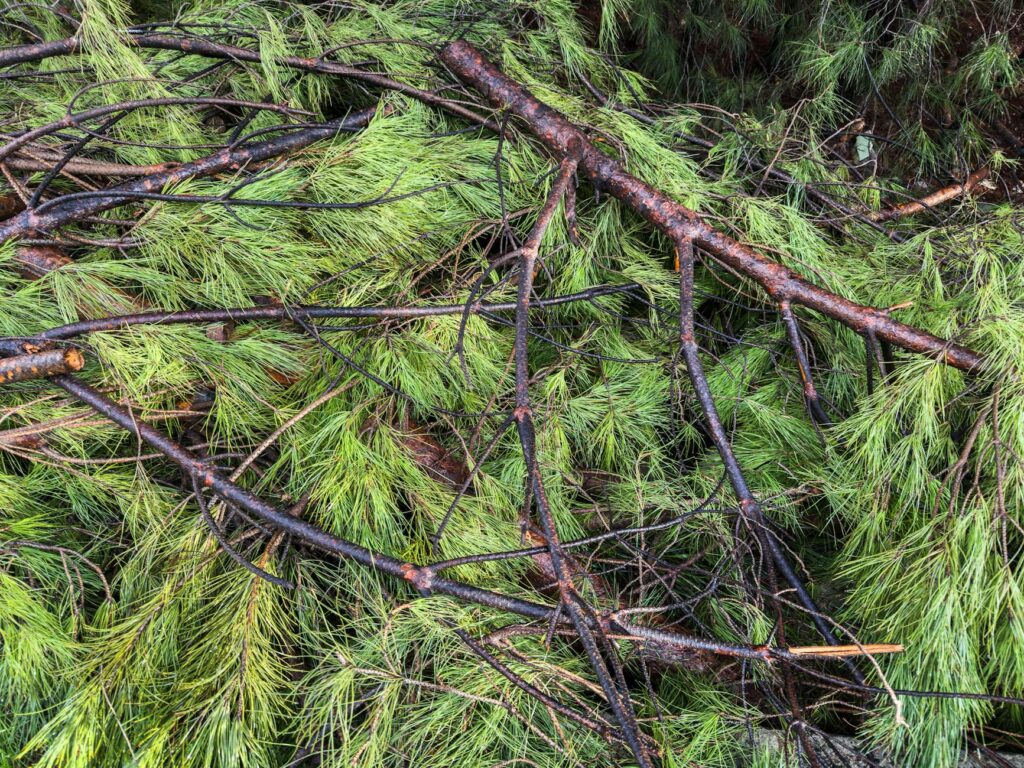
In mid-May, bagworm larvae are so small they are nearly invisible without knowing exactly what to look for. The bags at this stage are roughly 3 to 6 millimeters — smaller than a pea — and dangle from branch tips on a silk thread. The surrounding foliage may show no visible browning yet; the damage at this scale is imperceptible. But finding the infestation now, before significant feeding has occurred, makes every subsequent step far easier.
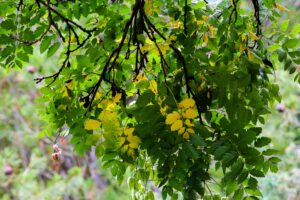
Focus your scouting on the outer, sunlit portions of the canopy first. Bagworm larvae favor new growth on branch tips, and egg masses overwinter near the tops of trees where sun exposure is highest. On arborvitae, gently part the outer foliage scales and look for small spindle-shaped objects hanging from individual branchlets. On junipers, check where branch tips cluster most densely. One useful trick: hold a branch up against a bright sky and look through the foliage. The tiny bags, backlit, become much easier to spot against the light than against the dark green of the foliage behind them.
If you find even a handful of bags at this size, assume there are many more throughout the tree. A single overwintered female laid 500 to 1,000 eggs. If just a few females were present last year — and on a heavily infested hedge, there could have been dozens — you are likely looking at a very large population hatching right now across the entire plant. Do not let the small size of what you see fool you into thinking the problem is small.
Treatment Options: What Works Now and What Fails in July
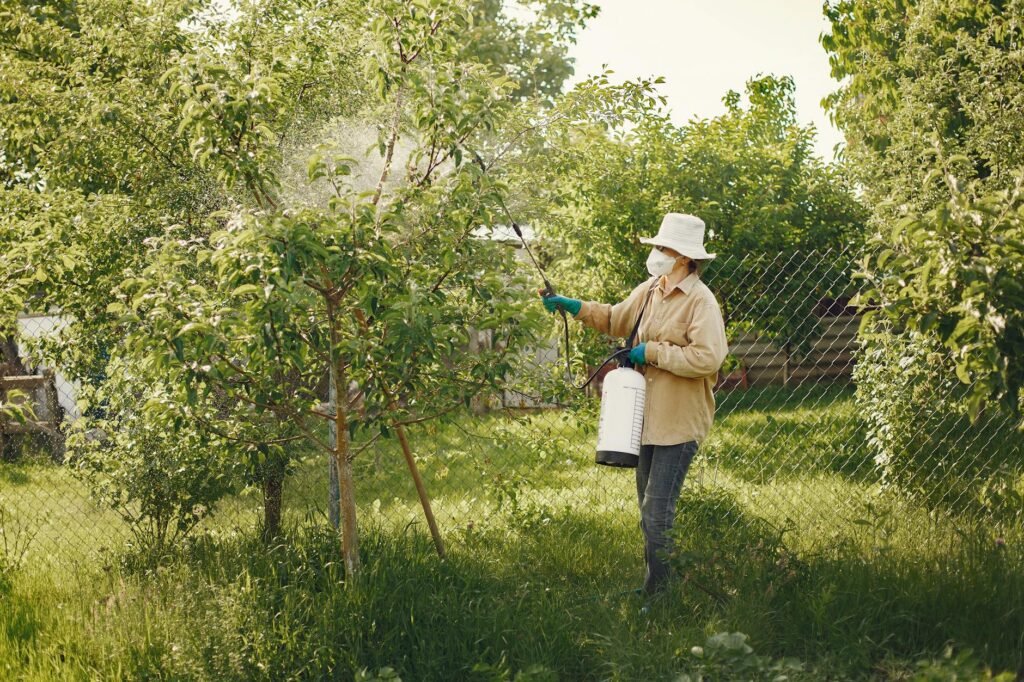
The good news about catching bagworms this early is that the most effective treatments are also the safest and least disruptive to the surrounding garden ecosystem. When larvae are tiny and actively feeding on exposed foliage, biological insecticides work extremely well.
Bacillus thuringiensis var. kurstaki (Bt) is a naturally occurring soil bacterium that kills caterpillar larvae when ingested. When bagworm larvae are less than half an inch — which is where they are right now in Middletown — a thorough application of a Bt product is often all that is needed. Spinosad, another biopesticide derived from soil bacteria, is similarly effective at this stage and has a substantially lower impact on beneficial insects than synthetic alternatives when applied correctly. Both products require contact with actively feeding larvae, so thorough spray coverage of the entire canopy is essential; do not just hit the outside of the hedge and call it done.
The International Society of Arboriculture’s consumer resource at TreesAreGood.org is a useful starting point for understanding what to expect when working with a professional arborist on integrated pest management. For a large hedge or tall trees, a licensed pesticide applicator with proper spray equipment will achieve far better coverage than a homeowner with a garden sprayer — and coverage is everything with this pest.
Contrast that with the situation in July or August, when bags are 1.5 to 2 inches long and larvae are fully armored inside them. At that stage, standard contact insecticides — including synthetic pyrethroids — have very limited effectiveness because the larvae seal themselves inside their bags and reduce or stop feeding. Manual removal of the bags becomes the primary option, which is tedious on a 30-foot arborvitae row. Any bags removed must be sealed in plastic and disposed of, since larvae can complete development on the soil if left on the ground.
The Math Behind the Window: Why May Treatment Matters
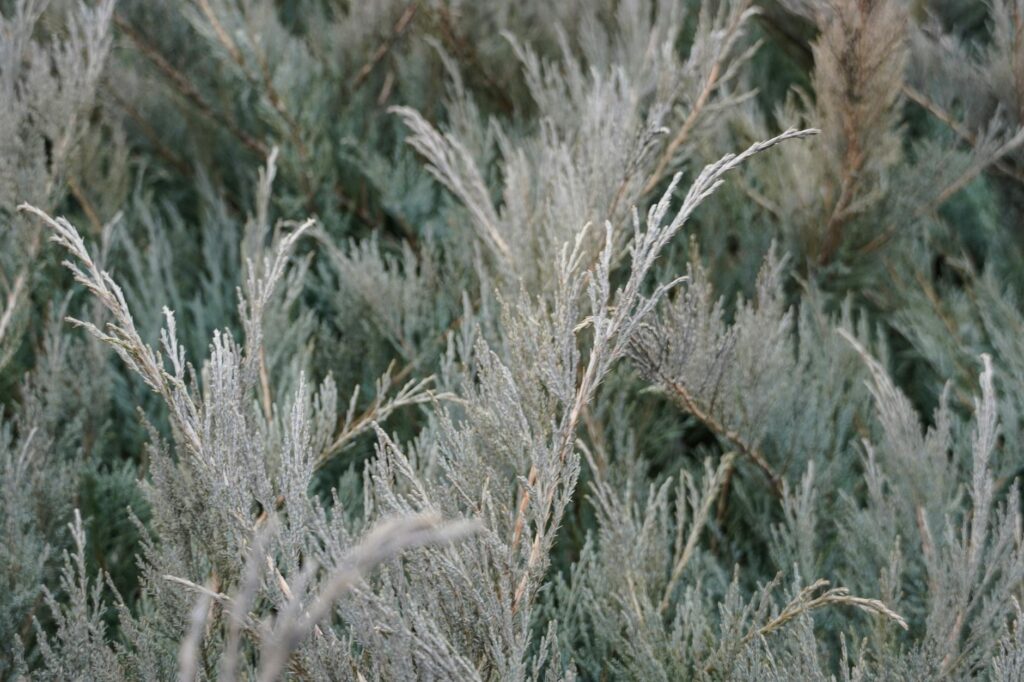
Consider the numbers behind this urgency. One overwintered female bagworm bag — the kind you might have noticed clinging to your arborvitae last fall, or the dried bags still hanging there from two or three seasons ago — contains 500 to 1,000 viable eggs. If even 10 of those bags survived on a 20-foot arborvitae hedge, you could be looking at 5,000 to 10,000 larvae hatching this month.
At their current tiny size, each larva is consuming a small amount of foliage — but bagworms grow rapidly, and their consumption rate increases dramatically as they mature. By the time they are half an inch long, each caterpillar is eating 10 to 20 times more tissue per day than when it hatched. By August, mature larvae stop feeding entirely to pupate, but by then an uncontrolled population can have stripped significant portions of an arborvitae hedge — damage that, on this species, is permanent.
The USDA Forest Service’s forest health resources document the bagworm’s range and impact across the eastern United States, noting that outbreaks tend to recur on properties where infestations go untreated, because overwintered egg masses persist on the plant and the cycle repeats year after year. In Middletown, that pattern exactly matches what I observe in the field: the same arborvitae rows take repeated hits because the spent bags were never removed and the population was never broken.
One practical step you can take today, independent of any spray decision: scan your arborvitae and junipers for old, dried bags still hanging from prior years and remove them by hand. Each one you pull off is 500 to 1,000 fewer larvae to deal with this season. Seal them in a plastic bag before discarding — do not drop them on the ground — and you have meaningfully reduced the starting population at zero cost.
Middletown's #1 Tree Expert Company
FREE Inspection & Estimate | Certified Arborists | Trimming, Pruning, Removal, More!
Sponsored
Summary / When to Call a Certified Arborist
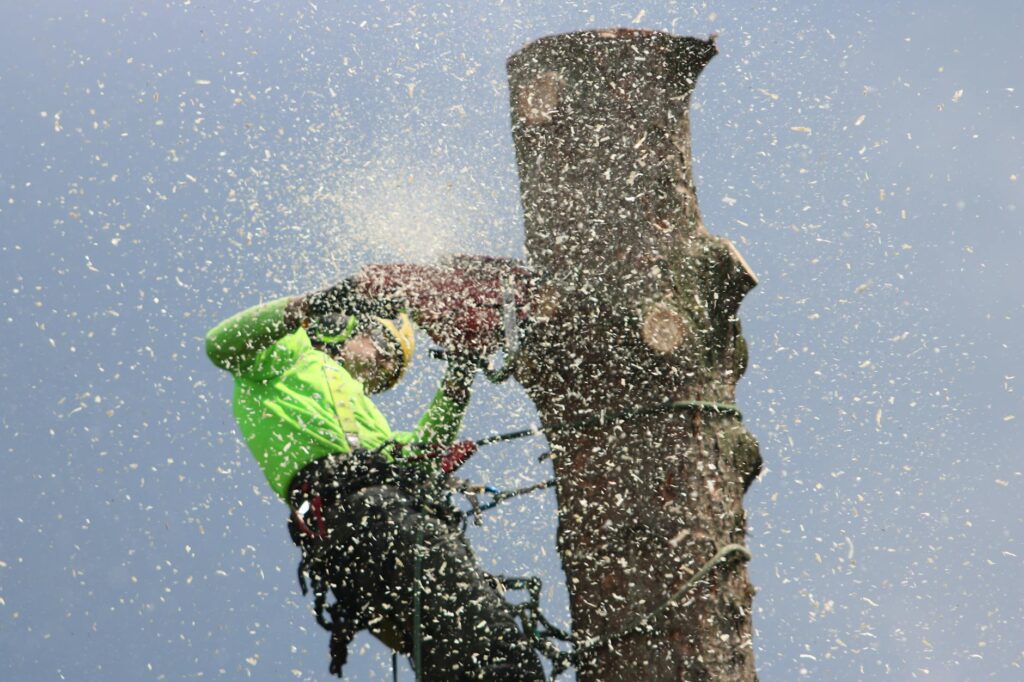
Bagworm season in Middletown is underway right now, and mid-May is genuinely the best time of year to address it. Small larvae, tiny bags, maximum susceptibility to biological treatments — everything lines up in your favor if you act this week rather than waiting until you notice brown patches in August.
If you have a small planting of arborvitae or junipers with a light infestation, a careful inspection and a well-timed Bt or spinosad application can handle the problem at reasonable cost and effort. But if your hedge is tall, the infestation appears heavy, or you are not certain whether what you are seeing is actually a bagworm bag versus something harmless, this is a situation where a certified arborist earns their fee quickly. Proper identification matters — there are other baglike structures on trees, including spider nests and caddisfly-related debris, that require no treatment whatsoever. And achieving thorough coverage on a 25-foot arborvitae row requires equipment most homeowners do not have available.
An arborist can also give you an honest assessment of whether branches that went brown in prior years are truly dead and need to be removed, or whether the plant as a whole has a realistic path to recovery. Arborvitae that has lost its foliage on interior branches will not regenerate that growth; sometimes the right answer is that a section of hedge needs to be replaced, and knowing that early saves you from investing in plants that will not bounce back.
For help finding qualified tree care professionals in Monmouth County, the NJ DEP Division of Parks and Forestry provides resources on forest management and tree health across the state, and the ISA certified arborist locator at TreesAreGood.org can connect you with credentialed professionals in your area. The window is open right now — do not wait until August to realize it has closed.
Photo credits: Featured image by Jaymantri on Pexels; Section 1 by Hanno on Pexels; Section 2 by Pras Bst on Pexels; Section 3 by Wyxina Tresse on Pexels; Section 4 by Doğan Alpaslan Demir on Pexels; Section 5 by Gustavo Fring on Pexels; Section 6 by Rylee Yi on Pexels; Section 7 by Henk Schuurmans on Pexels.