Middletown's #1 Tree Expert Company
FREE Inspection & Estimate | Certified Arborists | Trimming, Pruning, Removal, More!
Sponsored
The Vine You Should Never Ignore
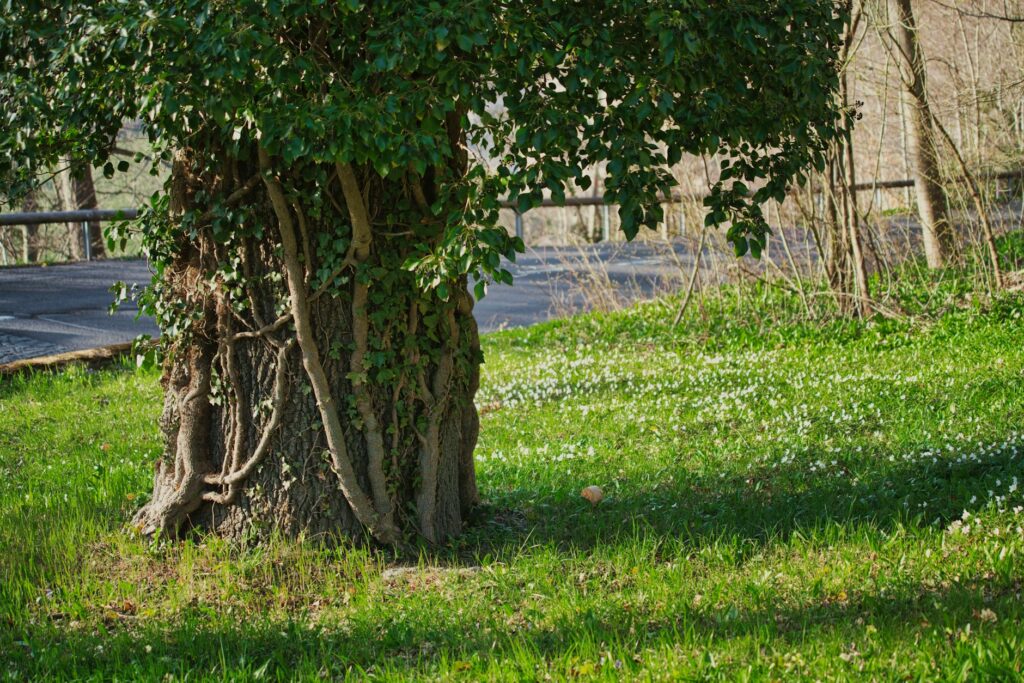
It’s mid-May in Middletown Township, and a particular plant is doing what it does best: taking over. Walk to the back edge of your property near the Bayshore, follow the treeline through a Lincroft neighborhood, or peer into the wooded margins around Hartshorne Woods Park — and you will almost certainly find Oriental bittersweet (Celastrus orbiculatus) already several feet into this year’s growth. The round leaves are fully expanded. The vines are twining clockwise around every trunk and branch they can reach. And somewhere up in your oak, red maple, or black cherry, this aggressive invasive is quietly working its way toward the crown.
Most Middletown homeowners don’t register bittersweet until fall, when the bright yellow capsules and red berries make it unmistakable. By then, the vine has already been at work for months or years. I’ve assessed trees in Lincroft and along Chapel Hill Road where bittersweet had girdled a trunk so severely that the cambium — the living tissue layer just under the bark — was crushed in a continuous ring. The tree’s fate was decided long before any visible dieback appeared in the canopy.
May is both the most critical month to spot Oriental bittersweet and the best window to begin controlling it. Here’s what every Middletown homeowner with trees on a woodland edge, along a fence line, or near a brushy slope needs to know.
How to Identify Oriental Bittersweet in May
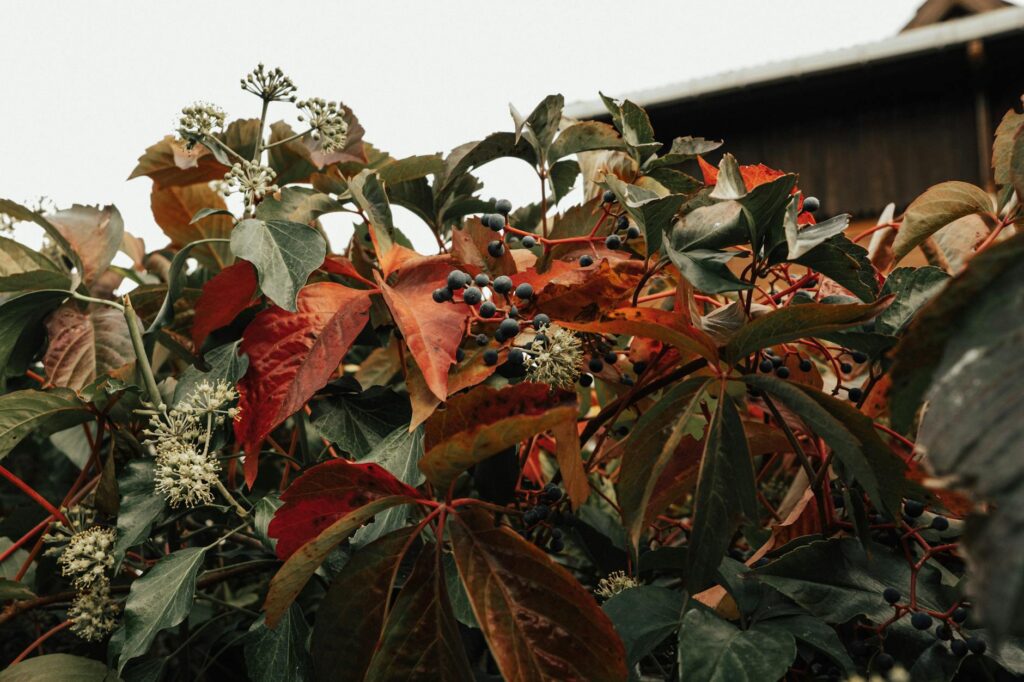
Oriental bittersweet (Celastrus orbiculatus) arrived from eastern Asia — Japan, Korea, and China — and has colonized disturbed woodland edges throughout Monmouth County. In May, identify it by its alternate, broadly oval leaves with finely toothed margins. The leaves tend to be nearly as wide as they are long, emerging lime green before darkening as the season progresses. Young stems have a distinctly warty, lenticeled texture you can feel by running a finger along them.
The most reliable identification trick — one that separates Oriental bittersweet from the native American bittersweet (Celastrus scandens) — is to note where the fruit sets. On Oriental bittersweet, the distinctive yellow capsules with red seeds appear all along the entire stem, at every leaf node. On native American bittersweet, fruiting is confined only to branch tips. In May you won’t have fruit to check, but if you’ve seen the same vine with berries scattered along the whole stem in previous falls, you’re looking at the invasive species.
The New Jersey DEP Forest Service’s invasive species program identifies bittersweet as among the most ecologically damaging invasive plants in New Jersey’s forests. In the woodland edge habitats that define much of Middletown Township — where manicured yards meet secondary growth, where old fence lines are draped in vegetation, where the Navesink River corridor borders private land — bittersweet thrives precisely because disturbance gives it a foothold that native plants struggle to close.
Also watch for look-alikes: native Virginia creeper (Parthenocissus quinquefolia) climbs by adhesive discs rather than twining and turns a brilliant red in fall without strangling host trees. If the vine is twining tightly around branches and the leaves are broadly oval, bittersweet is your likely culprit.
Three Ways Oriental Bittersweet Kills a Tree
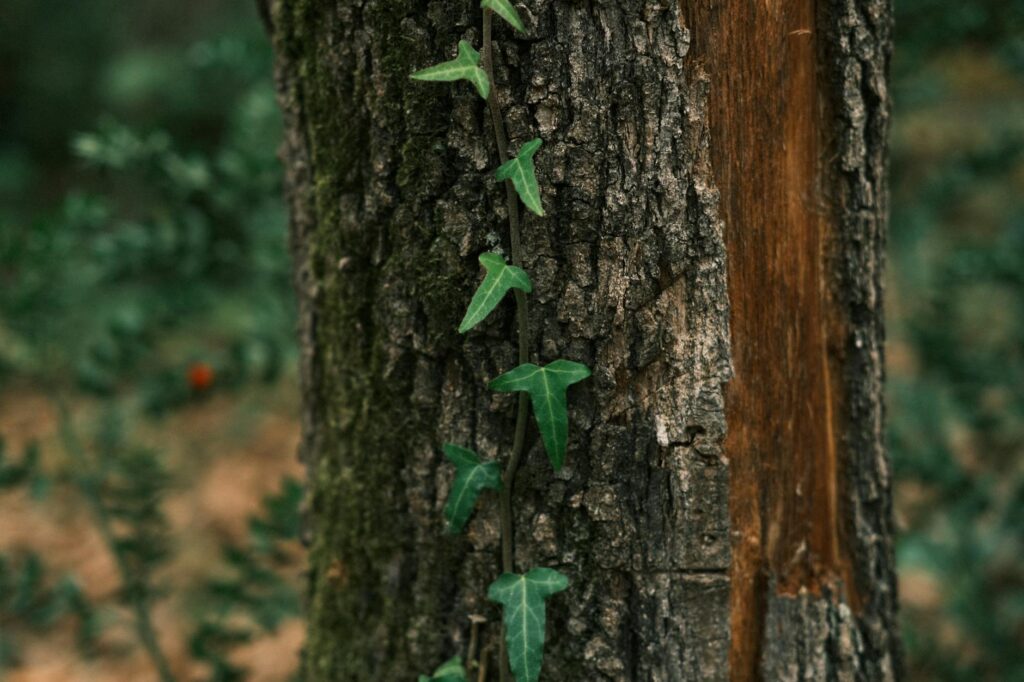
A single bittersweet vine seems manageable. By the time most homeowners realize it’s a problem, they’re usually dealing with a plant that has been working on their tree for years. There are three mechanisms by which Oriental bittersweet kills or severely compromises a tree.
Girdling. The vine twines tightly around trunks and branches, constricting the cambium layer that moves water and carbohydrates throughout the tree. On a branch, a single stem wrapping around the same point year after year can cut off flow to everything beyond it. On a large trunk where multiple bittersweet stems have coiled for a decade, cumulative pressure deforms bark and disrupts vascular tissue — a slow strangulation that can eventually kill a mature tree long before it shows severe distress from the street.
Shading. Bittersweet doesn’t stop at the lower trunk. It follows scaffold branches into the upper crown and spreads a dense leafy mat over the top of the tree. In full summer, the green canopy you see from the street on a heavily infested tree may be mostly bittersweet foliage competing for the same sunlight the tree needs. The host tree simultaneously loses light and expends energy trying to push new growth through the vine mass.
Storm loading. An infested tree is a larger wind target. Bittersweet adds leaf surface area, increasing drag in a wind event, and adds considerable weight throughout the crown. In the intense summer thunderstorm season that runs from June through September in Monmouth County — and in the nor’easters that roll through the Bayshore in fall — that extra loading on already-stressed branch unions increases failure risk significantly. The Rutgers NJAES publication on invasive plants in New Jersey landscapes identifies invasive vines as a compounding structural risk factor, not just a cosmetic nuisance.
Middletown's #1 Tree Expert Company
FREE Inspection & Estimate | Certified Arborists | Trimming, Pruning, Removal, More!
Sponsored
Other Invasive Vines Threatening Middletown Trees This May
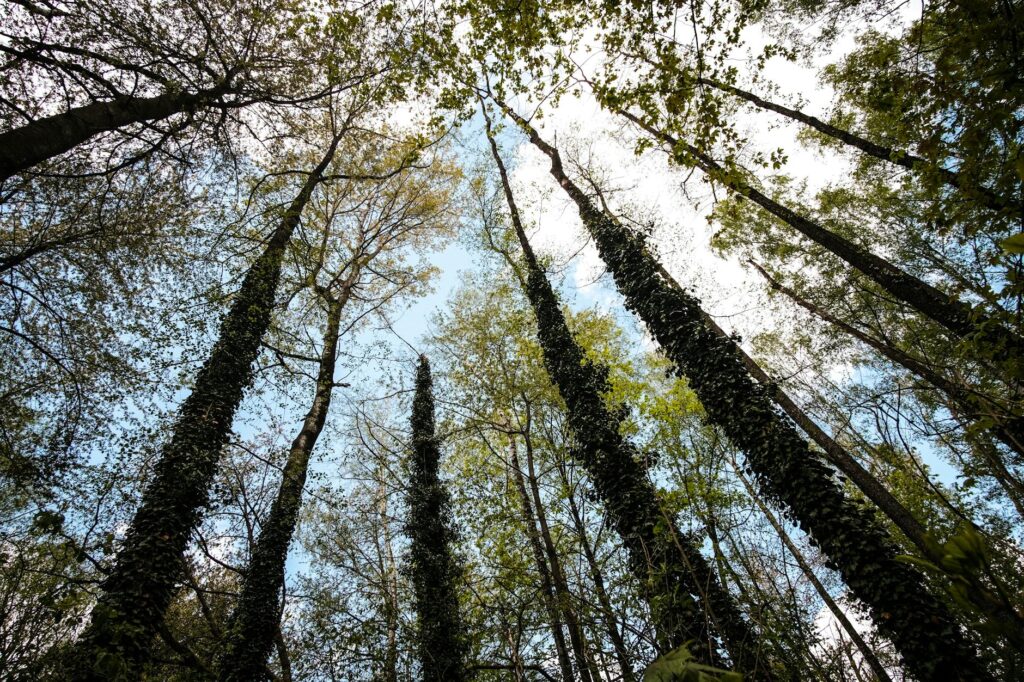
Oriental bittersweet gets the most attention, but Middletown yards host a supporting cast of invasive vines that cause their own damage. If you’re doing a vine survey this month, here’s what else to watch for along your fence line and woodland edge.
Japanese honeysuckle (Lonicera japonica). Right now, in mid-May, Japanese honeysuckle is just beginning to bloom — those familiar white and yellow tubular flowers with the sweet fragrance you’ve likely caught on a warm evening along a Middletown trail. Beautiful and deeply problematic. Honeysuckle grows semi-evergreen, meaning it holds leaves through mild winters and smothers shrubs and small trees year-round. It’s less likely to girdle a large oak than bittersweet, but it can collapse the structure of young trees and completely engulf the lower canopy of any ornamental planted in a partly shaded yard.
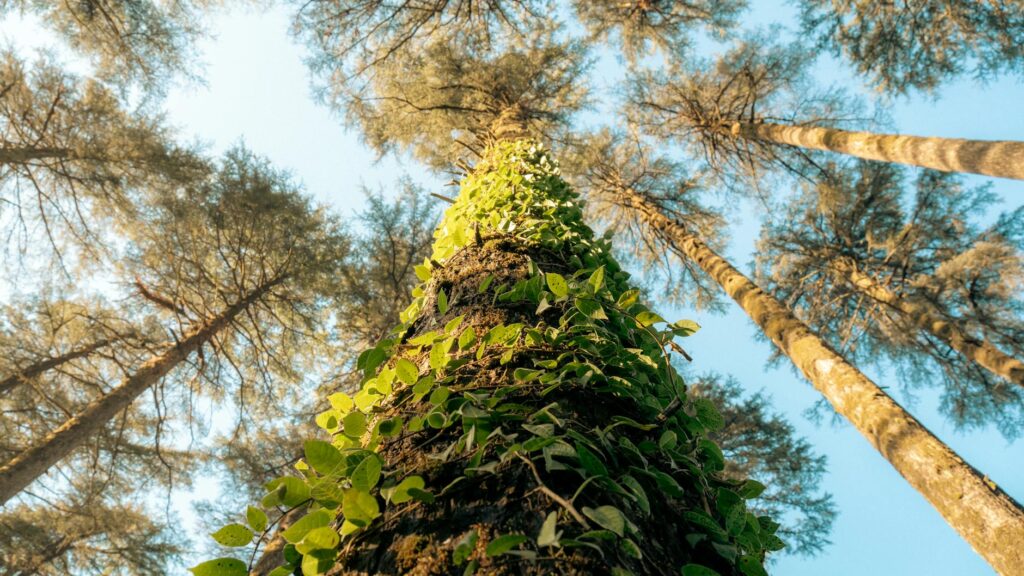
English ivy (Hedera helix). Ivy on a tree trunk is not a charming aesthetic — it’s a slow-motion threat to the tree beneath. The aerial rootlets penetrate bark, trap moisture, and eventually cover so much trunk surface that decay can advance undetected beneath the mat. In the shaded backyards common in Middletown’s older neighborhoods, ivy can spread across an entire woodland floor and climb established trees to 60 feet or more. The NJDEP’s invasive plant resources document English ivy as a significant threat to New Jersey’s urban and suburban forest ecosystems — and the fact that it’s still sold in nurseries doesn’t make it any less damaging to your trees.
The common thread among all these vines: they thrive at the disturbed edges between yards and woodland, exactly the landscape character that defines the Bayshore neighborhoods, the Hartshorne corridor, and the woodlot-adjacent properties throughout Middletown Township.
When and How to Control Bittersweet — The May Window
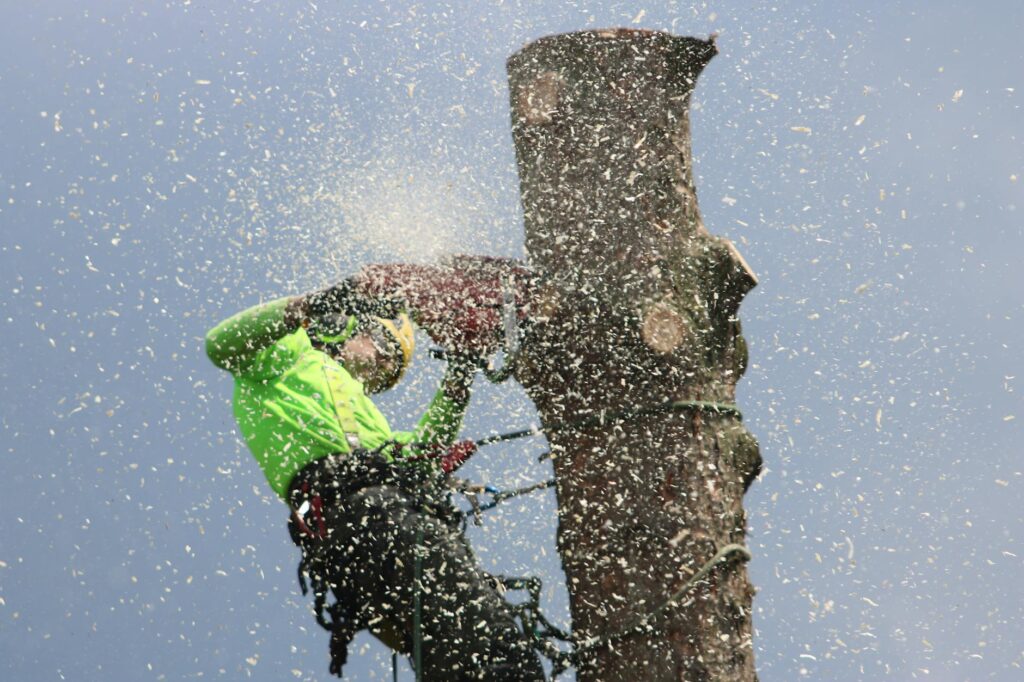
May through August is the optimal treatment window for Oriental bittersweet. The plant is actively growing and translocating nutrients, which means systemic herbicides applied to cut stems travel efficiently down to the root system — where you actually need to kill it. Treatments done in late fall or winter tend to be far less effective.
The most reliable technique for established vines is cut-stump treatment: cut the vine stem at chest height and immediately — within a minute or two — apply a concentrated herbicide directly to the cut surface. Glyphosate at 25–50% concentration or triclopyr (sold under several brand names for brush control) both work. The key is speed; the plant begins sealing the wound almost immediately after cutting. This gets the chemical into the root system before that happens. For bittersweet, treat both the stump at the base of the tree and any rooted stems or root sprouts you can find nearby.
For small vines at the base of a tree — stems less than half an inch in diameter — hand-pulling works if you get the root. Trace the root as far as possible; bittersweet roots are pale yellowish and can extend several feet from the stem, re-sprouting from any fragment left behind. Do not yank large vines down from the upper canopy. Cut them at the base and let them die in place — pulling can snap branches, tear bark, and cause exactly the wounds that invite secondary fungal pathogens.
- Cut at chest height; apply herbicide to cut surface immediately
- Hand-pull young vines and trace the root as far as possible
- Cut large canopy vines at the base; let them die in place rather than pulling
- Bag all fruiting material in sealed plastic; do not compost
- Plan for 2–3 seasons of follow-up treatment — one round rarely eliminates bittersweet
Disposal matters: bittersweet fruit is viable and spread widely by birds. Even dried winter berries can germinate. Any vine with berries attached goes into sealed bags and trash, never the compost pile.
Why Your Bittersweet Problem Is Everyone's Problem
Bittersweet is not just your property issue — it’s a landscape-scale challenge in Middletown Township that connects your backyard directly to the ecological health of Monmouth County’s green corridors. The wooded tracts at Hartshorne Woods Park, Poricy Park, and the Navesink River greenway are actively managed for invasive vine pressure by park staff and volunteer groups. But those parks are surrounded by private land, and what happens at your property edge directly affects what happens inside the park boundary.
Birds — robins, starlings, cedar waxwings — eat bittersweet berries in fall and winter and deposit seeds widely across the landscape. A heavily fruiting bittersweet plant at the back of your lot is a seed source for hundreds of feet in every direction. Controlling bittersweet before it fruits, or removing fruiting plants before seeds ripen, reduces the seed bank that park managers spend enormous effort fighting. This is why the NJDEP’s invasive species program actively encourages homeowners to remove invasive plants from private land — the cumulative effect of backyard removal is measurable at the regional scale.
Middletown Township’s woodland edge habitat — the transitional zone between mowed lawn and forest interior — is one of the most ecologically valuable landscapes in the municipality. White oak (Quercus alba), red maple (Acer rubrum), black cherry (Prunus serotina), and American beech (Fagus grandifolia) growing in that edge zone support a vast range of native insects and the birds that eat them. Bittersweet’s systematic replacement of that native plant community has measurable effects on local biodiversity that extend well beyond any single yard.
Middletown's #1 Tree Expert Company
FREE Inspection & Estimate | Certified Arborists | Trimming, Pruning, Removal, More!
Sponsored
When to Call a Certified Arborist
If you’ve spotted bittersweet on your property, start with what you can safely manage: cut and treat small vines at the base, hand-pull seedlings and young root runners near the trunk, and get all fruiting material into the trash before birds find it. These are meaningful steps that any homeowner can take on a May weekend afternoon.
But there are situations where a certified arborist needs to assess both the vine situation and the tree before any work begins. Call a professional if any of the following apply:
- Bittersweet stems at the base of the tree are thicker than an inch in diameter — these are mature plants with extensive root systems that typically require professional-grade herbicide application
- Vines extend into the upper canopy of a large tree — removing them safely requires climbing, rigging, and an understanding of which cuts could send limbs down
- The tree itself shows stress: a thin or patchy canopy, dead branches in the upper crown, premature yellowing, bark wounds, or fungal conks at the base
- You’re not sure whether the tree is structurally sound enough to recover after vine removal
An ISA-certified arborist can assess the tree’s overall condition, give you an honest prognosis, and perform vine removal in a way that protects the tree rather than adding to its stress. In some cases — particularly when bittersweet has been established for more than a decade — the honest assessment is that the host tree has been compromised beyond practical recovery, and removal is the safer path for your property.
Whatever you decide, don’t wait. Every week in May and June, Oriental bittersweet adds significant new growth. The vine you can handle yourself today may require a professional crew by September. Identify it now, cut it at the base, and if you’re unsure what you’re dealing with or how stressed the host tree may be, have an arborist walk the property before summer’s dense canopy closes in and makes assessment that much harder.
Photo credits: Featured image by Hrishav Jha on Pexels; Section 1 by Sergio Zhukov on Pexels; Section 2 by Sami Aksu on Pexels; Section 3 by Nina zeynep güler 🦕 zz on Pexels; Section 4 by Ignaz Wrobel on Pexels; Section 5 by Henk Schuurmans on Pexels; Section 6 by Jay Brand on Pexels; Section 7 by Peter Xie on Pexels.