Middletown's #1 Tree Expert Company
FREE Inspection & Estimate | Certified Arborists | Trimming, Pruning, Removal, More!
Sponsored
Your Birch Looks Fine From the Street — Until It Isn't
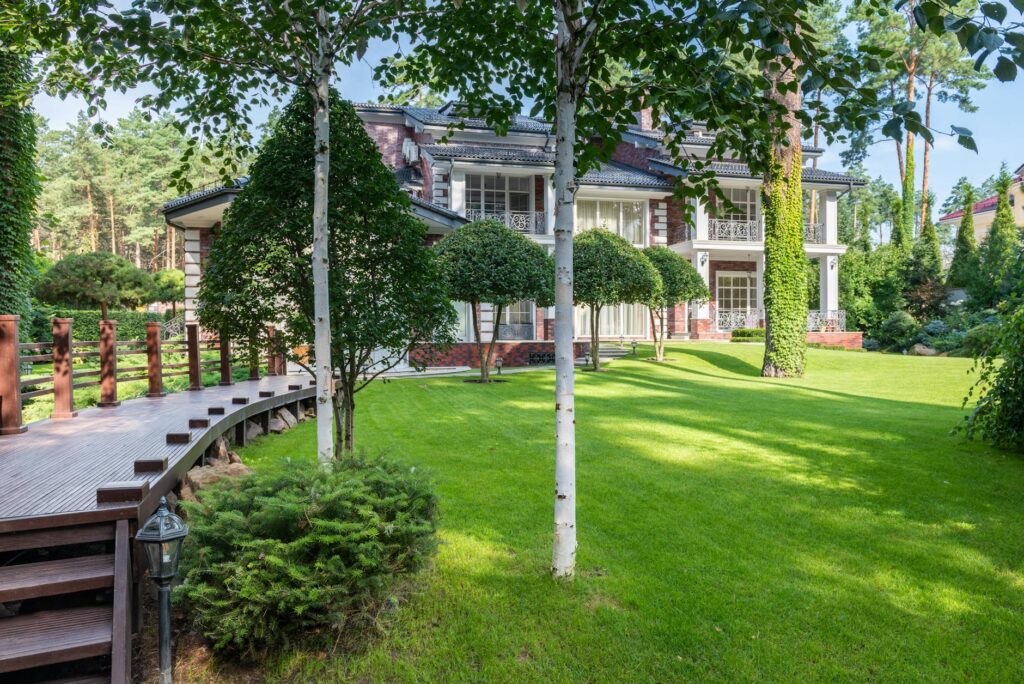
In mid-May, Middletown yards are at their most lush — everything leafed out, the oaks deep green, the dogwoods finishing their bloom. But there is a particular tree I keep getting called about this time of year, and it almost always starts with the same observation: the top third just isn’t leafing out like it should. That’s bronze birch borer. By the time a homeowner notices that crown dieback, the infestation is often well established and has been progressing for a full season or more.
This beetle is a master of working quietly — deep in the cambium, out of sight, while the tree burns through its reserves trying to wall off the damage. In Middletown’s mix of suburban neighborhoods and wooded parcels, from the hilltops above Lincroft down to the coastal lots near Port Monmouth and Leonardo, birch trees are a common and well-loved landscape choice. They’re graceful, fast-growing, and offer brilliant fall color. They also carry a particular vulnerability that too many homeowners don’t discover until the tree is already beyond saving.
May is the month that matters for bronze birch borer. The adults are emerging from last year’s infested wood right now, and they’re actively scouting for the next stressed birch to lay their eggs in. Knowing what to look for — and acting before the larvae get established — is the difference between saving your tree and losing it.
Meet Agrilus anxius: The Beetle Behind the Damage
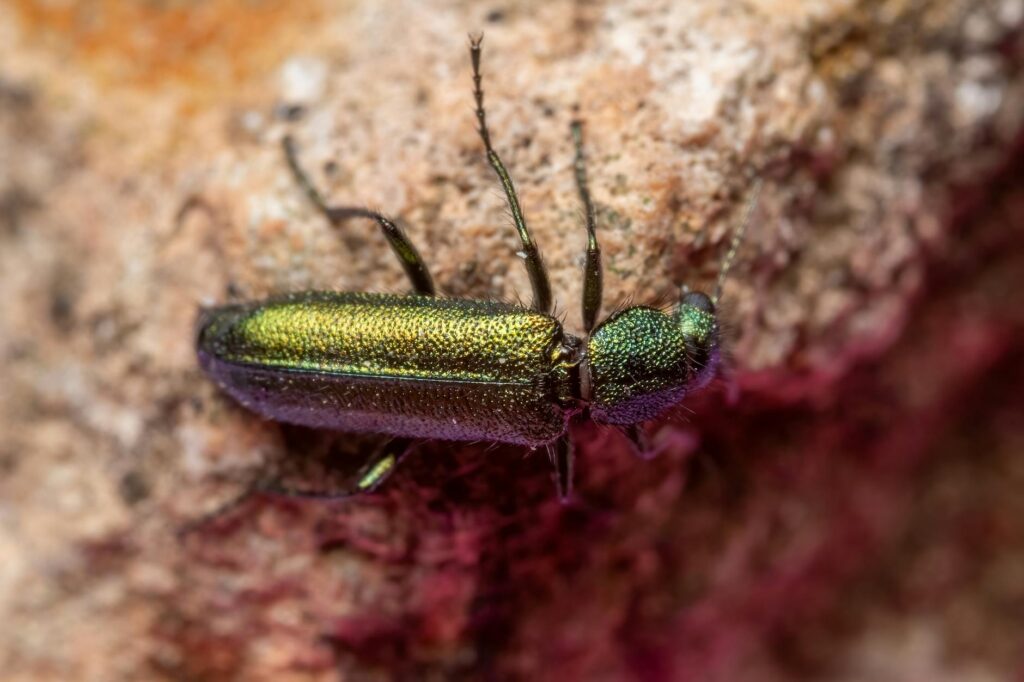
The bronze birch borer (Agrilus anxius) is a flatheaded borer in the jewel beetle family (Buprestidae) — the same family as the emerald ash borer that has devastated ash trees across Monmouth County over the past decade. The adult is a slender, olive-bronze beetle roughly a third of an inch long. In late May through July, adults emerge from their overwintering galleries, feed briefly on birch foliage, and mate on warm, sunlit sections of trunk bark — particularly on the upper crown and south-facing surfaces of trees already under stress.
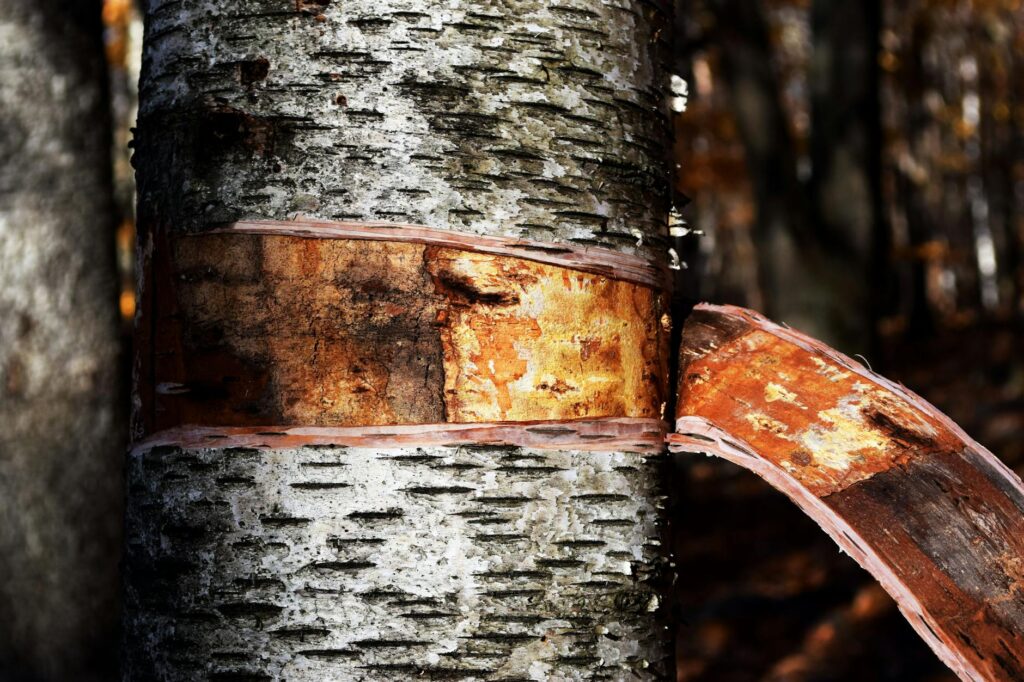
The real damage comes from the larvae. Females lay eggs in bark crevices, and once hatched, the larvae bore through the outer bark and begin feeding on the phloem and cambium — the thin but critical living tissue layer that moves water and nutrients between roots and canopy. As the larvae grow over summer and fall, they carve long, winding galleries that progressively cut off the tree’s vascular pipeline. The tree responds by pushing out callus tissue, creating the characteristic raised ridges under the bark that a trained eye learns to recognize. A single season of moderate infestation may not kill an otherwise healthy tree outright. But repeated attacks over two or three growing seasons are typically fatal, because the vascular girdle has been severed in too many places for the tree to compensate.
Which Birch Trees in Middletown Face the Greatest Risk?
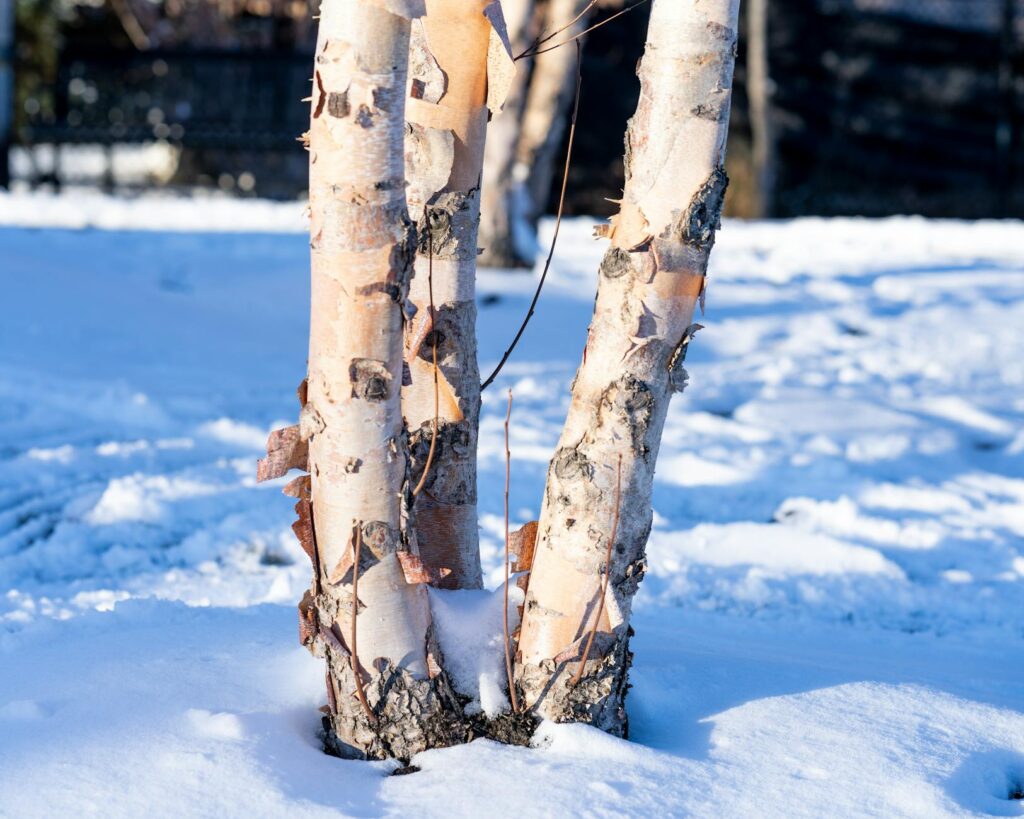
Not all birch species are equally at risk. The white-barked birches — European white birch (Betula pendula) and paper birch (Betula papyrifera) — are the most susceptible species and, unfortunately, the most commonly planted ornamental birches in Monmouth County. Homeowners prize them for their striking pale bark and airy, pendulous canopies. Gray birch (Betula populifolia), the scraggly, multi-stemmed native you’ll find along disturbed woodland edges near Cheesequake State Park and Hartshorne Woods, carries moderate susceptibility.
River birch (Betula nigra), by contrast, is significantly more resistant to bronze birch borer — which is precisely why arborists increasingly recommend it over European white birch for New Jersey landscapes. River birch evolved in our climate’s wet winters and hot, humid summers, and it handles the heat stress that makes white birch so vulnerable this far south. Its cinnamon-peeling bark offers similar ornamental appeal, and it’s a far more durable long-term choice for Middletown’s coastal plain conditions.
That said, even river birch can succumb to bronze birch borer when prolonged drought, soil compaction, or root damage has already weakened it. If you have white-barked birches in your yard — especially mature specimens 15 to 25 years old showing any thinning in the upper canopy — pay close attention this month.
Middletown's #1 Tree Expert Company
FREE Inspection & Estimate | Certified Arborists | Trimming, Pruning, Removal, More!
Sponsored
Reading the Warning Signs Before the Crown Collapses
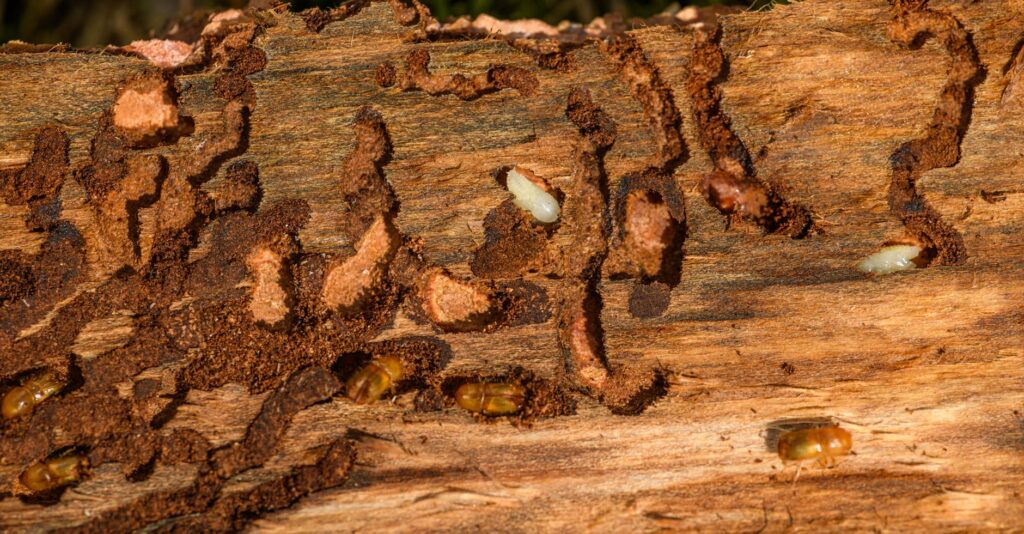
Bronze birch borer damage follows a predictable top-down pattern, and catching it early matters enormously. The first symptom is typically dieback in the upper crown — topmost branches failing to leaf out fully, or leafing out and then wilting back by mid-summer. This happens because larvae preferentially attack the upper trunk, where the bark is thinner and more exposed to solar heating. Each season, the dead zone expands further down the trunk as fresh larvae attack lower sections.
When you walk up to examine a suspect tree, look specifically for these warning signs:
- Swollen ridges or bumps under the bark surface, caused by callus tissue forming over active larval galleries
- D-shaped exit holes, approximately 4–6 mm wide, punched cleanly through the outer bark by emerging adults in late spring
- Serpentine galleries visible if you peel back a section of loose, discolored bark — meandering tunnels packed with fine, frass-like sawdust
- Thin or chlorotic foliage in the mid-crown, even while lower branches appear healthy
- Adult beetles sunning on warm May afternoons on the south-facing upper trunk — small, slender, metallic olive-bronze in color
The Rutgers NJAES Plant Pest Advisory tracks pest pressure across New Jersey throughout the growing season. For homeowners managing high-value birch trees, checking in with their seasonal updates can give you an early heads-up on local emergence timing, which varies year to year based on accumulated heat units.
Why Middletown's Birches Are Under More Stress Than You Think

Bronze birch borer is fundamentally an opportunist. Healthy, well-sited birches with adequate moisture, good soil aeration, and root zones shaded by proper mulch can fend off light infestations through compartmentalization — the tree’s natural wound-sealing response. These beetles actively prefer trees that are already compromised. And Middletown’s suburban landscape conditions create exactly that kind of chronic stress for a lot of birch trees.
White and paper birches planted in full lawn settings — roots baking in unshaded soil, competing with turf for moisture, sustaining weekly mowing trauma to surface roots — are the trees that get hit hardest. These are cool-climate species that evolved in the northern boreal zone, and they genuinely struggle with the sustained heat that New Jersey summers have delivered more consistently in recent decades. The USDA Forest Service’s forest pest conditions program has documented the southward range expansion of bronze birch borer across the mid-Atlantic as regional temperatures rise — a trend directly relevant to Monmouth County properties near the Raritan Bayshore.
Local conditions amplify the risk further. Birches planted close to paved driveways or patios absorb radiant heat from those surfaces through their root zones. Trees in coastal neighborhoods near the Bayshore may experience additional salt spray stress from strong onshore winds. And any birch with a girdling root problem, or one that was planted too deep years ago, is fighting an uphill battle against this pest every single season.
Your Options: Prevention, Treatment, and Knowing When It's Too Late
If you suspect bronze birch borer activity, your options depend heavily on how far along the infestation is. For trees showing early-stage symptoms — dieback in the upper 15 to 20 percent of the crown, with the main trunk still structurally sound — intervention is still viable and often successful if you act now.
Systemic insecticide treatments are the primary tool. Imidacloprid, applied as a soil drench around the root zone, moves through the root system into the tree’s vascular tissue where larvae ingest it while feeding. Emamectin benzoate, delivered by direct trunk injection, acts more quickly and bypasses soil uptake variability — an important consideration during dry conditions when soil transport may be slow. Both treatments need to be timed so the active ingredient is present in the cambium before adult females finish laying eggs in June. Timing is everything with this pest.
The International Society of Arboriculture recommends working with an ISA-certified arborist to confirm the diagnosis before committing to any treatment program. Several other birch problems — birch leafminer, environmental stress, and even natural senescence — can mimic early borer symptoms. A certified arborist can assess crown loss percentage and give you an honest prognosis on whether treatment is justified or whether the tree has already crossed the point of no return.
When more than 40 percent of the crown has died, the honest recommendation is usually removal. Infested wood should be chipped or disposed of promptly to reduce the local beetle population before the next emergence cycle. Replanting with river birch (Betula nigra), serviceberry (Amelanchier spp.), or another site-appropriate native species is the best path forward for the long term.
Middletown's #1 Tree Expert Company
FREE Inspection & Estimate | Certified Arborists | Trimming, Pruning, Removal, More!
Sponsored
Summary / When to Call a Pro
Bronze birch borer rewards early attention and punishes delay. The adults are emerging right now across Middletown, laying eggs in any birch tree stressed enough to catch their attention. If you have European white birch, paper birch, or any white-barked birch on your property, walk out this week and look at the upper crown. Look for sparse foliage, dead branch tips, D-shaped exit holes in the bark, or the characteristic bumping of callus tissue forming under the bark surface.
If you find any of those signs — or if you simply want a professional eye on a tree you’ve been watching — this is the moment to call a certified arborist. Not next month, when the larvae will have had another six weeks to extend their galleries further into the cambium. An ISA-certified arborist can confirm the diagnosis, evaluate whether treatment is still viable given the level of crown loss, and recommend the right approach for your specific tree and site. Birches that are well mulched, properly watered through summer dry spells, and sited away from heat-radiating pavement can live full, beautiful lives in Monmouth County. They just need attentive care — and a homeowner who catches this pest before the window for intervention closes.
Photo credits: Featured image by Robert Schrader on Pexels; Section 1 by Max Vakhtbovych on Pexels; Section 2 by Rafael Minguet Delgado on Pexels; Section 3 by Phil Evenden on Pexels; Section 4 by Petr Ganaj on Pexels; Section 5 by Feyza Daştan on Pexels; Section 6 by Gastón Mousist on Pexels; Section 7 by Henk Schuurmans on Pexels.