
Middletown's #1 Tree Expert Company
FREE Inspection & Estimate | Certified Arborists | Trimming, Pruning, Removal, More!
Sponsored
When May Runs Dry in Middletown, Your Trees Pay for It All Summer
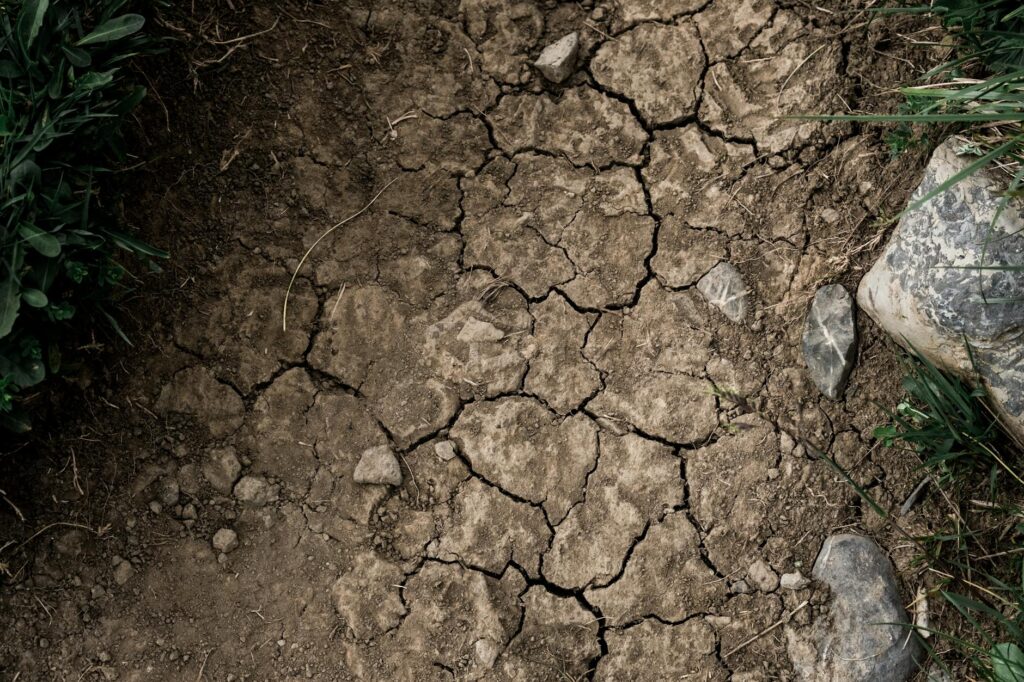
After the wet early spring we typically see along the Bayshore, May can flip dry with surprising speed. A week or two without meaningful rain, combined with rising temperatures and fully leafed-out canopies, creates conditions that quietly hammer trees from the roots up — and most Middletown homeowners don’t notice until August, when branches are already dying back.
I’ve been working with trees in Monmouth County for over twenty years, and the calls I dread most aren’t about dramatic events — lightning strikes or fallen limbs after a nor’easter. The calls I dread are from homeowners in late July, standing under a red maple or a flowering dogwood that’s dropping leaves early, wondering what went wrong. Nine times out of ten, the answer starts in May.
The problem is that spring drought is invisible until it isn’t. Trees are at peak metabolic demand in May: leaves are expanding, new root tips are growing, vascular systems are pumping hard. When soil moisture runs low at exactly that moment, the stress cascades — reduced photosynthesis, weakened defensive chemistry, root tip dieback — and the tree enters summer already compromised. Pest and disease problems that a healthy tree could shrug off become serious threats to a drought-stressed one.
Understanding the soil conditions specific to Middletown makes this even more urgent. The sandy, well-drained soils common in the Lincroft, Belford, and Atlantic Highlands sections drain quickly and hold less water than heavier clay soils further inland. A half-inch of rain in late April might penetrate only a few inches into those sandy profiles — nowhere near the root zone of an established tree.
Why Spring Drought Hurts Trees More Than Summer Drought
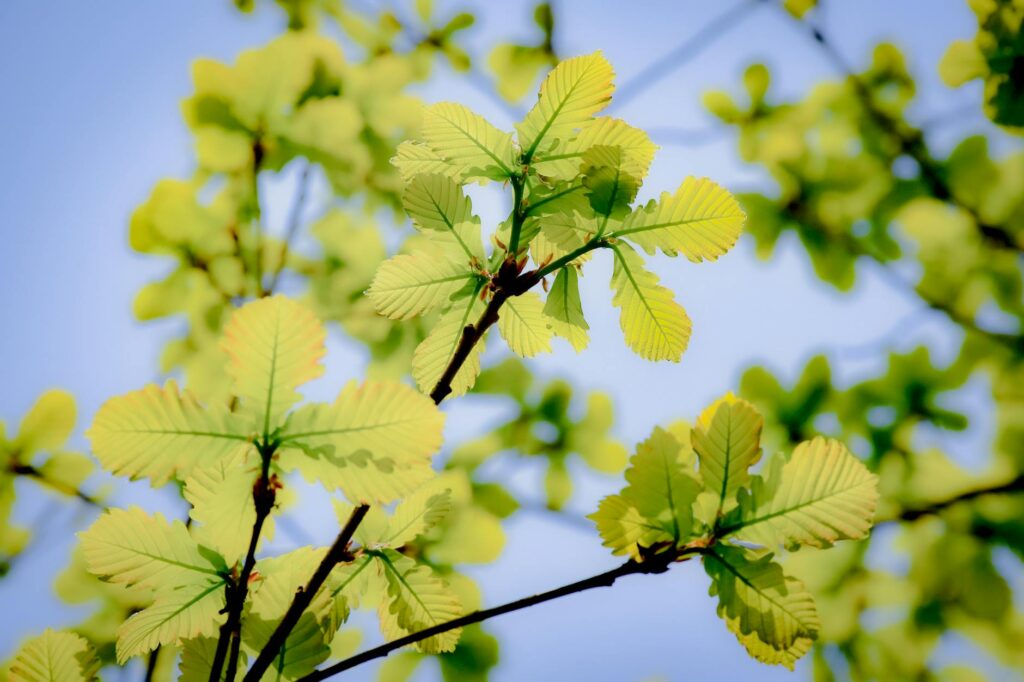
Most homeowners associate drought with July and August: brown lawns, wilting annuals, township water restrictions. But for trees, the math is completely different. Summer drought is uncomfortable; spring drought during leaf-out can be catastrophic.
Trees invest enormous energy reserves in the spring push. Everything from winter-stored carbohydrates to root architecture gets committed to supporting the rapid growth of new leaves, shoots, and root tips. This flush is non-negotiable — the tree is essentially spending down its savings to open for business each year. If soil moisture fails at that exact moment, the tree can’t pull back the expenditure. It simply gets less of what it needs, and every system downstream suffers.
Researchers at the Rutgers New Jersey Agricultural Experiment Station have documented how drought-stressed trees in New Jersey show measurably reduced xylem flow, which affects nutrient uptake and pest resistance simultaneously. A stressed red oak produces less of the tannin-based resins that help it resist borers and fungal pathogens. That’s why the two-lined chestnut borer that attacks an oak in July didn’t choose that tree randomly — it found one already struggling, and spring drought is often the first link in that chain.
Spring drought also affects root regeneration in ways that compound over multiple seasons. Trees stressed during a dry May often produce fewer fine root tips the following year, entering the next growing season with a reduced capacity to pull water and nutrients from the soil. The stress isn’t just a one-season problem; it builds.
The Middletown Trees Most Vulnerable to a Dry May
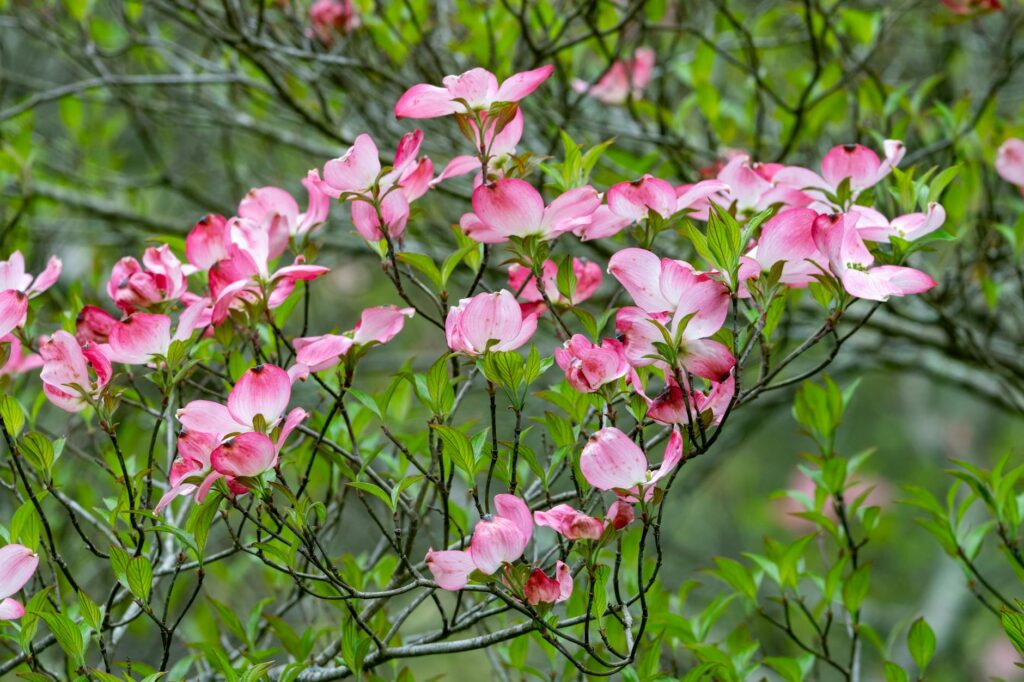
Not all trees handle spring moisture deficits equally. In my work across Middletown Township, these are the species I watch most closely during dry stretches:
- Flowering dogwood (Cornus florida): Shallow-rooted and shade-adapted, dogwoods are exquisitely sensitive to moisture stress. A dry May with full afternoon sun can trigger early leaf scorch and significantly weaken resistance to dogwood anthracnose.
- River birch and paper birch (Betula nigra, B. papyrifera): Birches evolved near waterways and need consistent moisture. Drought stress in May makes them prime targets for bronze birch borer, which is already active along the Navesink River corridor and in residential yards throughout Middletown.
- Red and sugar maples (Acer rubrum, A. saccharum): These species show leaf margin scorch quickly under drought stress, but the deeper problem is root dieback that won’t be visible until much later in the season.
- Eastern white pine (Pinus strobus): White pines under drought stress are far more susceptible to Diplodia tip blight and pine bark adelgid. Long needles lose water rapidly through transpiration when soil moisture is low.
- Newly planted trees of any species: Any tree planted within the past two years has a root ball extending only a foot or two beyond the original container. These trees have no drought buffer and can fail within two weeks of a dry stretch if not actively watered.
Trees growing in the sandy coastal soils near Port Monmouth, Leonardo, and the Bayshore waterfront face compounded risk because those soils drain so quickly. A homeowner on a sandy lot near Raritan Bay may need to water in May even after a rain event that would be sufficient for a property with loamy soil further inland toward Lincroft or Holmdel.
Middletown's #1 Tree Expert Company
FREE Inspection & Estimate | Certified Arborists | Trimming, Pruning, Removal, More!
Sponsored
How to Read Your Trees for Early Drought Stress

The good news about drought stress is that trees communicate it clearly — if you know what to look for. The bad news is that by the time most homeowners notice the obvious signs, stress has already been building for weeks.
Here is what to look for on a walking inspection of your property this May:
- Leaf curl: In many species, leaves roll inward along the midrib during the hottest part of the day. If you see this consistently every afternoon, the tree is working overtime to reduce water loss through transpiration.
- Marginal leaf scorch: Brown, papery edges on leaves — starting at the tips and margins — indicate the vascular system isn’t moving enough water to support the full leaf surface. This typically appears in mid-to-late May on stressed trees.
- Premature seed or cone production: When trees sense existential stress, they often produce a heavier-than-normal seed crop. If your oak or maple is dropping an unusual amount of fruit this May, that is the tree hedging its bets.
- Smaller-than-normal leaves: Leaves that emerge noticeably smaller than prior years indicate the tree lacked the resources to fully invest in leaf area this spring.
- Dull or grayish foliage: Healthy leaves in May should be a rich, saturated green. A flat or dull gray-green cast suggests reduced chlorophyll production tied to nutrient and moisture stress.
The International Society of Arboriculture’s tree owner resources include excellent species-specific guidance on identifying drought stress symptoms — worth bookmarking as you walk your property this spring.
The Right Way to Water Established Trees
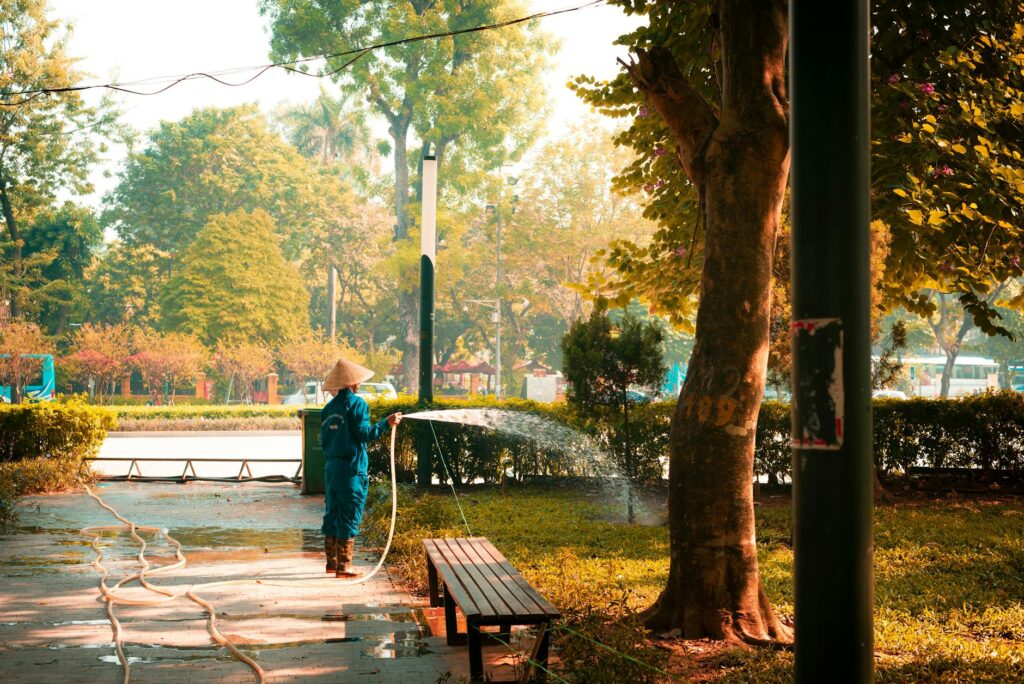
Most homeowners water their trees the same way they water their lawn — a quick sprinkler pass that wets the top inch of soil. For turf, that is adequate. For trees, it is nearly useless.
Established trees need water delivered slowly, deeply, and infrequently — not the shallow, fast wetting that lawn irrigation provides. The goal is to recharge soil moisture at the root zone, which for a mature tree extends outward roughly to the edge of the canopy and down 12 to 24 inches.
A practical rule of thumb: apply roughly 10 gallons of water per inch of trunk diameter, per week during dry periods. A tree with a 6-inch trunk needs about 60 gallons per watering. A soaker hose run at low pressure for 30 to 45 minutes can deliver that while you are having your morning coffee.
- Soaker hoses: Loop them from about 3 feet out from the trunk to the drip line. Slow delivery allows water to percolate rather than run off across the surface.
- Drip irrigation: Emitters placed at intervals throughout the root zone provide the most efficient deep watering for any tree you value highly.
- Tree watering bags: For newly planted trees, slow-release bags hold 15 to 20 gallons and release over 6 to 8 hours directly at the root ball. They are inexpensive and dramatically improve first-year survival.
- Avoid overhead sprinklers for established trees: Overhead watering wastes significant moisture to evaporation and wets foliage repeatedly in warm weather, which promotes fungal disease.
Water in the morning so any surface moisture evaporates before nightfall. Water deeply every 7 to 10 days during a dry stretch rather than lightly every day — deep, infrequent watering encourages roots to grow downward rather than hover near the surface chasing shallow moisture. Research from the USDA Forest Service’s urban forestry program consistently shows that proper mulching combined with deep watering improves tree drought tolerance significantly. A 3- to 4-inch layer of shredded bark mulch from 3 inches away from the trunk out to the drip line can reduce soil moisture loss by 25 to 30 percent — and mid-May is still an excellent time to get that mulch down if you haven’t already.
First-Season and Young Trees: Your Most Urgent Priority

If there is one thing I am emphatic about with every Middletown homeowner who has planted a tree within the past two years, it is this: young trees are not yet on drought autopilot. They will die without consistent supplemental water during any dry stretch from planting through their second fall.
The reason is structural. When you plant a balled-and-burlapped or container tree, you are putting a plant that spent years developing a root system into a hole where that root system has been cut back to roughly 20 to 30 percent of its original extent. The tree must regenerate roots out into native soil before it can access the water reserves of the surrounding landscape. Until that happens — typically 12 to 18 months after planting — the tree is living on what is in the immediate root ball.
During a dry May, the soil in that root ball can go from adequately moist to critically dry in less than a week, especially in Middletown’s sandier neighborhoods near the Bayshore. Here is the watering schedule I recommend for any recently planted tree:
- Year one (planted this spring): Water every 3 to 4 days during dry stretches. Use a tree watering bag or slow drip directly over the root ball. Do not rely on lawn irrigation — it does not deliver water where the tree needs it.
- Year two: Water weekly during dry periods. The root system is expanding but still limited compared to a mature tree.
- Year three and beyond: The tree can typically manage through moderate dry spells on its own. Continue supplemental watering during prolonged drought and summer heat events.
Species selection matters here too. Native trees adapted to New Jersey conditions — red maple, white oak (Quercus alba), sweetbay magnolia (Magnolia virginiana), and serviceberry (Amelanchier spp.) — establish root systems significantly faster than many ornamentals sold at big-box stores. The New Jersey Division of Parks and Forestry actively promotes native tree planting for exactly this resilience reason, and Middletown’s local conditions — Raritan Bay proximity, variable soils, coastal humidity — make well-chosen native trees considerably easier to keep alive through a dry May.
Middletown's #1 Tree Expert Company
FREE Inspection & Estimate | Certified Arborists | Trimming, Pruning, Removal, More!
Sponsored
Summary: When Drought Stress Calls for More Than a Garden Hose
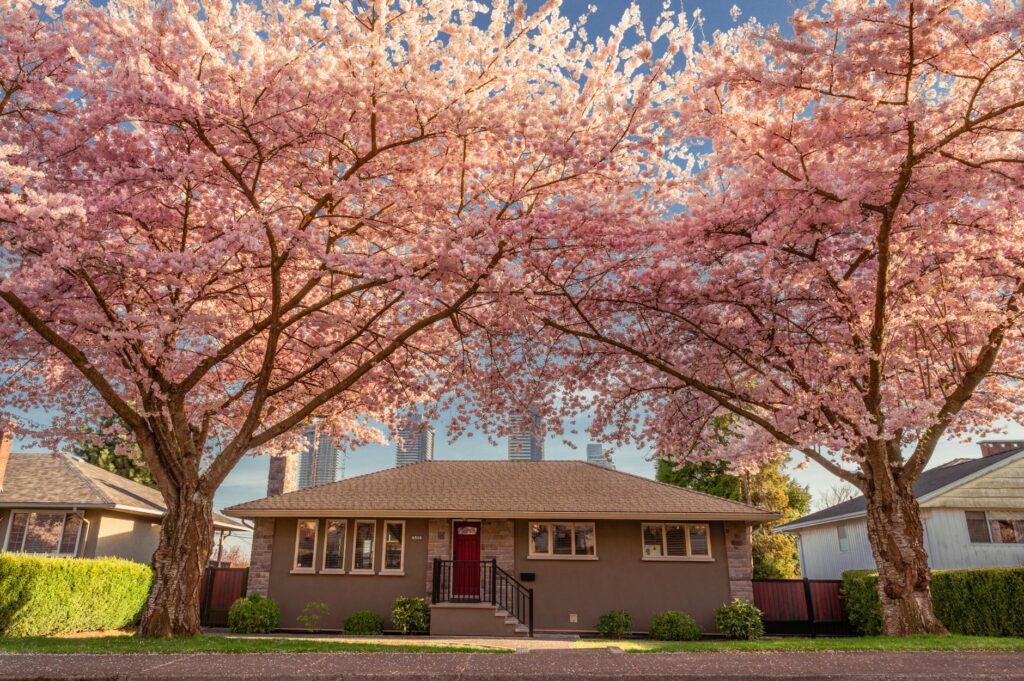
A dry May is something Middletown trees can survive — if you catch the stress early and respond with consistent deep watering, a proper mulch layer, and honest attention to which trees on your property are most vulnerable. The work is not complicated, and starting now in mid-May gives you the best chance of carrying every tree through the summer without loss.
What turns manageable stress into tree failure is the cascade that follows. Drought stress in spring suppresses a tree’s defenses exactly as the first flush of borers, scale insects, and fungal spores emerges. A tree running on empty by June has very little left to fight back with. I have removed trees in October that were still standing green in May — the spring drought opened a door that never fully closed.
If you walk your property this week and find any of the stress signs described above — leaf curl, marginal scorch, dull foliage color, early fruit drop — start watering today. The window to intervene effectively is while the tree is communicating early stress, not after it has shut down systems just to survive.
There are situations where supplemental watering is not enough, and a certified arborist should take a look. If a tree shows visible canopy dieback by early June, if you see sawdust-like frass at the base suggesting a borer is active, or if individual branches are already dying back in mid-May — those signs suggest drought stress has been building longer than you realized, and secondary pests or pathogens may already be present. A qualified arborist can assess whether treatment for a pest, supplemental fertilization, or structural evaluation is warranted before the summer storm season arrives along the Bayshore. Keeping your trees well-watered this May is some of the best tree care you can do before the July heat sets in.
Photo credits: Featured image by Thomas P on Pexels; Section 1 by Henrik Pfitzenmaier on Pexels; Section 2 by 袁 勇博 on Pexels; Section 3 by Beth Fitzpatrick on Pexels; Section 4 by Ron Lach on Pexels; Section 5 by Duc Nguyen on Pexels; Section 6 by Cara Denison on Pexels; Section 7 by Caio on Pexels.