
Middletown's #1 Tree Expert Company
FREE Inspection & Estimate | Certified Arborists | Trimming, Pruning, Removal, More!
Sponsored
The Leaf That Falls on Purpose

Walk the loop trail at Poricy Park in mid-September and the ground tells a story most people never stop to read. A red maple (Acer rubrum) near the pond has already dropped a scattering of orange leaves onto the mud, while thirty feet away a white oak (Quercus alba) hasn’t shed a single one. It’s tempting to assume the maple is stressed and the oak is healthy, but in most cases both trees are doing exactly what they’re supposed to do, on exactly the schedule their genetics wrote for them weeks ago.
A falling leaf looks passive, like something that simply gives up and drops. It isn’t. Leaf drop is an active, engineered process called abscission, and by the time a leaf actually separates from the twig, the tree has been preparing for that moment since roughly the summer solstice. Understanding how abscission works changes how a Middletown homeowner reads their own yard every October — which trees are on schedule, which are early for a reason, and which ones are just built differently.
This is one of the more elegant pieces of tree biology, and it happens in almost total silence, right above every driveway in Monmouth County, every single fall.
The Calendar Trees Actually Follow: Day Length, Not Temperature
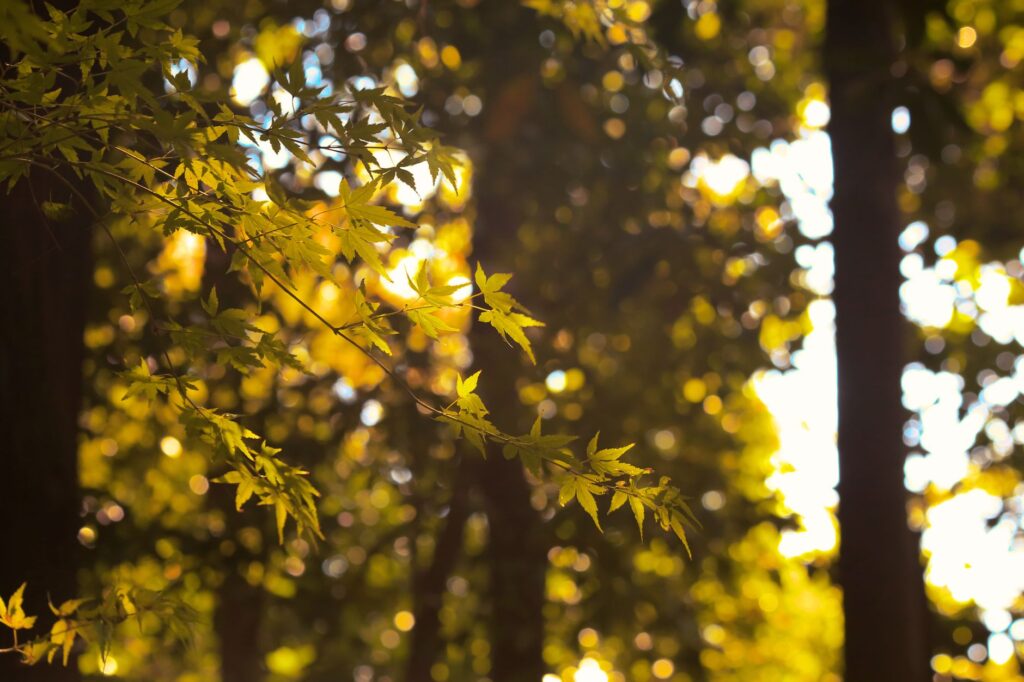
Most homeowners assume trees drop their leaves because of cold. Temperature plays a supporting role, but the real trigger is photoperiod — the shrinking number of daylight hours as summer tips into fall. Trees have specialized light-sensing proteins called phytochromes in their leaves that track the length of uninterrupted darkness each night. Once that dark period crosses a species-specific threshold, it switches on a hormonal cascade inside the leaf.
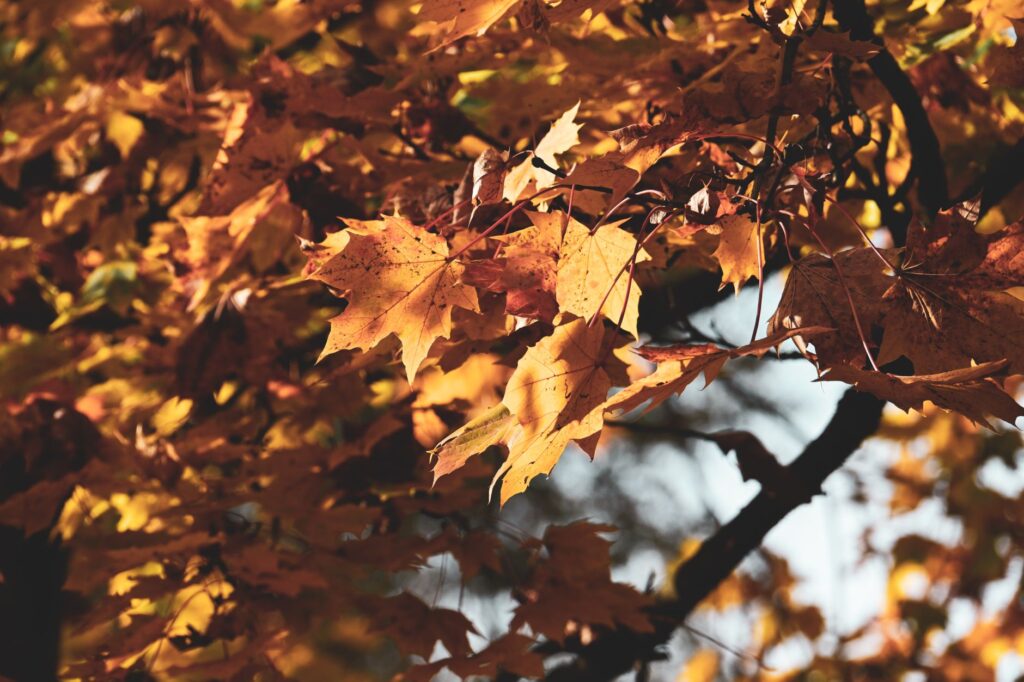
The two hormones doing the actual work are auxin and ethylene. All summer, a healthy, photosynthesizing leaf produces a steady stream of auxin that flows from the leaf blade down through the petiole and suppresses the formation of a special layer of cells at the base of the stem. As day length shortens, auxin production in the leaf drops off. That decline is the permission slip: with auxin no longer holding it back, the tree ramps up ethylene production at the leaf base, and a targeted layer of cells there — the abscission zone — begins to change.
Rutgers Cooperative Extension’s guidance on woody plant physiology in New Jersey describes this hormonal handoff as the mechanism behind essentially all seasonal leaf drop in the state’s deciduous species, not just the showy color change that gets all the attention. For a deeper walk through the anatomy involved, the Rutgers Plant Diagnostic Lab is a useful resource homeowners can lean on when a leaf-drop pattern looks unusual for the season.
Why the Maple Drops First and the Oak Holds On
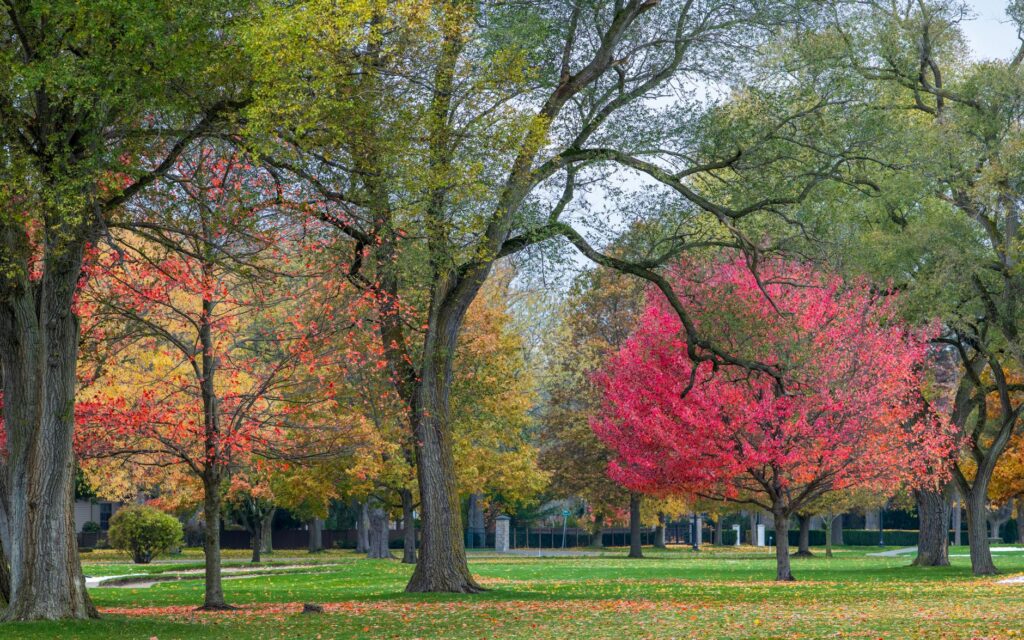
Species matter enormously here, and Middletown’s yards are a good live demonstration of the range. Red maples and tulip poplars (Liriodendron tulipifera) tend to have a shorter critical night-length threshold, so they trip the hormonal cascade earlier in the season — often by mid-September along the Bayshore. White oaks and pin oaks are built with a longer threshold and a slower abscission response, so they hold canopy well into November most years.
Microclimate adds another layer on top of genetics. A tulip poplar growing in full, reflected heat off a paved driveway in Port Monmouth may hold its leaves slightly longer than a sibling planted in a shaded, low-lying yard near the Navesink River, where cooler night air pools and accelerates the process. Soil moisture matters too — a tree that went into August already short on water often shortens its own timeline, dropping leaves a week or two early as a way to reduce transpiration demand before the hormonal signal would have arrived on its own.
None of this means one tree is unhealthy and the other isn’t. It means abscission responds to a mix of hardwired genetics and real-time local conditions, which is exactly why two trees of different species ten feet apart can look like they’re on entirely different calendars.
The USDA Forest Service publishes seasonal foliage timing data that shows this same species-by-species variation holding true across the whole mid-Atlantic region, not just in New Jersey.
Middletown's #1 Tree Expert Company
FREE Inspection & Estimate | Certified Arborists | Trimming, Pruning, Removal, More!
Sponsored
Inside the Abscission Zone: A Wall Built Before the Leaf Falls
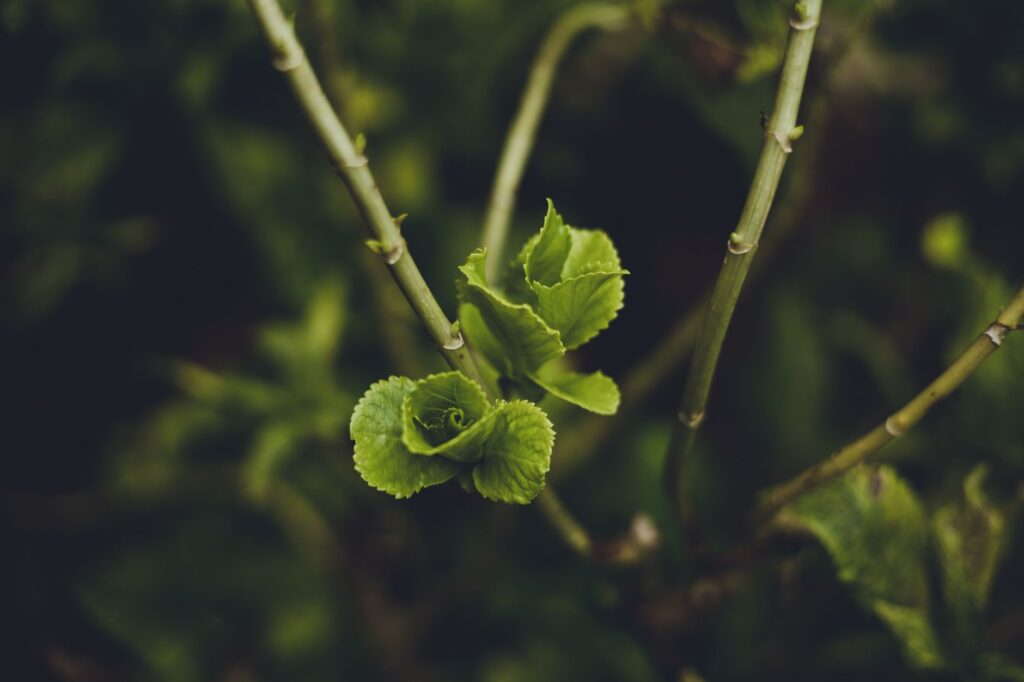
The mechanics are worth appreciating up close. At the base of every leaf petiole sits a narrow band of parenchyma cells — the abscission zone — that was actually laid down back when the leaf first formed in spring. It sits dormant and unnoticed for months, doing nothing but waiting.
When ethylene levels rise, enzymes inside that zone begin breaking down the pectin and cellulose that cements adjacent cell walls together. At the same time, and this is the part most people never realize, the tree is building a protective layer directly behind the breaking point: a barrier of suberin and sometimes a thin layer of cork that will seal the twig the instant the leaf lets go. The leaf doesn’t just fall off and leave an open wound. It’s released only after the tree has already sealed the exit behind it.
This is the same defensive logic trees use everywhere else — compartmentalizing damage rather than leaving tissue exposed. The International Society of Arboriculture’s consumer resource, Trees Are Good, has clear background on how trees compartmentalize and seal injuries, and the abscission scar left behind after leaf drop is one of the cleanest, lowest-stakes examples of that same biology at work. By the following spring that scar is barely visible, tucked beneath the new bud that was already forming just above it.
When Leaf Drop Timing Is Actually Telling You Something Is Wrong
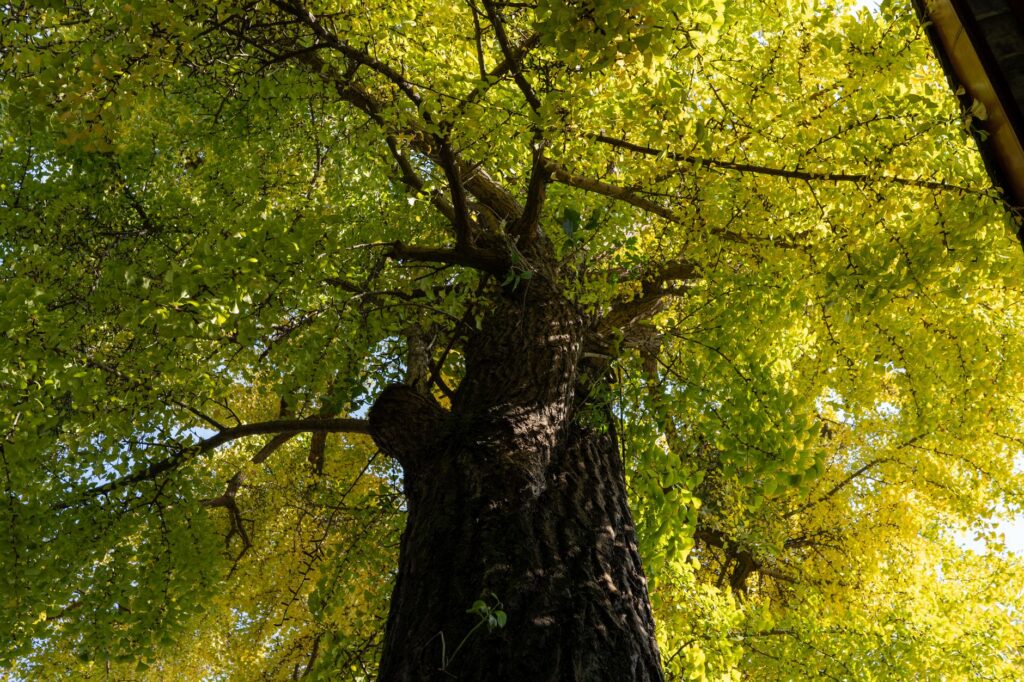
Because normal abscission varies so much by species and site, it can be genuinely hard for a homeowner to tell the difference between an early-dropping tree that’s just following its schedule and one that’s shedding leaves because something is wrong. A few patterns are worth watching for.
- A single branch or one side of the canopy dropping leaves noticeably ahead of the rest of the tree, rather than the whole crown moving together
- Leaves dropping while still mostly green, without going through the normal color change first
- A tree that dropped early and heavily the previous two summers in a row, which can point to chronic drought stress or a root-zone problem like compaction or girdling roots rather than a one-season response
- Significant leaf drop paired with visible trunk issues — cankers, sap weeping, or bark that’s sloughing away from the wood underneath
Any of those is worth a second look, ideally from an ISA-certified arborist who can distinguish a stressed tree from one that’s simply an early-dropping species on a dry year. Isolated, whole-canopy leaf drop that follows the normal green-to-color-to-fall sequence, on the other hand, is just abscission doing its job on schedule.
The Holdouts: Why Some Middletown Trees Never Fully Let Go

Not every species finishes the job cleanly, and that’s its own interesting wrinkle. American beech (Fagus grandifolia) and some juvenile oaks — pin oak especially — exhibit a trait called marcescence, where the abscission layer forms but never fully completes the separation. The dead, tan-colored leaves stay attached through much of winter, rattling in the wind, and only drop the following spring when new growth mechanically pushes them off.
Walk the understory at Hartshorne Woods Park or Thompson Park in January and the beech saplings holding brown leaves against a snowy backdrop are marcescence in action, not a health problem. Botanists still debate why some species evolved this trait — theories range from deterring deer browsing on nutrient-rich winter buds to trapping an insulating layer of snow at the base of the tree for spring moisture. Either way, it’s a reminder that typical leaf drop timing in Middletown covers a wider range than most people assume, from a tulip poplar bare by mid-October to a young beech still hanging onto last year’s leaves in March.
Middletown's #1 Tree Expert Company
FREE Inspection & Estimate | Certified Arborists | Trimming, Pruning, Removal, More!
Sponsored
Reading Your Own Yard This Fall
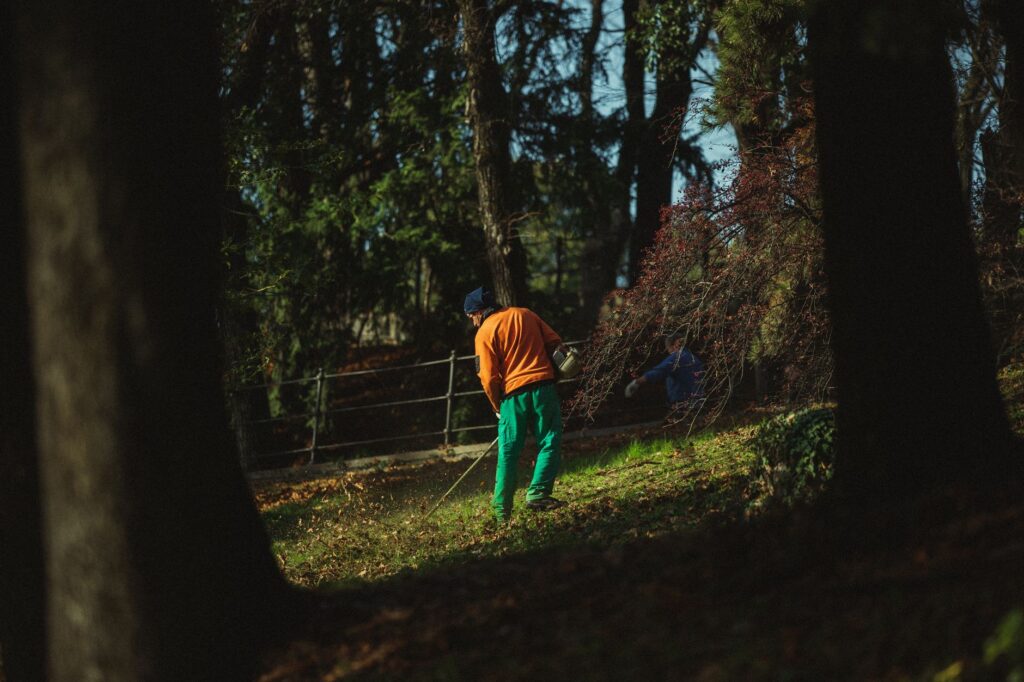
The next few weeks are a good window to actually watch this process rather than just rake up after it. Notice which of your trees moves first and which lags — that pattern will likely repeat every year, because it’s rooted in genetics and site conditions that don’t change much season to season. A yard with a mix of red maple, oak, and beech will never drop leaves all at once, and that’s a feature of species diversity, not a problem to fix.
What is worth flagging for a professional is any leaf drop that breaks from your trees’ own established pattern — a shade tree that’s suddenly weeks ahead of where it normally is, or green leaves coming down in a windless week. A certified arborist can look at the whole picture — canopy, bark, root flare, and the season’s rainfall — and tell you quickly whether it’s a genuine concern or just this particular tree’s version of a well-timed goodbye. For most of Middletown’s trees this fall, the leaves piling up in the yard aren’t a sign of trouble. They’re the last, quiet step of a plan the tree made back in July.
Photo credits: Featured image by Blue Record on Pexels; Section 1 by Kris Møklebust on Pexels; Section 2 by Alexas Fotos on Pexels; Section 3 by Ali Soheil on Pexels; Section 4 by Rafael Rodrigues on Pexels; Section 5 by Peter Xie on Pexels; Section 6 by Andreas Schnabl on Pexels; Section 7 by Valentin Angel Fernandez on Pexels.