

Middletown's #1 Tree Expert Company
FREE Inspection & Estimate | Certified Arborists | Trimming, Pruning, Removal, More!
Sponsored
Same Street, Different Calendar
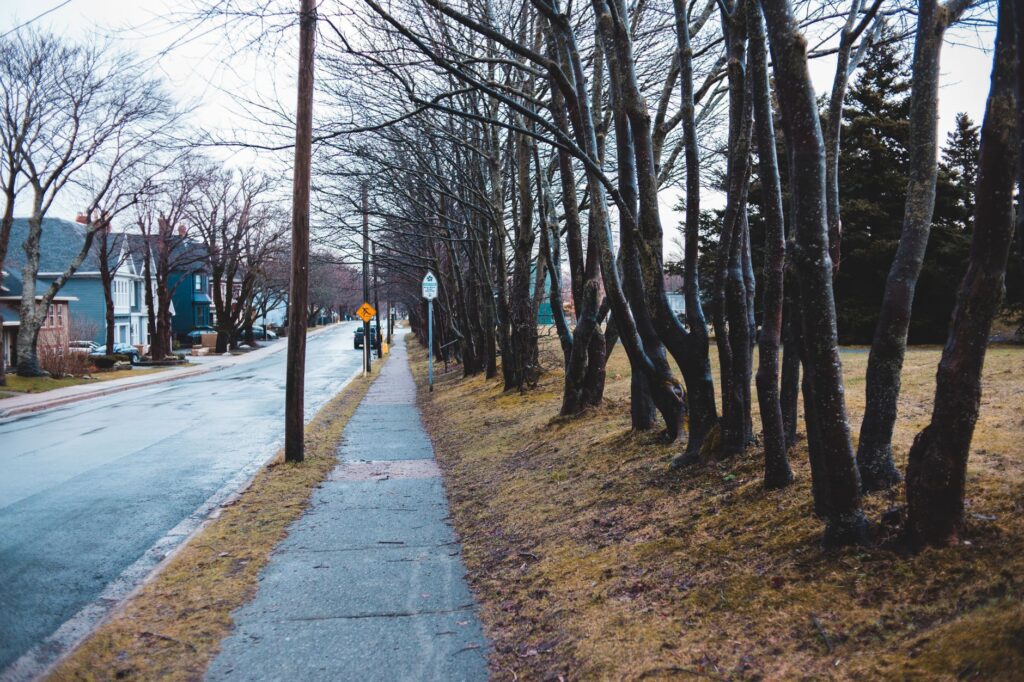
Walk a block in Lincroft or Port Monmouth in mid-September and you’ll notice it: one yard’s tree is already bare-limbed and raking-ready, while the tree two houses down still looks like the middle of August. Same rainfall, same soil, same six weeks of weather — and yet the trees are clearly not reading from the same script.
Homeowners tend to assume the earliest tree to drop its leaves is the sickest one. Sometimes that’s true. More often, it isn’t. Leaf drop timing is set by a mix of species genetics, individual stress history, and microsite conditions — soil depth, sun exposure, root space, proximity to pavement — that can vary house to house even along a single Middletown street.
Understanding the difference between a tree that’s simply on its own calendar and one that’s sending a warning matters, because the wrong read leads to the wrong response: panic-pruning a perfectly healthy tree, or ignoring one that actually needs attention before winter.
The Switch That Triggers Leaf Drop
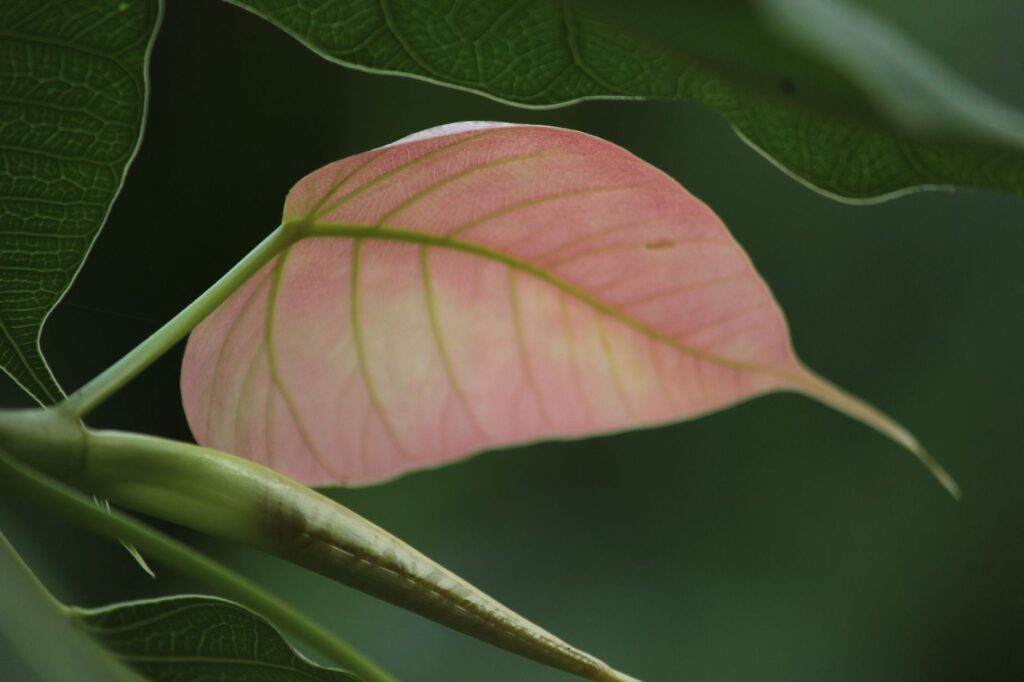
Leaf drop isn’t damage — it’s a controlled shutdown. As day length shortens and nights cool, a tree’s hormone balance shifts: auxin production in the leaf blade tapers off, and a layer of specialized cells called the abscission zone forms at the base of each petiole, right where the leaf stem meets the twig. That layer builds a corky seal, chlorophyll breaks down (unmasking the yellows and oranges that were there all along), and eventually the leaf separates cleanly, leaving a protective scar behind.
This process is under genetic control, calibrated over the tree’s evolutionary history to its native climate and typical first-frost date. Two trees standing side by side can run that internal calendar at noticeably different speeds, and both can be perfectly healthy. The USDA Forest Service’s forest health monitoring program tracks exactly this kind of phenological variation across regions and years, because it’s one of the more reliable indicators of how a forest — or a single street — is responding to the season.
Why Genetics Decide Some of the Calendar
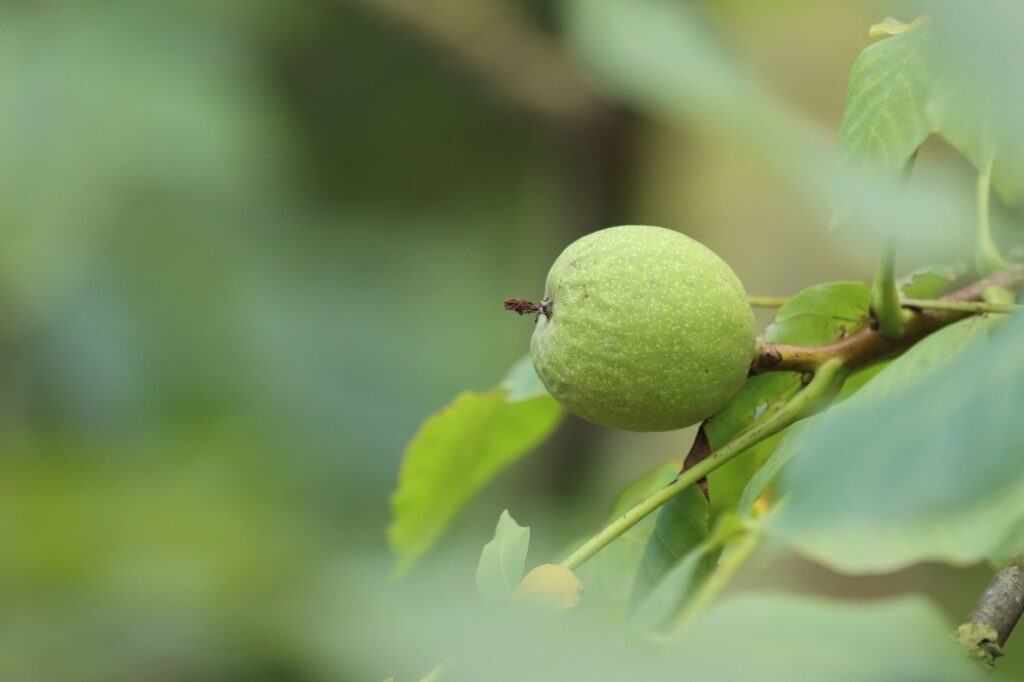
Some species are simply early risers when it comes to going dormant. Black walnut (Juglans nigra) and tulip poplar (Liriodendron tulipifera), both common in Middletown’s older neighborhoods, routinely begin dropping leaves in late August or early September in a completely ordinary year — no drought, no disease, just their internal clock running ahead of the pack. River birch and black cherry tend to follow a similarly early schedule.
On the other end, oaks (Quercus species) and American beech (Fagus grandifolia) are notoriously late, sometimes holding withered, tan leaves well into winter through a trait called marcescence, where the abscission layer never fully completes until spring pushes the old leaves off. A young pin oak still fully leafed out in November next to a bare black walnut isn’t a contradiction — it’s two species doing exactly what they evolved to do.
Because Middletown’s residential streets and parks mix native and ornamental species so densely — a legacy of decades of individual planting choices rather than a single developer’s palette — this kind of side-by-side contrast is more visible here than in a naturally occurring, single-species stand.
Middletown's #1 Tree Expert Company
FREE Inspection & Estimate | Certified Arborists | Trimming, Pruning, Removal, More!
Sponsored
When Early Drop Is a Stress Signal, Not a Season Cue
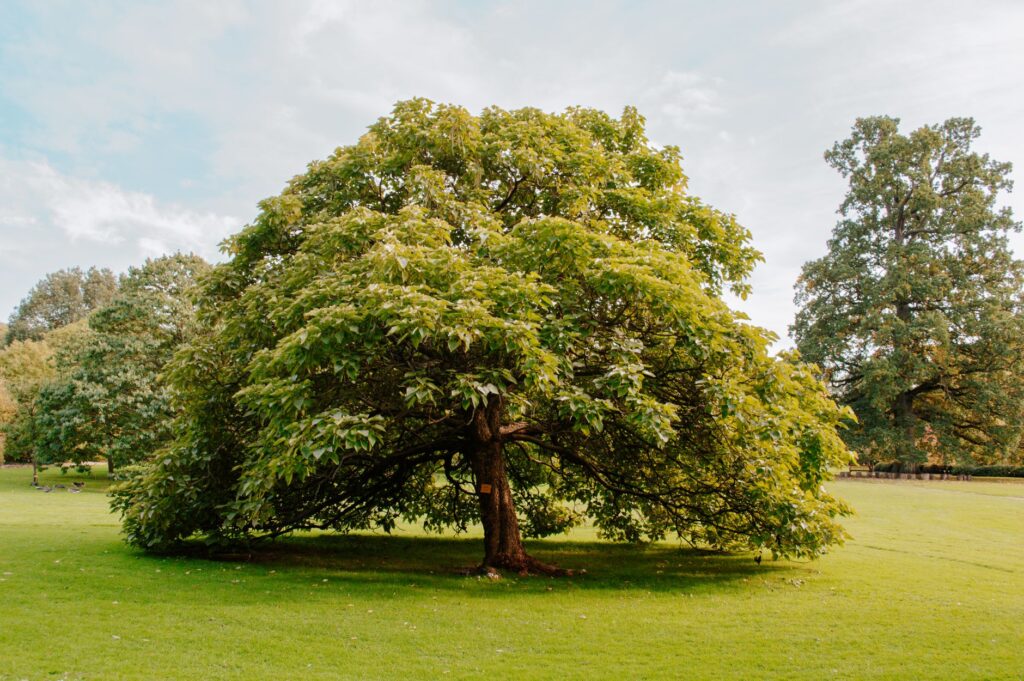
Genetics explain a lot, but not everything. A tree can also trigger early abscission as a survival response to drought. When soil moisture drops and a tree can’t keep up with water loss through its leaves, it will shed some foliage deliberately — a kind of self-rationing that reduces the surface area losing water, protecting the roots and trunk at the cost of some of this year’s canopy. This is a documented, well-understood mechanism, not a sign of imminent death, but it is a signal worth reading.
The tell is usually in the pattern. Drought-driven drop tends to be heaviest on the side of the tree facing the most sun, on the upper canopy, or on the side nearest a driveway, patio, or other heat-reflecting surface — all locations where water demand outpaces supply first. It’s also more common on trees with compromised root zones: compacted soil from years of foot traffic or parked cars, root damage from a nearby utility trench, or roots confined by a sidewalk or foundation. The International Society of Arboriculture’s TreesAreGood resource outlines these drought and root-stress signals in more detail, and they’re worth checking against before assuming a tree is just an early dropper by nature.
Reading the Pattern, Not Just the Timing
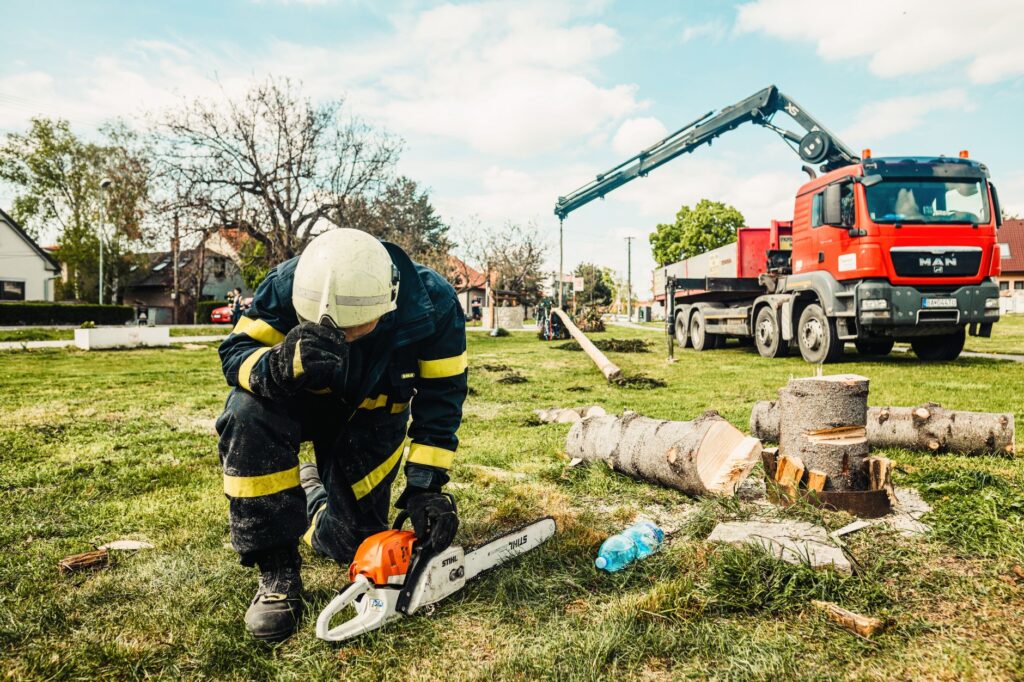
The single best diagnostic question isn’t when a tree dropped its leaves — it’s how evenly. A tree going through normal, species-typical senescence drops leaves from the whole canopy in a fairly consistent progression, and the leaves that fall usually show clean, complete abscission scars and typical fall coloring for that species.
A tree in distress tells a different story. Watch for leaf drop concentrated on one limb or one side of the canopy while the rest of the tree looks unaffected — that pattern often points to a localized problem: a girdling root on that side, storm-related root damage, or a cracked limb restricting water flow. Watch too for leaves that fall while still green, without the normal corky abscission scar, or that show scorched brown margins rather than typical fall color; both suggest the leaf was forced off by acute stress rather than released on schedule.
Clay-loam soils common through much of Middletown Township hold water well but drain slowly, which cuts both ways — trees here are less prone to summer drought stress than those on sandier Bayshore lots, but more vulnerable to compaction-driven root problems after wet stretches, which can produce exactly this kind of lopsided drop pattern.
What Middletown Homeowners Can Do This September

If a tree’s early drop looks like ordinary, whole-canopy senescence, there’s genuinely nothing to do — raking early is the only chore it creates. If the pattern looks stress-driven, September is still a useful window to help the tree head into dormancy in better shape.
- Deep-water the root zone, not just the surface, especially for trees within a few years of transplanting or those near pavement — soak slowly enough that water reaches 12-18 inches down rather than running off.
- Hold off on fertilizing now; late-season nitrogen can push new growth that won’t harden off before frost.
- Check for and correct girdling roots or mulch piled against the trunk, both of which choke the root flare over time.
- Resist the urge to prune heavily in response to early drop — removing more canopy adds stress rather than relieving it.
The NJ Department of Environmental Protection’s Forest Service publishes seasonal care guidance that’s a useful cross-check for homeowners deciding what, if anything, a stressed tree needs before winter.
Middletown's #1 Tree Expert Company
FREE Inspection & Estimate | Certified Arborists | Trimming, Pruning, Removal, More!
Sponsored
When to Call a Certified Arborist
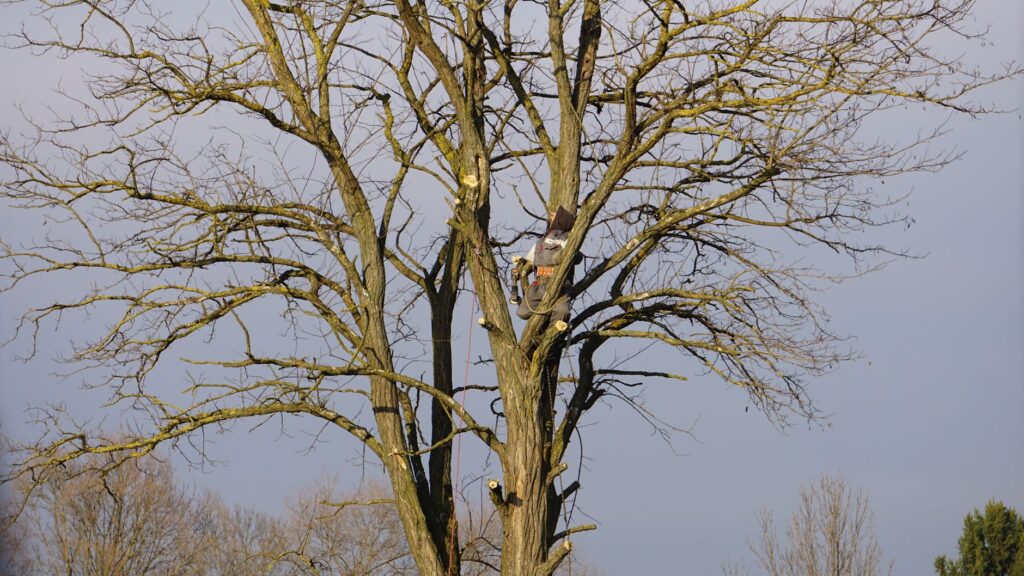
Most uneven leaf drop on a Middletown block is exactly what it looks like from the sidewalk: two trees, two schedules, both fine. But a few patterns are worth a professional look rather than a guess — leaf drop confined to one side of an otherwise healthy-looking canopy, drop combined with bark cracking or sap weeping, or a tree that’s dropped early for the second or third year running with no change in its situation.
A certified arborist can check root flare condition, probe for compaction or girdling roots, and assess whether a lopsided drop reflects a mechanical problem in the wood itself rather than ordinary water stress — the kind of diagnosis that’s difficult to make confidently from a lawn chair. Getting that assessment now, while the tree still has enough of the growing season left to respond to corrective care, beats waiting until the pattern repeats next September.
In the meantime, the mismatched calendars up and down a Middletown street are less a mystery than a small, visible reminder of just how much individual history — species, soil, root space, a decade of small stresses — is written into a tree’s canopy each fall.
Photo credits: Featured image by Ibrahim Boran on Pexels; Section 1 by Erik Mclean on Pexels; Section 2 by Thanthan Nitja on Pexels; Section 3 by ML ARANDA on Pexels; Section 4 by Laura Paredis on Pexels; Section 5 by Helena Jankovičová Kováčová on Pexels; Section 6 by Gustavo Fring on Pexels; Section 7 by Dmytro Glazunov on Pexels.