
Middletown's #1 Tree Expert Company
FREE Inspection & Estimate | Certified Arborists | Trimming, Pruning, Removal, More!
Sponsored
The Storm That Splits a Street Down the Middle
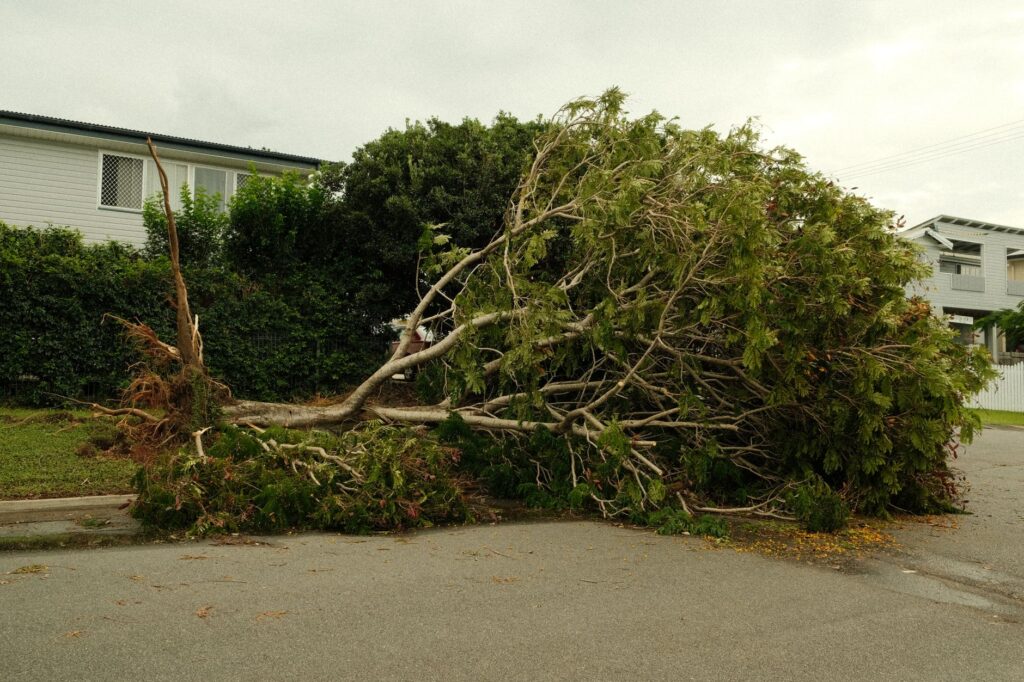
Walk any street in Port Monmouth or Belford the morning after a fall windstorm and you’ll usually see the same pattern: one tree stripped of half its crown, branches scattered across a driveway, while the tree two doors down — same wind, same rain, same soil — stands there looking like nothing happened. Homeowners tend to chalk this up to luck. It isn’t. It’s engineering, and every tree on the Bayshore is running its own version of it.
Middletown Township sits exposed to a long, unobstructed fetch of wind off Raritan Bay, and from late summer through the first hard nor’easters of November, that wind is the single biggest physical stress most local trees will face all year. Some species and individual trees are built to absorb that load and give it back. Others are one bad gust away from failure. Understanding the difference isn’t just interesting — it’s the fastest way to tell which trees on your property need a closer look before the next storm rolls in off the water.
Wood Is a Bundle of Drinking Straws — And That's the Whole Trick
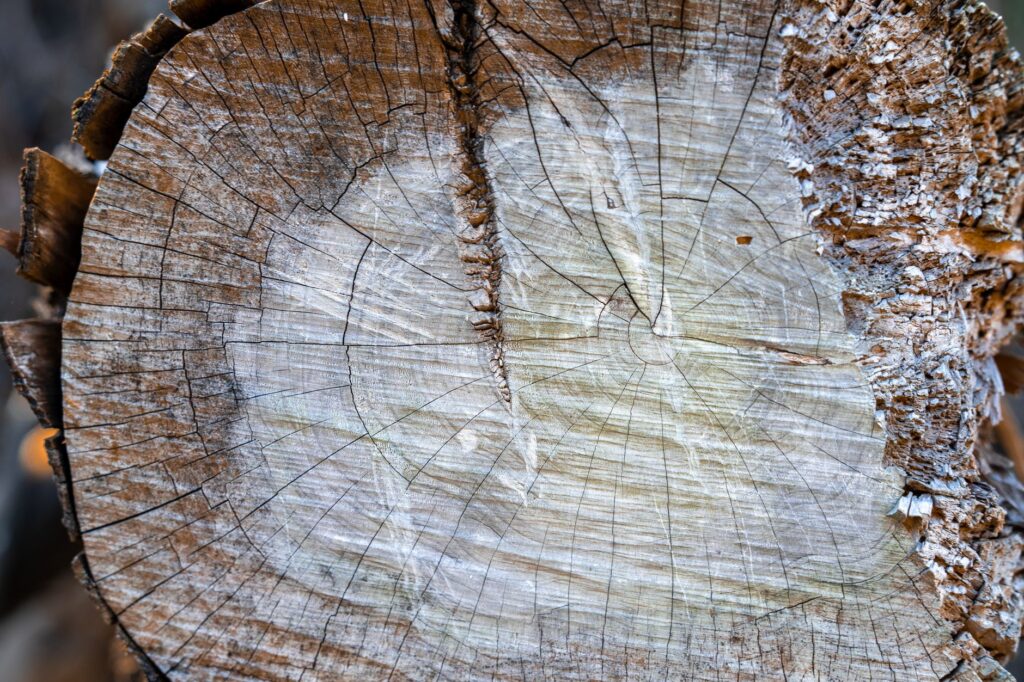
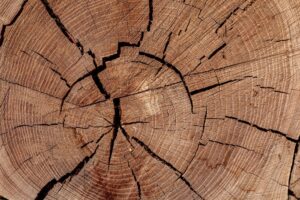
Cut a cross-section of any tree trunk and you’re looking at millions of long, hollow cellulose fibers glued together with a stiffer compound called lignin — essentially a bundle of flexible straws bound in natural cement. That structure is why a living branch can bow deeply in a gust and spring back to its original position: the fibers stretch on the outside of the bend and compress on the inside, then release the stored energy once the load passes.
The trouble starts when that wood stops being fully alive. Decayed, dead, or waterlogged wood loses its elasticity — the fibers get brittle and the whole system shifts from bending gracefully to failing abruptly. It’s also why grain matters: trees with straight, parallel grain distribute stress evenly, while a tree with twisted or spiral grain (or one already weakened by a healed wound) concentrates force at a single point instead of spreading it out. The International Society of Arboriculture has documented how trees respond structurally to wind stress, and the short version is: healthy, well-hydrated wood is remarkably tough. Compromised wood isn’t.
Anchorage Underground Matters as Much as Strength Above
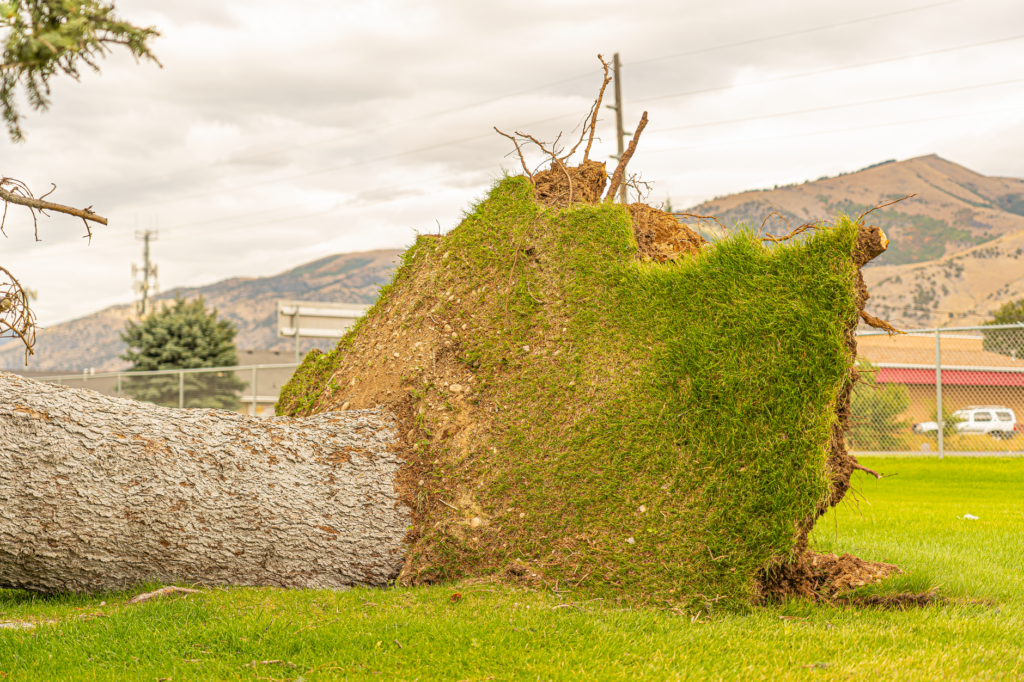
A tree’s crown can be perfectly engineered and it still won’t matter if the root system can’t hold the whole structure in place. Most of the trees around Middletown don’t have a deep taproot doing the work — that’s mostly a myth. Instead, they rely on a shallow, wide-spreading plate of lateral roots, usually concentrated in the top 12 to 18 inches of soil, that acts more like the base of a tripod than an anchor bolt.
That’s where our local soils come into play. Middletown’s mix of clay-loam inland and sandier, more saturated ground closer to the Bayshore behaves very differently once it’s soaked. Dry soil holds a root plate rigid. Saturated soil — exactly what you get after two days of nor’easter rain followed by sustained wind — loses much of its shear strength, which is why the worst tree failures so often follow heavy rain rather than wind alone. Compacted urban soil, girdling roots, and roots severed by nearby construction or trenching all shrink that anchoring footprint further. The USDA Forest Service’s urban forestry research has repeatedly found root-zone health to be one of the strongest predictors of whether a tree survives a major wind event.
Middletown's #1 Tree Expert Company
FREE Inspection & Estimate | Certified Arborists | Trimming, Pruning, Removal, More!
Sponsored
Some Species Are Simply Built to Snap
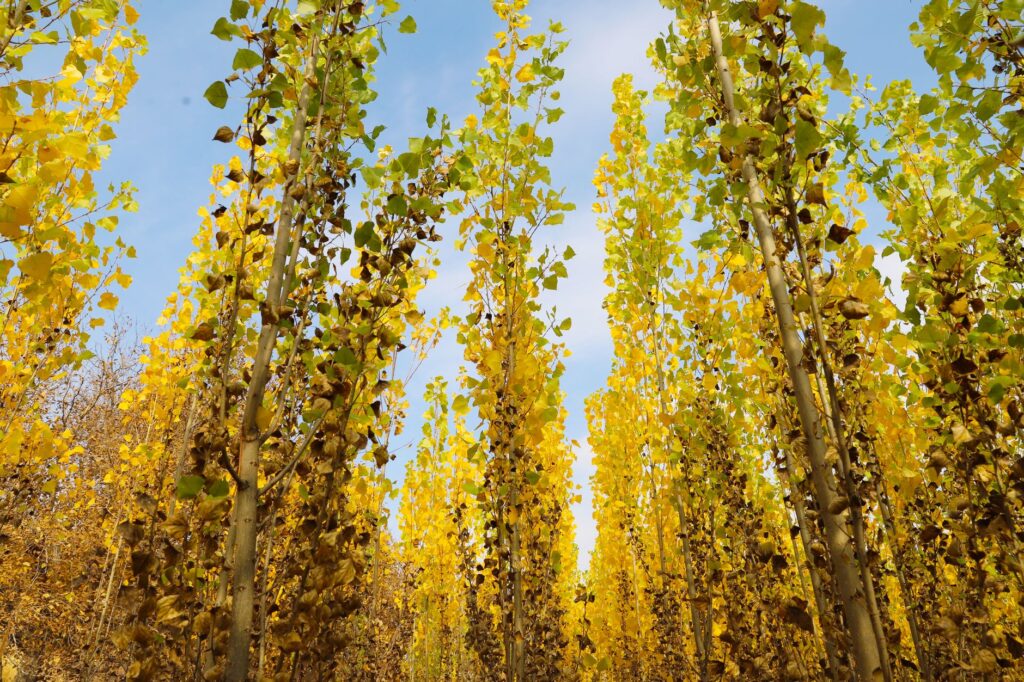
Genetics set the baseline. Species like Bradford pear (Pyrus calleryana), silver maple (Acer saccharinum), and Siberian elm grow fast because their wood is soft and low-density — great for quick shade in a new subdivision, terrible for standing up to a coastal wind event. Tulip poplar (Liriodendron tulipifera) presents a different version of the same problem: it grows tall and straight with a huge crown, but its wood is comparatively soft and its height puts enormous leverage on the trunk in open, exposed yards.
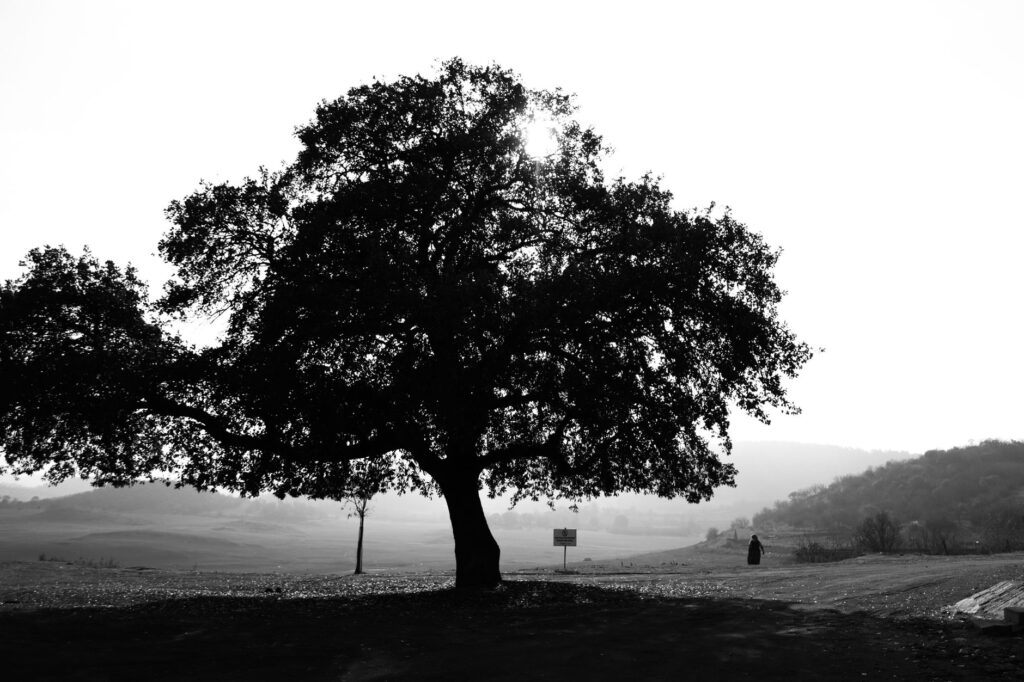
Compare that to white oak (Quercus alba), the hickories (Carya species), and American beech (Fagus grandifolia) — native species that evolved for generations under exactly this kind of coastal wind exposure. Their wood is denser, their branch attachments are typically stronger, and their growth habit distributes wind load more evenly through the crown. None of this means fast-growing ornamentals are doomed or that oaks are invincible. It means a tree’s species is the first piece of information worth knowing before you decide how much attention it needs heading into storm season.
How a Defect Changes Where a Tree Actually Fails
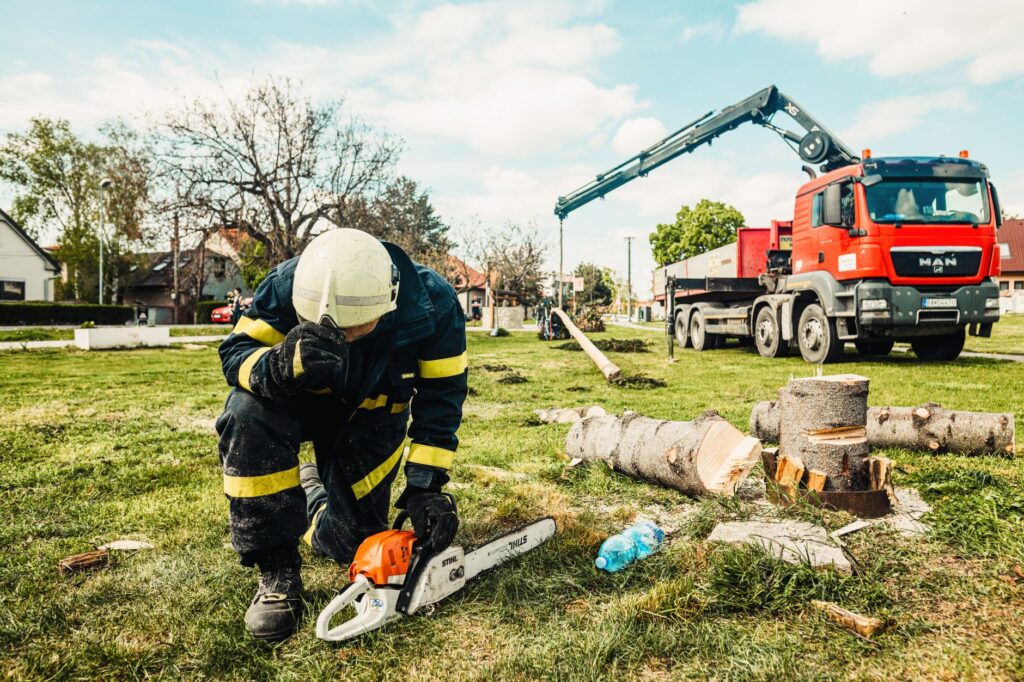
When an arborist evaluates a tree for wind risk, they’re really asking where it’s most likely to break, because trees fail in one of three distinct ways. Branch failure happens at a weak union — often where included bark has prevented two limbs from fusing properly, leaving a crack waiting to happen. Stem failure happens when a decay column, cavity, or old wound has hollowed out enough of the trunk that it can no longer resist bending, even though the outside still looks fine. And whole-tree failure — windthrow — happens when the root plate itself gives way and the entire tree tips over, roots and all.
Each failure mode gets addressed differently. A weak branch union might call for reduction pruning to lighten the load on that limb. A trunk with internal decay might need cabling, or might need to come down entirely, depending on how much sound wood remains. A compromised root plate is the hardest to fix and the reason a certified arborist trained through ISA’s tree risk assessment standards will often use resistance drilling or sonic tomography rather than guessing from the surface.
What You Can Actually See From Your Yard
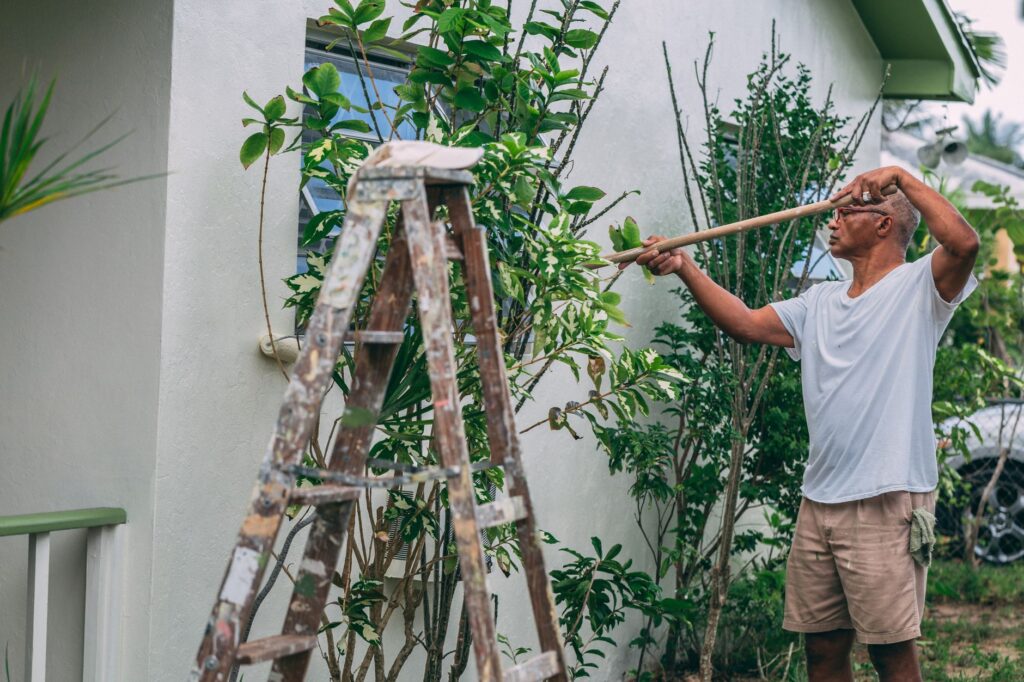
You don’t need certification equipment to catch the early warning signs. After any strong wind event, walk the base of your larger trees and look for soil that’s cracked, heaved, or slightly lifted on one side of the root flare — that’s often the first visible sign the root plate has started to shift, even if the tree is still standing upright. A canopy that leans noticeably toward open light, rather than growing symmetrically, is carrying more wind load on one side than the trunk was built for.
Watch, too, for clusters of thin, upright shoots along the trunk or major limbs — epicormic sprouts, usually triggered by stress, storm damage, or an old topping cut. They grow fast but attach weakly, and a tree that’s regrown its canopy this way after a previous storm is often carrying more risk than it appears to from the curb. Recent construction, trenching, or grade changes within a tree’s root zone are worth flagging as well, since severed roots can take years to show up as reduced anchorage.
For guidance on which native species hold up best in Monmouth County conditions, Rutgers Cooperative Extension maintains research-backed recommendations worth checking before planting anything new near a home or driveway.
Middletown's #1 Tree Expert Company
FREE Inspection & Estimate | Certified Arborists | Trimming, Pruning, Removal, More!
Sponsored
When to Get a Professional's Eyes on It
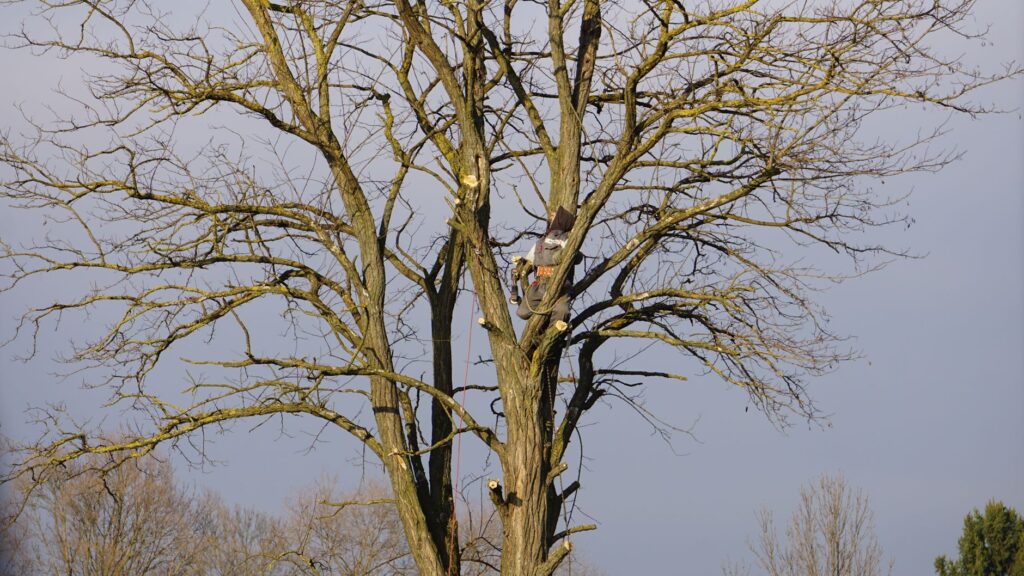
A tree’s genetics decide how much wind load it can theoretically absorb. Everything else — its soil, its pruning history, whatever decay or damage it’s carrying — decides whether it will actually live up to that potential when a real storm arrives. Homeowners can reasonably catch the surface-level clues: leaning trunks, heaved soil, one-sided canopies, and clusters of weak regrowth. What’s harder to see from the ground is internal decay, a compromised root plate under intact turf, or a weak union thirty feet up in the canopy.
Late summer into early fall — before leaves drop and while a tree’s full canopy is still visible — is a good window to have a mature or previously storm-damaged tree formally assessed. Bring in a certified arborist to walk the property before the next nor’easter, not after. Bending is normal. Snapping usually isn’t a surprise to the tree — just to the homeowner who never got a closer look.
Photo credits: Featured image by Enes Faruk Yarar on Pexels; Section 1 by April Yang on Pexels; Section 2 by Justin Warren on Pexels; Section 3 by Castorly Stock on Pexels; Section 4 by Vehap Erdoğan on Pexels; Section 5 by Helena Jankovičová Kováčová on Pexels; Section 6 by Craig Adderley on Pexels; Section 7 by Dmytro Glazunov on Pexels.