
Middletown's #1 Tree Expert Company
FREE Inspection & Estimate | Certified Arborists | Trimming, Pruning, Removal, More!
Sponsored
A Young Tree on Its Side Is Not Always a Lost Tree
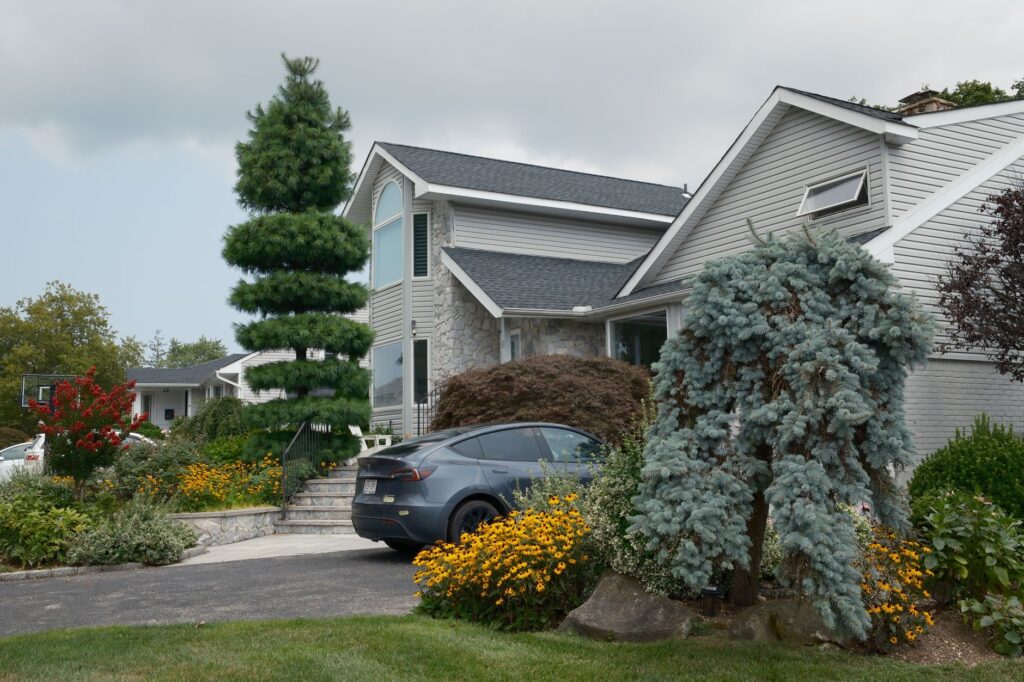
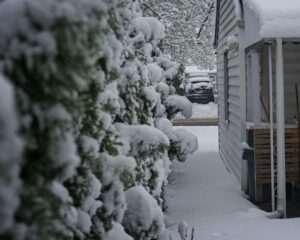
A late November nor’easter has a particular way of finding the youngest trees in a Middletown yard. Rain soaks the ground for a day or more, the wind holds steady from the northeast, and a red maple (Acer rubrum) planted two springs ago slowly gives way. By morning it is leaning at a sharp angle, with a crescent of raised soil on the windward side and the trunk still perfectly sound.
That sight leaves most homeowners with two impulses: haul it upright immediately, or write it off and drag it to the curb. Either one can be right. The answer depends on the size of the trunk, how long the tree has been in the ground, what happened to the roots, and how quickly someone acts before those roots dry out.
The odds are best for small, recently planted trees whose root systems tipped as a unit. They drop sharply as trees get bigger. This guide walks through how to tell the two apart on a Bayshore, Lincroft or Navesink property, how to reset a good candidate, and what the following year should look like.
Check for Danger Before You Touch the Trunk
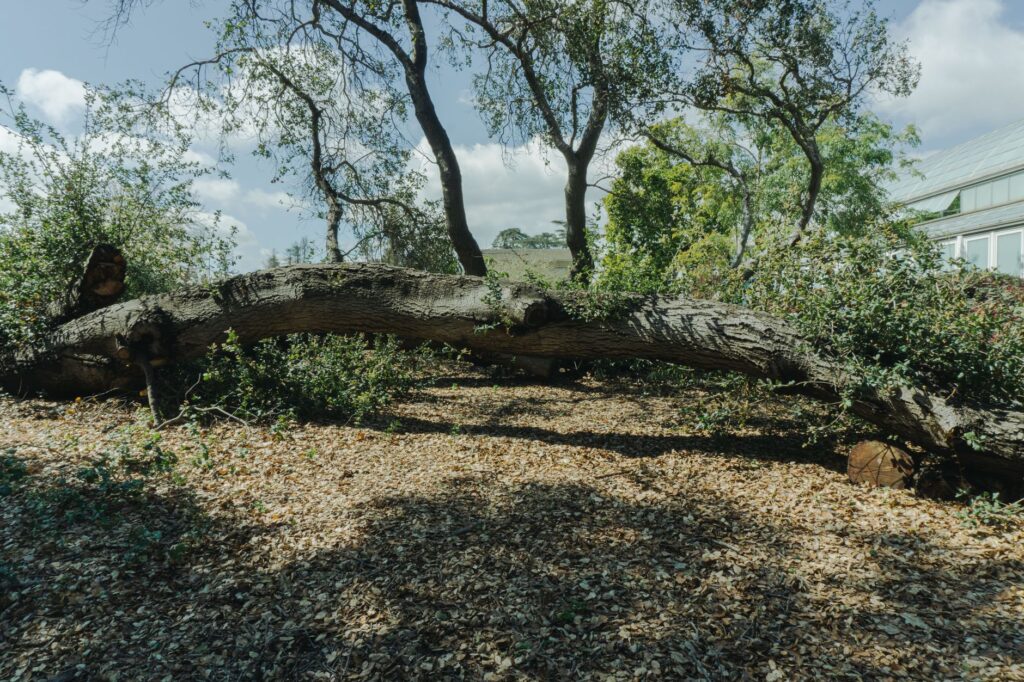
Look up and around first. If the tipped tree, or anything it is resting against, is touching a wire, stay well away and report it to the utility. Treat every downed or sagging line as energized, including the thin ones that may only look like cable or phone service. The National Weather Service wind safety page is a useful refresher on the hazards that come with high wind.
Wait for the gusts to settle before working outdoors, and check overhead for broken limbs in larger neighboring trees. A small project under a hanging branch is not a small project.
Next, resist the urge to yank. A trunk that has been pulled hard with a truck or a come-along can lose bark under the rope and snap roots that survived the storm. Until the assessment is done, protect what is exposed:
- Cover bare roots with moist soil, damp burlap or wet leaves.
- Keep exposed roots out of drying wind and direct sun.
- Photograph the tree and the lifted soil before moving anything.
- Keep foot traffic and mowers off the saturated root area.
If a hard freeze is forecast, that temporary cover matters even more, because roots tolerate far less cold than the trunk and branches above them.
Which Tipped Trees Are Worth Saving

Size is the first filter. The Mississippi State Extension publication on repairing storm-damaged trees treats leaning trees under 4 inches in trunk diameter as candidates for straightening and bracing. Larger trees are difficult to bring fully upright and call for a professional opinion, and replacement is often the better choice. Check the width of the trunk a few inches above the soil with a ruler, or wrap a tape around it and divide by about three.
Age comes next. A tree planted within the last few years still carries much of its original root ball, which often rotates in one piece. An established tree that goes over has usually torn long structural roots that are unlikely to recover.
Signs that favor resetting include:
- A trunk with no cracks, splits or large areas of torn bark.
- A root ball that lifted mostly intact, with soil still attached.
- A main leader and most major branches in good shape.
- Exposed roots that are still moist when you find them.
Signs that argue against it include a split at the base, several thick roots snapped on one side, circling or girdling roots, or a tree that was already declining. The Penn State Extension advice on leaning trees also points out that broken roots and heaved soil behind the lean make successful anchoring much harder. A tree with a defective root system may well fail again no matter how neatly it is staked.
Middletown's #1 Tree Expert Company
FREE Inspection & Estimate | Certified Arborists | Trimming, Pruning, Removal, More!
Sponsored
How to Reset a Small Tree, Step by Step
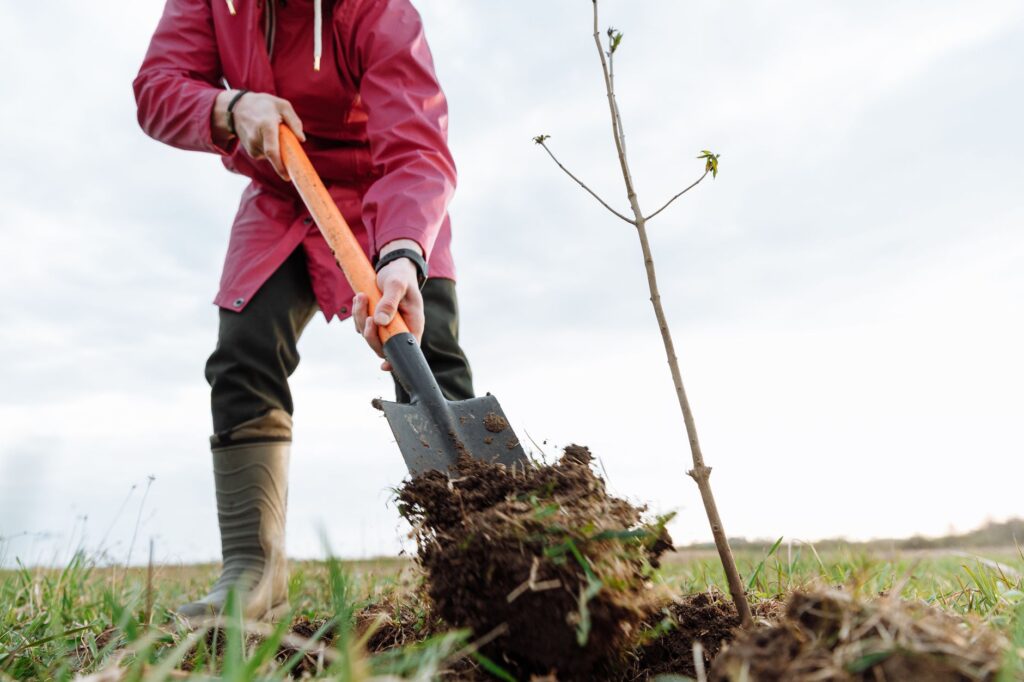
Work soon, ideally the same day or the next, while the roots are still moist and the soil is soft. A second set of hands makes the job far gentler.
- On the side where the root ball lifted, carefully clear loose soil from the hole so the ball has room to settle back into place.
- Trim only ragged, broken root ends with a clean, sharp tool. Leave healthy roots alone.
- Ease the tree upright with hands placed low on the trunk and on the root ball, not by pulling on the top.
- Check that the root flare, where the trunk widens into the roots, sits at the surrounding grade and not below it.
- Backfill gaps with the native soil, firming lightly to close air pockets without stomping it into a brick.
- Water slowly to settle the soil, unless the ground is already saturated.
- Spread two to four inches of wood chip mulch over the root area, keeping it pulled back from the trunk.
If the tree will not return to vertical with moderate pressure, stop. A partial correction with support is better than a forced one that breaks roots. In the sandier soils near Port Monmouth and Leonardo the ball may slide back easily but have little grip afterward. In heavier soil farther inland, the old socket can hold water, so avoid packing wet soil hard around the roots.
Do not bury the base deeper to make the tree feel steadier. Extra soil over the roots cuts off oxygen and creates a new problem that may not show for years.
Staking That Supports Without Strangling
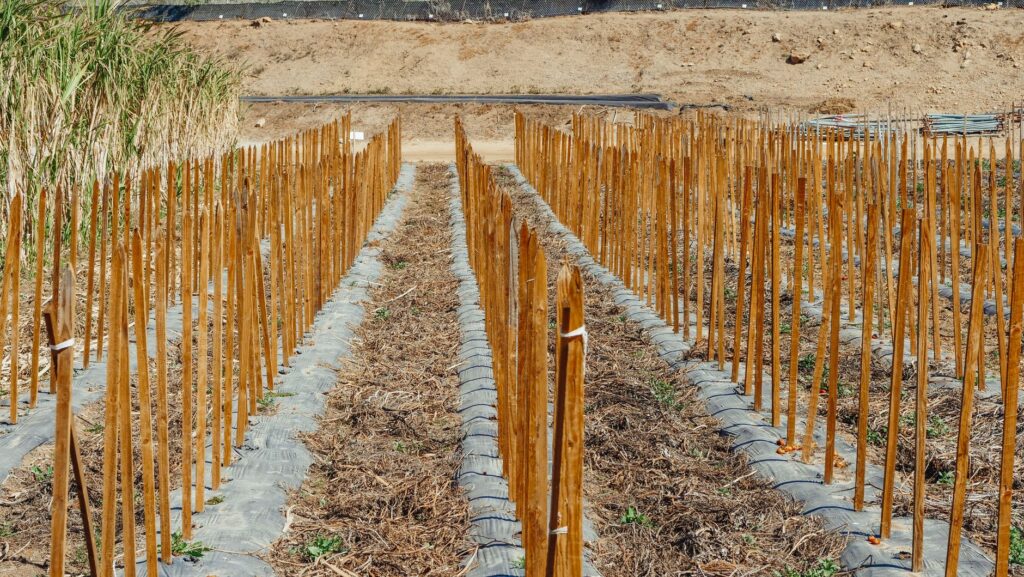
A reset tree usually needs help holding its position while new roots grow. The University of Minnesota Extension guide to staking and guying describes using three evenly spaced anchors for wind-thrown trees that need guying, with one placed upwind. Around here that means thinking about the northeast direction a nor’easter blows from, as well as the prevailing winds of the growing season.
Materials matter more than most people expect. Use wide webbing or fabric straps wherever they contact the bark. Wire or rope threaded through a scrap of garden hose still concentrates pressure into a narrow band and can girdle the stem.
Leave a little slack. A trunk that can sway slightly builds strength in response to movement, while one held rigid stays weak and may flop once the supports come off. Keep anchors inside the mulch ring so nobody trips on them in the dark, and tie a bright strip of cloth to each line.
On exposed lots facing Raritan Bay, check the lines after every strong blow. Straps creep, stakes loosen in wet ground, and a support that has shifted can start rubbing the bark. A thirty second look the next morning is usually enough to catch it.
Winter and Spring Aftercare
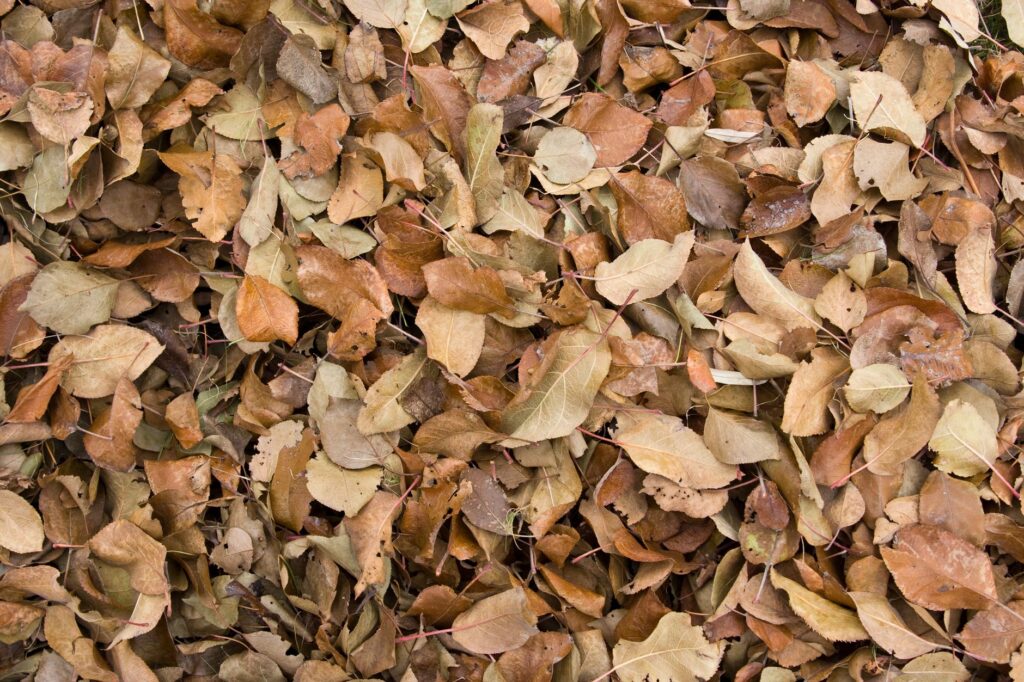
Resetting the tree is the start of the recovery, not the end of it. Roots broken in late November have limited time to regrow before the soil turns cold, so the first goal is simply to keep them moist, insulated and undisturbed. During dry, thawed stretches, give the root area a slow drink. Skip watering when the ground is frozen or already soggy.
Hold off on fertilizer and heavy pruning. The Nebraska Forest Service guidance on immediate storm care advises against fertilizing storm-damaged trees, against topping them and against painting wounds. Remove only branches that are clearly broken now, and save shaping cuts for later, when it is obvious how well the crown is doing.
Young trunks also need winter protection. A mesh guard can discourage deer rub, and keeping mulch off the bark removes cover that voles favor.
When spring arrives, compare the tree with nearby ones of the same species. Watch for late or sparse leaf-out, small leaves, dieback at the tips and any renewed lean. Plan on regular watering through the first summer. Supports often come off after about one growing season, though some trees whose roots are slow to anchor need them for up to two years. Before taking them off for good, loosen the straps and see whether the base shifts in the soil.
Middletown's #1 Tree Expert Company
FREE Inspection & Estimate | Certified Arborists | Trimming, Pruning, Removal, More!
Sponsored
Summary / When to Call a Pro
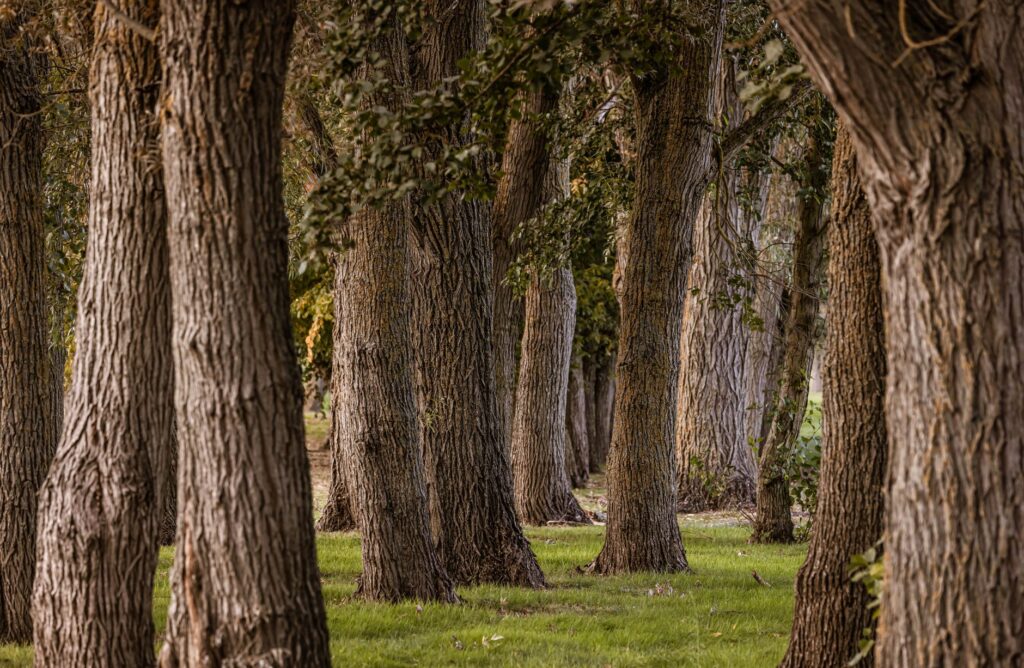
A tipped young tree has a fair chance when the trunk is sound, the root ball moved as a unit, the roots stayed moist and the stem is small enough to handle safely. Reset it promptly, keep the root flare at grade, support it loosely and give it a full year of attention. When roots are badly torn or the tree was struggling already, replacing it with a well chosen new one is often the kinder and cheaper path.
Bring in a certified arborist if any of these apply:
- The trunk is about 4 inches in diameter or larger.
- The tree is leaning toward a house, garage, driveway, sidewalk or street.
- The trunk or a major root is cracked.
- Wires are anywhere nearby.
- A reset tree has started leaning again.
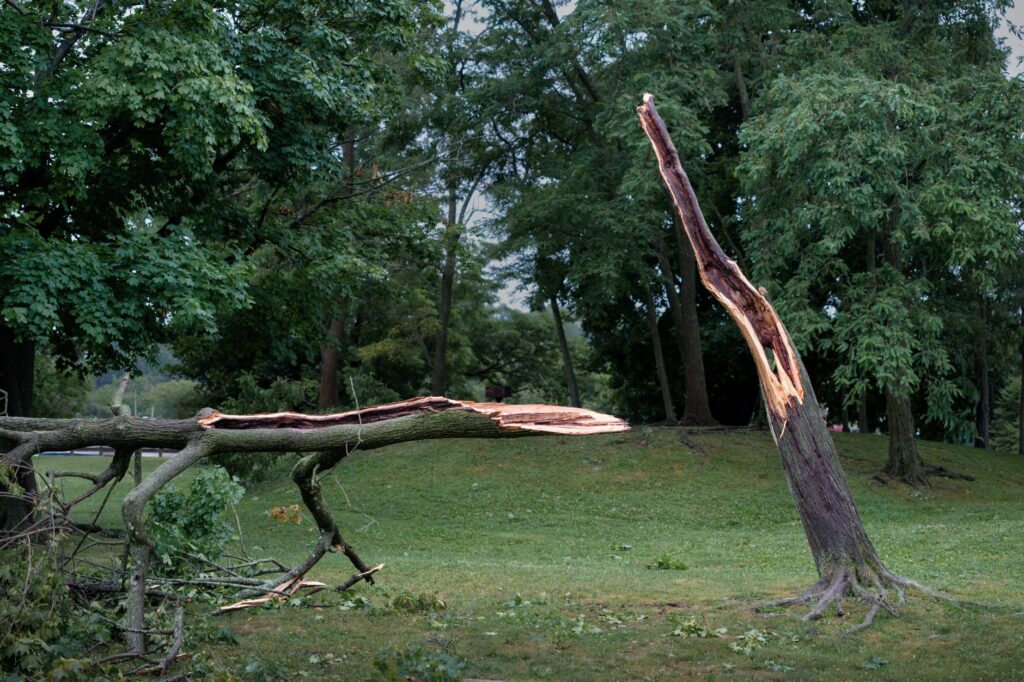
A mature tree that develops a sudden lean after a storm deserves prompt attention and a wide berth until someone qualified has examined it. The Find an Arborist search at TreesAreGood helps homeowners locate a credentialed professional. Ownership and permit questions can come up if the tree stands near the road or a property line, so check with Middletown Township before removing anything that may not be yours alone.
Photo credits: Featured image by David Kanigan on Pexels; Section 1 by Mingyang LIU on Pexels; Section 2 by Phu Huynh on Pexels; Section 3 by Christina & Peter on Pexels; Section 4 by Thirdman on Pexels; Section 5 by Kindel Media on Pexels; Section 6 by Valentin Ivantsov on Pexels; Section 7 by Victoria Bowers on Pexels.