Middletown's #1 Tree Expert Company
FREE Inspection & Estimate | Certified Arborists | Trimming, Pruning, Removal, More!
Sponsored
Why the High Ground Along the Navesink Is Different
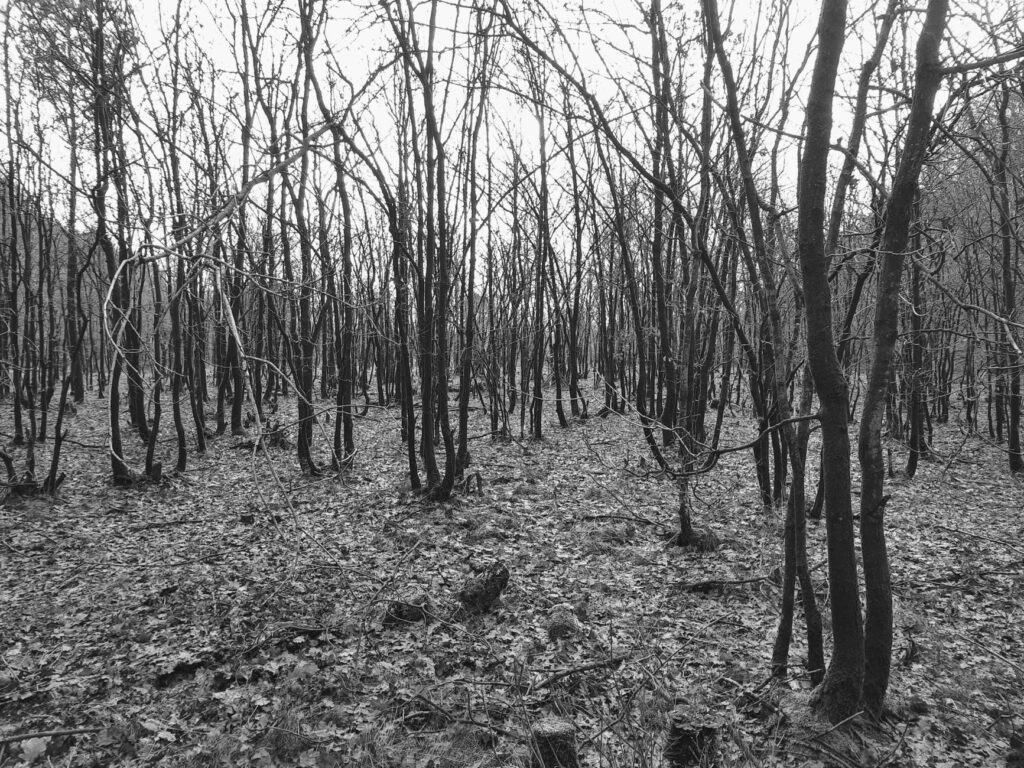
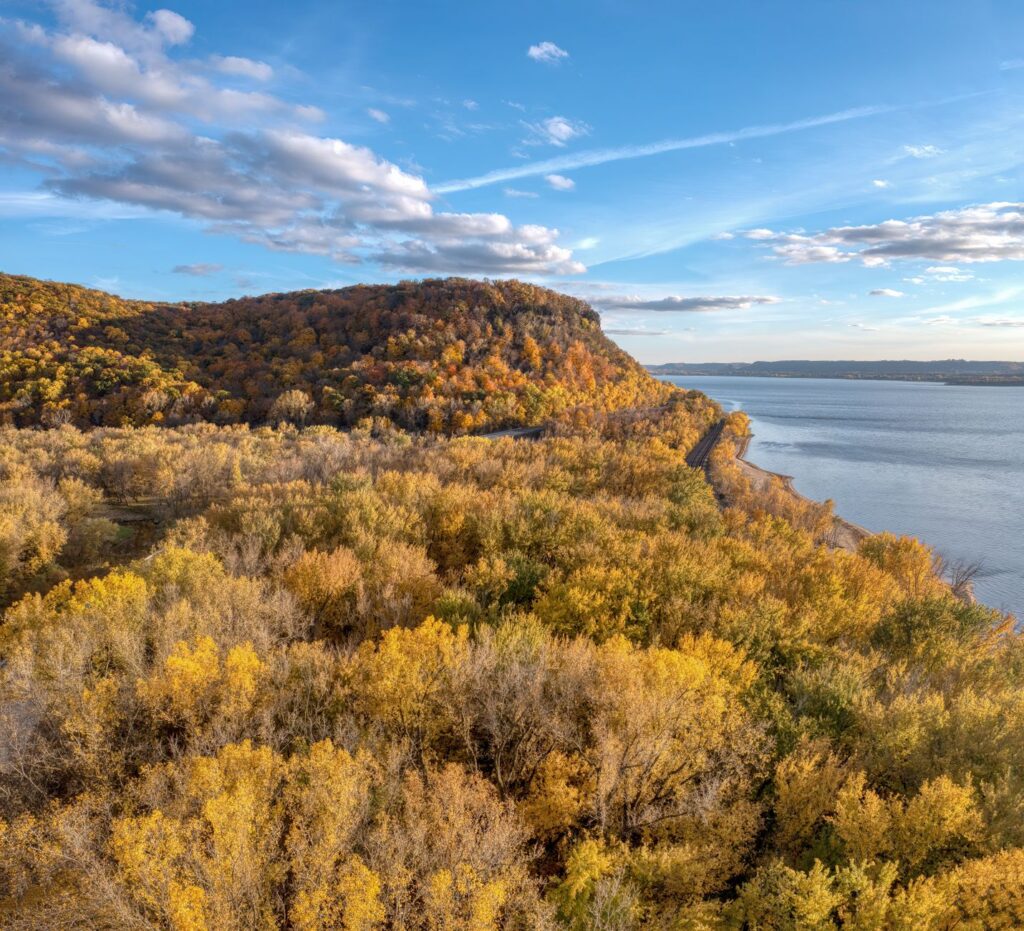
Much of Middletown is gently rolling or flat, but Locust, Navesink and the high ground toward the Highlands are another kind of place. Yards climb and drop, driveways switch back, and mature oaks stand above rooflines on ground that tilts toward the river. You can see the same wooded character from the trails at Hartshorne Woods Park, the county park whose forested hills look out over the Navesink.
Late November is the best moment to study a hillside tree. Most leaves are down, the trunk and scaffold limbs are visible, and the ground is not yet hidden by snow. A tree that looked like a green wall in August now shows exactly how it is built and how it sits on the grade.
That matters because a tree on a slope lives with forces that a tree on a level lawn does not. Water moves past it, soil slowly shifts under it, and its weight is rarely centered over its roots. Most hillside trees handle all of this well. The goal of a winter walk is to notice the few signs that suggest one is not.
How a Tree Learns to Stand on a Slope
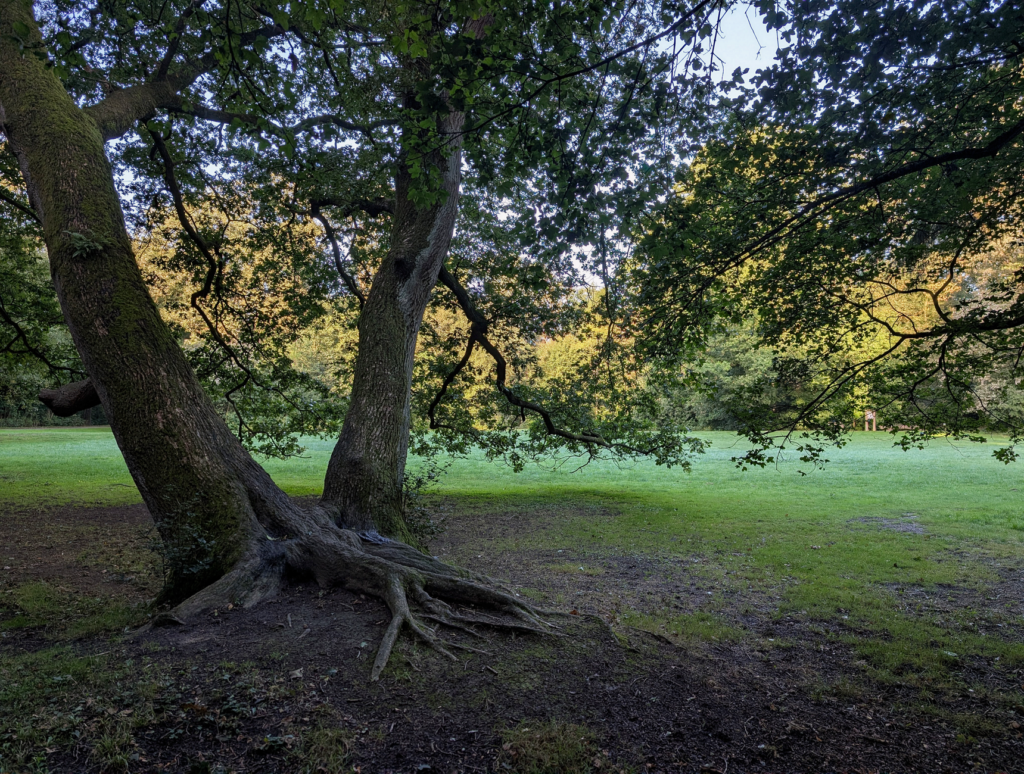
Trees respond to the loads they feel. A white oak (Quercus alba) that sprouted on a hillside has spent decades adding wood where it was stressed, flaring out roots where it needed anchorage and adjusting its crown toward the light. Broadleaf trees tend to build their extra reaction wood on the upper side of a lean, while conifers tend to build it on the lower side.
A curve low in the trunk, sometimes called a sweep, often records an old episode. The young tree was tipped, perhaps by creeping soil or a falling neighbor, and then corrected itself toward vertical. An old, smooth curve with a straight trunk above it is usually a story that ended long ago.
Roots follow the same logic. Anchoring roots commonly spread widely, and on grades the ones on the uphill side often work in tension like guy lines. This is one reason cutting into the bank above a tree can be as serious as cutting below it. A trench or patio excavation on either side can remove support you never saw. The International Society of Arboriculture’s tree owner resources are a good place to learn how roots grow and why they need protection well away from the trunk.
Read the Ground Before You Read the Branches
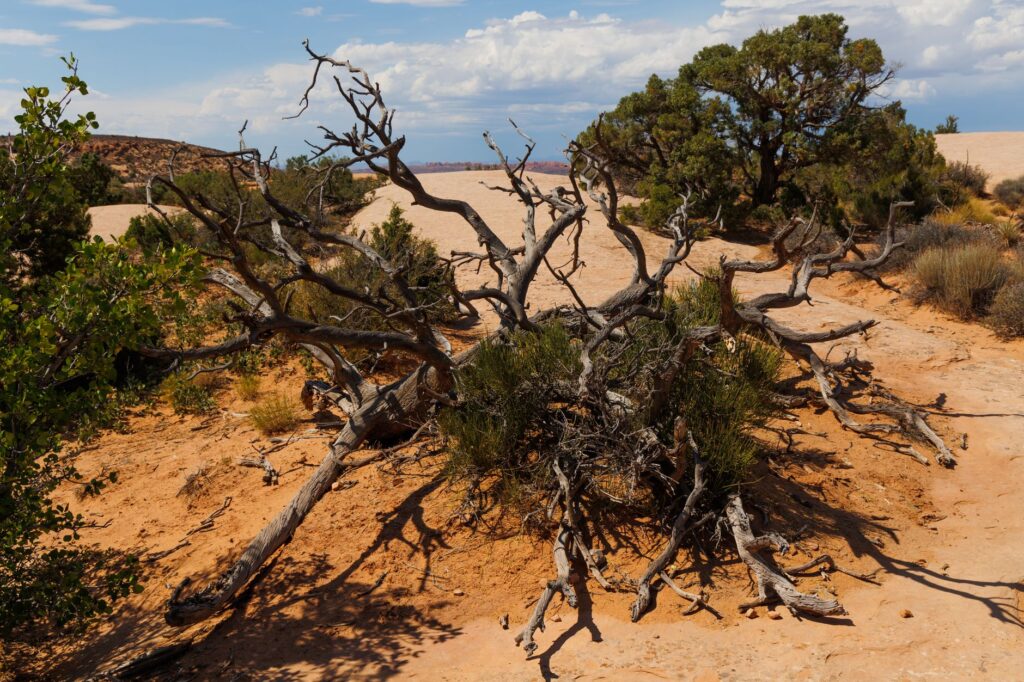
Start at the soil. Walk slowly across the slope, above and below each large tree, and look for changes that were not there last year. Fresh movement matters far more than old shapes.
These are worth writing down:
- A new crack in the soil, especially a curved one on the uphill side of the trunk
- A raised mound or heaved turf on the side opposite a lean
- Roots newly exposed by washed-out soil
- A gap opening between the trunk base and the surrounding ground
- Fence posts, walls or steps nearby that have recently tilted
A fresh crack or lifted root plate next to a tree that has changed its angle is not a wait-and-see item. Keep people and cars out of the area it could reach and get a qualified arborist to look promptly. If a retaining wall or the bank itself is moving, you may also need an engineer, because the problem may be larger than the tree.
Photographs help here. Stand in the same spot, frame the trunk against a fixed object such as a house corner, and date the picture. Repeating it after heavy rain or a nor’easter turns a vague impression into a real comparison.
Middletown's #1 Tree Expert Company
FREE Inspection & Estimate | Certified Arborists | Trimming, Pruning, Removal, More!
Sponsored
Water: The Slow Pressure on Hillside Roots
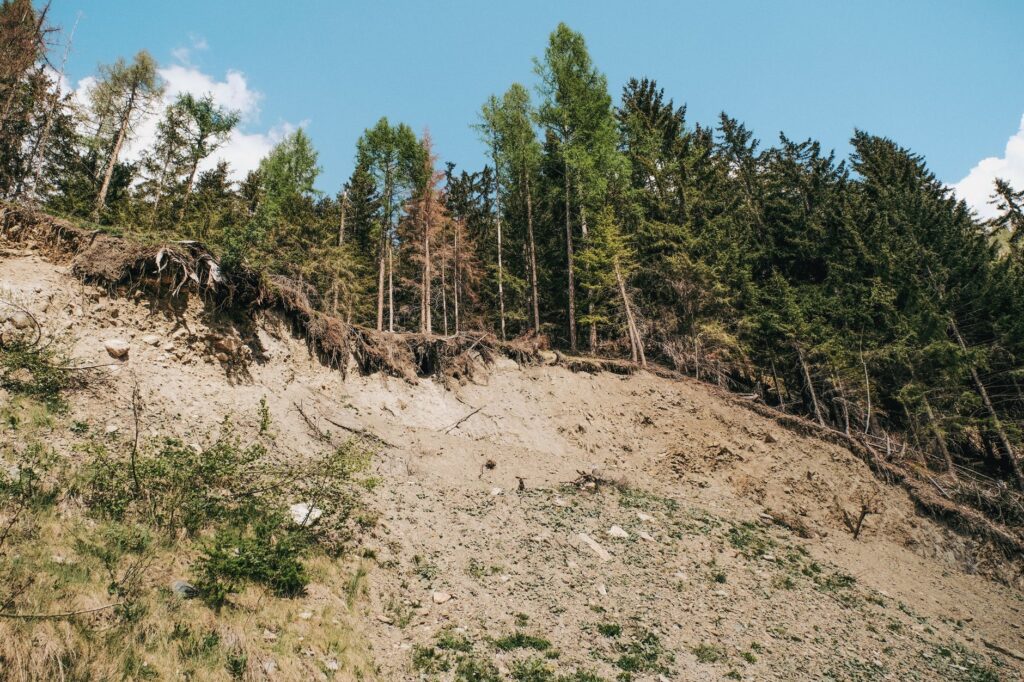
Runoff is the quiet problem on high ground. A downspout that empties above a tree, a driveway that sheds water over one edge, or a new patio that sends rain downhill can carve channels through the root zone. After a hard storm, follow the water while the evidence is fresh.
Soils can vary a great deal over short distances, from loose sandy material that drains fast to tighter layers that hold water. Look up your own address in the USDA Web Soil Survey for a general picture, then treat it as a starting point, since grading and fill around houses can change what is actually under your lawn. If you want to know about fertility and texture, the Rutgers Soil Testing Laboratory accepts homeowner samples.
Gentle fixes usually work better than dramatic ones:
- Extend downspouts so they discharge away from trunks and steep faces, without simply moving the problem onto a neighbor
- Keep a layer of shredded leaves or wood chips on bare soil under the canopy
- Leave established groundcover and shrubs in place on the bank
- Keep foot traffic off wet, soft areas in winter
Do not add a deep blanket of soil or stone over roots to level a washed spot. Burying the root flare causes its own decline, and heavy material on a slope can slide.
Leaves, Ivy and the Understory Are Doing a Job
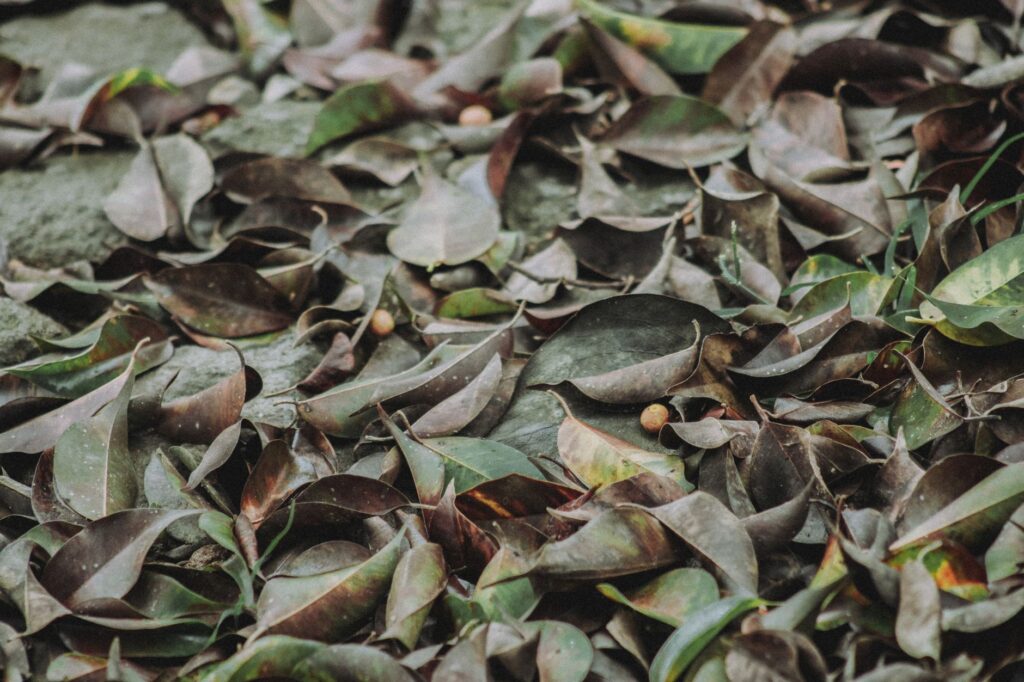
It is tempting to rake a bank down to bare dirt. On a slope, that removes the cover that slows raindrops and holds soil between the larger roots. Where leaves are not smothering lawn or clogging drains, letting them lie under the trees is often the better choice.
The layers beneath the big trees matter too. In many wooded yards, American holly (Ilex opaca), mountain laurel (Kalmia latifolia) and young hardwoods fill the space under taller oaks and tulip poplars (Liriodendron tulipifera). Their roots knit the upper soil together, and the young hardwoods are the next generation of canopy. Clearing them for a wider view can leave a bank much more exposed.
Vines are a different matter. English ivy (Hedera helix) climbing a trunk hides cracks, cavities and fungal growth right where you most need to see them. Cutting the vine stems in a band around the base, without cutting into bark, lets the upper growth die back over time. Leave the roots on a steep face unless you have a replacement cover ready. For broader guidance on caring for wooded property, the New Jersey Forest Service is a useful public resource.
Pruning and Views on a Hillside Lot
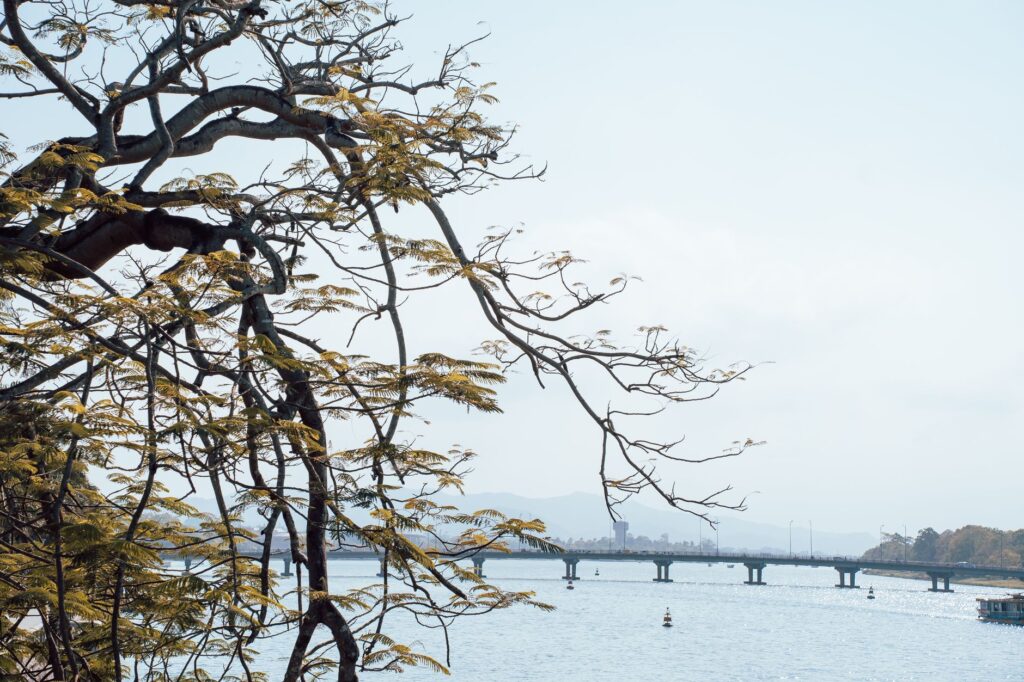
River views are a large part of why people love this part of town, and they are also why hillside trees sometimes get treated harshly. Topping a tree to open a sightline removes much of its leaf area, triggers weakly attached sprouts and leaves large wounds that are prone to decay. The sprouts soon close the view again, and the tree is worse off.
Selective work is kinder. Removing a few chosen lower limbs back to the branch collar, or thinning small branches in one window of the crown, can frame water without wrecking structure. The dormant season is a sensible time to plan this because the branching is easy to see. Heavy one-sided pruning on a leaning tree changes how it carries weight, so large cuts deserve professional judgment.
Check property lines and any local or environmental restrictions before cutting on a bank or near the water. Steep ground, wetland buffers and conservation easements can carry rules of their own, and a call to Township planning staff before work starts is far easier than a correction afterward.
Middletown's #1 Tree Expert Company
FREE Inspection & Estimate | Certified Arborists | Trimming, Pruning, Removal, More!
Sponsored
Summary / When to Call a Pro
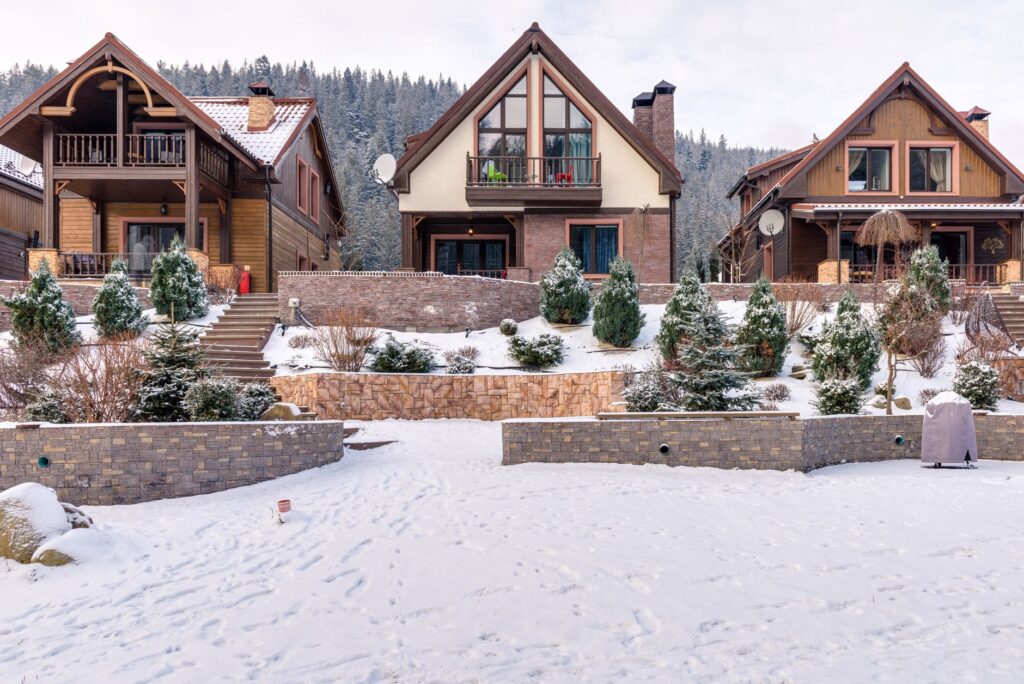
Hillside trees along the Navesink are often old, valuable and remarkably well adapted. Give them a deliberate look now: check the soil above and below, follow where water travels, keep the bank covered, clear vines from trunks and resist the urge to top for a view. Date a few photographs so next winter’s walk has something to compare against.
Call a certified arborist promptly if a tree has recently changed its lean, the ground is cracking or lifting near the base, roots have been cut or washed out on a large tree, or you find cavities, mushrooms or large dead limbs over a house, drive or path. Do not attempt chainsaw work on a slope, from a ladder or on uncertain footing. You can look up credentialed professionals in the ISA arborist directory and ask each one about experience with trees on grades.
A visit before winter storms arrive is much easier to arrange than emergency work, and it may well end with reassurance that a crooked old oak is as sound as it needs to be.
Photo credits: Featured image by Tom Fisk on Pexels; Section 1 by Tim de Vries on Pexels; Section 2 by Natural Light Visuals on Pexels; Section 3 by Igor Passchier on Pexels; Section 4 by Andreas Schnabl on Pexels; Section 5 by Murillo Molissani on Pexels; Section 6 by Xuân Thống Trần on Pexels; Section 7 by Max Vakhtbovych on Pexels.