
Middletown's #1 Tree Expert Company
FREE Inspection & Estimate | Certified Arborists | Trimming, Pruning, Removal, More!
Sponsored
The Season Homeowners Forget to Worry About
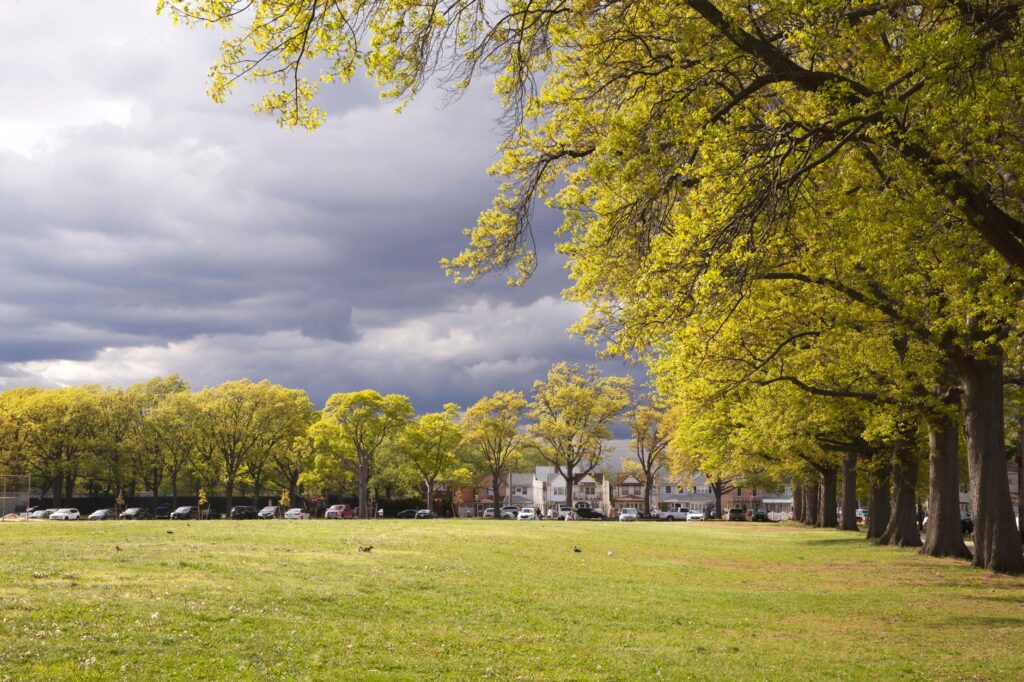
Every February, Middletown homeowners walk their yards looking up at bare branches, sizing up deadwood and cracked limbs against a gray winter sky. It’s easy to do — there’s nothing in the way. But late August through October is the other tree-risk season in Monmouth County, and it gets far less attention, even though it can be more dangerous. This stretch is the peak of the Atlantic hurricane season, and it arrives when every shade tree on the Bayshore is carrying its heaviest, fullest canopy of the year.
A tree that shrugged off a January nor’easter with bare limbs can fail in a late-summer tropical storm carrying the same wind speed, simply because the two storms are hitting a completely different tree. This isn’t a seasonal coincidence worth shrugging off — it’s a structural mismatch between when trees are most vulnerable and when the storms most likely to test them actually show up. Understanding why matters more here than in most places, because Middletown’s exposure along Raritan Bay and the Shrewsbury River puts its trees directly in the path of the wind these storms bring off the water.
A Full Canopy Is a Sail, Not Just Shade

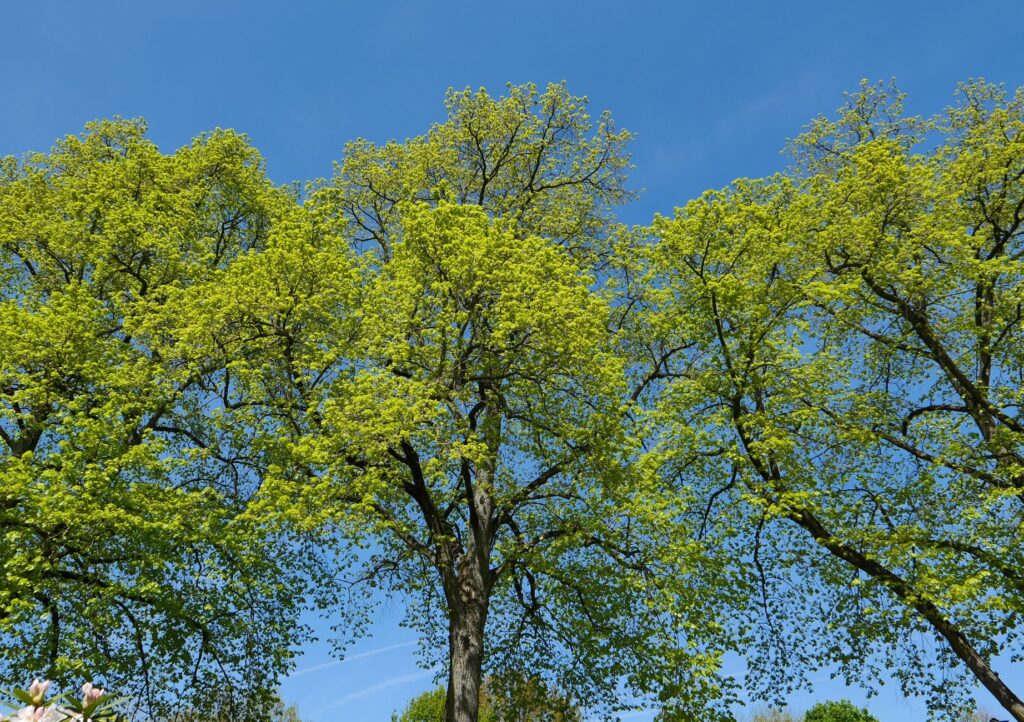
The mechanism is simple once it’s pointed out: leaves catch wind. A mature oak or tulip poplar (Liriodendron tulipifera) in full late-summer leaf can present many times more surface area to moving air than the same tree stripped bare in December. Every one of those thousands of leaves adds a small amount of drag, and all of that drag adds up at the trunk and root system as a single, much larger force trying to tip the tree over or snap its limbs. Arborists call this wind loading, and it’s the single biggest reason storm damage patterns look so different in August than in January.
Species matter here too. Trees with dense, broad canopies — Norway maple, silver maple, and mature tulip poplars among them — carry more sail area than open-crowned trees like many oaks, and they tend to show up disproportionately in storm-damage calls after late-summer systems. The USDA Forest Service has documented this wind-loading effect in urban forestry research on storm damage, and it’s consistent with what shows up on the ground in Middletown after any storm that rolls through with trees still fully leafed out.
Saturated Soil Makes the Root System the Weak Link
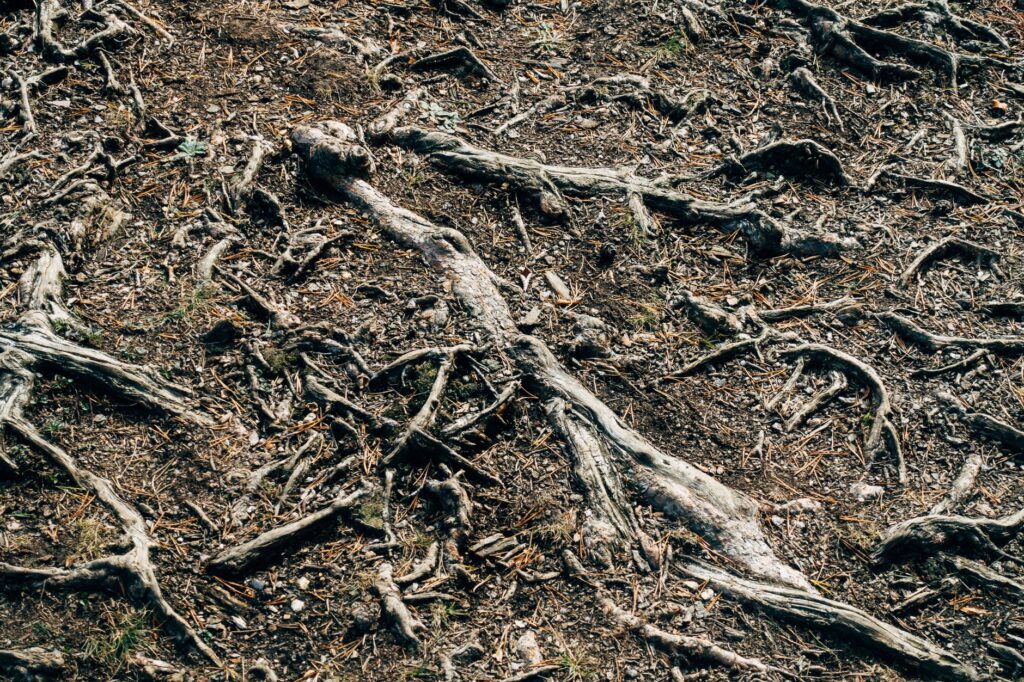
Wind load on the canopy is only half the story. The other half is happening underground, and it’s arguably more important. Middletown’s clay-loam soils drain slowly to begin with, and a wet summer — heavy thunderstorms in July and August, humidity that never lets the top few inches dry out — leaves the root zone saturated more often than not by the time a tropical system arrives. Saturated soil loses much of its shear strength, which means the roots anchoring a tree in the ground have far less to grip.
This is why late-summer storms produce so many trees that go over at the root ball rather than snapping at the trunk — the tree itself may be structurally sound, but the soil holding it upright simply gives way under load. Rutgers Cooperative Extension has published guidance on how soil moisture and compaction affect root anchorage, and it’s a useful reminder that a tree’s stability depends as much on what’s happening six inches below the surface as on what’s visible above it. A tree standing in soggy ground after a week of rain is carrying more risk in a storm than the same tree would after a dry stretch, even with identical wind speeds.
Middletown's #1 Tree Expert Company
FREE Inspection & Estimate | Certified Arborists | Trimming, Pruning, Removal, More!
Sponsored
Old Wounds and Weak Unions Fail Under Load They Never Faced Before
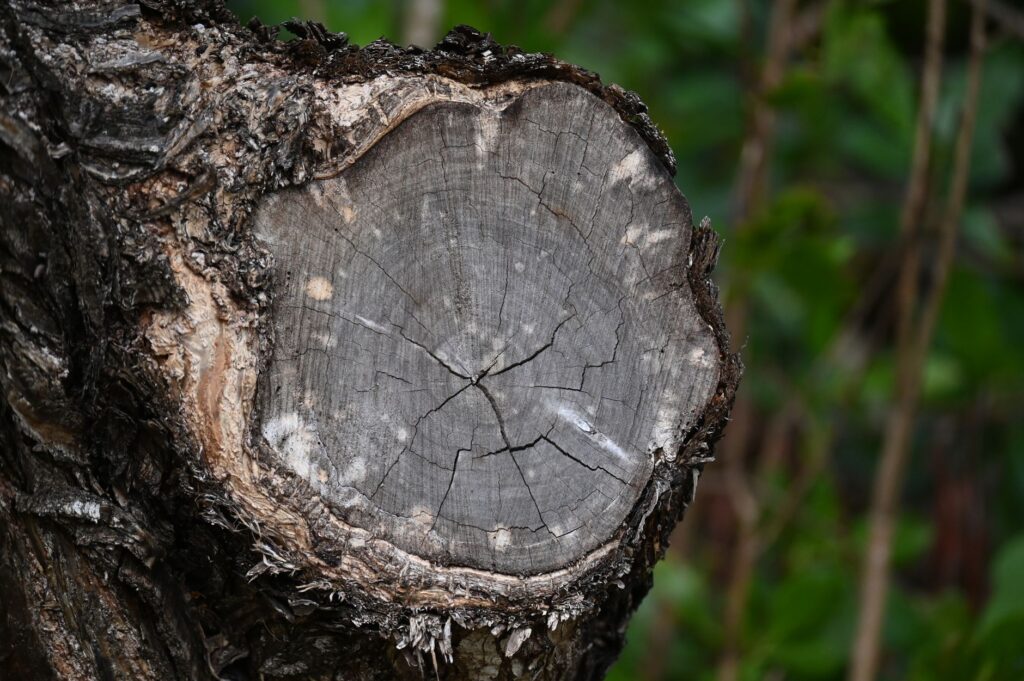
Full canopy and wet soil raise the baseline risk for every tree, but they don’t raise it evenly. Trees carrying pre-existing structural weaknesses take the brunt of it. Codominant stems with included bark — two trunks growing so close together that bark gets pinched into the union instead of forming solid wood — are notorious for splitting apart under wind loads that a single, well-attached trunk would handle easily. The same goes for old pruning wounds that never closed properly, cavities from long-past storm damage, and girdling roots that have quietly been restricting a tree’s own vascular system for years.
None of these defects are new. What’s new is the load. A structurally compromised limb or union that has held fine through years of ordinary wind can be the first thing to go once a tropical system pushes gusts through a fully leafed canopy sitting in saturated ground. The International Society of Arboriculture recommends exactly this kind of structural inventory — looking for included bark, cavities, and old wounds — as a core part of any pre-storm-season risk assessment, precisely because these are the defects that turn an ordinary storm into a property-damaging one.
What to Actually Check in Your Own Yard Right Now
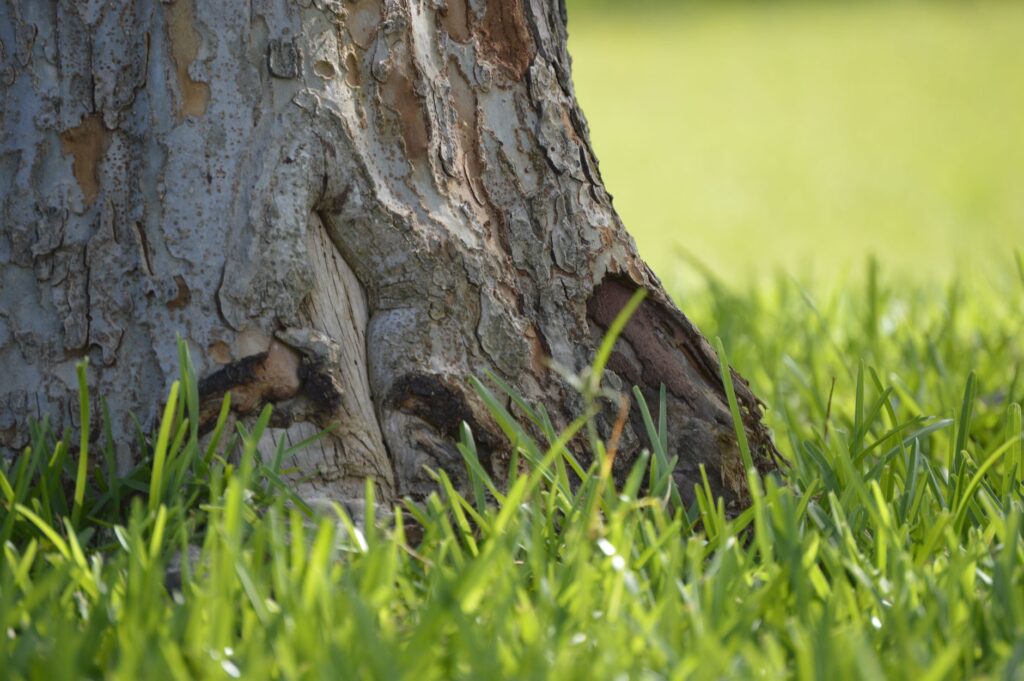
A homeowner doesn’t need a bucket truck to do a meaningful pre-storm walk-around. Start at the base of each significant tree and look for soil that has recently cracked, lifted, or heaved on one side of the trunk — that’s often the earliest visible sign that roots are beginning to lose their grip, sometimes weeks before a tree visibly leans. A trunk that leans noticeably more than it used to, especially if the lean is recent rather than a lifelong growth habit, deserves a closer look.
- Scan the canopy for large dead branches — deadwood has no living tissue holding it in place and is often the first thing to come down in wind
- Look up into the crown for included bark: a V-shaped union where two major limbs meet, rather than a wider, U-shaped one
- Check for mushrooms or fungal conks growing at the base or on the trunk, which can indicate internal decay long before the outside of the tree shows stress
- Note any trees near the house, driveway, or a neighbor’s property line that combine several of these signs at once
None of this requires special equipment, just a slow walk around the property with a critical eye — ideally before the next system is already in the forecast, not the night before it arrives.
Middletown's Bayshore Exposure Raises the Stakes Further
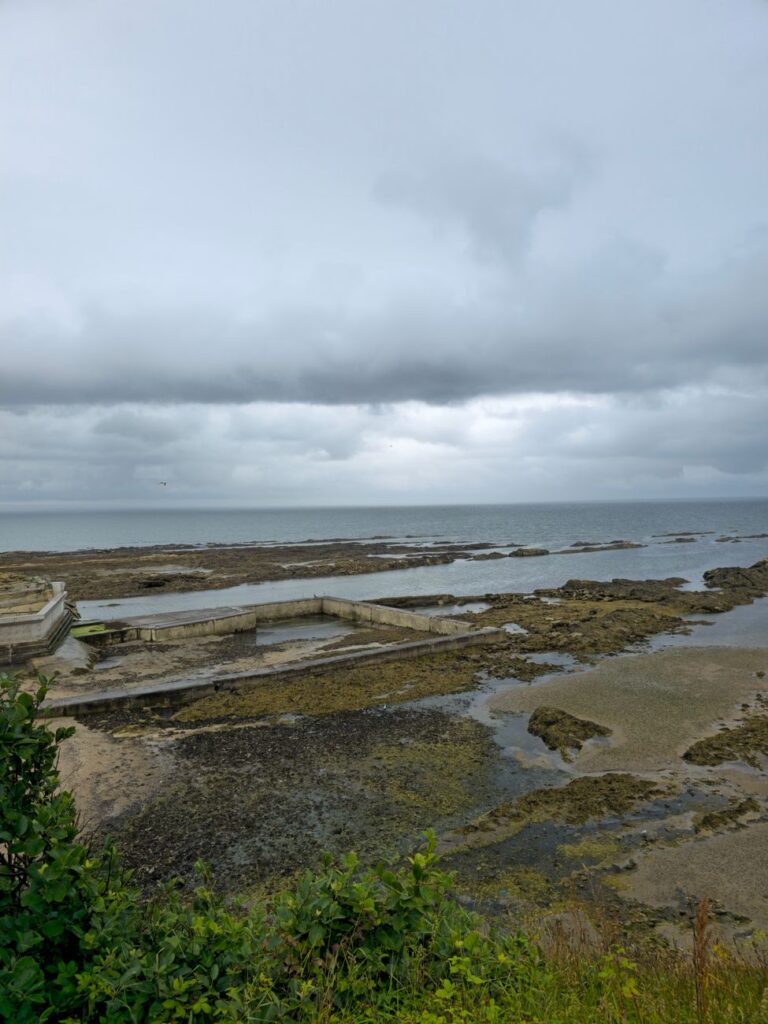
Trees along Raritan Bay and the Navesink and Shrewsbury Rivers face a version of this problem that inland Monmouth County doesn’t. Wind off open water arrives with less friction to slow it down than wind moving across rooftops and forest, so gust speeds in Port Monmouth, Leonardo, and the Atlantic Highlands waterfront tend to run higher than the same storm produces a few miles inland in Lincroft or Middletown’s town center. Salt spray carried on that wind can also stress foliage in the days before a storm even arrives, which doesn’t help a canopy that’s already working hard to shed a heavy wind load.
The tree management practices at county-managed woodlands offer a useful parallel for homeowners. The Monmouth County Park System conducts regular hazard-tree assessments along trails at Hartshorne Woods and Thompson Park specifically ahead of storm season, prioritizing exactly the defects described above — included bark, deadwood, and lean — rather than waiting for damage to show up after the fact. A backyard benefits from the same logic on a smaller scale.
Middletown's #1 Tree Expert Company
FREE Inspection & Estimate | Certified Arborists | Trimming, Pruning, Removal, More!
Sponsored
When a Walk-Around Isn't Enough
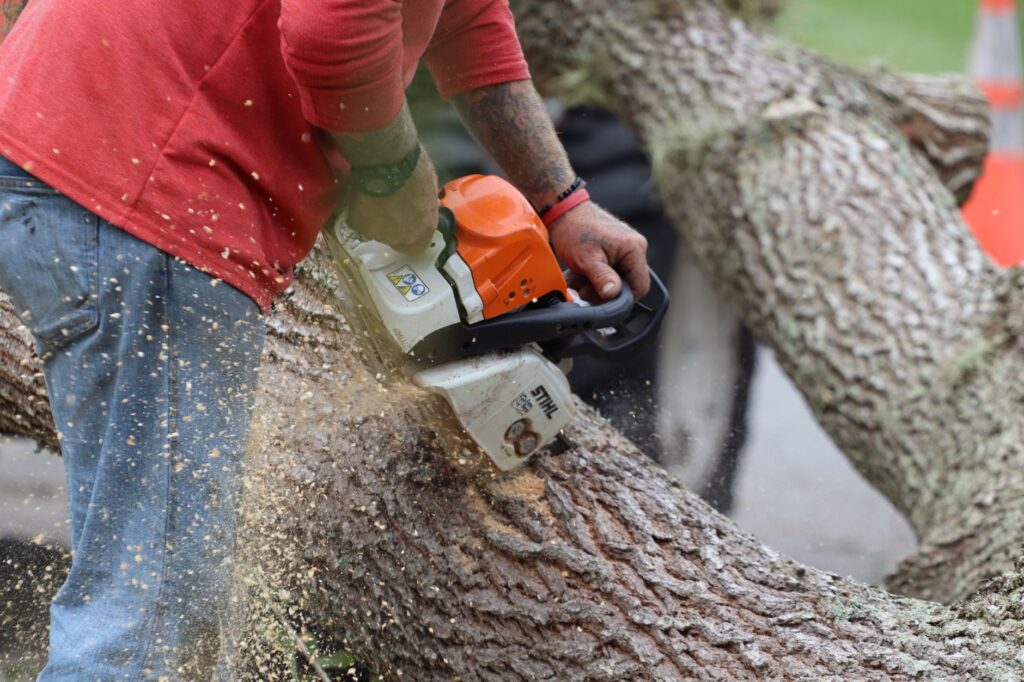
A visual inspection from the ground catches a lot, but it has real limits. Internal decay, root damage from past construction, and the true extent of a codominant union’s weakness often aren’t visible without training and, in some cases, resistance-drilling or sonic tomography equipment that goes beyond what any homeowner owns. Any tree that combines a significant lean, visible root-zone disturbance, and proximity to a house, driveway, or property line is a reasonable candidate for a professional risk assessment before the next storm rather than after.
A certified arborist trained in tree risk assessment can evaluate root plate stability, identify internal decay, and recommend whether a tree needs cabling, selective crown reduction to lower its wind sail, or removal — decisions that are much easier to make calmly in late August than in the panicked aftermath of a storm. With the Atlantic hurricane season running into October, there’s still time this year to get ahead of it. A tree that makes it through this fall’s storms with its full canopy intact will be back to a lighter winter load in a few months anyway — the goal is simply making sure it gets there standing up.
Photo credits: Featured image by Hajo Merz on Pexels; Section 1 by Veronika Bykovich on Pexels; Section 2 by Lorenzo Manera on Pexels; Section 3 by Markus Winkler on Pexels; Section 4 by John Dean on Pexels; Section 5 by Carl Owens on Pexels; Section 6 by Ivan Dražić on Pexels; Section 7 by Aurora Aguilar on Pexels.