Middletown's #1 Tree Expert Company
FREE Inspection & Estimate | Certified Arborists | Trimming, Pruning, Removal, More!
Sponsored
The Storm Isn't the Whole Story
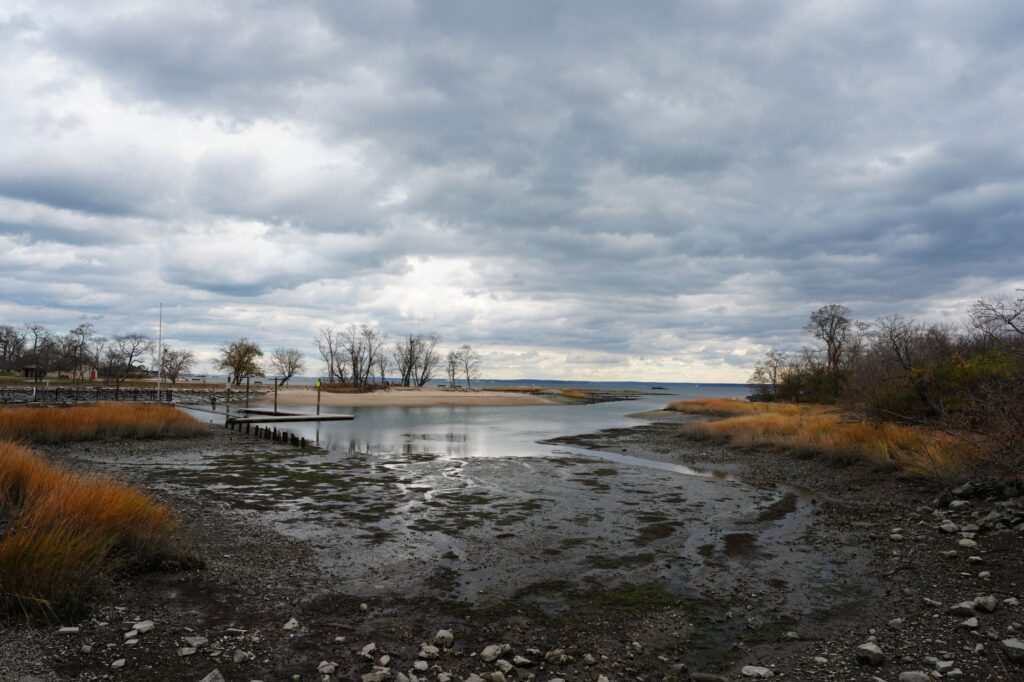
Every September, the calls I field about downed trees follow a pattern that has nothing to do with how hard the wind actually blew. A tree that shrugged off a 60 mph nor’easter in January goes over in a 40 mph September squall, and the homeowner is baffled. The wind didn’t change. The ground did.
Mid-September sits at the peak of Atlantic hurricane season, and in Middletown Township that peak lands on top of soil that’s often already saturated from a summer of thunderstorms and the occasional tropical remnant sliding up the coast. Low-lying pockets near Port Monmouth, Leonardo, and the Bayshore edge along Raritan Bay hold water longer than the upland soils around Lincroft or Chapel Hill, which means the same storm can be a non-event on one street and a root-plate failure two miles away.
Understanding why saturated ground is more dangerous than wind speed alone is the difference between a homeowner who spots trouble a week before a storm and one who’s calling a cleanup crew the morning after.
Most of a Tree's Roots Are Shallower Than You Think
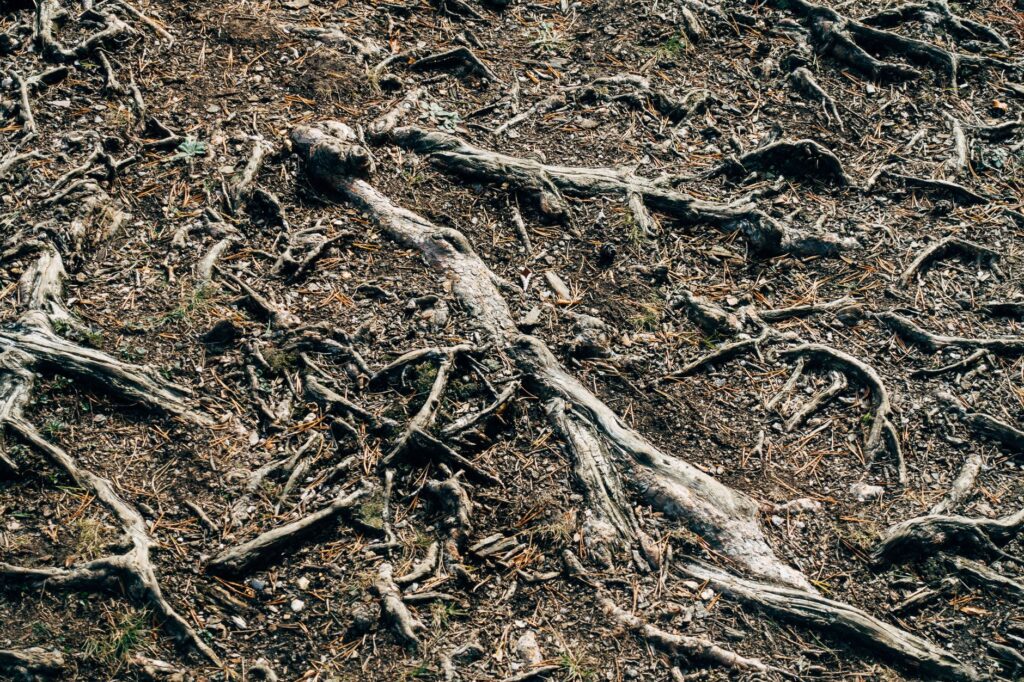
Homeowners picture roots as a mirror image of the canopy — a deep taproot anchoring the tree like a stake in the ground. For the overwhelming majority of mature trees, that’s not how it works. Roughly 80-90% of a tree’s root mass lives in the top 12 to 18 inches of soil, spreading out well beyond the drip line rather than plunging downward. USDA Forest Service research on root architecture describes this structure as a shallow, wide-reaching plate rather than a deep anchor — closer to how a dinner plate sits balanced on a fingertip than how a stake holds in the ground.
That root plate does two jobs at once: it pulls water and nutrients from the soil, and it resists the leverage the canopy puts on the trunk every time wind pushes against it. In compacted clay-loam — common across much of Middletown’s inland soils — roots are already forced to spread laterally instead of penetrating deep, because the dense subsoil resists root growth. That’s a normal adaptation. It becomes a liability the moment the soil holding that shallow plate in place turns to mud.
Why Wet Soil Changes the Physics
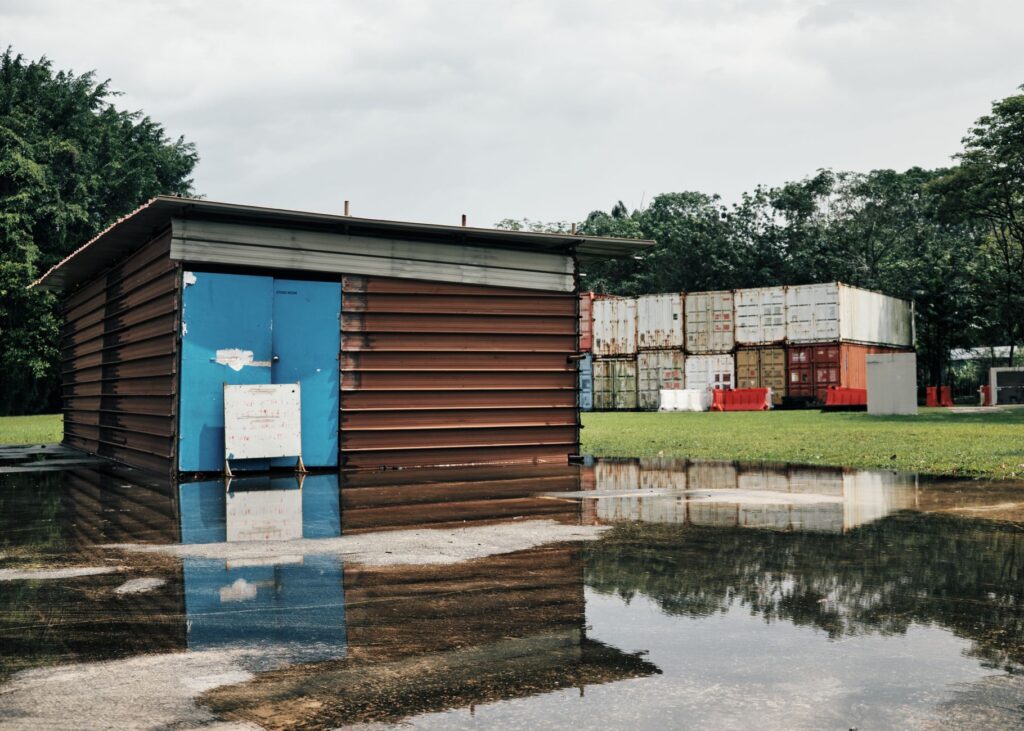
Dry or moderately moist soil has real shear strength — the individual particles grip each other and grip root fibers, so the whole root plate resists twisting and lifting. Saturate that same soil and the water fills the pore spaces between particles, effectively lubricating them. Shear strength drops, sometimes dramatically, and the friction that normally holds the root plate in place gives way well before the wood itself would break.
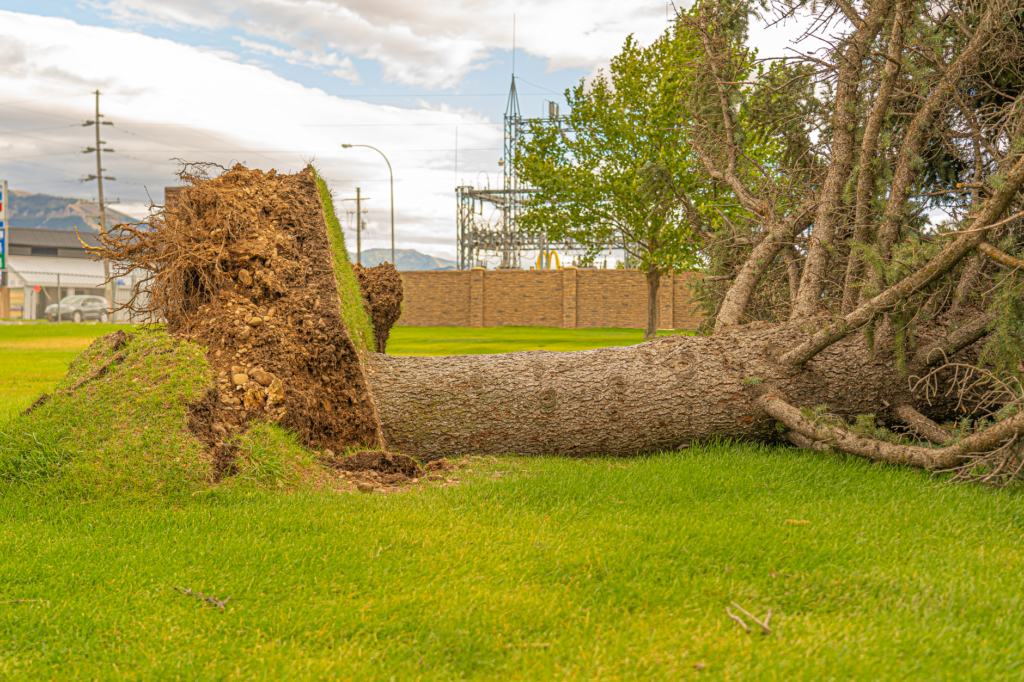
This is why arborists distinguish between two very different storm-failure modes: wind snap, where a weak point in the trunk or a major limb gives way while the roots hold firm, and windthrow, where the entire root plate rotates or lifts and the tree goes over with roots exposed. Saturated soil is the single biggest driver pushing a given tree from the first failure mode toward the second. The Rutgers New Jersey Agricultural Experiment Station has long flagged prolonged soil saturation as a compounding hazard heading into storm season, precisely because it changes how a tree fails, not just whether it fails.
Windthrow trees are also the most dangerous kind of failure for a homeowner, because a leaning or partially uprooted tree can still be standing — barely — with a compromised root plate that won’t hold through the next gust or the next storm.
Middletown's #1 Tree Expert Company
FREE Inspection & Estimate | Certified Arborists | Trimming, Pruning, Removal, More!
Sponsored
Some Middletown Trees Carry More of This Risk Than Others
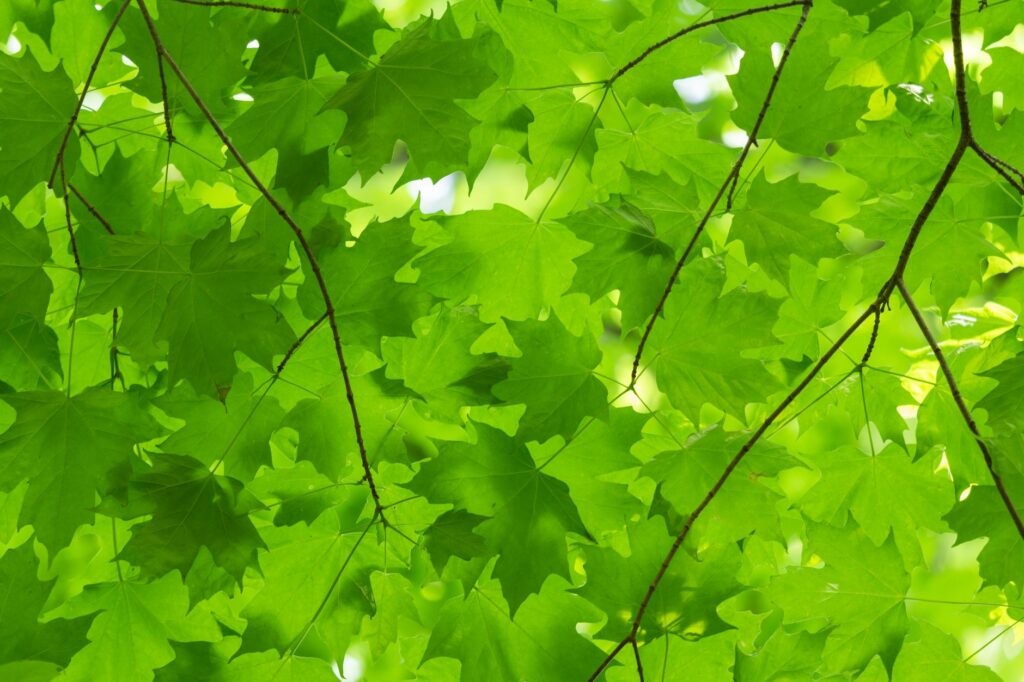
Species with naturally shallow, wide-spreading root systems are disproportionately represented in windthrow failures after saturated storms. Norway maple (Acer platanoides), a common street and yard tree throughout Middletown, is a frequent example — it roots aggressively but shallowly, and it holds its leaves later into storm season than many natives, which means more sail area catching wind at the exact moment root grip is weakest. Tulip poplar (Liriodendron tulipifera) and white pine (Pinus strobus) are two more species that tend toward height and canopy volume without a correspondingly deep root system, particularly on sites with any history of soil compaction from construction or lawn equipment.
By contrast, white oak (Quercus alba) and other native oaks common across Middletown’s older neighborhoods generally develop a more substantial, better-distributed root plate over decades — one reason mature oaks often outlast younger, faster-growing species in the same storm. That’s a tendency, not a guarantee; an oak with a history of root damage from nearby excavation or years of soil compaction can be just as vulnerable as anything else.
Soil type matters as much as species. The sandier soils closer to the Bayshore drain faster and generally regain shear strength sooner after rain, while the heavier clay-loam found further inland can stay saturated for days after a storm has already passed — which is part of why a tree can come down in the calm aftermath of a storm, not just during it.
What to Actually Check Before a Storm Watch Goes Up
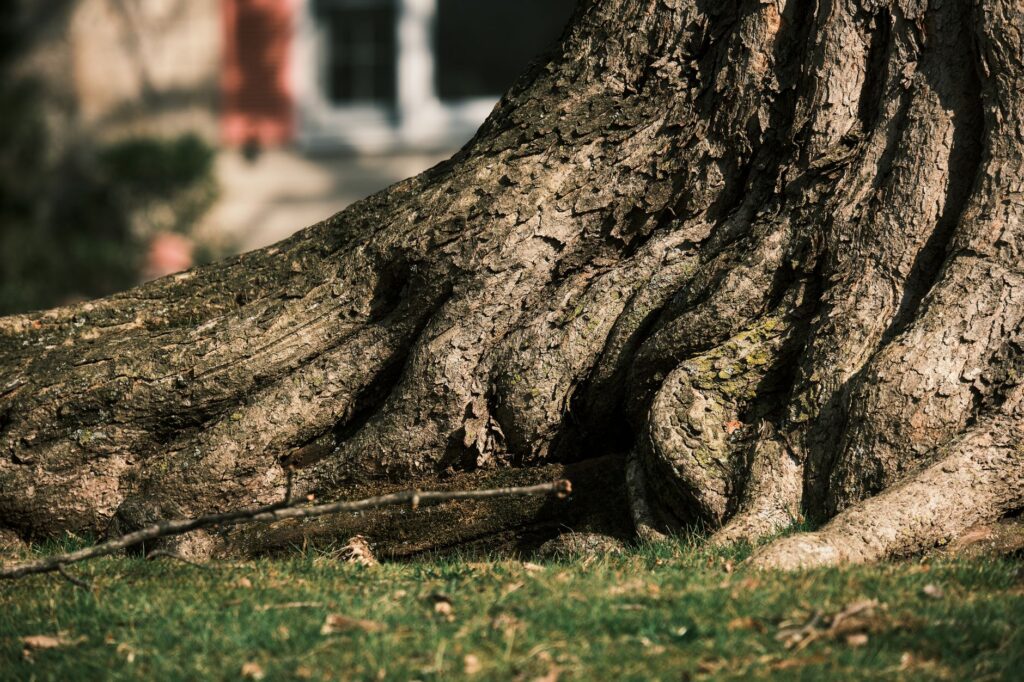
You don’t need equipment to do a meaningful root-plate check — you need ten minutes and a walk around the base of any tree that could reach the house, the driveway, or a neighbor’s property.
- Look for a new lean. A trunk that’s leaning more than it used to, especially if the lean is recent, is often the first visible sign the root plate has already started to shift.
- Check the soil right at the base. After heavy rain, look for cracking, heaving, or a slight mounding in the soil surface on one side of the trunk — that’s the root plate beginning to rock, sometimes weeks before a full failure.
- Confirm grading sends water away from the trunk. Soil that pools against the base rather than draining outward keeps that root zone saturated far longer than the surrounding yard.
- Don’t add soil or mulch depth around the base. Piling material against the trunk — a mulch volcano — holds moisture against the root flare and can suffocate the very roots you’re counting on for anchorage.
None of this replaces a professional assessment for a tree that’s already showing signs of trouble, but it’s enough to tell you which trees on your property deserve a closer look before the next storm watch is issued.
When a Lean or Soil Crack Means It's Time to Call Someone
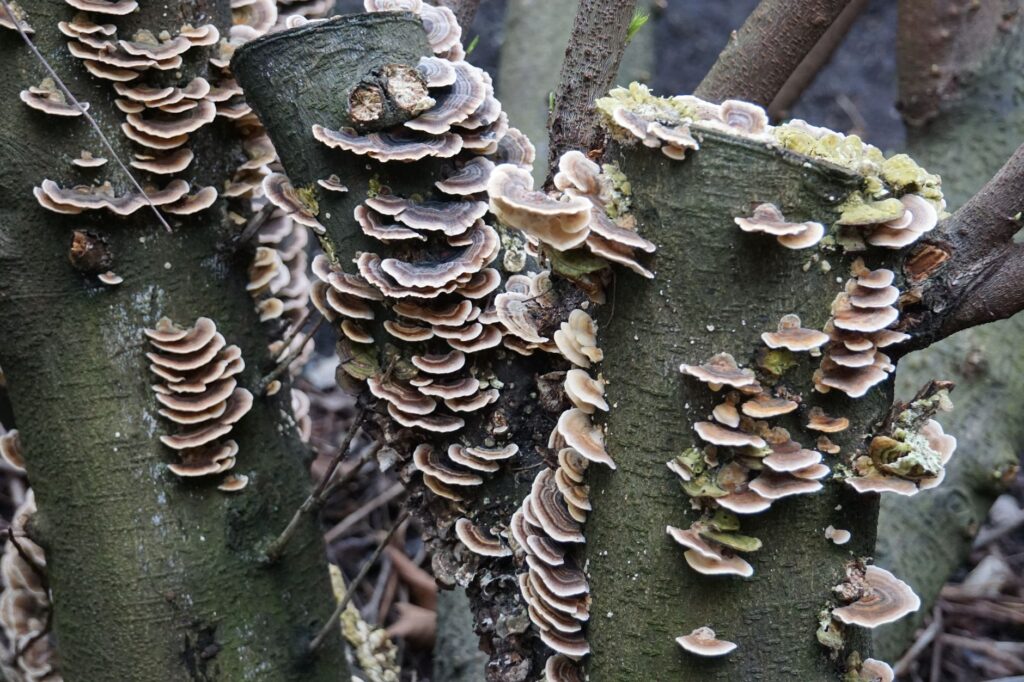
A few signs move a tree from keep an eye on it to get it looked at now. A lean that’s new or worsening, visible soil cracking or heaving anywhere around the root zone, mushrooms or fungal conks growing from the base or surface roots — a sign of root decay that compounds the loss of anchorage from saturation — or a tree that rocks visibly at the base when you push on the trunk all warrant a certified arborist’s evaluation, not a wait-and-see approach.
An arborist assessing root-plate risk is looking at things a homeowner typically can’t from the surface: the extent of any decay, whether the lean is longstanding (and the tree has compensated for it) or genuinely new, and whether the root system has been compromised by past construction, trenching, or grade changes nearby. The International Society of Arboriculture maintains a directory of ISA Certified Arborists for homeowners who want that kind of evaluation before storm season rather than after.
Middletown's #1 Tree Expert Company
FREE Inspection & Estimate | Certified Arborists | Trimming, Pruning, Removal, More!
Sponsored
The Ground Is Doing Half the Work, One Way or Another
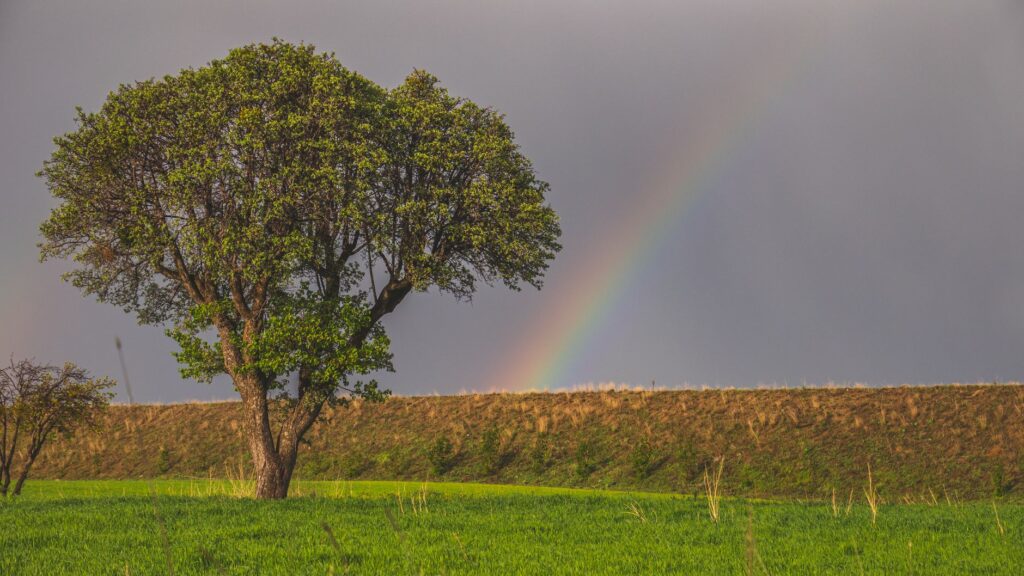
Every storm season, the trees that come down aren’t always the ones that look the weakest from the street. A healthy-looking tree in saturated, compacted soil can be more vulnerable than a scruffier tree rooted in well-drained ground. That’s a hard thing to judge from a lawn chair, which is exactly why a walk around your property after the next heavy rain — before the next storm watch — is worth the ten minutes it takes.
If something looks different — a new lean, cracked soil, a root flare that seems to be lifting — a certified arborist can tell you in one visit whether it’s a tree that needs cabling, pruning to reduce sail area, or removal before it makes that decision on its own terms. Trees that get that kind of look before the storm hit are, almost always, the ones still standing after it passes.
Photo credits: Featured image by Castorly Stock on Pexels; Section 1 by David Kanigan on Pexels; Section 2 by Markus Winkler on Pexels; Section 3 by Inky Torex on Pexels; Section 4 by Sam Divita on Pexels; Section 5 by Malcolm Garret on Pexels; Section 6 by Marian Florinel Condruz on Pexels; Section 7 by Emre Ayata on Pexels.