Middletown's #1 Tree Expert Company
FREE Inspection & Estimate | Certified Arborists | Trimming, Pruning, Removal, More!
Sponsored
Cutting Holiday Greens Is Pruning, Whether You Call It That or Not

Every year about now, Middletown yards start to look like a source of free decorations. A white pine branch for the mantel, a few sprigs of American holly for the front door, a handful of red cedar tips for a wreath. It feels harmless, and often it is. But every cut you make with pruners in your hand is a pruning cut, and the tree responds to it the same way it responds to a professional’s saw.
That matters because the season sits right at the edge of the dormant window. Most trees here have dropped their leaves and slowed down, which is a forgiving time to cut, and evergreens are not fully dormant in the way an oak is. They still carry needles that make food on mild days, and they still seal wounds, just slowly.
The goal for this article is simple: help you take what you need for the table and the door without leaving a bare patch, a ragged stub, or a stressed tree that browns out in March. A little planning before the first cut makes the difference between a tree that shrugs it off and one that shows the damage for years.
Know Which Tree You Are Cutting From
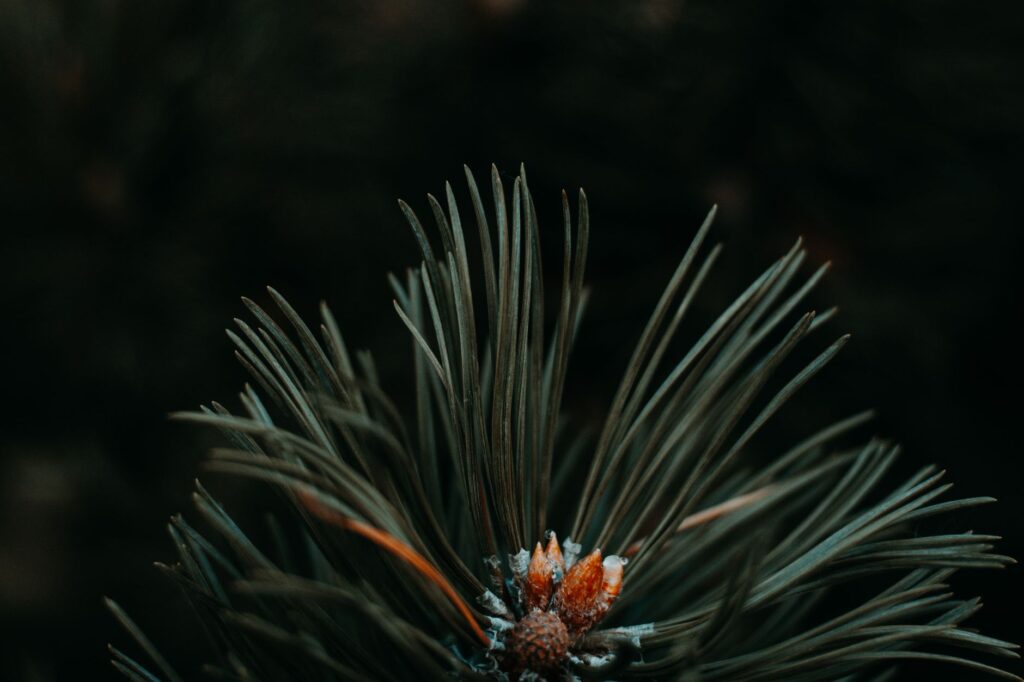
The three evergreens most Middletown homeowners reach for each behave differently, so start by naming the tree. Eastern white pine (Pinus strobus) has soft, long needles in bundles of five and a layered, whorled branch pattern. Eastern red cedar (Juniperus virginiana) has scale-like foliage and often blue, waxy berry-like cones. American holly (Ilex opaca) has the spiny, glossy leaves everyone recognizes.
Holly has one extra wrinkle: it is dioecious, meaning separate trees carry male and female flowers. Only the female trees set red berries, and only if a male is somewhere nearby. If your holly is the one producing the berries, those sprigs are also winter food for robins, cedar waxwings and mockingbirds, so take a modest amount and leave plenty behind.
Pines and cedars have a rule that holly mostly ignores. Cut a pine branch back to bare, needle-free wood and that spot will not sprout new growth, and cedar is similar. Holly, on the other hand, can bud from older wood, which makes it more forgiving. The ISA’s homeowner pruning guidance explains the same basics of how a tree responds to a cut, and it is worth a few minutes before you pick up the shears.
Where to Cut, and How Much Is Too Much
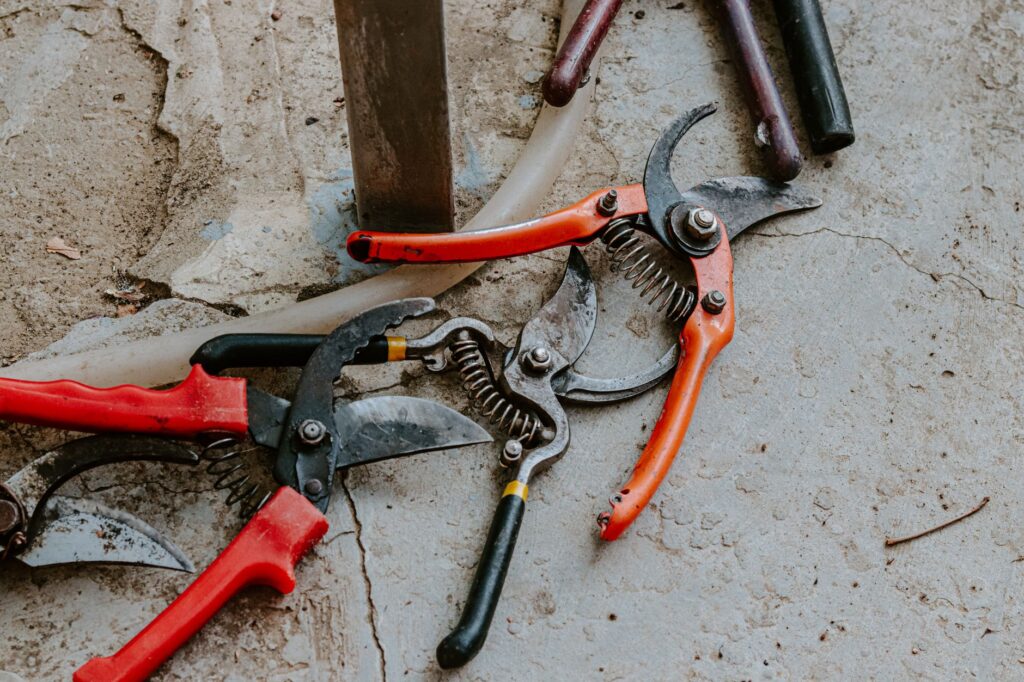
The cut location matters more than the amount of greenery you take. Work from the inside and the lower, shaded part of the tree, where branches are already thinner and contribute less. Make each cut just beyond a side branch, a bud or a fork, so the stub that remains is short and the tree has a growing point to push from.
A few working rules keep you out of trouble:
- Never cut the central leader, the main upright stem at the top of a young tree.
- Take from several places around the tree rather than stripping one side.
- Keep the total well under a fifth of the live foliage, and less on a small or recently planted tree.
- Leave flush cuts and long stubs alone; cut just outside the swollen ring where the branch meets its parent.
- Use sharp bypass pruners for small stems and a pruning saw for anything thicker than a finger.
A ragged, torn cut gives decay fungi and winter-feeding insects an easy way in, and evergreens heal slowly. Clean cuts with sharp tools are the cheapest insurance you have. The Rutgers home lawn and garden resources are a good place to look up species-specific pruning questions for New Jersey conditions.
Middletown's #1 Tree Expert Company
FREE Inspection & Estimate | Certified Arborists | Trimming, Pruning, Removal, More!
Sponsored
Whose Tree Is It? Rules for Yards, Streets and Parks

Before you cut, make sure the tree is yours to cut from. In Middletown that is not always as obvious as it sounds. Trees in the public right of way, the strip between sidewalk and road, are generally not private property to prune, and township rules cover work on them. Township tree regulations are written mostly around removal, but they are a reminder that public and protected trees have their own rules.
Parks are a different story. The woods at Hartshorne, Tatum Park and the other county parks look like a free supply of pine boughs, and they are not. Park rules generally prohibit removing plant material, and the Monmouth County Park System publishes its regulations, so check there before you carry anything out. The same goes for a neighbor’s tree, even one overhanging your fence. Ask first.
On your own property, the question is simply whether you can reach the branch safely from the ground. If it takes a ladder, an extension pole and a good deal of reaching, the right answer is to pick a different branch.
Handling Greens So They Last Through December

Cut greens dry out faster than most people expect, and a dried-out wreath is a fire hazard indoors as well as an eyesore. Cut on a cool morning, when the foliage is fully hydrated, and get the stems into a bucket of water as soon as you bring them in. Let them stand for several hours in a cool spot before you arrange anything.
Fresh pine and cedar hold up best, and holly keeps its leaves for a few weeks if the stems are kept moist. Berried holly sprigs tend to shed berries when they dry, so put them in water or floral foam. Keep all of it away from candles, fireplaces and heating vents, and recut the stems every week or so if you are using a vase arrangement.
Outdoors, evergreens on a porch or a gate hold up through freezing weather and look good until the New Year. When the season ends, a pile of pine or cedar clippings is usable as a light winter mulch or can go to the township’s yard waste collection. Check the schedule so you do not miss the last pickup before the holidays.
What Your Tree Is Telling You After the Cut
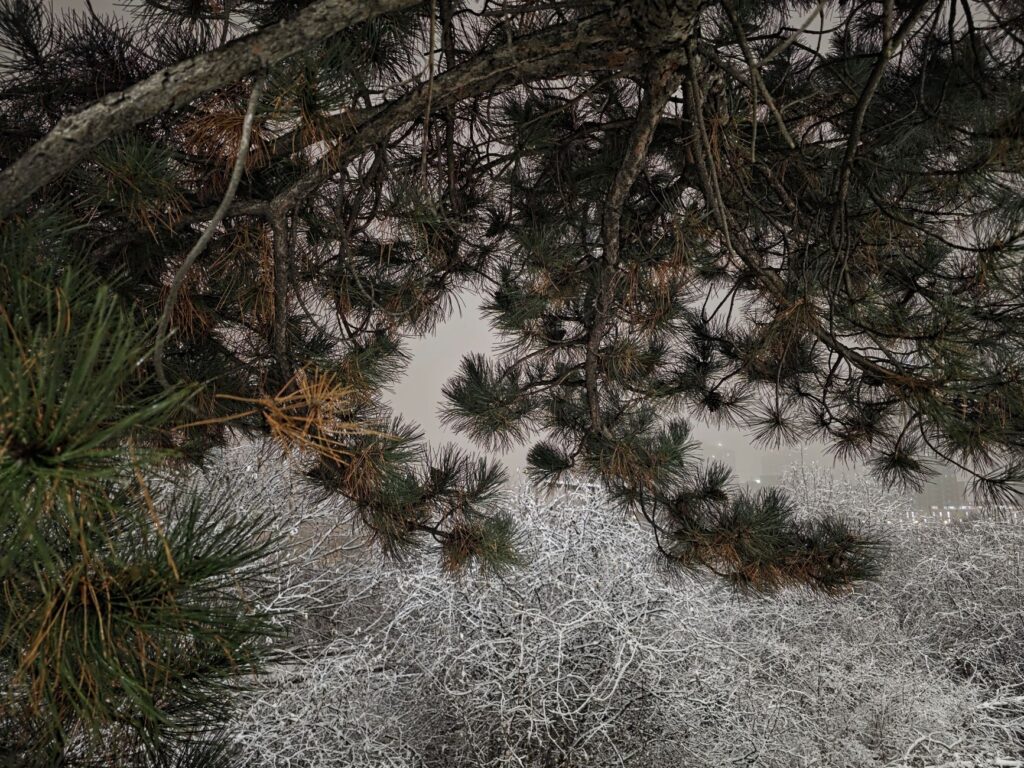
You will not see much change in December, but come back in late winter and spring and look at the places you cut. Healthy cuts on a pine or cedar simply close over slowly with a thin edge of callus. Needles turning brown behind a cut, a trail of sap running down the branch, or a dark, sunken area at the cut face can mean the tree is struggling, usually because the cut was too heavy or too close to the trunk.
A winter-stressed evergreen is also more exposed to the things that already trouble Bayshore trees. Salt spray, drying wind and compacted clay soil all take a toll, and a tree that lost a lot of foliage has less to work with. If you noticed browning on your pines before you ever picked up the shears, it is worth sorting out the cause rather than cutting more.
The USDA Forest Service’s urban forest resources give a good overview of how trees cope with stress in developed areas, and they put the small cuts of a holiday harvest into perspective.
Middletown's #1 Tree Expert Company
FREE Inspection & Estimate | Certified Arborists | Trimming, Pruning, Removal, More!
Sponsored
When to Hand the Job to a Certified Arborist

Most holiday greenery needs nothing more than steady hands and sharp pruners. A few situations are different. Any branch that is above head height and needs a ladder, any cut near a power line or service drop, and any tree that already looks hollow, leaning or half dead belongs to a professional. A fall from a ladder with a saw in hand is the most common way a pleasant weekend job turns into an emergency room visit.
A certified arborist can also tell you whether a tree can spare the foliage at all. A white pine that has been losing needles for a few years, or a holly with dieback on the top, is not a good donor tree no matter how nice the branches look. The ISA’s find an arborist tool lists credentialed professionals near you, and it is a better place to start than a flyer on a door.
For everything else, take a little, cut cleanly, and leave the tree looking like nothing happened. A tree that is left healthy this December will give you the same wreath next year.
Photo credits: Featured image by Sidde on Pexels; Section 1 by Ron Santini on Pexels; Section 2 by Irina Iriser on Pexels; Section 3 by Ejov Igor on Pexels; Section 4 by christianne on Pexels; Section 5 by Malcolm Garret on Pexels; Section 6 by Lyrad Wolfspider on Pexels; Section 7 by Thomas Benedetti on Pexels.