
Middletown's #1 Tree Expert Company
FREE Inspection & Estimate | Certified Arborists | Trimming, Pruning, Removal, More!
Sponsored
Why Winter Birds Care Which Evergreens You Have
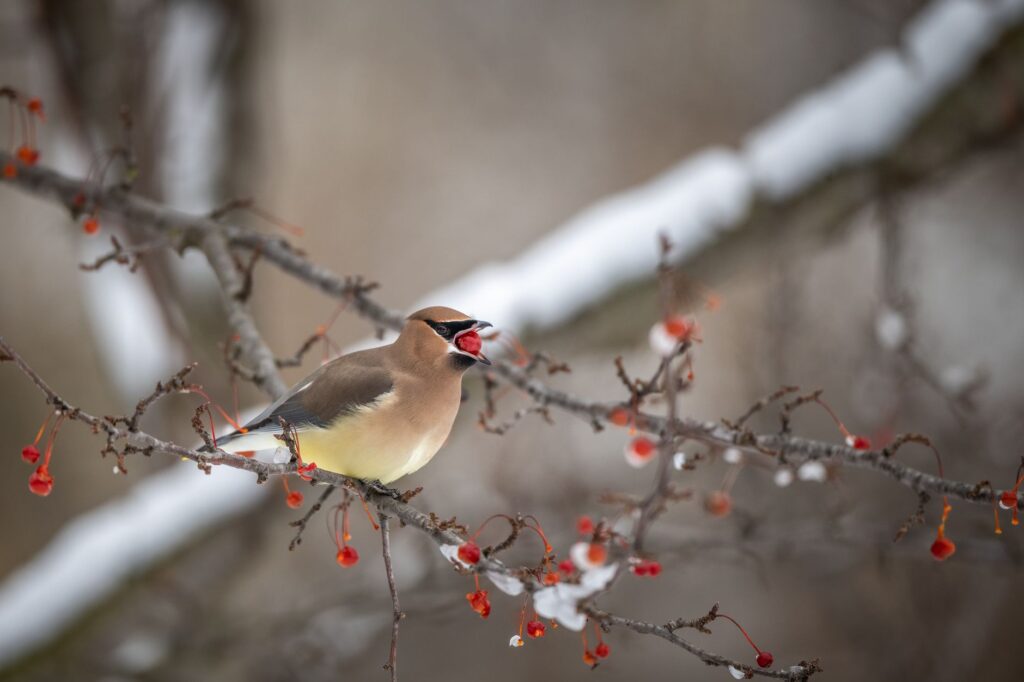
By mid November the Middletown landscape changes fast. The oaks and maples are bare, the lawns are brown at the edges, and the first hard frosts have wiped out most of the insects that birds lived on all summer. What is left for a chickadee, a cedar waxwing or a hermit thrush to eat is mostly stored in a few tough, evergreen trees that hold berries and shelter right through January.
Two of those trees are native to the Raritan Bayshore and perform far better than their modest reputation suggests: eastern red cedar (Juniperus virginiana) and American holly (Ilex opaca). Both grow wild along the edges of Hartshorne Woods, Tatum Park and the old fields near Poricy Park, and both turn up in Middletown yards, often by accident when a bird drops a seed under a fence line.
This article looks at what each tree offers wildlife, how to tell a healthy, well placed specimen from a problem one, and how to keep these evergreens useful without letting them become a hazard to a house or a power line. Whether you already own one or are thinking about planting one this fall, the details below will help you decide.
Eastern Red Cedar: The Bayshore's Tough Native Evergreen
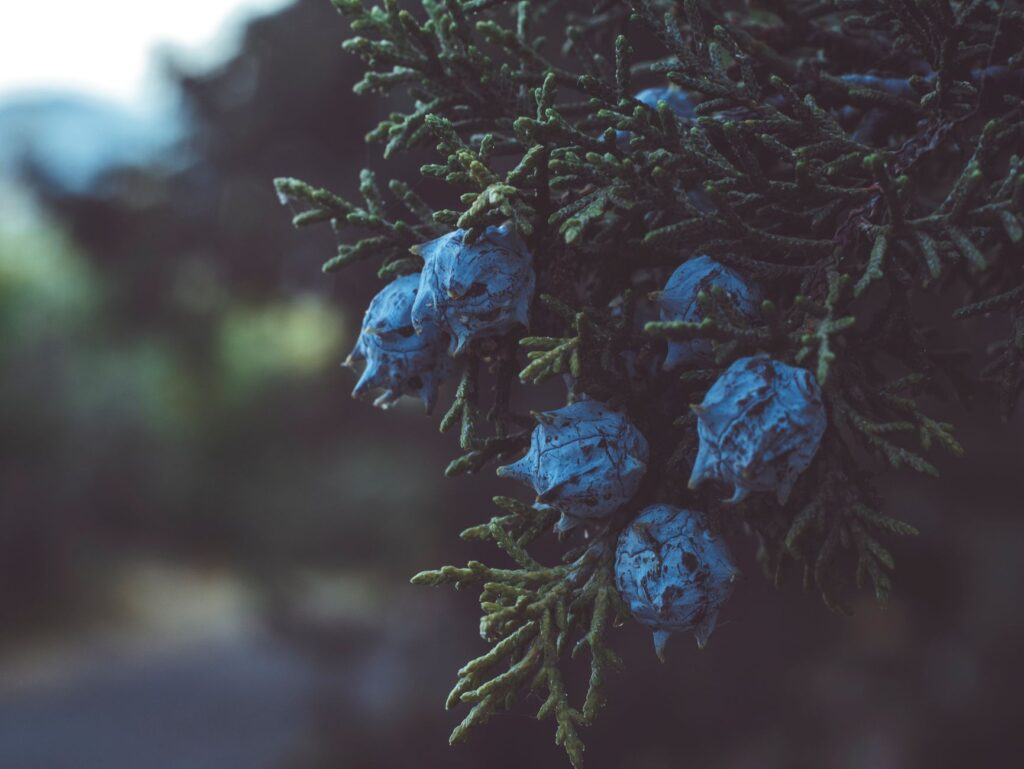
Eastern red cedar is a juniper, not a true cedar, and it is one of the most adaptable native trees in New Jersey. It tolerates thin sandy soil, heavy clay, road salt, wind and drought, which is exactly the mix of conditions found on exposed Bayshore lots. The Forest Service fire effects database describes how widely it spreads across the eastern United States, and much of that success comes from birds carrying its seeds.
The small, powdery blue cones on female trees are technically berries, and they ripen in the fall. Cedar waxwings, robins, bluebirds, mockingbirds and yellow-rumped warblers all feed on them through the winter. Dense foliage also gives roosting birds a windbreak on a bitter night, which matters more than most homeowners realize when the Bayshore wind is coming off the water.
A few traits are worth knowing before you decide whether to keep a volunteer seedling:
- Only female trees produce berries, so a male tree gives shelter but no food.
- Young trees grow narrow and upright, and old trees can become open and irregular.
- Foliage that browns from the inside out in late summer is often normal seasonal shedding, not disease.
- Orange, jelly-like growths in spring point to cedar-apple rust, a fungus that harms nearby apples and crabapples much more than the cedar itself.
None of these traits make the species a problem on their own. They simply help you judge what you are looking at in the yard.
American Holly: Berries, Thorns and a Winter Pantry
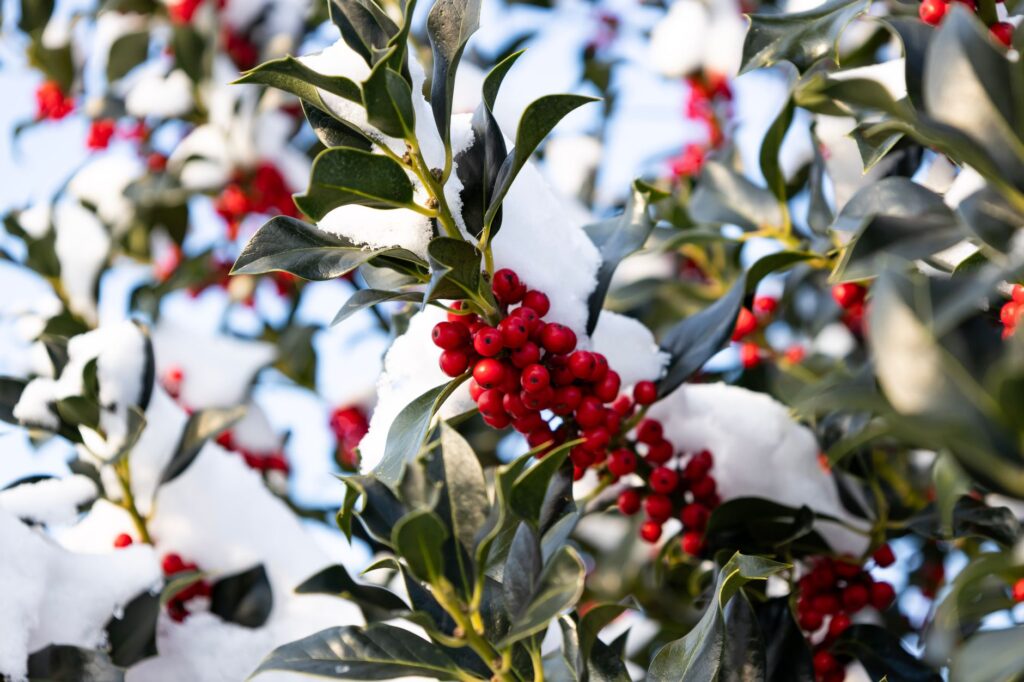
American holly is the native evergreen that most people picture at the holidays, and it is a genuine wildlife tree. The bright red berries on female plants ripen in autumn but often stay on the branches until late winter, because birds tend to wait until other foods run out and the berries soften after repeated freezes. When they do eat them, the list of visitors includes robins, mockingbirds, catbirds, bluebirds and cedar waxwings.
The prickly leaves protect the roosting cover inside the canopy from larger predators, so holly works as both a pantry and a shelter. As the same Forest Service database notes for the species, it prefers moist, well drained soil and handles shade much better than most evergreens, which makes it a good choice under the canopy of taller oaks.
Like many holly species, American holly is dioecious. Berries only appear on female trees, and a female needs a male within pollinating range to set fruit. If a holly in your yard flowers every May but never produces berries, the likely explanation is that no male tree is close enough, not that the tree is unhealthy. This is a very common point of confusion and a good reason to look at the tree in spring before buying or removing anything.
Middletown's #1 Tree Expert Company
FREE Inspection & Estimate | Certified Arborists | Trimming, Pruning, Removal, More!
Sponsored
Choosing and Placing the Right Tree in a Middletown Yard
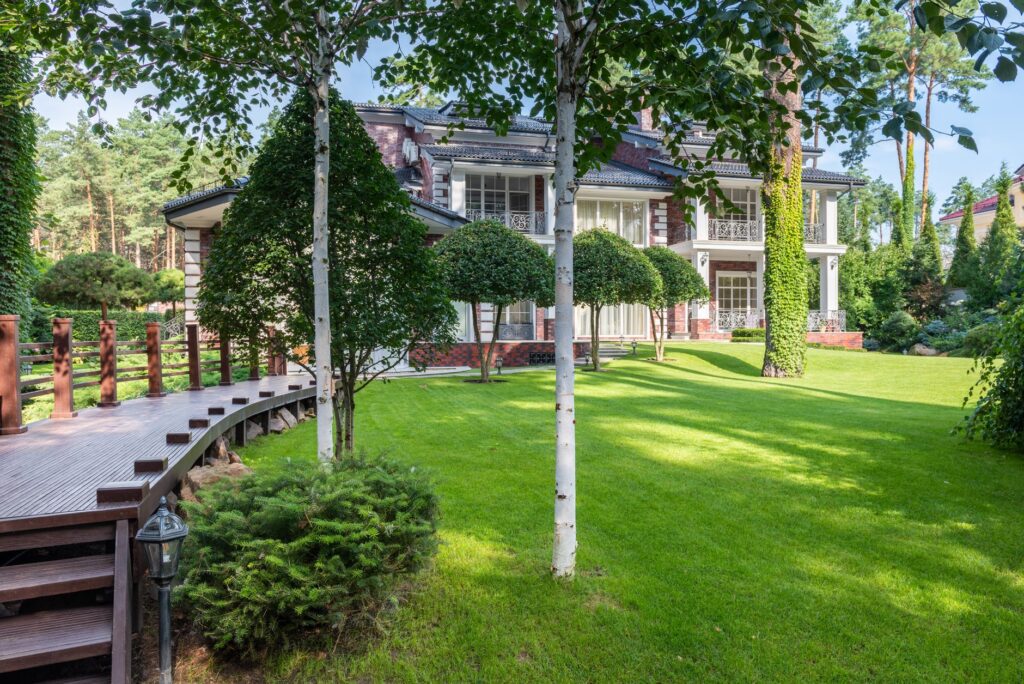
Wildlife value is only half the decision. A tree that feeds birds but is planted three feet from a foundation will become a maintenance problem within a decade. The planting guidance from Trees Are Good, the consumer site of the International Society of Arboriculture, stresses matching the mature size of a tree to the space available, and that advice applies directly here.
A few placement rules help for these two species:
- Give a red cedar at least 15 to 20 feet of room from any structure, and keep it well clear of overhead utility lines.
- Plant holly where it gets some afternoon shade and protection from the harshest winter wind, especially near the coast.
- Keep cedars away from apple and crabapple trees if rust has been a problem in your neighborhood.
- Avoid planting either tree directly over a septic field, a buried utility or a driveway edge.
Clay soils common across much of Middletown Township drain slowly, and holly in particular resents standing water around its roots. If a spot stays soggy after a few days of rain, choose a different location or a different species altogether.
Caring for Wildlife Evergreens Through the Winter
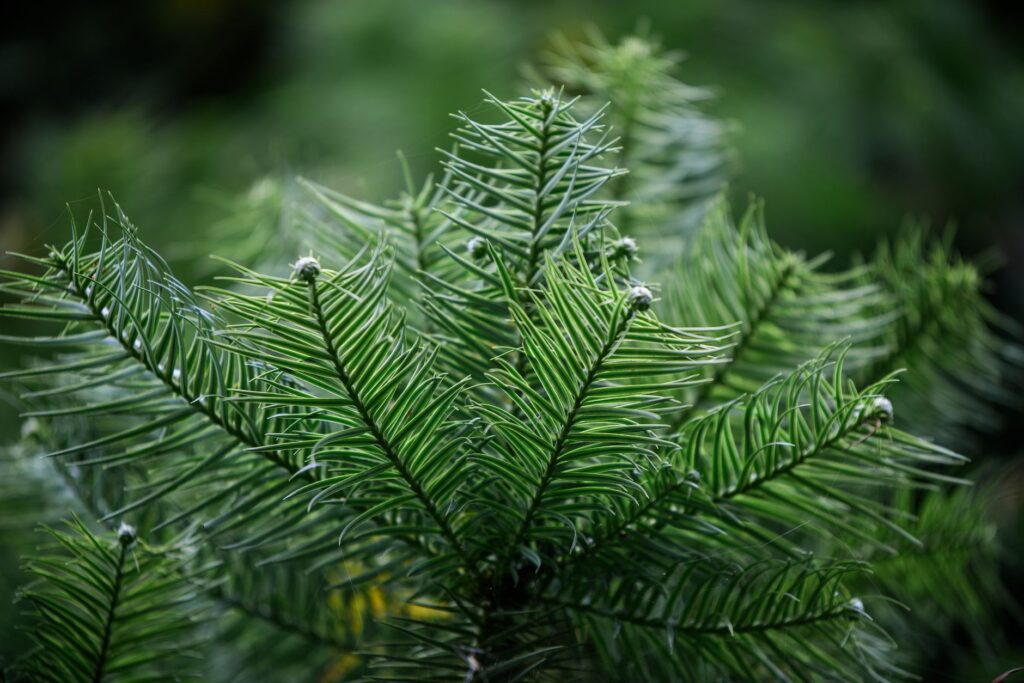
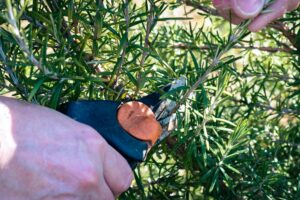
Established native evergreens need very little from you, which is part of their appeal. The most helpful thing to do in November is to leave the berries and the lower branches alone. Pruning in late autumn removes the fruit that birds are about to depend on, and heavy shearing opens the dense interior that makes the tree a good roost.
Young plants are a different story. A holly or cedar planted within the last two or three years still needs deep watering until the ground freezes, plus a layer of mulch two to three inches deep, pulled back from the trunk so the bark stays dry. Mulch piled against the stem holds moisture against the bark and invites decay, a mistake that shows up in many yards every year.
Deer are the other winter concern. Both trees can be browsed hard in a cold, snowy stretch, especially when other food is scarce. Light fencing or burlap screening around young plants through the worst months is usually enough, and it is far cheaper than replacing a tree that was stripped in a single season.
It is also wise to avoid salt spray and shovelled road salt around the base. Salt that washes into the root zone burns fine roots and shows up months later as browning needles.
Spotting Trouble: When a Wildlife Tree Becomes a Hazard
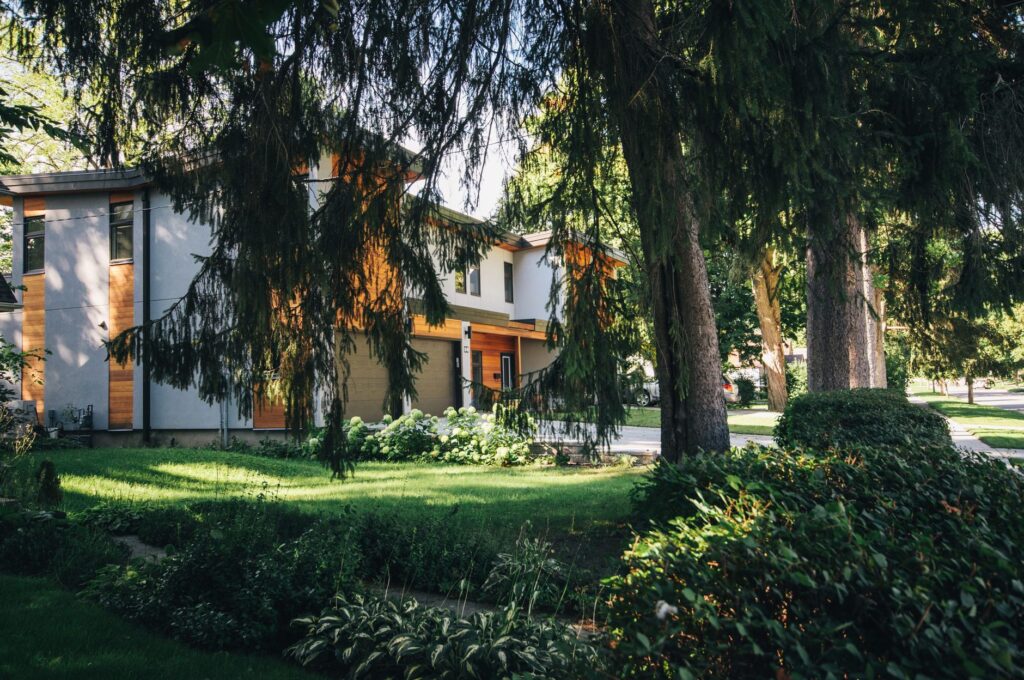
Wildlife value never outweighs safety. An old red cedar can look sturdy while its heartwood is quietly decaying, and a holly planted decades ago may now lean over a roof or a neighbor’s fence. Both are worth a look every year, ideally after a windy storm and again in late winter when the branch structure is easy to read.
Warning signs that deserve attention include:
- A sudden lean, or soil heaving at the base of the trunk.
- Large dead branches inside the canopy, especially over a house, a driveway or a play area.
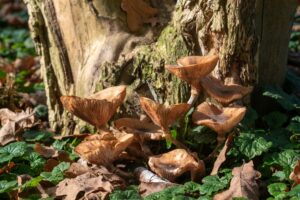
- Cracks, split forks or mushrooms growing from the bark or the root flare.
- Thin, sparse foliage on one side only, which can point to root or vascular trouble.
Not every one of these means the tree must come down. Many problems can be corrected by removing a defective limb or adjusting the load, and a skilled arborist can often save a tree that looks doomed. The point is to know what you are seeing so you can decide calmly, before a winter storm makes the choice for you.
Standing dead cedars and hollies can still serve wildlife as snags, but only when no person or structure sits within falling distance of the trunk or its largest limbs.
Middletown's #1 Tree Expert Company
FREE Inspection & Estimate | Certified Arborists | Trimming, Pruning, Removal, More!
Sponsored
Summary: When to Call a Certified Arborist
Eastern red cedar and American holly are two of the best native evergreens a Middletown homeowner can keep, plant or protect. They feed and shelter birds when little else does, they handle Bayshore wind and salt better than most ornamentals, and they ask for little in return beyond sensible placement, a bit of early watering and some respect for their natural shape.
The decision points are simple. Leave the berries and the lower branches alone in late fall, water young plants until the ground freezes, and keep both species well away from structures and utility lines. If you want to see mature native evergreens before deciding, the Monmouth County Park System manages several nearby parks where they grow in a natural setting.
When a tree leans, drops large limbs or shows signs of decay, or when you are unsure whether a mature specimen is safe near your home, the right move is to have a certified arborist look at it in person. An on-site assessment is the only reliable way to judge structure, root health and risk, and it is much easier to arrange in a quiet week than after a storm.
Photo credits: Featured image by Skyler Ewing on Pexels; Section 1 by Kristine Bruzite on Pexels; Section 2 by Mike on Pexels; Section 3 by Joerg Mangelsen on Pexels; Section 4 by Max Vakhtbovych on Pexels; Section 5 by Duc Nguyen on Pexels; Section 6 by Scott Webb on Pexels; Section 7 by KATRIN BOLOVTSOVA on Pexels.